

Extremely Dense Breasts: Mammograms & Advanced Imaging

It’s not pretty finding out you have “extremely dense” breasts — because this is a big risk factor for breast cancer; what makes this worse is that a tumor can pass as benign fibrous tissue on a mammogram reading.
A cancer surgeon and a diagnostic radiologist weigh in on extremely dense breasts, mammograms and an advancement in imaging.
Do you have “extremely dense breasts” and have read that this is a risk factor for breast cancer and/or that this situation makes it more difficult for a tumor to be detected by eye on a mammogram?
For this article I consulted with Dr. Steven Standiford, MD, Chief of Staff Emeritus at the Cancer Treatment Centers of America Breast Cancer Institute across all five CTCA sites, and Dr. Debora Fineman, MD, a diagnostic radiologist formerly with the Philadelphia CTCA.
“Regarding extremely dense breasts and the risk of breast cancer, the issue is more that extremely dense breasts make it difficult to DETECT cancer mammographically,” says Dr. Fineman.
Imaging for Extremely Dense Breasts
“A fairly recent advancement in mammography, Tomosynthesis, is quite beneficial in evaluating dense breasts, as it enables visualization of the breast in ‘layers,’” says Dr. Fineman.
“Most insurance companies will not cover this as a screening procedure. We do get tomosynthesis coverage for performing diagnostic workups such as evaluating an abnormal screening mammogram or evaluating a clinical problem.
“Screening tomosynthesis is readily available, with some institutions collecting a nominal out-of-pocket.”
Your gynecologist may order this test for you if it’s available in your health network even if it isn’t covered, so ask about it.
What about the MRI for extremely dense breasts?
Dr. Fineman says that coverage for the cost varies across insurance companies, and that most insurance companies will not pick up the cost for MRI screenings.
“I believe the research has not yet been finalized as to risk stratification and frequency of performing screening MRI evaluations,” adds Dr. Fineman.
Dense (fibrous) breast tissue appears as white on a mammogram. So do tumors. But in addition to this visual issue, it’s true that having more fibrous tissue and less fatty tissue increases a woman’s risk of the cancer.
Just how much of an increase is up for debate. This all begs the question: Why isn’t an MRI screening covered by insurance for patients with dense breasts?
Dr. Standiford has this to say: “I worry about policies mandating coverage of a specific, as yet unproven test – for as yet, MRI has not impacted breast cancer mortality, and the resources could be better utilized in expanding mammography coverage – the impact would be far greater.
“Also, newer technology is on the way, for example higher resolution ultrasound, tomosynthesis mammography and breast CT, which may have more utility in screening dense breasts.”
 As a part of Dr. Standiford’s life-long commitment to improving cancer treatment, he has partaken in wide-ranging research and has been awarded grants to study breast and colon cancer.
 Dr. Fineman has been in practice for 30+ years.
 Lorra Garrick has been covering medical, fitness and cybersecurity topics for many years, having written thousands of articles for print magazines and websites, including as a ghostwriter. She’s also a former ACE-certified personal trainer.
.
Top image: Shutterstock/Billion Photos

Can Breast Cancer Be Spread by Mammogram Compression?
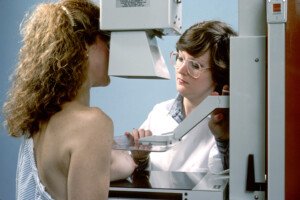
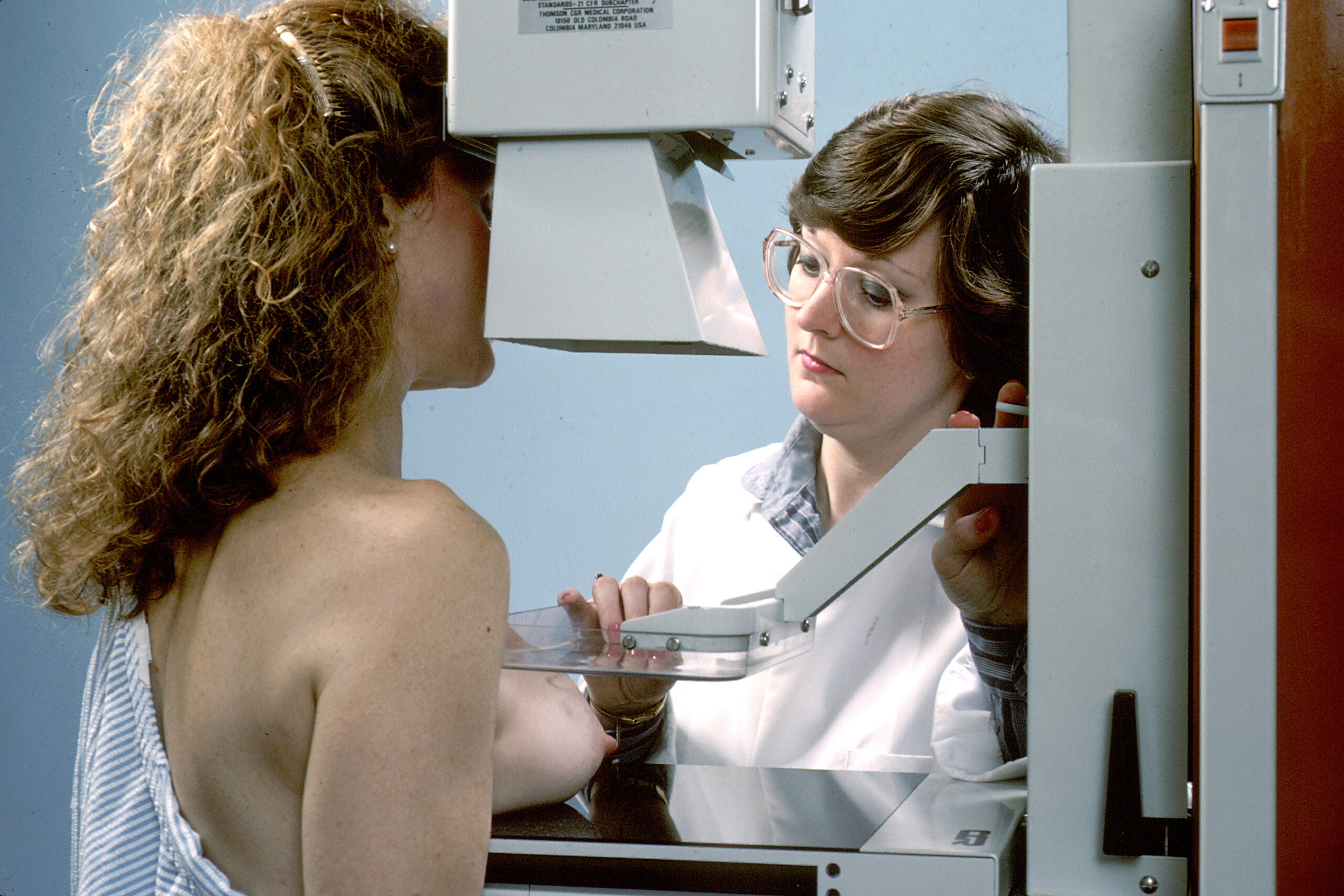
Find out what a breast cancer surgeon has to say about the idea that a mammogram can compress a pre-existing tumor and make it spread.
The compression from a mammogram can hurt quite a bit.
This can make some women wonder if this painful compression could somehow squeeze out an undiagnosed malignant tumor to the point of scattering it beyond its local position.
So the big question becomes: If there’s cancer in the breast, can what feels like excessive compression can make it spread or disseminate it to other parts of the body?
The Answer
“Manipulation of a tumor – whether by exam, compression of a mammogram, ‘disrupting’ the tumor with a needle biopsy, or manipulating the tumor at surgery – has NOT been shown to increase the risk of tumor recurrence or dissemination of metastases,” explains Dr. Steven Standiford, MD, Chief of Staff Emeritus at the Cancer Treatment Centers of America Breast Cancer Institute across all five CTCA sites.
Spread of Cancer Cells
Dr. Standiford explains, “Cancer metastasis is a complex dance between tumor cells separating themselves from the initial tumor, having the biochemical reactions that loosen the bonds between cells so that one can break free, having access to blood vessels or lymphatics to have a highway to travel, avoiding identification by the immune system, and having a site which provides an appropriate milieu for the cell to develop into a metastatic lesion.
“Compression, or exposing the tumor to the air, or any other single factor will not change the nature of the disease, which is determined by the tumor and not how hard it is squeezed.”
In short, malignant breast tumors are “tough” and don’t just break apart.
If you are still concerned about the “spread” of cancer cells during a mammogram, you may want to consider having a whole-breast screening performed via ultrasound — as this does not involve compression of the breast tissue.
You should discuss the pros and cons with your women’s health physician regarding screening technology.
Keep in mind that not all insurance plans will cover the cost of a screening ultrasound, and in fact, the procedure may not even be offered by your health plan.
However, independent imaging centers will provide screening ultrasounds for breast cancer, though you may need an authorization from your doctor to have it done.
As a part of Dr. Standiford’s life-long commitment to improving cancer treatment, he has partaken in wide-ranging research and has been awarded grants to study breast and colon cancer.
Lorra Garrick has been covering medical, fitness and cybersecurity topics for many years, having written thousands of articles for print magazines and websites, including as a ghostwriter. She’s also a former ACE-certified personal trainer.
.
Top image: Cancer.gov/ Bill Branson
Menstrual Pain Every Day but Gyno Tests Are Normal?

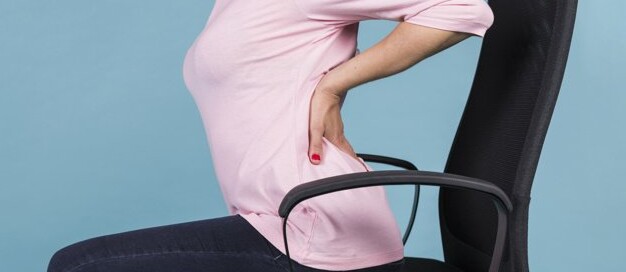
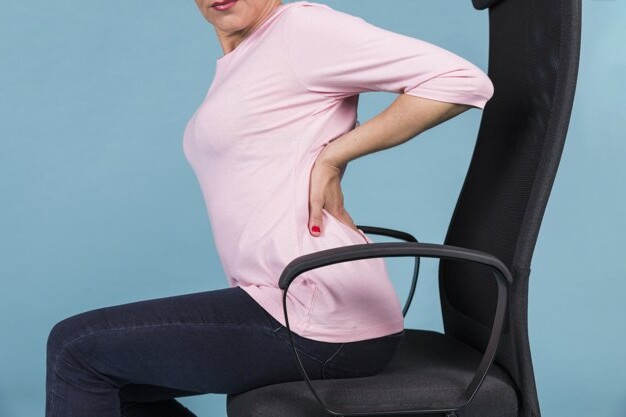
Have you ever had menstrual pain or cramps but no period?
If your only symptom is pelvic discomfort, a number of conditions can cause this.
But the more locations of your body, that have the aches or pains, that get added into this equation, the fewer the conditions that can explain this.
Thus, the possibilities get narrowed slightly when, in addition to pelvic cramps, you also get low back aches.
Toss in wrist, ankle and neck aches, and this eliminates gynecological causes such as pregnancy, ovarian cysts, endometriosis and gynecological cancer, and it also eliminates colon cancer.
Joint aches other than in the back are not on the symptom lists for these cancers.
So what on earth can possibly cause period pain in the absence of the above, and in the absence of pregnancy, periomenopause, menopause and celiac disease?
Consider the possibility of inflammatory bowel disease! One such condition is microscopic colitis, a benign inflammatory bowel disease that will never turn into anything serious.
“How can I have colitis if I don’t have any digestive symptoms, no diarrhea, no constipation, no flatulence, no gas?”
Microscopic colitis, as well as other IBDs like Crohn’s and ulcerative colitis, can cause “extra-intestinal” symptoms (e.g., beyond the intestines), that can surface IN THE ABSENCE of gut-related symptoms.
What causes menstrual joint pain?
Prostaglandins, which are hormone-like chemicals produced throughout the body, including the uterus.
This is why ibuprofen alleviates this pain, because it inhibits production of prostaglandins.
What’s believed to cause the joint aches of microscopic colitis?
Prostaglandins.
“Aching joints can be a symptom of microscopic colitis, but not necessarily. Many patients with aching joints don’t have microscopic colitis, but aching joints and gut problems often go hand-in-hand.
“They’re both associated with inflammation, and many doctors speculate that cyclo-oxygenase (COX 2) or prostaglandins are involved because of the function they provide.
“Prostaglandins are chemicals that generally cause inflammation of our joints.”
– Dr. Jeffrey Fine, MD, chief of gastroenterology at the Medical Surgical Clinic of Irving, as interviewed in my article, Why Does Microscopic Colitis Cause Joint Pain?
If you’re having unexplained joint aches and pelvic cramping that feel menstrual, like you’re about to get your period, but the period never comes, there IS some degree of possibility that this could be microscopic colitis, if all of your other tests have turned up negative, and ESPECIALLY if you’re over 50.
Even if there’s no diarrhea. However…the diarrhea may come yet. When I had my second flare-up of microscopic colitis, the period pain was present (and significantly) for about 27 days BEFORE the diarrhea and other gut symptoms started.
Then out of 32 days that followed from the first day of diarrhea, I had a total of 27 episodes of diarrhea.
The diarrhea came on rather suddenly and tapered down over the next 32 days.
The feeling like I was going to have my period any day disappeared a few days after the diarrhea began, BUT … throughout the diarrhea’s course, I continued, almost every evening, getting that menstrual feeling, albeit milder.
PROSTAGLANDINS!
Your health insurance should cover a colonoscopy, which is the only way to diagnose microscopic colitis. If you’re at least 50 and haven’t had one, get one.
Tell the doctor to swab for microscopic colitis. The joint aches of IBDs are called “enteropathic arthropathy.”
This situation is non-destructive, will eventually remit (though future flares are possible), and will NOT damage your joints or weaken them. I continue deadlifting heavy barbells and doing pull-ups without a problem.
 Lorra Garrick has been covering medical, fitness and cybersecurity topics for many years, having written thousands of articles for print magazines and websites, including as a ghostwriter. She’s also a former ACE-certified personal trainer.
.
Top image: Freepik.com
Sources:
mayoclinic.org/diseases-conditions/menstrual-cramps/basics/causes/con-20025447
webmd.com/women/guide/menstrual-pain
ccfc.ca/site/pp.asp?c=ajIRK4NLLhJ0E&b=6349433&printmode=1 (flare-up of joint aches can occur separate from gut problem flare-ups)
ncbi.nlm.nih.gov/pmc/articles/PMC3629156/ (prostaglandins and MC)
ncbi.nlm.nih.gov/pubmed/6350580 (prostaglandins and PMS)
ncbi.nlm.nih.gov/pubmed/19594490 (prostaglandins and IBD)
rheumatology.org/Practice/Clinical/Patients/Diseases_And_Conditions/Psoriatic_Arthritis/

Acid Reflux Can Affect Throat without Chest Burning

Don’t assume your throat issues can’t be acid reflux just because you have no heartburn, chest discomfort or abdominal pain.
My father was recently coughing for no apparent reason, and I suggested it might be acid reflux. He said it couldn’t be because he didn’t feel any burning in his chest or stomach.
I told him you could have acid reflux affecting the throat without feeling any burning in the chest.
Why can acid reflux cause throat related symptoms in the absence of chest or stomach related symptoms?
“On occasion acid reflux can cause throat symptoms with no burning sensation in the throat or chest,” says Dr. Jeffrey Fine, MD, the chief of gastroenterology at the Medical Surgical Clinic of Irving.
“This is referred to as extra-intestinal manifestations of gastroesophageal reflux disease (GERD).
“It can be a direct effect of acid refluxing all the way up into the throat from the stomach. GERD can be caused when esophageal and cricopharyngeal muscle disorders occur at the same time.”
One day I developed a cough—every few minutes something would tickle in the back of my throat and necessitate a cough. No other symptoms.
At the time, it didn’t occur to me that acid reflux was the only explanation.
But in retrospect, this had to be acid reflux, affecting only my throat and without heartburn or chest pain—triggered by extreme emotional duress.
This every-two-minutes need to cough developed a few days prior to having to literally chase after my beloved dog down a busy street, trying to catch up to him before he got hit by a car.
Actually, my parents owned him, but I was staying with them to give the dog his brain cancer treatment because my parents couldn’t handle the injections.
He was deranged from the disease and had gotten loose from the yard after the lawn care people left the gate open.
I was running through traffic since the dog was running through traffic. This was a German shepherd and I began losing distance.
Finally, I saw a man approaching from another direction who was trying to help.
Suddenly I got really close to my beloved furry angel and reached out to grab his collar, but he tried to bite me, causing me to retract.
Then I reached out for his collar and almost had him–he bolted off, even ignoring my father as my father pulled alongside the dog and opened the car door and called for him to jump in—something the dog always loved to do—but now, only ran away in his demented state.
I called out to the man who had joined in on the attempt to catch the large dog, “A hundred dollars if you can catch him!”
Within a minute, the man had the dog. (And I stuck to my word and paid him $100.)
I knew it was time to call the vet and have him euthanized; he had taken a rapid turn for the worse over the past few days—this coincided with development of my cough; my heart was just breaking—I was about to lose my golden love.
He no longer “knew” his family and was defecating in the house, spending hours pacing frenetically.
Throughout this course I had also suddenly developed a change in bowel habits that included frequent diarrhea and foul smelling and weird looking stools.
I couldn’t help but think colon cancer. I scheduled a colonoscopy, which turned out to be two days after the dog was put down.
The stress and anxiety were ridiculous. I’d be sitting there at my computer, coughing every two minutes, taking swigs of the almost-nauseating syrupy solution to clean my colon out for the exam.
Stress-induced acid reflux?
Acid reflux can cause a persistent cough — a throat symptom — without causing any heartburn, chest or abdominal discomfort. I had the cough all the way into the exam room.
When the colonoscopy was over, and the doctor said everything looked normal, and I began coming out of the sedation. The cough was completely gone. It never came back.
The diarrhea and abdominal rumbling turned out to be microscopic colitis, a benign condition not related to acid reflux.
If you have a nagging cough or other throat symptom like a hoarse voice, but no heartburn or chest pain, this might be acid reflux.
But to be sure, see a physician, since throat symptoms can have other, more serious causes.

Dr. Fine has been in practice for over 30 years and specializes in digestive health, integrative medicine and food sensitivities.
Lorra Garrick has been covering medical, fitness and cybersecurity topics for many years, having written thousands of articles for print magazines and websites, including as a ghostwriter. She’s also a former ACE-certified personal trainer.
Top image: Shutterstock/Rocketclips, Inc

Can Excessive Burping Be Caused by Anxiety?

Though cancer can cause burping, this symptom can also be caused by psychological factors.
Anxiety can cause a LOT of symptoms, including headache, backache, stomach ache, a knotty feeling in the stomach, diarrhea, a racing heart, a fluttering heart, a lump feeling in the throat …
But what about belching?
Burping is associated with obnoxious behavior and eating too much, and with gulping air with a carbonated beverage.
But can anxiety actually cause one to burp?
“Yes. Anxiety can cause excessive burping,” says Dr. Jeffrey Fine, MD, the chief of gastroenterology at the Medical Surgical Clinic of Irving.
How does this happen?
“When people become anxious, they may swallow excessive amounts of air,” says Dr. Fine.
“This is called aerophagia. When this happens, air goes into the stomach and is then forced back through the esophagus and out of the mouth – more commonly thought of as burping.”

Freepik.com/katemangostar
The solution would be to make sure that your mouth is closed during periods of anxiety. But this tactic isn’t always easy to pull off, especially if the anxiety is of an acute and severe nature.
If you’re still burping, put yourself in a state of mind that induces relaxation and calmness, and see if it goes away.
For instance, settle down in your favorite piece of furniture with some soothing music, and focus on something that will distract your mind from anxiety, such as counting backwards by seven from 100; or counting each tick of the clock in the room.
Or repeat in your head your favorite poem or song lyrics over and over.
Do this for a while and see if the burping goes away.
Dr. Fine has been in practice for over 30 years and specializes in digestive health, integrative medicine and food sensitivities.
Lorra Garrick has been covering medical, fitness and cybersecurity topics for many years, having written thousands of articles for print magazines and websites, including as a ghostwriter. She’s also a former ACE-certified personal trainer.
.
Top image: Shutterstock/Aaron Amat

Can Acid Reflux Cause Bloody Stools?

Is it possible for acid reflux disease to cause blood to be in one’s stools?
“It is unlikely that acid reflux can cause blood on or in the stool,” says Dr. Jeffrey Fine, MD, chief of gastroenterology at the Medical Surgical Clinic of Irving.
“To have blood on or in the stool, the patient would have to have massive gastrointestinal bleeding from the esophagus and this is unlikely.
“The only way acid reflux could cause blood in a patient’s stool is if they had an esophageal ulcer eroding into a blood vessel causing rapid gastrointestinal blood loss.
“When a patient has this condition, they are more likely to be vomiting blood than to see it in their stool.”
If you’re experiencing any unnerving symptoms, insist upon a colonoscopy, even if you’re under age 50.
A colonoscopy can rule out or in a number of conditions. Do not fear a colonoscopy.
If you haven’t had any peculiar symptoms but are at least age 45, it’s time to ask your physician about a colonoscopy as a screening for colon cancer.
The age for starting screening colonoscopies was changed to 45 by the American Cancer Society in 2018 — due to the rise in colon cancer diagnosis in people under 50.
Dr. Fine has been in practice for over 30 years and specializes in digestive health, integrative medicine and food sensitivities.
Lorra Garrick has been covering medical, fitness and cybersecurity topics for many years, having written thousands of articles for print magazines and websites, including as a ghostwriter. She’s also a former ACE-certified personal trainer.

Can Exercising on an Empty Stomach Cause Acid Reflux?

Are you wondering if that discomfort in your chest or stomach while working out on an empty stomach might be from acid reflux?
“Yes, exercising on an empty stomach can cause acid reflux,” says Jeffrey Fine, MD, chief of gastroenterology at the Medical Surgical Clinic of Irving.
How does this happen?
“Exercising on an empty stomach can increase intra-abdominal pressure,” explains Dr. Fine.
“Anything that increases intra-abdominal pressure can overwhelm the lower esophageal sphincter (LES) and result in reflux.”
The symptom can linger for a while after the exercise is over.
Symptoms of Acid Reflux from Exercising on an Empty Stomach

The symptoms are those that are typical of acid reflux: a discomfort in the abdominal area that can be described as an ache, mild pain or burning sensation.
This feeling can also make its way to the chest area, including what seems to be below the sternum (the esophagus is right behind the sternum).
If you’re getting chest pain every time you exercise on an empty stomach, but not when you have some food in it, then yes, this can be acid reflux.
However, make sure you have a thorough exam with a cardiologist so that a cardiac cause can be ruled out.
For example, suppose you have a normal coronary calcium score (within five years of having the test).
Suppose also that your blood pressure and cholesterol profile are in the normal range.
And let’s also say that you don’t have diabetes.
Finally, you have not noticed any unusual shortness of breath or decline in physical abilities due to increased fatigue.
Given all that — chances are extremely high that the discomfort in your chest (and especially if it’s in your abdomen) is being caused by acid reflux if it comes only when you exercise on an empty stomach.
To help prevent this annoying problem, make a point of taking in some food prior to exercising.
This could be a little yogurt, some fruit, a hardboiled egg, a handful of nuts or any small helping of a healthful food so that your stomach isn’t completely empty.
Dr. Fine has been in practice for over 30 years and specializes in digestive health, integrative medicine and food sensitivities.
Lorra Garrick has been covering medical, fitness and cybersecurity topics for many years, having written thousands of articles for print magazines and websites, including as a ghostwriter. She’s also a former ACE-certified personal trainer.

Gurgling from Stomach: Could this Be Acid Reflux?

Is that gurgling inside your stomach coming from acid reflux, cancer or what?
Now, gurgling from your stomach can be either annoying, embarrassing or scary (if you read somewhere that it could be a sign of cancer or even a brewing condition involving your heart).
Can Acid Reflux Cause a Gurgling Sound in the Belly?
“No — When your GI tract moves, it generally causes a gurgling noise,” says Jeffrey Fine, MD, chief of gastroenterology at the Medical Surgical Clinic of Irving.
“This is part of the natural digestive process and not due to acid reflux.”
What are the symptoms that acid reflux does cause?
The most common symptom of this very common condition is a burning or slightly abrasive feeling in the chest and/or upper abdomen.
However, the chest or abdominal discomfort from acid reflux isn’t always of a burning nature.
It can sometimes be described as a dull ache, strong ache or a pressure or heaviness.
The chest symptoms of acid reflux can mimic those of heart disease or of a heart attack.
Another common symptom of acid reflux is “burping” up a small amount of bitter tasting liquid after eating a meal — especially if you ate a lot of food in a short period of time.
The good news is that a gurgling stomach — either that which you can hear or only feel — is not cause for alarm.
The GI tract is supposed to move. The esophagus and intestines contract as part of the digestive process.
The esophagus and intestines are made of muscle, and muscle in the GI tract moves things along to get food digested. This movement is called peristalsis.
If you hear it, that’s normal. Whose stomach doesn’t gurgle sooner or later?
Dr. Fine has been in practice for over 30 years and specializes in digestive health, integrative medicine and food sensitivities.
Lorra Garrick has been covering medical, fitness and cybersecurity topics for many years, having written thousands of articles for print magazines and websites, including as a ghostwriter. She’s also a former ACE-certified personal trainer.
.
Top image: Shutterstock/Mix and Match Studio

Can HIIT Trigger Acid Reflux?

Are you wondering if high intensity interval training can bring on acid reflux?
“Yes. High intensity training can trigger acid reflux for some people, depending on what type of exercise the person is doing and how that person is wired,” explains Dr. Jeffrey Fine, MD, the chief of gastroenterology at the Medical Surgical Clinic of Irving.
“High intensity training can trigger acid reflux for some, depending on what type of exercise the person is doing and how that person refluxes,” says Dr. Fine.
Symptoms of Acid Reflux Brought on by High Intensity Interval Training
You may get a dull aching or burning in your upper abdomen.
If the acid reflux makes it higher up into your throat and mouth, you may start getting an unpleasant taste in your mouth.
This taste won’t be strong or sharp, but rather bland and dull. It may taste the way you’d imagine cardboard might taste. It may have a bitter quality to it.
It can come on within five minutes of your cardio exercise.
Dr. Fine explains, “Everyone is wired differently, neurologically speaking. Some people experience reflux only when lying down; others when sitting or standing up, and some experience it in either position.”
Can acid reflux be prevented during intense cardio training?
If you’ve been experiencing reflux symptoms as a result of HIIT, see what happens if you eat a small amount of food prior to the exercise, since an empty stomach can make you more likely to develop symptoms.
Many people perform HIIT on an empty stomach, namely to maximize the fat-burning effect.
But a small item of healthful food won’t disrupt this process.
Choose a something like a small peach, apple, banana, grapes or a little yogurt.
Another approach is to more gradually ramp your work intervals, to give your stomach a change to acclimate to the uptick in physical activity. This may result in less acid reflux.
Dr. Fine has been in practice for over 30 years and specializes in digestive health, integrative medicine and food sensitivities.
Lorra Garrick is a former personal trainer certified through the American Council on Exercise. At Bally Total Fitness she trained women and men of all ages for fat loss, muscle building, fitness and improved health.
.
Top image: Shutterstock/Razoomanet







How Soon After Eating Chocolate Can You Get Acid Reflux?

You may know that chocolate can cause acid reflux, but how soon after eating it can it produce this symptom?
Acid reflux, even when caused by eating chocolate, can result in a burning sensation in the chest and/or the upper abdomen.
Unfortunately, chocolate is a known trigger for the reflux of acidic stomach “juices” that travel up the esophagus and cause annoying symptoms.
However, to a chocoholic, the symptoms are worth the reward.
Time It Takes Chocolate to Cause Acid Reflux After Eating It
“Eating chocolate can cause reflux,” begins Jeffrey Fine, MD, chief of gastroenterology at the Medical Surgical Clinic of Irving.
“This can occur within seconds of consuming chocolate or up to an hour afterward.”
So if you had chocolate cake, brownies or ice cream three hours ago, and seem to be having some acid reflux, chances are pretty good this is not coming from the chocolate you indulged in three hours ago—probably not even two hours ago.
How does chocolate cause reflux in the first place?
Dr. Fine explains, “Chocolate contains cocoa powder, which is an acidic substance that can directly injure the esophagus.
“In addition, it can decrease the lower esophageal sphincter (LES), which allows gastric reflux in the esophagus.”
If you’re prone to frequent episodes of acid reflux that seem strongly correlated to an intake of chocolate goods, you may want to consider discussing this with a gastroenterologist.
After all, chronic irritation to the esophagus can lead to a condition called Barrett’s esophagus — which is a risk factor for esophageal cancer.
Dr. Fine has been in practice for over 30 years and specializes in digestive health, integrative medicine and food sensitivities.
Lorra Garrick has been covering medical, fitness and cybersecurity topics for many years, having written thousands of articles for print magazines and websites, including as a ghostwriter. She’s also a former ACE-certified personal trainer.
.