How Much GERD Causes Barrett’s Esophagus?

How much acid reflux must you have in order to cause Barrett’s esophagus, a precancerous condition in the “food pipe” that’s a risk factor for esophageal cancer?
If a person suffers from acid reflux symptoms every day, is this enough to cause Barrett’s esophagus after a certain length of time?
Is it a type of symptom that’s more relevant to the development of Barrett’s, such as heartburn as opposed to coughing?
Does the severity of the GERD symptoms play into this?
In short, should people have anxiety over developing Barrett’s esophagus just because they have GERD or episodes of acid reflux?
Symptoms of Acid Reflux
• A burning or aching in the chest and/or upper abdomen
• Coughing, which may be present only overnight
• Waking with an odd taste in the mouth. The taste may also be triggered by exercise like running, step aerobics or jumping.
• A burning or lump feeling in the throat
• Sensation of difficulty swallowing
“We know that Barrett’s esophagus is due to chronic exposure of the esophagus to acid and stomach contents,” says Alan Gingold, DO, a board certified gastroenterologist with Central Jersey Ambulatory Surgical Center.
“Typically, five years or more of reflux is considered the minimal amount of time that it takes for patients to develop Barrett’s in the setting of chronic reflux.
“Obviously this is an average, and so there are patients who have less than five years’ exposure and develop Barrett’s, and there are patients with many more than five years and never develop Barrett’s.
“Risk factors for Barrett’s include cigarette smoking and other factors such as being a white male, obesity, alcohol use, FH adenocarcinoma of the esophagus.”
There is no research that links a subjective report of severity of a GERD symptom with the likelihood of developing Barrett’s.
For instance, nobody can say that a subjective report of chest pain being “severe” puts the patient at greater risk of Barrett’s than someone who reports their acid reflux chest pain as only “mild.”
Reflux symptoms occurring often throughout the day, has also not been linked to a higher risk of Barrett’s than does having the symptoms only occasionally throughout the day.
Finally, type of symptom has not been found to be linked to any higher risk.
Thus, the person whose GERD causes mostly throat related symptoms is not more or less likely to get Barrett’s than someone whose acid reflux only causes chest or abdominal discomfort, or whose reflux occurs only after eating, or only overnight, or only during anxiety or exercise, etc.
If you’re worried about developing Barrett’s esophagus, then take measures to lower your risk for this precancerous condition:
• Stop smoking
• Avoid drinking
• Lose excess body fat
• Eat fewer processed foods and more fruits and vegetables.
• Replace white flour foods with whole grain versions.
• Replace white rice with brown rice.
If your acid reflux or GERD symptoms are not responding to medication or conservative treatment (e.g., sleeping with torso elevated), or if they are longstanding — see your doctor.
 Dr. Gingold attributes his success to the extra time he spends with his patients. His areas of expertise include reflux disease, Barrett’s esophagus, capsule endoscopy, chronic liver disease and inflammatory bowel disease. Dr. Alan Gingold is board certified by the American Board of Internal Medicine in Gastroenterology
 Lorra Garrick has been covering medical, fitness and cybersecurity topics for many years, having written thousands of articles for print magazines and websites, including as a ghostwriter. She’s also a former ACE-certified personal trainer.
Top image: ©Lorra Garrick

Sleep Apnea: How a Dentist Can Help You Get Real Rest at Night

Sometimes a dentist can create a perfect solution to a patient’s obstructive sleep apnea.
Many people wonder if they have obstructive sleep apnea, especially if they never feel recharged from sleeping or wake up in the middle of the night feeling choked.
Sleep apnea, which is usually but not always associated with snoring, is a serious condition that requires prompt treatment.
Are You Fed Up with CPAP?
Although CPAP machines are the most common method of sleep apnea treatment, many people find CPAP intolerable.
• It’s uncomfortable (e.g., air pressure, mask fit, skin irritation).
• The apparatus may shift during sleep.
• It can result in morning dry mouth.
• Vigilent cleaning of the device is required.
How a Dentist Can Help with Sleep Apnea
If you’re tired of the CPAP machine, there is a possible alternative.
A dentist can create an oral appliance similar to a sports mouth guard.
The mandibular advancement device (MAD) fits in your mouth and does not need to be hooked up to anything else.
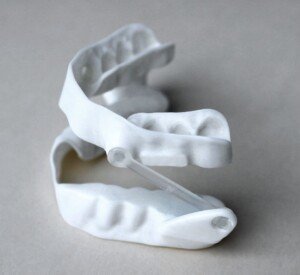
Oral appliance
Each oral appliance is custom-fitted to maximize your comfort and breathing during sleep. They are also easy to care for.
Another excellent feature of the dental appliance is that it’s easy to take on trips. Its compact size lets you take it anywhere, ensuring that you get a good night’s sleep.
Another advantage is that they do not make any noise, leaving your partner undisturbed.
More on Mandibular Advancement Devices
These are not recommended for moderate or severe sleep apnea, but some patients with a diagnosis of mild sleep apnea may benefit.
The confirmation of benefit could only come from a sleep study when the patient is wearing the MAD. If the study’s results show an apnea-hypopnea index at under five per hour, this means the oral appliance is working.
More than 100 types of these stop-snoring devices have been approved by the FDA. Many insurance plans will also cover them, but you will need to have an official medical diagnosis of sleep apnea.
Many people who get an oral appliance from a dentist find that their sleep is so much better – even on the first night. Just as important is the fact that with better sleep, you’re positively moving towards better health.

Dr. Vadivel, DDS, is a board certified periodontal surgeon, and Founder-CEO of Implants & Gumcare of Texas, offering affordable restorative and cosmetic dental procedures. Dr. Vadivel has over 25 years of experience.

What Does Burping After Heart Bypass Surgery Mean?

No, not the burping you might do immediately after coronary bypass surgery, but in the days or weeks after the operation?
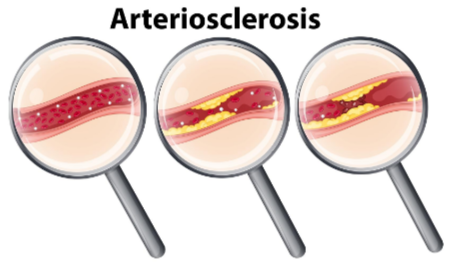
Can an Ultrasound Show Hard, Calcified Plaque in the Heart’s Arteries ?
An ultrasound takes “pictures” of your heart.
The difference between hard calcified plaque and soft plaque in the coronary arteries is that the hard buildup is much more stable. (more…)
Should an IVC Be Placed in Every Joint Replacement Patient?
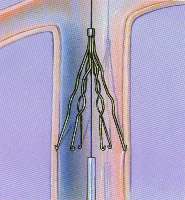
Since joint replacement surgery raises the risk of DVT, why don’t all joint replacement surgeries include IVC filter placement, especially in higher-risk patients?
It seems that it would make sense to perform the 20 minute procedure on a pre-emptive or prophylactic level, especially for patients with the greatest risk for a deep vein thrombosis (e.g., advanced age, smoking history, obesity).
An IVC filter can prevent a DVT from getting into the lungs where it can become quickly fatal as a pulmonary embolism. There’s no telling when a deep vein thrombosis might become dislodged and travel to the lungs.
An IVC placement is non-invasive.
Another question is why, once a DVT is actually diagnosed, the inferior vena cava filter isn’t automatically placed.
A pulmonary embolism is a leading cause of cardiac arrest. Death can result within minutes of the DVT breaking off from its original location.
If the pulmonary embolism is big enough, it’ll prevent air from getting into the lungs. The patient will essentially suffocate.
“Current evidence does not support routine filters in patients,” says Henry Boucher, MD, clinical instructor of Adult Reconstruction, Medstar Union Memorial Orthopaedics, Baltimore, MD.
“It is true that they can be placed less invasively, but they are not without potential complications—vascular injury, migration, post-thromboembolic issues such as leg swelling and pain,” he continues.
“Some higher risk patients may be candidates for a filter—prior PE and intolerance to anticoagulants—but this would be up to discretion of the surgeon and a vascular consultation.”
Wouldn’t the pros outweigh the cons?
After all, it’s estimated that a quarter of a million Americans die every year from a pulmonary embolism (some estimates go up to 300,000 and more), and though many of these deaths are from non-surgically related PEs (i.e., air travel), many are complications from joint replacement surgery.
“Filters for all patients would be a huge expense to prevent a complication that typically happens less than one percent of the time after joint replacement surgery,” says Dr. Boucher.
One percent sounds insignificant, but the large death toll can be attributed to the number of hip and knee replacements done every year in the U.S.
According to the American Academy of Orthopaedic Surgeons, over 800,000 hip and knee replacements were performed in 2003. Currently that number exceeds 900,000.
“Most DVTs are treatable without progression to pulmonary embolism.
“Most lower leg DVTs are not a problem; we worry much more about ones behind the knee and in the thigh.”

Dr. Boucher’s specialties are hip and knee surgery, replacement and revision, and sports medicine surgery. He has been the recipient of the Golden Apple Award for teaching excellence multiple times.
 Lorra Garrick has been covering medical, fitness and cybersecurity topics for many years, having written thousands of articles for print magazines and websites, including as a ghostwriter. She’s also a former ACE-certified personal trainer.
.
Source: aahks.org/patients/documentary/inside_look.asp

What Swelling in the Hip After Replacement Surgery Means

If you’ve recently undergone hip replacement surgery, you may be noticing some swelling around the hip and are worrying about this. (more…)
Causes of Bite Changes from Muscle Spasms to Cancer

If you suspect that your bite has changed over a short or long period of time, it’s imperative that you make an appointment with your dentist. (more…)

Is Your Ejection Fraction Very Low? How Long Can You Live ?

If you’ve been told you have a very low ejection fraction, just how long can you expect to live?
When the ejection fraction is below 20 to 25 percent, it’s considered to be “severely reduced.” (more…)
Sedation Dentistry: The Dental Spa, Sleep While We Work

People often find it difficult to see the dentist for one reason or another.
Some are simply afraid of the drill, or the dentist, or the pain. (more…)

Varicose Veins vs. Bodybuilder’s Veins: Differences & Dangers
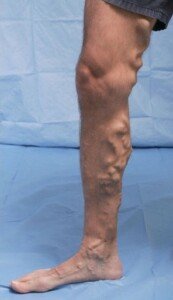
Is there a difference between the bulging veins of a bodybuilder and varicose veins?
Though varicose veins mean there’s a problem with the vessels’ valves, does the vascularity of a bodybuilder point to anything amiss? (more…)