

Why It’s Insulting to Say “Don’t Worry About It”

Before you tell someone, “Don’t worry about it,” DON’T!
In fact, don’t even say “Don’t worry.” Just these two words alone are a mistake to tell someone, even if they are visibly worrying.
It’s just plain inappropriate to tell someone, “Don’t worry.” If you’re in the habit of doing this, ask yourself the following questions:
“Whenever I tell someone, ‘Don’t worry about it,’ do I have a solution to their problem?”
“Whenever I’ve told a person, ‘Don’t worry,’ did they suddenly brighten up?”
You know the answer is NO to both questions. People don’t want to be told not to worry.
They want solutions to the problem that’s making them upset or concerned.
Invalidating their emotions by telling them don’t worry will not make the problem go away—and they know that. And YOU know that.
Psychology 101 is that the listener makes this lame directive because they don’t know what else to say.
They lack solutions and good advice. Their minds are a blank, so to fill the empty air space, they say “don’t worry.”
And then they have nothing to back up this directive, such as a solution, recommendation or other fix to the problem.
I never tell people not to worry.
Instead, I jump right into offering helpful advice. There is always some way to give help to a fretting person, even if it’s to suggest keywords to google to see what possible information comes up that they can benefit from.
Another peeve is when the individual says, “Don’t worry about it,” in a demeaning or irate tone.
This really puts me on the defensive and makes me feel I must clarify why I’m “worrying” about something.
Another problem with this absurd directive is that many times, it’s an erroneous observation.
I can’t begin to tell you how many times I’ve been told don’t worry when in fact, I wasn’t the least bit vexed.
When this happens, I always call that person out on their wrong assumption, their inability to read someone.
One day I called out my brother on this. I was merely making some comments about the fact that our three-year-old nephew still was not talking.
I was not troubled about this; honestly. At the time, I’d met the nephew only twice in my life and was not in contact with his parents, but my parents were.
So after my casual comment, my brother gruffly stated, “Oh don’t worry about it!”
That set me off. I chastised him for making this wrong assumption. Now you may call me neurotic or overreactive, but I firmly believe that when a person commits a faux pas, they should be called on it.
If my brother, in fact, had been the one to begin commenting about the nephew not talking yet at age three, I would have joined in on the topic and added to it, rather than shutting him down with an irate “Oh don’t worry about it!”
“When someone tells you, ‘Don’t worry about it,’ or, ‘It’s not that bad,’ or anything along the lines of suggesting you are overreacting, that does nothing to change how you feel,” explains Patricia Celan, MD, a senior psychiatry resident at Dalhousie University in Canada.
“Such comments can be seen as dismissive and minimizing,” continues Dr. Celan.
“People would rather feel heard and be told that their feelings are valid, instead of being told to not have those feelings at all – an invalidating response that makes people not want to further confide in the speaker.”
THINK before you tell a person not to worry, even if they’re very visibly upset about something, even if they’re crying.
People want solutions, not invalidation of their emotions.
Even if no solution exists, it’s still highly inappropriate to say those two words. They are overused, patronizing and insulting.
 Dr. Celan is a post-graduate trainee in psychiatry, working in diagnosing and treating patients with psychiatric conditions. She is passionate about psychotherapy, especially in trauma, anxiety and depression.
 Lorra Garrick has been covering medical, fitness and cybersecurity topics for many years, having written thousands of articles for print magazines and websites, including as a ghostwriter. She’s also a former ACE-certified personal trainer.
.
Top image: ©Lorra Garrick

Do Obese People Only Go Through the Motions with Exercise?
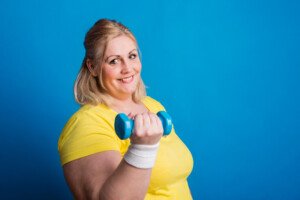
Many obese people insist that they exercise as much as any lean person.
About 80 percent of personal-training clients are overweight women.
But the truth is, the percentage of clinically obese individuals at health clubs or parks (on the walking/jogging/biking/inline skating paths) is drastically lower than the percentage in general areas such as malls, festivals, busy streets, business centers, ball games, concert halls, etc.
Visit any place where people are exercising or getting in physical activity. You will see few people who are significantly overweight.
This isn’t because the very overweight can’t perform the exercise or activity.
I don’t expect to find very heavy people skateboarding, but I’m talking about more practical activities like walking, slow jogging, basketball, tennis. And of course, working out with weights.
An issue of the Journal of Nutrition Education and Behavior (Jan/Feb 2010) delves into the strange paradox:
The solution to obesity and its accompanying hazards is exercise (along with smart eating habits), yet, most obese U.S. people do not have a structured, comprehensive approach to exercise.
First, let’s define exercise.
The shopping you did at Kohl’s or Walmart does not comprise your exercise regimen for the day.
Nor does housework. And leisurely walking your Pomeranian around the block a few times doesn’t count, either.
Exercise that works is that which keeps the heart rate elevated for at least 20 minutes nonstop.

If housework keeps your heart rate elevated, this means you’re in poor condition and need to perform structured cardio routines (treadmill, outdoor arm-pumping walking, step class, elliptical machine, staircase machine, cycling).
And a program also of strength training will make housework less fatiguing.
The variable for the obese individual is making time for deliberate, structured, bilateral, neutral-spine-positioned cardio and strength training workouts, regardless of how much “walking” you did at the mall that day, or how much hassling you did carrying around your toddlers that day.
RESEARCH
Researchers at The George Washington University Medical Center analyzed survey results from 1,552 people, of whom 989 were overweight.
Some results: Overweight people believed that exercise enhanced self-image and appearance more so than normal weight subjects.
Overweight participants felt more intimidated and self-conscious about exercise (under most circumstances) than non-overweight people.
And the negative emotions that go with the health club experience may be greater in obese people when it comes to dictating the decision to exercise.
The study authors note that “…it would be wise for exercise professionals and commercial health clubs to help OW people feel more comfortable around those who are different from themselves and to minimize the intimidating aspects of the exercise environment, while promoting the benefits of exercise to personal health and wellbeing.”
It is no secret that many obese and even moderately overweight people won’t exercise at gyms due to self-consciousness.
However, exercise can begin inside the comfort of the house. Fancy, noisy, space-consuming equipment is not necessary.
If you’re obese and not working out, you can start with a used stationary bike for $25, and used treadmills are pretty cheap, if money is an issue.
Or exercise to cable channel fitness programs, or purchase some exercise CDs. You can even follow YouTube workouts.
Though the percentage of obese people who exercise at gyms is way smaller than the percentage of very heavy people in the general population, I’d have to say that enough overweight women and men show up at health clubs to conclude that self-consciousness and intimidation obviously don’t stop these particular individuals from doing what’s right for their body.
Lorra Garrick is a former personal trainer certified through the American Council on Exercise. At Bally Total Fitness she trained women and men of all ages for fat loss, muscle building, fitness and improved health.
.
Top image: Shutterstock/ Halfpoint
Source: sciencedaily.com/releases/2009/12/091217133738.htm

Do Obese Women Strength Train Differently than Thin Women?
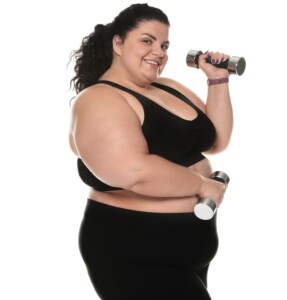
Obese women indeed strength train differently than thin women, and this is one of the reasons they can’t lose weight.
Obese women strength train a lot differently than their lean counterparts, and while this creates obstacles to fat loss, it’s important to know that it is not the obesity that causes overweight individuals to work out differently than thinner ones.
In my years in the fitness industry, as well as being a “gym rat,” I have observed a very intriguing phenomenon in the way that women of different sizes work out.
First of all, in general, most women, regardless of amount of body fat, tend to use light weights when doing resistance exercise.
There is a range within this range, so that some women use very light weights, while others use heavier than average weights, and only a very small percentage use a “Wow!” amount of resistance.
Most women do not want a muscular look. The muscular look, however, results from very low levels of body fat in combination with a very-well-strength-trained body. Low levels of body fat make the musculature visible.
Obese women almost always use particularly light resistance, whether it’s with a machine, dumbbells or barbells.
hutterstock/Lisa F. Young
Trust me when I say that this is NOT because their excess size prevents use of heavier resistance. Strength training is not the same as running.
There is nothing about obesity that makes a woman physically weak in the sense of strength training.
A very large person is on an even playing field as a lean person when it comes to weight workouts.
Ask an obese woman who strength trains why she strength trains.
She will probably tell you to lose pounds. However, training with light weights will not get her the desired results.
Overweight women usually fear that if they use heavy or even moderate resistance, or work out in a way that feels intense, that they will get bigger. This is a myth.
Go to any crowded gym and observe how obese women do strength training. The weights are often very, very light.
They are afraid of getting bigger if they use more than a light resistance. I’ve had my obese clients use heavier weights—without any problem as far as performing the exercise. They have the ability, but the myth gets in the way.
This phenomenon is particularly obvious with the lat pull-down, any chest press, bench press, seated row and bent-over dumbbell row.
Now, look at the women who are lean and buff. How much weight are they lifting? Almost always, it’s a lot more than light, and often it’s “a lot for a woman.”
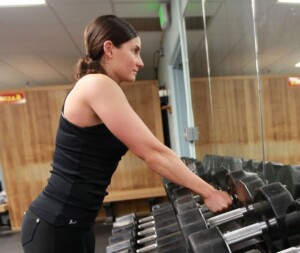
In other words, an obese woman will be using 50 pounds for a lat pull-down, while the lean, tight, buff size 6 counterpart will be pulling down 115 pounds.
The best way for the obese to lose body fat via exercise is to lift heavy, and intensely.
Intense strength training with moderate to heavy resistance ignites a hormonal response in the body that causes an accelerated resting metabolism.
This hormonal response does not occur with light exercise!
An obese woman’s body will shrink, shrink and more shrink only when she begins using moderate weights with high intensity, or heavy weights with medium to high intensity.
The formula for this, in general, is using a load that makes 8-12 repetitions exceedingly difficult. If you can do more than 12 reps, increase the resistance!
Lorra Garrick is a former personal trainer certified through the American Council on Exercise. At Bally Total Fitness she trained women and men of all ages for fat loss, muscle building, fitness and improved health.
.
Top image: Shutterstock/New Africa

What Should Your Sitting Time Limit Be Per Day?

You know that lots of sitting is unhealthy, but what’s the maximum number of hours we should sit per day?
The absolute number of hours per day spent sitting might just very well be three hours, suggests a study on “the sitting disease.”
Sitting in excess of three hours per day is responsible for 3.8 percent of deaths by all-cause.
This is the result of a study that appears in the American Journal of Preventive Medicine.
And what if you averaged less than three hours a day of sitting?
The study says this would tack 0.2 years onto your life expectancy.
Behavioral surveys from 54 nations were analyzed in this study, which was led by Leandro Rezende, MSc, Department of Preventive Medicine at the University of Sao Paulo School of Medicine.
The time spent siting had a big impact on all-cause mortality, responsible for 433,000 deaths. This figure is 3.8 percent of all the deaths across the 54 countries.
What’s even more alarming is that prolonged sitting seems to be an independent risk factor for early mortality, not to mention an assortment of ailments, REGARDLESS of how hard a person crushes it in a gym.
If this is difficult to understand, let’s take smoking as an example. You’ll agree that smoking causes illness and death.
Smoking is just plain bad for the body. This fact doesn’t change if a smoker decides to run five miles a day and train with weights an hour a day.
The agent of smoking is still there, and it’s still dangerous. And so it is with prolonged sitting. It’s bad…period.
How to Sit Less and Be on Your Feet More: Fitting More “Foot Time” into Your Day
See if your manager at work will permit a treadmill desk station, or at least a “sit and stand” desk.
If not, get one for home for when you’re on your computer shopping, banking, reading or watching videos.
If you work out of your home, get a treadmill desk and just start easing your way onto it.
While watching TV, do some yoga, brief bursts of jumping jacks, squat jumps or stationary lunges, karate kicks or see how long you can balance on one foot with the other leg bent to 90 degrees.
If you don’t need to be sitting, then stand. Do toe touches, windmills, jump up and down, whatever comes to mind to offset the sitting disease.
Lorra Garrick is a former personal trainer certified through the American Council on Exercise. At Bally Total Fitness she trained women and men of all ages for fat loss, muscle building, fitness and improved health.
.
Source: sciencedaily.com/releases/2016/03/160323142345.htm

When Is the Temperature Too Hot to Run a Marathon?

Maybe you’ve heard that a certain temperature is too hot for marathon running, but what’s the lowest temperature that may still be too hot?
As a marathon runner, you certainly know that the hotter the temperature, the more potentially unsafe it is to run long distances.
In one Rochester, Minnesota. race, the temperature hit 80 degrees by the event’s start, and 20 percent of finishers required IV fluids.
Marathon runners can still be at risk for heat related illness when the temperature is as low as just 65 degrees, says a report in Medicine and Science in Sports and Exercise, the science journal of the American College of Sports Medicine (ACSM).
The report states that marathons should be cancelled when the temperature hits 82-86 degrees.
ACSM recommends that in the event that a weather report predicts hot temperatures, race officials should begin the event earlier if they don’t cancel it.
Another recommendation from ACSM is that athletes put ego aside and walk part of the race if they begin feeling symptoms of heat illness.
Unfortunately, some runners don’t experience early signs of heat sickness, says the ACSM report.
What’s too Hot?
“There’s no absolutely right answer to this because the relative risk is different for different people,” says Dr. David Beatty, MD, a retired general practitioner with 30+ years of experience and an instructor of general medicine for 20+ years.
“For most people who run a marathon it’s the most physically demanding thing they will do in their lives. This inevitably involves a degree of risk.”
Variables make the answer to this question difficult to answer such as cloud cover, available medical support at the marathon event, number of elite runners, individual fitness of the athletes, etc.
And some marathon runners thrive in the heat and have even stated that they prefer it over colder conditions.
“The American College of Cardiologists (in 2009) found the risk of death to be 0.8 per 100,000 runners,” continues Dr. Beatty.
“The London Marathon has been run for just over 40 years and there have been 12 fatalities.
“About 1-2 runners per 1,000 have to attend hospital. Well over a million people have taken part.
“The Sahara Marathon is a race of about 150 miles run over six days.
“This is, obviously, only taken on by ultra-fit athletes, and the temperature can be as high as 120 degrees F.
“There have been three deaths over its 35 year history. The 2021 race was particularly brutal with over half of the competitors dropping out.”
Most Common Causes of Death Related to Marathons
“The most common causes of death are heart attack, heat stroke, hyponatremia (low blood sodium) and hyperthermia,” says Dr. Beatty.
“You’re less likely to get heat stroke if you’re physically fit and have trained well for the event.
“If your marathon time is three hours you’ll get a lot less sun exposure than if you take five or six hours.
“Being the right weight is important. If you’re 10% overweight that’s 10% extra energy you have to use to get round the course.
“This means your body is burning more calories and producing more heat in the process.”
How to Protect Yourself During a Marathon
“Protect yourself from the sun, wear a hat, use sunscreen and pick the shady areas to run in,” says Dr. Beatty.
“Take plenty of isotonic fluid to avoid dehydration. If you only drink water this can cause hyponatremia.
“You’ll be sweating out salt, and if you only take in water your blood sodium levels become more diluted.”
During the course of the marathon there are plenty of opportunities to grab fluids, as spectators are lined up holding plastic cups.
It’s interesting to speculate how many runners have passed up this opportunity, believing it would cut a few seconds off their time. But if they’re dehydrated, this will cut off time.
The water can also be used to splash over their body, and it’s not uncommon to see this when viewing a marathon.
Keep in mind that runners shouldn’t wait until they’re parched to drink water or isotonic fluids.
“Make sure you’re well-hydrated before the race and don’t stand around in the sun before the race starts,” adds Dr. Beatty.
“Wearing heavy, fancy dress costumes can only increase the risk of heat related problems.” Yes, it’s not unheard of for participants to do this.
Just because you’re not an elite athlete or trying to break a personal record doesn’t mean you’re immune to heat related illness.
Heat Sickness
“With heat stroke the body temperature can be elevated to over 104 degrees F,” says Dr. Beatty.
“There may be poor coordination, delirium or seizures. Symptoms might be headache, malaise, nausea, vomiting, fatigue, anxiety or chest pain.”
Clammy skin and dizziness are two more potential signs.
“The pulse and respiration rate may be rapid [out of proportion to the exertion]. Coma can occur in severe cases.”
“It can be quite hard to know when you’re developing heat sickness because many runners will have some of the above symptoms when extending themselves.
“When it’s hot you have to consider the heat risks more seriously, and if you are feeling worse than you should, for having run a given distance, you should stop, get in the shade, cool off and rehydrate.”
But didn’t primitive man do a lot of running in the heat?
Ancient man – the hunter-gatherer – certainly needed to run in order to survive.
But primitive peoples ran only when they had to, and this crucial running was over short distances to either catch prey or escape from prey.
There were no marathon runs. Instead, hunter-gatherers walked long stretches of distance. They listened to their bodies.
When they felt tired, they stopped and rested. They sought shade when possible.
So though the human body was designed to cover long distances, it was not designed to run 26 miles nonstop, let alone in as short a time as possible.
 Dr. Beatty has worked in primary medicine, surgery, accident and emergency, OBGYN, pediatrics and chronic disease management. He is the Doctor of Medicine for Strong Home Gym.
 Lorra Garrick has been covering medical, fitness and cybersecurity topics for many years, having written thousands of articles for print magazines and websites, including as a ghostwriter. She’s also a former ACE-certified personal trainer.
.
Source
acsm.org/about-acsm/media-room/news-releases/2011/08/01/-hot-races-reiterate-precautions-for-marathon-runners

Why You Should Retire Rather Than Keep Working

You should retire (if you’re able to) rather than continue working because retirement is much better for your health; working is linked to many diseases.
It’s not unheard of for mental health experts to endorse the idea of senior citizens continuing to work full time in the name of “staying young,” “keeping the mind active,” “having something to do,” and “feeling valuable,” etc.
Even when someone is middle age but in a financial position to retire, they are often urged to “find a new career.”
There are two groups of people here: 1) Those who HAVE to work, who are unable to retire due to their financial situation, and 2) Those who CHOOSE to work—and full-time at that.
It’s the No. 2 group that this article pertains to.
University of Sydney researchers announced that retiring means becoming more active, sleeping better and cutting down on sitting time (sitting is “the new smoking”).
A report in the American Journal of Preventative Medicine says that the lifestyle behaviors of 25,000 older Australians was followed for a study.
The paper says that retirement was found to be associated with positive lifestyle changes.
In the study, people who were retired were more physically active (which is always better for health), spent less time sitting, were less likely to engage in smoking, and had better sleep.
It’s truly flabbergasting that a significant number of older people actually fear retirement; they have anxiety over adjustment to all the free time.
I’ve been retired by choice since age 53. I just don’t get how so many men and women could experience anxiety over a soon-to-be retirement.
I’ve been looking forward to retirement since I was a teenager!
After my father retired in his mid-60s, he one day told me, “I don’t know I ever had time for a job.”
He filled his days with home/handyman projects, listening to classical music, taking care of the lawn, playing and watching golf, bridge, a bowling league, reading, watching action movies and playing Scrabble with my mother, going to the gym, cooking pancakes and waffles, learning computer skills, not to mention he had a dog, went on vacations whenever he wanted, attended symphonies, received visits from his kids, and was just outright free of the stressors associated with having a full-time job such as fighting rush-hour traffic every day.
The study explains that, though retirement is a major life change, it also creates a great window of opportunity for making positive lifestyle changes.
The study also said that half the female smokers quit following retirement.
Working brings all sorts of disadvantages, including loss of privacy.
Suppose you must take off a month for surgery, then come back with a scar. You can bet that coworkers will be swarming you with questions.
If you must take funeral leave, all your coworkers learn of your family member’s death — something that many people want to keep private.
Dr. Melody Ding is the lead author of this study and was inspired to conduct it when her mother, who still lived in China where women are mandated to retire at age 55, turned 55 and expressed she would not be “valuable” as a non-working person.
“She now spends her days enjoying so many hobbies,” says Dr. Ding in the paper, “she can’t remember how she had time to work.”
Sound familiar?
Isn’t it really odd that when a younger person plans on retirement, they are frequently asked, “What will you do all day?” even though a younger body can do more than an elderly one?
But when an elderly person with limited mobility retires, the question of “What ever will you do all day?” doesn’t come up as often? Bizarre!
Lorra Garrick is a former personal trainer certified by the American Council on Exercise. At Bally Total Fitness she trained clients of all ages for fat loss, muscle building, fitness and improved health.
.
Top image: Freepik.com/ pressfoto
Source: sciencedaily.com/releases/2016/03/160311105229.htm
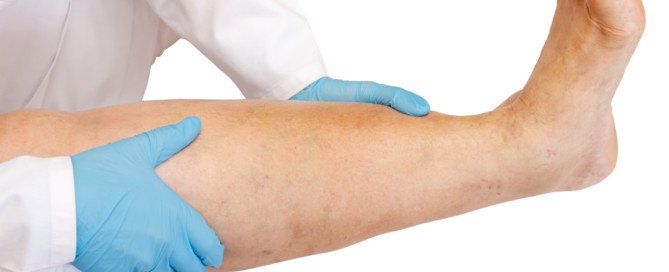
Very Swollen Leg 4 Days after Hip Replacement Surgery
So the leg suddenly swells up four days out from hip replacement; does this mean a deep vein thrombosis (DVT)?
After my mother’s hip replacement surgery (fracture repair), I thought that the surgical leg looked pretty good; I was surprised it wasn’t swollen up.
The second and third day, same thing: There wasn’t much swelling.
It wasn’t a “fat leg” as I had anticipated.
The nurses and the physician’s assistant mentioned nothing about a delayed swelling.
So when my mother was transferred to the rehab center, and I saw how swollen the entire leg had become, I couldn’t help but think DVT.
Was it normal for such swelling (edema) to occur several days after the hip replacement surgery, skipping the first three days?
She also had a suspicious-looking bulge of retained fluid behind her leg, below the knee.
I couldn’t help wonder about a popliteal DVT, even though the nurse there said it was from the compression stocking.
Furthermore, my mother was complaining of leg pain.
I asked her to place her hand where it hurt, and it went straight to her mid-thigh.
I pushed for an ultrasound. The facility ordered a mobile ultrasound that came in the following morning. Her leg was clear of any DVT.
“The hip and thigh can get quite swollen after a hip replacement,” says Barbara Bergin, MD, board certified orthopedic surgeon at and co-founder of Texas Orthopedics, Sports & Rehabilitation Associates. (Dr. Bergin was not my mother’s surgeon.)
“As long as it is getting better, it may not be something to get too concerned about,” adds Dr. Bergin.
“This is something a patient should really discuss with their doctor, simply because some swelling can be associated with complications like infection or a blood clot.”
I called the orthopedic wing at the hospital to speak to a nurse about delayed swelling in the leg following hip replacement surgery. She said this was perfectly normal.
Bottom line: Swelling several days after a hip replacement may not be a DVT…but it may be a DVT…it can go either way.
So what to do? Do not keep silent. Point it out to nurses and doctors. Ask about it. Have it checked. Trust your gut!

Dr. Bergin is a general orthopedist, surgically and conservatively treating all manner of bone and joint conditions. She enjoys educating patients so they can emerge stronger than they were before their orthopedic injury or surgery.
Lorra Garrick has been covering medical, fitness and cybersecurity topics for many years, having written thousands of articles for print magazines and websites, including as a ghostwriter. She’s also a former ACE-certified personal trainer.
.
Top image: Shutterstock/Ocskay Bence

Vague Headache Starts Late in Day, Worsens, Gone by Bedtime?

Have you been noticing a very gradual onset of mild headache that gets worse into the evening, but never gets past a level 5 on a 1 to 10 pain scale, and in fact, is usually a level 1 to 3, or even one-half?
I had this experience and was baffled, though early on, I figured it was a low-grade sinus infection, since the character of the headache fit that of a sinus headache.
I had no other symptoms; no stuffiness or congestion in my nose, no runny mucus from my nose or feeling of heaviness behind the nose.
There was no apparent trigger of the headaches.
However, I noticed that in a minority of cases, it was more pronounced or felt more like pressure when I bent over.
It also usually felt worse—noticeably worse—when I lied on my back. This made me think it was a sinus related cause.
It felt like a tension headache or a dehydration-caused headache, but I was getting plenty of water and wasn’t under more stress than usual.
Exercise suppressed it. Sometimes I didn’t realize it was there till it was there, because its onset was so gradual. I never awakened with it.
This was occurring several times a month, up to eight or nine times, but usually four or five or so times.
I eventually figured out a likely, though never 100 percent proven, cause of the headaches:
It was using a Q-tip to “scoop out” dry chunks of mucus from my nose in the morning, and sometimes I’d have to do this later on in the day or in the evening.
The scooping had irritated a nerve located just up a bit in my right nostril.
I accidentally discovered this one morning when I was sticking the Q-tip up the right nostril to pull out some mucus.
BAM! In an instant, like a light going on, the headache appeared.
It felt identical to the headaches I’d been having for several months…except it was stronger.
I felt it in the three key areas I’d been feeling it all along: back of head, behind eyes, across forehead. (Sometimes, the headache would present in just one or two of these areas).
I removed the Q-tip, and like a light switch being flipped off, the headache instantly vanished.
I reapplied the Q-tip, and voila, the light switch went back on instantly. I removed the Q-tip: instantly gone.
I put it in again, and nothing that time. I tried again, and the light went back ON.
This was freaky. I removed it, realizing that this nerve obviously went to the back of my head (or at least towards it) and was sending signals there when its tip in my nose was getting irritated.
My theory:Years and years of scooping finally caught up with me. I began scooping several weeks after having a nose job many years ago, but this was also shortly after I moved to a very dry climate, which can cause a buildup of dry mucus in the nose overnight.
Scooping would irritate the nerve.
The reason the headache was delayed (it would come on later in the day or even later in the evening) was because — according to my theory — the scooping caused a situation that invited a very mild infection or micro-trauma.
If it was an infection, then it must have buzzed the nerve, making it send referral pain to the back of my head and behind my eyes.
I finally saw an ear, nose and throat doctor.
He didn’t go for my theory, but thought it might be related to seasonal allergies and told me to take Allegra, which did no good. He also prescribed an anti-bacterial ointment.
Application of this ointment at both nostrils before bedtime seemed to be preventing the headaches for the most part.
I’ve also been scooping less aggressively (the doctor had told me to stop scooping; but it’s the only way to clear my nose).
Lorra Garrick has been covering medical, fitness and cybersecurity topics for many years, having written thousands of articles for print magazines and websites, including as a ghostwriter. She’s also a former ACE-certified personal trainer.
.
Top image: Shutterstock/Tero Vesalainen
mayoclinic.org/diseases-conditions/sinus-headaches/basics/symptoms/con-20025426
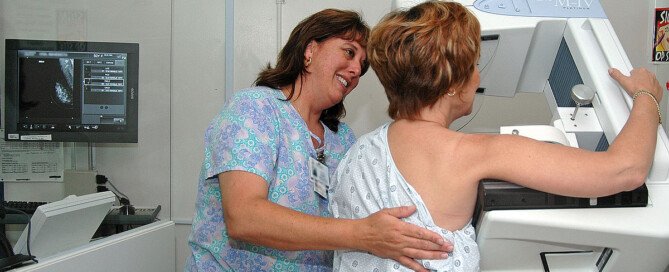
Tomosynthesis vs. Regular Mammogram for Dense Breasts
Is the 3D (tomosynthesis) mammogram worth it for dense breasts vs. the 2D (regular) mammogram?
“3D mammography vs. 2D mammography showed increased cancer detection, clinically significant for women with scattered and heterogeneously dense breast tissue (cat II and III),” says Anjali Malik, MD, a board certified diagnostic radiologist with Washington Radiology in Washington, DC. She interprets mammograms, breast MRIs and ultrasounds, and performs biopsies.
“Digital mammography offers screening benefits over film mammography for women with dense breasts,” adds Dr. Malik.
If your HMO doesn’t cover tomosynthesis, and you have dense breasts, you should still have it done at a separate facility that provides this procedure – even if you have to pay out of pocket.
3D vs. 2D: the ASTOUND Study
In a study of more than 3,000 women with dense breasts for whom regular (2D) mammograms did not show cancer, the addition of 3D mammograms (or ultrasound) detected 24 extra cancers.
This report appears in the March 2016 Journal of Clinical Oncology.
Dense breast tissue appears white on a mammogram. But so do tumors.
This makes it more challenging for a radiologist to spot a tumor.
If breasts are mostly fatty, the image has a lot of black in it.
A white patch (that’s actually a tumor) will stand out much more.
However, the issue isn’t just about how keen a radiologist’s eye is for “catching something.”
The high concentration of fibrous and glandular tissue, that creates the density, actually raises the risk of breast cancer – though just why this is has not yet been determined.
One theory is that the more of this tissue there is, the more cells there are to start growing awry in the first place.
ASTOUND stands for Adjunct Screening with Tomosynthesis or Ultrasound in Mammography-negative Dense breasts.
Researchers had asymptomatic women with dense breasts (C and D) undergo a regular mammogram and then the tomosynthesis or ultrasound in the same visit.
It’s scary: Twenty-four women who thought their 2D mammogram cleared them of breast cancer were informed that the tomosynthesis or ultrasound detected a possible malignancy.
Twelve cases were by tomosynthesis and ultrasound; one by only tomo; and 11 by only ultrasound.
This translates to four additional cancerous tumors per 1,000 women being detected by tomosynthesis (and an extra seven BCs picked up by ultrasound per 1,000).
More research is warranted, but ASTOUND is indeed the first prospective trial that compares additional screening for dense breasts.
Ongoing Research with 3D Mammograms
“The Tomosynthesis Mammographic Imaging Screening Trial (TMIST or study EA1151) is a randomized breast cancer screening study,” says Dr. Malik.
“The ECOG-ACRIN Cancer Research Group opened the trial on July 6, 2017, and is currently enrolling [as of November 2022].
“TMIST aims to help move towards a more personalized approach that tailors mammography for each woman based on her own genetics and individual risk factors for developing breast cancer.”
Update on the Study
TMIST has completed patient enrollment. The primary results are expected to be published as early as 2027.
 Dr. Malik is a frequent public speaker and advocate for breast health awareness. She has lectured on the latest advances in breast cancer screening including 3D Mammography™. Follow her on Instagram: @AnjaliMalikMD
Lorra Garrick has been covering medical, fitness and cybersecurity topics for many years, having written thousands of articles for print magazines and websites, including as a ghostwriter. She’s also a former ACE-certified personal trainer.
.
Top image: Bill Branson/Cancer.gov
.
Sources
N Engl J Med. 27;353(17):1773-83, 2005
jamanetwork.com/journals/jama/fullarticle/2516698
ncbi.nlm.nih.gov/pmc/articles/PMC5883365/
ajronline.org/doi/full/10.2214/AJR.14.13554
sciencedaily.com/releases/2016/03/160309101058.htm

Best Exercises for Prehab Before Major Surgery





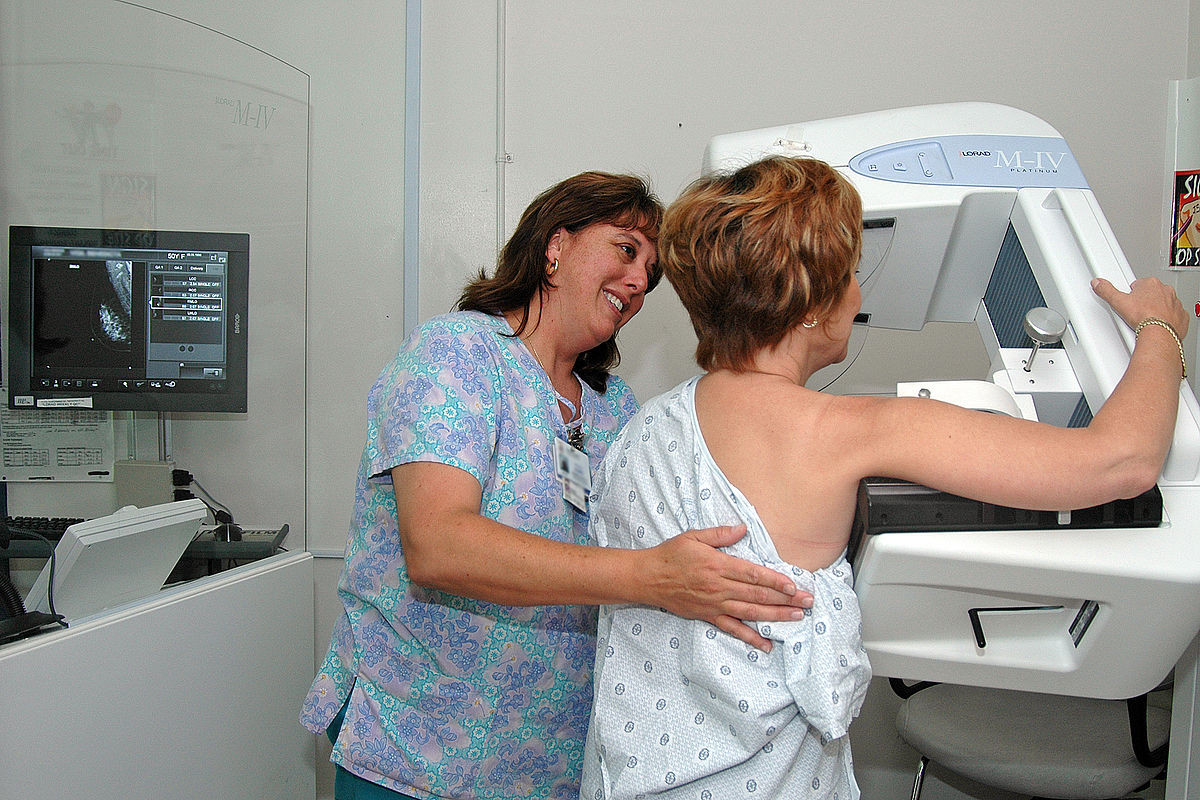

There are certain exercises and a certain WAY to work out that will give you the best prehab for your body to prepare for major surgery.
So let’s look at it this way:
Even the most devoted gym rat could end up under the knife due to an unexpected diagnosis or accident.
How well can intense strength training and vigorous cardio exercise prepare the body for the trauma of surgery?
It’s common sense to know that the more physically fit a person is, prior to undergoing invasive surgery, the less likely there will be serious complications.
“Yes, a hard workout is a stressful event that can help a person’s body cope with future stress,” says Carolyn Dean, MD, ND; Medical Advisory Board Member of the non-profit Nutritional Magnesium Association.
Dr. Dean, a medical doctor and naturopath, adds that “many people who undergo surgery, for the most part, are already ill and will not be able to engage in heavy exercise.
“Also, one-half to one-quarter of surgeries are emergency procedures and not elective.”
Hmmm, that raises a riveting question:
Why would a person who slams their body at the gym on a regular basis need invasive surgery in the first place?
Well, even the most physically fit trainee could end up on the operating table due to a vehicular or sporting accident or bullet wound.
Secondly, though strenuous exercise goes a very long way at lowering the risk of disease, there’s no 100 percent guarantee of prevention.
Surprise diagnoses do happen, but all of that exercise is never in vain.
For example, the mountain runner who lifts weights, but mysteriously develops colon cancer, is more likely to breeze through the surgery, than if this individual were a couch potato.
Every time you work out, your body gets damaged and traumatized.
What happens post-workout? The repair process kicks in. This happens optimally when you get adequate nourishment, sleep and rest in between workouts.
Over time, your body becomes proficient at recovering from trauma. It gets lots of practice at recouping and replenishing from the injury and stress incurred by hardcore workouts.
So if you ever undergo major surgery, your body will “think” it’s another gym workout!
Your body already has an idea of what to do following this trauma, thanks to all your gym sessions; your body will go to work at healing.
The stress of surgery and the stress of hard exercise involve the same physiological systems in the body.
The trained body, following surgery, is less likely to respond with complications such as a blood clot, cardiac arrest, stroke or renal failure, among others.
The untrained body, however, doesn’t know what to make of the trauma from surgery. It’s at a loss. It has no concept of repair and recovery mode. It panics.
This is the patient who, despite a highly skilled surgical and post-op team, suffers some kind of major setback or complication, and/or the road to full recovery is long and bumpy.
If you’ve been struggling to adhere to a workout regimen, perhaps reminding yourself that you’re preparing for a possible invasive surgery one day will jumpstart your motivation. The preparation is sometimes referred to as prehab.
A prehab mindset is key. You may think you’ll never need major surgery, but remember, unexpected medical conditions can strike people who consistently train hard, and serious accidents do happen to the fittest.
Dr. Dean points out a very overlooked element in all of this: Working out causes mineral loss, especially magnesium.
“So, if this is not addressed before surgery, you can actually have a worse outcome because the heart absolutely needs to be saturated with magnesium when it’s under the massive stress of surgery,” she explains.
“Add to that the drain on magnesium by the drugs used in surgery. I recommend my patients take magnesium every day and increase their magnesium intake with magnesium citrate powder before any stressful event.”
WOMBATS for Prehab
This is an acronym devised by Dr. Raymond Rocco Monto, an orthopedic surgeon from Nantucket Cottage Hospital, MA.
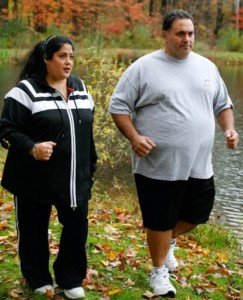
Weight. “One of the most critical things you can do before surgery (if your BMI is 30 or over) is to get your weight down as much as possible,” says Dr. Monto.
“This helps with diminishing stress on your heart, lungs, muscles and joints. Can’t run or do heavy exercise? No problem, watch your diet and add walking or stationary bike use 20 minutes a day in the three weeks prior to surgery.”
Rudd Center
Surgical preparation via exercise need not be only aerobic. If you’re facing knee replacement surgery, for example, you can really crank up your body’s resilience to physical stress by lifting weights while lying and seated: chest and shoulder presses, and pulling movements for the back and arms.
An 8-12 rep max of these compound resistance exercises, with one minute between sets, will help shave off excess body fat while improving the body’s durability.
Outlook. “Prepare yourself mentally for your surgery by visualizing your surgery and recovery,” says Dr. Monto.
Medication. Make sure your surgeon knows of all your medications and also non-pharmaceutical supplements.
Bad habits. In the weeks leading up to surgery, cut out vices like drinking, smoking and recreational drugs. “They can wreak havoc with your liver and kidneys trying to process and eliminate all the anesthetic drugs you will receive at surgery.”
Timing. “Don’t schedule your elective surgery unless you have sufficient time blocked out in your busy life to devout your full effort and focus on recovering.”
Strength. Dr. Monto says, “This is the most important issue. Surgery is very stressful on your body. Getting as strong as you can before your surgery will make your recovery easier and faster.”
The best time to get as strong as possible is before you even need surgery.
Think “prehab” to kick up your motivation.
Best exercises include the deadlift, squat, bench press, overhead press, bent-over dumbbell row, chin-up, sled work, tire flip, hill dash, parking lot sprints (or any HIIT mode) and hybrid movements such as the squat-to-overhead press.
 Dr. Monto’s expertise is in sports medicine, and reconstructive surgery of the knees and shoulders.

Dr. Dean, in practice for 35+ years and author of “The Magnesium Miracle,” is also a naturopath, nutritionist, herbalist, acupuncturist, lecturer and consultant.
Lorra Garrick has been covering medical, fitness and cybersecurity topics for many years, having written thousands of articles for print magazines and websites, including as a ghostwriter. She’s also a former ACE-certified personal trainer.
.