Chest Pain with a Cough: 3 Most Likely Causes
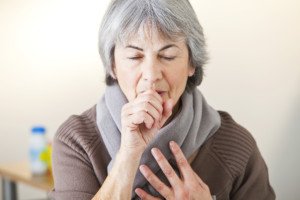
The three most likely causes of chest pain with cause can kill you, and two within minutes of getting the symptoms.
The expert source for this article about the causes of chest pain that is accompanied by a cough is John A. Elefteriades, MD, William W.L. Glenn Professor of Surgery, and Director, Aortic Institute at Yale-New Haven, New Haven, CT.
There are three dangerous conditions that can cause chest pain WITH a cough.
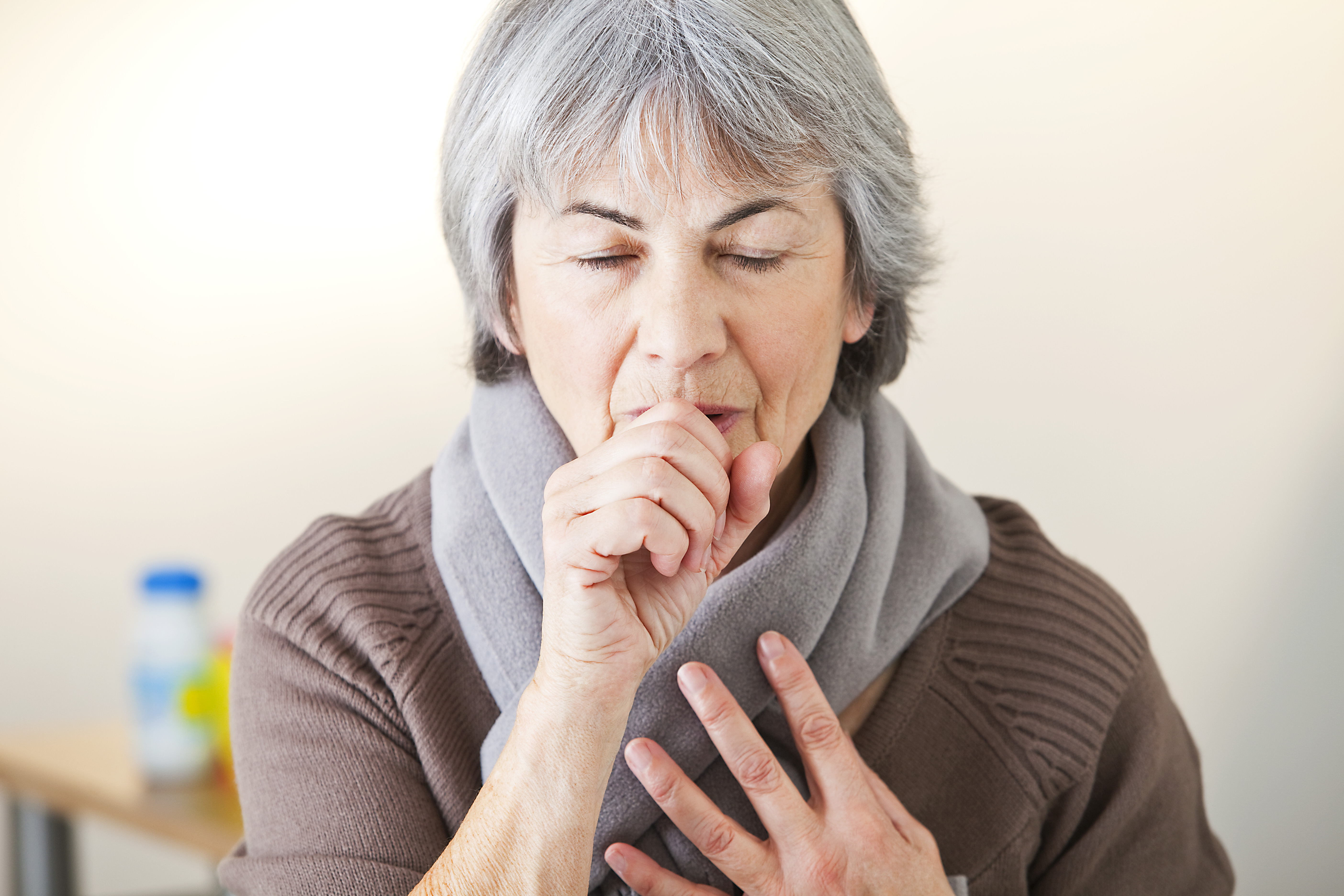
If you suddenly develop a cough along with pain in your chest, this probably means one of three life-threatening conditions.
Dr. Elefteriades says, “Cough and chest pain are probably most commonly caused by pneumonia, pulmonary embolism or heart attack.”
Pneumonia
Now, when you first develop signs of pneumonia, your life is not in immediate danger, but you will need to seek medical treatment.
Untreated, pneumonia can be fatal.
A heart attack speaks for itself.
This event can cause chest pain, of course, but also a cough (along with pain in the jaw, neck, arm, shoulder or back, sweating, nausea, vomiting and/or shortness of breath). Get to the ER as soon as possible for evaluation).
Pulmonary Embolism
This has striking risk factors that don’t just occur out of the blue.
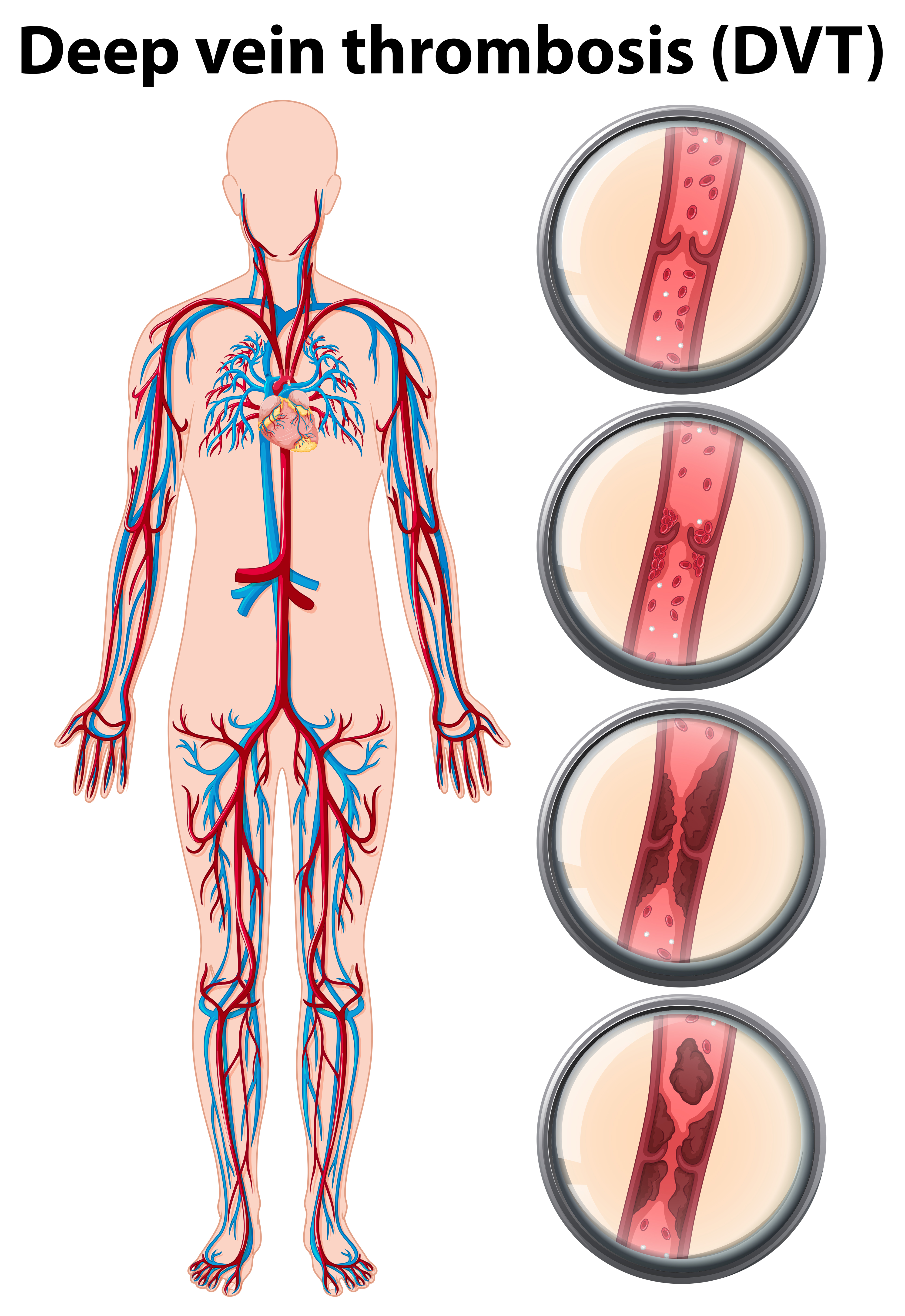
A pulmonary embolism is a blood clot in the lung, that originates from what is called a deep vein thrombosis.
A DVT usually develops in the lower extremities, but a DVT can also occur in the upper extremities.
Risk factors for a DVT/pulmonary embolism include prolonged periods of bed rest, sitting still on long airline flights or car rides, surgery, dehydration, elderly age, smoking and excess body fat.
However, no adult is immune to a DVT/PE.
Tennis champion Serena Williams, even, was treated for a pulmonary embolism (her biggest risk factors are believed to have been prolonged bed rest and a long airline flight following foot surgery).
The coughing that results from a pulmonary embolism typically comes with blood and sputum.
Other signs of a pulmonary embolism include clammy or blue-tinged skin, excessive sweating, unilateral leg swelling, lightheadedness, fainting and rapid/weak heartbeat.
Another Possible Cause of Chest Pain with a Cough
Dr. Elefteriades says “Aneurysm can cause these symptoms, but this is lower on the diagnostic list.”
In the ER, the first things that a doctor will check for is the possibility you had, or are having, a heart attack or pulmonary embolism.
The imaging involved in checking for these will reveal an aneurysm if this is the cause—and it would be a thoracic aortic aneurysm—an abnormally enlarged portion of the aorta, the body’s largest blood vessel.
Chest pain with a cough can also be caused by esophageal cancer.
Formerly the chief of cardiothoracic surgery at Yale University and Yale New-Haven Hospital, Dr. Elefteriades is working on identifying the genetic mutations responsible for thoracic aortic aneurysms. He is the author of over 400 scientific publications on a wide range of cardiac and thoracic topics.
 Lorra Garrick is a former personal trainer certified by the American Council on Exercise. At Bally Total Fitness she trained clients of all ages for fat loss, muscle building, fitness and improved health.
Source: mayoclinic.com/health/esophageal-cancer/DS00500/DSECTION=symptoms

Causes of Chest & Back Pain with Hoarse Voice

Chest and back pain along with a hoarse voice can be caused by one of two life-threatening medical conditions.
The expert source for this article about the causes of a hoarse voice with chest and back pain is John A. Elefteriades, MD, William W.L. Glenn Professor of Surgery, and Director, Aortic Institute at Yale-New Haven, New Haven, CT.
Waste no time seeing a cardiologist if you have all three:
Chest pain
Back pain
And a hoarse voice.
They may very well be all connected, though not necessarily.
“Hoarse voice usually arises from vocal problems, either infection, overuse, or polyps or tumors,” says Dr. Elefteriades.
So if a hoarse voice is being caused by an infection or polyp, for example, and you also have chest and back pain that has seemingly coincided with the hoarse voice…then there’s at least two underlying causes, since a polyp or an infection of the vocal cords will not cause chest or back pain.
However, Dr. Elefteriades continues: “In some cases, hoarseness may be due to an aneurysm in the aortic arch or the descending aorta.”
The aorta is the body’s largest blood vessel, originating in the heart and supplying the body with blood.
An aneurysm is an abnormally enlarged or dilated section of a blood vessel.
The bigger an aneurysm gets, the higher the risk of it tearing, dissecting or bursting.
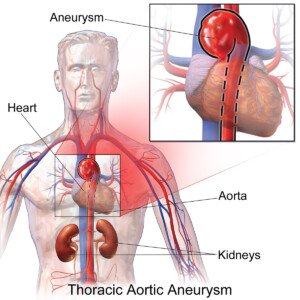
Source: BruceBlaus/CreativeCommons
A person can be dead within minutes from the massive internal bleeding that results.
“The recurrent laryngeal nerve runs right over the site where the aortic arch joins the descending aorta,” says Dr. Elefteriades.
“So, if there is severe aneurysmal dilatation of the aorta, the recurrent laryngeal nerve can be stretched — to the point where it stops working.
“When it stops working, the vocal cord on that side becomes immobile, leading to severe hoarseness.
“The accompanying aneurysm can produce chest or back pain from pressure on the chest wall by its very size.”
If a doctor suspects that this is what’s going on, he will order an image of the aorta, likely using MRI technology.
An aortic aneurysm that causes symptoms is one of the criteria for surgical repair.
Formerly the chief of cardiothoracic surgery at Yale University and Yale New-Haven Hospital, Dr. Elefteriades is working on identifying the genetic mutations responsible for thoracic aortic aneurysms. He is the author of over 400 scientific publications on a wide range of cardiac and thoracic topics.
Lorra Garrick is a former personal trainer certified by the American Council on Exercise. At Bally Total Fitness she trained clients of all ages for fat loss, muscle building, fitness and improved health.
.
Top image: Shutterstock/nednapa

Chest Tenderness: What Are the Likely Causes?

A heart surgeon addresses the likely causes of chest tenderness.
“Chest tenderness is not a typical presenting scenario,” says John A. Elefteriades, MD, William W.L. Glenn Professor of Surgery, and Director, Aortic Institute at Yale-New Haven, New Haven, CT.
“Chest tenderness is uncommon.”
Usually, when something is going on in this area of the body, it’s in the form of pain, pressure or tightness.
Dr. Elefteriades says that tenderness in the chest “can be seen after traumatic injury, from rib fractures or from something called costochondritis.”
This last cause is “inflammation (irritation) of the costal cartilages—the soft bone attachments that connect the ribs to the breastbone,” continues Dr. Elefteriades.
Costochondritis can also cause a considerable degree of pain, though it is a benign condition and not at all related to the heart.
Many bodybuilders or those who work out hard with weights are quite familiar with the chest tenderness or sometimes considerable pain that comes with “costo.”
Additional Cause of Tender Chest: Car Seatbelt
Yes, the seatbelt. The belt may be pressed too much against a person’s chest, and at the time this is happening, there may not even be any discomfort.
But a few hours later, or even the next day, one may begin noticing a subtle sensation in the area where the seatbelt crossed over — like a tenderness, not a pain.
One may not make the connection to the seatbelt, either.
But if you DO make this connection…don’t stop wearing your seatbelt!
Tender Chest from Getting Struck There
Finally, another possible cause of soreness in the chest area is getting struck there during sport, such as a martial arts sparring match or getting hit there by martial arts kicks during tournament.
This can cause bruising, though the bruising may be barely visible.
However, pressing the fingers into the chest area will bring out the feeling of tenderness.
Formerly the chief of cardiothoracic surgery at Yale University and Yale New-Haven Hospital, Dr. Elefteriades is working on identifying the genetic mutations responsible for thoracic aortic aneurysms. He is the author of over 400 scientific publications on a wide range of cardiac and thoracic topics.
Lorra Garrick is a former personal trainer certified by the American Council on Exercise. At Bally Total Fitness she trained clients of all ages for fat loss, muscle building, fitness and improved health.
.
Top image: ©Lorra Garrick
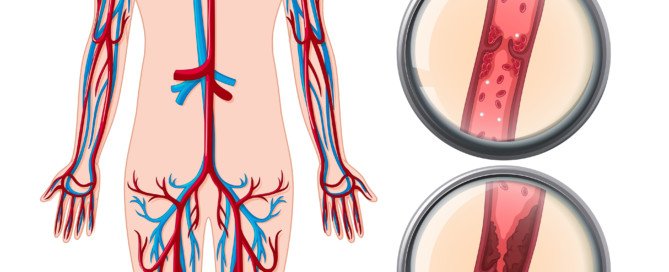
Can Aspirin Prevent a DVT in an Immobile Patient?
A woman dies at home from a pulmonary embolism after lying on the floor of her house for four days following arm surgery, having not recovered from the general anesthesia.
A DVT developed during immobility.
The woman developed a pulmonary embolism (which begins as a deep vein thrombosis or “DVT”) at some point while lying immobile for four days on her bathroom floor, after her husband placed her there because it was too difficult for him to drag her from the bed to the toilet.
The hospital had discharged her the day after arm surgery even though she was still in an anesthesia-induced stupor and could not converse, ambulate, eat or drink even water.
Could Aspirin Have Helped?
I asked an expert in the field if aspirin could have helped prevent a deep vein thrombosis (even though, since this woman was not able to hold down water, I wondered how her husband would have gotten aspirin inside her).
“There is no data, as far as I know, that aspirin can prevent or treat DVT in a post-op non-ambulatory patient,” says Seyed-Mojtaba Gashti, MD, a board certified vascular surgeon with Broward Health Medical Center in Florida.
I also wondered why the discharge instructions didn’t include giving this patient a more potent blood thinner, since the nurse knew that the patient was inert upon discharge.
Dr. Gashti, says, “Anticoagulation with coumadin and/or Lovenox (heparin) can be effective; but again I am not clear at all why this patient went home in the condition she was in.”
This story is the subject of a medical malpractice case, for which I had proofread one of its discovery deposition transcripts, and it’s a mystery to me as well, why a patient who’s not fully recovered from general anesthesia gets discharged.
There was obviously an adverse reaction to the general anesthesia, but she was sent home as though there were nothing wrong.
Well, there most certainly was. She lie immobile on the floor for four days; four days later she was dead from a pulmonary embolism, which begins as a DVT.
The DVT likely developed in her leg, but Dr. Gashti says, “You should also realize that we can also develop DVT in upper extremities as well which can then embolize.”
Upper extremity DVT involves blood clots that form in the veins of the arms, shoulders or neck.
Symptoms often include swelling in the affected arm or hand, pain or tenderness, and visible redness or warmth in the area.
Distension or protrusion of veins near the surface of the skin may also occur, making the condition noticeable.
Several factors can contribute to the development of upper extremity DVTs.
Prolonged immobility, trauma or injury to the arm or shoulder, and certain medical conditions that increase blood clotting, are common causes.
The presence of central venous catheters used for medical treatments can also elevate the risk.
Dr. Gashti specializes in the diagnosis and treatment of vascular disease including abdominal and aortic aneurysm. He received his medical degree from University of New England College of Osteopathic Medicine and has been in practice for more than 20 years.
 Lorra Garrick has been covering medical, fitness and cybersecurity topics for many years, having written thousands of articles for print magazines and websites, including as a ghostwriter. She’s also a former ACE-certified personal trainer.
.
Top image: ©Lorra Garrick

Sudden Racing Heart: Causes Other than Anxiety
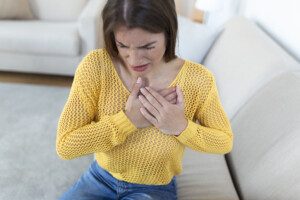
A cardiologist explains what can cause your heart to suddenly race.
We all know that anxiety or fear can cause your heart to suddenly race, but what’s behind this in the absence of any fear, anxiety, stress or anger?
What if your heart suddenly begins racing while you’re relaxing in the bathtub listening to soothing music?
Sudden Racing Heart
“If it is of sudden onset, and not associated with stress or severe anxiety, it may be an abnormal heart rhythm,” says Robert M. Davidson, MD, a cardiologist with SignatureMD.
“The most common type, especially in younger, healthy people, is called SVT (supraventricular tachycardia),” continues Dr. Davidson.
“In older people, or people with heart disease, it may be atrial fibrillation, which is similar, but irregular (the SVT is regular). SVT is usually at a rate of 130-180 beats per minute, and starts and stops suddenly.
“Atrial fibrillation (AF) typically is at a rate of anywhere from 100-150, but can be faster.
“However, the most common cause of a rapid heart beat is just a speeding up of the normal heart rhythm (sinus tachycardia), and usually is more gradual in onset and offset.
“In order to differentiate between these, a doctor might suggest a portable monitoring device, such as a Holter monitor.”
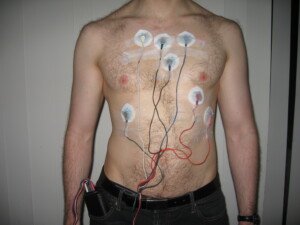
Holter monitor. Jason7825 at en.wikipedia
My mother wore a Holter monitor for 24 hours, but not because she had a sudden racing heart, but instead, to test for AF at some point following bypass surgery.
It’s a small device that’s easily hidden under one’s clothes, and involves several leads (the sticky things that a nurse places on your chest to get a heart rhythm reading).
The device detects abnormal rhythms and documents the time they occur.
My mother simply removed the device after the 24 hours and deposited it at the medical clinic, where her cardiologist later interpreted it.
Dr. Davidson is with the Division of Cardiology at Cedars-Sinai Medical Center, Los Angeles, and has been practicing for 35+ years. Areas of specialty include coronary artery disease, heart attack and palpitations.
Lorra Garrick has been covering medical, fitness and cybersecurity topics for many years, having written thousands of articles for print magazines and websites, including as a ghostwriter. She’s also a former ACE-certified personal trainer.
.
Top image: Freepik/stefamerpik
Chest Tightness but No Trouble Breathing: Should You Worry?

A cardiologist addresses the issue of whether or not chest tightness, but no shortness of breath, should be worrisome.
Have you been experiencing tightness in your chest, but no problem breathing, no shortness of breath — and as a result, you’ve been trying to reassure yourself that there can’t be a problem with your heart?
As long as you can breathe just fine, you figure that your heart is okay?
Think again.
Robert M. Davidson, MD, says that “absolutely!” you SHOULD be concerned if you have any tightness in your chest, regardless of whether you can breathe just fine or have difficulty breathing.
Tightness in the chest is a concerning issue, “especially if it is associated with exertion or stress,” says Dr. Davidson, a cardiologist with SignatureMD.
“Exertional chest pressure is called angina pectoris.
“It is the most common symptom of coronary artery disease, and may be associated with shortness of breath, but not necessarily.”
If you have exertional chest pressure or tightness, but don’t seem to have any unusual difficulty in breathing that seems out of proportion for the amount of exertion, it’s crucial that you have a thorough examination with a cardiologist.
If you have coronary heart disease, the treatment may be only medication and a recommendation of a healthier diet, plus exercise and other healthy habits such as ditching the cigarettes.
Depending on test results, you may also need more pronounced intervention such as the placement of a stent in a narrowed coronary artery.
A stent is a small, mesh-like tube. During a stent placement, a catheter with a balloon is inserted into the narrowed artery.
The balloon is inflated to open up the vessel, and the stent is then permanently placed in the artery to keep it open.
Chest tightness is not normal. Get it checked out by a cardiologist.
WARNING
There is NO way a cardiologist can rule out severe coronary heart disease based on ONLY the following:
A normal stethoscope exam
A normal blood pressure reading
A normal pulse rate
A questionnaire about lifestyle habits in which the patient says they’re active and have a healthy diet.
The fact that the patient does not smoke.
Absence of diagnosed heart disease in family members
An EKG (electrocardiogram)
This is what happened to my mother!
Ten months later, as a result of worrisome symptoms, a few abnormal test results and a catheter angiogram that revealed severe coronary blockages, she had emergency quintuple bypass surgery plus mitral valve replacement and a pacemaker implant!
Dr. Davidson is with the Division of Cardiology at Cedars-Sinai Medical Center, Los Angeles, and has been practicing for 35+ years. Areas of specialty include coronary artery disease, heart attack and palpitations.
Lorra Garrick has been covering medical, fitness and cybersecurity topics for many years, having written thousands of articles for print magazines and websites, including as a ghostwriter. She’s also a former ACE-certified personal trainer.
.
Top image: ©Lorra Garrick
What Causes a Fast Heartbeat After Eating?
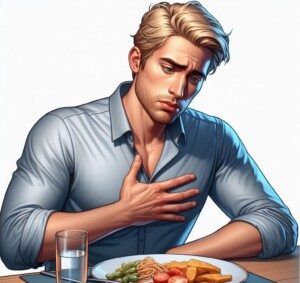
A cardiologist explains why eating can cause your heart to beat fast.
Ever experience a fast heartbeat soon after eating?
There is a specific reason for this.
Fast Heart Rate After Eating
“This is normal, assuming it is not overly fast or occurring with exertion right after eating,” says Robert M. Davidson, MD, a cardiologist with SignatureMD.
“The blood volume is shifted to the intestine after eating, and can result in a faster heartbeat, especially if you are somewhat dehydrated.
“However, it should normally be only slightly faster than normal. If it is a great deal faster, it might be due to an abnormal heart rhythm.”
Eating raises the body’s energy demands. Your metabolism is actually faster after you’ve eaten.
This doesn’t mean that if you want to lose weight, you should eat a lot to speed up your metabolism.
But anything that increases the body’s energy demands is, not surprisingly, going to speed up the heart rate.
The body must work to process incoming food. This is why you should not eat a full meal before exercising, because the body’s energy will be focused on metabolizing what you just ate.
The best time to eat a full meal is AFTER intense exercise, when the metabolism is accelerated.
Next time you find that your heart rate is fast after eating — but not abnormally fast — consider this a normal reaction to eating.
Dr. Davidson is with the Division of Cardiology at Cedars-Sinai Medical Center, Los Angeles, and has been practicing for 35+ years. Areas of specialty include coronary artery disease, heart attack and palpitations.
Lorra Garrick has been covering medical, fitness and cybersecurity topics for many years, having written thousands of articles for print magazines and websites, including as a ghostwriter. She’s also a former ACE-certified personal trainer.
.
Top image: ©Lorra Garrick
Heart Rate Over 100 a Few Hours After Intense Exercise Normal?
Sudden Fast Heartbeat when Turning to the Side in Bed: Causes
Heart Doctor Explains How Stress Causes Chest Pain
Do you keep suffering from chest pain and trying to convince yourself it’s from stress and anxiety rather than a looming heart attack?
Chest pain is frightening, because one of the causes is a heart attack or pending heart attack, yet a common cause of chest pain is also anxiety and stress, or panic attacks.
First of all, let’s be clear: This article is not about angina. Angina involves heart disease, and typically, stress and anxiety will cause or aggravate chest pain in a person who has angina.
But what about a person who does not have heart disease, or at least, has not been diagnosed with such?
Perhaps this individual’s calcium score is zero, which very likely means the absence of heart disease.
So what’s going on if they experience chest pain from anxiety or stress?
“Chest pains caused or aggrevated by stress should always be evaluated by a physician,” says Robert M. Davidson, MD, a cardiologist with SignatureMD.
This way, a pathological condition can be ruled out. In the healthy person, it is “generally not well-understood” just what the mechanism is behind chest pain resulting from anxiety or stress, says Dr. Davidson.
“Several possible and established mechanisms include coronary artery spasm (probably rare), esophageal spasm — more often associated with eating, or reflux; in some cases, due to an associated sudden increase in blood pressure, associated with stress; and sometimes in association with hyperventilation due to stress.
“If the pain is sharp (as opposed to heaviness or pressure), and/or is very brief (seconds or less), or is associated with tenderness in the area of pain, it is not likely to be heart related, and is probably not serious.”
Erratic, deep inhalations that occur in the midst of a heated, high charged argument can cause chest discomfort that’s related to forceful expansion of the ribcage from the combination of gulping in enough air to subsidize the exertion of high emotions, and the exertion of spewing out long strings of words in one breath to get your point across or dominate the other person’s speaking.
Dr. Davidson is with the Division of Cardiology at Cedars-Sinai Medical Center, Los Angeles, and has been practicing for 35+ years. Areas of specialty include coronary artery disease, heart attack and palpitations.
Lorra Garrick has been covering medical, fitness and cybersecurity topics for many years, having written thousands of articles for print magazines and websites, including as a ghostwriter. She’s also a former ACE-certified personal trainer.
Causes of Fluttering Heartbeat After Lying Down
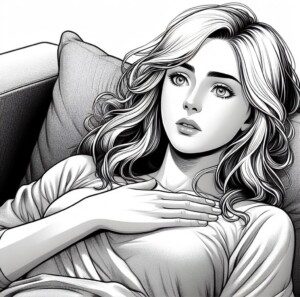
A cardiologist explains what can cause palpitations or the feeling of skipped heartbeats after you lie down.
So you get into bed and are ready for the night’s sleep, and only a few minutes later, your heart suddenly skips a beat or flutters.
You’ve noticed that usually when you feel a skipped beat or fluttering — palpitations — it’s very soon after settling into bed for sleep. Why is this?
The cause of a fluttering or seemingly skipping heartbeat, soon after getting into bed, is anxiety and stress.
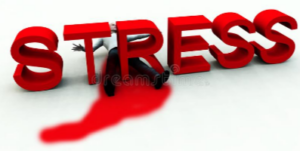
Image: Dreamstime Chrisharvey
After all, the minute your head hits the pillow, you may become inundated with the stress of all the things you have to do the next day.
“Yes, this is usually the cause,” says Robert M. Davidson, MD, a cardiologist with SignatureMD.
“Also, it is easier to feel your heartbeat when lying down and it is quiet, especially if you are lying on your left side.”
Now that we know it’s usually stress and anxiety, fretting about the next day’s tasks, that causes palpitations or fluttering, just what is the mechanism behind this annoying phenomenon?
“It is due to an increase in both adrenaline, released from the adrenal glands at times of stress, which has a direct effect on the heart, and to an increase in involuntary nervous stimulation of the heart (the sympathetic nervous system), which also stimulates the heart,” says Dr. Davidson.
“Both of these stimulants are part of the normal adaptive response to stress, the fight or flight response, which causes the heart to beat faster and harder,” adds Dr. Davidson.
So here’s how it works:
You’re overwhelmed with anxiety and stress either about the next day’s tasks and/or what happened earlier that day.
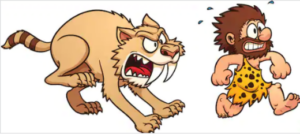
The body gears up for a fight or flight. Modern man’s fight or flight response is identical to that of primitive man’s, even though the source of stress and fear is different.
Modern man’s source of fear is how to pay for Junior’s braces, job troubles, car troubles, mounting debt, etc.
Caveman’s stress was chasing after animals to catch them to feed his family, or fleeing from animals wanting HIM for dinner.
Shutterstock/Memo Angeles
The body responds the same way to ancient and modern stressors, and this includes alterations in pulse.
“But in people who are subject to arrhythmias, these responses can cause extra heartbeats, and sometimes a more sustained arrhythmia, such as PSVT or even AF,” adds Dr. Davidson.
PSVT is paroxysmal supraventricular tachycardia, a sped-up heart rhythm caused by abnormal signaling to the heart chambers.
AF is atrial fibrillation, another rhythm disorder characterized by sudden accelerated heartbeat.
So, does this mean that the next time you lie down for sleep and your heartbeat flutters or skips, you probably have a rhythm disorder?
Dr. Davidson says, “In most cases, it is either due to a faster and stronger heartbeat, but not an abnormal rhythm, or to extra heartbeats, which may cause a sensation of skipping and/or pounding of the heart.”
If this problem plagues you most nights, try this:
Do one minute of your hardest exercise such as squat jumps, squat thrusts, burpees, jump lunges, pushups or sprinting on your treadmill.

Dreamstime.com/ Tomasz Borucki
And I mean DARN HARDEST for 60 seconds, so that at the end, you’re gulping air.
This one minute of strenuous exercise will trick the body into thinking you engaged in the “fight” part of the fight or flight response.
The body will then release hormones that will oppose the stress hormones that cause your heart to flutter in the first place!
This approach may calm down your heartbeat, once your rate returns to normal after the exertion.
Dr. Davidson is with the Division of Cardiology at Cedars-Sinai Medical Center, Los Angeles, and has been practicing for 35+ years. Areas of specialty include coronary artery disease, heart attack and palpitations.
Lorra Garrick has been covering medical, fitness and cybersecurity topics for many years, having written thousands of articles for print magazines and websites, including as a ghostwriter. She’s also a former ACE-certified personal trainer.
Top image: ©Lorra Garrick
Fast Heartbeat in a Resting Healthy Person: Cause

“The cause of a fast resting pulse rate when all else is normal can be the result of many different things.”
– Dr. Ali Tabrizchi, DO, interventional cardiologist, formerly with Cardiovascular Associates of Maryland.
You may think you’re healthy, but the cause of a fast resting pulse could mean a serious problem.
You should not wait to make an appointment with your doctor.
Dr. Tabrizchi names possible causes of a fast resting pulse:
1) Dehydration
2) An underlying infection
3) A fast thyroid
4) Anemia
5) Over-the-counter or prescribed medications
6) Anxiety
7) Underlying heart disease
8) Exacerbation of lung disease
9) A blood clot in the lung
10) An allergic response to food, perfume or a chemical
11) Metabolic abnormality
As you can see, some of these causes are benign. “Two of the best ways to find the causes of a fast resting pulse rate are by doing a detailed medical history of the patient and by performing a thorough physical examination,” says Dr. Tabrizchi.
“These provide the doctor with the information needed to begin treatment. Of course, treatment depends on what is causing the abnormal pulse rate in the first place.
“In addition physicians treating the physical and psychological conditions, social counseling, in some cases, could be of help.”
In the above list, #9 is the most immediately life-threatening. Another name for blood clot in the lung is a pulmonary embolus or embolism.
These come from blood clots or deep vein thromboses elsewhere in the body, usually the legs, when they dislodge and travel towards the heart (veins carry blood towards the heart).
And on the way, the clot settles in the lungs, and it can kill within minutes of lodging there.
This doesn’t mean that if you notice a fast resting heart rate, that you should panic that you might have a pulmonary embolism.
If you do have a PE, you’ll likely be struggling to breathe and may also have chest pain.
Another cause of a fast resting heart rate is overtraining in the gym — but the elevation is outside of gym time.
Many people report an elevated heart rate for several hours after strenuous exercise.
Overtraining is when there is a lot of intense exertion but inadequate rest over a period of time.
Typically, the athlete has persistent soreness, mood changes, insomnia and has stopped making progress as a result of overdoing their training regimen.
Dr. Tabrizchi says, “Again, I can’t emphasize enough to seek treatment right away, because a fast resting pulse can be an indication of something very serious.”
 Dr. Tabrizchi has performed over 30,000 procedures for diagnosis and treatment of heart disease. He has authored various published studies and has been named Top Doctor multiple times by Baltimore Magazine. Dr. Tabrizchi passed away in 2023.
Lorra Garrick has been covering medical, fitness and cybersecurity topics for many years, having written thousands of articles for print magazines and websites, including as a ghostwriter. She’s also a former ACE-certified personal trainer.
.