

Aortic Aneurysm: Are Heavy Bag Workouts Safe?

See what aortic repair surgeon, Dr. John Elefteriades, has to say about heavy bag workouts and aneurysms.
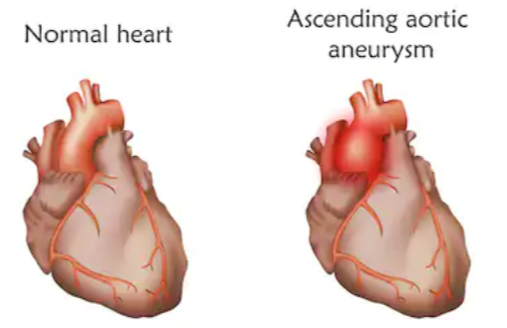
When a person is diagnosed with an aortic aneurysm, he or she is warned to avoid exercise of a heavy or straining nature, because this will cause a significant rise in blood pressure—which can increase the odds of an aortic dissection.
But where do heavy bag workouts fit in?
Patients with aortic aneurysm are encouraged to do cardio exercise, but there is very little data on just what the limitations for aerobic activity should be.
Are heavy bag workouts safe (for people with an aortic aneurysm)?
“Not for patients with thoracic aortic aneurysm,” says John A. Elefteriades, MD, William W.L. Glenn Professor of Surgery, and Director, Aortic Institute at Yale-New Haven, New Haven, CT.
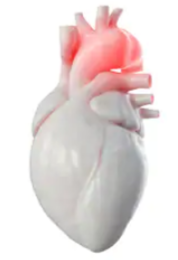
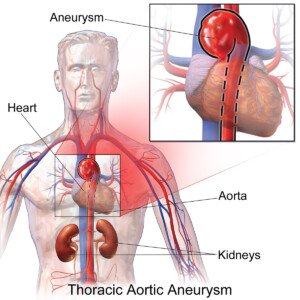
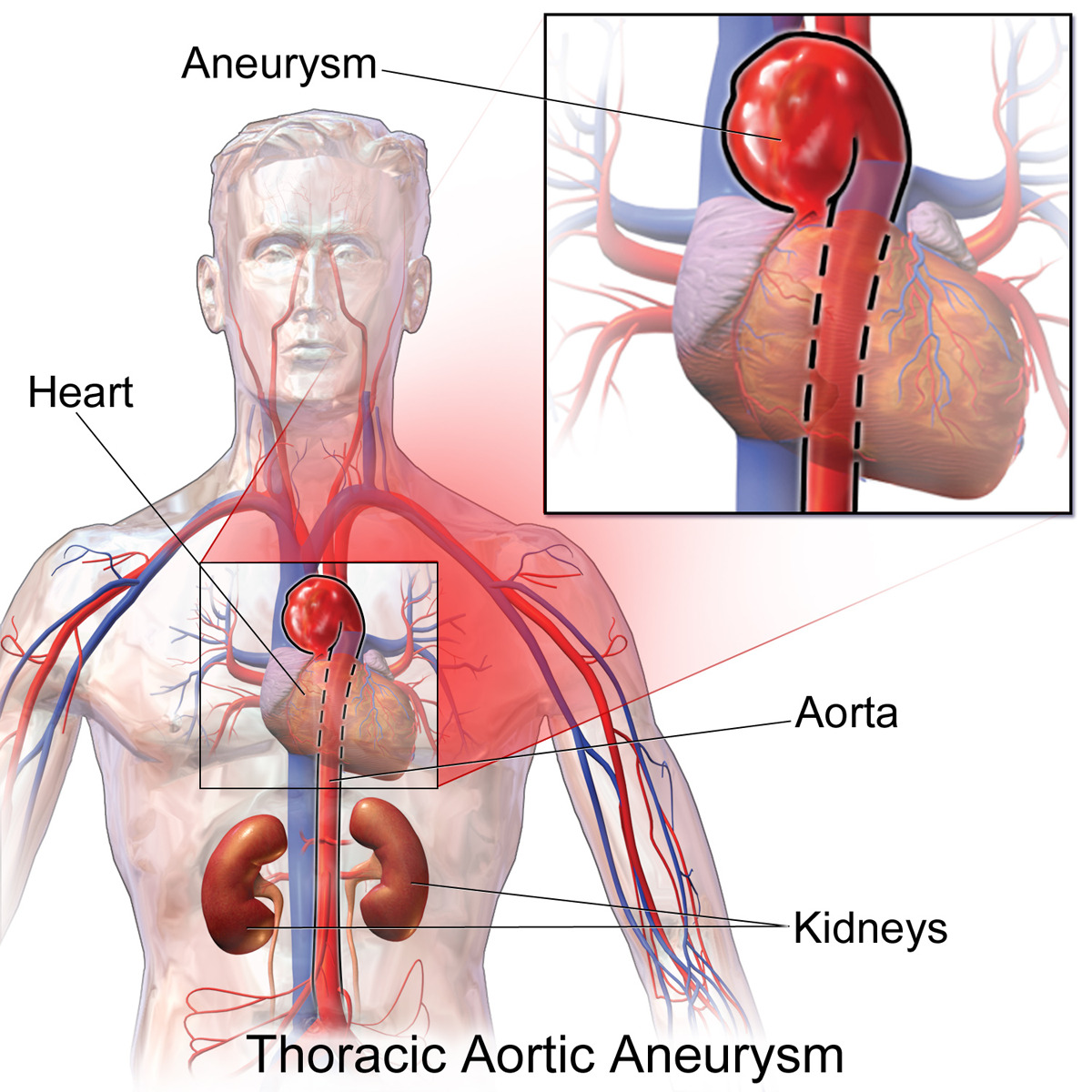
Thoracic aortic aneurysm. Shutterstock/Sebastian Kaulitzki
I was surprised at this answer because a heavy bag workout does not involve any lifting at all; one simply throws punching and kicking techniques at a heavy bag.
The increase in blood pressure, during cardio activity, is typically modest.
Some patients do have a hypertensive response to cardio (this can be determined with special testing), but my question applied to athletes in general who learn they have an aortic aneurysm, yet would like to kick and punch at a heavy bag.
Dr. Elefteriades elaborated: “I have a heavy bag myself. My concern stems from the fact that the impact has to be born by the body as a whole, and the torso, in some way.
“I am being cautious in my recommendation. I do not know any direct way to test this exercise, in terms of its immediate and momentary potential to raise blood pressure to dangerous levels.”
There are blood pressure monitors on the market that a person can wear on the arm or wrist that will record blood pressure during exercise.
But these will not be as accurate as a blood pressure test given in a formal, medical setting with more sophisticated equipment.
Perhaps what a person, with an aortic aneurysm, can do, is par back on fierce striking of the heavy bag.

Shutterstock/Oscar Carrascosa Martinez
Rather than focus, for example, on 10 all-out, as-hard-as-possible uppercuts, the athlete can go for duration more than speed and power—doing moderate-intensity uppercuts or crosses for several minutes. The same principle can be applied to kicking.
Though abdominal and descending aortic aneurysms are associated with older age, younger or middle-aged adults are more likely to be diagnosed with an ascending aortic aneurysm.
Because the vast majority of aortic aneurysms do not produce symptoms, many people do not know they have these, and usually, they are discovered by accident via imaging for an unrelated concern.
Thus, the prevalence of non-symptomatic aortic aneurysm is not known.
If patients wish to work out with a heavy bag, they should first consult with their cardiologist.

Formerly the chief of cardiothoracic surgery at Yale University and Yale New-Haven Hospital, Dr. Elefteriades is working on identifying the genetic mutations responsible for thoracic aortic aneurysms. He is the author of over 400 scientific publications on a wide range of cardiac and thoracic topics.
 Lorra Garrick is a former personal trainer certified by the American Council on Exercise. At Bally Total Fitness she trained clients of all ages for fat loss, muscle building, fitness and improved health.
.
Top image: Shutterstock/Monkey Business Images

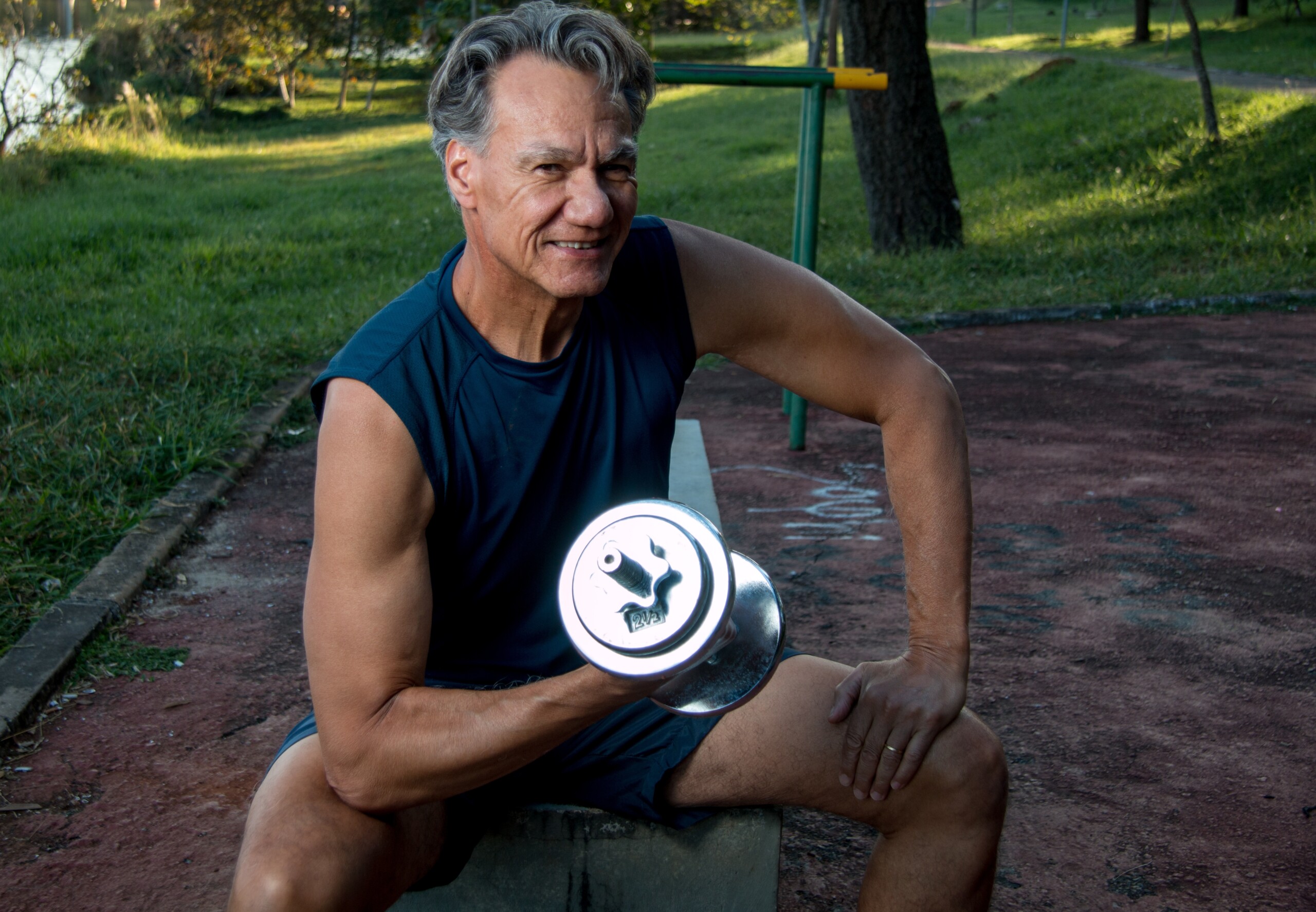
Biceps Curl Safety Guidelines for Aortic Aneurysm
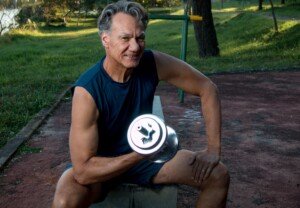
Here are guidelines for safely doing biceps curls if you have a thoracic aortic aneurysm: guidelines straight from an aortic repair surgeon.
If you’ve been diagnosed with a thoracic aortic aneurysm and have been lifting weights for years, enjoying a buff physique, does this now mean you’ll lose that physique?
Well, if you’re in training for a bodybuilding competition, you’ll have to give up your dreams. But that doesn’t mean you’ll regress to flab.
For this article my expert source is John A. Elefteriades, MD, a weightlifter himself, and William W.L. Glenn Professor of Surgery, and Director, Aortic Institute at Yale-New Haven, New Haven, CT.

Shutterstock/BLACKDAY
Biceps Curls and Thoracic Aortic Aneurysm: Is There Hope?
I was reading an online aneurysm forum in which an older man, an avid weightlifter for years, had recently learned he had a thoracic aortic aneurysm.
He posted a message stating that he’d have to work on accepting the fact that he’d never have the biggest biceps in the retirement living community.
Here is what Dr. Elefteriades says: “Exercises on relatively small muscle groups—e.g., curls—do not easily produce as much strain and blood pressure rise as those involving large muscle groups—bench press, lat pull-downs, squats.”
This is great news for that older guy with the thoracic aortic aneurysm who thinks his biceps will shrink from ceasing weightlifting.
If you’ve been diagnosed with a thoracic aortic aneurysm, you can still train fairly hard—with isolation routines.
If you do enough biceps curls (and triceps push-downs and kickbacks with cables), you can get a pretty good pump and good muscle fiber recruitment—enough to stimulate growth.
You won’t get a body like Mr. America with only isolation routines like biceps curls, but you can still get some nice, symmetrical muscles, especially since there are so many variations of biceps curls.
Not only are there a ton of biceps curl variations, but intensity techniques can be applied even if you have a thoracic aortic aneurysm, because the biceps are such a small muscle group.
If you have a thoracic aortic aneurysm, you can safely do 21s with biceps curls.
This automatically requires a non-heavy weight, since 21 reps need to be completed.
Another safe intensity technique is the drop-set. Though the “pain” is significant when you force yourself to muscle failure with biceps curl drop-sets, the strain on the aorta isn’t sufficient enough to set off alarm bells.
You can build a round, hard biceps also with curls using tension bands.
Feel free to do biceps curls with a barbell, dumbbells, kettlebells and cables, preacher machines, spider curls, concentration curls, the whole nine yards — even if you have an aortic aneurysm.

Freepik.com, senivpetro
However, if you must break form to get the weight up, use a lighter weight. Form should always be solid, and this can be your guideline for keeping the workout as safe as possible.
If you have a thoracic aortic aneurysm, you can get very nice arms from lots of biceps curls, triceps work and even isolation shoulder work like lateral lifts, front raises and reverse flyes.
Just make sure you always exhale during the lifting phase and inhale on the release.
Formerly the chief of cardiothoracic surgery at Yale University and Yale New-Haven Hospital, Dr. Elefteriades is working on identifying the genetic mutations responsible for thoracic aortic aneurysms. He is the author of over 400 scientific publications on a wide range of cardiac and thoracic topics.
Lorra Garrick is a former personal trainer certified by the American Council on Exercise. At Bally Total Fitness she trained clients of all ages for fat loss, muscle building, fitness and improved health.
.
Top image: Shutterstock/Marcos Casiano
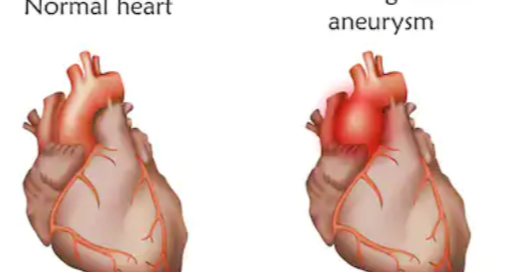
Do Thoracic Aortic Aneurysms Have a Genetic Cause?
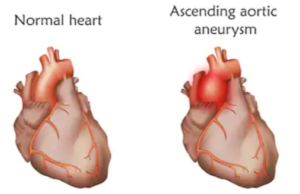
A thoracic aortic aneurysm is a bulge in this great blood vessel that can kill a person within minutes if it rips open.
A genetic basis for a thoracic aortic aneurysm has been the subject of research.
Research (Nature Genetics, Milewics et al) revealed an association between a common genetic variant and a possible predisposition to an acute aortic dissection (AAD).
The genetic variant’s presence may double one’s risk of developing AAD.
The vast majority of people who suffer an acute aortic dissection have a pre-existing aortic aneurysm, which typically grows over time but usually produces no symptoms.
Genetic Variant Discovered Linked to Thoracic Aortic Aneurysm
The genetic variant is on chromosome 15, discovered by researchers (Milewicz et al), and the study report was published in 2014.
The gene involved is called FBN1. It has already been established that mutations in FBN1 cause Marfan’s syndrome, which predisposes patients to aortic aneurysms and hence, AAD.
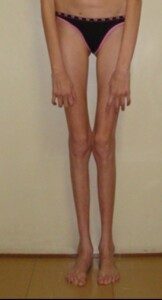
Marfan’s syndrome. The thinness in Marfan’s is not caused by an eating disorder. Mileny ES Colovati1, Luciana RJ da Silva1, Sylvia S Takeno1, Tatiane I Mancini1, Ana R N Dutra1,Roberta S Guilherme1, Cláudia B de Mello2, Maria I Melaragno1and Ana B A Perez1/Wikimedia Commons
“Although patients with aortic dissection in our study did not have Marfan syndrome, this study suggests that the same pathways are involved in causing aortic dissections in patients with and without Marfan syndrome,” says the 2011 paper.
“Genetic cause for aortic aneurysm have been known but poorly understood,” says Michael Fiocco, MD, Chief of Open Heart Surgery at Union Memorial Hospital in Baltimore, Maryland, one of the nation’s top 50 heart hospitals.
“There appears to be familial aneurysm disease, but the gene that is causing it has been elusive.
“The one that is known is the aneurysms associated with Marfan’s syndrome.
“That gene has been identified on chromosome 15 and is related to the entire syndrome (tall, slender, hyperflexible joints, aortic aneurysm/dissection propensity).
“The abdominal and cerebral aneurysms remain a work in progress to find the genes.
“Various studies have shown that if a first-degree relative has an abdominal aortic aneurysm, you are 2-4x more likely to have one than someone without that family history.”
Marfan’s syndrome can go undiagnosed because its symptoms are often subtle and vary in severity.
Mild signs, such as joint hypermobility or eye problems, may be overlooked or mistaken for other conditions.
The most serious complications, like cardiovascular issues involving the aorta, can remain unnoticed until later stages.
Extra tall and thin kids or teens with long limbs or hypermobile joints should be evaluated for Marfan’s syndrome, as these traits are common in the disorder.

Dr. Fiocco specializes in treating artery disease, valvular disease and aortic aneurysm. His heart care expertise has earned him recognition by Baltimore Magazine as a Top Doctor in 2010, 2011, 2013, 2016 and 2017.
 Lorra Garrick has been covering medical, fitness and cybersecurity topics for many years, having written thousands of articles for print magazines and websites, including as a ghostwriter. She’s also a former ACE-certified personal trainer.
Top image: Shutterstock/Veronika Zakharova
Source: sciencedaily.com/releases/2011/09/110911145257.htm
Stent Graft Repair of Aortic Aneurysm Eliminates Open Heart Surgery
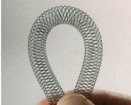
Stent graft repair of thoracic aortic aneurysms is becoming more and more commonplace, replacing the riskier open heart surgery.
Open chest surgery for treating a thoracic aortic aneurysm is highly invasive, can take up to eight hours, and months to recover from.
There can also be serious complications such as kidney injury.
So is there any way to treat aortic aneurysm without cutting open the chest?
Yes, there is. It is called the stent graft.
A stent graft can repair this serious condition, and patients usually go home after one or two days, versus the one to two weeks required for the open chest surgery.
- The stent graft is a polyester tube that is covered with metal webbing.
- The surgeon uses a catheter, or thin tube, to deliver the stent graft, via the patient’s groin in an artery.
- The catheter is guided into the chest artery: the thoracic aorta.
- At the predetermined location, the stent graft is deployed, and it expands to the arterial walls.
- The stent graft can range from 1-2 inches wide, to 4-8 inches long.
“Stent grafts have grown in popularity and have become quite sophisticated,” says Michael Fiocco, MD, Chief of Open Heart Surgery at Union Memorial Hospital in Baltimore, Maryland, one of the nation’s top 50 heart hospitals.
“Most thoracic aortic aneurysms can be treated with a TEVAR (thoracic endovascular aortic repair),” continues Dr. Fiocco.
“The vast majority of TAA beyond the aortic arch are treated this way (beyond the left subclavian artery).
“The aortic arch, where the arteries to the arms and brain arise from the aorta, is much more of a challenge for TEVAR, and is a quite complex open surgery for aneurysm as well.
“Treatment of the TAA in the ascending aorta with TEVAR is still in its early development due to the need to avoid the coronary arteries at one end and the aortic arch with its branches at the other.”
Silent Killer
It is estimated that about 60,000 Americans have a thoracic aortic aneurysm: an abnormally dilated aortic vessel.
There are usually no symptoms, and they are normally discovered incidentally via imaging tests for other concerns such as suspected pneumonia.
Treatment at that point depends on the size of the aortic aneurysm.
Depending on the size, the treatment will include that of regular imaging tests to track the growth rate of the artery’s bulging portion.
If it reaches a certain size, usually 5.5 cm, or if the growth exceeds a certain rate per year, or if there are symptoms like chest pain and shortness of breath, surgery will be discussed.
Otherwise, the watchful-eye approach is used, along with lifestyle modifications including no smoking, and blood pressure control.
Dr. Fiocco specializes in treating artery disease, valvular disease and aortic aneurysm. His heart care expertise has earned him recognition by Baltimore Magazine as a Top Doctor in 2010, 2011, 2013, 2016 and 2017.
Lorra Garrick has been covering medical, fitness and cybersecurity topics for many years, having written thousands of articles for print magazines and websites, including as a ghostwriter. She’s also a former ACE-certified personal trainer.

Build Muscle Safely with Aortic Aneurysm: Hundreds Training

If you have a thoracic aortic aneurysm and are crushed at hearing “avoid lifting weights,” there is hope: Hundreds training, for building muscle.
If you’ve been diagnosed with a thoracic aortic aneurysm, your doctor may have warned you not to lift weights.
This all-encompassing restriction for those with a thoracic aortic aneurysm ensures that there will never be a blood pressure spike from any heavy lifting.
Thoracic aortic aneurysm and building muscle can be in the same sentence with “hundreds training.”
Chances are pretty high that your doctor is not aware of a weightlifting format called “hundreds training.”
Hundreds training is ideal for people who, due to medical conditions (including thoracic aortic aneurysm), cannot or should not lift heavy weights.
Can it be safe, then, for people with a thoracic aortic aneurysm to lift weights?
According to the International Registry of Acute Aortic Dissections website:
For patients who are very much interested in maintaining some sort of weight lifting program, choosing sets of repetitive light weights appears to make more sense than permitting heavy weight lifting.
Hundreds training can actually build lean muscle tissue. If you have an aortic aneurysm and, in the past, strained with heavy weights in the name of building muscle or shaping your body, you can still achieve these results – with hundreds training.
Granted, if you want to place in a bodybuilding contest, you’re going to need a lot more than the hundreds training protocol.
- But this isn’t about getting the look of a bodybuilder.
- It’s about increasing lean muscle mass — which of course, always results in a better looking and fitter body.
Hundreds training will not bulk you up or make you look like a powerhouse.

Shutterstock/wavebreakmedia
But assuming that you want to lift weights to have a sleek, muscular look, hundreds training should work very well for you, and will not contraindicate a thoracic aortic aneurysm.
The “How to” of Hundreds Training
The basic premise of hundreds training is to use a load that is 20 to 30 percent of your 8-12 rep max effort.
The rule of “don’t lift weights” for people with aortic aneurysm assumes that any strength training they do would cause a big spike in blood pressure.
Hundreds training won’t cause a major spike in blood pressure because 20-30 percent of your 8-12 rep max is not heavy enough.
Example: Shoulder Press
Let’s use the shoulder press machine as an example. With a load that’s 20-30 percent of 8-12 rep max, push it up 50 times.

Shutterstock/CandyBox Images
This may not be possible; you might make it only to 40. Just lift the weight till you can’t anymore.
This muscle failure will not spike blood pressure, even though it will hurt like mad.
People with a thoracic aortic aneurysm should never hold their breath while lifting weights, and should always exhale on the push or pull phase.
However many reps you complete for this first attempt, subtract that from 100, and that’s how many seconds you rest till you resume.
If you completed 45 reps, you rest 55 seconds, then see how many more you can do, which will certainly be less than 45.
Let’s say it’s 25. So now, you’ve completed 70 reps thus far. This means you rest 30 seconds (100 minus 70 equals 30).
Go again. Each time you have to stop, whatever number of reps you have left, is the number of seconds you rest.
By the time you’re done your muscles will be pumped like never before, and the “pain” will be searing.
This is a safe way to lift weights for people with aortic aneurysm, because the resistance doesn’t require the straining that doctors warn against.
Muscle burn is not the same as straining, and comes from lactic acid buildup, which results from many reps. Rest five to seven minutes in between hundreds routines.
Three sessions per week (45 minutes each) will provide a superb, safe weightlifting workout for people with a thoracic aortic aneurysm who wish to build muscle.
Before embarking on this regimen, you should explain it to your cardiologist.
Lorra Garrick is a former personal trainer certified through the American Council on Exercise. At Bally Total Fitness she trained women and men of all ages for fat loss, muscle building, fitness and improved health.
.
Top image: Freepik
Source: iradonline.org/articles/lifestyle_recs.html
Lift Weights Safely with Aortic Aneurysm; Burn Fat with Panaerobics
For people with a thoracic aortic aneurysm, there’s a weightlifting modality that can burn fat & tone muscle: panaerobics.
What’s the Risk of Aortic Aneurysm in a Bicuspid Heart Valve?
An aortic aneurysm is more likely to occur in someone who was born with a bicuspid aortic valve (BAV).
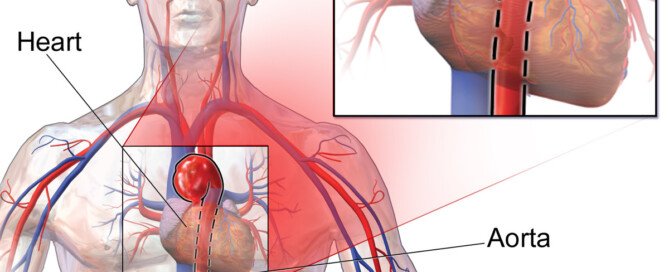
“The aorta is the large artery carrying oxygenated blood away from the heart,” explains Dr. David Beatty, MD, a retired general practitioner with 30+ years of experience and an instructor of general medicine for 20+ years.
Dr. Beatty continues, “It climbs upwards out of the left ventricle (the ascending aorta) into the aortic arch where it curves downwards into the descending aorta.”
The aorta is the body’s biggest blood vessel.
“Arteries supplying blood to the heart muscle, brain, arms, kidneys and bowel branch off at various levels,” adds Dr. Beatty.
****
An investigation looked at the frequency of aortic aneurysm (and dissection) in people with BAV.
The data that was analyzed was of patients diagnosed with bicuspid valve, spanning 1980 to 1999; they were residents of Olmsted County, Minn.
Also analyzed was data involving people with aortic disease whose BAV had gone undiagnosed.
The last year of follow-up was 2008-2009. Included were 416 people with bicuspid valve; average follow-up was 16 years.
Risk of aortic aneurysm development in people with bicuspid valve: 26 percent over a 25-year period.
What does this translate to when compared to the general population? An 86 times greater risk of developing an aortic aneurysm.
What about risk of dissection in those with bicuspid valve? After all, an aortic aneurysm is a precursor to a dissection (size of aneurysm is directly proportional to risk of dissection).
People with bicuspid valve had an 8.4 times higher risk of dissection than people in the region’s general population.
This number may seem high, but the study authors state that the absolute risk of dissection still remains low in people with bicuspid valve.
Say the study authors: “The low aortic dissection incidence and lack of association with a detectable reduction in survival is reassuring.” The full report is in the Sept. 14, 2011 JAMA.
What else did this study unveil? Incidence of dissection was greater in people over age 50, and not surprisingly, higher in patients who had a baseline aortic aneurysm.
Percentage of people with BAV: 1-2 percent
Symptoms of bicuspid aortic valve: Not all patients have symptoms, and in some cases, one may live a normal life span minus BAV problems.
How BAV is usually discovered: Incidentally during a routine physical, or an imaging test for an unrelated condition.
Symptoms are a heart murmur (not always present) and rapid changes in blood pressure during stress or activity.
Complications: aortic aneurysm as well as dissection; leakage of blood back into the heart; narrowing of the valve, which can lead to a thickened, inefficient heart; mitral valve leakage.
If you’ve been diagnosed with a bicuspid valve, it’s very important to have it monitored on a regular basis for the possible development of an aortic aneurysm.
 Dr. Beatty has worked in primary medicine, surgery, accident and emergency, OBGYN, pediatrics and chronic disease management. He is the Doctor of Medicine for Strong Home Gym.
Lorra Garrick has been covering medical, fitness and cybersecurity topics for many years, having written thousands of articles for print magazines and websites, including as a ghostwriter. She’s also a former ACE-certified personal trainer.
.
Top image: BruceBlaus/CreativeCommons
2011/09/110913161941.htm
http://www.cedars-sinai.edu/Patients/Health-Conditions/Bicuspid-Aortic-Disease.aspx
http://en.wikipedia.org/wiki/Arnold_schwarzenegger#Accidents_and_injuries

Lifting Weights with Aortic Aneurysm: “Straining” Defined

For those with thoracic aortic aneurysm, the restriction of “No straining” when lifting weights needs to be explained.
If you’ve been diagnosed with a thoracic aortic aneurysm and have always lifted weights, you’re likely wondering how to recognize that fuzzy boundary between a challenging workout and a “straining” workout.
Sometimes, straining is obvious, as in the case of a man barely getting a barbell off the floor in a deadlift, his back buckling, legs quivering, face turning red, and it seemingly takes him forever to straighten his back.
But straining doesn’t always look like this, either.
Lifting weights doesn’t have to be straining, so here are guidelines for distinguishing between straining and not straining.
There are five basic levels of lifting weights: 1) Going Through the Motions, 2) Some Work, 3) Challenging, 4) Difficult, and 5) Straining.
What’s the difference between Difficult and Straining?
- It’s not determined by amount of weight lifted.
- It’s determined by amount of effort.
One person’s straining load can be another person’s warm-up lift. As a former personal trainer, I’ve had clients straining with weight loads that others moved with little effort.
Signs of Straining
- Vocalizing or feeling like vocalizing
- Squirming or other substantial form breaks
- Grimacing
- Moving the load slowly because it’s so heavy, especially with pauses.
- Valsava maneuver
“Valsalva is what we do when lifting something very heavy and when we are bearing down to have a bowel movement,” says Michael Fiocco, MD, Chief of Open Heart Surgery at Union Memorial Hospital in Baltimore, Maryland, one of the nation’s top 50 heart hospitals..
Now, if you are not grunting, moaning or groaning, this does not mean you can’t be in the Straining zone.
The key is if you feel compelled to grunt or groan. You may be avoiding this simply out of courtesy to nearby people, but if you actually feel like doing it, then you’re straining — at least somewhat – a forbidden zone for thoracic aortic aneurysm.
What does Challenging mean?
A Challenging set of eight bench presses means that the tempo is a little slowed down at the seventh or eighth rep due to increasing fatigue, but you feel you can do another eight. You stop at only eight.
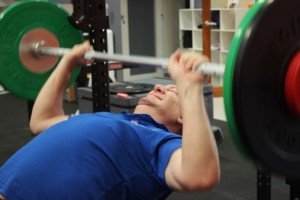
Turn the Challenging bench press into a Difficult set by lifting the same weight, but for 12 reps.
You stop at 12, but know you can do three or four more. Your arms “feel it,” but you aren’t “whupped” yet.
To make this a Straining set, add more weight so that you must struggle to complete four or five reps.
Form breaks are tempting at this stage, namely, arching the back. Or perhaps one arm is lagging behind the other and you’re gritting your teeth and scrunching up your eyes.
Often, an eight-rep max will make a person feel they must strain — depending on the move. Certainly, you’ll feel much more straining for an 8-RM deadlift, squat or bench press vs. a dumbbell curl.
BruceBlaus/CreativeCommons
Recap
Going Through the Motions: This is like warming up.
Some Work: Think of this as more than a warm-up, or what you might do when recovering from a mild injury.
Challenging: Minimal heart rate elevation; no or minimal increase in respiration; yet you feel worked.
Textbook form, and solid, rhythmic breathing are maintained throughout, but you also induced a little muscle burn.
The lifts can be done quickly with full range of motion. You could have done the 12 reps with 25 percent more weight. You made it look easy to the observer.
Difficult: You can do fast lifts at the beginning, but quickly find you can no longer go fast.
You must pay more attention to breathing to avoid any breaks in breathing, but form is intact. No desire to grunt, groan, moan or grimace.
But the weight did get heavy. By the time you think you’re closing in on the Straining zone, the set is over. Heart rate is up, but nothing significant. An observer knows you definitely were not warming up.
Straining: To the observer, and to yourself, you are struggling. The lifts are laborious and slow, and unsteady if it’s with dumbbells.
You must concentrate on breathing to avoid pauses in breathing. There may be eventual form breaks, such as arching your back while bench pressing.
If you’re not grunting or moaning, it’s out of courtesy to others. Your face shows “pain.” At the conclusion, you know you kicked some bad butt.
Lifting Weights with a Thoracic Aortic Aneurysm
Dr. Fiocco specializes in treating artery disease, valvular disease and aortic aneurysm. His heart care expertise has earned him recognition by Baltimore Magazine as a Top Doctor in 2010, 2011, 2013, 2016 and 2017.
Lorra Garrick is a former personal trainer certified through the American Council on Exercise. At Bally Total Fitness she trained women and men of all ages for fat loss, muscle building, fitness and improved health.
.
Top image: Freepik.com/ pressfoto

Think You Have Lymphoma? Blood Pathology Questions to Ask

What questions should you ask regarding blood pathology if you might have lymphoma?
Lymphoma is cancer of the lymph nodes, and if this disease is suspected by your physician, then your blood will need to be analyzed.
If you or your doctor suspect lymphoma or leukemia, your blood will need to be scrutinized by a pathologist. A blood pathologist is called a hematopathologist.
If your doctor informs you that your samples need to be sent to a hematopathologist, here are some questions you should ask about this process, according to Dr. Zsuzsanna Vegh-Goyarts, assistant director of the Flow Cytometry department at Acupath Laboratories, a leading anatomic pathology and cancer genetics laboratory.
Questions to ask blood pathologist if you might have lymphoma or leukemia:
Who will evaluate the specimen? Can I speak to the blood pathologist?
The blood pathologist does not have direct contact with the patient. “Your doctor will send your samples, along with your clinical history, to a laboratory to process and test,” says Dr. Vegh-Goyarts.
What happens to specimen when it reaches the lab? The sample is processed, measured, tested, analyzed by licensed lab technologists.
A blood pathologist will carefully examine results, then construct a report and diagnosis. Your doctor will receive a final diagnostic report.
What is a biopsy? A biopsy means removing a sample of cells, fluid or tissue for analysis. Ask what kinds of tests will be done.
Most frequently, a blood pathologist will test for CBC (complete blood count), red and white blood cell count, hematocrit, platelet count, red blood cell volume, concentration of hemoglobin, and differential blood count. What if CBC results are abnormal? Further testing is warranted.
What can I learn from these tests? Results can determine diagnosis of lymphoma, leukemia and other diseases.
How fast will I get the test results? Your doctor normally gets results within 24 hours, though a specialty test may require several days. Your doctor should then immediately contact you.
Dr. Vegh-Goyarts explains, “It is important that your doctor sends samples to an experienced hematopathologist within an established and accredited diagnostics laboratory in order to receive the most accurate results, and ultimately allowing for the best patient care.
“On the other hand the hematologist relies on the clinical data from the patient’s physician to establish a diagnosis.
“Laboratory data are always viewed in the light of all the clinical background and all test results.
“Physician and hematopathologist often discuss the case before the final conclusion is reached regarding the diagnosis.”
Blood diseases affect hundreds of thousands of people in the United States every year, according to the Leukemia and Lymphoma Society.
Lorra Garrick has been covering medical, fitness and cybersecurity topics for many years, having written thousands of articles for print magazines and websites, including as a ghostwriter. She’s also a former ACE-certified personal trainer.
.
Top image: Shutterstock/Viktoriia Hnatiuk
Source: www.acupath.com




Why Does Being Fat Raise the Risk of Uterine Cancer ?

Being fat increases the risk of uterine cancer, plain and simple.
DNA mutations that lead to uterine cancer do NOT care if you love your larger-than-life body or hate it.
Fat is a risk factor for uterine cancer, and the only way around this is to lose weight. Learning to “love your skin” will not nullify this well-established risk factor.
Obesity or being “fat” and good health should never be in the same sentence, unless it’s to say that obesity and good health cannot co-exist in the same body.
So it’s no surprise that a fat body is a risk factor for uterine cancer.

ParentingPatch, CreativeCommons
“The adipose tissue or fat tissue in obese patients has an enzyme called aromatase that can convert other hormones in the body to a weak estrogen,” says Diane Yamada, MD, Chief, Gynecologic Oncology, University of Chicago Medical Center.
In essence, the patient is getting significantly more estrogen than the ovaries would normally produce.
This constant, higher level of estrogen is not counteracted by progesterone.
It may stimulate the lining of the uterine cavity (the endometrium) to develop precancerous change, and then cancer.”
In other words, the more lifetime exposure that a woman has to circulating estrogen, the higher her chances of developing the malignancy.
Of course, this risk is her baseline risk, and the baseline varies from one woman to the next.
Genetics may play a part, and genetics cannot be changed. However, obesity is primarily linked to lifestyle habits.
Uterine cancer is also known as endometrial cancer, and some risk factors are tied to the exposure to estrogen.
You now know how a lot of excess fat in the body influences the risk for uterine cancer. But here are other factors tied to estrogen:
Many years of menstruation (beginning before age 12, and/or late menopause).
The more monthly cycles a woman has, the more her uterus is exposed to estrogen.
Which is why never having been pregnant, and even having just one pregnancy, is another risk factor for this disease. However, researchers aren’t sure why this increases risk for the condition.
It may be because pregnancy increases levels of progesterone, which offset the effects of estrogen.
According to the American Cancer Society, obese women have triple the risk of uterine cancer, and overweight women have double the chance.
But if you’re medium weight or even skinny, don’t think this makes you immune to this disease! Thin women can get it, too.
A high fat diet is another risk factor for uterine cancer, not just because it promotes obesity, but because some fatty foods may influence estrogen metabolism.
Keep in mind that a non-overweight woman can still have a high fat diet.
The fats at issue here are the so-called “bad” fats: the saturated and trans (manmade) variety, found in animal products and processed foods (e.g., commercially baked goods), respectively.
Other risk factors for uterine cancer are estrogen-only hormone replacement therapy, tamoxifen for breast cancer, ovarian tumors and diabetes.
Non-obese women with diabetes actually have an increased risk of uterine cancer. The majority of cases occur in women over the age of 55.
It’s never too late to lose weight, and food intake has everthing to do with obesity.
 Dr. Yamada specializes in the diagnosis and treatment of gynecologic cancers including ovarian, uterine and cervical. She is also an editorial reviewer for numerous academic medical journals.
Lorra Garrick has been covering medical, fitness and cybersecurity topics for many years, having written thousands of articles for print magazines and websites, including as a ghostwriter. She’s also a former ACE-certified personal trainer.
.