
Why Do Spouses of Bedridden Obese Overfeed Them?

What about the enablers of super morbidly obese bedridden people: spouses or family members who keep feeding them tons of food?
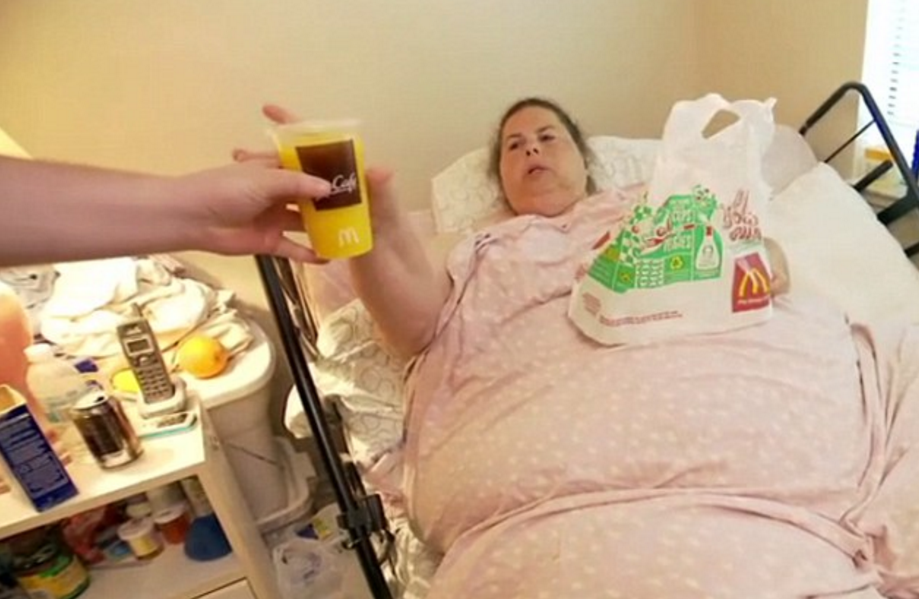
Have you seen any of those TV shows about 700, 800, even 900 pound men and women who literally live out of their beds, while a family member (usually a spouse) continues to bring them enormous quantities of food?
These are popular shows, and in so many cases is the mind-boggling enabler.
Usually, the “caretaker” enabler is a spouse, but sometimes it’s a significant other, or family members such as older children or even a niece.
In the case of 800 pound Billy Robbins, the enabler was his mother!
Billy Robbins
What causes enabling behavior towards the super morbidly obese who can’t leave their bed to get food?
For this article I interviewed two medical doctors: an obesity specialist and an addiction specialist.
“Enabling is a complex psychological behavior with multiple etiologies,” says Michael Nusbaum, MD, founder of Nusbaum Medical Centers of New Jersey which specializes in weight loss treatments.
Dr. Nusbaum says that the enabler typically functions out of a “warped sense of love.”
Enablers of the super morbidly obese have ulterior motives, he says, including that of “creating a situation where the patient is physically unable to leave them,” and making that person “undesirable to others.”
Dr. Nusbaum also explains that an enabler may be “compensating for a perceived failure to nurture in the past.”
This last explanation to a small degree explains why Billy Robbins, who at age 18 weighed over 800 pounds, was enabled by his mother.
But wanting to re-create a deceased baby does not explain why a woman brings 20,000 calories a day to her 900 pound husband, or why 960 pound Renee Williams’ daughters kept bringing her food.
Enablers Keep Bringing Huge Amounts of Food to Obese Who Can’t Get Out of Bed
“The person who enables the food addict or compulsive eater supplies food for the same reasons a loved-one buys more alcohol for a nearly unconscious alcoholic or lends money to a drug addict knowing it’ll be spent on drugs,” explains David Sack, MD, a psychiatrist specializing in addiction disorders, and CEO of Promises Treatment Centers in Malibu and Los Angeles.
Yes, “Who keeps feeding them?!” is a fair question when super morbidly obese individuals can’t even leave their bed.
TV programs almost always show the food source as their spouses, family members or significant others, rather than pizza or other food delivery workers coming into their bedrooms.
Dr. Sack says that often, enablers think they’re helping their overfed loved-one.
“They want to show their unconditional love and acceptance for the obese individual or make them happy, even if just for a moment.
“Providing ‘help’ gives them some sense of control in an unmanageable situation.”
Kenneth Brumley, confined to bed at over 1,000 pounds, admits to eating 30,000 calories a day — catered to him by girlfriend Serena.
But what’s going on with Serena and other enablers like her?
“Some are in denial about the problem,” says Dr. Sack. “Others are codependent: Their self-esteem depends on their ability to help others, even if the help actually hurts.
“Once someone begins enabling, it can be difficult to break the cycle.
“The addictive behavior continues or worsens and the enabler gets drawn in further.”
Many enablers, he continues, avoid the task of correcting the problem to avoid conflict or because they’ve learned to feel helpless.
“Over time, the enabler loses their identity outside of their caretaking role,” says Dr. Sack.
Imagine how much time every day Serena must expend making sure Brumley gets his food.
Imagine how much time Cheryl must have invested feeding her husband Ricky Naputi (now deceased) enough food daily to keep him at around 900 pounds.
A man at Brumley’s house commented that outside the garage, he could smell the stench: like “one huge baby diaper.”
Brumley hadn’t bathed in four years. How could Serena enable this?
Dr. Sack points out that solving the problem involves a lot more than just, for instance, Serena one day announcing, “Kenny, from this point forward, I’m bringing you only 2,000 calories a day. If food delivery comes to the house, I’m not letting them in. Complain all you want. I’m no longer your enabler.”
The solution, says Dr. Sack, often “requires the entire family to see a mental health professional to address the underlying issues.”
One of the comments to an online New York Daily News article about Ricky Naputi is as follows:
So basically he couldn’t move and she had complete power over what he would eat. I think she basically murdered him.
 Dr. Nusbaum is a bariatric surgeon, board certified by the American Board of Surgery, and a Fellow and member of the American Collage of Surgeons.
 Dr. Sack is a sought-after media expert and has appeared on “Dateline NBC,” “Good Morning America,” “The Early Show,” and “The Doctors,” among many other outlets.
 Lorra Garrick is a former personal trainer certified by the American Council on Exercise. At Bally Total Fitness she trained clients of all ages for fat loss, muscle building, fitness and improved health.
Sources:
dailymail.co.uk/news/article-505198/The-half-ton-mum-Tragic-story-worlds-heaviest-woman.html
nydailynews.com/life-style/health/world-fattest-man-died-900-pounds-article-1.1353829

Enablers of the Super Morbidly Obese Partly to Blame for Overfeeding

What is it with the spouses of bedridden super morbidly obese people who keep bringing them trays of food?
Being addicted to excessive amounts of eating is no excuse for bringing to the food addict, who weighs over 600 pounds and is bedridden, heaps and heaps of junky sugary items.
A study from the University of Georgia reveals that the behavior that drives a person to gorge abundantly on food is the same kind of impulsive behavior behind substance abuse. This is referred to as a compulsive personality.
But the difference between alcohol/drug addiction and that of food is that the former individual can easily ambulate to get the next fix.
A super morbidly obese person who’s confined to bed cannot do this.
Someone else supplies the food, prepares it, brings it to the bedside.
This is the enabler, and is almost always a spouse or significant other.
The journal Appetite (2014) has the University of Georgia report explaining that those with impulsive personalities are more apt to report greater levels of food addiction. This was associated with obesity.
“My lab generally studies alcohol, nicotine and other forms of drug addiction,” says James MacKillop in the paper, principal investigator of the study.
He continues, “…but we think it’s possible to think about impulsivity, food addiction and obesity using some of the same techniques.”
Have you ever noticed that those bedbound, super morbidly obese people on reality TV shows such as “My 600 Pound Life” and “Half-Ton Dad” never live alone?
That’s because it takes two people to create this horrendous situation: the food addict and the enabler. Sometimes there’s more than one enabler.
There’s growing research in the realm of food addiction, and significant research into the causes of obesity.
But where’s the research into what compels a person to become an enabler and help their loved-one kill themselves with food?
This is like bringing alcohol to a person with liver cirrhosis, or cigarettes to a person with lung cancer. Who’d ever do that?
But here we have all these enablers being depicted on reality TV shows bringing piles of fast food to their 600, 700, sometimes over 800-pound spouse or family member! This is mind-blowing.
And nobody seems to want to address it head-on. The enabling issue gets evaded on TLC’s shows, time and time again.
The only exception to this evasion is the “Half Ton Teen” show, in which the enabler dynamic to the 800 pound young man is explored.
MacKillop hopes that his research will guide physicians and other relevant experts in planning treatments and interventions for the food-addicted super morbidly obese.
However, what about their enablers, in cases where the obese are bedridden or housebound?
This is akin to an alcoholic struggling to abstain, while an enabler keeps bringing this person alcohol every time the addict expresses a desire for liquor.
In addiction, brain circuits are “hijacked,” says MacKillop, laying “the foundation for compulsive eating habits that are similar to drug addiction.”
But this doesn’t mean that those with compulsive behaviors will necessarily become obese, he adds.
Though most enablers to 600 pound individuals are obese themselves, some are not. Thus, the idea of “sharing” an addiction does not seem to apply in all the cases.
Lorra Garrick is a former personal trainer certified by the American Council on Exercise. At Bally Total Fitness she trained clients of all ages for fat loss, muscle building, fitness and improved health.
Source: sciencedaily.com/releases/2014/01/140124161245.htm

Should Virgins Get Pap Smears?

Should a virgin get a Pap smear?
Pap smears are very effective screening tools for cervical cancer, which is primarily caused by the sexually transmitted human papillomavirus (HPV).
Recommendations for when women should begin getting Pap smears always reference sexual activity.
Lisa B. Bazzett, MD, a gynecologic oncologist (cancer specialist) at Ochsner Medical Center in New Orleans, states:
“The current recommendation for initiation of Pap smears from the American College of Obstetricians and Gynecologists is that girls and women should begin cervical cancer screening approximately three years after initiation of sexual intercourse, but no later than age 21 years.”
Where do virgins fit in here as far as Pap smears?
Every single time we see something about women and Pap smears for cervical cancer, there never seems to be any mention about how this may or may not apply to virgins. So I began wondering, Should virgins get a Pap smear?
Or are virgins exempt from HPV transmission? I posed this very interesting question of whether or not virgins should get Pap smears, to Dr. Bazzett.
Do virgins need to get Pap smears?
Dr. Bazzett: It is true that HPV is transmitted during intercourse, but it can also be transmitted during other, non-penetrative, sexual acts.
This is due to the mode of spread of the virus being different than other sexually transmitted diseases that are transmitted in bodily fluids. HPV is not transmitted in bodily fluids, but in skin to skin, or surface to surface contact.
Therefore, if two individuals engage in close contact of the genitals, but don’t actually have “penetrative intercourse,” the virus can still be transmitted.
This is why it’s safer to simply choose an arbitrary age to begin screening, even if a women is a “virgin,” because there are other sexual acts that may transmit the virus that a patient would not necessarily consider “sex” when her sexual history was being taken by a healthcare provider.
But if a woman is a virgin, chances are pretty high that she also abstains from any close contact of the genitals.
A woman who chooses to stay a virgin (regardless of reason) will typically avoid all close contact with the genital area.
So, to refine my question, should committed virgins, or nuns, for that matter, get Pap smears?
Dr. Bazzett: It is reported that 99% of all cervical cancers are caused by HPV. There is a very rare type unrelated to HPV that most gynecologic cancer specialists will see only once or twice in their careers, as opposed to the unfortunately all too common HPV-induced cervical cancers.
HPV is also responsible for other female gynecologic cancers including the vagina, the vulva and the anus.
Therefore, it is certainly much safer to include virgins in the standard cervical cancer screening recommendation, with yearly Pap smears, than to miss an HPV related disease in its precancerous, curable state.
So this means that virgins, i.e., women who have never even been on a date, should nevertheless get Pap smears?
Dr. Bazzett: The recommendation from ACOG is yes, at age 21, and I would never go against that recommendation.
As I stated, there is a very rare type of cervical cancer unrelated to HPV, and to simply not do Pap smears, or exam of the cervix or genitalia in a woman, could put her at risk, so I would still recommend a Pap smear at age 21.
If a woman is a virgin and not engaging in any sexual activity, it is always up to the discretion of her and her physician what is best for her.
She may not need a Pap every year, but should still be getting a pelvic exam, as there are other problems that can arise from the uterus, the ovaries, that require yearly pelvic exams.
 Dr. Bazzett specializes in the treatment of malignancies of the female reproductive organs including that of the ovary, uterus, cervix, vagina and vulva.
 Lorra Garrick has been covering medical, fitness and cybersecurity topics for many years, having written thousands of articles for print magazines and websites, including as a ghostwriter. She’s also a former ACE-certified personal trainer.

Ovarian Cancer May Be Caused by Too Many Periods

Too many periods may contribute to the cause of ovarian cancer — the deadliest of all gynecological cancers.

Atrial Fibrillation & Elevated Troponin: Prognosis
An episode of atrial fibrillation may cause a mild elevation (“indeterminate range”) in troponin, but does this relate to a mortality or heart attack risk?
“In of itself, A-Fib does not cause a rise in troponin unless underlying coronary artery disease is also present,” says Dr. Adam Splaver, clinical cardiologist and co-founder of NanoHealth Associates, a practice that explores the molecular level of cardiovascular disease.
If atrial fibrillation is a suspected issue in a patient who presents in the ER with mildly elevated serial troponin results (that are falling), the next course of action would be to monitor the heart rhythm outside the hospital setting.
“Holter monitors, event recorders and loop recorders are just a few of the tools used to detect this arrhythmia, or disturbance in the heart’s normal rhythm,” says Dr. Splaver.
A-Fib is not treated with any kind of implanted device, but instead, with medications or ablation.
But it first has to be established that a patient even has A-Fib — and that’s done with the event monitors.
According to a report in the European Heart Journal, a mild elevation in troponin I in patients with atrial fibrillation is associated with increased risk of cardiac events and mortality. The report’s abstract states:
In patients with atrial fibrillation, minor troponin I elevation is regularly detected.
The study authors conclude that their findings may be important for risk stratification in such patients.
A report in Circulation has the same conclusion, except that the subjects also had an accompanying rapid ventricular rate:
Even mild troponin elevation in the setting of AFib with RVR predicts a significant increase in risk of MI at 1 yr. MI means a heart attack.
What would be very intriguing is a study of subjects, who’ve had CABG (coronary bypass surgery), who’ve had a mildly elevated troponin result as a consequence of atrial fibrillation.
Would the presence of bypass grafts impact the risk of future cardiac events and mortality?
Would it be slightly lower than patients in the same boat (severe heart disease) but who never had revascularization (bypass surgery)? Would the difference be negligible?

Dr. Splaver is board certified in cardiology, internal medicine and echocardiography, and is a registered physician in vascular interpretation and trained in age management medicine.
Lorra Garrick has been covering medical, fitness and cybersecurity topics for many years, having written thousands of articles for print magazines and websites, including as a ghostwriter. She’s also a former ACE-certified personal trainer.
Sources:
eurheartj.oxfordjournals.org/content/32/5/611.full
circ.ahajournals.org/cgi/content/meeting_abstract/118/18_MeetingAbstracts/S_818-a

Is Colon Cancer Always Caused by Polyps?

Though most colon cancers arise from what was once a benign (and removable) polyp, there are a number of circumstances in which the tumor starts growing without first transforming out of a polyp.
Not all cases of colon cancer are caused by polyps.
Colon cancer usually arises from polyps, but the question then becomes: Is colon cancer always caused by polyps?
All we seem to hear about in the media is how polyps can be discovered in a routine colonoscopy and removed, thereby going a very long way in preventing colon cancer, since malignancies can arise from these polyps if not removed.
Greater than 90 percent of colon tumors are believed to “go through the polyp cancer sequence over many years,” says Whitney Jones, MD, a national expert and frequent speaker on early-age onset colon cancer prevention, and Founder, Colon Cancer Prevention Project.
“Examples where these trends do not apply include familial genetic syndromes (i.e., hereditary non-polypyosis colorectal cancer syndrome HNPCC, familial polypyosis), inflammatory bowel disease, ulcerative colitis and Crohn’s disease, immunosupressed patients.”
How could it be discerned that ulcerative colitis and Crohn’s can lead to non-polyp colon cancer?
Dr. Jones explains, “By non-polyp colon cancer, we mean that the usual small polyp to large polyp to early cancer to late cancer (about 10 years for these changes to occur) is skipped or accelerated.
“Persons with Crohn’s colitis or UC should undergo more frequent screenings after 10 years’ duration of disease, because of just this pattern of tumor growth.
“There are many reports in this population of inflammatory bowel disease who have developed cancers in the period between surveillance intervals presumptively from an accelerated carcinogenesis (genetic pathway).”
How often should this population, after 10 years’ disease, have colonoscopy screenings?
Dr. Jones explains, “Once the diagnosis of Crohn’s or ulcerative colitis (the more of the colon involved, the higher the risks of cancer development with ulcerative colitis) has been made, then regardless of the age of diagnosis, an increased screening regimen should begin after 8-10 years.”
Suppose a doctor discovers a malignant tumor upon colonoscopy. Is there a way for lab analysis to determine if the mass arose from a polyp, versus colon cells (no polyp transition phase)?
Dr. Jones says, “Yes, by pathology. The fact is that in almost all colon cancers, there is associated adenomatous tissue within the specimen. These findings are what lead in part to the polyp — cancer sequence theory.
“A variety of new genetic tests, including micro-satellite instability assays, are available and emerging.
“These tests also help us prognosticate on the tumor behavior after tumor removal.”
Why would inflammatory conditions increase risk anyways?
Dr. Jones says, “There are direct effects on the DNA through inflammatory pathways leading to DNA mismatch, repair errors, proto oncogene activication, and others.”
Dr. Jones emphasizes that the best time to be screened for colon malignancy is when you have no symptoms and are feeling just fine.
Waiting until symptoms set in means that a colonoscopy is no longer a screening procedure; it’s a diagnostic procedure — to find out what’s wrong. Don’t wait.
Colon cancer symptoms are typically not warning signs of early disease; they mean the disease has spread beyond the colon.
The emphasis by the media is on polyps that have the potential to transform to cancer in the colon.
But as you have just read, there are circumstances under which a colon cancer can develop without first being a benign polyp.
All of this can sound frightening. Getting regular colonoscopies can ease your fear tremendously.
 Dr. Jones’ practice interests include prevention and treatment of colon cancers, pancreatic disease and biliary disease. He has authored numerous scientific articles, reviews and abstracts and presented at a variety of national and international scientific meetings. Colon Cancer Prevention Project
Lorra Garrick has been covering medical, fitness and cybersecurity topics for many years, having written thousands of articles for print magazines and websites, including as a ghostwriter. She’s also a former ACE-certified personal trainer.
Top image: Shutterstock/Rabbit2Dsign

Colon Cancer in People Who Didn’t Have Routine Colonoscopy

What percentage of people, diagnosed with colon cancer, did not have a colonoscopy within 10 years of the diagnosis?
Colonoscopies to screen for colon cancer are recommended every 10 years beginning at age 45 for people at average risk for this disease, the second-leading U.S. cancer killer of men and women combined. (more…)
Can Colon Cancer Be Prevented with a Colonoscopy Every 10 Years?
Would a routine colonoscopy prevent colon cancer if done every 10 years, since this type of cancer grows so slowly and usually starts as a benign polyp?
The colonoscopy is a marvel of medical technology that allows physicians to detect precancerous growths in the large colon called polyps.
If you know that colon cancer can take years to develop (and hence why a routine colonoscopy is recommended for average-risk people every 10 years beginning at age 45), you may wonder this:
If, in a 45-year-old who has a clean colonoscopy, colon cancer can be prevented. if he or she continues having colonoscopies every 10 years?
After all, how quickly can a polyp form and morph into a malignancy between 10-year screenings?
“First, there are outliers in terms of age of cancer development; some sporadic cases in their 20s or 30s,” begins Whitney Jones, MD, a national expert and frequent speaker on early-age onset colon cancer prevention, and Founder, Colon Cancer Prevention Project.
“The 40-year age group is a different question altogether.”
Thus, the question pertains strictly to average-risk (of colon cancer) people who begin having the routine colonoscopy.
Unless there is a family or personal history of colon cancer, a person will not be advised to begin colonoscopy screening until age 45 according to the U.S. Preventive Services Task Force as of 2021.
Dr. Jones continues, “Second, there are outliers in terms of the biological behavior and rapidity of growth of the classic polyp-to-cancer sequence that have aggressive growth, resulting in cancer in small growths that evidently turn into cancer, and may even spread to blood vessels and lymph nodes while being very small (i.e., sub 1 centimeter).”
Finally, Dr. Jones explains that there are technical issues. He says, “All cancer screening tests are by their nature imperfect:
“Polyps are missed (up to 10-15 percent); blind spots for the endoscopist in the colon are a reality despite evolving technology; preps are not always optimal; there are significant performance differences between individuals who perform colonoscopy.
“Standardized preps including split dose preps, withdrawal time tracking and adenoma detection-rate tracking are helping endoscopists improve on this third and important variable.”
Despite the “imperfect” nature of the colonoscopy, it’s a glaring fact that the number of people who avoid colon cancer screening via colonoscopy is directly related to the mortality rates of this disease.
By the time symptoms first start presenting (e.g., change in bowel habits, change in stool caliber, diarrhea, blood in stools, ribbon-like or pencil-thin stools, abdominal pain, nausea, vomiting, fatigue, unexplained weight loss, constipation — especially if it alternates with diarrhea), the malignancy has likely already spread beyond the large colon and even into surrounding organs.
Thus, routine colonoscopies are life-saving and make a tremendous difference in the development and survival rates of colon cancer.
Note: If you have any of the above symptoms, don’t jump to the conclusion it must be a malignancy.
The above symptoms are common and can be explained by many benign gastrointestinal disorders.
However, if symptoms haven’t resolved within two weeks, see a gastroenterologist — with the exception of bloody or “tarry” stools: In that case, make an appointment ASAP.
Dr. Jones’ practice interests include prevention and treatment of colon cancers, pancreatic disease and biliary disease. He has authored numerous scientific articles, reviews and abstracts and presented at a variety of national and international scientific meetings. Colon Cancer Prevention Project
Lorra Garrick has been covering medical, fitness and cybersecurity topics for many years, having written thousands of articles for print magazines and websites, including as a ghostwriter. She’s also a former ACE-certified personal trainer.
.
Top image: Shutterstock/Chinnapong

Why Do Colonoscopies Normally Begin at 45? Why Not Sooner?

There’s good reason why 40 is that “magical” number for when a typical person should begin getting colonoscopies for colon cancer screening.
A colonoscopy is a minimally invasive procedure that can detect colon cancer, or precancerous polyps.
“Colon cancer is generally a disease of the elderly,” says Mitchell S. Cappell, MD, Chief, Division of Gastroenterology & Hepatology, William Beaumont Hospital, Royal Oak, MI.
“Nearly 95 percent of colon cancers occur in people more than 50 years old.
“This phenomenon is due to the fact that colon cancer generally comes from chance biochemical abnormalities, called mutations, in the genes (DNA) of individual colon cells.”
Colon cancer (like all malignancies) does not happen overnight; there are a number of stages of transformation that a healthy cell undergoes before it becomes a malignant cell.
In the case of colon cancer, a normal cell, due to accumulated mutations, will proliferate out of control, initially forming a benign polyp – which a colonoscopy can detect. On the spot, the physician removes the polyp(s).
If you don’t have screening for colon cancer, the polyp will continue growing and may sustain more mutations – enough to morph it into a malignant tumor.
Dr. Cappell explains that this disease “occurs mostly in the elderly because this sequence of changes, the accumulation of chance mutations, is a long process that takes many years.”
This doesn’t mean that people younger than 45 are immune to colon cancer.
Dr. Cappell adds, “About 2 percent of people developing colon cancer are younger than 40 years old.
“About 20 percent of people who develop colon cancer when less than 40 years old have special risk factors that place the patient at a very high risk of developing colon cancer.”
These risk factors are 1) familial polyposis coli (abbreviated as FPC), and 2) Lynch syndrome (also called HNPCC).
In FPC, patients have many benign polyps, and malignancy is likely because out of so many polyps, it’s inevitable that one or more will become malignant.
In Lynch syndrome, the patient develops just a few benign polyps, but these particular polyps have an intrinsically high risk of morphing into colon cancer.
“Patients less than 50 years old generally do not undergo screening for colon cancer because they have much lower risks than patients more than 50 years old,” continues Dr. Cappell.
If someone is diagnosed with FPC or Lynch syndrome, he or she will be urged to have colonoscopies beginning at a much younger age.
Just how young can a person getting a colonoscopy be?
Dr. Cappell says, “Patients with a close blood relative with familial polyposis coli need colonoscopy at a young age, during their early teens, to diagnose or exclude this disorder.
“Likewise, close blood relatives of patients with Lynch syndrome need early colonoscopy beginning in their mid-20s.
“Patients with a family history of colon cancer in first degree relatives (e.g., mother or father) should generally undergo colonoscopy at age 40 years or earlier.”
So if you’re 25 and have no family history of this dreadful disease, and do not have Lynch syndrome or FPC, this does not give you the green light to practice lifestyle habits that are risk factors for colon cancer, such as:
1) a sedentary lifestyle, 2) a meat-based diet, 3) eating lots of processed meats, 4) diet low in fiber, high in “bad” fats, and 5) smoking and heavy drinking.
You have no green light because, as Dr. Cappell explains, colon cancer (in the absence of Lynch syndrome or FPC) is decades in the making, and how you treat your body during your younger years influences your risk of developing the disease.
Dr. Cappell says, “In summary, colon cancer usually occurs in patients more than 50 years old, and colon cancer is unusual in patients less than 50 years old. However, no age group is immune from colon cancer.
“I saw and diagnosed one patient with incurable colon cancer at age 20, a few weeks before his planned wedding.”
Symptoms of this Common Disease
Constipation, diarrhea, and especially with a recent dramatic shift in bowel movements (such as from regular bowel movements to constipation); blood in the stools (may be bright red, or tar-like); abdominal pain; abdominal bloating; unexplained weight loss; unexplained fatigue; and appetite suppression.
Note: Having some of these symptoms doesn’t mean you have the disease.
In fact, the symptoms of irritable bowel syndrome can be very similar, though over time, in untreated colon cancer, the symptoms will get worse.
“Colon cancer may also present as anemia due to iron deficiency unexplained by blood loss during menstrual periods or by numerous childbirths,” says Dr. Cappell.
“Patients should routinely undergo screening colonoscopy at age 50 years even without symptoms or risk factors for colon cancer.”
Recommended Age to Begin Screening for Colon Cancer Drops in May of 2021
The U.S. Preventive Services Task Force (USPSTF) updated their guidelines in 2021 to recommend that individuals of average risk begin colon cancer screening at age 45.
This recommendation applies to people who are at average risk for colorectal cancer and doesn’t take into account any other risk factors like family history or genetic predisposition.

Dr. Cappell has been in practice for over 30 years.
Lorra Garrick has been covering medical, fitness and cybersecurity topics for many years, having written thousands of articles for print magazines and websites, including as a ghostwriter. She’s also a former ACE-certified personal trainer.
.
Top image: ©Lorra Garrick

Nasal Congestion Relief: Humidity vs. Dry Air

You’ll be surprised which turns out the winner between humidity and dry air when it comes to nasal congestion relief, and why.
The kind of air you breathe, in terms of how dry it is or humid it is, can significantly impact the perception of nasal congestion.
The feeling that you have congestion, or a stuffed-up nose, is not necessarily related to actual mucus buildup in the sinuses.
Rather, the sensation of a stuffy nose can originate from the airflow through the nasal passages.
“It’s very common for the nose to feel congested or blocked without mucus,” says Inna Husain, MD, an ear, nose and throat specialist with Community Healthcare System of Indiana.
“The lining and tissue of the nose can congest and decongest in response to inhalant allergies, but what most people don’t know is that it is also affected by non-allergic stimuli such as temperature.”
This can explain why your nose feels stuffed or blocked, yet no matter what you do, nothing comes out, even after irrigating the nose.
The Monell Chemical Senses Center
Monell Center researchers found that the sensation of nasal congestion relates to air temperature and the level of humidity.
So if you’re one of the 33 million people in the U.S. with a nose that feels blocked up, keep reading.
Perhaps you’ve seen a doctor and he couldn’t find any physical cause of your sinus congestion.
You may actually have a sensory-related issue.
When the feelings of nasal congestion are sensory-related, says the research, this opens doors for more targeted treatment.
One example of a targeted treatment is that of focusing on restoring the optimal humidity and temperature in a patient’s nasal airflow.
The Monell study had 44 healthy participants breathe air from three boxes and then rate any symptoms of a nasal congestion.
One box contained cold air; the second box contained room temperature dry air; and the third offered room air that was at normal humidity.
Which box produced the lowest report of sinus congestion? The cold air box.
Reduced nasal congestion was also perceived when the participants inhaled from the dry air box.
The room air, normal humidity box did not result in these perceptions.
In short, lower humidity was found to be associated with reduced sensations of nasal congestion.
Nasal cooling is influenced by the interaction of humidity and air temperature as air moves through the nose’s cavities, say the researchers.
“Cool sensors” in the nose detect the nasal cooling, and the detection can feel like easy breathing — or obstructed.
The researchers point out that if someone is in a desert, with all other things being equal, they should feel less congested than if in a jungle.
That’s becauuse a desert has low humidity. This means more evaporative cooling inside their nose, making the temperature of their nasal passages lower.
This creates the sensation of a greater airflow.
Additiona Reasons for a Blocked Feeling in Both Nostrils

Shutterstock/natali_ploskaya
“There is also a process known as the nasal cycle which is the spontaneous congestion and decongestion of nasal mucosa that cycles side to side,” says Dr. Husain.
“Also, nasal congestion or obstruction can occur due to structural reasons in the nose — for example, a septal deviation.”
 Dr. Husain