
Can Muscle Twitching from Lifting Weights Mean a Disease?

If you’ve noticed that lifting weights triggers muscle twitching in the muscles you worked, find out if you should be worried about this.
So you go into the gym and lift weights hard, feeling like a beast after the workout, only to be reduced to a bundle of nerves because the muscle you worked won’t stop twitching.
This happens quite often following a weight training session, and the twitching may even occur in between sets.
Weightlifting can cause any muscle to twitch.
Whatever muscles can get exercised are capable of twitching following the workout.
“If the same area is the only site twitching, and that seems to occur during or after bench pressing weights (or whatever exercise you performed, such as squats, deadlifts, bent-over dumbbell rows or biceps curls), then it is likely the bench press movement is causing the twitching,” explains Michael Cartwright, MD, a board certified neurologist at Wake Forest Baptist Medical Center in Winston Salem, NC.
Muscle twitching is also called fasciculations. Dr. Cartwright adds, “Fasciculations are generated from an unstable motor neuron firing sporadically.
“When a muscle is exercised, the motor neuron connection can become a little more unstable and fascics can occur.”
This instability is benign, though it can be annoying. Think of the fascics as your muscles’ way of massaging themselves after an intense weightlifting session.
You’ll also want to review your water intake. Is it adequate during your workout? How about after?
Dehydration can make muscles, particularly fatigued ones from strength training, more likely to twitch.

Dr. Cartwright treats numerous conditions including ALS, brachial plexus injuries, hereditary neuropathies, peripheral neuropathy, peripheral nerve injury and polymyositis.
 Lorra Garrick has been covering medical, fitness and cybersecurity topics for many years, having written thousands of articles for print magazines and websites, including as a ghostwriter. She’s also a former ACE-certified personal trainer.
.
Top image: Shutterstock/KDdesignphoto

Beeturia Q & A: Worried About Beets in Urine and Stools?

A Gastroenterologist Answers Questions About Beeturia
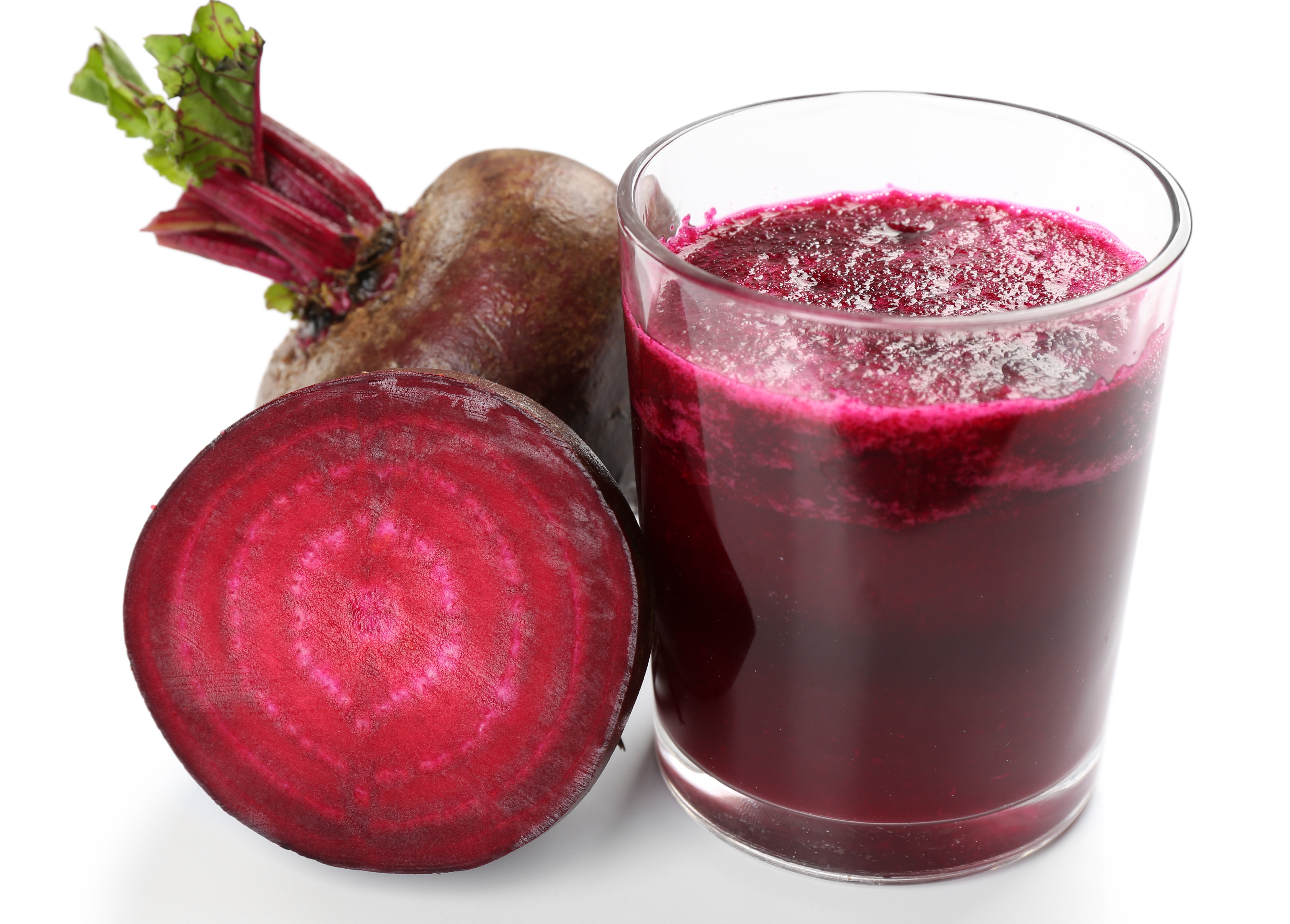
If what you see in the toilet after eating beets alarms you, here are some responses from Mervyn D. Danilewitz, MD, FACG, a board certified gastroenterologist based in Philadelphia, PA.
Just how much beet juice can end up in the toilet after drinking a glass?
Dr. Danilewitz says that the whole glass can end up in the toilet, in the sense that “The beetroot pigment called betanin is responsible for the red coloring in urine and feces,” he explains.
“Some people cannot break the pigment down and this results in excretion of the pigment in urine and feces.
“The rest of the beetroot is digested and no nutrients should be lost. The beetroot red pigment is indigestible.”

Freepik.com
Can beets make stools appear black?
“The more beets that are eaten, the darker the red coloring will be in urine and feces,” says Dr. Danilewitz.
“This coloring may look black, but beetroot should not cause black stools.”
Viewing your “black” poops under magnification will reveal the very dark purple in the event of having eaten a large volume of this ultra-healthful vegetable.
How long can beeturia last?
“Beeturia (urine) usually lasts for 48 hours, but this varies in people who have slow or a faster rate of passing feces.
“It also depends on the amount of fluids one drinks. It has nothing to do with malabsorption or iron absorption.”
More than once, my own beeturia has lasted four to five days, appearing with my stools.
Now, if these situations worry you, then you should keep track of when you eat beets or beet juice and how much, even if it’s just small amounts in a salad.
This highly pigmented vegetable is extremely nutrient dense and much under-rated for its antioxidant properties.
 Dr. Danilewitz is board certified in both gastroenterology and internal medicine, and has been in practice for over 40 years.
 Lorra Garrick has been covering medical, fitness and cybersecurity topics for many years, having written thousands of articles for print magazines and websites, including as a ghostwriter. She’s also a former ACE-certified personal trainer.
Top image: Shutterstock/Africa Studio

Can Sudden Severe Headache Be a Transient Ischemic Attack?

Find out how likely a sudden severe headache might be a TIA: transient ischemic attack.
If you get a sudden severe headache, you might wonder if this might be a transient ischemic attack (TIA).
A TIA is a mini stroke, and stroke medicine falls under the specialty of neurology, since strokes involve the brain.
“Perhaps the only reassuring measure to afford a patient some mental relief is to know that headache, especially when severe, is not routinely a symptom of a transient ischemic attack (TIA),” explains Michael Sellman, MD, neurology division chief with the Greater Baltimore Medical Center’s Center for Neurology.
“TIA in layman’s terms connotes the brief absence of blood flow to the brain,” continues Dr. Sellman.
“So for example, if there is not enough blood to our motor cortex or speech centers, a patient would then have symptoms of loss of strength or loss of speech.”
Other symptoms of a transient ischemic attack, that are far more likely than a headache, are as follows:
• Sudden onset double vision or other visual disturbance
• Confusion or cognitive impairment
• Slurred speech or difficulty speaking
• Trouble understanding speech
• Drooping on one side of the face
• Numbness or tingling on one side of the face
• Feeling your body pulling to one side
• One sided body weakness or numbness
• Paralysis on one side of the body
• Trouble swallowing
Dr. Sellman emphasizes that a headache, especially a severe one, “is not routinely a symptom of absence of blood flow to the brain or impending stroke. There are many other causes of severe headache, but TIA is not one of them.”
Some more likely causes of a sudden severe headache: migraine, ruptured aneurysm, pinched nerve in the neck, “icepick” headache (though these last only moments).
Some likely causes of a less sudden-onset but severe headache: migraine, tension/stress, sinusitis, pinched nerve in the neck, bleeding in the brain from a head injury, brain cancer or benign tumor.
“In general a patient should be advised to call or see a doctor if the severe headache is of new onset or never experienced before.
“Severe headache of new onset should not be ignored, but is not due to TIA.”
 Dr. Sellman’s interests are in clinical neurophysiology and neuromuscular disorders. He previously served as chief of the Division of Neurology at Mercy Medical Center since 2002.
Lorra Garrick has been covering medical, fitness and cybersecurity topics for many years, having written thousands of articles for print magazines and websites, including as a ghostwriter. She’s also a former ACE-certified personal trainer.
.
Top image: Freepik/benzoix

IBS: Age, Stool Changes, Colon Cancer, Pain

Here is a sampling of IBS articles:
Can IBS ever lead to colon cancer or even colon polyps?
Many with irritable bowel syndrome wonder if this disorder can ever pave the way to colon cancer. After all, the symptoms of both conditions are frighteningly similar.
IBS and back pain!
Yes, IBS can cause back pain. But how does this happen? And is there anything you can do to prevent this?
What’s vexing about back pain is that it can have so many potential causes, even more than one cause at the same time. How does IBS fit in with back pain?

How common are narrow, skinny stools with IBS?
Have you read that narrow, pencil-like stools can result from colon cancer?
If you’ve been noticing narrow long stools lately, is this more likely to be IBS? Or not? This explains it all.
IBS and Pain in a Leg
Leg pain can have a number of causes including compression of nerves at the spine.
Another cause might be irritable bowel syndrome.
Though this isn’t a common result of IBS, it can actually happen, and here’s why.

Can IBS cause your stools to be dark green?
Poops can easily turn dark green as a result in variables relating to the digestive process as it relates to food intake.
Have you been seeing dark green poops in the toilet bowl lately? Read more on this.
IBS Symptoms vs. Microscopic Colitis
It’s no secret that often, someone with IBS is misdiagnosed with microscopic colitis, and someone with microscopic colitis is misdiagnosed with IBS.
Both disorders can cause a lot of diarrhea as well as stomach cramping.
The symptoms greatly overlap, but this doesn’t mean that the treatments are similar as well.
Fact is, the treatments and management of both these conditions are quite different from each other.
That’s why when there’s a misdiagnosis, the patient continues suffering from the problem with no improvements, despite the new “treatment.”
A misdiagnosis should not occur, being that the diagnosis of microscopic colitis is dependent upon a tissue biopsy that has a distinct appearance under the microscope!
Lorra Garrick has been covering medical, fitness and cybersecurity topics for many years, having written thousands of articles for print magazines and websites, including as a ghostwriter. She’s also a former ACE-certified personal trainer.
.
Top image: diana.grytsku
Poops: Green, Skinny, Pebbly, Colon Cancer

Here is a sampling of articles on bowel movements.
Do thin narrow stools usually mean colon cancer?
How often have you read that thin stools (“pencil-like” or “ribbon-like”) can signal colon cancer?
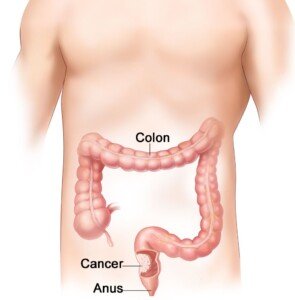
National Cancer Institute
How often have you read that colon cancer can cause stools to come out long and skinny because the tumor partially blocks the exit point of BMs, forcing them to come out skinny?
Though this is true, this doesn’t mean there can’t be benign causes of narrow thin stools. Here is more on this topic.
Why can IBS make stools come out in little pieces?
Those of you who have IBS have certainly scratched your head on this one.
IBS can definitely cause your poops to come out in clusters of pebble-like formations. Here is an explanation.
IBS poops vs. malabsorption poops
Malabsorption can be caused by numerous medical conditions, including cancer.
Is there a way to visibly distinguish the BMs from malabsorption and the BMs from irritable bowel syndrome? Here is more information.
How common are narrow skinny stools with IBS?
You may know that colon cancer can cause BMs to come out long and skinny, or to appear like pencils or ribbons.
However, irritable bowel syndrome can cause narrow stools too. But how common is this? Continue…
Can dark green stools be caused by IBS?
Irritable bowel syndrome can cause all sorts of symptoms, and dark green stools are one of them. Learn more about dark green poops.
Can dark green stools be caused by microscopic colitis?
Find out what’s going on when green stools result from microscopic colitis — which you may not even know you have…though you certainly will know something’s going on in your GI tract, being that this inflammatory bowel disease causes diarrhea.
Lorra Garrick has been covering medical, fitness and cybersecurity topics for many years, having written thousands of articles for print magazines and websites, including as a ghostwriter. She’s also a former ACE-certified personal trainer.
.
Top image: Shutterstock/Notto Yeez

The Mouth: Many Symptoms, Causes and Remedies

Cotton in your mouth?
There’s a big difference between thirst and “dry mouth.” You can have a true case of dry mouth and not feel the least bit thirsty.
The difference in how being “parched” and having dry mouth feels is that with a dry mouth, it feels like you have cotton in it. Not just lining your tongue, but a thick layer lining the insides of your cheeks.
Guzzling water will not make this sensation go away because it’s caused by reduced secretion of saliva. Dry mouth has a number of causes. Continue…

Sweet taste in mouth won’t go away?
Do you have a nagging taste in your mouth that can be described as sweet? Funny thing is, you’ve not eaten anything sweet or sugary. And it won’t go away no matter what you do.
The only time you should be tasting something sweet is when you’re eating something sweet. Find out what this could mean and how you can solve it.

Is there a nagging metal taste in your mouth?
Ughh, what can be causing THIS? (Lots of things!) A phantom metal taste is a very unpleasant experience, almost like sucking on a coin.
So how can you get rid of this awful sensation? Depends on the cause!

“Why do I keep having a salty taste in my mouth, doggone it?”
A salty taste in the mouth, even though you haven’t been eating salty foods, has causes — and solutions.
Eating salty foods such as crackers, pretzels or canned soup should not leave this lingering taste in your mouth. There are solutions. Here they are.

Freepik
Are your teeth sensitive after fillings?
Is this normal? How long should it last? It’s no picnic when you can’t enjoy a chilled beverage, let alone ice cream, thanks to sensitive teeth.
It’s time to find out what dentists say about this annoying problem.
Can dry mouth be the only symptom of Sjogren’s disease?
When I suddenly developed dry mouth, I couldn’t help but think, “Could I have Sjogren’s disease?”
So I set out to find out if ONLY dry mouth can be the beginning of this autoimmune condition, for which 90 percent of the people it affects are women.
Lorra Garrick has been covering medical, fitness and cybersecurity topics for many years, having written thousands of articles for print magazines and websites, including as a ghostwriter. She’s also a former ACE-certified personal trainer.

MY SYMPTOMS & CONDITIONS

I have had the following symptoms and conditions.
(no particular order)
- Changing mole
- Seborrheic keratosis
- Seborrheic dermatitis
- Finger pain/cramp (annular flexor pulley injury)
- Shoulder pain (rotator cuff injury)
- Biceps tendonitis
- Low back pain (soft tissue weakening)
- Heel pain/burning heels (plantar fasciitis)
- Chondromalacia patella
- Quadriceps tendonitis
- Sudden-onset diarrhea (microscopic colitis)
- Change in stool caliber/color (microscopic colitis)
- Missed periods
- Headaches (sinus nerve irritation from aggressive nose cleaning)
- Sudden-onset dry mouth
- Continuous coughing (acid reflux)
- Beeturia
- Medial epichondylitis (golfer’s elbow)
- Hamstring injury
- Grating jaw
- Blocked ears upon awakening
- Ganglion cyst
- Sprained ankle
- Sprained wrist
- PVCs
- Twitching muscles
- Panic attacks
- Actinic keratosis
- Benign paroxysmal positional vertigo
- Prophylactic double mastectomy
Lorra Garrick has been covering medical, fitness and cybersecurity topics for many years, having written thousands of articles for print magazines and websites, including as a ghostwriter. She’s also a former ACE-certified personal trainer.
.
Top image: Freepik.com, pressfoto

Rotator Cuff & Other Shoulder Pain: Causes, Treatment Options

Shoulder pain is one of the most common problems that affects not only the poorly conditioned but also fitness enthusiasts, recreational athletes and professional athletes.
“The majority of shoulder pain is related to the rotator cuff,” says Jessalynn Adam, MD, who specializes in primary care sports medicine with OrthoVirginia.
“Rotator cuff injuries and problems include impingement, tendinosis (overuse/wear and tear), bursitis/bursopathy, and acute or degenerative tears,” explains Dr. Adam.
Pain in the shoulder can also be caused by life threatening situations such as a heart attack or lung cancer. But don’t panic.
Because, again, the vast majority of shoulder pain is caused by a musculoskeletal problem involving either the rotator cuff, cartilage, bursa or major muscles in that area.

What is the rotator cuff?
It’s a group of four muscles and their tendons. It’s a site of frequent injury or strain. Some people suffer a tear at some location of their rotator cuff requiring surgery.
Symptoms of Rotator Cuff Strain or Impingement
Quite classically, the pain radiates to the side of the upper arm, even though that is not the site of the actual strain or impingement.
There is often pain as the person is trying to slip a hand into a coat or jacket pocket, or reach behind them from the driver’s seat to retrieve something from the back seat.
The patient may report that it hurts to raise the arm straight up at the sides, especially if in the process they turn their wrist forward so that the palm is facing backward.
Overhead motions may also hurt. Usually, pulling motions, such as holding — with a bent arm — onto the leash of a large dog that’s trying to walk faster than you, do not hurt.
Physical therapy is the treatment of choice, along with avoiding the offending movements.
A worsening pain in this joint that does not improve with rest is cause for concern.
 Dr. Adam specializes in the care of athletes and active individuals of all ages, offering prevention, diagnosis and treatment of sports and exercise injuries. Dr. Adam’s care focuses on muscle injuries and biomechanics.
Lorra Garrick has been covering medical, fitness and cybersecurity topics for many years, having written thousands of articles for print magazines and websites, including as a ghostwriter. She’s also a former ACE-certified personal trainer.
.
Tongue Problems? Here’s What’s Wrong
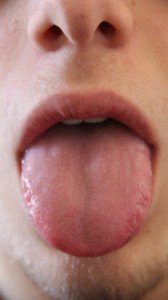
Here is a sampling of tongue symptom articles:
Is your tongue twitching?
How scary is THAT? Do you find yourself spending huge amounts of time inspecting your tongue in the mirror?
Is your family wondering why you spend so much time in the bathroom?
When you go over to someone’s house, is the first thing you do is seek out their bathroom to catch a look at your tongue, under the guise of, “I really have to go,” or, “There’s something in my eye”?
How about at diners? Must you check your tongue before settling at a table to order your food?
Do you find yourself moving it around unnaturally inside your mouth to test it for stiffness?
But here’s a truth: Nowhere in the annals of medical literature does it state that tongue twitching usually means a fatal disease!
To believe otherwise would certainly induce tremendous anxiety. Here’s what to do if your tongue has become a big thorn in your side.
Normal tongue twitching vs. bulbar-onset ALS symptoms:
Are there key differences between benign twitching of the tongue and that of bulbar-onset ALS?
Only a neurologist can answer this question for you; find out what one has to say about this before you begin jumping to all sorts of conclusions that will interfere with your ability to focus on tasks throughout the day!
When you REALLY need reassurance you don’t have bulbar-onset!
Sometimes you just need to read something several times to reassure yourself that your tongue is very healthy and that there is nothing wrong with you. Read more on this topic…
Stiff tongue? A stiff tongue can have at least nine causes. Whom better to address the causes of a stiff tongue than an ear, nose and throat doctor and surgeon?
Stacey Silvers, MD, discusses nine possible ailments that can cause your tongue to feel or be stiff.
Burning tongue? Most causes of a burning tongue are benign, but one possible cause stands out because it can kill you. Here is the information on that.
Does your tongue seem to be yellowish lately?
Though the cause of a yellowing tongue is usually benign — such as that of sucking on a lemon drop — unfortunately, a possible cause is also cancer.
Lorra Garrick has been covering medical, fitness and cybersecurity topics for many years, having written thousands of articles for print magazines and websites, including as a ghostwriter. She’s also a former ACE-certified personal trainer.

HEADACHES: Brain Tumor, Aneurysm, Sinus, Hematoma & More

Here Are Headache Related Articles
Brain tumor headache vs. normal headache.
Are you one of these types who, every time you get a headache, you fear it’s a brain tumor? Can a benign headache actually feel like a brain tumor headache?
Or, to put it another way…can a brain tumor headache mimic a regular harmless headache? Read…
Is it a sinus headache…or a ruptured aneurysm?
The sinus headaches depicted in TV commercials are a field of flowers compared to the intensity of some real life sinus headaches. They can actually masquerade as a rupturing aneurysm!
“Sinus headaches are due to three major causes: blocked sinuses from allergies, blocked sinuses from infection, or blocked sinuses from distorted anatomy such as a deviated septum,” says Dr. C. Phillip Amoils, MD, a board certified otolaryngologist with SC-ENT Ear, Nose & Throat Specialists in CA.
“The diagnosis for sinus headaches comes from a thorough ENT evaluation and a limited CT scan of just the sinuses,” adds Dr. Amoils.
But is there a way you can distinguish at home between a benign sinus headache and the pain of a rupturing brain aneurysm?
Aneurysm headache symptoms vs. normal headache symptoms.
“Sudden severe headaches may warrant a neurological evaluation and MRI radiological workup,” says Dr. Amoils.
- Can a ruptured aneurysm ever feel like a benign headache?
- Should you go running to the ER every time you have a really bad headache?
What IF it’s a ruptured aneurysm? This can be fatal within minutes.
Do you get a headache from lifting weights?
Head pain from strength training has more than one possible cause. There are solutions.

Can heavy weightlifting cause an aneurysm?
Heavy weight lifting, especially deadlifts and squats, will cause blood pressure to spike significantly. Can this burst a blood vessel in your brain?
Hit your head? CT scan normal? Beware…
Have you recently hit your head but are relieved because the ER CT scans were normal?
The standard is to have a CT scan upon ER admission, and then stay overnight and have a follow-up CT scan 24 hours later.
Warning: Even if the follow-up scan shows no bleeding in the brain, this doesn’t mean you’re out of the woods!
A “chronic” subdural hematoma may still be waiting in the wings for you, as it was for my mother!
Six weeks after her normal CT scan, she awakened with significant neurological symptoms and had to have blood drained from her brain! Read more about chronic subdural hematoma…