
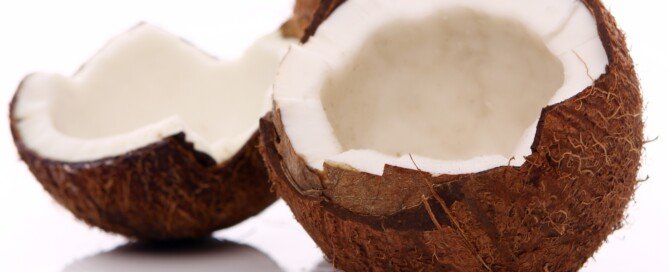
Coconut Saturated Fats vs. Meat Sat Fats
A heart specialist addresses whether coconut oil’s saturated fats are as bad as those from meat.
There’s a lot of online content touting the health virtues of coconut oil, even though it’s loaded with saturated fats.
Proponents of coconut oil and shreds say that the sat fats are of a different (and healthier) molecular structure than those that come from beef and other types of meat.
“Coconut oil is not as good as current marketers try to make it out to be and not as awful as once thought,” says Dr. Alvaro Waissbluth, MD, a cardiologist with Alameda Health System in CA.
Dr. Waissbluth continues, “The ‘bad’ coconut oil from days gone by was typically refined – bleached and partially hydrogenated – and this type has multiple unpleasant health effects – as do most manmade processed foods.”
This means that jar of “refined” coconut oil sitting on your shelf is bad news!
In addition to the trans fats of the partial hydrogenation process, the refined version often has sodium hydroxide added to extend shelf life.
The refining process may also involve chemical solvents.
“The modern ‘good’ coconut oil is virgin coconut oil – untouched by man [unrefined] – and even though it is predominantly saturated fat – over 90% – most of these are medium chain triglycerides which are processed differently [once inside the body] than the long chain ones (which are found in most other vegetable oils and almost all animal products),” explains Dr. Waissbluth.
Buy the unrefined version, even if the solidified oil looks clumpy inside the jar.
“These medium chain TGs have been postulated to have some beneficial effects and have shown very modest benefit in small trials and animal studies,” says Dr. Waissbluth.
“However, there is no definitive data which leads any health professional who is not being paid by a coconut oil seller/reseller to recommend virgin coconut oil be used any more than sparingly in any given diet.
“There is no good long-term data on humans that show cardiovascular benefit. Period.”
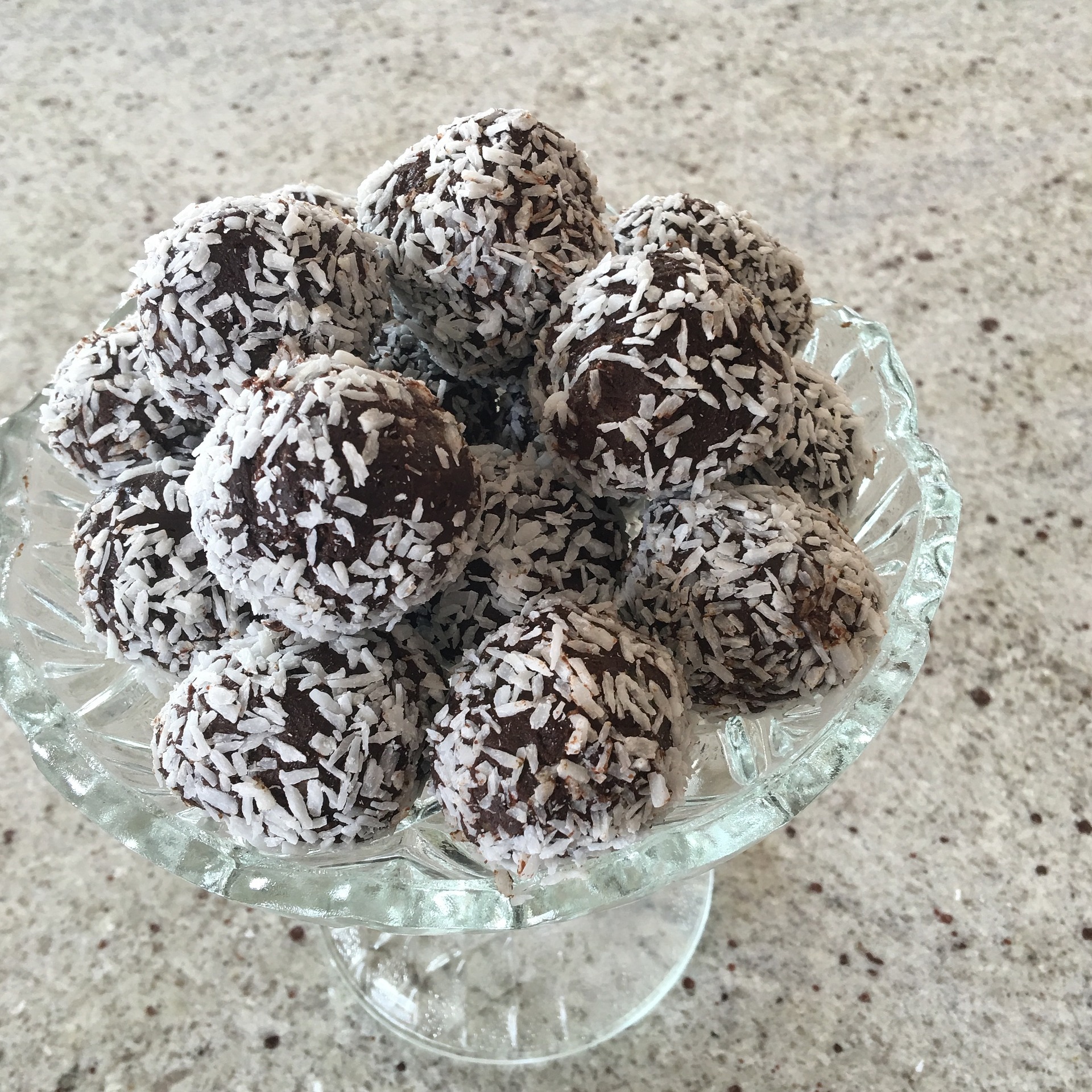
This isn’t welcome news for those of you who are hooked on raw chocolate coconut balls sweetened with dates and/or Stevia — seemingly a great replacement for the standard candy bar and especially a more processed item like brownies and cake.
If you’re feeling your way around the saturated fats of coconut oil vs. meats and just don’t know what to do, one thing that will help make things a little clearer is to get your cholesterol profile regularly checked.
Changes in diet can rapidly alter your lipid profile.

Dr. Waissbluth has been in practice for 25+ years and is board certified in interventional cardiology and cardiovascular diseases. He is founder of Eat Tank, an educational nutrition initiative that provides simple tools and practical knowledge for better understanding food.
 Lorra Garrick has been covering medical, fitness and cybersecurity topics for many years, having written thousands of articles for print magazines and websites, including as a ghostwriter. She’s also a former ACE-certified personal trainer.
.
Top image: Freepik.com, Racool_studio

How Does Stress Cause a “Skipped” Heartbeat?

A heart surgeon explains how stress can cause a “skipped” heartbeat.
Keep in mind that what may feel like your heart skipping a beat isn’t necessarily actually that at all, but rather, the next beat occurs so close to the previous one, that this leaves a gap before the next beat after that, creating the illusion that your heart literally skipped a beat.
“Stress causes increased heart rate and blood pressure by increasing the release of adrenalin and adrenalin-like substances in the body,” says Dr. Alvaro Waissbluth, MD, a cardiologist with Alameda Health System in CA.
Dr. Waissbluth continues, “Adrenalin increases heart rate and blood pressure which can lead to abnormal or fast heart rhythms along with the sensation of skipped beats and palpitations.”
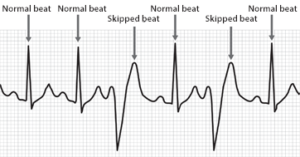
Adrenalin and like-hormones are the so-called “fight or flee” hormones. They prepare your body for an encounter with danger.
The body, however, doesn’t know the difference between the dangers that primitive man had to face (an encounter with a wild boar) and the “dangers” that industrialized people must face (opening the letter that has your mammogram results).
The chemical fear response in the body is the same in either case.
To put it in layman’s terms, these hormones can trip things up, leading to a momentary erratic heart rhythm, what is often called a palpitation, or a thumping or fluttering heartbeat.
There’s a lot of truth to that age-old saying, “My heart skipped a beat when I found out I owed so much in taxes!”
Dr. Waissbluth has been in practice for 25+ years and is board certified in interventional cardiology and cardiovascular diseases. He is founder of Eat Tank, an educational nutrition initiative that provides simple tools and practical knowledge for better understanding food.
Lorra Garrick has been covering medical, fitness and cybersecurity topics for many years, having written thousands of articles for print magazines and websites, including as a ghostwriter. She’s also a former ACE-certified personal trainer.
.
Top image: ©Lorra Garrick
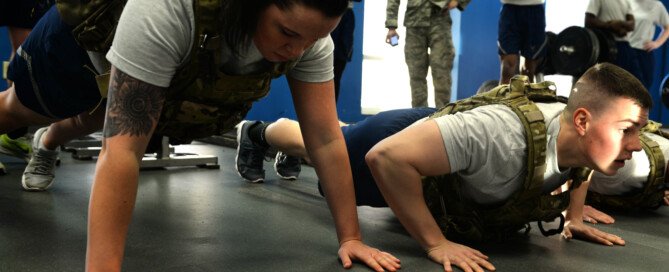
Bench Press vs. Weighted Vest Pushups
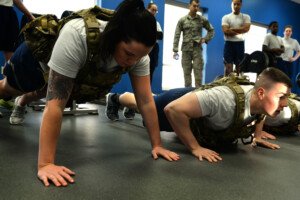
Here’s the comparison between the bench press and weighted vest pushups.
One of my personal-training clients some years ago asked me which was better: bench press or weighted vest pushups.
What are your goals? Do you want to tone your arms, shoulders and chest? Weighted vest pushups will do the trick, but so will bench pressing.
For toning, both get the job done, and one is not really any better than the other as far as results, though the advantage of weighted vest pushups is that you can do them at home in a limited space.
If you want to build impressive chest muscle, I recommend the bench press. It’s straightforward and allows you to work towards significant weight loads.
One argument against the weighted vest pushup is that it limits the progressive component.
However, weighted vests are now sold that can hold up to 200 pounds.
Furthermore, for beginners, it will be quite some time before they get up in weight load anyways.
Nevertheless, fussing around with loading up a vest could be a turn-off to many people, whereas loading a bar for the bench press is fast and easy.
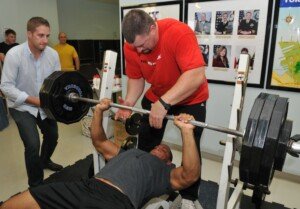
If you want to gain a lot of strength in your upper body, again, the bench press is the better choice.
Ultimately, for those gunning for getting as strong as possible, the bench press offers no limits in how much you can load up the barbell.
You might be thinking that pushups can be progressed by doing them one-handed, by propping the feet on a stool, by clapping in between, etc.
But the moment you begin doing things like this, you change the dynamics of the movement.
For instance, a one-handed pushup is no longer primarily a force production movement.
It’s now more of a balance and core movement mixed into the force component (though a textbook military pushup indeed involves core recruitment, but not as much as the one-handed version).
Clapping in between adds a jarring element to the shoulder tendons that many people may not take well to, whereas the bench press does not involve this kind of jarring impact to the shoulder tendons.
Elevating the feet makes a pushup more difficult, but that’s because elevating the feet diverts more of the recruitment to the shoulder muscles (meaning less of it to the stronger chest muscles), hence making the movement harder.
But while you’ve just made it harder, you’ve subtracted workload from your chest. Is that what you want if you want a bigger and/or stronger chest?
By the way, don’t think for a moment that performing pushups with a heavy weighted vest will help you a lot with your bench press. It will do squat (no pun intended). And vice versa.
Though the pushup appears to be an inverted bench press, it does not carry over to the bench press. And again, vice versa.
One more element that can’t be overlooked: The bench press allows you to work with a spotter.
On the other hand, you don’t have to worry about getting pinned by a too-heavy barbell when doing pushups.
So why not have both exercises in your program? Who says you must choose?
Start with the bench press, then maybe do the weighted vest pushups as your second chest routine of the session.
 Lorra Garrick is a former personal trainer certified through the American Council on Exercise. At Bally Total Fitness she trained women and men of all ages for fat loss, muscle building, fitness and improved health.

Does a Punch Biopsy for Mole Removal Hurt?
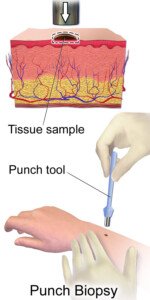
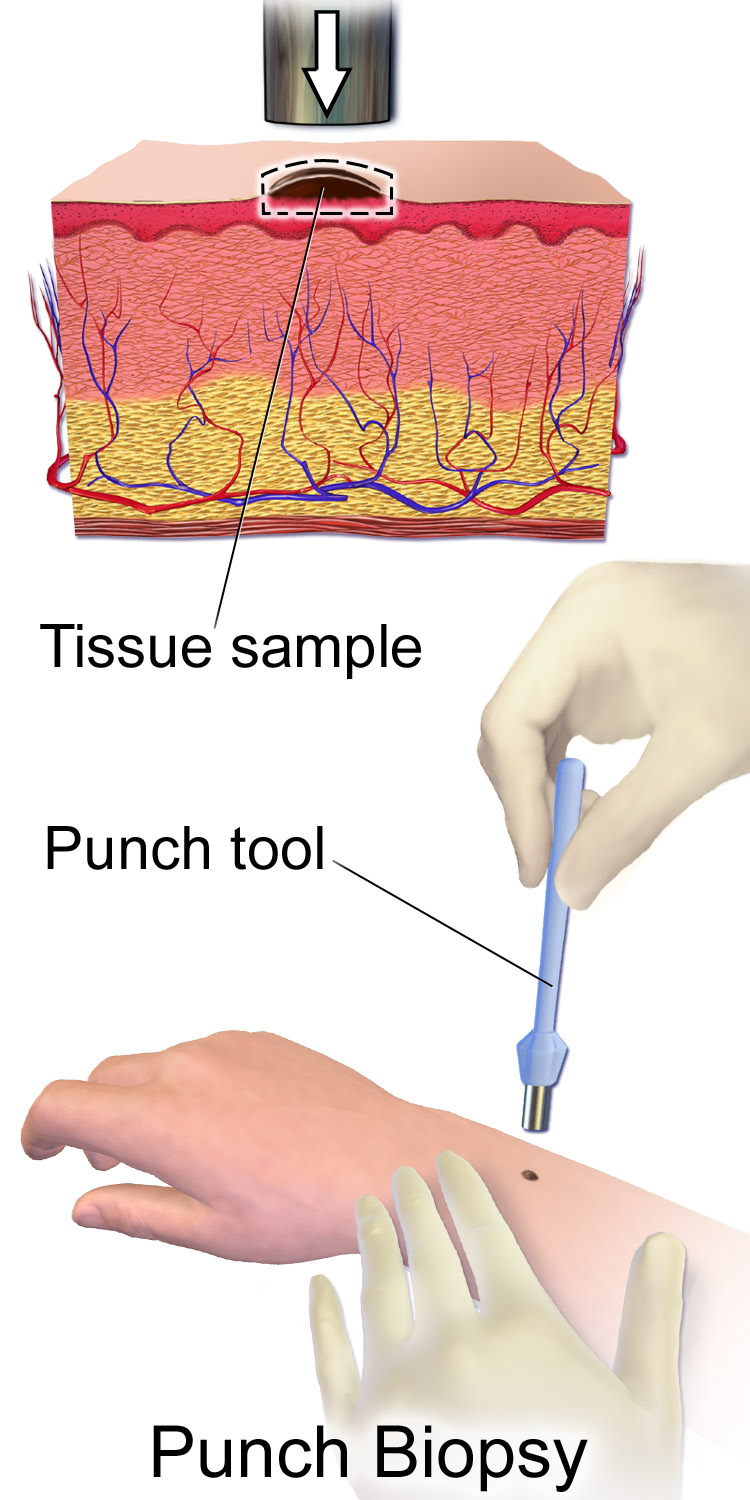
Here’s why a punch biopsy for a mole removal does NOT hurt.
You don’t need a doctor to tell you that having a mole removed via punch biopsy does not hurt. I’ve had two of these.
Actually, one of the punch biopsies was done on a harmless skin barnacle (I had requested the procedure just to play safe, because the dermatologist didn’t sound 100 percent sure that the lesion was a skin barnacle).
Anyways, the actual punch technique itself does not hurt. Prior to performing the punch biopsy, the dermatologist will anesthetize the area, which of course requires a needle to inject the anesthetic.
But in both cases, I did not perceive true pain, like the kind of pain you feel when you accidentally get pricked by a needle.
If you sew or otherwise handle needles and have accidentally gotten pricked, trust me, the anesthetizing injection feels nothing like that.
Once the area is numbed, you will not feel the “punch.” A punch biopsy is when a margin of surrounding tissue which includes below the surface of the mole is removed. As a result, stitches are necessary.
There is no pain, or at least, in my two cases there wasn’t, after the numbing drug wears off.
It doesn’t even sting or burn. In fact, the only problem I had was irritation from the adhesive of the Band-Aid.
Do not fear having a punch biopsy performed for mole removal. It does not hurt.
Lorra Garrick has been covering medical, fitness and cybersecurity topics for many years, having written thousands of articles for print magazines and websites, including as a ghostwriter. She’s also a former ACE-certified personal trainer.
Top image: BruceBlaus
Breast Density Cancer Danger: Truth or Hype?
Dense breast tissue is a risk factor for breast cancer, but there’s another big problem with dense breasts: Mammograms are harder to read.
So though there may be inconsistent research findings regarding just how much of a risk factor for breast cancer that dense tissue creates, we can’t exactly sweep under the rug the fact that dense tissue in breasts can hide a malignant tumor.
“Mammographic density is referring to the ratio of breast tissue to fat on a mammogram image,” says Jennifer Hartman, a clinical nurse practitioner specializing in breast health, women’s health and cancer genetics.
“When looking at a mammogram image, fat appears dark and breast tissue is white.
“When you have dense breast tissue your mammogram image will appear with more white patchy areas than dark areas.
“Increased breast density on mammography is a problem for two reasons.
“First, breast cancer can often appear as white masses on mammograms, so if your image already has dense white patches, it makes it more difficult to find a white breast cancer nodule.
“The more dense you are, the greater the chance a small breast cancer could be missed.
“3D mammography (tomosynthesis) is definitely much better at cutting through those dense areas to find cancer than traditional 2D mammography, but it is still not perfect.
“Second, increased breast density has been associated with an increased risk of breast cancer.
“These concerns have led to 38 states currently [as of 2023] requiring that we notify patients of their breast density so they can be aware of these risks.
“Any woman with dense breast tissue should talk to their healthcare provider about their options which may include education, risk assessment and additional imaging.”
Striking Points to Consider Regarding Dense Breasts
• Body weight does not determine level of breast density or fattiness.
• Neither exercise, dietary habits, weight loss or weight gain will affect how fatty or how dense a woman’s breasts are. Breast composition is luck or un-luck of the genetic draw.
• Size, shape, feel or “perkiness” of breasts is not predictive of how fatty or dense they are.
• Only a mammogram can reveal whether breasts are mostly fatty; have scattered density; are heterogenously dense; or are extremely dense.
What should you do if you learn your breasts are dense?
It’s strongly advised to trade the 2D mammograms for the 3D (tomosynthesis).
If your health plan doesn’t provide 3D technology, then don’t let that stop you; find an independent imaging clinic and get the tomosynthesis.
Yes, you’ll pay out of pocket, but your breast health is worth every penny. So is your peace of mind.
You may also want to consider annual whole-breast screening ultrasounds.
If you must get these from an independent clinic and pay out of pocket, then DO SO.
You may need authorization from your doctor, though.
Simply inform your doctor that you have dense breasts and want to be extra vigilant.
Do not be “afraid” to request your doctor’s authorization — which should be in writing and faxed over to the clinic.
What does a “tomo” screening feel like?
I’ve had many. They feel the same as the 2D version.
Think of tomosynthesis this way: A 2D mammogram is like standing in one spot at the edge of a forest and, from that position, looking inside the woods to find a bird perched in a tree.
But tomosynthesis has you flying above the forest to look for the bird!
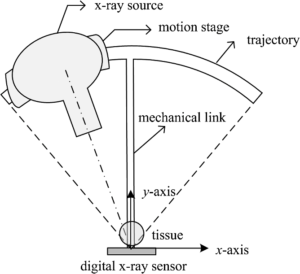
Tomosynthesis
As for the ultrasound as an additional surveillance, the whole-breast screening ultrasound is very simple from the patient’s perspective: Just lie there while the technician places the device over your breasts.
A negative 3D mammogram and breast ultrasound in the same year will be extremely reassuring!
 Jennifer Hartman, NP, specializes in surgical breast oncology and has 14+ years of nursing background involving (but not limited to) high-risk breast care, cancer genetics, breast cancer survivorship, gynecological care and homeless healthcare.
Lorra Garrick has been covering medical, fitness and cybersecurity topics for many years, having written thousands of articles for print magazines and websites, including as a ghostwriter. She’s also a former ACE-certified personal trainer.
.
Top image: Freepik.com
Source: sciencedaily.com/releases/2015/12/151202084226.htm

ANGINA: What It Feels Like, Duration, Triggers…

What does the chest “pain” of angina feel like and how long, or short, might be the duration?
What are possible triggers?
“Angina is a term for chest pain due to coronary heart disease,” says Waqar Khan, MD, who’s been providing state-of-the-art cardiology services to the Houston area for over 20 years, and is author of “Be Heart Smart: Understand, Treat, and Prevent Coronary Heart Disease.”
Dr. Khan explains, “It may feel different to different patients — but more commonly it feels like pressure in the chest, but it may also feel like sharp pain , dull ache, tightness or squeezing type of chest pain.”
In other words, angina can present itself in many flavors. You can’t rule out angina as the source of your chest pain just because it is any particular flavor — such as sharp, dull, squeezing, tight or heavy.
The all-encompassing descriptor for the experience would be chest discomfort.
If chest discomfort occurs when you physically exert yourself or exercise, and it subsides when you stop the activity, this is suspicious for angina — whether the discomfort is a dull ache, a pressure, a jabbing pain or a heaviness.
Keep in mind that angina can also occur while a person is at rest.
This is called unstable angina, and if you suspect this…you need to see a doctor immediately.
This is a warning that a heart attack may occur in the near future — very near, in fact.
The way unstable angina feels would be the same as how it feels when triggered by exercise or activity.
This could be sudden intense pain in the chest. Or, it could feel like that proverbial elephant sitting on the chest.
Some patients have described it as an intense squeezing or tightening — something totally unnatural.
However, angina doesn’t always feel “intense” or “severe.”
You should pay attention to exactly what you’re doing whenever the chest pain starts in to see if there’s a pattern or if changing body position relieves the chest discomfort.
Below are articles about angina. You’ll note that a few of the titles are similar; however, a different cardiologist was interviewed for those.
Physical Activity
– Can you get angina while sedentary even if exercise doesn’t trigger it?
Duration of Symptoms
– How short can an angina episode last?
Miscellaneous
– How is angina brought on by sudden strong emotions?
Digestive Connection
– Angina and vomiting: a connection?

Waqar Khan, MD, has a private practice and serves as an affiliate faculty member at Baylor College of Medicine in Houston, TX. Amazon.com/Be-Heart-Smart-Understand-Coronary/dp/1732268606
Lorra Garrick has been covering medical, fitness and cybersecurity topics for many years, having written thousands of articles for print magazines and websites, including as a ghostwriter. She’s also a former ACE-certified personal trainer.
.
Top image: Shutterstock/pikselstock

Premature Ventricular Contraction Fear: Should You Worry?
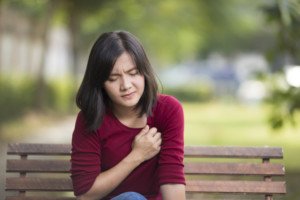
Are PVCs worth being scared out of your wits over?
Below are links to some of the premature ventricular contraction articles on this site.
All are interviews with Pam Marcovitz, MD, an internal medicine cardiologist with Frankel Cardiovascular Center in MI.
Can PVCs be life threatening if your heart is otherwise normal?
How often must PVCs occur before they begin harming the heart?
If you’re having PVCs while calm, can they still be from stress you had a while ago?
How to Calm Yourself from Anxiety that Might Be Causing Your PVCs
To calm yourself when worrying about premature ventricular contractions, start by taking slow, deep breaths to relax your body and steady your heart rate.
Practice mindfulness or meditation to shift focus away from intrusive thoughts.
Go on a kickass hike. This worked for me during a time that I was getting anxious about palpitations.
After completing the hike two hours later, I couldn’t help but think, “Gee, I must have a pretty healthy heart to have done all that with energy to spare!”
- Use physical activity as reassurance, but NOT as diagnostics.
If you’re getting a thumping or fluttering heartbeat that doesn’t seem tied to anxiety, it would be smart to get checked out by a cardiologist.
Neverthelss, you should keep exercising or start an exercise regimen: both strength training and some form of aerobics.
If you develop chest pain or nausea while exercising, then quit immediately and consult with your doctor.
How’s your sleep lately? The heart loves sound sleep. Make sure you’re doing all you can to get restorative sleep.
Caffeine and alcohol can bring on palpitations. Cut back on caffeine, and ideally, how about abstaining entirely from alcohol?
Though that may seem like a formidable task, at least make a high effort to cut back on liquor.
Don’t use alcohol as an excuse to bond socially in groups.
Another thing you can do to combat anxiety is to find a new hobby — one that relaxes you and takes your mind off your worries.
Or maybe you can revisit an old hobby that you haven’t participated in for years, such as playing a musical instrument, drawing or listening to a particular form of music.
Lorra Garrick has been covering medical, fitness and cybersecurity topics for many years, having written thousands of articles for print magazines and websites, including as a ghostwriter. She’s also a former ACE-certified personal trainer.
.
Top image: Shutterstock/CHAjAMP
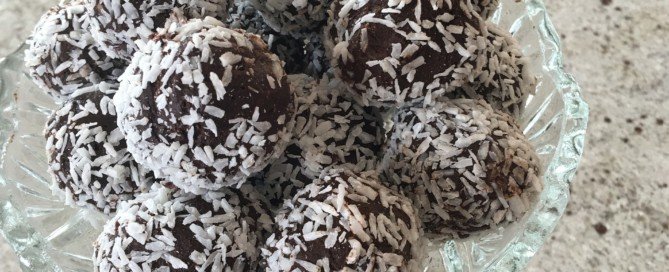
STEVIA Raw Chocolate Coconut Balls Simple Recipe
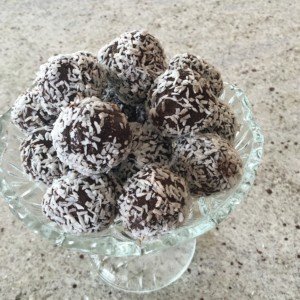
STEVIA Raw Chocolate Coconut Balls Simple Recipe
You will need:
– 12 level tablespoons almond meal (not “ground almonds,” but meal; this is very finely ground almonds)
– 8 level tablespoons coconut shreds
– 8 level tablespoons raw cacao powder
– 6 level tablespoons coconut oil
– 3 organic Medjool dates, pitted
– 8 packets Stevia (SweetLeaf brand; yes, it makes a difference)
– One-quarter teaspoon pure vanilla extract
One of the things that makes this recipe for Stevia raw chocolate coconut balls so unique is that it doesn’t require that many dates.
Other recipes on the ‘Net call for a lot of dates relative to other ingredients, and as a result, the balls end up tasting “datey” or even like cornflakes.
Instructions for Stevia Raw Chocolate Coconut Balls
In a big bowl, put all the dry ingredients first. A “level” tablespoon is literally level, not heaping.
To make it level, scoop up enough of the dry ingredients so that the spoon is heaping.
Then with a butter knife, skim it across the rim of the spoon (and please, use a standard measuring spoon, not a soup spoon).
The purpose of heaping the spoon is to make sure no air pockets are formed when you skim. In fact, skim by “bouncing” the knife as you go.
After the dry ingredients, put in the coconut oil (never refrigerate; not necessary; it has an extremely long, if not indefinite, shelf life as long as it’s securely sealed).
If you put the coconut oil in before the dry ingredients, the dry ingredients will stick to the spoon—unless you don’t mind cleaning up the spoon first.
With a butter knife, scoop out the oil (assuming it’s solid; it liquefies if room temperature is 76 degrees) and stuff into the tablespoon, then skim the surface.
Make sure there are no air pockets. Skim really good so that the surface of the oil is flush or even with the rim of the spoon. With butter knife, then dig it out thoroughly and put in the bowl.
Add the Stevia. I’ve tried other brands of Stevia, and trust me, SweetLeaf is the best. The other brands are bland and don’t do much for sweetening.
Add the vanilla extract.
With a food processor, grind up the dates. IMPORTANT: Grind up so that the end product has almost the consistency of peanut butter, in that it’s spreadable.
It doesn’t have to be creamy smooth, but almost so. If there’s a chunky-particle appearance to it, it needs more processing.
Add this spreadable date goop to the bowl.
With a sturdy steel or wooden mixing spoon, mix everything by aggressively pressing the bottom of the spoon, from the edge of the bowl towards the center, rotating the bowl with the other hand.
If your food processor can handle mixing all the ingredients, then process the dates first (so that you can visually confirm spreadability), then add the remaining ingredients. My food processor can’t handle powder; it jams the blades.
But if you’re mixing in a bowl by hand (electric mixers won’t work), you must be patient and aggressive; it takes some elbow grease.
Just keep furiously mixing, and you’ll note that the clumps of coconut oil and dates will NOT be evenly distributed.
Press on these with the spoon to further break them down and distribute them throughout the dry mix. You don’t want any one ball to have a large clump of just date or coconut oil in it.
Keep mixing till it looks like everything is evenly distributed, no isolated clumps of date goop or coconut oil.
IMPORTANT: The final mixture will appear too dry to form into balls. Do NOT add anything. If you add even another one-quarter tsp of vanilla, the balls may be too sticky.
Grab enough of the mix to make a ball, and squeeze in your palm to compact it first, then mold into a sphere between two rotating palms, a ball.
With fingers, first compact the mix a little, then begin rolling—and use enough mix to make balls almost the size of a ping pong ball.
This recipe makes 12 balls, depending on the size you roll them.
Again, the mix will appear too dry to mold into balls, but it will mold very nicely and they will hold in place.
If you want the balls to be sticky enough to roll in coconut shreds, almond meal or chia seeds, add another quarter teaspoon of vanilla. If this doesn’t quite do it, add another quarter teaspoon.]
Once nicely molded, place on a plate and refrigerate for later on if you prefer them cold, but they taste just divine at room temperature.
In fact, when refrigerated, these Stevia raw chocolate coconut balls take on a denser quality, but at room temperature, have a consistency resembling non-refrigerated squares of fudge.
These Stevia raw chocolate coconut balls are SUPER good for your body! And doggone it, you won’t believe how great they taste!
Lorra Garrick has been covering medical, fitness and cybersecurity topics for many years, having written thousands of articles for print magazines and websites, including as a ghostwriter. She’s also a former ACE-certified personal trainer.

Causes of Waking with Racing Heart After Falling Asleep

Waking in the middle of the night with a racing heart can have minor to serious causes.
Have you been awakening in the middle of the night to find that your heart is racing? Below is information for both men and women.
“One of the common causes is simply sinus tachycardia or a fast, normal rhythm,” says cardiologist Dr. Pam Marcovitz, MD, an internal medicine cardiologist with Frankel Cardiovascular Center in MI.
“This condition does not need to be treated and does not regularly reoccur.”
In other words, it’s just something that occurred while you happened to be asleep, and the change in pulse was enough to awaken you.
This same situation can happen during the day but go unnoticed if you’re up and about.
If you’re noticing these incidents, document when they occur and record your pulse, to see if over time, there’s a pattern or if these incidents of a “racing” heart are happening less frequently — or more frequently—than it seems.
Another possible cause of awakening with a racing heart in the middle of the night is atrial fibrillation, says Dr. Marcovitz.
A-fib is a potentially serious disorder, as it can increase the risk of blood clots and cause symptoms including faintness.
During an A-fib episode, the heart rate bounces all over the place; it’s not steady.
In sinus tachy, the sped-up rate is steady, as in, for instance, a steady rate of 110 beats per minute (which may fluctuate a few beats up or down every minute).
In A-fib, the pulse is not steady, and a heart rate monitor would show the numbers quickly jumping from (for instance) 110 to 174 to 142 to 170 to 94 to 152. Do not try to diagnose yourself with A-fib.
“Feeling frightened and/or having a dream or nightmare, especially if the dream involved running or physical activity, whether you remember it or not, is another possible cause” of being awakened in the middle of the night with a racing heart, says Dr. Marcovitz.
“This late night response, however, should only occur very occasionally.
If it occurs more frequently, including throughout the day, see your doctor for possible connection to a heart monitor, which will evaluate for treatable causes,” including A-fib.
Another possible cause is a panic attack while you’re asleep. Yes, this can happen.
Years ago I was dreaming I was with my brother; nothing too eventful was playing out.
But in the dream I became aware that my heart was pounding—and fast. This then awakened me — and my heart was racing and pounding.
What I believe happened was during the REM stage of sleep (rapid eye movement; dreaming), my body physically had a spontaneous panic attack.
And it worked its way into the dream I just happened to be having, kind of like how the need to urinate can work its way into a dream (e.g., you’re searching for a restroom but can’t find one).
So, I literally awakened with a racing heart. I was so afraid for my heart — even though I did a lot of exercise — that I called 9-1-1 and an ambulance took me to the hospital.
In the ambulance my heart rate was in the 130s. At the ER it turned out that my heart was just fine (according to an EKG, stethoscope exam and troponin test).
Other Causes of Awakening in the Middle of Night with a Racing Heart
“Sleep apnea, anxiety and high blood pressure may also cause a person to awaken with a fast or racing heart rate,” says Dr. Marcovitz.
“These are potential causes for which a person should be evaluated.”

Dr. Marcovitz has 40+ years of experience in helping people improve their heart health.
Lorra Garrick has been covering medical, fitness and cybersecurity topics for many years, having written thousands of articles for print magazines and websites, including as a ghostwriter. She’s also a former ACE-certified personal trainer.
.
Top image: Shutterstock/Photographee.eu



PVCs after Eating Not Caused by Food
A cardiologist says that PVCs or heart palpitations after eating are not caused by the food or the physical act of eating.
“Blood flow is shunted to the intestine after eating, so we can digest our food,” says cardiologist Dr. Pam Marcovitz, MD, an internal medicine cardiologist with Frankel Cardiovascular Center in MI.
“More blood also flows to the digestive organs. This is usually not a cause of palpitations or PVCs after eating.”
So why do some people experience PVCs after eating?
They should make a documentation of this when it occurs: time of day, who was present with them during the meal, the planned activity after the meal, and any other stressors that were present while eating or shortly after.
PVCs can be brought on by anxiety and stress.
When you’re anxious or stressed, your body’s fight-or-flight response can trigger these irregular heartbeats.
This is because stress and anxiety increase adrenaline levels, which can affect heart rhythm.
So think about this: Do your PVCs usually occur after a meal with people you were arguing with?
Do they usually occur after the last bite, and within how many minutes?
Do they usually occur when the after-meal planned activity is something stressful, like going over your bills?
Eating, in and of itself, and food, do not cause premature ventricular contractions, says Dr. Marcovitz.
The rhythm control center of the heart, known as the sinus node, is not directly linked to the digestive system.
Instead, it is located in the right atrium of the heart and is responsible for initiating and regulating the heart’s electrical impulses, which control the heartbeat.
However, the body’s autonomic nervous system, which affects both heart rate and digestion, can influence how they interact.
For example, stress or a heavy meal can affect heart rate (steady beats per minute, not PVCs) due to changes in autonomic nervous system activity, but the sinus node itself does not directly connect to the digestive system.
What Another Cardiologist Says About PVCs and Eating
Chester M. Hedgepeth, III, MD, PhD, Executive Chief of Cardiology at Care New England, says that certain foods can cause palpitations, and that there are six causes for why you may feel what seems like PVCs during and soon after eating.
Dr. Marcovitz has 40+ years of experience in helping people improve their heart health.
Lorra Garrick has been covering medical, fitness and cybersecurity topics for many years, having written thousands of articles for print magazines and websites, including as a ghostwriter. She’s also a former ACE-certified personal trainer.
.