
Are PVCs Connected to GERD in any Way?

There is probably a link between PVCs and GERD.
PVC stands for premature ventricular contraction, and GERD refers to gastroesophageal reflux disease.
Are PVCs associated with GERD?
“I think they are,” says cardiologist Dr. Pam Marcovitz, MD, an internal medicine cardiologist with Frankel Cardiovascular Center in MI.
She continues, “I find a lot of people who have GERD tell me they have PVCs. When you lay down at night, if you have GERD, small microscopic droplets of food may travel up the esophagus into airways, thus causing PVCs.”
The link between heart “palpitations” and acid reflux may also occur via other pathways.
For instance, both the “skipped heartbeat” sensation and acid reflux can be caused by anxiety.
So the symptoms, then, have a common cause in this case, but the symptoms do not act upon each other.
Do your PVCs calm down when you take a medication for heartburn?
Which usually comes first, a bout of GERD or a string of PVCs?
Take a note of timelines, concurrent stressors and your activities at the time the symptoms act up.
Over time you may discover a common denominator that can help you relieve yourself of these issues.

Dr. Marcovitz has 40+ years of experience in helping people improve their heart health.
 Lorra Garrick has been covering medical, fitness and cybersecurity topics for many years, having written thousands of articles for print magazines and websites, including as a ghostwriter. She’s also a former ACE-certified personal trainer.
.
Top image: Shutterstock/SZ Photos

Strong Heartbeat Awareness: Causes & Solutions

Dang, there goes that “cardiac awareness” again:
You REALLY feel your heart beating, or maybe this goes on for long stretches of time—even though you’re not physically exerting yourself.
“Some people are just more aware of their heartbeat than others,” says cardiologist Dr. Pam Marcovitz, MD, an internal medicine cardiologist with Frankel Cardiovascular Center in MI.
This awareness of the heart’s pumping action applies equally to men and women.
“People also seem to notice their heartbeat when they lie down to go to sleep at night, because they are quiet,” continues Dr. Marcovitz.
“If you’re heart rate is normal, it might simply be a heightened awareness, rather than a stronger than average heartbeat.”
Something inside of you is continuously pumping. Of course you will feel this at rest from time to time.
It may be more prevalent if your chest is snuggly against an arm while you’re in bed.
See what happens when you relax the snug. Experiment with different positions to see if any particular position heightens the cardiac “awareness” or diminishes it.
Ask Yourself this Question
Has your heartbeat always been strong or noticeable, but only recently you’ve been growing concerned about it?
“Becoming vigilant about noticing your heart rate may cause anxiety in and of itself, which in turn can increase heartbeat,” says Dr. Marcovitz.
“Some people are prone to panic attacks and hyperventilation, which can cause a stronger heartbeat.
“To address these challenges, take some deep breaths. If you’re hyperventilating, breathe into a paper bag. Simply try to relax.”
Another tactic is to remind yourself that it’s better to hear a beating heart than to hear what a non-beating heart would sound like!
Of course, if your heart were not beating — you would not be conscious to be aware of this since the brain needs a continuous supply of blood to function.
Dr. Marcovitz has 40+ years of experience in helping people improve their heart health.
Lorra Garrick has been covering medical, fitness and cybersecurity topics for many years, having written thousands of articles for print magazines and websites, including as a ghostwriter. She’s also a former ACE-certified personal trainer.
.
Top image: ©Lorra Garrick
Should You Do Deadlifts on Back or Leg Day or BOTH ?

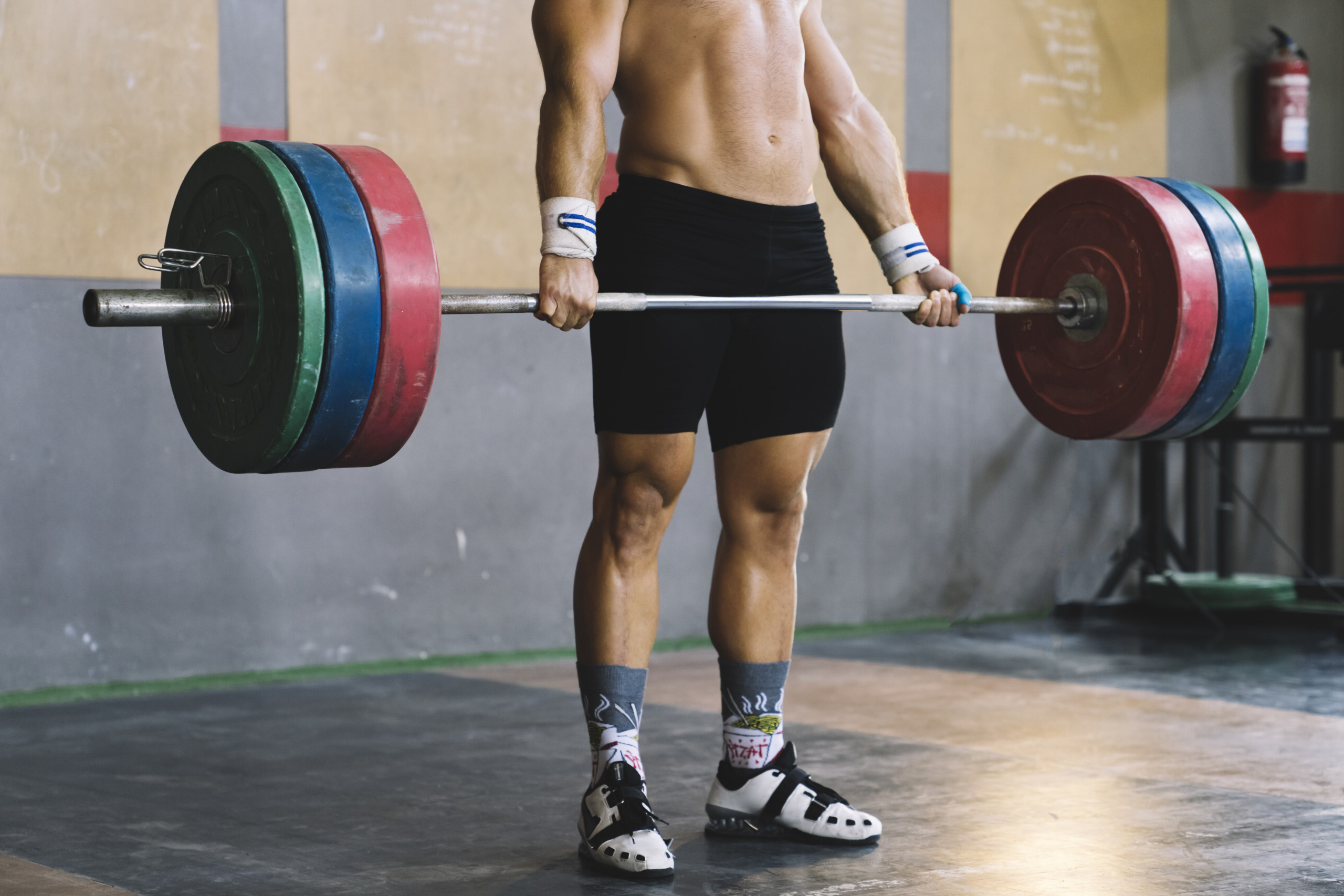
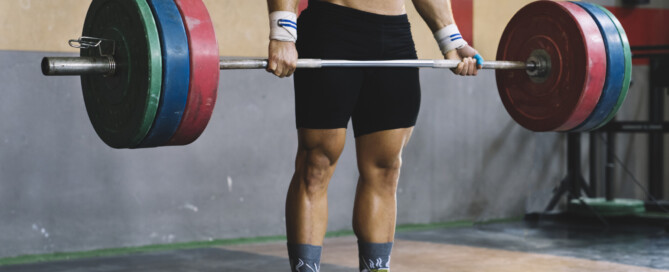
A big question in the muscle building world is whether deadlifts should be done on leg day or back day, but … why choose?
If you’ve been deadlifting only once a week and have not been making much progress, you may want to consider doing this exercise twice a week.
As for deadlifting only once a week, there are people who get great results when they are done only on leg day, and others when it’s done only on back day.
And many athletes swear that deadlifts, due to the bigness of this movement, should be done twice a week: back AND leg day.
You’re going to have to experiment. The correct answer to the question is not drilled into steel.
But one thing is for sure, whether you perform deadlifts on only leg day, only back day — or BOTH days:
It should be either your first exercise or second if your first is the back squat.
The Deadlift Is a Giant
This compound giant really take it out of you, and you want to be as fresh and as charged up as possible before starting your deadlift routine.

Freepik.com
Some people also find that doing some pull-ups or chin-ups before the deads can help, but that’s up to you.
As long as you don’t deadlift AFTER you’ve pre-fatigued your back and arms with working sets of rows and pull-downs.
And on leg day, you don’t want to hammer your body with multiple leg routines prior to doing deadlifts.
As mentioned, on leg day it’s fine if your first exercise is the barbell squat–moving right into the deadlift as the second exercise.
Freepik.com
Waiting towards the middle of your session to deadlift will also be psychologically dismantling.
Just get them out of the way very early on in the workout whether it’s a leg day or a back day.
I recommend twice a week for the deadlifts, even though again, find out what works best for you.
But the thing is, if you perform deadlifts twice a week, and at some point you must miss one of these workouts, at least you will have the other one for that same week going for you.
Lorra Garrick is a former personal trainer certified through the American Council on Exercise. At Bally Total Fitness she trained women and men of all ages for fat loss, muscle building, fitness and improved health.
.
Top image: Freepik.com
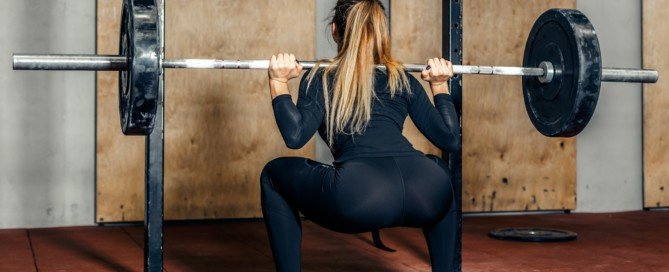
Why You Should Ditch the Barbell Pad for Squats
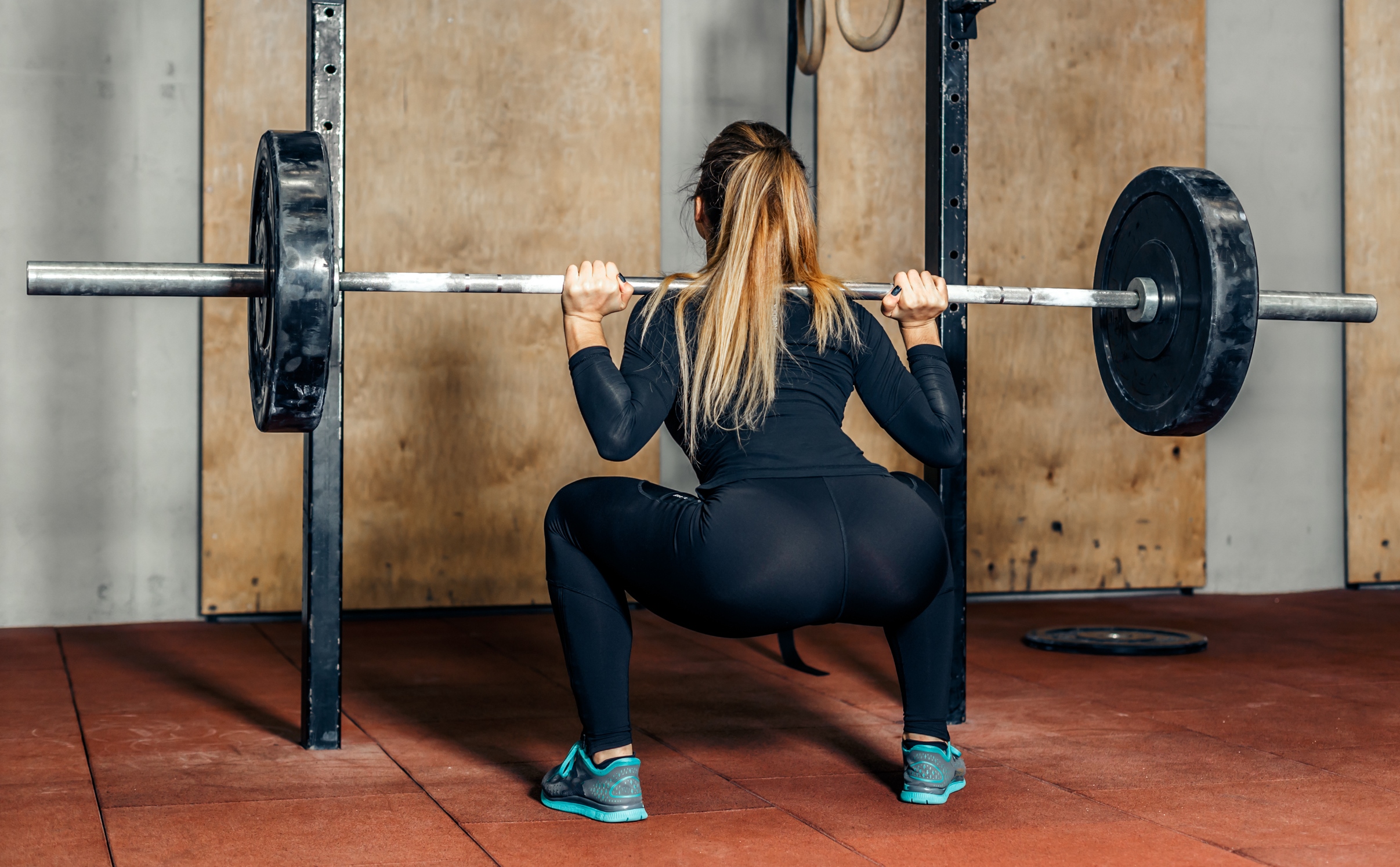
The cons of using a barbell pad for the squat outweigh the pros so much, that this article will cover only the cons.
Yes, the pad is there on the gym floor, but this doesn’t mean you have to use it for the back squat, even if you’re a beginner.
In fact, it may even be worse for a beginner.
When I was a personal trainer at a gym, none of my clients — even beginners or slightly built women — used the pad. I discouraged it.
Cons of Putting a Pad on a Barbell for Squatting
The pad will slightly alter the trainee’s center of gravity, causing that person to lean forward a bit more than they would without the cushion.
The increased forward lean diverts some of the force absorption of the exercise to the lower back: not what you want.
The idea with the back squat is to minimize as much as possible the forward lean, even though people with certain limb proportions will need to lean forward more than others.
But that’s due to their limbs. You don’t want to add an extraneous variable that forces you to lean more forward.
The pad causes the barbell to stay higher than if the pad were not there. This higher placement of the bar is what promotes an increased forward lean.
However, the pad can also cause the bar to slip a bit down your back. In rare cases, the trainee can lose control of the bar.
But who wants to worry about this? In fact, the pad may make you feel as though you’ll lose control of the bar — even if that doesn’t actually happen.
The pad can also cause you to crane your neck.
When squatting, you should not crane your neck.
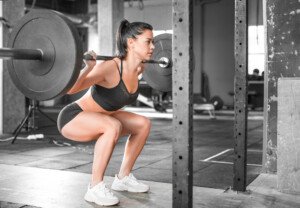
Though some people do this even without a pad, it’s still an inefficient technique.
Though the barbell squat does not mimic a real-life movement against resistance (when’s the last time or next time you’ll be rising from a squatted position out in public somewhere with something heavy loaded across your upper back?), the presence of the pad really gives this exercise an element of non-realism.
The pad is NOT part of your body.
Using a pad on the barbell almost always causes the barbell to stay against your neck, when in fact, it should rest across your upper back.
There should never be any weight bearing down on your neck.
Lorra Garrick is a former personal trainer certified through the American Council on Exercise. At Bally Total Fitness she trained women and men of all ages for fat loss, muscle building, fitness and improved health.
.
Top image: Shutterstock/IvanRiver
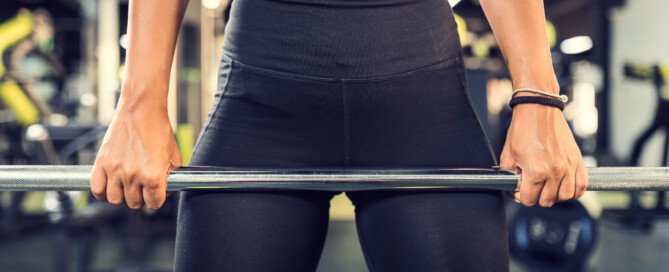
How to Stop Grip from Slipping During Deadlift WITHOUT Gloves
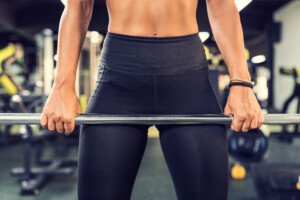
Sick of your grip slipping during deadlifts? You can solve this problem–and without gloves or straps.
Say No to Gloves During the Deadlift
Do not wear gloves. Otherwise, this teaches your hands to rely on something between your hands and the bar. Ditch the gloves altogether, and yes, you’re going to develop calluses. Deal.
Ditching the gloves means you’ll need to go down in weight. Yes, do so, but then you’ll be back to the glove weight in no time, with a stronger grip.
When you perform deadlifts, make a point of gripping tightly, even more than you have to (like during warm-ups with a lighter barbell). CONCENTRATE on applying a superhuman grip on the bar, even during warm-ups.
Make sure that the bar has decent traction in the gripping areas. Some bars are designed to be smoother than others; the smoother ones are lousy for gripping.
IMPORTANT: The above instructions must be done with both an underhand grip for some sets, and an overhand grip for other sets.
Avoid the mixed grip during the warmups!
It’s time to use the mixed grip when you reach a weight for which you can pull completely for one or two reps ONLY with either an underhand grip or overhand grip.
The next weight UP from this, then, will be your first set with the mixed grip, which is what you should do once the weight gets too heavy to use an underhand or overhand grip.
But do not warm up with the mixed grip; it’s pointless for warmups and will not help you avoid slipping at heavier loads.
Farmer Walks
Do farmer’s walks with heavy dumbbells and hold straight-armed at your sides, and walk around until you can no longer carry them.

Shutterstock/DisobeyArt
If you’re walking around for several minutes, however, the weights are too light. You should be able to walk for at least 15 seconds but not more than 30 seconds. SQUEEZE your grip hard like a vice.
If you’re a woman pretend you’re Wonder Woman. If you’re a man pretend you’re the Hulk.
Don’t bother with wrist curls; they won’t do anything for improving your deadlift grip or stop your hands from slipping off the bar.
Don’t use chalk for the same reasons not to use gloves or straps. Chalk is an artificial way to stop your grip from slipping. You want your lift to be ALL YOU, not helped by chalk, gloves or the straps.
Another exercise that will help prevent your grip from slipping when doing deadlifts is the rack pull.
- Identical to a deadlift except that the bottom portion of the movement is above floor level.
- The level is at some point along the shin, below the knees.
- This exercise is done at a squat cage where the height of the bottom movement can be set in place.
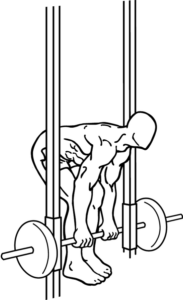
Starting position for a rack pull. Everkinetic, CreativeCommons
And finally, when doing heavy deadlifts, hold the top position for a few seconds before lowering, and lower with control.
Do not let the bar crash down.
The “negative” portion of the lift, even on the last repetition, is very important.
When the negative portion of the deadlift is done with control rather than letting the barbell slam to the floor, you will strengthen your grip even more, and this will help solve the problem of slipping hands — all without gloves.
 Lorra Garrick is a former personal trainer certified through the American Council on Exercise. At Bally Total Fitness she trained women and men of all ages for fat loss, muscle building, fitness and improved health.
.
Top image: Shutterstock/Burnt Red Hen

Why You Should Never Ask People Why They Never Remarried

You should never ask someone why he or she never remarried. This is just plain thoughtless and inconsiderate.
It’s dumbfounding how often people, who’ve lost a spouse to death, are asked this question.
However, it’s still a dopey question when it’s asked to a divorced woman or man as well.
Either way, it’s an offensive question, even though there will always be that predictable percentage who will actually delight in explaining why — especially if they lost a spouse to divorce rather than death.
“This question feels very personal for most,” begins Talia Wagner, marriage and family therapist and author of “Married Roommates.”
“When some people are asked this, it comes off as judgmental and critical.
They feel judged for the lifestyle they have in the moment, and the question is taken as their failure to meet the social norms or the expectation of others.
“Some people have a negative viewpoint of marriage and know that they never want a redo of that time.
“However, they also may not want to be judged for having a negative interpretation of marriage, so they give a surface- or façade-like answer, or get upset for even being asked about it.
“This is frequently a defensive response to their own interpretations and insecurities.”
Is it supposed to be easy to find another soulmate?
When people ask, “Why haven’t you remarried?” or something similar, such as “How come you never got remarried?” it’s asked as though remarrying is as easy as buying a new pair of shoes.
A considerate person with common sense will avoid asking this question.
If you know the divorced or widowed individual very very well, you’ll very likely already know why they never remarried.
If you don’t know why and are wondering — DO NOT ASK. Instead, try to figure it out on your own — which shouldn’t be hard to do.
There are several logical explanations for why a widow or widower never remarried:
- They just never crossed paths with Soulmate #2.
- They can’t conceive being with someone other than their deceased beloved, whom they believe was the only one meant for them.
- They are too despondent to date again.
Wagner adds, “For these people, getting remarried feels like a betrayal of their beloved lost one, and swearing off marriage just feels like the right thing to do to not taint their memory.”
As for the divorced person:
- See the first bullet point above.
- By the time the divorce rolled around, the children were still young and naturally demanding, and the parent has decided to involve themselves as much as possible with their kids instead of getting involved with a new person.
For some divorced men and women, Wagner explains, “Marriage was hard for them, and the thought of going through anything similar ever again becomes so distasteful that their overall view of marriage gets colored by it.”
Next time you’re tempted to ask someone why they never remarried, consider the possibility that they’ve been on many bad dates and have had several worthless relationships — and are now bitter and frustrated — and have decided to throw in the towel.
 Talia Wagner, along with her husband Allen, has a private practice in California.
Lorra Garrick has been covering medical, fitness and cybersecurity topics for many years, having written thousands of articles for print magazines and websites, including as a ghostwriter. She’s also a former ACE-certified personal trainer.
.
Top image: Freepik.com, katemangostar
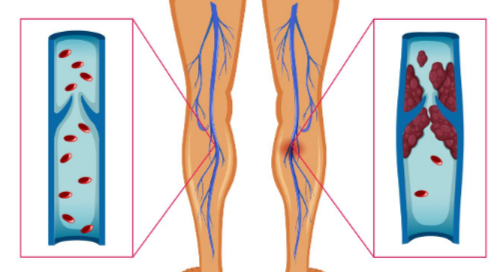
DVT Risk after Joint Replacement Surgery Stays for Years
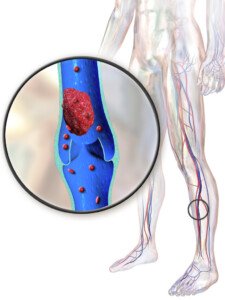
The length of time that DVT risk remains significant after joint replacement surgery will shock you.
It’s years. Yes, the risk of this dangerous blood clot goes on for years after the joint replacement.
This is the result of a study, led by Yuqing Zhang, D.Sc., Professor of Medicine and Epidemiology at Boston University School of Medicine, that was published in Arthritis & Rheumatology.
Risk of DVT is high in the first month following joint replacement surgery (knee or hip), but this risk persists for a long time out—years, say the researchers.
“The long-term risk of heart attack was insignificant,” says Dr. Zhang in the 2015 paper, “but risk of blood clots in the lung remained for years after surgery to replace a hip or knee damaged by osteoarthritis.”
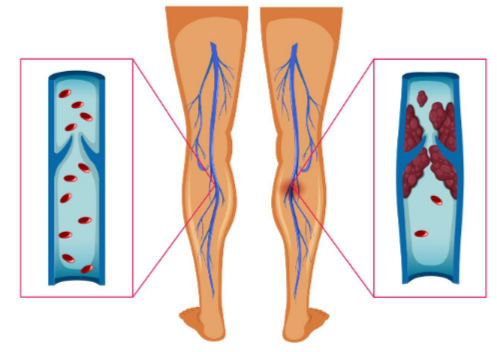
A blood clot in the lung is called a pulmonary embolism, and this originates from a DVT (deep vein thrombosis) in the leg when a portion of it breaks off and travels to the lung.
The results of Zhang’s study means that long after your surgeon has taken you off the blood thinners to prevent a DVT, you must still be alert to symptoms that could mean this kind of blood clot.
Why aren’t joint replacement patients on blood thinners for much longer if DVT risk persists for years?
“Anticoagulants raise the risk of bleeding, especially in the head and brain,” says Dr. Paramjit “Romi” Chopra, MD, founder of the Midwest Institute for Minimally Invasive Therapies (MIMIT), an interventional radiology and endovascular therapy practice.
“Therefore, they are not prescribed indefinitely after joint replacement surgery — with the assumption that these patients will resume their normal activity within a few weeks to months,” continues Dr. Chopra.
“Staying active, well-hydrated and maintaining an optimal weight will reduce the overall risk of DVT.”
Symptoms of a DVT are any of the following:
- Redness in the lower or upper leg
- Swelling in the lower or upper leg
- Tenderness or warmth to the reddened area
- A pain or cramp in the calf, leg or pelvic area that does not go away when you sit and rest the leg
However, half of DVTs do not produce symptoms. If some of it or all of it travels to the lung, this can produce one or more of the following symptoms:
- Difficulty breathing
- Chest pain
- Fainting or a faint feeling
Though the risk of a DVT, according to the study, stays for years after the joint replacement surgery, you now know why your surgeon will not want you on a prescription blood thinner for those years.
Dr. Chopra combines his Eastern roots and 30+ years’ Western experience to unify the best of both worlds at MIMIT to treat venous disease, peripheral artery disease and musculoskeletal disease.
 Lorra Garrick has been covering medical, fitness and cybersecurity topics for many years, having written thousands of articles for print magazines and websites, including as a ghostwriter. She’s also a former ACE-certified personal trainer.
.
Top image: BruceBlaus/CreativeCommons
Source: sciencedaily.com/releases/2015/08/150831001112.htm

Younger Daughter Bigger than Older Son: Solutions

Do you have a younger daughter who’s bigger than and bullies an older son?
Don’t blame the size difference before you look in the mirror as the cause.
There’s a thread on a health site explaining that the girl is nine years…but 5-5 and 120 and shows signs of puberty. The son is 13, five feet and 90 pounds.
The post describes the son as depressed, and that he and his sister occasionally get into fights and that she is stronger “and can hurt my older son.”
The second case from answers.yahoo.com involves a 16 year old boy, 5-5, and his 14 year old sister, six feet.
The parent writes that the girl regularly inflicts physical harm to him.
I used to be a certified personal trainer for a large gym. My knowledge of physical fitness, muscles, force exertion, etc., tells me that the nine year old girl — as a general rule now — cannot possibly be stronger than a 13 year old boy.
Never mind the height difference; his body is 13 and her body is only nine.
Long bones and long muscles don’t translate to more absolute strength. Let’s call her “Sally” and him “Jack.”
Unless Sally has a bizarre medical condition that has caused her to acquire teenage musculoskeletal development at age nine, I very strongly doubt that she could bench press more weight or throw a harder punch than a same-age girl of “normal” height.

Shutterstock/F8 studio
Though Sally would find it easier than her female classmates to, say, place a 15 pound box on a six-foot-high shelf, this is only because of her positioning — her start position has her vertically closer to the shelf.
But this isn’t a display of absolute strength. An example of absolute strength, rather than mechanically-advantaged strength, is that of pressing a force away from your body.
Though a longer arm should have more torque than a shorter arm, and thus in theory should be able to land a harder punch, I have not seen evidence of this in all the years I’ve studied martial arts.
Due to his age, Jack has more developed muscles, bones and neuromuscular connections.
This would make him stronger in the absolute sense. But psychologically, Sally has him pummeled.
I’ve worked with short strong clients and tall “weaklings.” For instance, I’ve had tall clients struggle with pushups.
So then, what’s going on when the smaller son gets beaten up by his younger, bigger sister?

Shutterstock/aekkorn
The shock value that Little Sis is so much taller may create the illusion that she’s stronger.
This may intimidate the older brother who already has a pre-existing low self-esteem stemming from unhealthy family dynamics.
One day Sally gets mad at Jack and shoves him. Her towering height scares him; he concludes she’s stronger; she comes to believe this based on his fear; she continues pushing him around because she thinks she’s stronger.
(I wonder which of these kids Mom tells to take out the heavy garbage — I’m betting the son.)
I’m betting Jack would find it easier to bench press an empty Olympic bar (45 pounds) than would Sally.
But there’s a big power imbalance going on that’s based on psychology, not muscle fibers.
Haven’t you yourself ever witnessed, when growing up, situations in which the bully was smaller than the victim? I certainly have.
Even in the adult world, the “bully” is sometimes smaller than the victim.
It’s akin to the feisty cat scaring off the much bigger dog.
In the second example, the six-foot-girl might be stronger than her slightly older, shorter brother because she’s already 14.
Maybe she’s a jock; maybe the brother, only two years older, is a bookworm.
A child or teenager will not automatically become a bully to an older sibling just because the older sibling is a lot shorter!
If being bigger than the older sibling is indeed all it takes to turn a child into a bully…then nearly every teen or child with a smaller but older sibling would be a bully.
Size differences do not create bullies! Size is only a tool that the bully realizes she has!
SOLUTIONS
– Get to the root of the sibling bullying instead of blaming it on the superficial feature of size difference.
Could it be your own behavior that’s setting a poor example? Bullies don’t always spring from a physically abusive parent.
For example, “What is more likely, is that children who bully have witnessed their parents use bullying tactics on others,” explains Rona Novick, PhD, developer of the BRAVE bully prevention program and a clinical psychologist.
“They may see Mom or Dad abuse their power to get their way with waiters, dry cleaners, teachers, neighbors or other family members.”
– Reassess your typical response to the fighting between your younger, bigger daughter and older, smaller son. It’s obviously not working.
“Scolding is not the best remedy; humiliating a child only escalates the behavior,” says Janet Lehman, MSW, co-creator of The Total Transformation Program, a program for empowering parents.
“The best approach is to clearly identify the behavior: Label it, communicate that it is unacceptable and attach a clear consequence for the rule breaking,” says Lehman.
– Enroll both kids in martial arts. The bully will mellow out and learn self-discipline, and the victim will learn self-confidence and have tools to stop a fight with minimal physical force.
– Telling Sally to be nice to Jack because she’s probably stopped growing, but he hasn’t yet reached his growth spurt and will be bigger and stronger than her in a few years, won’t correct the underlying problem.
 Dr. Novick is recognized for her expertise in behavior management and child behavior therapy. She has published scholarly articles on school applications of behavior management, children and trauma, and bully prevention in schools.
 Janet Lehman, with her husband James, developed the foundational parenting programs offered by EmpoweringParents.com.
Lorra Garrick has been covering medical, fitness and cybersecurity topics for many years, having written thousands of articles for print magazines and websites, including as a ghostwriter. She’s also a former ACE-certified personal trainer.
Top image: Shutterstock/Black Rock Digital
Sources: healthboards.com/boards/childrens-health/309697-8yr-old-boy-blood-urine.html and: answers.yahoo.com/question/index?qid=20110515065052AAfl9I2
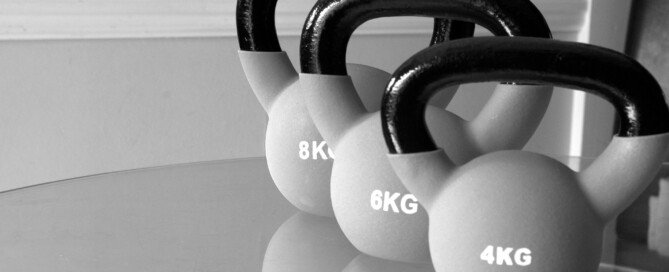
Pushups Using a Dangling Kettlebell: Instructions
Get ready for the kettlebell heavy pushup — for those who dare, for those who find pumping out lots of plain ‘ol pushups is just way too easy.
Pushups need not be fancy to be tough and intense.
For people who are no longer challenged by the conventional pushup, and who don’t want to hassle around with the placement of weight plates on their back, or fussing around with tension bands to add resistance, the kettlebell heavy pushup is just for you.
Equipment needed: kettlebell (ideally two or three of different weights), dip belt and two high exercise stools.
Getting Started
It would be wise to do a set of non-weighted pushups using the stools, to get used to how it feels to perform this exercise in this fashion.
The stools are placed apart so that one’s hands are on the top of one stool, and the tips of their feet are on the second stool: a standard pushup position.
From here, simply do a warm-up set. If you find that your middle is sagging towards the space between the two stools, figure out why this is happening.
It may very well be bad form. During a pushup, the body is supposed to be straight as a board, like a plank of wood. Imagine a group of military personnel doing pushups.
On the other hand, if a trainee cannot keep their body straight, they are not strong enough to perform pushups with solid form.
Bad form (either due to unawareness or weakness) should not be tolerated in the pushup any more than it’s tolerated in the squat.
Though bad form in a pushup isn’t as risky as bad squat form, it will still interfere with achieving desired results.
How much added weight do you think you need to be challenged by a set of pushups?
Select that weight of a kettlebell. However, select two more weights; one lighter and one heavier, just in case your judgment is a little off, or in the event that you want to do drop sets.
Working Sets
Slip into a dip belt and attach a kettlebell, then position yourself on the stools in a pushup start position.
The arms are extended, feet on toes, body straight, kettlebell hanging below midsection.
Now lower into a pushup. The stools should be high enough so that when you lower, the kettlebell does not touch the floor. Push back up. A variation is to place the hands over the sides of the stool.
What makes this kind of weighted pushup superior to bands or a plate placed on the back, is that the added resistance is disconnected from the body.
In tension band pushups, the bands surround the body and are integrated with the trainee. Of course, a plate on the back is on the body.
The kettlebell hangs and even swings a bit. Even the tiniest swinging adds to the workout.
Plus, because it’s disconnected from the body, it produces a unique element to the so-called resistance arm.
In a regular pushup, as well as tension band style, the resistance arm is not extended.
The resistance arm is the athlete’s body itself. When one adds a plate to the back, the resistance arm is extended only by the width of the plate, which is negligible.
In the case of a suspended kettlebell, the resistance arm is extended for whatever the length is from the attachment point of the dip belt to the bottom of the kettlebell; that’s a lot of extra vertical resistance.
Is there a way to increase intensity without increasing kettlebell weight? Yes, depending on available equipment.
If the feet are elevated higher than the hands, this will make the pressing harder.
Give this a try if you can find two elevated surfaces of different heights, but that will get you high enough to prevent the kettlebell from touching the floor.
Why not just do elevated regular pushups for increased resistance?
Why bother hooking up a kettlebell? The more that the feet are elevated, the more that the muscle recruitment shifts from chest to shoulders.
This is why an elevated pushup is harder than a flat one; the shoulders are forced to take more work, and shoulders aren’t as strong as the pectoralis muscles of the chest.
The most elevated form of a pushup is the handstand press; this is all shoulders and very difficult.
It should be clear now why simply elevating the feet higher and higher isn’t a practical solution for those wanting to create a heavier pushup.
The kettlebell heavy pushup keeps the chest as much involved as in a regular pushup, without the trainee having to hassle with the balancing moves of placing each hand on a medicine ball for “extra intensity” or doing other funky things like using only the fingertips or clapping in between.
Lorra Garrick is a former personal trainer certified through the American Council on Exercise. At Bally Total Fitness she trained women and men of all ages for fat loss, muscle building, fitness and improved health.

Plantar Fasciitis Prevention: New Habit for Stronger Feet
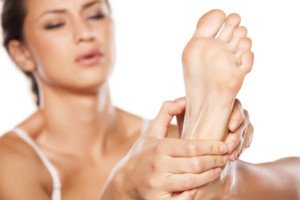
There is a unique but very simple way to help prevent the heel pain of plantar fasciitis, and it’s so cheap you won’t believe it.
Just kick off your shoes. And socks. This is what Patrick McKeon recommends. He’s a professor at Ithaca College’s School of Health Sciences and Human Performance.
This doesn’t mean throw out the arch supports. Keep using those, but in addition, go barefoot.
Think of the muscles in the feet as having the same kind of job as the muscles in your “core” (abdomen and lower back).
MeKeon says that there is a feedback cycle between larger muscles of the foot and leg and smaller muscles of the foot.
These two muscle groups send information to the brain. Shoes interfere with this signaling, a “missing link,” he says.
The result is that the larger muscles over-compensate and eventually become too overused to keep up with repairing themselves, leading to overuse injuries including plantar fasciitis.
To help prevent plantar fasciitis, which typically causes a burning type of heel pain, McKeon suggests Pilates, martial arts and yoga—and performed barefoot.

Freepik.com yanalya
Use Common Sense
You don’t want to be playing basketball, volleyball or running on a treadmill barefoot.
“Going barefoot can be beneficial for some, if performed properly (on safe surfaces, done gradually so as to build up mileage over time, and proper stretching is performed before and after activity),” says Bruce Pinker, DPM, who specializes in sports medicine and surgery of the foot and ankle.
“It may help strengthen feet and prevent plantar fasciitis,” says Dr. Pinker.
“Barefoot walking and running is a great activity that can strengthen feet, but should always be performed with caution so as to avoid injury.”
Just make sure you don’t stub your toes and that there’s no broken glass or other sharp objects on the floor.
 Dr. Pinker