
Gurgling in Upper Stomach, Chest: Causes Include Cancer

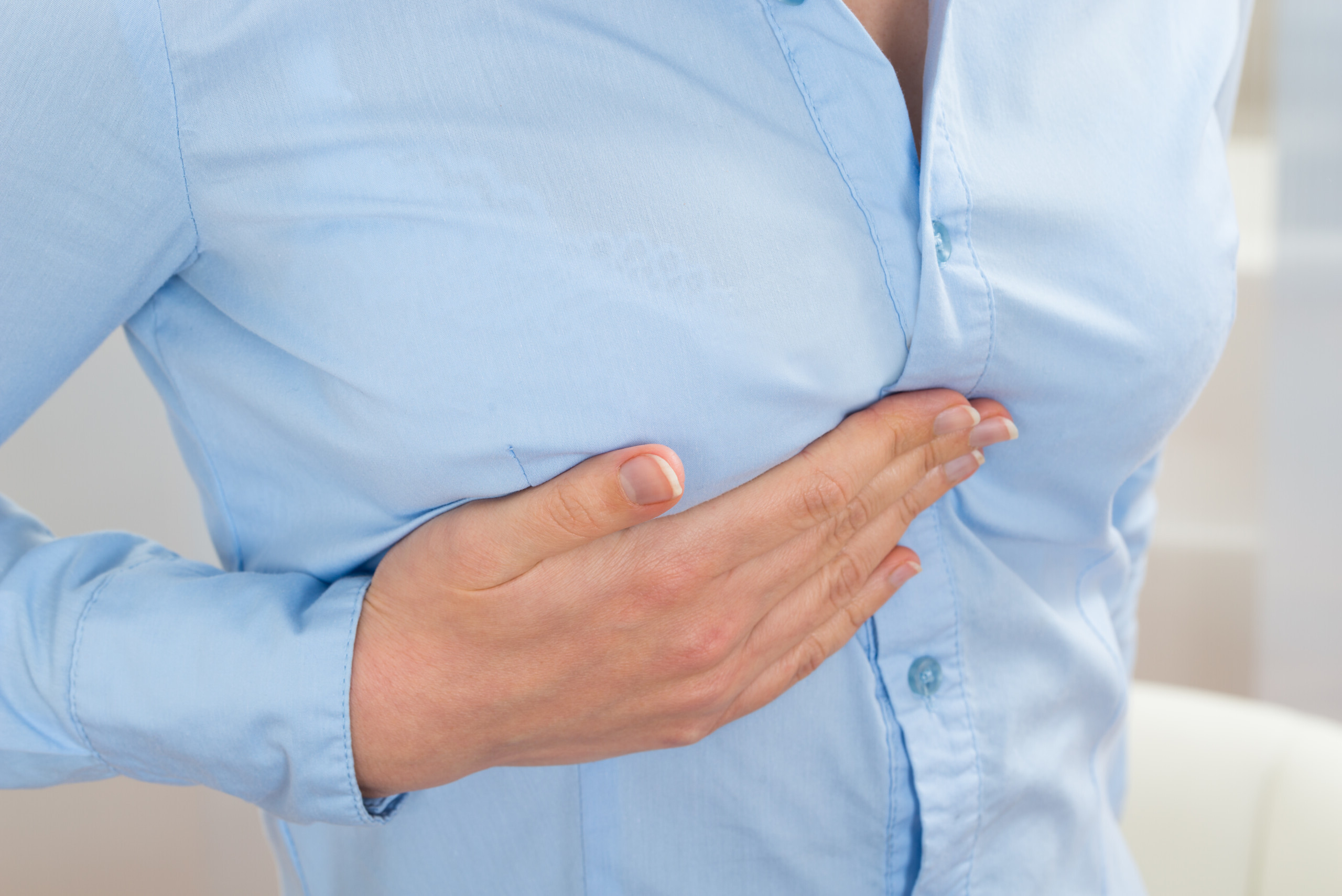
If you’ve been hearing or feeling gurgling in your upper stomach or chest, cancer as a cause is not impossible.
But the odds of this being benign in nature are piled in your favor – even if you’re over 50.
We all have gurgling from time to time in our stomach, but usually it’s in the lower or middle portion.
Gurgling that’s higher up, especially at chest level, is more unusual and hence, more worrisome.
After all, the heart is in the chest. Could an imminent heart attack be causing gurgling noises in the chest? Or what about clogged coronary arteries?
The good news is that heart problems do not cause gurgling sounds.
Most Likely Causes of a Gurgling Feeling or Noise in the Upper Stomach or Chest
“Gurgling usually indicates movement of fluid and gas in the intestine,” says Dr. Neil Sengupta, MD, a general gastroenterologist and assistant professor at the University of Chicago, and and GI Research Foundation Scholars Award Recipient.
“This can occur in the beginning of the stomach or small bowel, which can manifest in the upper abdomen,” continues Dr. Sengupta. “Bowel sounds are normal.
“However, certain gastrointestinal diseases can be associated with exaggerated bowel sounds, particularly when the patient has additional symptoms such as diarrhea or significant abdominal pain or swelling.”
This includes irritable bowel syndrome and inflammatory bowel disease.
“Certain common conditions such as lactose intolerance can lead to exaggerated gurgling or bowel sounds,” adds Dr. Sengupta.
“Gurgling or sounds in the chest can also indicate movement of gas or fluid in the esophagus to the stomach or vice versa. Some element of this can be normal.”
Serious Causes of Gurgling in the Upper Stomach or Chest Area
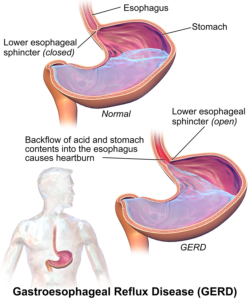
“However, when this is associated with significant pain or heartburn, this can indicate abnormality or pathology in the esophagus.”
There are three serious conditions that are potentially involved with this symptom.
• Esophageal (peptic) ulcer – usually caused by an infection but could also be caused by acid reflux.
Source: BruceBlaus
• Barrett’s esophagus – caused by acid reflux, this is a risk factor for esophageal cancer.
• Esophageal cancer – other risk factors include smoking, drinking, obesity, frequent intake of hot beverages, and low intake of fruits and vegetables.
The first two of these serious conditions are more likely. An ulcer would also usually cause bloating, nausea/vomiting, appetite suppression, pain when swallowing and a dry cough.
Barrett’s esophagus would typically cause frequent heartburn, trouble swallowing food and (not as commonly) chest pain.
Esophageal Cancer
- Symptoms are difficulty swallowing, heartburn, chest pain or pressure, coughing, hoarseness and unintentional weight loss.
- Mortality rate is exceptionally high.
- Cancer of the esophagus is uncommon, with about 17,200 new diagnoses every year in the U.S., according to the National Cancer Institute Surveillance, Epidemiology and End Results Program.
- Average age at diagnosis is 68, and incidence rises sharply after age 55.
- Only 12.3 percent of diagnoses are in people 35 to 54.
With all of that said, it should be clear that hearing gurgling sounds or feeling this sensation coming from your chest or upper stomach – in the absence of worrisome symptoms – very most likely means just run-of-the-mill functions of your digestive tract.
 Dr. Sengupta’s research interests involve optimizing the care and outcomes of patients hospitalized with gastrointestinal bleeding. Specific interests include GERD, colon cancer screening and fatty liver disease.
 Lorra Garrick has been covering medical, fitness and cybersecurity topics for many years, having written thousands of articles for print magazines and websites, including as a ghostwriter. She’s also a former ACE-certified personal trainer.
.
Top image: Shutterstock/Andrey_Popov

Discomfort Behind Breast when Swallowing: Cancer May Be Cause

Discomfort behind the breast upon swallowing has different possible causes including cancer – but not breast cancer.
Furthermore, a heart problem may be a possible cause that occurs to the person experiencing pain in this area. (more…)

Can Breast Cancer Cause a Tiny Hard Red Lump on the Skin?

Usually, a lump caused by breast cancer cannot be seen simply by looking at one’s breasts.
But it’s not impossible for a tiny hard red lump on the skin over one’s breast to be caused by breast cancer. (more…)
Can a Woman Fly with Arm Lymphedema from Breast Cancer?
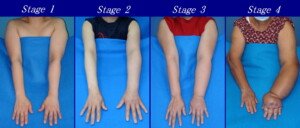
Under what circumstance would arm lymphedema prevent a woman from flying in an airplane? (more…)

Is It Safe for Elderly to Submerge Sprained Ankle in Ice Water?
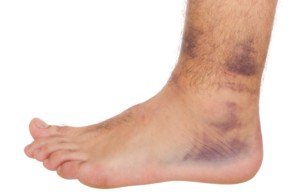
Being that very elderly people have such thin skin, the question comes up of whether it’s safe to submerge their sprained ankle in ice water. (more…)

Can Acid Reflux Cause Red Irritated Tonsils?

It’s not a pretty sight: peering inside your mouth to see that your tonsils are red and irritated looking.
The tonsils are in the path of acid reflux that makes it into the throat.
The refluxed contents from the stomach contain acid, which is anything but gentle. (more…)

Can Pain in Chest Under Clavicle Be Esophageal Cancer?

Pain under one’s clavicle in the chest area can have so many causes, and for those worrying that this means esophageal cancer – unfortunately, this IS a possible cause. (more…)

Can You Prevent Type 2 Diabetes with Whole Grains?

Whole grains are good for someone with type 2 diabetes, but is it a far reach to think that whole grains can outright prevent this metabolic disease? (more…)

Arm Pain when Heart Is Racing: Heart Attack or Anxiety?
Have you been trying to convince yourself that your symptom pair of a racing heart and arm pain is anxiety rather than a heart problem? (more…)

Constant Stomach Pain that Gets Worse when Eating

The patient said she had continuous stomach pain day and night that got worse eating.
Her doctors could not find anything wrong. (more…)