
“I’m so Tall: Will I Ever Find a Husband?”

For very tall women, worrying about ever finding a husband can be a very hardcore reality, being that many tall men go for “the short girls.”
Some tall women of at least six feet believe they have a very limited pool of men from which to choose, since hoards of men stand between 5-10 and six feet.
Tall women may believe a husband will never be in the picture because most men are not over 6-1; or, perhaps some tall women believe that few men under six feet would be interested in a woman of at least six feet.
There is a site for tall women that has a “tall quotes” page.
Tall women are welcome to post comments, and the concern over finding a husband comes up on a recurring basis.
Check out this posting, copied word-for-word, from the site:
6’2 1/2″ Gisele wrote (April 2nd 2009)
OMG, I feel so embarrassed in school. By the way, I turned 17 in January and I just feel soo insecure sometimes – it’s just too bad.
Sometimes I realise that some of the boys like me but they get intimidated by my height. It’s soo uncomfortable… it makes me wonder about my future husband.
There are a few boys around who are my height and sometimes even a bit taller but they go 4 shorter gils and it’s like “WHATT??”. My ideal guy is at least 6’1 1/2″ or 6’2″, my height. I need help people!
How can we help Gisele and tall women like her?
We need to first know if Gisele, and like-minded tall women, have automatically scratched shorter men off the list of potential husbands because they’d feel awkward looking down at their husband.
So that leaves only men over six feet, which greatly reduces the pool of husband prospects.
On the other hand, maybe Gisele wouldn’t mind at all dating a shorter man, but believes that shorter men wouldn’t be interested in her; or perhaps she’s approached many shorter men, and none were interested.
This is vital information, because if Gisele is open to dating shorter men, she’s already doing a good job of seeking out a possible husband.
But if Gisele, as well as other tall women, will not give shorter men a chance, due to 1) Feeling awkward, 2) Societal expectations that the man be taller than his woman, and 3) Not wanting to feel “huge” around a man, then Gisele is making a big mistake.
The funny thing about this is that many SHORT women face a similar problem!
Here we have quite a few tall women who simply will not give a man under six feet the time of day. She worries about finding a husband since fewer men are at least 6-1.
But if a short woman shares the same sentiment about not wanting a man under six feet, she sort of ends up in the same boat as tall women who won’t look at a shorter man!
A 5-3 woman wants a man who absolutely must be six feet minimum: This limits her choices.
However, the short woman actually has a better crack at finding a husband, because some tall men want only short women!
In fact, it’s not uncommon for tall women to point out that the short girls take men away from them.
This very complaint was posted in one of my other articles about tall women. I have also seen this complaint come up repeatedly on the “tall quotes” page of the Web site.
I’ve seen it on a few other threads on different sites about height and dating.
Short women want tall men to feel protected, since being short can make a woman feel vulnerable. Tall men who want short women want to play the role of protector; they’ll definitely feel this way if their lady is a shortie!
Gisele needs to be less restrictive on her height requirement, and hang out where many tall men gather, like at a health club.
Maybe she could learn volleyball and eventually join some leagues, including recreational level leagues.
She can place online and print ads that include her height. She can read these interviews with men who love tall women to keep her hopes up.
Source: tallwomen.org
 Lorra Garrick has been covering medical, fitness and cybersecurity topics for many years, having written thousands of articles for print magazines and websites, including as a ghostwriter. She’s also a former ACE-certified personal trainer.
.
Top image: Shutterstock/SpeedKingz

What Tall Women Dating Shorter Men & Vice Versa Must Know

I hope dating taller women doesn’t make you men feel like less of a man. You’d be no more of a man if you dated women shorter than yourselves.
It comes down to: What makes a man a man? Certainly not how tall his woman is.
I was inspired to write this after seeing a woman at the store who was at least four inches or so taller than me (I’m 5-8), and her boyfriend appeared to be around 5-10.
Both were wearing sandals, so regardless of their exact heights, the woman clearly had three inches on him.
They seemed happy together. And to think that a lot of men at 5-10 — average height for young American men — would feel ill at ease or not as macho if their women were tall…taller than themselves.
And to think that many tall women would be bothered if their men were three inches shorter.
What men need to realize is that you are whom you are, regardless of your woman’s height.
Men of average height look like men of average height, regardless of how tall the women they date are, or how tall the woman he marries is.
It’s sad, but true: Some men (and maybe that “some” is a tiny percentage, but nevertheless, it exists) would feel a threat to their manhood or manliness if they got involved with a tall women, even if the man’s height was 5-10 or even six feet.
And sadly, there exist tall women who’d feel “huge” or masculine with a shorter man. But a woman who’s 6-2 is still 6-2, whether her man is 5-11 or 6-7.
I certainly don’t think very tall women look shorter when they are standing next to even taller men.
Recently I was in the store and came up behind a man in the checkout line, who wasn’t that much taller than me.
In heels I’d be eye to eye with him easily. I pictured him with a six-foot-tall woman in heels.
It would have been impossible for this man to be perceived as less manly than he really was, no matter how tall his woman was, because this guy had exquisite muscular development. The bald head added to his machismo.
On the other hand, I see men all the time whom I perceive to be wimpy, nerdy or incapable of “protecting” a woman from a mugger…even though I’ve seen these men by themselves, having no idea what their women looked like.
In other words, the woman standing beside a man doesn’t make the man. The MAN makes the man. If a man is a wimp or a meek geek, this doesn’t change if his woman is shorter.
Even though that 5-10 man at the store had to look up at his woman when talking to her, I’m sure that he’s the one who’d change the flat tire if both were on the road; he’s the one who hauls out the heavy garbage; and he’s the one who’d confront the home intruder with a baseball bat.
Lorra Garrick has been covering medical, fitness and cybersecurity topics for many years, having written thousands of articles for print magazines and websites, including as a ghostwriter. She’s also a former ACE-certified personal trainer.

Tall Women, Short Men: A Woman Wants to Feel Protected

Many tall women claim that they don’t feel “protected” by a boyfriend unless the man is taller.
It’s common for women (and tall women are no exception) to want to feel “protected” by the man in her life.
What I have a problem with is this myth that a man must be taller than a women in order to have protective qualities.
A man who’s taller than his tall girlfriend can’t necessarily fight better than a man who’s shorter.
Being tall is worthless if you can’t throw a punch.
Tall women should ditch the idea that a shorter man cannot protect her. Taller men aren’t necessarily stronger, either.
There are short men who can throw very mean punches and move as quick as a panther.
If tall women don’t like the aesthetics of a shorter man, that’s more understandable. But to be comfortable ONLY with taller men just because of this “protection” thing ??
Oddly, there ARE tall women who say one of the advantages to being very tall is that they feel safer; a 5-10 man would rather attempt a rape on a 5-5 random woman than a six foot tall random woman.
The average American male stands 5-10. I wonder what the average height difference is between rapists and their victims — when the victims didn’t know the rapist.
I’d bet that in most cases, the rapist is at least four inches taller, and in very rare cases, the woman sees eye to eye with the rapist, and in extremely rare cases, she’s taller — as it, once again, applies to victims who did NOT know their attackers.
This desire to “feel protected” seems to arise from factors unrelated to height (hence, why tall women are capable of feeling this need as much as short women), but more related to all the factors in a woman’s past that contribute to her sense of self-worth, self-confidence and self-reliance.
Evolutionary scientists believe that a woman’s burning desire for a taller man roots back to evolution.
On the other hand, many tall women insist a man be taller simply because of appearances.
Another reason is, unfortunately, the woman worrying what others will think if the top of her boyfriend’s head comes up to her eyes.
But back to this idea that a woman won’t feel secure and protected unless her boyfriend or husband is taller than her.
This means that a 5-7 man would be great at protecting his 5-2 girlfriend, yet lousy at protecting his 5-11 girlfriend —
EVEN THOUGH the thug he’s protecting them against is the SAME PERSON!
So according to the logic of these tall women, a 5-7 man is capable of beating up the 5-7 or 5-11 thug ONLY if the girlfriend is shorter!
But if she’s taller than the boyfriend, he suddenly can’t throw a punch!
Please Lord, help me understand why some (not all, but some, and maybe only a small percentage at that) tall women don’t feel safe with a shorter man. Really, whom do you think could protect you better: 5-7 Fonzie or 6-3 Kramer?
Lorra Garrick has been covering medical, fitness and cybersecurity topics for many years, having written thousands of articles for print magazines and websites, including as a ghostwriter. She’s also a former ACE-certified personal trainer.
.
Top image: Shutterstock/Jasenka Grujin

Tall Women Preferred By These Three Men

Attention to all tall women: You have fans! End the slouching and avoiding high heels — I interviewed three men who LOVE tall women — and I don’t just mean 5-8 or 5-9, but over six feet tall!
These three men represent only a fraction of the many men out there who think tall women are goddesses.
So to all tall women who have a habit of letting self-consciousness or people’s dumb comments and questions ruin your life: These three men find tall women very attractive.
What tall women must realize is that not all men prefer “the short gals,” and not all men, who like tall women, are super tall men themselves.
Also, not all men who like tall women are short men, which is another stereotype directed at men who prefer tall women.
There is nothing wrong with the men who love tall ladies. In fact, I’d say there’s something very right about such men!
I’m 5-8 and I’d be lying if I said I never worried that my ideal man has crossed paths with me but looked straight past me because I wasn’t tall enough for him!
Here are the men
Jim McClure, 6-3, 47, publicist/writer from Arlington Heights, IL
Jim’s preferred height range for women is 5-6 to 6-1.
He says: “I do like the idea of them wearing high heels, not so much from the style aspect, but that it speaks to a woman’s confidence and comfort with the way God made her.
“I like women tall because it is much easier to look them in the eye. From both a friendship and a romantic perspective, that means a lot. Eyes are often what attract people; why have to strain yourself looking at or for them?
“Although close dancing is a lost art, the idea of dating someone taller who is at or near your height is attractive too. Much easier to communicate and easier on the back in the dance hall!”
Michael Luchies, 6-0, 23, Content Producer from Peoria, IL
Michael’s prefers them to be 5-9 to 6-4.
He says: “I like a long athletic build, and nice long legs. It does not bother me at all if a woman is taller than me. It would not be a turn off and I would not be embarrassed to be anywhere with her, even if people were looking.
“Men who are ‘intimidated’ by taller women are missing out on some great women. You can’t be discriminatory against women who are taller than you are.
“This is the same as any discrimination. I would not ‘not’ give a girl a chance who is skinny, thick, short, tall, red, green, etc. 6’4 is not a ceiling; depending on her personality and morals, I would consider a woman at any height. If she was taller than me, I would prefer her not to wear high heels.”
Jim Clayton, 5-10, 51, Content Producer from Richmond, VA
Jim says: “While happily married now, I was on the ‘market’ for a number of years between marriages. I loved women up to about 6′ or so. I loved the classic ‘Rubenesque’ woman.
“Tall women spread the curviness over a broader area. More to love. I’ve always felt that taller women carried off the curvy thing in a more appealing way.
“I like ’em to be proportional. I think a nice size 16, perhaps an 18, if properly proportioned, is exceptionally attractive, and for that to be successfully carried off, it requires a lot of woman, hence the taller ones pull it off better.
“In college I dated a girl for almost five years. She was 5’9” about 210, but every single pound was in the right place – all boobs, thighs and butt. She was the epitome of curvy and proportional.”
Lorra Garrick has been covering medical, fitness and cybersecurity topics for many years, having written thousands of articles for print magazines and websites, including as a ghostwriter. She’s also a former ACE-certified personal trainer.

Dating Advice for Very Tall Women by a Shorter Woman

I’m short compared to very tall women, at 5-8, but I have some dynamite dating advice for you with my very unique perspective, because I’ve always wanted to be at least six feet tall!
Are very tall women best at giving advice to tall women for meeting men? Many tall women do have sensational advice about meeting men.
But if you’re a tall women, would you want advice from another tall women who hates being tall?
How on earth can she help you?
A tall woman needs input from either a very tall woman who loves being tall, or — a not-so-very tall woman who would LOVE to be as tall as you! And that’s ME!
I’m 5-8 but wish I were six feet. This makes me no more odd than a woman with a B-cup bra size who gets breast implants; a woman with brown hair who goes blonde, or a skinny woman who dreams of having curves.
Because I wish I were very tall, I can bring something to the table when it comes to very tall women meeting men.
Besides, when you get right down to it, it’s all about self-confidence, and any smart woman — short, medium or tall — will know this.
Feeling diminished because “all the men like the short girls?”
Suppose “all the men” also liked the blondes. Would you feel downtrodden because you have brown or black hair rather than blonde?
Of course not! The fact that you can change your hair color doesn’t necessarily play into this, either.
It’s just that for some reason, when men prefer shorter women, this really eats up some tall women, because you know very well that if 95 percent of men preferred women with a different hair color than yours, you probably would not change your hair color for this reason.
Well, maybe you would, but many women absolutely wouldn’t even think of it.
What if most men wanted overweight women, and you’re thin? Would you get depressed over being fashionably slender and start stuffing yourself with pork chops and brownies? Of course not!
I know that most men like to see breasts on a woman. But I wear an A cup. Am I miserable and despondent over this?
Of course not! Some men are breast men. I leave it at that. I accept that.
And you must accept that some men, maybe MOST men, prefer a woman who’s shorter than they are. Instead, focus on a physical trait that most men LOVE:
Do you have luscious lips? Beautiful hair? A glowing complexion? Shapely legs? Nice breasts? A nice butt?
I know I will never catch a breast man, and most men are breast men, in that very few men actually look for women with A-cup breasts.
BUT SO WHAT. I’m not the least bit upset, because my type of man is a LEG man! I will flaunt my legs to get a man. Flaunt what you are proud of.

Shutterstock/Doronin Denis
A tall woman can still have a great pair of legs! She can have enviable muscle tone and complexion as well.
She can have a great smile (which many men prize), and then there’s the whole personality and attitude thing.
Would you be drawn to a man who slumps and hangs his head?
Women often list self-confidence as a required trait in a man. Likewise, why would a man come your way if you’re slouched and trying to appear less tall?
This tells him you are not confident. This is a real turnoff to men. If you stand tall and proud of being tall, a man will see a strong woman with confidence and charm. Self-loathing is one of the ugliest traits.
Adorn your body.
Go all out with the hairdo, the jewelry, the clothes, the high heels.

But the moment a tall woman slouches and sends out those vibes of, “I hate being tall,” this will send men running in the opposite direction.
If you’re having trouble meeting men, it’s not because of your height in most cases.
Yes, some men won’t look at a woman over 5-6. My brother is 5-11 and I can tell you right now that he never looked at a woman over 5-9. This is his right.
He married a woman who’s 5-6. But likewise, I bet many tall women have strict preferences in their men as well!
Right? He MUST be this and that, right? He MUST be handsome, right? He MUST be slender, or have a full head of hair, or broad shoulders, or a hairy chest, etc., right?
If 100 men won’t come near you, being tall might explain why 10 won’t come near you.
The remaining 90 won’t come near you because you hang your head; you slouch; you exude low self-esteem; you’re too quiet; your body language says you don’t like yourself; your walk and mannerisms say you hate yourself.
And maybe it’s because you have brunette hair, and a few of those men want only a redhead.
Liberate yourself, put on the high heels, throw your shoulders back, make your presence known, and see what happens.
Lorra Garrick has been covering medical, fitness and cybersecurity topics for many years, having written thousands of articles for print magazines and websites, including as a ghostwriter. She’s also a former ACE-certified personal trainer.
.
Top image: Freepik.com

My Daughter’s Very Tall: How to Raise Her to Be Confident?

How your very tall daughter feels about her height will determined by YOU, her parents!
She will internalize how you feel about her height; be careful what you say.
I’ve read postings by very tall women on a tall women’s site. Some are heartbreaking, and some are from teen girls and adolescent girls.
When a girl feels like a freak because she’s very tall, this means that her parents or primary caretakers have failed to teach her to embrace her height. It reflects trouble in the household.
Tyra Banks, the famous fashion model, was ridiculed to the point of tears when she was a kid, for being very tall. Is it a coincidence that when she was six, her parents divorced?
I can see the lack of family stability here, contributing to feelings of insecurity in a confusing world.
Such a child will go to school not very confident or feeling secure. This child then becomes a focal point of mean kids and bullies.
If there is an outstanding physical trait, it becomes the object of the teasing. The child then learns to hate that trait and feel different, or like a freak.
My brother and sister-in-law have a 3-year-old daughter. The doctor says that the girl is taller than 97 percent of kids her age. She’s as tall, or taller, than the 4-year-olds she plays with. She towers over kids her own age.
Now, get this: Her parents, especially her father, are very excited about this. With this kind of attitude, I’d be shocked out of my pants if my niece grew up feeling like a freak about her height.
My brother is very sports-minded and wants my niece to be an athlete. Not that he’ll pressure her to play basketball against her will, but he will encourage her to love athletics.
The girl’s parents are average height, so nobody knows where the height is coming from.
But he is so excited about this. The maid of honor at their wedding — my sister-in-law’s best friend since childhood — stands six-one.
Thus, the girl will get only positive vibes from her parents regarding her extra height. And from me as well.
What kind of attitude would this little girl have, if her parents were going into this with a “Oh no, I hope she doesn’t get too tall” approach? What if their mindset was, “Dammit, she’s going to stand out. Kids are gonna be so cruel to her. Why does this have to happen to OUR child?”
Imagine the damage this would bring to my niece’s body image. First thing my brother does when he gets home from work is scoop her up and spend time with her.
She is truly Daddy’s girl. She will have a very strong male figure in her life. He never goes out with the boys after work. He comes straight home: a true family man.
I don’t agree with all of their parenting methods, but the big picture is that I foresee my niece having so much self-assuredness built into her, that being very tall will never be a thorn in her side.
Because this preschooler is destined to hold her head high and exude self-confidence, nobody at school will think to taunt her about her height.
Think back to when you were in grade school or high school. Suppose there was a classmate with purple hair.
Now, suppose you knew full-well that this kid loved her purple hair. She swung it, styled it, talked positively about it.
No matter how different it looked, and no matter how mean you felt one day, would you ever make fun of the hair color? I doubt it.
You’d sense it was a lost cause, because you’d know ahead of time that this girl loves her crazy purple hair.
It’s the same with height. When a girl learns to love it, other kids will know this, and it will not be a focal point for ridicule. Kids often are what their parents think they are.
Lorra Garrick has been covering medical, fitness and cybersecurity topics for many years, having written thousands of articles for print magazines and websites, including as a ghostwriter. She’s also a former ACE-certified personal trainer.

Encouragement for Tall Teen Girls Who Wish They Were Shorter

Tall teen girls are beautiful, but some struggle with height issues. They will be empowered by what these tall women have to say!
I interviewed four tall women: three of these confident tall women are 6-2, and the fourth is “just under” 6-2!
If you’re a tall teen girl struggling with height issues, allow these confident women to share their wisdom with you.
From Wendy Merrill of California, 51, 6-2. Wendy owns WAM Marketing Group and is author of “Falling into Manholes: The Memoir of a Bad/Good Girl,” which has a chapter called Size Matters where she discusses being a tall woman.
When I was younger, there were no athletic role models for tall women. I was always a tall, gawky skinny girl, but when I grew 6″ in eight months around seventh grade, I surpassed everyone in my school, including most teachers, and certainly felt like a freak.
I was self-conscious and developed an attitude about my altitude that would plague me for years. That something was WRONG with me, and that ultimately I was not lovable.
Of course there were many other factors besides my height that played into this, but I focused on the fact that I was taller than everyone, and became infected with a way of thinking that could never be satisfied no matter what I did. This all changed when I changed.
Not a day goes by without someone commenting on my height, but today I take it as a compliment.
I had to learn that I am the only one that will be with me, 24/7, for my whole life, and if I didn’t learn to accept myself and adjust my attitude … well, then what? Walk around feeling less-than just because I’m not average?
In the end, it wasn’t finding the taller guy, or not wearing heels or wearing heels with a F-you attitude to hide my shame that changed my life.
It was about practicing radical self-acceptance and gratitude. The result? I’m comfortable in my own skin.
So now, I LOVE it when I meet other tall women; it’s like I’m part of a very exclusive club, rather than feeling like a freak because I’m outside the norm.
Yes, I am defined by my height in the world at large, and that gives me power. I can either use this power for good (loving myself) or for evil (hating myself). So what’s it going to be? What feels better?
Do I want to be miserable or do I want to make the most of what I have? I love the definition of happiness as wanting what I have, not what I don’t have, so all you tall teen girls out there who hate being tall?
Hating your height will not make you shorter, and even if it could, it won’t make you happy!
From Stacey Martin, 35, “just under” 6-2, senior marketing executive, Ohio
God made you tall and you should try and use it to your advantage. I find that being tall in the business world is an advantage. I have been told that I have presence in the room.
Since I carry myself well, I come across as confident and assured. People will look up to you if you carry yourself tall.
When I was in high school and the tallest girl in my class, I did have some issues with my height.
My tall friend and I would hang out together and talk and laugh about our height. We once talked to our basketball coach about this and how we didn’t date much and it was hard to find a boy to date because most were intimidated by us.
He said something that stuck with me. He said, “You may not be the girls they are after right now, but you wait until college and beyond, the boys will not be able to stay away.”
I can’t say this entirely came true, but he really made me feel like I had such potential and that the boys my age didn’t know what they were missing.
I think from that point on I embraced my height. Another girl I knew in high school was very tall and very attractive.
However, she walked with her shoulders hunched over. I looked at that and felt sorry for her because she looked so sad and almost unnatural.
I didn’t want to look that way. I made a conscious effort to keep my chin up and come across as if I was in charge.
This was a very deliberate decision for me. I knew my height was part of who I am and it was always going to be part of my identity.
I now like the fact that I stand out from the other women in this world because I am one of a few women who stand as tall as I am.
I don’t just fade into the woodwork. There are many men out there who love tall women. My husband is only 5’9”. Focus on all of your positive attributes and you will shine.
From Kristina Weise of NYC, a public relations professional, 28 and 6-2.
Sports definitely helped because I was with other taller teen girls and I had a team behind me, to support me, and make me feel that my height was ALWAYS to my advantage.
If teen girls do not feel comfortable with their height, and are not inclined to join a sport, I suggest working on their posture, working to gain confidence, and noticing that people who ask “how tall you are” comes from an intense wonder — and often jealous — perspective.
Do you see short girls on “America’s Top Model?” No way.
There are also studies that suggest that taller people are more successful and make more money — use it to your advantage. You cannot let words break you down.
If boys are intimidated by your height, that’s on them, not you. Most men love confidence — despite height — so above all else, be confident.
Gain confidence in the way your height alone brings attention to you — and that’s not a bad thing.
Work to accentuate your angles, feel good in the clothing you buy, do not hide your body.
Being tall gives you an automatic spotlight into many social scenes — and it’s best to smile and go with the flow.
Some teen girls complain they never get ANY attention — take those that ask about height as either a way for them to open dialogue with you — or more attention than any of your other, shorter pals are getting.
From Sabrina Sampson 28, 6-2, finance student, Milwaukee, WI
I would tell other tall women and teen girls to embrace who they are as a woman.
True, we can do nothing about our extreme height, but we can let others know we are confident in ourselves by smiling and being friendly.
It is not easy but we need to accept how our bodies are made. We are blessed to be able to walk and breathe!
We need to focus on what we do like about ourselves and emphasize that. We need to tell ourselves that no one will appreciate our height if we don’t.
We are wonderfully and beautifully made to inspire each other. Smile the next time someone makes a comment about your height and say, “Thank you!”
Lorra Garrick has been covering medical, fitness and cybersecurity topics for many years, having written thousands of articles for print magazines and websites, including as a ghostwriter. She’s also a former ACE-certified personal trainer.

When Men Make Mean Comments to Tall Women in High Heels

How DARE men make rude comments to tall women wearing high heels?
Are they begging to be spit on their head or what? A tall woman has every right to sport high heels!
But there do exist many men who have the nerve to spew unkind words just because a very tall woman is in high heels.
How do I know this? There’s a website for tall women, and many tall women post comments and share their experiences on this siste.
I was actually amazed at the number of postings from tall women who report that men can be very mean-spirited when it comes to spotting a tall women wearing high heels.
I’m only 5-8, so I’m not tall enough to get much attention when I wear high heels.
But then again, I don’t wear high heels on a regular basis. I’m a tomboy and prefer athletic footwear; I don’t go clubbing or to parties; and I work out of my home.
Thus, my opportunities to dress up are quite limited. But when the occasion arises, I don four-inch high heels, like during my recent trip to Las Vegas. But what if a woman is naturally six feet or 5-10?
The postings on the tall women web site are typically from women between 5-10 and six feet, when it comes to wearing high heels, though some postings are from even taller women. Below is a posting that I copied and pasted, word-for-word:
5’11” Renee wrote (November 13th 2008) I would just like to say thanks to everyone who is so positive about being tall.
I have never worn heels in my life before, but I’ve just bought a pair and am trying to work up the confidence to wear them this Saturday!
The only thing I’m really scared of is the mean comments by guys but all your comments have really helped!
I’m always slouching, not consciously but I think it’s just because when I was younger I just got use to it. This weekend I’m going to wear my heels, stand up straight and keep smiling! Xoxo.
If men make mean comments when you wear high heels, then get revenge by continuing to wear the high heels and standing tall, an IN-YOUR-FACE attitude!
I’m sure you, as the tall woman, were probably told that men who make mean comments to tall women wearing high heels are insecure and immature, and you wouldn’t want to date them anyways.
However, to hear mean comments is kind of like having to hear a fly buzzing in the room. Ignoring it will not make it go away.
Mean comments about your height can be just as irksome as someone coming up to you and poking fun at your skin color, nose, the sound of your voice, your weight or the ethnic sound of your last name.
So what can tall women do?
The trick is to PREVENT the comments in the first place. This can be done by loving the shoes you’re in, and loving the height Nature gave you.
When you truly feel this way and change your perspective, this will be detected by those insecure men who are just waiting for a chance to slip in a mean comment.
If you do not act like prey, men will not treat you like prey.
Did you know that a cheetah will NOT chase after a gazelle if the gazelle just stands there?
But the moment the gazelle takes off, the cheetah’s prey/chase instinct will rule, and the predator will give chase. Humans, too, behave either like predators or prey.
If you prance around and strut and flaunt your tall self in your wonderful high heels, men will either keep their mouths shut, or they’ll compliment you.
How do I know they’ll compliment you? The tall women site also has plenty of postings from tall women who wear high heels, who say the men compliment them in droves.
But you don’t need the tall women site to realize how much sense all of this makes. If I were six feet and wore high heels, I’d eagerly venture into areas dense with men, just to get a kick out of the reaction.
You wouldn’t be able to wipe the huge smirk off my face. I’d be giving them this eye-contact that shouted: I love my height; wanna make something of it?
I guarantee it, NO man would have the spine to make a mean comment that I could hear.
And if they did, as in, “You shouldn’t wear heels,” or, “Don’t you think you’re too tall to wear high heels?” I’d find it funny and amusing, then say something like, “My high heels instantly tell me who all the insecure men are.”
Then I’d give him a sneering, wide-eyed look, and I’d delight in watching him turn pale with humiliation.
Ladies, you’ve got to think of these men as MICE. You can either think of yourself as an insect, or as a CAT. What do mice do with insects? What do cats do with mice?
Play with these men’s minds. Put’em in their place: “I wear high heels so I can see the bald spot on top of your head,” or, “I wear high heels so you can feel insignificant/short/insecure.”
Wear your high heels. Walk tall and proud. Confuse these men. Use attitude and pride to get revenge. Smile and snicker at them; they are mice.
Lorra Garrick has been covering medical, fitness and cybersecurity topics for many years, having written thousands of articles for print magazines and websites, including as a ghostwriter. She’s also a former ACE-certified personal trainer.

Is 5’9 Small for a Man? What Height Is Short for Men?

Many men are 5’9, and if this describes you, maybe you’ve wondered if you’re actually short, or just average, for a man.
This is a fascinating topic, because 5’9 is a “limbo” height: It’s often considered borderline very tall for women, and some 5’9 women think they’re way too tall and refuse to wear heels. I’ve seen 5’9 women slouching.
I’m 5-8 and am very good at estimating the height of people.
As for men who are 5’9, this height is interesting because it’s considered the average height of the American male, yet in some countries, it’s actually considered tall for a man.
Now, 5’9 is considered average in the U.S. because the heights of senior citizens, as well as the heights of short men of particular ethnicities (in which men are usually what we’d consider short or below average) are mixed into the statistic.
The average height of men in the U.S. has also been declared to be 5’10 and even 5’10 and a half.
A man who stands 5’9 in bare feet can easily pass as 5-11 if he wears shoe lifts.
There was a three-page thread on this topic. Unfortunately, the thread, which appeared on bodybuilding.com, is no longer up as of December 2022.
If you’re a guy of 5’9 height who is self-conscious or preoccupied with being taller, you will relate to the following information.
The thread’s OP said he overheard two women, both about 5’4, commenting that a man was too short for them; and he was 5’9.
Several other thread posters blasted these women for being shallow.
It’s been said that if you can’t grow taller, then grow wider. I work out at a gym and there is a lot of truth to this.
A short man who’s ripped with muscle doesn’t as much come across as short in stature.
But a short man with an out-of-shape body (thin, scrawny, paunchy, chubby, fat) definitely more-so comes across as short.
The biggest dude I’ve ever seen, as far as muscle development, is about eye-to-eye with me; not very tall for a man, but Lord Almighty, the size of his shoulders and triceps cancels all of that out.
One thing I can’t resist noting:
When a man comments about how shallow those two 5’4 women are, I wonder if these guys are equally shallow when it comes to dating.
Some men won’t even look at a woman if she’s more than 10 months older than him! This is extremely shallow!
They also pay too much attention to breast size.
So guys, hope you’re not being hypocrites here when it comes to height and dating preferences.
Lorra Garrick has been covering medical, fitness and cybersecurity topics for many years, having written thousands of articles for print magazines and websites, including as a ghostwriter. She’s also a former ACE-certified personal trainer.
Source: forum.bodybuilding.com/showthread.php?t=121555761
Best Reasons Women Over Six Feet Love to Wear High Heels

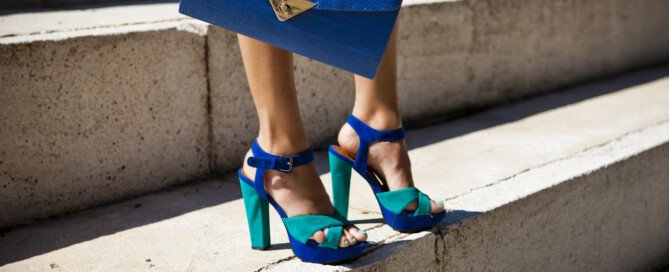
Tall women like six-feet+ who wear high heels haveeven been questioned by other tall women as to why they wear the high heels.
And of course, men have been known to ask a tall women, “Why do you wear those high heels? Aren’t you tall enough?”
Are you one of these people who wonders why some tall women wear high heels?
Let me give you a clue: for the same reasons women of “normal” height wear high heels! Can’t tall women have style too?
Can’t tall women find a pair of shoes with high heels to look as sexy or appealing as a shorter woman might find them?
Can’t tall women have a fashion sense? Can’t tall women like the same things as 5-7 or 5-4 women?
Some tall women think they’d look like clowns or ridiculous in high heels.
I hate to say this, but I’ve seen very short women wearing clodhopper high heels, and they seemed a tad off balance with their gait, and I’d be lying if I said they didn’t look pretty awkward in those high heels.
I’m not saying a short woman shouldn’t wear high heels. But ANY woman can look ridiculous in the wrong pair of shoes; and the wrong pair of shoes don’t necessarily have high heels.
Some shoes are attractive, and some are unsightly. But if you walk with good posture, and if the shoes fit comfortably, I guess there’s no such thing as a truly unsightly pair of shoes.
Certain high heeled shoes go very well with certain clothes. And any woman knows that the best-looking shoes have at least a two-inch heel, and often a three-inch heel.
The heel comes with the shoe. What are you going to do if you like the shoe? You’re going to buy it!
Why should a tall woman settle for flats?
Have you ever seen the limited variety of flats out there?
There’s only so much that can be done to flats in terms of making them stylish and providing variety.
More than ever these days, flats come in an array of styles, but the range just doesn’t compare to what you find with heeled shoes.
It’s also a known fact that heels force a woman to have better posture, and provide a lift to the calf muscle.
A six foot woman with sagging calf muscles may prefer high heels to perk up her calf muscles.
This up-lifting effect is no secret, which is why female bodybuilders and female figure competitors wear five-inch heels when they are posing on stage.
It isn’t to look taller; since all the contestants wear these high heels, the shortest women are still the shortest women in the group.
High heels lift up the calf muscle.
Flats come in all sizes — obviously, flats are worn by medium and short women, and if a woman likes flats because she likes flats, thinks they’re cool or cute, or suffers pain wearing high heels, that’s fine. I’m not criticizing that at all.
But a tall woman should not feel she must wear flats because some nimrod out there thinks tall women have no right to grace themselves with high heels. That’s my point.
It’s said there is no such thing as a stupid question. SURE there is: “You’re so tall; why do you wear high heels?”
A tall woman wears high heels for the same reason any woman wears high heels: style, fashion, sexiness, goes great with an outfit, and need I say more at this point?
 Lorra Garrick has been covering medical, fitness and cybersecurity topics for many years, having written thousands of articles for print magazines and websites, including as a ghostwriter. She’s also a former ACE-certified personal trainer.
.