Does Deadlifting Make Your Elbow Hurt? Solution for Pain

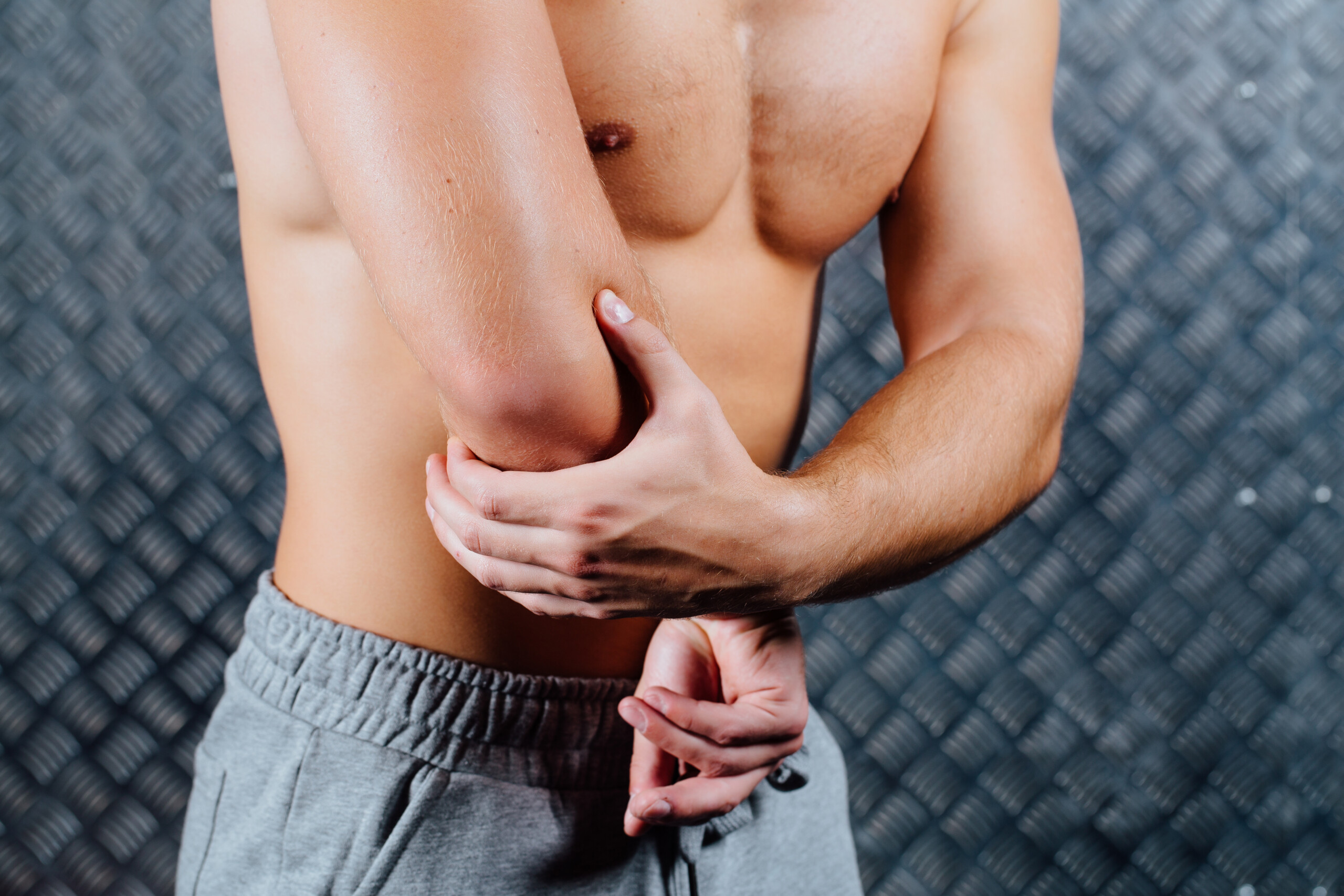
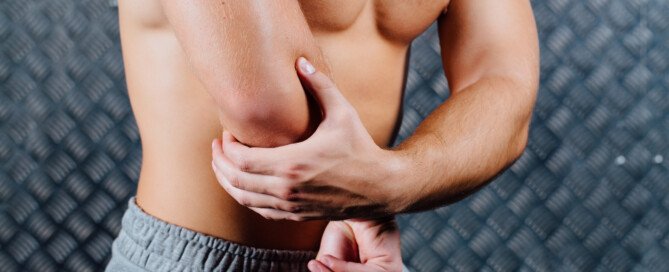
One day I noticed that after completing my third or fourth set of deadlifts, my right elbow felt a bit funny.
This funny feeling was in the joint; the tendon had somehow been overloaded or strained in some way.
If this has been happening to you, ask yourself if you’ve been doing the repetitions fast. Because that’s what I had been doing.
By doing the deadlift rapidly, the elbow is subjected to forces that it doesn’t absorb when this exercise is done at a more standard pace.
A more standard pace allows for less erratic motion. The first solution, then, is to return to a normal speed of reps.
However, suppose your elbow feels funny or hurts a little after completing normal-paced deadlift sets. What then should you do?
When you grab the bar and begin pulling it off the floor or mount, put a very slight bend in your elbows. This will reduce the tension on the bones, and thus, the joint.
The very slight bend will recruit more biceps and forearm muscles, yes, but — it will subtract some tension off of the tendons in the elbow.
What this technique means is that, while providing some relief to strained tendon tissue in the elbow, it will also mean you cannot lift your maximum load this way. It’s a tradeoff.
Continue lifting your maximum load and you’ll continue damaging the elbow.
To allow the elbow to heal, use a lighter load, perhaps what would be a 15-20 RM — but done for 5-7 reps.
Accept it: A tendon strain means you must give up your heaviest lifts till it heals.
Whether using an underhand or overhand grip, my technique employs very slightly bent elbows throughout the entire deadlifting set, and the set is performed at a normal pace, complete range of motion.
You then set the bar gently — yes, gently — back on the floor or mount. Letting it bang back down puts a shock through the elbow joint.
If you release the bar so that it falls to the floor (freeing your joints), the loud sound can damage your hearing if done often enough.
After employing this technique for three weeks, I began noticing a big improvement in my elbow in that after completing all of my deadlift sets, there was no longer any discomfort.
However, just to play safe (don’t get ahead of yourself), continue this technique for two or three more weeks.
Then ease yourself back to your maximal lifts as much as you can with the very slightly bent elbows, and gradually return to your normal lifting from that point (straight arms).
Of course, if pain in the elbow continues from deadlifting despite these approaches, abandon the activity and consult with a sports medicine physician for guidance.
 Lorra Garrick is a former personal trainer certified through the American Council on Exercise. At Bally Total Fitness she trained women and men of all ages for fat loss, muscle building, fitness and improved health.
.
Top image: Shutterstock/vhpicstock

GOMAD vs. Olive Oil for Weight Gain

GOMAD means a gallon of milk a day for weight gain, but have you ever considered olive oil?
When a man chooses GOMAD for weight gain, it’s usually whole milk, or maybe 2 percent. However, GOMAD is very impractical, whereas olive oil may just do the trick with a fraction of the hassle.
Let’s compare GOMAD with olive oil if your goal is simply to gain weight and get rid of that “weakling” or skinny look, as many “skinny” men strive to do.
They lift weights faithfully and eat as much as they can, yet are still, from their point of view, too skinny.
As a personal trainer I’ve worked with men who were struggling to put on weight. And I see men at the gym, during my own workouts, who are clearly underweight and obviously trying hard to put some meat on.
A few problems with GOMAD is that in some individuals it will cause a lot of diarrhea.
It’s also difficult to drink a gallon of milk every day on top of what you’ve already been eating.
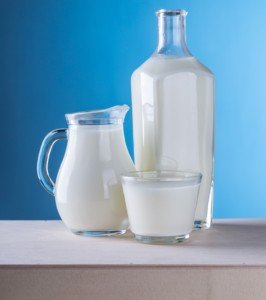
Remember, a gallon of milk a day here is not a replacement for food; it’s an accessory, since weight gain is the goal. Many men have reported gaining quite a bit of pounds doing the GOMAD thing for just one month.
But for how long can you keep doing this?
GOMAD = 1,200 calories a day for whole milk; total fat: 64 grams, of which a whopping 40 grams is the “bad” fat of saturated; protein: 64 grams; and carbs: 104 grams. This may sound like an excellent weight gain formula.
However, 40 grams a day of saturated fat is very unhealthy, for those of you who are, in addition to packing on pounds, interested in being healthy.
For olive oil to hit 1,200 calories in a day, you’d need just 10 tablespoons. Ten tbs of olive oil = 140 grams of fat, way more than milk.
However, just 20 grams of that 140 are the “bad” saturated fats. All that olive oil still equals no protein and no carbs.
However, if you subscribe to the calories-in vs. calories-out model for weight gain, then it won’t matter that olive oil has no carbs or protein. It’s still 1,200 calories, plus all that fat — most of it very healthy fat.
So which is easier to ingest every day? A gallon of milk (in addition to what you normally stuff yourself with to gain weight)?
Or…10 tablespoons of olive oil? A few tablespoons will go unnoticed in a protein shake.
If you’re drinking a few protein shakes a day, you can easily knock down five tablespoons of olive oil and never know it.
Depending on the size of your protein shake, you can slip in three tablespoons of olive oil in each serving and never taste it.
Add a few tablespoons of olive oil to your rice’s cooking water, and another tablespoon (with vinegar) to your green salad, and there’s your 10 tablespoons a day of olive oil! Was that easy or what?
What if you don’t eat rice? If you hate rice, add olive oil to your boiled potatoes, yams or pasta.
Between rice, potatoes, pasta, salads and protein shakes/smoothies/drinks, you can see how simple it is to ingest 1,200 calories’ worth a day of olive oil.
And you won’t get sick on it, like you might with GOMAD, especially if you’re lactose intolerant.
Lorra Garrick is a former personal trainer certified by the American Council on Exercise. At Bally Total Fitness she trained clients of all ages for fat loss, muscle building, fitness and improved health.

Risk of Kids of Anorexic Moms Developing Eating Disorder?

An expert explains the risks children have in developing anorexia nervosa when their mother struggles with the eating disorder herself.
How much can an anorexic environment, created by a mother, raise the risk of her children (particularly daughters) developing an eating disorder?
How much are daughters of mothers struggling with anorexia at risk for internalizing the thought process?
Kids at a very young age may imitate what they see around them without fully understanding what is going on.
But, are they more likely to become anorexic, have a poor body image, and obsess about food?
“Children of women with eating disorders are definitely at risk for developing their own eating disorder,” says Beth Rosenbaum, LCSW and primary therapist at The Renfrew Center, the country’s first residential treatment facility and largest network of eating disorder treatment facilities.
Recent research shows a possible genetic component to developing anorexia nervosa, adds Rosenbaum.
However, this disorder is virtually unheard of in cultures where the thin body is not prized.
Anorexia also increases in prevalence as cultures become more Westernized. This strongly indicates there’s more to developing anorexia than a genetic component.
Rosenbaum explains, “We also know that being raised in a household with disordered eating places a child at risk for developing the behavior.
“Children observe their mother’s behaviors and hear her comments about her body. This can greatly influence how the daughter or son perceives his or her own body and can influence the child’s own relationships with food.”
This is why it’s extremely crucial for mothers, whether they struggle with anorexia or not, to be very cognizant of what they say about their bodies within earshot of their kids.
“A child will notice when his or her mother may cook a healthy dinner for the family but not eat with the family or not eat the same food,” says Rosenbaum.
“Children hear when their mothers criticize their own bodies and when they dress to hide their bodies.”
As part of therapy, Rosenbaum involves family members in the treatment process.
This includes husbands who can be a main support system in the recovery process.
They need to have a solid understanding of anorexia and other eating disorders, says Rosenbaum.
The husband can also play an important role in encouraging healthy eating and a positive body image among his children, so he should not turn his back on getting educated.
Rosenbaum also believes strongly in including older children in family therapy.
When it comes to how a mother’s disordered eating and negative body image can affect her children, it is clear children are impressionable and parents need to be mindful of this.
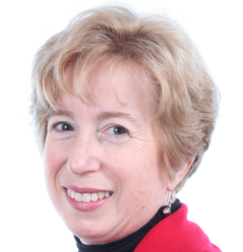 Beth Rosenbaum specializes in working with women with mid-late life eating disorders. She has presented frequently on eating disorders and body image issues.
Lorra Garrick is a former personal trainer certified by the American Council on Exercise. At Bally Total Fitness she trained clients of all ages for fat loss, muscle building, fitness and improved health.
Source: renfrewcenter.com
Top image: Shutterstock/Kleber Cordeiro

Should Anorexic Women Avoid Parenthood Due to Mental Illness?

It’s a fair question: If a woman has anorexia and has not yet had children, should she postpone parenthood until she absolutely feels she has conquered her eating disorder?
Anorexia nervosa is a form of mental illness, but it’s a very unique psychiatric disorder, hardly comparable to schizophrenia or even bipolar disorder.
Is it ethical for a woman who knows she has anorexia nervosa to willingly have a child?
This isn’t about the medical aspects of pregnancy to the expectant mother and unborn child.
It’s about raising children in an “anorexic environment.”
And what about anorexic women who already have kids; should they not have any more until they have overcome their eating disorder?
Good News for Anorexics Who’d Like to Have Children
“It is not necessary for a woman with anorexia to wait to start a family until they have recovered,” says Mehri Moore, MD, medical director/founder of THIRA Health in Washington which offers programs for women and girls facing depression and anxiety.
Again, the issue here is after the fact: the actual raising of kids. And here is what Dr. Moore says about that:
“Typically their anorexia does not affect how they nourish their children.
“Most anorexics are perfectionists and as mothers try to do their best in raising and nourishing their children.”
On the other hand, being a perfectionist can backfire, in that the perfectionistic parent may push their kids too hard to be perfect or excel.
Of course, a non-anorexic mother can be a perfectionist as well. Perfectionists, whether they have an eating disorder or not, need to be acutely aware of the effect this trait has on their kids.
Dr. Moore adds that children, especially girls in their developmental years, can be especially adversely influenced by the anorexic mother’s body image issues and negative self-talk.
Is there ever a perfect time to become a mother? For many women, there doesn’t seem to be.
Dr. Moore says, “It is really not optimal for women with anorexia to start a family while they are still suffering from the eating disorder, but we have seen mothers with anorexia raise perfectly healthy, well-adjusted children.”
The other end of the continuum, says Dr. Moore, is that she has seen anorexia extend three generations, with this illness being “passed down” from mother to child.
Thus, the recommendation by Dr. Moore is that anorexic women be in full recovery before starting their families, yet it’s also true that a woman with this eating disorder is still capable of raising well-adjusted, healthy kids.
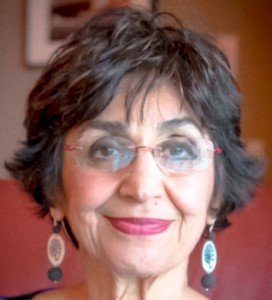
In 1991, Dr. Moore founded The Moore Center (now Eating Recovery Center of Washington), which is the longest-established treatment center specializing in eating disorder treatment in the Pacific Northwest.
Lorra Garrick has been covering medical, fitness and cybersecurity topics for many years, having written thousands of articles for print magazines and websites, including as a ghostwriter. She’s also a former ACE-certified personal trainer.
.
Top image: Shutterstock/ShotPrime Studio

Can Anorexic Mom’s Body Prevent Daughter from Eating Disorder?

A girl is more likely to develop anorexia nervosa, relative to her baseline inclination, if her mother has this eating disorder.
From an intuitive point of view, it seems as though just the sight of an emaciated physique would be enough to deter the daughter from developing the anorexia that she sees her mother battling with daily.
Mayoclinic.com cites that having a first-degree relative with anorexia (which includes the mother) puts a child at a “much higher risk” of developing this condition.
How much is due to genetics and how much is due to learned behavior or dysfunctional family dynamics?
I’ve seen many women over the years who appeared to have anorexia. I’m not talking about “thin” women (or teens). My 15-year-old niece has what’s considered a “skinny” body.
But if she’s walking down the street in tight jeans and a tee shirt, it’s very unlikely that anyone is going to assume that she has an eating disorder.
She eats normal amounts of food and shows no signs of purging. She’s simply in a vertical growth spurt.
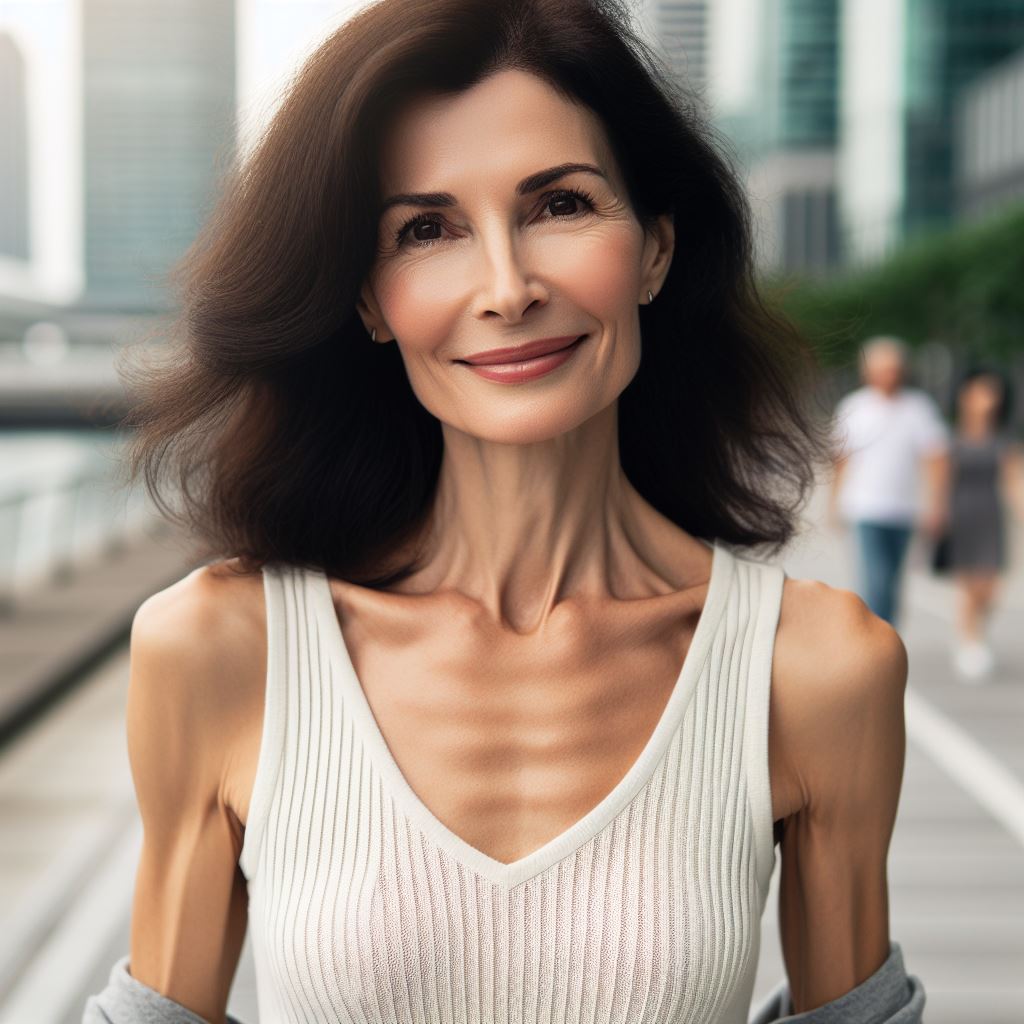
However, I’ve seen what truly appears to be significant undernourishment, including a woman at my gym who (according to my personal trainer’s eye) appears to weigh 75 pounds on a 5-4 frame.
So here’s something odd to consider: A daughter of an anorexic woman is at increased risk of developing this eating disorder, even though her mother’s body would surely be quite alarming in appearance.
“In my experience, the mother’s emaciated body is actually a deterring factor for the daughters developing anorexia,” says
Mehri Moore, MD, medical director/founder of THIRA Health in Washington which offers programs for women and girls facing depression and anxiety.
But what about Mayoclinic.com’s statement that anorexia risk is greater in children when a mother has this eating disorder?
Those daughters who never develop anorexia, perhaps, as Dr. Moore explains further, “can more easily recognize that their mother’s anorexia is an illness.”
Another thing to consider when wondering if an anorexic woman’s body can prevent her daughter from developing the illness, is the degree of malnourishment.
Anorexia is on a continuum, just like overeating is. Some functioning anorexics aren’t emaciated, but may look more like my niece.
Dr. Moore explains, “It is much more confusing for daughters when anorexic mothers are thin but not emaciated.”
And when a girl’s anorexic mother seems more fashionably thin than skeletal, she may very well be the recipient of compliments about her thin frame, says Dr. Moore.
If her daughter hears this enough, the daughter may “strive for this thin look,” adds Dr. Moore.
Will the youthfully lean daughters of the 75 pound woman ever aspire to have a body like hers?
I’d think that her three young daughters would rather want a body like Miley Cyrus, Taylor Swift or a Victoria’s Secret model. However, in an effort to achieve that, they may go overboard and actually become anorexic.
A woman with anorexia should not assume that her daughters are at low risk for developing the illness just because she’s skin and bones, or even if her daughters have remarked how frightfully thin she is. The heightened risk can still be there.
In 1991, Dr. Moore founded The Moore Center (now Eating Recovery Center of Washington), which is the longest-established treatment center specializing in eating disorder treatment in the Pacific Northwest.
Lorra Garrick has been covering medical, fitness and cybersecurity topics for many years, having written thousands of articles for print magazines and websites, including as a ghostwriter. She’s also a former ACE-certified personal trainer.
Source: mayoclinic.com/health/anorexia/DS00606/DSECTION=risk-factors

How Kids Can Motivate Anorexic Mom to Seek Treatment
Here are guidelines for kids to help their mother with anorexia nervosa seek treatment.
If you’re a teenager or even younger, and your mother has anorexia nervosa, it’s presumable that you’d like to help out, but are not sure how to go about doing this beyond, “Mom, I think you need treatment for your eating disorder.”
So what, then, can kids do to help their mother with anorexia realize that she should seek out treatment?
“The most important piece is to not blame yourself and to be honest,” says Tammy Holcomb, MS, EdS, a licensed professional counselor who specializes in eating disorders.
“Let your mom know that you love her and are concerned that she is not taking care of herself.”
What does not work so well is if you’re vague, as in, “Mom, I wish you’d get help for your eating disorder.”
This vagueness is almost akin to your mother telling you, “Clean up the garage,” and leaving it at that.
You then step into the garage: It’s a complete mess. You don’t know where to begin. It’s overwhelming.
However, if your mother had been more specific, as in, “Go into the garage with a big garbage bag and put all the scraps of paper, rags and old magazines you see on the floor into it,” the task would be far less daunting.
This principle applies to helping your mother out who has anorexia nervosa.
Holcomb says to give pinpointed examples whenever you can: “For example, telling your mom that you wish she could sit down and have a meal with you.”
People with anorexia nervosa or other eating disorders often don’t believe they are “sick” or need help, and do not perceive themselves as others around them view them, says Holcomb.
She urges specificity, citing another example: “You looked really pretty when you wore a size 8, but now you are too small at a size 4. I think you have lost too much weight.”
- Don’t be afraid to be upfront and lovingly honest.
- Don’t be critical or admonish.
Imagine you’re struggling with math. You’d be more receptive to your mother if she tenderly offered to help, rather than if she criticized you for being “lazy.”
Holcomb explains further, “Also, don’t hold secrets for a sick mom. Talk to another adult you trust. Either your dad or someone at school.
“Sometimes adults don’t see things until you point it out to them!”
If your mother has anorexia nervosa, do not give up when it comes to getting her to seek treatment.
 Tammy Holcomb founded the Atlanta Eating Disorder Coalition in 2003 and runs a weekly women’s sexual trauma therapy group. She is the former executive director of Carolina House eating disorder programs in NC.
Lorra Garrick has been covering medical, fitness and cybersecurity topics for many years, having written thousands of articles for print magazines and websites, including as a ghostwriter. She’s also a former ACE-certified personal trainer.
Is It Wrong for Anorexic Women to Have Children?

Some people believe that a woman with anorexia should not have children — “have” as in raise kids.
In other words, that it’s not ethically right for anorexic women to decide to rear kids, as they’d be subjecting them to the emotional turmoil and extreme anxiety that this eating disorder creates.
“This is a very personal decision and I can only offer some points to consider (as to whether an anorexic woman should or should not start a family),” says Linda Centeno, PhD, clinical psychologist, and assistant director of the Koch Center in NJ that specializes in eating disorder treatment.
First of all, Dr. Centeno says that a child has a greater risk of developing anorexia or another eating disorder if the mother has anorexia.
This increased risk is, in part, genetic, adds Dr. Centeno. However, environment is also a powerful variable.
Dr. Centeno explains, “An anorexic mother is also at risk of modeling disordered eating and body image.
“If a mother is constantly dieting and expressing dislike towards her body, the child receives the message that restrictive eating is normal and a healthy body weight is not.”
What if an anorexic woman truly wants to have children; what should she do?
“One reason why it is important to seek eating disorder treatment before having a child is because many mothers may impart unhealthy eating patterns onto their children,” says Dr. Centeno.
An anorexic who wants to have kids should consider how destructive these patterns can actually be, such as restricting their child’s food intake — when the child very much needs adequate calories for optimal growth.
Or, she may make her kids eat more than necessary. The anorexic mother may express disapproval of her children’s size, even if they aren’t overweight.
She may avoid eating in the presence of family members, even skipping out on important get-togethers to avoid food.
“A mother with anorexia might underfeed her child to make her thin, or, you overfeed her to show nurturing,” says Dr. Centeno.
“Power struggles over food and eating often affect families when a mother has an eating disorder. Mothers need to set a good example for children with respect to weight and eating.”
If a woman with anorexia is wondering if she should or should not have children, she also has to consider another striking element: Kids need and crave their mother’s full attention.
“Individuals with anorexia spend much of their time internally focused on weight, food and body issues,” says Dr. Centeno.
“Even if a mother tries to hide her preoccupation with weight and food, her child will sense that she is not available in the way that the child needs.”
Children can be very perceptive and should not be underestimated, especially as they grow older.
“A child also needs to learn healthy ways of coping,” adds Dr. Centeno.”
Often, the anorexic individual relies chiefly on her eating disorder as a way to cope with life’s major as well as minor challenges, says Dr. Centeno.
Kids need to be shown non-food-related coping tactics for troublesome thoughts and feelings.
In summary, maybe the question shouldn’t be, “Is it wrong for anorexic women to have children,” but rather, “What should anorexic women who want children do to prepare for this new role in their life?”
 Dr. Centeno works with adolescents and adults. In her private practice her specific clinical expertise also includes anxiety and panic disorder, depression, relationship issues and sexual abuse.
Lorra Garrick is a former personal trainer certified by the American Council on Exercise. At Bally Total Fitness she trained clients of all ages for fat loss, muscle building, fitness and improved health.
Five Ways Anorexia in Mother Negatively Affects Children
Though anorexia nervosa is an eating disorder rather than a drug or alcohol addiction, its consequences can have a profoundly negative effect on children of the patient.
Don’t assume “It’s just an eating disorder; how harmful can that be; it’s not like I’m an alcoholic.”
“In my career, I have assessed many individuals who have reported that his/her mother was anorexic or otherwise eating disordered during that individual’s childhood,” says Linda Centeno, PhD, clinical psychologist, and assistant director of the Koch Center in NJ that specializes in eating disorder treatment.
It’s a mistake to assume that this phenomenon can be explained only by a genetic inheritance.
#1. Environment plays a leading role in anorexia being “picked up” by children of the patient.
Dr. Centeno continues, “Many individuals have emphasized this historical fact as having contributed significantly to his/her own eating disorder etiology.”
Though the mother with anorexia may believe there’s no way her children would ever emulate her behavior because they have seen firsthand how she has suffered with the eating disorder, she has to realize that witnessing the negative effects isn’t always an effective deterrent.
This is why children of alcoholics often become alcoholics themselves, even though they grew up witnessing the harmful effects in their parent.
Kids’ minds are very impressionable and they may not have a good grasp on just how harmful eating disorders, especially anorexia, truly are, and may even perceive the situation as simply a benign method to achieving thinness.
#2. “Many individuals report that having been raised with such a mother led them to not know how to ‘eat normally,’” explains Dr. Centeno.

Shutterstock/fizkes
These children learned that food, or the restriction thereof, was the primary means for coping with painful emotions, continues Dr. Centeno.
Kids learn that food is a lot more than just fuel or sustenance; it’s therapy, it’s a reward, it’s punishment.
#3. Dr. Centeno offers this powerful statement: “Some (grown) children have expressed to me feeling ‘detached’ from his/her mother during childhood, ‘knowing’ that the mother’s eating disorder (or anorexia) was paramount in the mother’s life.”
In other words, in these particular cases the children have been made to feel less important than their mother’s obsession with food.
#4. Dr. Centeno says that another potential negative impact that anorexia has on kids is that some kids learn to overeat to make their mother happy.
The anorexic mother can’t have cake or even a bowl of cereal, so she may unconsciously derive satisfaction watching her kids overeat these foods — any foods, for that matter.
Thus, anorexia in the mother may lead to lifelong overeating in the (grown) child.
#5. “Other children report not having any ‘child-friendly’ food in the home growing up, and by having to eat those same foods that the mother ate, later developed anorexia or restrictive eating.”
Dr. Centeno works with adolescents and adults. In her private practice her specific clinical expertise also includes anxiety and panic disorder, depression, relationship issues and sexual abuse.
Lorra Garrick is a former personal trainer certified by the American Council on Exercise. At Bally Total Fitness she trained clients of all ages for fat loss, muscle building, fitness and improved health.
.
Top image: Shutterstock/VGstockstudio

Advice to Teen Girls with Anorexic Mothers

If you’re a teenaged girl who’s struggling because your mother has anorexia nervosa, know that you are absolutely not to blame for your mother’s eating disorder, says Linda Centeno, PhD, clinical psychologist, and assistant director of the Koch Center in NJ that specializes in eating disorder treatment.
“Despite what happens, most children who have a mother with an eating disorder worry about the parent’s health,” says Dr. Centeno.
If you’re a teen, ask yourself how often you’ve tried to intercept your mother from engaging in eating disorder behavior.
This is normal on the teenager’s part, just as it’s not surprising when a teenager tries to prevent their obese mother from engaging in compulsive overeating of junk food. Caring teens want what’s best for their mothers.
“However, just as teens didn’t cause the eating disorder, they alone cannot stop it,” says Dr. Centeno.
“A teen’s mother has to seek professional treatment,” or, the mother’s partner (assuming they don’t have an eating disorder) should step up and help with this rather than give up or be in denial.
So what can teen girls do, then, if their mother has anorexia?
Certainly they should not stand by idly and cross their fingers. Of course teens want to protect their mother from the anorexia.
If your mother is in denial of her eating disorder, the first step, says Dr. Centeno, is to admit that your mother indeed has an illness.
After all, some teens may attempt to cope with what they subconsciously or deep down inside know to be true, by convincing themselves that there’s actually NO problem.
Dr. Centeno urges teens to confide in a trusted adult who does not have an eating disorder, and this can be your father, any relative, a teacher, coach or school counselor.
What if there’s nobody you feel you can go to? Teens can call the National Eating Disorder Association.
“Ideally, a child or teen with an anorexic mother should work with a psychologist or experienced clinician to address his or her own distress,” says Dr. Centeno.
Dr. Centeno works with adolescents and adults. In her private practice her specific clinical expertise also includes anxiety and panic disorder, depression, relationship issues and sexual abuse.
Lorra Garrick is a former personal trainer certified by the American Council on Exercise. At Bally Total Fitness she trained clients of all ages for fat loss, muscle building, fitness and improved health.
Recovering Anorexic Says Eating Disorder Had Bad Impact on Kids
If you have anorexia nervosa, don’t underestimate how damaging the effects of this will be on your children, especially daughters. One woman shares how badly her anorexia nervosa affected her daughter.
I interviewed Kari Adams, who was 42 at the time I spoke with her.
She had received treatment for her anorexia nervosa at The Renfrew Center, which is the U.S.’s biggest network of eating disorder treatment facilities.
At around age 15 was when Adams began developing her eating disorder, and at 41 she sought treatment — but not before she had given birth to a daughter and son.
At the time I interviewed her, Adams was recovered and her daughter was 12.
My first question was how much she felt that her daughter was at risk for developing anorexia or some sort of body image distortion or unhealthy relationship with food.
“My daughter now struggles with body image issues,” says Adams. “She asks me almost daily if she is ‘fat’ and says she needs to go on a diet.
Of course, Adams is working hard with her daughter to build up the girl’s self-esteem.
As for her son, age 10 at the interview time, he gets upset upon hearing Adams negatively talk of her body.
And by the way, boys are not immune to developing anorexia nervosa.
Adams’ daughter was eight when she began noticing that her mother’s relationship with food was not normal.
“My daughter picked up on it when I was in the midst of my eating disorder,” says Adams.
The girl would say, “Mom, you have a problem.”
Adams continues, “After I went to treatment we talked about it; she admitted she didn’t know what an eating disorder was but knew something was wrong.”
“My struggle with food and self-abuse gnawed at me constantly because I had children,” says Adams, “and especially because I knew I was shaping my impressionable daughter who would perhaps one day be faced with similar issues.
The Guilt Factor
Adams explains that as her son was rapidly putting on weight, she was feeling tremendous guilt over this.
She’d been feeding him too much food to prevent him from getting hungry. She worries that her son will develop type 2 diabetes.
Adams’ drive to seek treatment for her anorexia was inspired by the fact that she was a mother.
“I want my daughter to love herself for who she is,” says Adams, “and because I want to be a healthy, happy mother for my children.”
The Renfrew Center has an evidence-based treatment model for eating disorders that emphasizes respect for the unique psychology of women, as well as the importance of a collaborative therapeutic relationship.
The Center encourages patients to actively participate in their growth and recovery.
Lorra Garrick is a former personal trainer certified by the American Council on Exercise. At Bally Total Fitness she trained clients of all ages for fat loss, maintaining fat loss, muscle building, fitness and improved overall health.
.