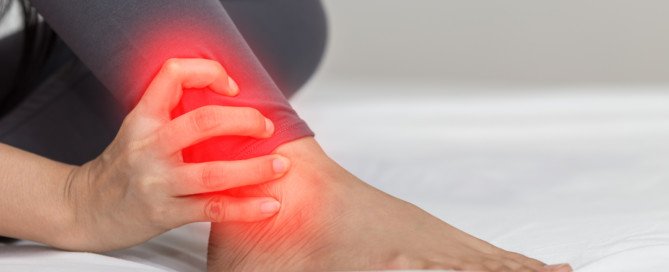
Cause of Stabbing Ankle Pain that Comes and Goes
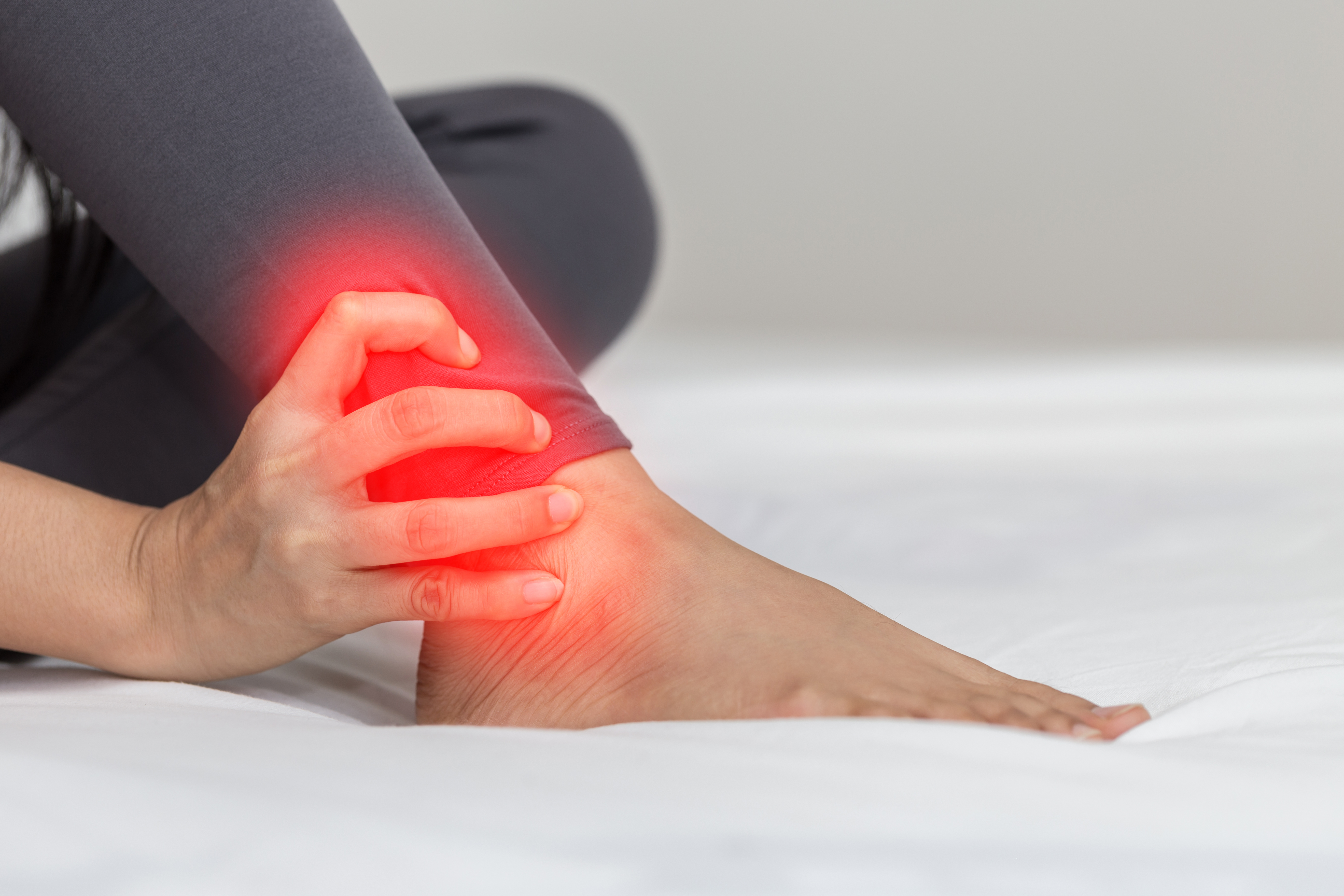
Find out the likely causes of that awful, stabbing pain in your ankle that comes out of the blue.
You haven’t broken your ankle; you haven’t even twisted it.
Yet every so often you get a sharp or stabbing pain in this joint.
Likely Causes of Sharp Pain in the Ankle that Comes and Goes
“Typically it is due to altered kinetics, i.e., may be abnormal forces transmitted through one extremity versus the other,” says Dr. Moshe Lewis, MD, board certified in physical medicine and rehabilitation.
“Issues including weight and posture should also be addressed. We should investigate the anatomy of the feet and consider custom orthotics.”
Orthotics in this case are shoe insert devices that are custom molded to an individual’s foot shape, designed to redistribute forces and alignment for better comfort and elimination of pain.
Dr. Lewis continues, “The source of the pain has to be established and minimized before intense exercise.
“This could include a tendonitis, bone deformity, strained arch or even neuropathy.
“Typically, stabbing pain is thought due to the latter or a spur.”
Neuropathy means damage or dysfunction of the nerves.
It commonly affects the peripheral nerves, which are outside the brain and spinal cord.
This damage can lead to a range of symptoms, depending on which nerves are involved.
A bone spur, also known as an osteophyte, is a bony growth that forms along the edges of bones, often where bones meet at a joint.
Bone spurs may form in response to repetitive stress or injury.
In the case of the ankle, the repetitive stress might come in the form of frequent running, jumping or pivoting.
These activities can irritate the ankle joint, causing the body to deposit extra bone.
Activities like basketball, volleyball, jump rope or long-distance running put constant pressure on tendons and ligaments, leading to inflammation and eventually a bone spur forming as the body tries to stabilize the area — but ironically, leading to pain.
Bone spurs are are typically smooth but can become rough and thus cause pain or discomfort if they impinge on surrounding tissues, such as tendons or nerves.
To get to the bottom of what’s causing sharp or shooting pains in your ankle, make an appointment with a podiatrist, a physician who specializes in foot care.
However, if you’re an athlete you might want to consider a sports medicine doctor, since sport may be behind the discomfort.
 Dr. Lewis is the founder and CEO of Golden Gate Institute for Physical Medicine in CA, which provides education and clinical management of pain.
 Lorra Garrick is a former personal trainer certified through the American Council on Exercise. At Bally Total Fitness she trained women and men of all ages for fat loss, muscle building, fitness and improved health.
.
Top image: Shutterstock/Yuttana Jaowattana
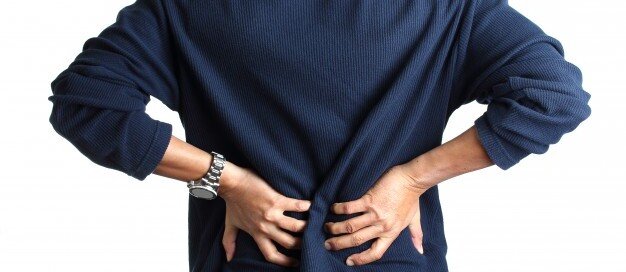
Low Back Pain after Sitting: Cause & Solutions

Sitting should not have to cause low back pain, and there are things you can do to remedy this annoying problem.
Why do some people have low back pain after sitting for a while?
Let’s assume that if your low back hurts after prolonged sitting, it’s not because you recently fell, were in a car or ski accident, or wrenched muscles while lifting something heavy.
“Sitting creates the most pressure on the intervertebral discs,” says Dr. Moshe Lewis, MD, board certified in physical medicine and rehabilitation.
Sitting shifts the pelvis backward, flattening the natural lumbar curve.
This posture compresses the discs unevenly, especially in the lower back, increasing the pressure within the discs.
Unlike standing, sitting reduces support from core muscles and places more load directly on the spine.
Prolonged sitting, particularly with poor posture, can strain the discs and contribute to back pain or disc degeneration.
“Solutions include inversion/tilt tables, traction and core strengthening,” says Dr. Lewis.
Inversion/tilt tables and traction are not practical for many people, but anyone can get started on core strengthening.
I recommend core strengthening exercises several times a week.
The core is the low back and abdominal regions. There are many core strengthening exercises out there.
An example is the back extension with leg support (just about every gym has the equipment for this). Do eight to 12 times.
George Stepanek, CreativeCommons
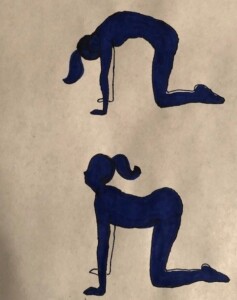
Another exercise that will engage the core is the “camel back,” illustrated below. Do eight to 12 times.
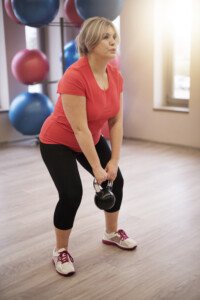
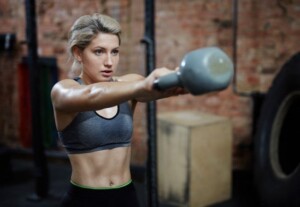
A third exercise is the kettlebell swing. Start out with a small kettlebell and swing for eight to 12 times, working your way up to 15 times.
Shutterstock/gpointstudio
Freepik pressfoto
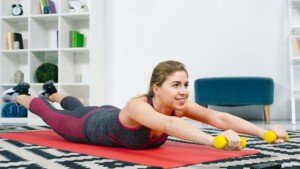
Below is another core exercise. Hold soup cans if you don’t have weights, or extend your arms without any weights.
Freepik.com
Do two to three sets of each exercise. If you don’t have access to a kettlebell, you can use a dumbbell if you have one around the house, or an old milk or juice jug filled with water.
A person with a strong, conditioned core will not experience low back pain after long periods of sitting.
Dr. Lewis is the founder and CEO of Golden Gate Institute for Physical Medicine in CA, which provides education and clinical management of pain.
 Lorra Garrick is a former personal trainer certified through the American Council on Exercise. At Bally Total Fitness she trained women and men of all ages for fat loss, muscle building, fitness and improved health.
.
Top image: Freepik/shayne_ch13
Complete Back & Biceps Routines You Can Do with Golfer’s Elbow
Can’t do pulling exercises (rows, chin-ups, deadlifts) because of elbow pain?
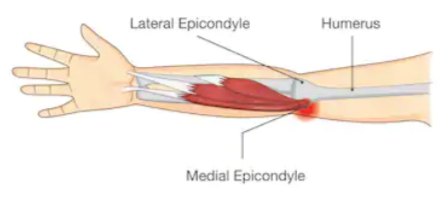
I have the solution. Elbow pain often comes in the form of “golfer’s elbow.”
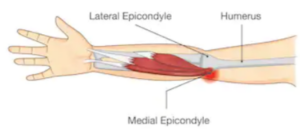
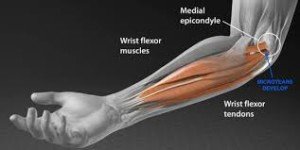
This is an inflammation of the tendon on the inner (medial) aspect of the elbow. The medical name is medial epicondylitis.
Not all people with golfer’s elbow got it from golfing. It can also occur from sports involving throwing as well as from lifting weights.
Lifting weights is how I got golfer’s elbow. Many muscle building enthusiasts find that golfer’s elbow prevents them from performing exercises that involve pulling, because in order to pull something, you must grip it with your hand.
The medial epicondyle tendon is activated with gripping. Hence, gripping (as you do for the deadlift, seated row and lat pull-down) aggravates golfer’s elbow.
Work the Back and Biceps Despite Golfer’s Elbow
After a lot of experimentation at the gym, I figured out ways that someone with this condition can STILL DO PULLING EXERCISES.
How to do the deadlift with tendonitis of the elbow. Tendonitis doesn’t mean you must entirely sacrifice the deadlift motion and end up with pathetically weak back muscles.
How to do lat pull-downs. There is no need to give these up. You just have to know how to modify them to accommodate your elbow pain so that the tendon has a chance to heal.
How to do biceps curls. You can actually activate the biceps without having to grip the handles of a free weight or a machine.
Try my technique to prevent your biceps from going flat on you.
How to do shoulder shrugs. You won’t get traps like the Incredible Hulk, but at least there will be some degree of activation with this modified approach.
Golfer’s elbow stinks, but it doesn’t have to keep you from working the back and biceps muscles.
Lorra Garrick is a former personal trainer certified through the American Council on Exercise. At Bally Total Fitness she trained women and men of all ages for fat loss, muscle building, fitness and improved health.
.
Top imaeg: solar22
How to Do Inverted Rows with Golfer’s Elbow

Believe it or not, there are two ways to do inverted rows while protecting your golfer’s elbow from further injury or pain.
If you have golfer’s elbow, you can actually do sets of inverted rows.
I’m a former personal trainer who had golfer’s elbow. It hurt when I did the slightest gripping against resistance.
The medial epicondyle tendon of the elbow is what’s involved in gripping, and it is this structure that’s at the center of golfer’s elbow.
To spare this tendon any stimulation and allow it to heal, you must avoid gripping — at least with the index finger. More on that later.
Gripless Inverted Rows for Golfer’s Elbow
The first way is with a dual cable cross machine that provides a width adjustment.
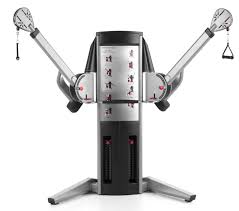
Set the pins on a total weight that exceeds your body weight. Next, lower the cable arms to a height so that the strap-handles’ distance from the floor is about the same distance you would normally use a bar when doing standard inverted rows.
Set the width accordingly. If you normally do inverted rows with your heels on the floor, your equipment setup is completed.
If you normally elevate your feet, bring over a 12- or 18-inch workout stool if your gym has these.
Do not position it between the strap-handles and the machine; there won’t be enough room to extend your body and perform the inverted rows.
Instead place the stool (or chair, whatever you have), out away from the arms (hopefully there’s room).
Place heels on it and pretend you’re getting into position for the exercise to make sure the stool is the right distance from handles.
You will NOT be gripping the plastic handles. Instead you will be inserting both hands through them so that the strap portion tugs against the underside of both wrists.
If you have golfer’s elbow only on one side, you still must put BOTH hands in this position to ensure equality on both sides of your body.
Though this technique — straps digging into the wrists — sounds painful, it’s not. You will likely be able to do full-out inverted rows this way with minimal discomfort, if any at all.
The plastic part of the handle must NOT make contact with wrists; slide it off to the side, and only the strap portion makes contact with your skin.
You can slip your hands through while sitting up, then recline back into the start position; or, you can insert hands while maintaining a reclined position.
You’re now ready to begin reps. The handles should be high enough off the floor so that, when you’re at the bottom of the movement, your arms are nearly straight.
If you feel aggravation in the tendon, cease the activity. I can only speak for what has worked for me.
I advise against using a forward-palm grip, as this pronation may aggravate the tendon. First try a supinated (palms facing you) grip, then a neutral grip of palms facing each other.
Suspension Straps
This same technique can be done with suspension straps. It’s a matter of personal preference.
But I actually think it’s a whole lot easier with suspension straps. The reason I myself did not use suspension straps was because, at the time I had the golfer’s elbow, the gyms I was working out at did not have suspension straps set up.
They now do, however. This device will work superbly and does not require the set-up hassle as the dual cable equipment.
The problem is that many gyms don’t have these suspension straps. But if yours does, I recommend that you try the inverted rows on these first.
Gripping that Excludes the Index Finger
It’s possible that you can avoid the pain of golfer’s elbow by excluding the index finger from your gripping activities.
The medial epichondyle tendon controls flexion of the index finger against resistance, such as when gripping or using it to press down on a knife when cutting meat.
Try the inverted row without the index finger. If it still bothers the elbow, then exclude the thumb, so that you’re gripping the handle with only the middle, ring and pinky fingers.
This is very doable but will require a reduction in weight load from what you’d normally use with all five fingers and a healthy elbow.
Lorra Garrick is a former personal trainer certified through the American Council on Exercise. At Bally Total Fitness she trained women and men of all ages for fat loss, muscle building, fitness and improved health.

Golfer’s Elbow: How to Do Shoulder Shrugs if You Can’t Grip
There’s actually a way to do the shoulder shrug exercise against heavy resistance if you can’t grip due to golfer’s elbow.
Golfer’s elbow has the potential to make gripping hurt, since the medial epicondyle tendon in the elbow is engaged when you grip something, particularly when the index finger is involved. I’m a personal trainer and I have left golfer’s elbow.
To do shoulder shrugs with golfer’s elbow, you first need a dual cable cross machine.
The cable arms must be adjustable width-wise in addition to height-wise. Set the arms as low as they can go, and set the width so that it’s about the same as when you do regular shoulder shrugs.
How to Grip
Instead you’ll be slipping your entire hand through them so that the strap portion of the loop tugs against the underside of your wrist.
The plastic portion of the loop does not make contact with your wrist; it’s off to the side of the loop.
If the strap is against bare skin, this will be quite painful, so you’ll need to wear a barricade between your skin and the strap: a full-length Ace bandage wrapped firmly around your wrist.
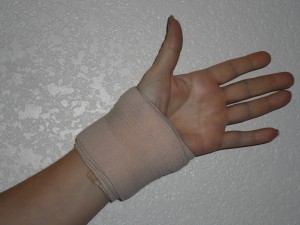
Place it so that half of it is on either side of the crease in your wrist. Make sure the bandage is securely fastened so that it doesn’t unravel.
Even if you have golfer’s elbow in one arm, you will need to fashion your other hand with a bandage, to make the shoulder shrug equal on both sides of your body:
Both hands will be through the loops with the straps tugging against the undersides of the wrists.
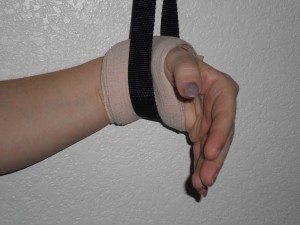
Stand smack between the machine’s arms, lower yourself and position hands as already described, then stand straight, and you’re ready to do shoulder shrugs even though you have golfer’s elbow.
If you normally shoulder shrug with an overhand grip, you’ll probably need to use a neutral or underhand palm position, because golfer’s elbow may incite pain if you tug against resistance using a pronated (overhand) position.
Make sure that the hand on the side of the golfer’s elbow is open wide, as though you’re trying to make a hand print.
This deliberate hand print position will ensure that no inclination towards gripping (curling in the fingers) occurs.
You must avoid any inclination towards a gripping position!
To help with this, splint your index finger with a tongue depressor cut to size and taped.
This will make it impossible to curl in that finger.
The minute that finger curls in against any kind of resistance, the medial epicondyle is activated.
The thumb is also barred from gripping.
Simply perform the shoulder shrugs with these restrictions, and you’ll need to experiment with amount of resistance.
The strap will also be uncomfortable on the underside of the palms, but you’ll get used to it.
Lorra Garrick is a former personal trainer certified through the American Council on Exercise. At Bally Total Fitness she trained women and men of all ages for fat loss, muscle building, fitness and improved health.
How to Do Lat Pull Downs with Golfer’s Elbow

If you have golfer’s elbow, here is how to perform the lat pull-down without gripping a bar or handle.
If your golfer’s elbow makes it painful to pull against resistance, this means you can’t do lat pull-downs in the usual way.
I’m a former personal trainer who had golfer’s elbow — and I have some great information for you.
I didn’t want to give up my pulling exercises while the golfer’s elbow had a chance to heal, so I figured out a way to get around this.
Lat pull-downs can be done using a dual cable cross machine – but instead of gripping the handles with my hands, I grip them with the underside of my wrists.
This eliminates the activation of the medial epicondyle tendon because this wrist grip does not require any finger gripping. It’s the finger gripping that aggravates golfer’s elbow.
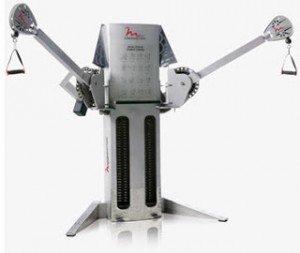
The arm bars of the dual cable cross machine need to be close enough together so that it’s not too cumbersome to get your wrists properly positioned.
This means a wide width will be cumbersome, but it’s doable, especially if you have a partner to help get your second wrist set up (it’s easy to do the first one; it’s the second one that’s cumbersome).
Rules for a lat pull-down with golfer’s elbow using the dual cable cross apparatus.
Wrap both wrists (for equality even though you have golfer’s elbow on one side) with an Ace bandage to protect them from the discomfort of the machine’s handle-strap from digging in. The bandage is centered over the crease in the wrist.
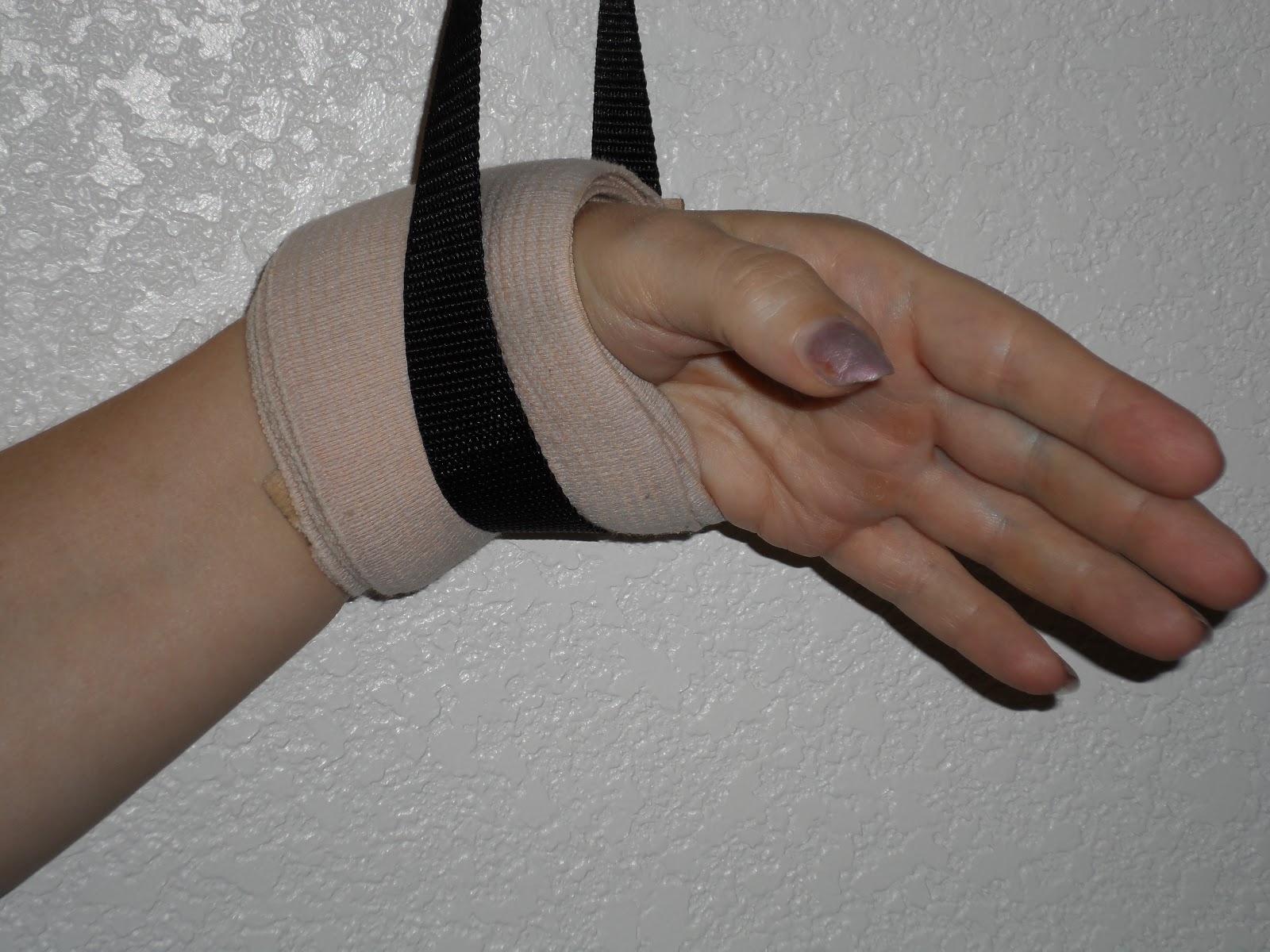
The plastic part of the machine’s gripping handle does NOT make contact with wrists; only the strap portion does.
Insert hands through the handles and slide the plastic part away from wrist. The lat pull-down should be done with palms facing you unless palms facing away produces no golfer’s elbow pain.
Using the Right Grip
A neutral grip is fine as well. It’s just that for some with golfer’s elbow, only the supinated (palms facing you) grip will be pain free.
Keep fingers extended on the golfer’s elbow side. This includes the thumb. Do not grip with any fingers or the thumb. The wrists will be flexed to carry out the pulling.
It won’t be easy keeping the fingers flexed, but if you don’t focus on this, you’re apt to find yourself gripping – and therefore aggravating your golfer’s elbow.
To help guard against accidentally gripping, splint the index finger (I use a tongue depressor and tape).
You can do this standing or seated, with torso at the angle you would normally use in a standard lat pull-down.
Start out with light weights to get the feel of this. A lat pull-down done this way will feel awkward but you’ll get used to it.
Do not jump a lot in weight increase; make sure your golfer’s elbow can tolerate this movement by gradually increasing the weight.
Alternative Modification
Do lat pull-downs as you normally would, except grip with only your middle, fourth and pinky fingers.
The caveat here is that you won’t be able to pull as much weight as with the Ace bandage method.
There’s also the risk of straining the flexor tissue in your fingers.
Lorra Garrick is a former personal trainer certified through the American Council on Exercise. At Bally Total Fitness she trained women and men of all ages for fat loss, muscle building, fitness and improved health.
.
Top image: Shutterstock/vhpicstock
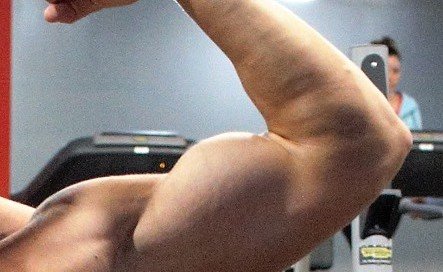
How to Do Biceps Curls with Golfer’s Elbow
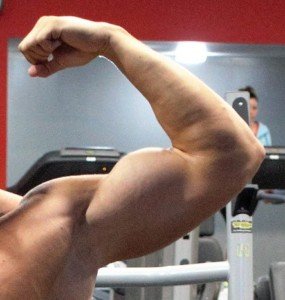
Learn how to do biceps curls even if you must avoid gripping due to golfer’s elbow.
You need not give up biceps-targeted exercises just because you can’t grip due to golfer’s elbow.
There are two ways to perform biceps curls while sparing the medial epicondyle tendon that’s at the center of golfer’s elbow.
The first way is with a dual cable cross machine that has a width adjustment.
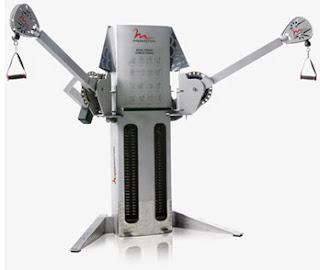
I’m a former personal trainer who had golfer’s elbow, and I have figured out the best way to do biceps curls without antagonizing this tendonitis.
You will not be gripping the handles.
Instead you’ll be pulling or tugging at them with your wrists.
So if you have golfer’s elbow only in one arm, both hands must take on identical positioning to ensure equality on both sides of the body/arm/hands.
The biceps can still get plenty of stimulation if you curl with a “wrist grip” rather than a hand grip.
The so-called resistance arm is shortened by placing the force application on the wrist rather than in the palm (as would be the case with a hand grip).
You will thus need to use more weight than you normally would with a hand grip on this particular machine.
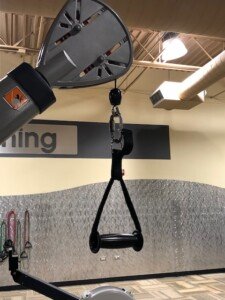
The plastic part of the machine’s handle does NOT make contact with your wrist.
You must slide the handle to the side so that only the strap part of the handle comes in contact with your wrist.
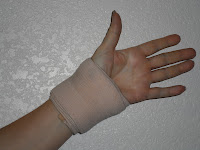
Wrists must be protected with a wrapping; otherwise the tugging of the strap against the skin will be very uncomfortable.
I wrapped a full length Ace bandage around my wrists, making sure that the wrapping was evenly over the underside crease in my wrists.
Set the weight a bit heavier than what you normally would (or think you would) for this equipment.
Insert hands into the loop handles, setting the strap portion against the underside of both wrists.
Of course, make sure the machine’s arm bars are low enough so that when you’re standing straight, arms straight, there is tension on your arms. Set the arm bar width accordingly.
Now begin curling, the strap against the underside of your wrist, the bandage between strap and wrist.
Do NOT let the fingers of the golfer’s elbow side bend in or curl (that is, start forming a gripping motion).
You want to avoid a gripping motion at all costs, as gripping stimulates the medial epicondyle tendon.
To leave this tendon completely out of the picture, keep that hand in a palm print position: fingers extended as much as you can throughout the biceps curls.
In fact, try not to let the wrist flex (i.e., palm come towards you as you lift the weight). Keep the palm aligned with forearm.
It’s best to keep the other hand (non-golfer’s elbow side) matched in position, for equality.
You won’t be able to raise hands up as high biceps curling this way, but they’ll go high enough to adequately stimulate the biceps.
TIP: Splint the index finger; this will prevent accidentally gripping with it.The second way to do biceps curls with golfer’s elbow is with a preacher weight stack machine. No bandages are necessary.
Rather than grip the handles, place palms against them, fingers extended, and lift the bar towards you, keeping fingers extended at all times. Do NOT even grip with the thumb.
Lorra Garrick is a former personal trainer certified through the American Council on Exercise. At Bally Total Fitness she trained women and men of all ages for fat loss, muscle building, fitness and improved health.
How to Do a Bench Press with Golfer’s Elbow

If golfer’s elbow interferes with your bench press, here’s a way to help get around this problem.
If your golfer’s elbow is bad enough, bench pressing will aggravate it.
I’m a former personal trainer who had golfer’s elbow, and it had started hurting with my bench press.
However, you may be thinking, How can that be, since golfer’s elbow affects pulling motions and not pressing motions?
The lift-off of the barbell in a bench press involves a grip. Next, efficiently pressing and lowering a heavy bar requires a sturdy grip.
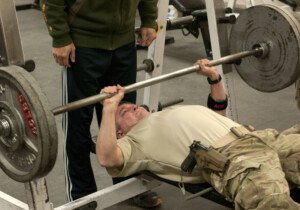
Here is where golfer’s elbow comes in, because the inflamed tendon (medial epicondyle) controls the gripping action of the hand.
“The muscles which originate from the medial epicondyle common flexor tendon control wrist flexion (bringing the palm of the hand toward the forearm), finger flexion (curling fingers) and wrist pronation (turning the palm of the hand down),” explains D’Wan Carpenter, DO, a board certified physical medicine and rehabilitation physician with SIMEDHealth in FLA.
“The best bench press is going to be achieved after completing a rehabilitation program for golfer’s elbow (medial epicondylitis),” continues Dr. Carpenter.
“If that is not an option, one can bench press with a neutral wrist (i.e., not bent back or forward on the bar).
“Altering the finger grip while still maintaining control and stability of the bar may also alleviate some pain — given the muscle which helps to bend the fingers around the bar also originate from the flexor tendon on the inside of the elbow.”
To avoid aggravating the tendon when doing the lift-off, loosen or even eliminate the grip of only the index finger and see if that makes a noticeable difference. Without the index finger you can still maintain a stable grip.
As for handling the barbell after that point, here are options.
#1. Keep the index finger splinted if you’re unable to keep it from grasping the bar.
If the index finger is dropped from the equation, and the remaining fingers take over the grip, this may be enough to prevent pain.
The index finger must be splinted to prevent you from accidentally including it in a grip — unless you’re pretty disciplined about that.
You’ll need to play around with positioning your four-finger hold to find the “groove” where there is no forearm pain.
#2. If the four-fingered grip isn’t sufficient at calming golfer’s elbow during a bench press, then slightly loosen the grip of the middle and fourth fingers, but keep the thumb still tightly wrapped around the bar.
Nevertheless, there may still be inner forearm discomfort.
Whichever method you use to keep golfer’s elbow from interfering with a bench press, use a spotter for heavier lifts until you get confident with these adjustments.
 Dr. Carpenter is one of the nation’s top board-certified physical medicine and rehabilitation physicians, a national speaker, medical legal expert and independent medical examiner. She is founder and Chief Medical Officer of DJC Physical Medicine Consultants. Follow Dr. D’Wan on Twitter.
Lorra Garrick is a former personal trainer certified through the American Council on Exercise. At Bally Total Fitness she trained women and men of all ages for fat loss, muscle building, fitness and improved health.
.
Top image: Shutterstock/KDdesignphoto
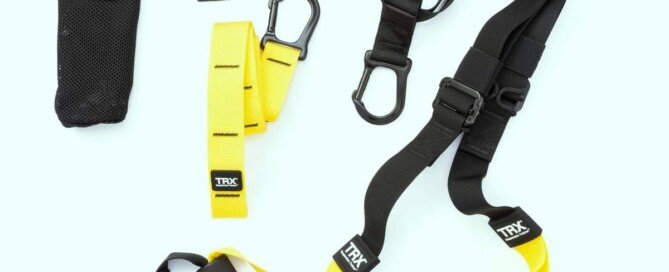
Golfer’s Elbow: Inverted Row with TRX Suspension Device
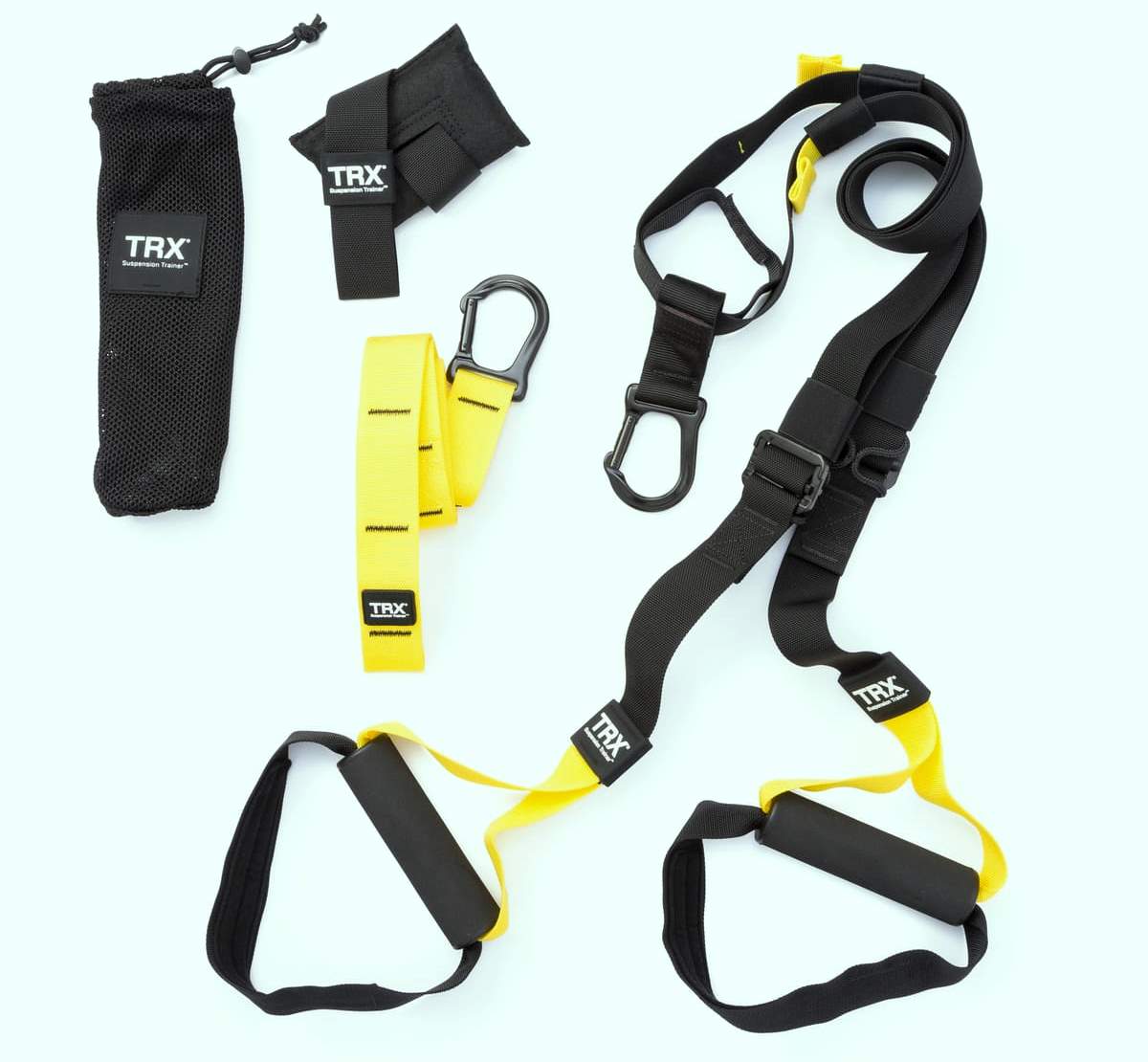
If you have golfer’s elbow, here’s how to do inverted rows without any gripping by using a TRX suspension device.
Whether or not you have golfer’s elbow, the TRX setup is the same:
Make sure that the loop-straps are suspended high enough off the floor so that when you’re in the down position of an inverted row, your arms are straight or almost straight.
Golfer’s elbow doesn’t have to keep you from doing inverted rows.
If your gym has a TRX suspension device, you can use this instead of what you normally use for inverted rows.
In fact, some people, even without golfer’s elbow, use suspension straps for inverted rows.
Foot Position
And of course, make sure that feet can be properly positioned; if you normally elevate the feet, hopefully your gym will have a workout stool to use.
The only difference between TRX suspension inverted rows with a non-inflamed tendon and those with golfer’s elbow is just exactly where the hands are at relative to the loop-straps.
Do NOT Grip the Straps
Instead BOTH hands (even if you have golfer’s elbow only on one side) will be inserted through the loops, and the strap will be tugging against the underside of your wrists.
I recommend you NOT face palms away (pronated grip), as this can aggravate golfer’s elbow.
Instead face palms forward. This will also recruit more biceps fibers. A neutral grip may be doable if your golfer’s elbow isn’t that bad.
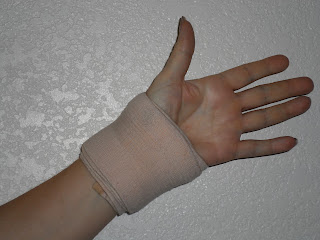
The last thing you must do, however, is put a protective wrap on your wrists, because the strap against your bare skin will not be tolerable.
TIP: Splint index finger to prevent accidentally gripping with it. The thumb is also barred from gripping.
Lorra Garrick is a former personal trainer certified through the American Council on Exercise. At Bally Total Fitness she trained women and men of all ages for fat loss, muscle building, fitness and improved health.
Can Chronic Anxiety Cause Fast Resting Heart Rate?
A fast resting pulse is not good for the heart, and unfortunately, a stressful life can cause this.
Stress is bad for the heart, and one way this is so is because chronic stress or anxiety can cause a fast resting pulse.
“As a busy clinical cardiologist, it is not uncommon to see a patient who has resting tachycardia, that is, a sustained heart rate above 100 beats per minute,” says Donna P. Denier, MD, of The Cardiology Center with the Appalachian Regional Healthcare System.
We can almost always feel our heart “racing” when faced with acute anxiety or fear.
However, a persistently fast pulse can’t always be “felt” by the patient unless they take their pulse.
The best time to take it is first thing upon awakening, or, at least, when you’ve been relaxed for awhile.
But you should also take it randomly, since being relaxed might not be a frequent occurrence for a highly stressed person.
Dr. Denier explains, “Often the patient notices a feeling of palpitations or a sensation of their heart racing, but other people may have no symptoms at all.
“They may be referred by a primary physician who noticed this finding.”
Medical causes of a fast resting pulse include an overactive thyroid, anemia, infection and pain, says Dr. Denier. Caffeine and side effects of medications can also cause tachycardia.
“Anxiety can cause tachycardia, but should always be a diagnosis of exclusion after carefully ruling out any significant organic disease that may require treatment,” says Dr. Denier.
“Increased heart rate is the normal response to anxiety and it can be seen in short intervals or sustained.
“Under conditions of anxiety, worry or fear, the body secretes catecholamines into the blood resulting in increased heart rate and blood pressure.
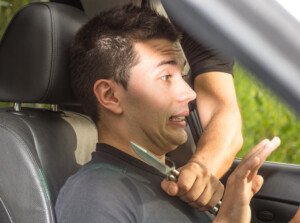
Fight or flight response kicking into gear. Shutterstock/oneinchpunch
“This is part of the body’s normal fight or flight response, and it is considered a normal compensatory mechanism.”
Primitive man’s chief source of anxiety was an encounter with a wild boar or a struggle to capture dinner for his family.
The physical exertion of fight or flight neutralizes stress hormones.
Modern man doesn’t fight or flee; he sits and seethes. So while the short-term stress response is valuable and necessary to prepare for the fight or escape, “sustained stress is never good for the heart,” continues Dr. Denier.

“Sustained tachycardia over long periods of time can even cause the heart muscle to weaken, leading to a condition we call cardiomyopathy.
“Sudden severe stress can even cause acute injury to the heart that mimics a heart attack without any coronary artery disease.
“When anxiety is sustained, causing persistent tachycardia, it should always be evaluated by a specially trained professional and treated appropriately.”
Does a fast pulse from stress require medical treatment?
“It does not usually require treatment to suppress the heart rate except in certain conditions such as hyperthyroidism,” says Dr. Denier.
“It should always be recognized as an important warning sign and may indicate that a person’s stress level has moved into the unhealthy zone.”
Chronic anxiety can result in poor sleep, bad eating habits, dehydration and too much indulgence in vices like smoking, which can all increase heart rate.
“This is the reason that a good medical exam is so important,” says Dr. Denier.
“Treatment should be focused on recognizing the underlying contributing factors and finding more effective coping mechanisms.”
As mentioned, modern peoples can’t fight or flee, and instead, often hold their stress inside.
Men and women need to develop coping skills to subdue stress’s negative effects.
“Exercise is a perfect healthy release of stress and is always good for the heart,” says Dr. Denier.

Dr. Denier has been practicing medicine for over 20 years and is board certified by the American Board of Internal Medicine – Cardiovascular Disease.
Lorra Garrick has been covering medical, fitness and cybersecurity topics for many years, having written thousands of articles for print magazines and websites, including as a ghostwriter. She’s also a former ACE-certified personal trainer.