
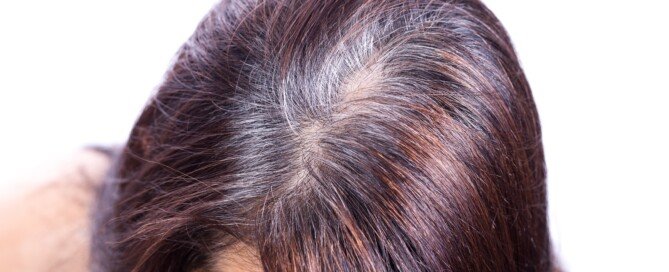
Can Grey Hair Be Caused by Minoxidil?
Grey hair indeed can result from the use of minoxidil; you aren’t imagining it.
The next question then is: Is this grey from rapid aging or just a harmless stain?
“I haven’t seen the phenomenon of Rogaine [minoxidil] causing grey hair, but it is always possible that upon application it is spurring hair growth that encompasses grey hairs as well as regular colored hairs,” explains Dr. Joel Schlessinger, MD, board certified dermatologist and cosmetic surgeon with a private practice in Omaha, NE.
He continues, “There are two formulations of Rogaine, and the foam is a much better tolerated form. The liquid forms contain propylene glycol and that tends to cause scalp irritation.”
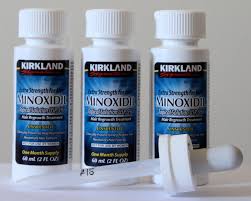
If you think your new grey hairs are from minoxidil, then have a dermatologist take a good close look at the area in question.
It may be difficult for you yourself to get a close-enough look to properly inspect the hairs on your scalp.
It can be difficult to tell if the grey hairs are new growth or hairs that were growing there anyways, with or without minoxidil.
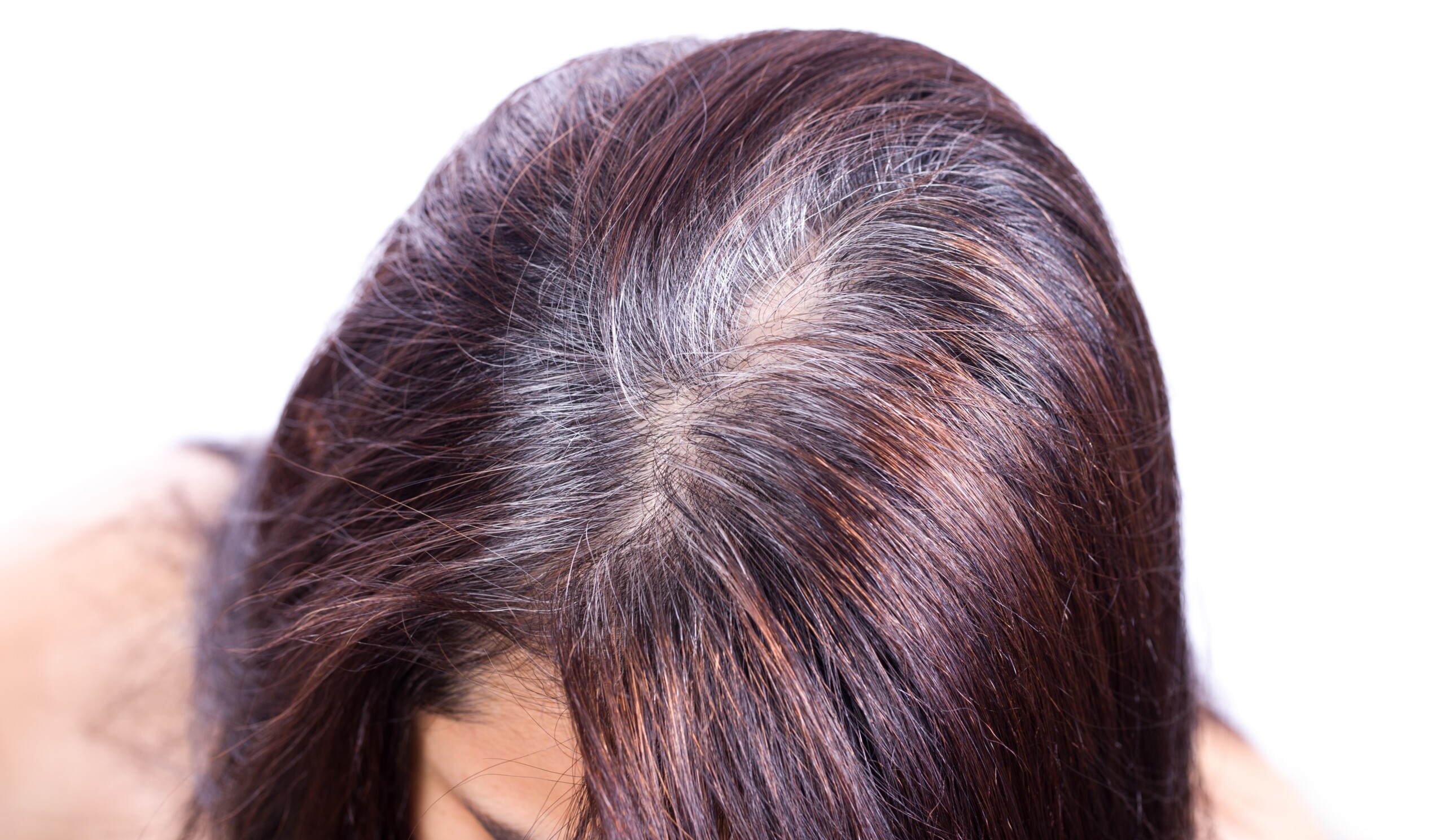
Below are some grey hairs where I apply the drug. But after shampooing, these always wash out.

 Dr. Schlessinger, founder of LovelySkin.com, has 25+ years of experience treating many skin conditions including melanoma. He’s founder of the Advanced Skin Research Center, a clinical facility that investigates new medications and treatments.
 Lorra Garrick has been covering medical, fitness and cybersecurity topics for many years, having written thousands of articles for print magazines and websites, including as a ghostwriter. She’s also a former ACE-certified personal trainer.
.
Top image: Shutterstock/Chutima Chaochaiya

Hair Falling Out? Could Be Your Clip-in Extensions or Braids
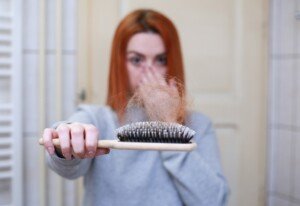
It’s no myth: Clip-in extensions and braids can damage hair and cause it to fall out: hair loss, and the damage could be permanent.
One: to add volume to hair
Two: to add length
Three: to add color, either as an under-layer or throughout.
Hair extensions actually come in a blazing array of neon colors, like blue, violet, magenta, purple, green, orange/red and pink.
Hair Loss from Clip-in Extensions
“Clip-in hair extensions can cause a variety of problems; the most important one to remember is that of hair loss from tension and pulling,” says Dr. Joel Schlessinger, MD, board certified dermatologist and cosmetic surgeon with a private practice in Omaha, NE.
“Hair is very fragile in general, and even an extension can cause it to degrade from chemicals and glues that are applied,” says Dr. Schlessinger.
“This is especially true in the case of thinning hair and with repeated application and reapplication of extensions.”
Braids Can Cause Hair Loss — if Worn Tight
“Traction alopecia [hair loss from traction] is often noted when hair is braided tightly (sometimes in order to prepare hair for extensions),” says Dr. Schlessinger. “Alopecia” means hair loss.
“Clearly, there is no benefit from braiding hair tightly; it is a very significant cause of hair loss in my practice, so it is best to avoid if at all possible.”
If you want to volumize your hair by wearing braids overnight, first put the sections that you want to braid in a loose ponytail.
What this means is, the rubber band is loose, and the rubber band is NOT right against the scalp: So what you then have is a floppy ponytail.
Then you braid below the rubber band. This way, there will be virtually no traction between the rubber band and the scalp.
If you feel the braid “snagging” or “pulling” while you’re lying in bed, gently bobby-pin the tip of the braid to the top of your head to relieve the pulling sensation.
It’s not news that any woman wants to hear, but over time, those fabulous clip-in extensions that you love so much will cause some degree of hair loss.
Just how much of your hair will fall out — beyond what’s normal in a typical day — depends on variables such as how hard you brush, how often you wear the extensions per week, for how long the clip-ins are in your hair in a given day, and how tightly you have the track’s teeth embedded into your scalp.
Braids are so cool, and tight braids are common with certain hairstyles…but unfortunately, they will stress the hair root as well.
So to prevent as much of your hair as possible from falling out, limit your use of clip-in extensions and tight braiding.
Dr. Schlessinger, founder of LovelySkin.com, has 25+ years of experience treating many skin conditions including melanoma. He’s founder of the Advanced Skin Research Center, a clinical facility that investigates new medications and treatments.
 Lorra Garrick has been covering medical, fitness and cybersecurity topics for many years, having written thousands of articles for print magazines and websites, including as a ghostwriter. She’s also a former ACE-certified personal trainer.

How This Muscle Twitching Syndrome Wreaks Havoc on the Mind

Imagine a doctor walking into the office where you’ve been waiting to hear the results of your muscle twitching worries. He’s not smiling.
Clipboard in hand, he pulls up a stool and licks his lips, eyes lowered a moment.
Then he makes eye contact and says, “I’m so sorry. The test came back positive.
You have ALS – Lou Gehrig’s disease. There is no cure, and life expectancy is usually two to five years after diagnosis.”
How would you feel? Well, this is pretty much the feeling experienced by many healthy people who suffer from benign fasciculation syndrome (which includes muscle twitching).
This harmless condition really messes with the mind, because a lot of people who have an annoying muscle twitch or twitches will invariably do an Internet search, not because they already fear the worst, but because they are merely seeking relief from bothersome twitching.
They expect perhaps to find some dietary or supplement advice, or maybe something about a salve or cream that can be applied to the twitching area.
Instead, their search takes them to ALS sites.
“Muscle twitching” is a symptom of amyotrophic lateral sclerosis, a muscle wasting, fatal disease caused by progressively degenerating nerve cells in the brain and spinal cord.
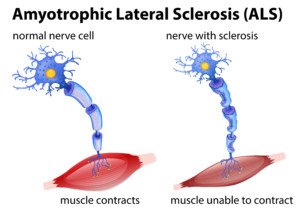
We all worry at some point or another in our life that we have a killer disease.
Who hasn’t worried they have cancer after noticing a strange birthmark on the back of their leg, or having a persistent cough, stomach cramps, a missed period or strange pain in the knee?
Who hasn’t feared diabetes when they awaken one morning with tingling toes?
Who hasn’t feared a brain tumor from a headache or an imminent heart attack from some chest discomfort?
But some people with benign fasciculation syndrome (BFS) go way overboard.
This is no laughing matter. The anxiety and fear of ALS is overwhelming.
Many sufferers have NOT — I repeat — have NOT had any other hypochondriasis involving other medical conditions before.
The ALS scare is their first. Victims can be any age, including 20s, even though ALS is extremely, extremely rare in this age group (cdc.gov).
So obsessed and profoundly shaken up do BFS sufferers become, that they typically spend inordinate amounts of time conducting strength tests, since muscle weakness is a hallmark ALS symptom.
These home tests can be as follows:
- Continuous standing up and down on one’s toes, on one foot
- Pulling at the feet, toes, fingers or hands to measure resistance strength
- Repeatedly climbing up and down stairs to measure possible weaknes
- Picking up heavy items
- Unscrewing tight jar lids
- Prolonged staring at the twitching area
- Excessive visual examinations comparing the twitching side of the body to the non-twitching side
- Continuous getting in and out of chairs in an attempt to detect leg weakness — and the list goes on.

Shutterstock/Boris Bulychev
The victim thinks of death constantly, worries how family will get along without them, starts imagining life in a wheelchair, life with a trach tube in the throat to breathe for them, what their last breaths will feel like while family members watch, etc.
They visit ALS clinics for exams, and sometimes, one round of negative tests isn’t enough to reassure them that they are healthy.
Many BFS sufferers take antidepressant drugs, because these drugs have been shown to alleviate symptoms of hypochondria, anxiety and obsessive thought processes.
But the drugs do only so much, and drugs aren’t an option for people who want to live naturally without putting drugs in their body.
The anxiety makes BFS symptoms worse, and the symptoms, besides muscle twitching (the biggest twitches are called “thumpers”), can include fatigue, a drained feeling, tingling, cramps (ALS symptom), buzzing, pins and needles sensations, and “perceived weakness.”
Because the sufferer thinks he has ALS, his imagination plays tricks on him and he thinks his muscles have weakened.
This can set off a chain reaction of continuous obsessing over home strength and balance tests in an attempt to reassure himself.

Don’t try funky balance tests for reassurance — tests that even perfectly healthy and fit people would struggle to do! Freepik
I began suffering from this malady some years ago, but I recovered quickly and no longer suffer.
It generally takes at least a year, sometimes several years (but sometimes NEVER), for a BFS sufferer to finally feel assured that they are healthy and nothing’s wrong.
My cure came after spending some time in cyberspace.
I never had any medical tests. My twitching became markedly subdued after only 12 days from when it started up.
I’ve always had a twitch here and there, but nothing like in those first 10 or 12 days.
If the twitching ever fires up again, I won’t tail spin into an insane fear of a killer disease.
However, many BFS sufferers who go into “remission” will experience a resurge of twitching, sometimes in new areas, many months after the remission, and will revert back to living in constant fear of ALS.
Lorra Garrick has been covering medical, fitness and cybersecurity topics for many years, having written thousands of articles for print magazines and websites, including as a ghostwriter. She’s also a former ACE-certified personal trainer.
.
Top image: Shutterstock/fizkes
Sources: mayoclinic.org/diseases-conditions/amyotrophic-lateral-sclerosis/basics/symptoms/con-20024397 and cdc.gov/mmwr/preview/mmwrhtml/ss6307a1.htm

How to Lower Blood Pressure Naturally without Drugs?
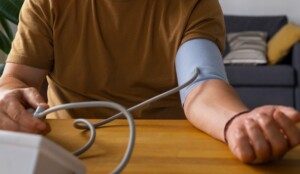
Lowering blood pressure without drugs is perfectly safe, cheaper and has no nasty side effects of conventional medicine.
If you want to lower blood pressure naturally, but are already on drugs to lower blood pressure, make sure you arrange with the prescribing doctor about weaning off conventional medicine for your high blood pressure.
Never quit blood pressure medication without consulting with your doctor.
If your doctor insists you use only conventional medicine, and that natural treatments for lowering blood pressure don’t work, find another doctor.
Conventional medicine for lowering blood pressure is something to be leery at because the “medicines” are actually drugs.
The body is not designed by nature to efficiently process a foreign chemical substance.
The results are side effects and chemical imbalances in the body.
If you have high blood pressure, something is not right inside your body. A drug treats symptoms and does NOT make you healthier.
Side effects of “medicine” for lowering blood pressure include:
Death to an unborn baby if a pregnant woman takes the “medicine.”
Cardiac arrest
Kidney problems
Skin rash
Headache, dizziness, nausea, fainting
Insomnia
Depression
Pneumonia
Impotence
Breast enlargement in men
Many more potential side effects exist.
This article assumes you’ve already been diagnosed with high blood pressure; here’s how to lower blood pressure without conventional medicine:
“When dealing with high blood pressure, the most important thing you can do is eliminate the drivers,” says Dr. Elizabeth Klodas, a board certified cardiologist and founder of Preventive Cardiology Clinic.
“There are multiple factors that contribute to blood pressure going up.”
Exercise. Just a 10-minute brisk walk will lower blood pressure. But don’t stop there.
A more permanent lowering of blood pressure will occur in only a few weeks of consistent exercise: 30-60 minutes a day at least four days a week. Exercise lowers blood pressure by lowering blood volume.
Dr. Klodas says that regular physical activity will decrease blood pressure by 4-9 mmHg.
Mistake: Thinking work you do around the house or yard or with your car counts towards your daily exercise quota. WRONG.

Shutterstock/Monkey Business Images
The 30-60 minutes of exercise must be scheduled exercise time, in addition to any work around the house or on the job.
If you have high blood pressure, all your housework obviously has not prevented it.
Exercise should consist of cardio and strength training, both challenging enough to get you winded but not gasping; and your muscles pleasantly burning but not hurting.
DASH diet: Dietary Approaches to Stop Hypertension (high blood pressure).
Permitted is an occasional portion-controlled non-DASH food such as a donut, roast beef and gravy, or fried chicken. A healthful diet will lower BP by 8-14 mmHg, says Dr. Klodas.
Also recommended is the Mediterranean diet.
It boils down to whichever one fits best with your lifestyle.
Cut sodium. Sodium should be limited to 1,500 to 2,400 mg a day.
Lowering sodium lowers blood pressure because less sodium means reduced blood volume.
Too much sodium constricts the tiniest of our arteries. This, plus high blood volume, forces the heart to work harder in a very unhealthy way.
Myth: Most sodium comes from the salt shaker.
Fact: Most sodium comes from processed and frozen packaged foods, including frozen seasoned vegetables that come in a box!
Myth: You don’t have to worry about sodium content of condiments.
Fact: Some condiments are loaded with sodium! A teaspoon of mustard can have 50 mg of sodium.
Read labels of every food and beverage. What you think may be low in sodium may be off the charts. Flat-out avoid cured luncheon meats, bacon and sausage.
Don’t add salt; use spices and herbs. Rinse canned foods, even low-sodium varieties, with water.
Lastly, your water softener may be adding sodium to your water. Make sure it doesn’t. If it does, use a different purification system. Cutting sodium will reduce BP by 2-8 mmHg, says Dr. Klodas
Get a dog. If you’ve been tinkering around with the idea of getting a dog but keep putting it off, you now have no more excuses: Studies show that petting a dog lowers blood pressure.

If you own a dog, think of all the daily petting you’ll do. A loving dog in the house will help de-stress you, and stress management is yet another way to naturally lower blood pressure.
Reduce stress. How you react to events is what makes the stress, not the actual event. Change whatever you can to de-stress your life.

Freepik.com Yanalya
If you hate your job, look for another one. If you’re in a toxic relationship, end it. If you’re always screaming at your kids, choose your battles wisely; let the messy bedroom go.
Buy a punching bag and wail on it every day for 10 minutes. Cut back on work hours if you can afford to.
Take assertiveness training classes. Make a to-do list for the next day, every night before going to bed so you can sleep well.
Stress raises blood pressure because if enough stress (how you react) occurs on a chronic basis, chemical changes occur in the body, because your reaction tricks the body into “anticipating” an emergency situation.
Chemically, the body gears up for this — but — no physical exertion (that can counteract the chemical changes) ever happens, because the emergency situation is usually a situation in which you CAN’T fight or flee; i.e., being trapped in a traffic jam, being trapped in an office cubicle working for a tyrant; arguing with your teens at the dinner table; balancing the checkbook, etc.
The sedate, trapped body under stress will result in chemical imbalance = high blood pressure.
In addition, losing weight can lower blood pressure by 5-20 mmHG, and lowering alcohol intake 2-4 mmHG, says Dr. Klodas.
“So put it all together – and you can realize anywhere from a 20 to 55 mmHg drop on your own,” she says.
“That’s the same results you’d get from being on a bunch of medications!
“And because sodium is so hard to avoid, being especially diligent in this regard is critical.”

Trained at Mayo Graduate School of Medicine and Johns Hopkins, Dr. Klodas believes in first changing the diet, rather than taking pills, to improve cholesterol profile. Her clinical interests include prevention of heart disease and non-invasive cardiac imaging.
Chocolate for Lowering Your Blood Pressure

Freepik.com
A study from the University of Surrey suggests that dark chocolate, apples and grapes may benefit heart health.
These items contain naturally occurring compounds shown to help lower blood pressure and improve blood vessel function.
Published in the European Journal of Preventive Cardiology (2025), the study reviewed 145 clinical trials.
It found that regular intake of dark chocolate can modestly reduce blood pressure, especially in people with high or borderline-high readings.
In some cases, the effect was similar to that of certain medications.
The study paper points out that chocolate should not replace medical treatment and that further research is still needed.
Lorra Garrick has been covering medical, fitness and cybersecurity topics for many years, having written thousands of articles for print magazines and websites, including as a ghostwriter. She’s also a former ACE-certified personal trainer.
Top image: ©Lorra Garrick
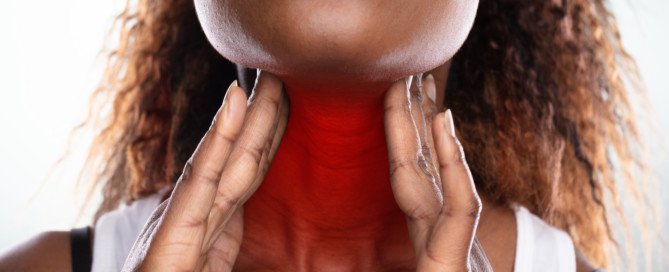
Coughing, Lump or Pain in the Throat: It’s LPR
LPR (laryngopharyngeal reflux) affects 50 million Americans, and you may be one, as it causes many symptoms and can lead to cancer.
LPR is frequently misdiagnosed as an allergy, sinus infection or asthma.
Below are links to articles about this common problem that sometimes presents with frightening symptoms such as a choking sensation or difficulty inhaling.
Of course, it’s vital to realize that you just can’t assume with 100 percent confidence that your symptoms mean LPR.
LPR can mimic other conditions; you need a professional diagnosis.
LPR symptoms like chronic throat clearing and a lumpy feeling there are distinct from typical acid reflux.
But a definitive diagnosis involves specialized testing.
An example is the 24-hour dual probe pH-impedance study; this will show the presence of acid and non-acid reflux in the throat.
But keep in mind that acid refluxing into the throat is a common situation.
Your symptoms may likely mean LPR. However, if they persist or if they don’t respond to over the counter medication and especially a prescription medication for reflux, you should see an E.N.T. physician.
I interviewed an E.N.T. physician for these articles.
Telling the difference between LPR and cancer of the throat
Can an LPR choking episode be fatal?
What to do about the acid reflux in your nose
Vocal vord dysfunction: real or fake?
Is your LPR a pain in the neck (literally)?
Lorra Garrick has been covering medical, fitness and cybersecurity topics for many years, having written thousands of articles for print magazines and websites, including as a ghostwriter. She’s also a former ACE-certified personal trainer.
.
Top image: Shutterstock/Andrey_Popov
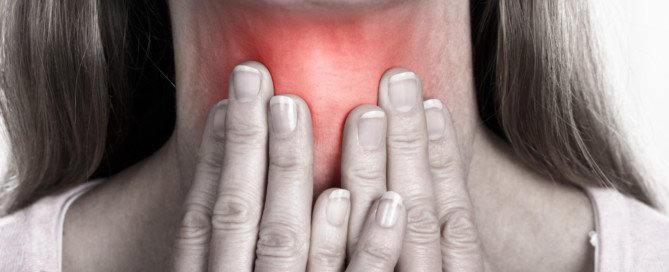
What Helps a Sore Throat from Acid Reflux?
An E.N.T. doctor explains what you can do to help your sore throat from acid reflux (LPR)—naturally and pharmaceutically.
What are the best drugs for helping relieve a sore throat from acid reflux?
“The best medications for acid reflux are the proton pump inhibitors,” says Dr. Stacey Silvers, MD, of Madison ENT & Facial Plastic Surgery in NYC, who is board certified in otolaryngology.
“Many of these medications are found over the counter in lower doses than can be found in a prescription.
“These medications include Nexium, Prilosec, Prevacid, Zegerid and omeprazole.
“Some patients may require these medications 2 x per day in order to manage their symptoms.
“There is no ‘best’ medication, as different people prefer and benefit from different things.
“If the first medication is not successful for you, then a second one may work better.
“Ideally these medications are not taken forever, and natural, dietary measures are taken and are successful.”
What are the best natural solutions for the sore throat caused by acid reflux?
Dr. Silvers explains, “These natural measures include first and foremost not eating three hours before bed.”
This is a difficult rule for many people to stand by, especially people trying to build muscle who believe that eating protein, even complex carbs, close to bedtime will turn an 11-hour fast into an eight-hour fast.
“Lying down with a stomach full of acid will lead the acid to go up with gravity from lying down,” says Dr. Silvers.
“It is not enough to elevate the head of the bed with a wedge, though this is a helpful natural measure.”
If you’re experiencing symptoms of acid reflux, including those affecting the throat, despite sleeping on a wedge, take note of what and when your last meal was before you got into bed.
“Foods that are high in acid should be reduced including tomatoes, chocolate, onions, alcohol, caffeine, mints and spicy food and citrus.
“If you smoke, QUIT. Some natural methods that are successful for some are apple cider vinegar 3 x per day and aloe. Individual results will certainly vary.”
If your sore throat persists despite these measures, acid reflux may not be the cause; see your doctor.
 An NYC expert in ear, nose and throat care, Dr. Silvers has been named among America’s Top Physicians and Surgeons in facial plastic surgery and otolaryngology numerous times since 2003. Dr. Silvers is an expert in the field of minimally invasive rhinology, resolving patients’ breathing and sinus problems with simple in-office procedures.
Lorra Garrick has been covering medical, fitness and cybersecurity topics for many years, having written thousands of articles for print magazines and websites, including as a ghostwriter. She’s also a former ACE-certified personal trainer.
.
Top image: Shutterstock/Audrey_Popov

Does Vocal Cord Dysfunction (VCD) Really Exist?

“VCD does not exist,” says E.N.T. physician Dr. Stacey Silvers.
Dr. Silvers, of Madison ENT & Facial Plastic Surgery in NYC, who is board certified in otolaryngology, explains that “No one has done EMG on vocal muscles to show that the nerve is not functioning during these sudden ‘episodes.’”
An EMG (electromyography) is a nerve conduction test to see how well, if at all, electrical nerve impulses are firing to make muscle fibers contract.
So then, just what is going on when someone experiences what they believe to be a problem or “dysfunction” with their vocal cords?
Dr. Silvers explains, “The symptoms of ‘VCD’ are the exact symptoms of silent reflux. It is the swelling from the acid leading to the scary symptoms. It is not paralysis or weakness of the vocal cords.”
Silent reflux is also known as LPR (laryngopharyngeal reflux disease).
The term “vocal cord dysfunction” is actually ambiguous. What Dr. Silvers is saying is that there truly is a disorder suffered by many that involves the vocal cords: LPR.
But this is not a problem with the muscle fibers of the vocal cords. Hence, the term “vocal cord dysfunction” is misleading.
“VCD is a misnomer,” says Dr. Silvers. “The symptoms of difficulty breathing, coughing, wheezing, throat tightness, hoarse voice are all symptoms of LPR.
“The term VCD has been coined by allergists and pulmonologists who do not have the ability to view the vocal cords.”
You may have read somewhere that a doctor can look down your throat and diagnose VCD, but that in order for the doctor to do this, the patient would have to be experiencing an “attack” right at that moment. What are the odds of that occurring?
LPR can produce ongoing symptoms such as throat discomfort, the hoarse voice, very frequent coughing, a sensation of mucus trickling down the throat and a constant feeling of a lump in the throat.
But that sudden “attack” of feeling that your airway has instantly been shrunk to the diameter of a straw … it’s just not likely that this will occur right when the physician is peering down at your vocal cords.
And if it did…the doctor would see acid on the vocal cords making them swell.
“The symptoms can be sudden; they can wake you from sleep and make it feel like you cannot breathe,” says Dr. Silvers.
“Laryngopharyngeal reflux is acid coming up into the back of the throat. The throat (laryngeal or post cricoid) swelling is a result of the acid irritating the tissues leading to swelling.
“Therefore, people experience throat tightness and hoarseness.
“It’s the swelling of the larynx and even just below the larynx that is a result of the corrosive stomach acid that leads to the wheezing and throat tightness.
“These patients are not developing a nerve issue or vocal function problems. If the reflux is treated, the symptoms will resolve.”
An NYC expert in ear, nose and throat care, Dr. Silvers has been named among America’s Top Physicians and Surgeons in facial plastic surgery and otolaryngology numerous times since 2003. Dr. Silvers is an expert in the field of minimally invasive rhinology, resolving patients’ breathing and sinus problems with simple in-office procedures.
Lorra Garrick has been covering medical, fitness and cybersecurity topics for many years, having written thousands of articles for print magazines and websites, including as a ghostwriter. She’s also a former ACE-certified personal trainer.
.
Top image: Shutterstock/Aaron Amat.

Rotten Egg Smell from Nose: Interview with Doctor

A rotten egg smell in your nose can have several causes, says an E.N.T. doctor.
Eeeuuwww! What is causing that rotten egg odor from your nose?
“A bad smell in the nose can come from the sinuses, or old mucus in the nose (possibly infected) or acid reflux,” says Dr. Stacey Silvers, MD, of Madison ENT & Facial Plastic Surgery in NYC, who is board certified in otolaryngology; one of her specialties is sinus surgery.
She explains: “Acid can come up as high as the back of the nose, causing a bad smell or odor.”
Does a rotten egg smell from the nose, or a particularly bad odor, necessarily indicate it may be cancer?
Dr. Silvers answers, “Rarely, a foul odor can come from an olfactory bulb tumor or a nasal tumor.”
Located at the base of the frontal lobe, the olfactory bulb processes information about odors detected by the nose.
When you inhale, odor molecules (also known as odorants) are detected by sensory neurons in the nasal cavity.
These neurons send signals to the olfactory bulb, which then relays the information to other areas of the brain for further processing for smell recognition.
This all happens in just a few hundred milliseconds after inhaling the molecules.
Again, it’s extremely unlikely that what seems like a rotten egg smell coming from your nose is actually a malignant tumor.
“If the symptoms persist, then a nasal examination may be necessary,” says Dr. Silvers.
If the rotten egg smell is accompanied by a persistent new kind of headache, vision problems or cognitive problems, you should seek a thorough evaluation.
But even if the rotten egg stench is the only problem and persists despite making efforts to reduce acid reflux or let a suspected infection in the mucus clear up, it’s time to see your doctor.
You may also want to consider irrigating your nose on a daily basis with a saline solution and neti pot (shown below), both of which can be purchased from a drug store or online.

Neti pot. Shutterstock/nullplus
An NYC expert in ear, nose and throat care, Dr. Silvers has been named among America’s Top Physicians and Surgeons in facial plastic surgery and otolaryngology numerous times since 2003. Dr. Silvers is an expert in the field of minimally invasive rhinology, resolving patients’ breathing and sinus problems with simple in-office procedures.
Lorra Garrick has been covering medical, fitness and cybersecurity topics for many years, having written thousands of articles for print magazines and websites, including as a ghostwriter. She’s also a former ACE-certified personal trainer.
.
Top image: Shutterstock/Boibin
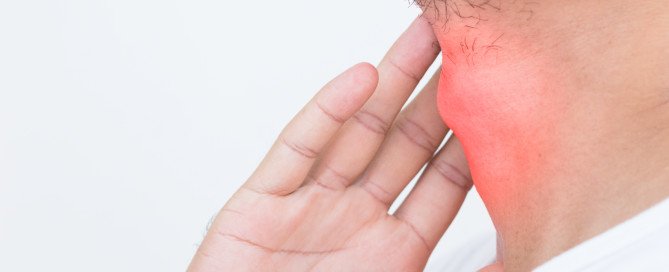
Pain Above Adam’s Apple from LPR
Here’s how LPR can cause pain above the Adam’s apple, says an E.N.T. doctor.
LPR stands for laryngopharyngeal reflux disease, and is a common culprit in pain or discomfort above the Adam’s apple.
“Throat pain is not a normal symptom; this does not mean, necessarily, that something bad [cancer] is going on with the throat,” says Dr. Stacey Silvers, MD, of Madison ENT & Facial Plastic Surgery in NYC, who is board certified in otolaryngology.
Dr. Silvers continues, “The Adam’s apple refers the thyroid cartilage. This tissue, like any tissue in the body, can get inflamed. In this case it is referred to as chondritis.”
Chond = cartilage, and itis means inflammation.
“Common things are common however, and pain in this area is invariably caused by acid reflux, otherwise known as silent reflux (LPR),” explains Dr. Silvers.
“LPR is when acid gets up into the back of the throat around the level of the larynx and the opening of the esophagus.
“The symptoms include post-nasal drip, throat pain, lump in the throat, trouble swallowing, pain with swallowing, throat clearing and cough.
“Stomach acid is an irritant and does not belong in the throat. The pH of this acid is 2 and is highly acidic and irritating to the tissues.
“This causes pain, swelling — and the body to try to protect itself with thick mucus from the back of the nose (causing a feeling of post-nasal drip and the need to clear the throat).”
Rubbing your fingers on the Adam’s apple will not make the pain or discomfort go away.
Triggers of Acid Reflux
When acid reflux occurs, it can travel high enough to cause LPR.
One common trigger is certain foods and beverages. Spicy foods, citrus fruits, tomatoes, chocolate and caffeinated drinks can irritate the esophagus or relax the lower esophageal sphincter (LES), which normally prevents acid from escaping the stomach.
Fatty or fried foods also tend to slow down digestion and increase the likelihood of acid reflux.
Another significant factor is overeating or eating large meals.
Consuming large portions puts extra pressure on the LES, making it more likely that acid will be pushed upward into the esophagus.
Eating late at night or lying down immediately after a meal can exacerbate the problem, as gravity helps keep stomach contents where they belong.
Smoking, too, weakens the LES, and alcohol can both relax the LES and increase stomach acid production.
Wearing tight-fitting clothing around the waist may add pressure on the stomach, leading to acid reflux — which again, can make its way to the throat: LPR that irritates the Adam’s apple area.
Stress can increase stomach acid production and slow down digestion, while inadequate sleep can affect the body’s ability to manage stomach acid levels.
We’re not done! Obesity puts extra pressure on the stomach, and this could cause those stomach juices to go where they shouldn’t.
The solution to pain above the Adam’s apple from LPR?
Make an effort to avoid all of the triggers of acid reflux and hence, the LPR, though stressful situations are often difficult to avoid.
An NYC expert in ear, nose and throat care, Dr. Silvers has been named among America’s Top Physicians and Surgeons in facial plastic surgery and otolaryngology numerous times since 2003. Dr. Silvers is an expert in the field of minimally invasive rhinology, resolving patients’ breathing and sinus problems with simple in-office procedures.
Lorra Garrick has been covering medical, fitness and cybersecurity topics for many years, having written thousands of articles for print magazines and websites, including as a ghostwriter. She’s also a former ACE-certified personal trainer.
Top image: Shutterstock/Niran Phonruang




Mucus in Throat Won’t Go Away: Causes, Solutions
An E.N.T. doctor explains causes and solutions to excess mucus in the throat that won’t go away.
Mucus in the throat that won’t go away or that you “can’t get rid of,” as many people state, is a common problem.
“Throat clearing and mucus in the throat that will not go away is associated with stomach acid coming up into the back of the throat,” explains Dr. Stacey Silvers, MD, of Madison ENT & Facial Plastic Surgery in NYC, who is board certified in otolaryngology.
People with this form of acid reflux do not usually experience the ‘typical’ reflux symptoms of indigestion and ‘heartburn.’
“The body has one protective mechanism to acid in the back of the throat, which is mucus,” says Dr. Silvers.
“That thick mucus in the throat is annoying and causes the individual to clear their throat almost constantly in some cases.
“Mucus production does come from the back of the nose and drips down. This often causes the individual to think the cause is allergies.
“Allergies cause congestion, sneezing, itching, mucus running and dripping from the nose. This can be successfully treated with allergy medication.
“Allergy medication will not treat that thick protective mucus in the throat causing the need to constantly clear the throat.”
How to Get Rid of Stubborn Mucus in the Back of your Throat
Dr. Silvers explains, “You can start by reducing eating three hours before bed and cutting down on highly acidic foods.”
So if you normally hit the sack at around 11:30 pm, be sure that your last bite comes in by 8:30 pm.
Dr. Silvers continues: “If this does not work adequately you can try an OTC reflux suppressor until the symptoms resolve.
“And then continue to focus on dietary treatment measures to keep the reflux from happening and therefore the need for excessive mucus in the throat.”
Examples of over-the-counter reflux suppressors include antacids such as Rolaids, Mylanta and Maalox.
H2 blockers include Pepcid and Zantac. Proton pump inhibitors include Nexium and Prilosec. Ideally, though, you’ll strive to treat your acid reflux naturally.