
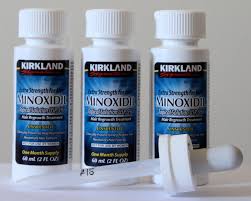
Can Rogaine Be Applied Like Shampoo on Entire Scalp?
Are you thinking of applying Rogaine (minoxidil) throughout your entire scalp to combat diffuse hair loss?
Not all hair loss is the same. Some people suffer from it in a diffuse or scalp-wide way, rather than a focal point like the notorious “bald spot” on the top/back of the head or the receding hairline and temple balding.
How effective would Rogaine (minoxidil) be if you were to apply the foam ALL OVER your head or drip the liquid from the medicine dropper all over your scalp (though this would be very messy)?
“I have seen patients who tell me they do apply it throughout their entire scalp, but have seen very limited positive results in doing so,” says Dr. Robert Dorin, DO, NYC-based hair care expert and restoration specialist.
“It appears that the people who have a true diffuse hair loss pattern, are typically not helped by the use of Rogaine,” continues Dr. Dorin.
“This type of pattern tends to be resistant to the benefits of Rogaine and appears to have a different etiology.
“There are numerous types of hair loss, and unfortunately, Rogaine does not work for all equally.”
Have you tried Rogaine (minoxidil) yet?
This isn’t to say that for 100 percent of the people who try it all over their scalp, that it would fail to stimulate regrowth.
It’s definitely worth a shot. There’s no question in the medical community that minoxidil indeed spurs new hair growth in deactivated follicles.
For some people it works. For others it fails. You will not know which group you fall under UNTIL you give minoxidil a fair shake.
You just might love the results! But there’s a few catches.
Using Rogaine — or Minoxidil — on the Entire Scalp
Again, they are one and the same, from a chemical formula standpoint. The first catch is the price. Minoxidil is the generic version and far cheaper than Rogaine.
But using it on your entire scalp means you’ll go through the bottles pretty quickly.
If you don’t mind this new monthly expense, then give it at least four months to work — as the instructions tell you to.
The second catch is the drippy mess while using the medicine dropper.
If you’re using the drug on your whole scalp, you need to be patient and careful, and embrace the concept of trial and error to get it just right.
Foam minoxidil is not recommended for the whole scalp. Most of it will end up on your hair, not in your follicles. Stay with the liquid formula.

Dr. Dorin of True & Dorin provides creative hair loss solutions, including advanced hair transplant techniques and the latest in regrowth technology, to ensure that his clients achieve their desired results.
 Lorra Garrick has been covering medical, fitness and cybersecurity topics for many years, having written thousands of articles for print magazines and websites, including as a ghostwriter. She’s also a former ACE-certified personal trainer.

Why Can’t Rogaine (Minoxidil) Be Made a Shampoo?
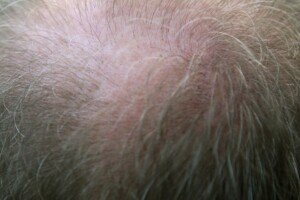
A hair loss doctor explains why minoxidil can’t be made in shampoo form.
Rogaine (generic name minoxidil) comes in either a liquid form that’s dripped onto the scalp from a medicine dropper, or a foam version which is dabbed onto the area of hair loss.
This sounds wonderful for focal hair loss, but what about diffuse hair loss?
This means “head-wide” loss of hair volume due to an increasing number of dormant follicles.
What’s a person to do…apply the minoxidil liquid from the medicine dropper all over the scalp, covering every portion? Or massage in gobs of the foam?
Well, why not Rogaine in shampoo form?
What a Hair Loss Physician Says
“The reason why Rogaine is not made in a shampoo form is simply because it is not an effective way to deliver the minoxidil drug to the follicles,” says Dr. Robert Dorin, DO, NYC-based hair care expert and restoration specialist.
“If one stops and thinks about it, during shampooing, one applies the shampoo to the scalp and rubs, or lathers it up with some water in the hair and scalp for a period of maybe 2-3 minutes at most, then rinses the shampoo off down the drain and along with it the minoxidil.
“The minoxidil would only be in contact with the scalp for this time, partially diluted with water for a very short period of time (2-3 minutes at most), then rinsed off with the shampoo detergent.
“This would never give the minoxidil enough time to be absorbed into the scalp and reach the dermal layer (where the follicles live), allowing the drug to affect the follicles.”
Makes sense! So what about lightly working the foam throughout much of the scalp if you have diffuse hair loss?
If you have very short hair, especially like a crew cut, this would actually be easy to do.
You’d just have to stand there and patiently dab the Rogaine foam through (not rubbing it in, but just getting it in contact with the scalp).
However, if you have long hair (such as a woman with diffuse hair loss or “thinning”), this will be a problem, as much of the foam will end up on the hair rather than the scalp to penetrate into the follicles.
Women or men with long hair may want to stick to select wide parts that they can always easily find and run the medicine dropper along those, or apply the foam down those with their fingertips.
Maybe one day there will be a shampoo for triggering hair regrowth. Until then, you’ll need to stick to the Rogaine/minoxidil liquid or foam.
Dr. Dorin of True & Dorin provides creative hair loss solutions, including advanced hair transplant techniques and the latest in regrowth technology, to ensure that his clients achieve their desired results.
Lorra Garrick has been covering medical, fitness and cybersecurity topics for many years, having written thousands of articles for print magazines and websites, including as a ghostwriter. She’s also a former ACE-certified personal trainer.

Why Do Supplements Irritate Esophagus & Cause Stuck Feeling?

Do you dread taking nutritional supplements because they usually end up “stuck” in your chest (esophagus)?
- Hate that feeling?
- Is the supplement really trapped there or does it just feel that way?
The pills that are most notably associated with irritating the esophagus are certain antibiotics,” says Akram Alashari, MD, a trauma surgeon at Geisinger Medical Center in PA, and author of “THE POWER OF PEAK STATE.”
Examples, say Dr. Alashari, are “tetracycline, doxycycline and clindamycin),” as well as “aspirin and anti-inflammatory agents, and bisphosphonates (for osteoporosis).
“The supplements most commonly associated with esophagitis include vitamin C, iron and potassium chloride.
“It is hypothesized that, in patients with risk factors for delayed esophageal transit, medication-induced esophagitis is caused by prolonged contact of the medication with the esophageal mucosa.
“Aspirin and nonsteroidal anti-inflammatory drugs (NSAIDs) may cause esophagitis by disrupting the normal cytoprotective prostaglandin barrier in the stomach and esophagus.”
Prostaglandins are hormone-like compounds, and “cytoprotective” refers to protecting the cell.
Here is additional information by Dr. Alashari on why pills can cause a stuck feeling in the esophagus.

Dr. Alashari was formerly with Grand Strand Regional Medical Center in SC as an abdominal and critical care surgeon.
Lorra Garrick has been covering medical, fitness and cybersecurity topics for many years, having written thousands of articles for print magazines and websites, including as a ghostwriter. She’s also a former ACE-certified personal trainer.
.
Top image: Shutterstock/Chayatorn Laorattanavech

Why Does Water Sometimes Cause Reflux When Eating?

Have you gulped or guzzled water, only to find that it refluxes back up into your throat?
What’s going on here?
“Water, in and of itself, does not cause reflux,” says Akram Alashari, MD, a trauma surgeon at Geisinger Medical Center in PA, and author of “THE POWER OF PEAK STATE.”
He continues, “Rather, reflux is caused by overfilling of the stomach. When someone drinks enough water to expand the stomach, the lower esophageal sphincter will allow the acidic medium of the stomach to reflux back into the esophagus.
“It is when the stomach contents reflux back when the symptoms of heartburn occur.
“So the mechanism of water causing reflux is by dilation of the stomach with secondary reflux.”
Dr. Alashari was formerly with Grand Strand Regional Medical Center in SC as an abdominal and critical care surgeon.
Lorra Garrick has been covering medical, fitness and cybersecurity topics for many years, having written thousands of articles for print magazines and websites, including as a ghostwriter. She’s also a former ACE-certified personal trainer.

How Does Acid Reflux Cause a Stuck Food Feeling in Chest?

A doctor explains why acid reflux can sometimes cause a sensation of food being stuck in your chest.
“Prolonged acid reflux can cause reflux esophagitis,” says Akram Alashari, MD, a trauma surgeon at Geisinger Medical Center in PA, and author of “THE POWER OF PEAK STATE.”
Esophagitis is inflammation of the esophagus.
“Chronic esophagitis will lead to scar tissue formation in the distal esophagus with stricture formation,” continues Dr. Alashari.
“This stricture, when present, can impede the passage of food through the lower esophageal sphincter and lead to a sensation of food getting stuck in the chest.
“Prolonged reflux esophagitis can lead to Barrett’s esophagus, which is a change in the type of cells lining the distal esophagus to a different type of cells.
“This change in cell type is called metaplasia and is due to the chronic irritation.
“This metaplastic cell type can then become dysplastic, which means that is has unregulated growth, leading to cancer.
“Barrett’s esophagus is a condition associated with a high rate of esophageal cancer.
“Cancer of the distal esophagus can cause esophageal obstruction with the feeling of food getting stuck in the chest.”
Esophageal cancer has a poor prognosis because it’s typically caught after it has spread.
Here is information about a camera in a pill that’s swallowed to view the interior of the esophagus to screen for Barrett’s.
Chronic, untreated or poorly treated acid reflux can lead to this condition.
Acid reflux that’s chronic is called GERD: gastroesophageal reflux disease.
Dr. Alashari was formerly with Grand Strand Regional Medical Center in SC as an abdominal and critical care surgeon.
 Lorra Garrick has been covering medical, fitness and cybersecurity topics for many years, having written thousands of articles for print magazines and websites, including as a ghostwriter. She’s also a former ACE-certified personal trainer.
.
Top image: Shutterstock/Alice Day

Do Pills Get Stuck in Esophagus or It Just Feels that Way?

A doctor explains why it seems your pills get stuck in your esophagus.
Sometimes you may be convinced beyond doubt that the pills you just swallowed are sitting in your esophagus, not moving, just stuck there.
Sensation of Pill Stuck in the Esophagus Has Multiple Possible Causes
“While eating, food does not actually slide down the esophagus after swallowing,” begins Akram Alashari, MD, a trauma surgeon at Geisinger Medical Center in PA, and author of “THE POWER OF PEAK STATE.”
Dr. Alashari continues, The esophagus undergoes peristalsis, which are coordinated contractions to help propel the food toward the stomach.”
He speaks of food at this point, since the way the “food pipe” works with food is the same as it works with pills.
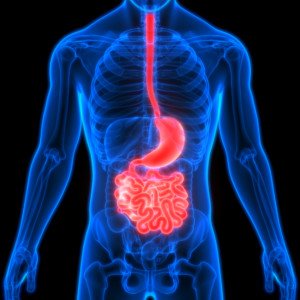
The esophagus may not always be able to tell the difference between certain medicinal pills, a vitamin pill, half a peanut or a particle of candy.
Shutterstock/Magic mine
Dr. Alashari continues, “If, however, the peristaltic wave does not clear the esophagus of food particles, then another peristaltic wave will be initiated.
“This can cause the sensation of food getting stuck. Certain pills can cause esophagitis and pain with swallowing.
“These include certain antibiotics (tetracycline, doxycycline and clindamycin), aspirin and other anti-inflammatory medications, and bisphosphonates.

Shutterstock/jajam_e
“This is especially true in those who swallow the pills without sufficient fluid ingested. The damage caused can lead to a fibrotic reaction during the healing process, leading to stricture formation.”
An esophageal stricture is when that area is narrowed, constricted or restricted, impeding passage of food or pills.
Dr. Alashari continues, “Swallowing pills can cause the sensation of it getting stuck. This is particularly true if there is a stricture present.
“Other medical conditions that can cause the sensation of food (or pills) getting stuck are strictures of other causes (long-standing GERD, prior toxic ingestion or radiation), as well as the disease achalasia.”
What is achalasia?
“Achalasia is a condition where the lower esophageal sphincter fails to relax with ingesting food. This causes food to accumulate in the esophagus with a stuck feeling.” Pills are not exempt from this phenomenon.
“The patient usually has to drink a lot of fluid with the meal in order to help the food pass through the esophagus.
“The patient will also find large pieces of food to be undesirable, such as steak or bread.”
“Another condition which can cause a feeling of a stuck sensation is scleroderma,” says Dr. Alashari. This occurs as a result of replacement of the muscle tissue of the esophagus with fibrotic tissue, which cannot contract.
“This causes the loss of peristalsis and the sensation that food is getting stuck.”
Remember, what applies to food, as far as its journey down the esophagus, also applies to pills.
If this article provided you with helpful information or reassurance, please consider supporting my work through Ko-fi. Donations help me continue writing detailed medical content that’s easy to understand.
Dr. Alashari was formerly with Grand Strand Regional Medical Center in SC as an abdominal and critical care surgeon.
Lorra Garrick has been covering medical, fitness and cybersecurity topics for many years, having written thousands of articles for print magazines and websites, including as a ghostwriter. She’s also a former ACE-certified personal trainer.
Top image: Shutterstock/Estrada Anton
Can Cancer Cause Strange Stomach Noises?

“Someone with a cancer can experience loud noises in the stomach often if they are having symptoms of an intestinal obstruction,” explains Michael Blume, MD, a gastroenterologist at MedStar Good Samaritan Hospital, Baltimore.
“The cancer itself usually does not cause strange noises in most situations,” adds Dr. Blume.
For example, colon and stomach cancer, ovarian cancer and metastasized melanoma can cause an intestinal obstruction.
“If one has an intestinal obstruction, there are usually other signs and symptoms present, such as pain, abdominal distension, vomiting, weight loss, etc.”
Other symptoms may be appetite suppression, undue fatigue, new-onset abnormal bowel habits and a feeling of malaise.
“Obstructive noises are usually high pitched or tinkling in nature,” says Dr. Blume.
“It is important not to view a particular symptom as an isolated phenomenon, but rather, to interpret it in the context of what else is going on in that particular person.”
 In practice for 25+ years, Dr. Blume treats over 65 conditions including abdominal pain, appetite loss, blood in stool, celiac disease, colon cancer, esophageal and liver disease, gas and IBS.
Lorra Garrick has been covering medical, fitness and cybersecurity topics for many years, having written thousands of articles for print magazines and websites, including as a ghostwriter. She’s also a former ACE-certified personal trainer.
.
Top image: Shutterstock/Robert Kneschke

Chest Pain, Pain/Numbness in Left Arm, Burping: Heart Attack?

Here is what a gastroenterologist explains might explain chest pain, left arm symptoms and burping all occurring together, which means that a heart attack must be ruled out as soon as possible.
Once a cardiac cause is ruled out (which is a priority), then a most likely cause is “disordered motility,” says Michael Blume, MD, a gastroenterologist at MedStar Good Samaritan Hospital, Baltimore.
This simply means a spasm involving the stomach or esophagus.
The esophagus is located behind the breastbone, so that’s why a spasm can present as chest pain.
“This type of symptom can mimic cardiac symptoms and can be rather frightening,” says Dr. Blume.
“It is always prudent to exclude cardiac causes for this prior to addressing gastrointestinal issues.”
The following can lead to the disordered motility: metabolic or biochemical problems, side effects from certain medications, and even stress and anxiety.
Dr. Blume says that a spasm in the esophagus may cause a tight or full feeling.
The spasm causes swallowed air not to “progress normally,” and the result is the burping.
“Because the esophagus has a similar innervation as the heart, it can often present with symptoms in similar locations.”
This explains why there might be accompanying arm numbness.
“Innervation” refers to the electrical firing of a nerve (transmission of electrical impulses) that causes muscle contraction.
The arm pain results because the brain “thinks” that the origin of the pain is in the arm because the nerve network to the arm overlaps the network to the esophagus (and heart).
In practice for 25+ years, Dr. Blume treats over 65 conditions including abdominal pain, appetite loss, blood in stool, celiac disease, colon cancer, esophageal and liver disease, gas and IBS.
Lorra Garrick has been covering medical, fitness and cybersecurity topics for many years, having written thousands of articles for print magazines and websites, including as a ghostwriter. She’s also a former ACE-certified personal trainer.
.
Top image: Shutterstock/PATIWIT HONGSANG

Mild Persistent Chest Tightness, Urge to Burp

A GI doctor explains what you should do when you have mild ongoing chest tightness, and what the burping with it might mean.
“First of all, in any situation where one experiences chest tightness, even if it is somewhat atypical, one should make sure that it is not a cardiac problem,” says Michael Blume, MD, a gastroenterologist at MedStar Good Samaritan Hospital, Baltimore.
“Excluding this may be as simple as taking a history and feeling comfortable that it is not cardiac, but could involve some testing,” continues Dr. Blume.
“Gastrointestinal problems that can cause tightness and the urge to burp are often signs of what we call disordered motility, or more simply, esophageal or stomach spasms.
“People often describe this as ‘acid reflux’ symptoms, and this could be the case, but it’s usually a problem with esophageal or stomach function, rather than an inflammatory process.
“There can be many causes of this type of symptom, such as biochemical or metabolic problems, certain medications or even stress related symptoms.”
Cause of the burping with the chest symptom?
“When one has spasm in the esophagus or stomach, there is a feeling of tightness or fullness,” begins Dr. Blume.
“And because the air one swallows does not progress normally, the only way to relieve the pressure is to belch.”
In practice for 25+ years, Dr. Blume treats over 65 conditions including abdominal pain, appetite loss, blood in stool, celiac disease, colon cancer, esophageal and liver disease, gas and IBS.
Lorra Garrick has been covering medical, fitness and cybersecurity topics for many years, having written thousands of articles for print magazines and websites, including as a ghostwriter. She’s also a former ACE-certified personal trainer.
Top image: Shutterstock/chajamp








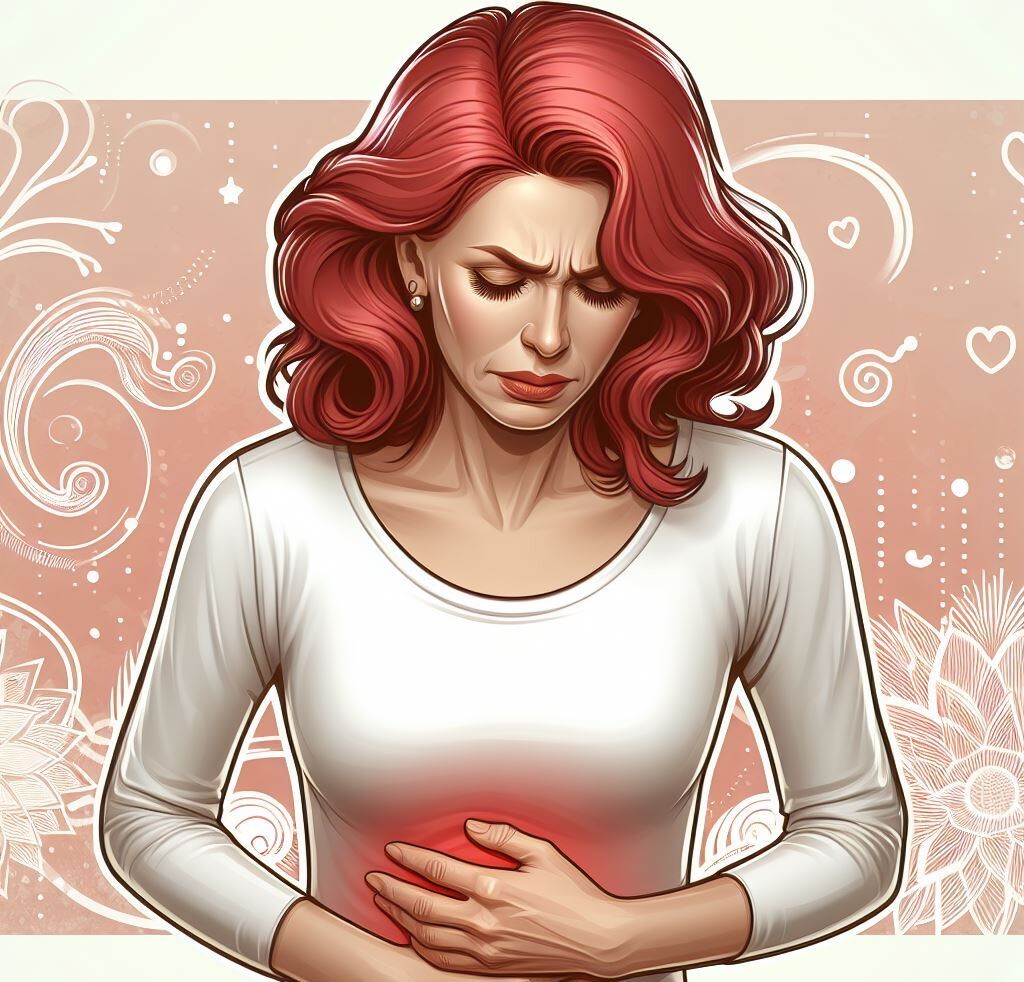
Stomach Growls, Rumbles 24/7: Causes & Solutions
Find out what a GI doctor, not a layman in a thread, says is the cause of a growling, rumbling stomach 24/7.
We expect our stomach to growl and rumble when we haven’t eaten for a while.
But what’s going on when your stomach is growling and rumbling away seemingly 24 hours a day, nearly every day?
Not only can this cause embarrassment, but it can cause anxiety over what the sufferer thinks might be wrong.
“Stomach rumbling is usually a sign of activity in your gastrointestinal tract,” says Michael Blume, MD, a gastroenterologist at MedStar Good Samaritan Hospital, Baltimore.
Dr. Blume explains, “When it is very active, it is often audible. Aside from being potentially socially embarrassing, it is usually not particularly dangerous.”
Can certain foods trigger a growling or rumbling stomach?
“It is usually not triggered by particular foods,” says Dr. Blume. “Most people, if they do have specific food intolerances, usually figure them out by themselves.”
How about the way a person eats or drinks?
“The way in which one eats or drinks is often not an issue, although some people who eat or drink rapidly or swallow a lot of air could experience some increased rumbling in the stomach.”
Another Possible Cause
“Occasionally, more serious problems can cause stomach rumbling, such as intestinal obstructions,” says Dr. Blume.
“However, in these situations, there are usually additional symptoms that suggest that there is a more serious problem, such as vomiting, severe pain, etc.”
So what’s a solution to a stomach that doesn’t seem to stop rumbling and growling despite getting adequate food intake?
First, make sure you don’t eat too quickly or gulp air when you drink beverages.
The only other thing, assuming that you don’t have additional troubling symptoms, is to eat more healthy foods and limit junk foods — and start exercising if you don’t.
A healthier, fitter body might quiet things down.
In practice for 25+ years, Dr. Blume treats over 65 conditions including abdominal pain, appetite loss, blood in stool, celiac disease, colon cancer, esophageal and liver disease, gas and IBS.
Lorra Garrick has been covering medical, fitness and cybersecurity topics for many years, having written thousands of articles for print magazines and websites, including as a ghostwriter. She’s also a former ACE-certified personal trainer.
.