

Heart Palpitations During, After Eating: 6 Causes

“Many patients note heart palpitations after meals,” says Chester M. Hedgepeth, III, MD, PhD, Executive Chief of Cardiology at Care New England.
“The most common reason for this is dietary caffeine intake during mealtime which is found in many drinks, including coffee, tea, soda, and energy drinks and chocolate.
“Alcohol consumption during mealtime, especially if in moderate of high levels, can be associated with heart palpitations.”
Dr. Hedgepeth further explains, “Some patients may also have sensitivity to a particular food, or food additive like monosodium glutamate (MSG).
“Heartburn caused by eating spicy or rich foods can lead to heart palpitations.
“If you have heart palpitations after eating, it may not be directly related to the food but to the mealtime experience.
“Palpitations can be triggered by the simple act of swallowing, or if your mealtimes are a source of anxiety or stress.”
That last point is very compelling. For many people, mealtimes are a time of stress.
If you’ve been experiencing heart palpitations while you eat or “from” eating…take note of the conversation and emotions that take place during the meal.
Do arguments usually ensue?
Do the discussions revolve around stressful topics such as budgeting and saving money, negative experiences at the workplace or the in-laws’ upcoming visit?
Of course, if you have heart palpitations while eating alone, you may still want to assess your thought processes during this time.
When you eat by yourself, is this also the time that you worry about all sorts of things?
Can heart palpitations after eating mean anything bad?
“Usually, the palpitations after mealtime are not associated with any pathology and resolve on their own,” says Dr. Hedgepeth.
“Rarely, these palpitations can be associated with a cardiac arrhythmia.
“Progressive palpitations which are increasing in duration or which are associated with chest pain, shortness of breath or fainting should be evaluated by a physician.”
Preventing Palpitations “from” Eating
“The key to preventing the symptoms is to try identifying what the trigger is for them to occur,” says Dr. Hedgepeth.
“Certainly, reducing caffeine and alcohol intake will help prevent mealtime associated palpitations.
“Also, eliminating foods for which the patient may have a sensitivity or which contain additives (e.g., MSG) may help.”
MSG (monosodium glutamate, common in processed and restaurant foods) is a sodium salt, and consuming it in large amounts will contribute to increased sodium intake.
High sodium levels can affect blood pressure and heart rate, potentially leading to palpitations in sensitive individuals.
 Dr. Hedgepeth also serves as a physician in the cardiovascular division and arrhythmia service at Brigham and Women’s Hospital, plus is an instructor of medicine at Harvard Medical School.
 Lorra Garrick has been covering medical, fitness and cybersecurity topics for many years, having written thousands of articles for print magazines and websites, including as a ghostwriter. She’s also a former ACE-certified personal trainer.
.
Top image: Shutterstock/Monster e

Acid Reflux: Chest Tightness vs. Angina, Heart Attack

Acid reflux or GERD can cause chest tightness, but how does this compare to that caused by a heart attack or angina?
“GERD is a disease where the esophagus is exposed to abnormal amounts of acid which is not designed to tolerate,” explains Jay Desai, MD.
Dr. Desai specializes in colon cancer screening, upper endoscopy and consultative gastroenterology with New York Gastroenterology Associates.
“The most common symptom is a burning sensation in the chest, which can also manifest as a tightening sensation.”
This sensation of tightness in the chest would, understandably, be quite frightening to anyone who knows that “tightness in the chest” is typically listed as a symptom of heart trouble, particularly that of a heart attack.
Dr. Desai continues, “It is important to note that this is just a symptom; the chest does not actually physically tighten.
“GERD symptoms can be confused with a cardiovascular event. Patients who are at risk for cardiovascular disease, i.e., people over age 50, tobacco smokers and those with family history of heart disease, should be evaluated for heart disease if they have these symptoms.
“If cardiovascular disease is ruled out, a trial of antacid medication should be initiated to see if it improves symptoms.”

A wedge pillow for acid reflux
GERD can also occur overnight or even shortly after going to bed.
What works for many people is that of elevating the upper body with a wedge pillow (one style is shown above), to help keep the stomach acids from creeping up the esophagus.
There are different styles of wedge pillows, and you may have to experiment with several before finding the one that’s the most comfortable for your sleeping habits.
You may also want to consider sleeping in a recliner chair.
Mattresses have not been proven to be the best sleeping surface for every single individual, and their horizontal shape is the last thing that someone with overnight acid reflux needs.

Board certified in internal medicine and gastroenterology, Dr. Desai provides a wide range of GI services including for bacterial overgrowth, constipation, acid reflux and GERD, IBS, incontinence and small bowel disease. Twitter handle: @NYGADocs
 Lorra Garrick has been covering medical, fitness and cybersecurity topics for many years, having written thousands of articles for print magazines and websites, including as a ghostwriter. She’s also a former ACE-certified personal trainer.
.
Top image: Freepik/8photo

Why Kids Shouldn’t Invite Everyone in Class to Birthday Party

Here is why children have a right to invite only select classmates to their birthday party and should not be forced to invite the whole class.
*********
- Planning for your child’s birthday party?
- Have you told them they should invite their entire class?
- Dang! Would YOU invite all your COWORKERS to YOUR birthday party?
Should children invite every classmate to their birthday party?
“No, no, no! This is the same misguided advice that says that every kid should get a trophy in a competition,” says Dr. John Mayer, a practicing clinical psychologist specializing in teens/families/children/young adults, and author of “Family Fit: Find Your Balance in Life.”
Dr. Mayer continues, “It does not teach children/teens the REAL WORLD and does not teach appropriate relationship building.
“That’s why we have so many people walking around with no social skills. Forcing a child to invite everyone — you are modeling inappropriate social skills and hindering the child’s social development.”
And what should parents do if their kid’s classmate invites just about everyone to a birthday party except their child?
I once read a letter to “Dear Amy” concerning parents perplexed by this common problem with kids’ birthday parties. The parents were distressed over how to handle this.
In a perfect world, everyone in the whole class is invited to every kid’s birthday party.
But it doesn’t work that way, and parents should educate their “rejected” kids why. It’s part of learning about life.
“It is a good, normal and beneficial experience to be rejected and it prepares you for losses and transitions later in life,” says Dr. Mayer.
Anyone — parents or childfree adults — can relate to this birthday-invite phenomenon, because the exact same thing happens to adults in the workplace.
Just about every person who works in an office has experienced “rejection” when a coworker invited practically the entire office to a birthday party, barbeque, baby shower or some other event.
If parents believe kids should invite their entire class to a birthday party, in the name of not letting any child feel left out, does this mean that the parents, themselves, would invite every single one of their coworkers to their own birthday party, housewarming party, dinner party, college kid’s graduation party, summer barbecue, Christmas party, etc. ?
How many parents include every coworker on their own party list?
It’s not an issue of limited seating. There may be only eight coworkers. Yet two or three will not be invited to your birthday party or other event.
Adults indeed have a right to invite whomever they please. Why shouldn’t this same right extend to kids?
Children are capable of liking some classmates, while disliking others. They have just as much right to this as their parents do with office coworkers.
If you disagree, then what’s the cut-off age to where kids are finally old enough to invite only a select group to a birthday party? 12? 14? 16?
Are children supposed to magically like everyone their age?
- Maybe Emily can’t stand Billy because Billy often talks about unpleasant things.
- Perhaps McCayla is always bragging about herself.
- Maybe Kelsi hardly talks.
- Perhaps Tommy never bathes.
- Maybe your little angel is actually a bully at school.

Freepik.com
Don’t harangue your child for not inviting everyone to their birthday party any more than you’d appreciate being given the third-degree over why you excluded some coworkers from your summer barbecue.
Children need to learn that they will sometimes be excluded from birthday parties and that not everyone owes them an invite.
If they don’t learn this, how will they handle not being invited to a coworker’s baby shower or dinner party years later? How will they deal with any kind of rejection in life?
How parents react when their kids are excluded from a party is extremely important — kids learn values and coping methods from parents.
Explain to your child that some personalities go together as well as peanut butter and jelly, while others don’t quite match up.
Don’t make a big deal out of the “rejection,” and your child won’t, either.
 Dr. Mayer is a practicing clinical psychologist who treats adolescents, children, families, violent and acting-out patients, substance abusers and disorders of young adults.
Lorra Garrick has been covering medical, fitness and cybersecurity topics for many years, having written thousands of articles for print magazines and websites, including as a ghostwriter. She’s also a former ACE-certified personal trainer.
.
Top image: ©Lorra Garrick

Why You Should NEVER Make Your Kids Give Hugs!

“Is it okay to make my child hug people against his or her will?” NO, NO and NO!
This article is about making (requiring, forcing) your child to “give a hug” to either someone they just met, or someone they’ve previously been in the presence of a few times or even more than occasionally (i.e., uncle or aunt, childhood friend of yours, “nice lady” at the candy shop).
Why do parents make kids hug people against their will?
Because some parents believe that if they DON’T say, “Give Aunt Alice a hug,” or, “Give that nice lady a hug for fixing your doll,” that people will think they’re failing to teach their kids manners.
Another reason is that parents think forcing hugs teaches their child to be affectionate.
But affection cannot be taught like math and vocabulary can be taught.
“Trying to force your child to hug someone is not only counterproductive, it can lead to dangerous consequences,” says Carole Lieberman, MD, a forensic psychiatrist and author of Bad Girls: Why Men Love Them & How Good Girls Can Learn Their Secrets.
“Children are not puppies who innately greet people with kisses,” continues Dr. Lieberman.
“They need to be given a lot of affection from their parents in order to spontaneously want to give affection back to anyone.
“And, if they are affectionate in general, except to someone they don’t spontaneously want to hug, it’s a red flag that parents should note.
“Maybe they don’t want to hug Aunt Alice because she smells of cigarette smoke.
“Or maybe they don’t want to hug Uncle Jim because he’s been touching them inappropriately.”
Dr. Lieberman mentions that if parents have been giving a lot of affection to a child, but he or she is still not affectionate, this could signal a neurodevelopmental condition such as autism.
But nevertheless, Dr. Lieberman continues: “In no case should you try to force your child to hug anyone, even though it may be embarrassing for you at times.”
Your child’s well-being always ranks higher than the alleged feelings of Aunt Alice, Uncle Freddy or that “nice lady.”
For what it’s worth, I have never, in my entire life, felt disdain towards any parent simply because they did not order their child to give me a hug!
Dr. Lieberman adds, “Forced hugs won’t teach your child to be compassionate or loving. Only your behavior towards them and towards the rest of the world will teach this.”
When parents make kids give hugs, whose best interests are the parents considering? Their OWN! People want to make a good impression, and, in their minds, what better way to do that than to order kids to give a hug?
So what’s wrong with making children give hugs?
It fails to take the child’s feelings into consideration. When’s the last time you felt like hugging someone you hardly knew or at least felt uncomfortable with? Think about that.
It’s natural for an adult to want to hug the stranger who just fixed their flat tire in the pouring rain.
But outside of major and minor heroics, many adults don’t care to hug people they barely or even casually know. Why should children? And if the adult is a relative, this should not matter.
Funny how the mother who’s thankful that the stranger fixed the doll and is ordering her introverted daughter to hug the stranger, won’t hug the stranger HERSELF.
Giving kids control over whom they hug or who touches them, teaches them that they have dominion over their bodies, and that nobody has the right to touch them “funny.”
Kids who feel they have the final say-so with whom their body comes in physical contact are far more likely to immediately report sexual abuse after the first time, rather than stay silent for years and years while the predator violates them over and over.
Dr. Lieberman explains, “Forcing your children to yield their body to someone they don’t want to be in contact with, teaches them to do this in other situations, which makes them vulnerable to being a victim of sexual abuse.
“It makes kids believe that they have to please others who want to touch their body. This makes it less likely that they’ll recognize how wrong sexual abuse is, and be less likely to refuse these advances and to report it right away.”
Parents also need to consider how the recipient of their child’s hug feels.
That “nice lady” who fixed your daughter’s doll doesn’t necessarily like to be hugged by little kids (or anybody, for that matter) unless she’s very close to them.
But is hugging a child such a bad thing for the adult?
To some, yes. Everyone has a threshold. What’s yours?
- Maybe you thrive on hugs, but somewhere else in your life, you lack courage. The adult who doesn’t want to receive a hug from your child may be skilled at doing things that leave you trembling. Think about that.
- Maybe they’re fearless at speaking before groups—something that petrifies you. Maybe they’re not the least bit nervous about asking a neighbor to turn down the booming music, but that’s something you’d never have the nerve to do. The point? Respect other adults’ boundaries.
Little girls, more often than boys, are ordered by parents to hug adults.
And women, more than men, are solicited as the recipients!
Dr. Lieberman points out that “there is an unfortunate expectation that girls are supposed to be more affectionate and compassionate people pleasers.
“But, forcing kids to hug someone indiscriminately teaches them that giving their love isn’t something special that should be reserved for special – whether this love is the warm friendly kind, familial, romantic or sexual.”
If you’re still not convinced of any of this, then what’s the cut-off age after which you will not order little Dakota to give her Aunt Alice a hug? When she’s nine? Ten? Or 12 and a half? Or 15?
If hugging is so important, why is there that cut-off age, and gender preference of female for both child and recipient?
Will you force your 15-year-old son to give a 30-year-old neighbor, Steve, a hug after the man fixes his skateboard?
 Dr. Lieberman analyzes the psychological impact of world events, as a guest and/or host on all major media outlets. Her appearances include “Larry King Live,” “The Today Show,” “Good Morning America,” “Entertainment Tonight,” CNN and Fox News.
Lorra Garrick has been covering medical, fitness and cybersecurity topics for many years, having written thousands of articles for print magazines and websites, including as a ghostwriter. She’s also a former ACE-certified personal trainer.
.
Top image: Shutterstock/altanaka
Philips HF 3520 Wakeup Light: Confusing, Poor Instructions

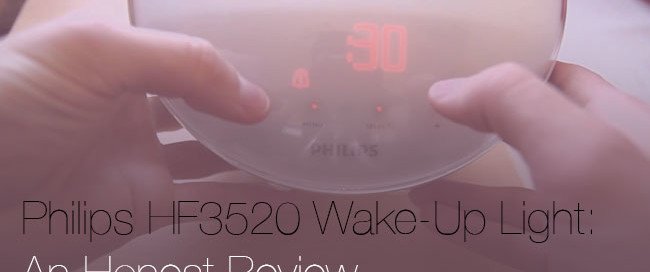
Be forewarned that the Philips HF 3520 Wake-up Light comes with very poor instructions, making its operation confusing.
I’m no dumb bunny. I have a four-year college degree, and my father has two, and neither of us were able to figure out how to set the “pm” and “am” times on my new Philips HF 3520 Wake-up Light.
We not only consulted with the very poorly written instruction booklet, but also tinkered around with the device without referring to the instructions.
My father has been working with machinery and DIY projects as a hobby for decades, having at one point built a porch on one of my childhood homes, and even HE couldn’t figure out the pm/am function on the Philips HF 3520 Wake-up Light.
After tinkering around with it again the next day, I gave up and called customer support.
The support person, once she had a duplicate unit in her hands…took a while to figure it out! Even SHE was stumped!
How do you set the pm and am time on the Philips HF 3520 Wake-up Light?
Select menu, select the clock icon, select 12H. The time in hours and minutes will blink, prompting you to select the correct hour and minutes.
If you do this at this point…you’ll be able to set the correct numbers. But not whether it’s pm or am.
The instruction booklet omits a step that should come right after you select the 12H but before you select the correct hour and minutes.
Right after you select the 12H, hold the “+” and “-” signs AT THE SAME TIME AND FOR A FEW SECONDS.
If you have the Philips HF 3520 Wake-up Light in your possession, you’ll know exactly where these signs are located.
Go ahead, check out the instruction booklet. I challenge you to locate where it states the aforementioned instructions about holding the plus and minus signs at the same time for a few seconds to get the pm and am set up.
After about two seconds (maybe less), the hour number will start moving.
Hold the plus and minus signs long enough to see the hour number move into the pm or am range (depending on time of day you’re doing this).
When you get to the pm (or am), then release the plus and minus signs. Whatever hour number it’s at will continue blinking—the prompt for you to set the correct hour time.
Select it, then select for minutes. You’ve now have the correct time of day.
Page 12 of the Philips HF 3520 Wake-up Light instructions has visual instructions for setting the clock, but nowhere mentions anything about simultaneously holding the plus and minus signs.
Page 15 has visual instructions for “adjusting” the clock. Again, no instructions about holding the plus and minus signs at the same time.
Go ahead, check out page 12 and 15, and see if you can find the +/- instructions, either illustrated or written. You won’t.
It also doesn’t help that the unit lacks a “back button.” If you need to go back a step, you must go back all the way and start over.
However, if you’re in the middle of the menu and are doing nothing while you think, you’d better very soon hit something because the unit times out quickly, forcing you to start all over.
Yet another issue is that on page 15, there’s a brief mention of the 12H and 24H settings.
How many civilian consumers know that “24H” refers to military time? I certainly didn’t.
For years I’ve known how to convert military time to civilian time (easy), but never knew that “12H” refers to civilian time and that “24H” refers to military.
Yet whomever put together the instruction booklet for the Philips HF 3520 Wake-up Light erroneously assumes that civilians know the 12H and 24H terminology.
Another issue: The instructions should also point out that it will seem that the light and sound don’t come on at the same alarm time; that the light comes on first, and several minutes later the sound (birds, piano, ocean) kicks in. I wondered why there was this sound delay.
The support woman told me they start at the same time, but the sound begins at such a low volume that you at first cannot hear it.
So here I am, thinking the device is malfunctioning. The instruction booklet should point this out. There’s plenty of unused space on the pages to do this.
The fact that the booklet includes a toll free support number is no consolation for poorly written instructions.
I was on the line for almost an hour about these issues and several more, including why the lamp is at its brightest after being on for only several minutes even though the “dawn duration” time is set for 30 minutes.
Another problem: The “dawn duration” time, despite being set for 30 minutes, runs for at least 55 minutes — I say at least, because I haven’t left it on to see how long it will go.
The instruction booklet says you can set the time for UP to 40 minutes. Go figure.
The lighting to display the time cannot be turned off. The lowest setting is 1 out of 4.
So if you want to sleep in a perfectly black room, the lit-up time display will prevent this. Though the light is dim at setting 1, it still mimics a night light.
This flaw in design defeats the purpose of the totally black room — assuming that you want to maximize your melatonin production.
The presence of a night light (believe it or not) will disrupt melatonin production.
Covering the display will partially shield the light you want to wake up to, and also, the consumer should not have to hassle with finding a suitable concealment.
In my case I cut one-fifth the length off of a large sponge and will set the bigger portion before the time display to shield it.
So even though the Philips HF 3520 Wake-up Light may be the best sunrise simulator on the market (and maybe I’m wrong), it’s flawed, and the instructions are poorly written and confusing.
I might add that the “ocean” sound is mostly that of screeching seagulls. The ocean waves are secondary.
Maybe you like the sound of ongoing screeching seagulls, but when the product description says “ocean,” you should get THE OCEAN, not screeching seagulls that drown out the ocean.
Lorra Garrick has been covering medical, fitness and cybersecurity topics for many years, having written thousands of articles for print magazines and websites, including as a ghostwriter. She’s also a former ACE-certified personal trainer.
.
Source: health.harvard.edu/staying-healthy/blue-light-has-a-dark-side

Dominant Hand’s Grip Is Weaker than Non-Dominant Hand’s

Are you worried because your dominant hand’s grip is weaker than that of your non-dominant hand?
So suppose you’re right-handed, but your left grip is actually stronger. Don’t jump to the conclusion that this means you have some neurological disease.
Yes, it seems that the grip of your dominant hand (if you’re right-handed) should be stronger than that of your left hand, and vice versa for left-handed individuals.
I’m a fitness expert but also a very observant person. I’m right-handed, and I couldn’t quite understand why it was that my left hand seemed to have a stronger grip with a grip-strengthening gadget when compared to my right hand.
My right hand should have been the stronger one. The gadget has five hooks: one for the thumb and four above it for the fingers.
The hooks are attached to springs, and you fit your fingers in all five hooks and try to pull your fingers towards a center point.
I was wondering if I was imagining that this seemed easier with my non-dominant hand.
However, when I deadlift a barbell … whenever I begin losing my grip … it’s always that of my left hand.
Well, I finally solved the riddle: two explanations.
Here is the first: For some reason, every time I open a very tight jar lid, it’s with my left hand, while my right (dominant) hand holds the jar.
I unscrew jar lids often enough with my left hand (including doing this for my mother — she buys jars of various things that can be quite tight) to have elicited a training effect.
My left hand, over time, has become stronger in certain gripping venues than my dominant hand.
Unscrewing tight jar lids certainly doesn’t toughen up the hands for deadlifting, but using my left hand for opening jars has made it stronger than my right as far as the spring-tension gadget.
I also find that with really tough jar lids … I fight these out with my left hand first— and if I don’t succeed, I try it with the right — and if I still don’t succeed, I go back to the left (which succeeds at this point).
So thus, the non-dominant hand has, over time, gotten much more of a gripping workout.
Now why have I always used my non-dominant hand to unscrew stubborn jar lids?
I’m assuming it’s because my right hand — being the dominant one — is better at holding the jar steady and leveraging it as I apply force to it. Sometimes my right hand really has to be like a vice on the jar.
In short, both hands must work hard at unscrewing a very tight jar lid — Newton’s Third Law: For every action, there is an equal and opposite reaction.
So if you’ve been worried that your dominant hand isn’t as strong in certain things as is your non-dominant hand … take some inventory of your daily, weekly or occasional habits as far as the use of your hands.
You just might discover that you’ve been using the “weaker” grip in tasks where it actually excels — producing a training effect.
The Second Explanation
Do you usually use your non-dominant hand to carry around weight plates at the gym to load equipment or return them to their racks?
Some people do this to make up for a stronger dominant arm, and in the process, their non-dominant hand gains a stronger grip.
If this resonates with you, then you can help even things up more by using your dominant hand for some of the plate carrying.
Lorra Garrick is a former personal trainer certified by the American Council on Exercise. At Bally Total Fitness she trained clients of all ages for fat loss, muscle building, fitness and improved health.
.
Top image: Shutterstock/LI Cook

Can an Ultrasound Miss Gallbladder Cancer?

There are reasons why you cannot count on an ultrasound for detecting gallbladder cancer; yet, it can also “miss” it.
Symptoms of Gallbladder Cancer
- Abdominal pain, especially in the upper right area of the abdomen
- Abdominal bloating
- Fever
- Unintentional or unexplained loss of weight
- Nausea
- Yellowing of the skin and of the whites of the eyes (jaundice)
The Ultrasound
“The usual diagnostic study for gallstone-related disease is ultrasonography (US),” says Akram Alashari, MD, a trauma surgeon at Geisinger Medical Center in PA, and author of “THE POWER OF PEAK STATE.”
Many patients who have gallbladder cancer that is discovered by accident are found retrospectively to have had suspicious ultrasound findings (e.g., a solitary or displaced stone, or an intraluminal or invasive mass) that were not recognized preoperatively.
“Findings that are suggestive but not diagnostic of gallbladder cancer include mural thickening or calcification, a mass protruding into the lumen, a fixed mass in the gallbladder, loss of the interface between the gallbladder and liver, or direct liver infiltration,” explains Dr. Alashari.
Accuracy of the Ultrasound
“The overall accuracy of US for staging the local and distant extent of a suspected gallbladder cancer is limited,” says Dr. Alashari.
“In one report of 26 patients, accuracy was only 38 percent, and the sensitivity for detection of liver infiltration or nodal metastases was only 50 percent each.”
Risk Factors for Gallbladder Cancer
Gallbladder cancer, though rare, has several risk factors that can increase susceptibility.
Chronic inflammation of the gallbladder raises the risk. So do gallstones, though it’s a small risk.
Additionally, those with a history of gallbladder polyps or certain genetic conditions, such as Lynch syndrome, are at higher risk.
Gender and age also play roles, with women and older adults being more affected.
Obesity and metabolic syndrome further contribute, as they often lead to gallstone formation and gallbladder inflammation.
Lastly, a diet high in fat and low in fiber might exacerbate the risk.
Who Gets Gallbladder Cancer?
This disease is very uncommon. It’s so uncommon that the National Cancer Institute Surveillance and Epidemiology End Results Program includes it with liver cancer statistics.
• About 37 percent of newly diagnosed cases each year in the U.S. are in people 55 to 64.
• In people 45 to 54 it’s 12.1 percent.
• In those 35 to 44 it’s 1.8 percent.
• For those 20 to 34 it’s 0.7 percent.
• For people under age 20 it’s 0.8 percent.
The symptoms of gallbladder cancer can also have benign causes.

Dr. Alashari was formerly with Grand Strand Regional Medical Center in SC as an abdominal and critical care surgeon.
Lorra Garrick has been covering medical, fitness and cybersecurity topics for many years, having written thousands of articles for print magazines and websites, including as a ghostwriter. She’s also a former ACE-certified personal trainer.

Can an Ultrasound Miss Gallstone Disease?

There’ve been a number of studies about the effectiveness of ultrasound for detecting gallstones, says Akram Alashari, MD, a trauma surgeon at Geisinger Medical Center in PA.
Dr. Alashari says that it’s key to recognize that “precise estimates of sensitivity and specificity are difficult to determine” because surgical confirmation of a negative sonogram is unlikely.
He cites a systematic review that showed that the sensitivity was 84 percent and specificity was 99 percent.
Rarely, advanced scarring and contraction of the gallbladder around gallstones will lead to a non-visualization of the gallbladder lumen, says Dr. Alashari, which has a specificity of 96 percent.
But this should also raise the possibility of cancer of the gallbladder.
The accuracy of a transabdominal ultrasound in detecting gallbladder disease, and whether or not it’s “missed,” is dependent on the ultrasonographer.
However, an experienced operator doesn’t mean a slam-dunk reading, because even with an experienced technician, Dr. Alashari says it’s a challenge “to determine the number or size of stones in the gallbladder,” particularly for very small stones: one to two mm in diameter.

Ultrasound of a gallstone. © Nevit Dilmen, CC BY-SA 3.0/ creativecommons.org/licenses/by-sa/3.0/Wikimedia Commons
A bunch of these tiny stones together may appear as one large stone during an ultrasound.
Gallstones are more likely to form in people who are female, over 40, overweight or pregnant. Rapid weight loss, diabetes and a family history also raise the odds.
Diets high in refined carbs and fat contribute, as do certain conditions like liver disease.
Some medications, including estrogen therapy, increase the risk.
Dr. Alashari was formerly with Grand Strand Regional Medical Center in SC as an abdominal and critical care surgeon. He is the author of “THE POWER OF PEAK STATE.”
Lorra Garrick has been covering medical, fitness and cybersecurity topics for many years, having written thousands of articles for print magazines and websites, including as a ghostwriter. She’s also a former ACE-certified personal trainer.
.
Top image: Shutterstock/Pressmaster

Normal Nosebleed vs. Leukemia: Is There a Difference?

Here’s what a doctor says about the difference between a leukemia nosebleed and a benign one.
If you have a nosebleed out of the blue, no apparent cause, just like that…should you fear this means leukemia?
Or what if you’ve been getting spontaneous nosebleeds lately?
What about the type of bleeding?
Would a leukemia nosebleed necessarily run hard? Or could it just trickle?
Would it necessarily bleed from both nostrils every time?
I brought these questions to Marc I. Leavey, MD, a primary care physician with 40+ years of experience.
Another question I had was if leukemia would make nosebleeds more likely if the person picked his nose or blew it hard, even lightly bumped it.
Dr. Leavey explains, “Rather than respond point by point, let me just expound a bit from what I’ve learned in consultation with learned oncologists in my environment about this matter:
“So you wake up with a nosebleed one morning, don’t feel sick and wonder what could be going on.
“You consult Dr. Google, or if your health plan dictates, Dr. Bing, and OH MY GAWD, I’VE GOT LEUKEMIA. I’M GONNA DIE!!! Hold up fella, not so fast. Let’s look at the whole picture.”
Know Thy Nose
Dr. Leavey explains, “The inside of the nasal cavity is lined with a very thin layer of skin that does not have the protection and resilience that the skin on your face or hand have.
“The slightest trauma to the nose can cause disruption of that mucosal layer. Just under the surface are countless little blood vessels.
“It is those blood vessels that make the lining of your nose look redder than other parts of your body.
“You are seeing those vessels through the very thin mucosa.
“So if you have a forceful sneeze, or pick your nose or otherwise insult your proboscis, those surface vessels may be disrupted and you will bleed from the nose. That’s a nosebleed if you’re not paying attention.”

Even just rubbing a towel on the middle portion of your schnoz as you dry your face after washing it could traumatize minute blood vessels and cause a little blood to trickle out; it’s happened to me.
“The potential severity of the nosebleed depends on the degree of disruption and how well your blood clots,” says Dr. Leavey.
“If it’s not too large of a leak, you will quickly clot it off and may not see any blood from the nose at all.
“On the other hand, a severe tear in a vessel may bleed enough to require medical intervention.
“And it is that ability to clot that is where leukemia enters the picture.
“With many types of leukemia, the normal clotting pathway of the blood is interrupted, for one reason or another.
“So a lesion which might cause only a trickle, if that, in a normal person could cause visible epistaxis (bleeding from the nose), that’s a nosebleed, in an afflicted individual.
“The bleed itself could be from one nostril or two, a trickle or a squirt, hard or easy to control, depending on the circumstances peculiar to that person with that nose at that time.
“The situation is not that dissimilar to those on blood thinners, like warfarin or some of the newer agents, who will have significant bleeding from a seemingly insignificant trauma.
“The takeaway point is that nosebleeds are neither pathognomonic of leukemia, nor does it exclude the diagnosis.
“It would be but one symptom to discuss with your physician if you are having them, and allow the physician to complete an evaluation.
“There are many far more common reasons for nosebleeds than leukemia, from picking your nose to picking a fight.
“In this, as in most other areas of scary symptoms, don’t jump to the worse case first.”
And by the way, significant straining during a heavy deadlift or back squat could trigger a nosebleed due to soaring blood pressure.
If this article provided you with helpful information or reassurance, please consider supporting my work through Ko-fi. Donations help me continue writing detailed medical content that’s easy to understand.

Dr. Leavey was formerly with Mercy Medical Center in Baltimore, MD, where his focus was primary care and internal medicine. He has a blog, STRING OF MEDICAL PEARLS.
Lorra Garrick has been covering medical, fitness and cybersecurity topics for many years, having written thousands of articles for print magazines and websites, including as a ghostwriter. She’s also a former ACE-certified personal trainer.
Top image: Shutterstock/ALPA PROD









Hair Smell Like Medicine? It’s Your Shampoo!

Your shampoo and conditioner may be the reason your hair smells like medicine.
Having great smelling hair is almost as important as having great looking hair.
In fact, for some people, maybe having great smelling hair is more important than how it looks!
So imagine one day finding that your hair smells like something from the medicine cabinet.
I had been trying to find the right shampoo and conditioner for my color-treated hair, and decided to try KEN PAVES “YOU ARE BEAUTIFUL” conditioner, since it does not contain sulphates or parabens. It was pricey, too.
But I figured that the famous adage, “You get what you pay for,” applied here.
At home when I opened up the tube, I was floored by the scent: medicine. How else can I describe this?
Imagine some tube of ointment your doctor prescribes for a rash. What would that ointment smell like?
Well, that’s how this shampoo smelled. Except it was probably stronger than what a rash ointment would smell like.
Something that smells like that should not go on your hair.
The KEN PAVES product not only had a medicinal smell, but again, it was strong.
I had to wash my hair that evening and wasn’t in the mood for going back out to return the tube to the store.
I also hoped that maybe this odor would transform into something more pleasant once the product got into my hair and was rinsed out.
Dang … I was wrong. My hair ended up smelling like medicine.
I don’t know which ingredient could possibly be responsible for this, but I absolutely warn you to avoid KEN PAVES hair products — at least if they have an unpleasant fragrance. Unless, of course, you want your hair to stink like medicine.
Even two days out and after brushing my hair, the problem persisted, though it wasn’t as strong.
I will never use this KEN PAVES product again and intend on contacting the company to complain about this.
It also doesn’t help that this conditioner did nothing to make my hair look like this product was worth the price or odor.
I’m sure the KEN PAVES shampoo (which thankfully I didn’t buy because I already had shampoo) is just as bad. I give the conditioner zero stars out of five. Good riddance.
Lorra Garrick has been covering medical, fitness and cybersecurity topics for many years, having written thousands of articles for print magazines and websites, including as a ghostwriter. She’s also a former ACE-certified personal trainer.
.