

Can PVC’s Cause Early Death?

Just when you’re finally convinced that PVCs are nothing to worry about, a study comes out linking them to early death and heart failure.
UC San Francisco researchers spent over 10 years following over 1,100 participants who were from the national Cardiovascular Health Study.
“We cannot exclude the possibility that PVCs are an ‘epiphenomenon’ or some marker of future heart failure,” points out Gregory Marcus, MD, senior author of the study, which appears in full in the Journal of the American College of Cardiology.
Dr. Marcus goes on to explain that the study participants had no prior history of heart failure, and that the data in this research “would appear to be quite convincing that PVCs represent an important predictor of the disease [heart failure], causal or not.”
The relationship between the frequency of PVCs, incidents of heart failure, and death in the general population is currently not known.
The study subjects were tracked over a decade for new onset death and congestive heart failure.
A higher occurrence of PVCs was associated with decline in left ventricular ejection fraction, an increase in heart failure incidents, and greater mortality.
However, Dr. Marcus says that future studies are needed to identify “the exact types of patients, and likely the particular types of PVCs,” that are most strongly linked to heart failure.
This is all quite striking to me, because my mother has a pacemaker that is able to record abnormal heart rhythms.
At a six-month checkup, the nurse casually commented that it had recorded six-thousand-and-something PVCs (over six months).
She spoke this as though she were commenting on the common cold. She wasn’t concerned.
My mother’s cardiologist wasn’t concerned, either. Her heart rhythm was declared normal.
According to Mayoclinic.com, the following can lead to or increase the risk of CHF: coronary heart disease, high blood pressure, low thyroid (my mother has all three), faulty heart valves, heart muscle damage and diabetes.
The site also lists abnormal heart rhythms, but then states that these “may cause your heart to beat too fast, which creates extra work for your heart.”
In other words, I don’t see a description of a PVC here.
Here are a bunch of articles about PVCs. They are not as dangerous as you think.
 Lorra Garrick has been covering medical, fitness and cybersecurity topics for many years, having written thousands of articles for print magazines and websites, including as a ghostwriter. She’s also a former ACE-certified personal trainer.
.
Top image: Freepik.com
Sources: sciencedaily.com/releases/2015/07/150706154852.htm; mayoclinic.org/diseases-conditions/heart-failure/basics/causes/con-20029801

Can You Wash Off Melanoma? Dermatologist Answers

Here’s the final answer to “Can you wash off melanoma?” given by a doctor.
I asked Gary Goldenberg, MD, of Goldenberg Dermatology, if it was possible to wash off any part of a melanoma. Dr. Goldenberg is assistant professor of dermatology and pathology at Mount Sinai School of Medicine.
Here is what he explains: “Absolutely not! Melanoma is a malignant cancer of skin cells that make pigments (melanocytes).
“Depending on when it’s found, melanoma can be in the top layer of the skin called the epidermis (melanoma in situ) or spread down into the deeper levels of the skin (malignant melanoma).
“The deeper the lesion, the higher the chance of spreading to other organs and death from the disease.”
The reason you cannot wash off a melanoma, no matter how hard the water against your skin, no matter how vigorously you rub a sponge on it, scrub with a brush or with a loofah brush, is because the cancer cells are tough and solidly affixed to and into the skin, even if the melanoma is in situ (stage 0) or a very thin layer of cells.
In fact, when’s the last time you were able to wash off a common mole?
If you believe you’ve actually done this … then what you washed off was not a mole, but something that looked like it, most likely a benign skin barnacle (seborrheic keratosis).
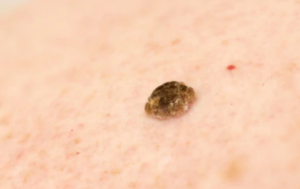
Seborrheic keratosis. Shutterstock/Lipowski Milan
It was probably already loose, and you most likely vigorously rubbed over it. These can look like moles. They can also look like melanoma, but are harmless.

Dr. Goldenberg of Goldenberg Dermatology provides comprehensive care in medical and cosmetic dermatology, including melanoma and other skin cancer, moles, psoriasis, eczema and acne. He is the medical director of the Dermatology Faculty Practice, NY.
 Lorra Garrick has been covering medical, fitness and cybersecurity topics for many years, having written thousands of articles for print magazines and websites, including as a ghostwriter. She’s also a former ACE-certified personal trainer.
.
Top image: Shutterstock/Boris Bulychev

What Causes Red Itching Bumps on the Fingers?

Itchy red bumps on the fingers can have several causes.
Regardless of cause, the No. 1 rule is that you should avoid scratching, as this can make the condition worse — regardless of the cause.
One possible cause, believe it or not, is warts.
Warts are “a viral condition you pick up from the environment,” says Gary Goldenberg, MD, of Goldenberg Dermatology, and assistant professor of dermatology and pathology at Mount Sinai School of Medicine.
The viral infection is located in the top layer of the skin. The viruses are of the HPV type and can get into the skin via a little scratch.
The cells grow rapidly, forming a wart – which can itch.
But warts typically will not grow in clusters all over your fingers. Other conditions can.
Dr. Goldernberg continues, “Papular (bumpy) eczema can also cause red bumps on the hands and is usually treated with topical creams.”
Eczema will itch worse than a few warts. The last thing you’ll want to do is get into a scratching frenzy.
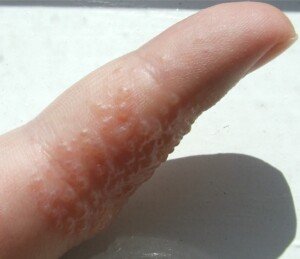
The pinkish red bumps of eczema. Maslesha,CC BY-SA
Scratching at eczema can cause the area to crust and even ooze.
When you scratch, you irritate the already inflamed skin, which can exacerbate the itching and lead to more severe flare-ups.
This creates a cycle of itching and scratching that makes the eczema symptoms worse and more difficult to control.
Plus, scratching increases the risk of infection. As you scratch, you break the skin, which can allow bacteria, viruses or fungi to enter and cause infections.
These infections can complicate the eczema and make the condition more challenging to treat, often requiring additional medical intervention.
Scratching also delays the skin’s healing process. Continuous irritation from scratching can prevent the skin from recovering properly, extending the duration of the eczema flare-up and making it harder to manage over time.
The damage caused by scratching can lead to further complications, including thickened and rough patches of skin known as lichenification.
Frequent scratching can lead to long-term skin damage. The repetitive trauma can cause permanent changes in the skin, such as scarring or thickening, which may be difficult to reverse.
Your dermatologist will prescribe the right medication to treat eczema, which is common and which can also occur on the elbows and make them itch like mad.
If the itching is driving you batty, you can gently wrap gauze around your fingers overnight or while you’re watching TV or any activity during which you are not using your fingers too much.
Dr. Goldenberg continues, “Bites can occur on the hands, and can be caused by mosquitos or bed bugs – see your dermatologist for tests to rule this one out.”
Bottom line: You certainly do not have to worry about a serious disease causing red bumps to be scattered all over your fingers or hands, no matter how badly they itch.
But remember: Avoid scratching and instead see a dermatologist for proper treatment.
Dr. Goldenberg of Goldenberg Dermatology provides comprehensive care in medical and cosmetic dermatology, including melanoma and other skin cancer, moles, psoriasis, eczema and acne. He is the medical director of the Dermatology Faculty Practice, NY.
Lorra Garrick has been covering medical, fitness and cybersecurity topics for many years, having written thousands of articles for print magazines and websites, including as a ghostwriter. She’s also a former ACE-certified personal trainer.
.
Top image: Shutterstock/Image Point Fr
Skin Peeling Like Crazy On Your Hands: Doctor Explains

A dermatologist says there can be two common conditions that cause a lot of skin peeling on your hands.
These conditions are very common, says Gary Goldenberg, MD, of Goldenberg Dermatology, and assistant professor of dermatology and pathology at Mount Sinai School of Medicine.
The conditions are psoriasis or eczema.
Dr. Goldenberg explains, “Psoriasis is a genetic condition in which the skin forms scaly patches and plaques, anywhere on the body, including hands.
“This condition may also be associated with arthritis and internal disease, such as heart disease, stroke and diabetes.”
Psoriasis is an autoimmune disease, and sometimes, patients experience the joint problems before they experience any skin problems such as peeling on the hands.
“The treatment of psoriasis depends on the severity of disease, including topical creams, certain oral medications (pills) and biologic injections.”
Eczema
Dr. Goldenberg says, “Eczema is a very common condition that is genetic in nature. Hand eczema is the most common manifestation of this disease in adults.
“It usually presents with scaly patches and may be related to other allergies. Treatment is usually with topical creams.”
Dr. Goldenberg of Goldenberg Dermatology provides comprehensive care in medical and cosmetic dermatology, including melanoma and other skin cancer, moles, psoriasis, eczema and acne. He is the medical director of the Dermatology Faculty Practice, NY.
Lorra Garrick has been covering medical, fitness and cybersecurity topics for many years, having written thousands of articles for print magazines and websites, including as a ghostwriter. She’s also a former ACE-certified personal trainer.
.
Top image: Shutterstock/Monster e

Why Your Eyelid is Itchy & Swollen: Doctor Explains

A doctor explains the most common cause of a swollen, itching eyelid.
And the most common cause of this is contact dermatitis, says Gary Goldenberg, MD, of Goldenberg Dermatology, and assistant professor of dermatology and pathology at Mount Sinai School of Medicine.
He further explains, “This is more common in female patients than men. Common allergens include nail polish, hair care products, makeup and gold jewelry.
“Investigative work may be needed here to find out the exact cause of the allergy.
“Your dermatologist may suggest patch testing – a test to see what it is you are allergic to.”
Patch Testing
Patch testing for dermatitis is a diagnostic procedure used to identify specific allergens or irritants that might be causing allergic contact dermatitis.
During the test, small amounts of various potential allergens are applied to the skin, using adhesive patches.
These patches remain in place for about 48 hours, after which they are removed and the skin is evaluated for reactions.
The test helps determine which substances trigger dermatitis by monitoring the skin for signs of an allergic reaction, such as redness, itching or swelling.
The results guide treatment and management by identifying which substances to avoid.
Patch testing is typically conducted by a dermatologist and is particularly useful for patients with chronic, unexplained dermatitis or those who have not responded to standard treatments.
What can you do about an itching, swollen eyelid?
Dr. Goldenberg explains, “Treatment can be a bit frustrating, since sometimes even if you remove the allergen, the condition may persist.
“Topical creams may be helpful. Caution should be exercised with using topical steroids on the eyelids.”
Make sure you follow the instructions.
More About Contact Dermatitis and the Eyelid
You’d be surprised at what can come in contact with your eyelid every day or several days a week — enough to cause itching and swelling.
In some cases the contact is unintentional such as with hand cream and tweezers.
Do any of these apply to you?
- Moisturizer
- Hand cream
- Tweezers
- Allergens even in eye drops and contact lens solutions
- Dust mites. Yes, they live on the eyelid.
- Pet dander
- Perfume
Keep a daily journal about what just possibly — even if it seems silly — could be making unintentional contact anywhere around your eye.
This includes from housecleaning agents that get onto your fingertips, and then before you wash your hands, one of those fingertips rubs a tired eye — transferring the chemical allergen to the lid.
Other causes of an itchy swollen eyelid you’d never think of.
- Very cold or hot temperatures
- Very dry or humid air
- Dust in the air
- The new carpet, memory foam pillow or mattress. Their “off-gassing” could be sending chemical allergens straight to your eyelid.
Dr. Goldenberg of Goldenberg Dermatology provides comprehensive care in medical and cosmetic dermatology, including melanoma and other skin cancer, moles, psoriasis, eczema and acne. He is the medical director of the Dermatology Faculty Practice, NY.
Lorra Garrick has been covering medical, fitness and cybersecurity topics for many years, having written thousands of articles for print magazines and websites, including as a ghostwriter. She’s also a former ACE-certified personal trainer.
.
Top image: ©Lorra Garrick
Missing Child in a Store? Where to Look First!

If your child goes missing in a store, the first place you should look is probably not where you’d think.
Where was the first place Adam Walsh’s parents searched when the 6-year-old child went missing at a mall Sears store on July 27, 1981?
They spent two hours searching inside the store for their missing boy, and then they called the police, say reports such as from nbcnew.com.
Reve Walsh wasn’t looking away from Adam for long by the time she returned to the toy section to retrieve him and saw that he was missing.
This scenario is actually common:
Parent “looks away for just a few minutes,” and then the child goes missing. If it turns out the child was abducted (lured away by a predator), it’s very fair to speculate that a mother dramatically increases her chances of catching the predator in the act — if she dashes towards the store’s nearest exit, which is likely where the predator is heading — victim in tow.
Or maybe the parent will spot the predator and her child outside walking towards his car, which again, puts her in a position to thwart the abduction.
Parents who worry about their child going missing in a store or mall should know the location of the nearest exit at any given time.
I asked Robert Siciliano, a personal safety and security expert, where is the first place a parent should look in a store if that’s where a child goes missing.
“As a parent, I’d go directly to the front of the store, near the entrance, so I can watch the door,” explains Siciliano, CEO of Safr.Me.com.
“Customer service is usually near the front as well. Bring it to the attention of customer service and they will bring it to security. Usually a code goes out on a PA alerting employees to be on the lookout.”
In the Walsh case, the PA system summoned him by name. Preceding that, however, while his mother was frantically calling out for him in the toy section and asking nearby shoppers if they’d seen him, those crucial minutes were apparently being used by the predator to whisk Adam outside to his vehicle.
What person, who abducts a child, lingers inside the store with the victim?
They usually have it all planned out. The moment they have gained the child’s trust, they lead him or her towards the nearest door to the parking lot.
Once the child is out there, while the frantic parents are searching inside the store, it’s a done deal.
Siciliano says that, if his own child went missing in a store, after alerting the security there, he’d give his mobile number to the store manager and look outside.
When children go missing in stores and then later turn up murdered or never found, one has to wonder if the abduction process could have been intercepted in at least half these cases, had the parent immediately bolted out the nearest exit.
It’s inconceivable that a perpetrator, once he has the child’s hand, would continue hanging out inside the store or mall, knowing full well that a search is in progress.
“And there’s nothing wrong with causing a little scene to get other parents to be on the lookout too,” says Siciliano. “I’ve done it myself.”
This can be done while the parent rushes towards the exit — hollering out that someone possibly kidnapped their child.
Usually, when a child goes “missing” inside a store, they’re located safe and sound inside the building, having innocently wandered off.
But no parent spends the rest of their lives regretting that years ago, they had created a scene “for nothing” inside a store, bolted outside and searched the parking lot for a stranger with their child.
 Robert Siciliano is a private investigator fiercely committed to informing, educating and empowering people to protect themselves and their loved-ones from violence and crime — both in their physical and virtual interactions.
Lorra Garrick has been covering medical, fitness and cybersecurity topics for many years, having written thousands of articles for print magazines and websites, including as a ghostwriter. She’s also a former ACE-certified personal trainer.
Sources:
nbcnews.com/id/28257294/#.UmoSrnCor20
trutv.com/library/crime/criminal_mind/psychology/child_abduction/9.html
http://www.nbcnews.com/id/28257294/#.UmoSrnCor20http://www.nbcnews.com/id/28257294/#.UmoSrnCor20

Crohn’s Disease: Early vs. Long-Term Symptoms

“Crohn’s is the inflammation of the intestine, from mouth to anus, usually in the small or large bowel – or both,” says gastroenterologist Sander R. Binderow, MD.
“Some patients have anal Crohn’s or Crohn’s of the stomach; however, that is very rare,” adds Dr. Binderow, who’s with Atlanta Colon & Rectal Surgery.
This disorder is an inflammatory bowel disease that is actually associated with an increased risk for colon cancer.
Microscopic colitis is also an inflammatory bowel disease, but is not associated with an increased risk of any kind of cancer. Microscopic colitis is often misdiagnosed as irritable bowel syndrome.
“Crohn’s presents as a diarrheal-type illness, where the large intestine lining is inflamed, and with Crohn’s, there is not as much blood,” says Dr. Binderow.
“Patients tend to be ill, where they lose a significant amount of weight, do not eat and have a loss of appetite.”
If you think these symptoms sound like those of colon cancer, you are correct.
Long-term Symptoms of Crohn’s Disease
“Long-term symptoms can include a stricture, which causes abdominal pain, nausea and vomiting, narrowing of the colon and fistulas,” says Dr. Binderow.
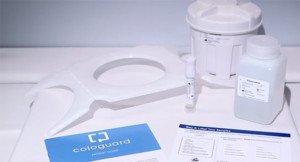
If you’ve been diagnosed with Crohn’s disease, you should be vigilant about colon cancer screening.
You can begin this with Cologuard, a non-invasive way to screen for colon cancer.
It’s a test that you take at home. Using the latest in DNA technology, Cologuard identifies precancerous cells.
If your test result comes out positive for this, your next step should be a colonoscopy.
 Dr. Binderow performs minimally invasive, robotic and laparoscopic surgery for Crohn’s disease, ulcerative colitis, colon cancer and other colorectal conditions. Adept at routine procedures, he also sees patients with complex, atypical maladies.
Lorra Garrick has been covering medical, fitness and cybersecurity topics for many years, having written thousands of articles for print magazines and websites, including as a ghostwriter. She’s also a former ACE-certified personal trainer.
.
Top image: Shutterstock/Zetar Infinity

Constant Need to Burp: Most Likely Cause

A GI doctor explains what the most likely cause is if you constantly need to burp.
The important thing to note here is if frequent burping is your only symptom, rather than it’s also accompanied by (not necessarily at the exact time that you burp) concerning symptoms such as abdominal pain, blood in the stools, unexplained weight loss and undue fatigue.
So let’s say that lately, you just seem to be burping a lot, but otherwise feel as healthy as ever.
“Most people talk while they eat, which leads to burps and farting,” explains gastroenterologist Sander R. Binderow, MD, FACS, FASCRS, with Atlanta Colon & Rectal Surgery.
“There is a possibility of a small bowel obstruction if a person is burping, but in that case the patient would be more concerned about the pain they are experiencing and would go to the doctor for that obvious symptom rather than burping alone.
“It is possible a patient could be burping more often if they suffer from reflux; however, most times if the symptom of burping is the only one that the patient is experiencing, they are likely talking more while they eat.”
Have you been going out to dinner more frequently, and hence, talking more while you eat? Try not to gulp air as you take in food or drink beverages.
What if you don’t talk when you eat, yet you’re still frequently burping?

Shutterstock/Aaron Amat
It’s entirely possible that you’re still swallowing excessive air as you eat and drink — especially if you’re a fast eater.
But what about the question, Can excessive burping actually be a symptom of cancer?
Yes, it can. In this article, Dr. Maxwell Chait explains what kinds of cancer can cause this seemingly innocuous symptom.
What about colon cancer? If you’ve been experiencing a lot of burping lately, chances are extremely unlikely that this is being caused by cancer of the colon.
However, other GI symptoms can be caused by this disease, such as abdominal pain, constipation, blood in the stools (which may appear dark, not necessarily red), unexplained fatigue and unintentional weight loss.
By the time symptoms of colon cancer begin presenting, the disease has spread beyond local confines. That’s why it’s so important to be screened for it.
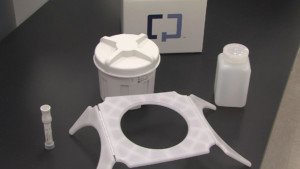
Cologuard
You can start with Cologuard, a non-invasive home test that utilizes state-of-the-art DNA technology to identify abnormal cells.
If you have abnormal cells, the next step is a colonoscopy.
Dr. Binderow performs minimally invasive, robotic and laparoscopic surgery for Crohn’s disease, ulcerative colitis, colon cancer and other colorectal conditions. Adept at routine procedures, he also sees patients with complex, atypical maladies.
Lorra Garrick has been covering medical, fitness and cybersecurity topics for many years, having written thousands of articles for print magazines and websites, including as a ghostwriter. She’s also a former ACE-certified personal trainer.
.
Top image: Shutterstock/elbud

Bits of Foam in Diarrhea Explained by Doctor

What are the “bits of foam” that someone might see in their diarrhea?
And can this ever be a sign of a disease? These are questions I asked of gastroenterologist Sander R. Binderow, MD, FACS, FASCRS, with Atlanta Colon & Rectal Surgery.
“Foam in diarrhea can occur in the small intestine, when air combines with the bowel movement that is in rapid transit, which is the nature of diarrhea,” explains Dr. Binderow.
“The diarrhea combines with air, creating small foam. This is not a sign of any type of disease when it is observed alone with no other symptoms.”
So next time you see foam or white fuzzy mucus in your diarrhea, remind yourself that it is the product of air combining with your bowel movement.
However, there are other features that you should be concerned about that are not related to bits of foam.
For example, do you see what appears to be blood in your stools? Or does your diarrhea alternate with going days without any bowel movement?
This is especially concerning if it’s a new phenomenon for you.
These are concerning signs, and though colon cancer can be one of the causes, there are numerous other non-malignant causes for such symptoms.

If you have not yet had a colonoscopy but are concerned — yet are fearful of having a colonoscopy — you may want to consider a preliminary step: Cologuard, a non-invasive screening test that you can give to yourself at home.
Using the latest DNA technology, Cologuard can identify abnormal cells in your stools.
If the test results show this, you would then need to undergo a colonoscopy, which usually takes around 25 to 45 minutes and can be done under sedation.
If this article provided you with helpful information or reassurance, please consider supporting my work through Ko-fi. Donations help me continue writing detailed medical content that’s easy to understand.
Dr. Binderow performs minimally invasive, robotic and laparoscopic surgery for Crohn’s disease, ulcerative colitis, colon cancer and other colorectal conditions. Adept at routine procedures, he also sees patients with complex, atypical maladies.
Lorra Garrick has been covering medical, fitness and cybersecurity topics for many years, having written thousands of articles for print magazines and websites, including as a ghostwriter. She’s also a former ACE-certified personal trainer.
Top image: Shutterstock/sasha2109






Diarrhea vs. Loose Stools Comparison
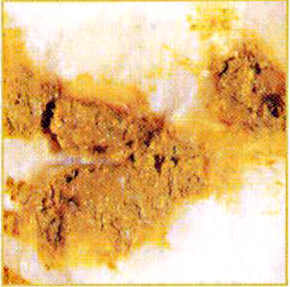
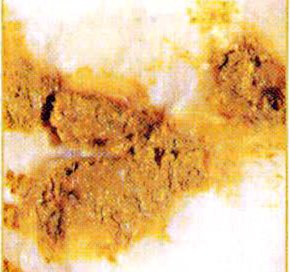
The line between diarrhea and “loose” stools is very fuzzy; at what point are loose stools actually diarrhea?
Is there a way to test the substance to classify it as one or the other?
“To answer, one must specify that the diarrhea is a medical term and diagnosis, and ‘loose’ stools are a patient observation,” says Sander R. Binderow, MD, FACS, FASCRS, with Atlanta Colon & Rectal Surgery.
“A patient could have diarrhea; however, it is also possible that they just have loose stools.
“Diarrhea includes bowel movements more than three times per day with copious amounts, and it can be mixed with mucus.
“If a patient has acute diarrhea, it is often the body’s response to something a person has eaten and needs to get rid of.
“A doctor does not normally recommend treating, and rather, it is best to let the body process the issue.
“If it continues for weeks at a time, it is then necessary to bring to the attention of a physician.”
Colon Cancer Worry
Diarrhea or “loose” stools, in and of themselves, are not common features of colon cancer.
The issue with colon cancer is if diarrhea (or what the patient may perceive as loose stools) alternates with constipation (going days without a bowel movement).
Nevertheless, if loose stools or diarrhea have you worried about colon cancer, it is recommended that you have a non-invasive screening exam for this disease.
Cologuard is non-invasive and can be done in the convenience of your home.

Cologuard uses the latest advances in DNA technology for identifying any abnormal cells in the sample.
If the test results are positive for abnormal cells, you would then be recommended to follow up with a colonoscopy.

Colonoscopy