

Can Tight Socks Cause Edema?

Is it edema when you roll down your tight socks and see that big indent in your leg?
“I have a memory of my grandmother, who used an elastic band to hold up her stockings,” begins Marc I. Leavey, MD, a primary care physician with 40-plus years of experience.
“At the end of the day, when she would roll them down, there was a clear groove in her leg above slightly swollen calves.
It turns out that blood pumped down to the legs requires the relatively weak pumping action of calf muscles to return that blood to the circulation.
“External compression on surface veins can cause that blood, and another body fluid called lymph, to stagnate in the legs.
“This produces the surface irregularities that mirror the constricting devices that had been used on the legs.
“These days, tight socks can do the same thing, as can about anything else that impedes the circulation.
“Avoiding such constriction, walking around a bit to get those body fluids back in circulation, and even elevating the legs once freed of constraints all help to obliterate those nasty lines.”
If only your tight socks are causing edema, you have nothing to worry about.
However, you may already have edema that’s being caused by a medical problem or lifestyle habit, and the tight socks are simply making this fluid buildup more noticeable or aggravating it.
Lay off the tight socks to see if it disappears. If not, you need to find out why this swelling is occurring.
Common Causes of Edema
- Heart Failure: When the heart struggles to pump blood efficiently, fluid can accumulate in the legs.
- Kidney Problems: Conditions affecting the kidneys can impair the body’s ability to manage fluid balance, leading to swelling.
- Liver Disease: Liver conditions like cirrhosis can disrupt normal fluid balance and lead to fluid retention in the legs.
- Venous Insufficiency: Poor circulation in the veins, often due to damaged or weakened vein walls or valves, can cause blood to pool in the legs, causing swelling.
- Medication Side Effects: Certain medications can puff up the legs.
- Pregnancy: Increased blood volume and pressure on the veins from the growing uterus can lead to swelling in the legs, especially later in pregnancy.
- Infections: Infections in the leg can cause swelling along with redness, pain and warmth.
- Lymphedema: A condition where the lymphatic system is damaged or obstructed, leading to fluid buildup in the tissues of the legs.
- Menstruation: One’s period can lead to a puffiness in the feet that may extend a little bit above the ankle.
- Poor Diet: High salt intake can cause fluid retention, leading to swelling in the legs.
Again, if you’re worried, avoid wearing tight socks or any socks, for that matter, and see what happens over the next several days.
If this article provided you with helpful information or reassurance, please consider supporting my work through Ko-fi. Donations help me continue writing detailed medical content that’s easy to understand.

Dr. Leavey was formerly with Mercy Medical Center in Baltimore, MD, where his focus was primary care and internal medicine. He has a blog, STRING OF MEDICAL PEARLS.
 Lorra Garrick has been covering medical, fitness and cybersecurity topics for many years, having written thousands of articles for print magazines and websites, including as a ghostwriter. She’s also a former ACE-certified personal trainer.

What Kind of Doctor Treats Vertigo?

Vertigo has many causes, so what kind of doctor should you first see?
A common cause of vertigo involves the inner ear canal. This might be the cause of your vertigo — which to some sufferers, is described as the room “spinning,” “whirling” or moving. It may also be described as sort of like a motion sickness.
“Vertigo, or more precisely, benign paroxysmal positional vertigo [BPPV], is a condition in which little particles contained within the inner ear’s balance organ lose their positioning accuracy, and you feel dizzy,” says Marc I. Leavey, MD, a primary care physician with 40-plus years of experience.
“You can feel so dizzy that you become nauseated, vomit and even fall down,” he explains.
BPPV can also be very mild, in that the patient feels just slightly dizzy or “heady,” but is otherwise fully functional.
“Once diagnosed, the proper treatment is to put those little particles, called canaliths [otoconia], back where they belong,” says Dr. Leavey.
“By moving the head in a precise pattern, called an Epley maneuver, BPPV can often be easily treated in the office.
“While many physicians can treat vertigo, the therapy is often practiced most skillfully by trained physical therapists, who have the skill and facility to render effective treatment.”
What Type of Doctor to See
If you believe you have benign paroxysmal positional vertigo, your family practitioner will be able to make this diagnosis. Describe the situation. Don’t just say, “I feel dizzy.”
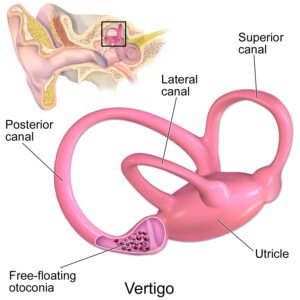
The free-floating otoconia or “crystals” can get out of place and cause vertigo. BruceBlaus/CreativeCommons
A hallmark feature of BPPV is that the patient feels the dizziness only when they move their head.
For example, you’re busy at your computer. Your head is not moving left to right because your eyes are glued to the screen. All is fine.
You then turn your head 90 degrees to the right to grab your coffee mug…and you feel a wave of dizziness.
The room may seem to shift a little, but this isn’t always the case. Sometimes with benign paroxysmal positional vertigo, you feel only that annoying dizziness.
For some patients this disappears when they lie down. For others it gets worse. Often, rising from a lying position will trigger the dizziness.
If they close their eyes while feeling the dizziness, they may feel a sensation of their body or the room spinning about.
In severe cases, the symptoms can be way out of proportion to the benignity of this disorder.
Intense dizziness, especially accompanied by vomiting, will be frightening to someone who doesn’t realize this is due to those canaliths.
So if BPPV sounds like what you have, see your general doctor. If your symptoms don’t quite fit this benign type of vertigo, you should still first see your primary care doctor.
Dizziness can have so many causes, and also, some people think they’re dizzy when actually they are experiencing a faintness type of feeling.
Feelings of faintness can be caused by heart arrhythmias, low blood pressure, low blood sugar, pregnancy and side effects of medications, among many other causes.
A neurological cause, too, may be behind a wave of dizziness, so as you can see, depending on the cause of the “vertigo,” you may be referred to a specialist by your primary care physician.
Dr. Leavey was formerly with Mercy Medical Center in Baltimore, MD, where his focus was primary care and internal medicine. He has a blog, STRING OF MEDICAL PEARLS.
Lorra Garrick has been covering medical, fitness and cybersecurity topics for many years, having written thousands of articles for print magazines and websites, including as a ghostwriter. She’s also a former ACE-certified personal trainer.
.
Top image: ©Lorra Garrick

What Is Ptosis and Miosis?

Ptosis, as it pertains to symptom of a leaking aneurysm, refers to a drooping eyelid.
The drooping, or ptosis, can have a variety of causes, including a brain aneurysm that has begun to leak.
Another cause of what appears to be eyelid ptosis (perhaps Paris Hilton and Taylor Swift have this?) is “looseness of the skin of the eyelid, causing it to hang down, and even block the visual field,” says Marc I. Leavey, MD, a primary care physician with 40-plus years of experience.
Ptosis can be acquired later in life as well. The ability to control the eyelid involves muscles and nerves.
Eyelid ptosis is divided into four basic classes: myogenic, neurogenic, mechanical and involutional.
- Myogenic (“myo” means muscle) means something is wrong with the muscle of the upper eyelid.
- Neurogenic (“neuro” means nerves/neurons) means that the nerve that supplies the eyelid muscle with movement commands, is impaired.
When the muscles in the eyelid have weakened, the result is involutional ptosis.
Mechanical eyelid drooping is when the weight of the eyelid has become too great for muscular control, and hence, the drooping.
The myogenic version can result from a muscle disease. Neurogenic-caused drooping can be caused by aneurysm, stroke, diabetes, injuries and the dreaded brain tumor.
But Dr. Leavey explains, “Very rarely, tumors or growths in the brain, or leaking or swelling blood vessels in the brain can press on a nerve headed to the eyelid, producing a ptosis.”
As for mechanical ptosis, excess skin, fat and tumors can cause this.
Finally, aging is the primary culprit with involutional ptosis. The muscles and nerves work just fine here, actually.
The problem is when the muscle detaches from the eyelid structures. Thus, the muscle is able to contract, but it’s not attached enough to the eyelid any more to move it.
Ptosis can be corrected with surgery—depending on the cause.
“A key diagnostic question is if the drooping lid is on one side or both,” says Dr. Leavey.
In general, bilateral ptosis is caused by a systemic condition, one that is not specific to the region of one eye, or even the eyes themselves.
“While very uncommon, they include conditions as wide ranging as myasthenia gravis to a whole raft of genetic diseases.”
Miosis simply means a constriction of the eye’s pupil. Miosis is not to be confused with meiosis, which is a type of cell division.
“By itself, unilateral miosis [one eye only] is quite a bit less common; eye drops or other external chemicals can be one cause,” says Dr. Leavey.
If you have one-eye miosis, you should see a physician to rule out a disease process, though if disease is the cause, you’ll very likely have ptosis with it.
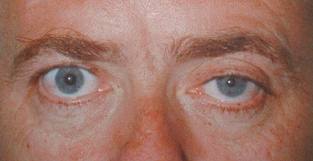
Ptosis and miosis. Source: physio-pedia.com
Dr. Leavey continues, “Many sedative drugs, and even deep sleep itself, can cause constricted pupils.”
Being in the dark or dim light and then flipping on bright lights will cause miosis.
One such medical condition, that can cause miosis, is an aneurysm, when it starts leaking.
This does not mean you should become fixated on your pupils and spend time examining them in the mirror because you just read that miosis can be a symptom of a leaking aneurysm.
Additional Information on Aneurysms and Brain Tumors
Dr. Leavey was formerly with Mercy Medical Center in Baltimore, MD, where his focus was primary care and internal medicine. He has a blog, STRING OF MEDICAL PEARLS.
Lorra Garrick has been covering medical, fitness and cybersecurity topics for many years, having written thousands of articles for print magazines and websites, including as a ghostwriter. She’s also a former ACE-certified personal trainer.
.
Source:mmcneuro.wordpress.com/tag/miosis/

Sudden Numbness in Index Finger; Don’t Fear ALS, MS

Dr. Marc Leavey explains what can cause sudden numbness in your index finger.
I was inspired to write this article after I discovered my right index finger had suddenly gone numb. Marc I. Leavey, MD, a primary care physician with 40-plus years of experience.
Is your index finger suddenly numb?
I was slightly pressing my index finger against a wall while navigating in the darkness when I realized, Hey, my index finger is numb.
Part of it, mostly the inner portion. I kept pressing it against the wall to verify this, and I also pressed my opposite fingers against it. Numb.
If you discover such a symptom, don’t panic. Ask yourself if recently there was pressure on your index finger.
“While nerves carry electrical impulses, pressure on nerves can actually disrupt those signals,” says Dr. Leavey.
“Pressure on a sensory nerve, such as at the wrist or elbow placed under a part of your body, under a pillow or just pressing against something, can produce numbness as if injected with Novocaine.
“I’ve had a hand and forearm become so numb from a weird sleeping position that when I turned over, my hand hitting my face felt like someone else’s.”
I reflected about what I could have done that day or the day before that could have imposed pressure on the finger. I didn’t come up with anything right away.
Then I remembered that I had been lying on the sofa (something I never do, but I was doing it to see if it would make a good bed for sleeping overnight).
The sofa isn’t that wide, so there really wasn’t room for both my arms to lie on either side of my body.
My left arm was wedged up against the sofa, while my right arm was left to dangle.
Well, I didn’t like the dangling, so I tucked my hand under my butt to hold my arm in place.
My butt had placed pressure on my index finger.
This finger had bore the brunt of the pressure — and re-enactment of this position confirmed my theory.
Re-enact the suspect position of pressure to see if the surface area of the pressure aligns or matches up with the surface area of the numbness in your index finger. Mine definitely did.
“When the effect of the pressure wears off, the nerve should carry impulses as usual,” says Dr. Leavey.
And that’s what happened in my case; before I knew it, everything felt perfectly normal again.
Dr. Leavey was formerly with Mercy Medical Center in Baltimore, MD, where his focus was primary care and internal medicine. He has a blog, STRING OF MEDICAL PEARLS.
Lorra Garrick has been covering medical, fitness and cybersecurity topics for many years, having written thousands of articles for print magazines and websites, including as a ghostwriter. She’s also a former ACE-certified personal trainer.

Should Adults Take ADD, Inattentive ADHD Drugs?

Adult inattentive deficit disorder and taking medications: Is there really a such thing?
And if adult ADD is a valid disorder, then should adults take ADD medications?
After all, when people hear about “attention deficit disorder,” they typically think of kids and adolescents, even teens, and assume that by adulthood, individuals have figured out a way to combat attention deficits and other components of the diagnosis.
To see what his perspective was on whether adults with ADD symptoms should take medications, I interviewed Joe Wegmann, psychopharmacologist and licensed clinical social worker, author of Psychopharmacology: Straight Talk on Mental Health Medications.
“ADD” is now known as inattentive ADHD.
Wegmann responds: “Absolutely, adults should take ADHD drugs. Seventy percent of those diagnosed with ADD/ADHD in childhood or adolescence go on to experience symptoms in adulthood.
“Many adults do however, ‘outgrow’ the hyperactivity/impulsivity component of this disorder, and develop compensatory behavioral adaptation skills to manage the distractibility and inattentiveness components of the disorder.”
Do you believe that the drug companies have inflated the idea that ADD is a “real” disorder amongst adults, and that it’s just a profit-driving game to market ADD drugs towards adults?
After all, quite a few adults would meet the criteria on those very broad ADHD/ADD symptom checklists.
Wegmann replies: “What drug companies do to influence profits will never surprise me.
“However, drug companies haven’t expanded criteria for ADD/ADHD in adults, as there aren’t different criteria as one ages.
“Simply, the criteria are what they are. Clinically, I think it is accurate to say that the ‘adult’ attention deficit disorder market is under-served compared to the child and adolescent market.
“Most adults ‘outgrow’ the hyperactivity and impulsivity components to a manageable degree.
“Also many adults that present to offices such as mine actually meet criteria for attention deficit disorder but were NEVER diagnosed during their childhood or adolescent years.
“Sure, pharma is trying to capitalize on this, but they’ve got the aforementioned stats I mentioned above to back their claims.”
Wouldn’t people over 18 try to manage ADD symptoms without drugs?
Wegmann continues: “Although adults in general do have more sophisticated compensatory and adaptability skills for managing these symptoms compared to children and adolescents, I have had many adults come through my practice with severe distractibility problems, and these folks should be on meds.
“Honestly, in this instance, I don’t think adult prevalence of this disorder is over-exaggerated.”
If you’re an adult with ADD symptoms, your best bet is to review all of your options, and evaluate a risk-benefit ratio when it comes to the medications that are typically prescribed for ADHD or inattentive ADHD.
 Joseph Wegmann is a licensed clinical pharmacist and clinical social worker with more than 30 years of experience in the field of psychopharmacology.
 Lorra Garrick has been covering medical, fitness and cybersecurity topics for many years, having written thousands of articles for print magazines and websites, including as a ghostwriter. She’s also a former ACE-certified personal trainer.
.
Top image: Shutterstock/Photographee.eu
Source: pharmatherapist.com
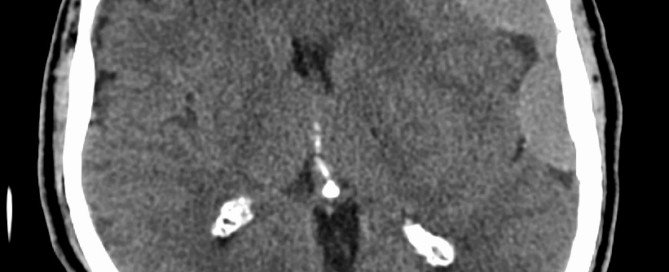
Left Side Neglect Caused by Brain Bleed from Hit in Head
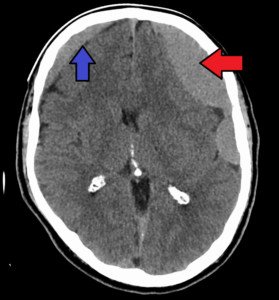
Left side neglect can be caused by a chronic subdural hematoma (a type of brain bleed) that’s on the right side of the brain.
My mother had a chronic subdural hematoma on the right side: twice.
There were no signs of left side neglect with the first chronic subdural hematoma.
It was drained, but about 10 days later she began dropping things with her left hand.
Over several days her gripping ability in the left hand deteriorated, along with fine motor control.
When my mother was recovering in the hospital following the second draining procedure, the physical therapist said she had left side neglect of the hand and leg.
In hindsight, it’s now clear that the motor control of her left hand, pre-surgery, was at least partially a left side neglect process, since she would try to pick things up and miss, yet think she had the item in her fingers, such as a hair clip.
She’d also try to pull up her panties or pants, and instead be pulling up air, believing she had the pants between her fingers, while the pants remained low on her body.
She’d then walk away, not aware that the left side of her pants/panties were not pulled up.
Pre-surgically my mother had wanted to go into the dining room from the kitchen, which requires a left turn.
But once through the doorway she veered rightward towards the living room.
At the time I thought this was some altered mental status, but in hindsight, I realize it was left side neglect, caused by a recurrence of the chronic subdural hematoma or brain bleed.
Post-surgically, she showed signs of left side neglect while working with her physical therapist.
The seating in her hospital room was to her left. If I started talking to her, while in the seat, while she was watching TV, she’d continue watching the TV, as though I weren’t there.
I’d then have to raise my voice to get my mother’s attention, or stand and move closer to her, more into her straight-ahead field of view, to get noticed.
This was left side neglect at work, even though the brain bleed had mostly been drained.
But residual fluid remained on my mother’s brain, and this remaining fluid caused more pronounced symptoms post-operatively while her body was working on resorbing it.
One she was transferred to a skilled nursing facility, the neurological phenomenon was more obvious.
She’d exit the bathroom (located at the beginning of her room) with her walker, and instead of making a 90-degree right turn towards the main room, she didn’t clear the turn and ended up hitting the wall (across from bathroom) with the left bottom of the walker.
In other words, when my mother was turning rightward, she wasn’t accounting for the left side of her surroundings.
When walking through the corridors, she kept getting sidetracked by rooms, doors and even wall pictures on the right. This was not normal behavior for her.
When a therapist had my mother fill in dates of a blank calendar, she started in the middle of the first row, which the therapist said someone with left side neglect would do.
Every time my mother exited the room, she’d make a right turn (which led to nowhere that would interest her: other patients’ rooms), even though we kept instructing “Go left” whenever she made this error (the dining hall was left, along with other main services).
As is typical with left side neglect, my mother was never aware there was something going on.
To someone with this intriguing condition, a therapist told me that it all seems normal to them, and that what they perceive as their “midline” is actually a rightward orientation.
The right side of my mother’s world was getting processed by her brain, yet the processing of the opposite side was compromised.
Chronic subdural hematoma on the right side of the brain can definitely result in neglect on the opposite side of the body.
As the brain bleed resolved, so did my mother’s left side neglect.
Lorra Garrick has been covering medical, fitness and cybersecurity topics for many years, having written thousands of articles for print magazines and websites, including as a ghostwriter. She’s also a former ACE-certified personal trainer.
.
Top image: James Heilman, MD, CreativeCommons

How Soon After Burr Hole Draining Can Chronic Subdural Hematoma Return?

Recurrence for chronic subdural hematoma is at around 15 percent.
The recurrence is not a sudden event, but unfolds over a short period of time.
My mother had a chronic subdural hematoma, and her neurosurgeon told me that one of the risks of the draining procedure was a 15 percent recurrence rate.
He did not tell me how long, after the draining it typically takes for a recurrence of a chronic subdural hematoma to develop.
Or, to put it another way, how long after treatment the symptoms of a recurrence would start presenting.
Variability in How Long It Takes a Chronic Subdural Hematoma to Come Back
“The recurrence rate is somewhat variable and will range anywhere from 10-30 percent,” says Kangmin Daniel Lee, MD, a neurosurgeon with New Jersey Brain and Spine.
“There is some variability in technique from surgeon to surgeon and will depend on the location and size of the chronic subdural hematoma.
“Sometimes two vs. one burr holes are used, and small vs. large sized burr holes are also used.”
My mother had one burr hole for her procedure. Dr. Lee continues, “There is also some discussion regarding the utility of a subdural drain once the burr hole washout is completed.”
My mother had such a drain after her surgery, and gravity was used to continue the draining while she was recovering in her hospital bed.
“However, the general consensus is that larger burr holes and the routine use of a subdural drain will minimize the risk of recurrence,” says Dr. Lee.
The post-surgical drain tube does not guarantee against a recurrence, because 10 days after my mother’s procedure, she started showing peculiar symptoms.
And it turned out she had a recurrence of the chronic subdural hematoma, and had to have a second burr hole operation.
But what about a specific time window or “grace period” following drainage of a first chronic subdural hematoma, as far as potential development of a recurrence? My mother’s time window was (to our observation) 10 days.
But is there data on how long after treatment would a patient be clear of ever having a recurrence of the chronic subdural hematoma?
Dr. Lee explains, “There is some variability with this number depending on the technique, but most recurrences, when it does occur, will happen in the short term. Most published reports range it from the 1-3 week period.”
]As you can see, my mother’s case clearly fits into what the published reports indicate.
Now, what usually causes the recurrence?
In my mother’s case, it didn’t seem related to the surgeon’s handiwork, because a CAT scan the morning after surgery was satisfactory to him, and the post-surgical drainage tube was ordered removed when it indicated that no more blood was coming out (though cerebral spinal fluid was, and the nurse told me that this was a sign that the drainage was nearing completion and that the tube should be removed).
I speculate that my mother’s recurrence of the chronic subdural hematoma was caused…believe it or not…by a second fall she took!
The first one was caused by striking her head on a bathtub after she fell. This fall was caused by blacking out while she was standing at the sink; she was experiencing frequent orthostatic hypotension.
The second fall occurred outside and I didn’t see it, but a witness said my mother did not hit her head.
The second fall apparently resulted from side effects of Keppra.
Though she didn’t hit her head, her neurosurgeon told me that the jarring from this second fall could have easily shaken things up in her brain and caused the recurrence of the chronic subdural hematoma.
The fall occurred the day after she was discharged from the hospital.

Dr. Lee focuses on minimally invasive techniques to treat traumatic and degenerative diseases of the spine and brain tumors. He’s been invited to speak at the regional and national levels on his research areas.
Lorra Garrick has been covering medical, fitness and cybersecurity topics for many years, having written thousands of articles for print magazines and websites, including as a ghostwriter. She’s also a former ACE-certified personal trainer.
.
Top image: Shutterstock/Alexander Raths
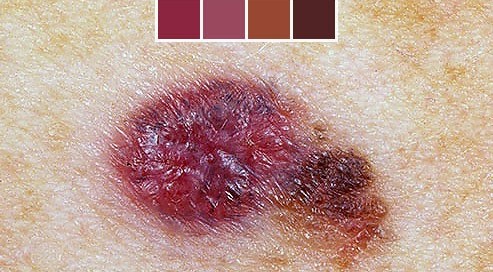
What Colors Can Melanoma Skin Cancer Be?

These four colors are just the tip of the iceberg.
It helps to know what the most common colors are for the deadliest skin cancer, melanoma.
Are there particular colors that melanoma skin cancer usually presents itself with?
“Melanomas are usually multiple shades of red, brown or black,” says Glenn Kolansky, MD, with Advanced Dermatology Surgery & Laser Center of NJ.
“However, they can be one color.”
A normal mole, of course, is usually some shade of brown or tan. In fact, a benign mole can even be black or what appears to be black.
About one-third of melanoma skin cancer arises out of a pre-existing mole.
This is why it’s so critical to become very familiar with every mole on your body. This means you must locate all your moles.
You may have some behind your ear or just under your hairline, even between your toes.
Do don’t just look for moles in easy-to-look-for locations. Examine every area of skin possible, and even have someone check your scalp.
Use mirrors to check behind your ears and even inside the ears. Don’t forget the bottom of the feet and the eyelids.
What other colors can melanoma skin cancer be?
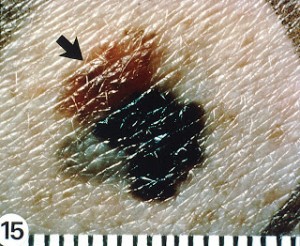
This killer of nearly 10,000 Americans every year can be brown, tan, grey, white, beige, beige-yellow, shades of pink, flesh colored, blue and violet. See the images below.

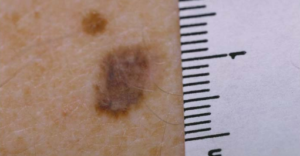



CDC, Carl Washington, MD, Emory Univ. School of Medicine, Mona Saraiya, MD, MPH

CDC, Carl Washington, MD, Emory Univ. School of Medicine, Mona Saraiya, MD, MPH
“Often a lesion can only be evaluated by doing a biopsy and looking under the microscope for a diagnosis,” says Dr. Kolansky. “This should be performed by a dermatopathologist.”
This cancer doesn’t necessarily present with changing color; it can also grow in size, change in texture, bleed, crust, become elevated and even itch.

Dr. Kolansky has received the Physician of Hope Award presented by the American Cancer Society and has lectured at local and national meetings.
Lorra Garrick has been covering medical, fitness and cybersecurity topics for many years, having written thousands of articles for print magazines and websites, including as a ghostwriter. She’s also a former ACE-certified personal trainer.

Fibromyalgia & Arm Pain When Fitness Walking: Solution

If your fibromyalgia gets in the way of your walking workouts by causing arm pain, there’s something you can do about this.
When you walk for fitness, especially on a treadmill, do you experience arm pain that you know is from your fibromyalgia?
Why does fibromyalgia induce pain in the arms from simply walking on a treadmill?
“This most likely occurs because you are using muscles you don’t usually use to either hold onto the bar or to keep your hands elevated,” explains Jacob Teitelbaum, MD, medical director of the Fibromyalgia and Fatigue Centers nationally, and author of “The Fatigue and Fibromyalgia Solution.”
I’m a former certified personal trainer and have helped countless clients bust the egregious habit of holding onto a treadmill while walking.

So very wrong! Shutterstock/LightField Studios
The harder you hold on, the more likely you’ll experience pain in the arms from your fibromyalgia.
I’ve even had healthy clients who, prior to hiring me, experienced unexplained pain while using a treadmill because they were holding on.
Holding on totally disrupts natural gait.
This can result in repetitive stress injuries in healthy people, so if you have fibromyalgia, this is all the MORE reason to walk naturally — that is, don’t hold on unless you need to steady yourself to change the settings or sip water—then let go once you’re done.
It may seem wise to hold on in the name of fibromyalgia, but on the other hand, holding onto a treadmill suppresses your body’s balancing mechanism—making you less efficient at movement.
If you have a pain disorder, the last thing you need is a suppressed balancing system.
The solution to arm pain while walking on a treadmill or outside, is to let the arms and shoulders move naturally, in synch with your lower body, the way nature designed your body to move.

Shutterstock/ LightField Studios
You can’t go wrong with natural movement when you have fibromyalgia.
Dr. Teitelbaum is a board certified internist and nationally known expert in the fields of fibromyalgia, chronic fatigue syndrome, sleep and pain.
Lorra Garrick has been covering medical, fitness and cybersecurity topics for many years, having written thousands of articles for print magazines and websites, including as a ghostwriter. She’s also a former ACE-certified personal trainer.

What to Do After ADHD Diagnosis for Kids AND Adults



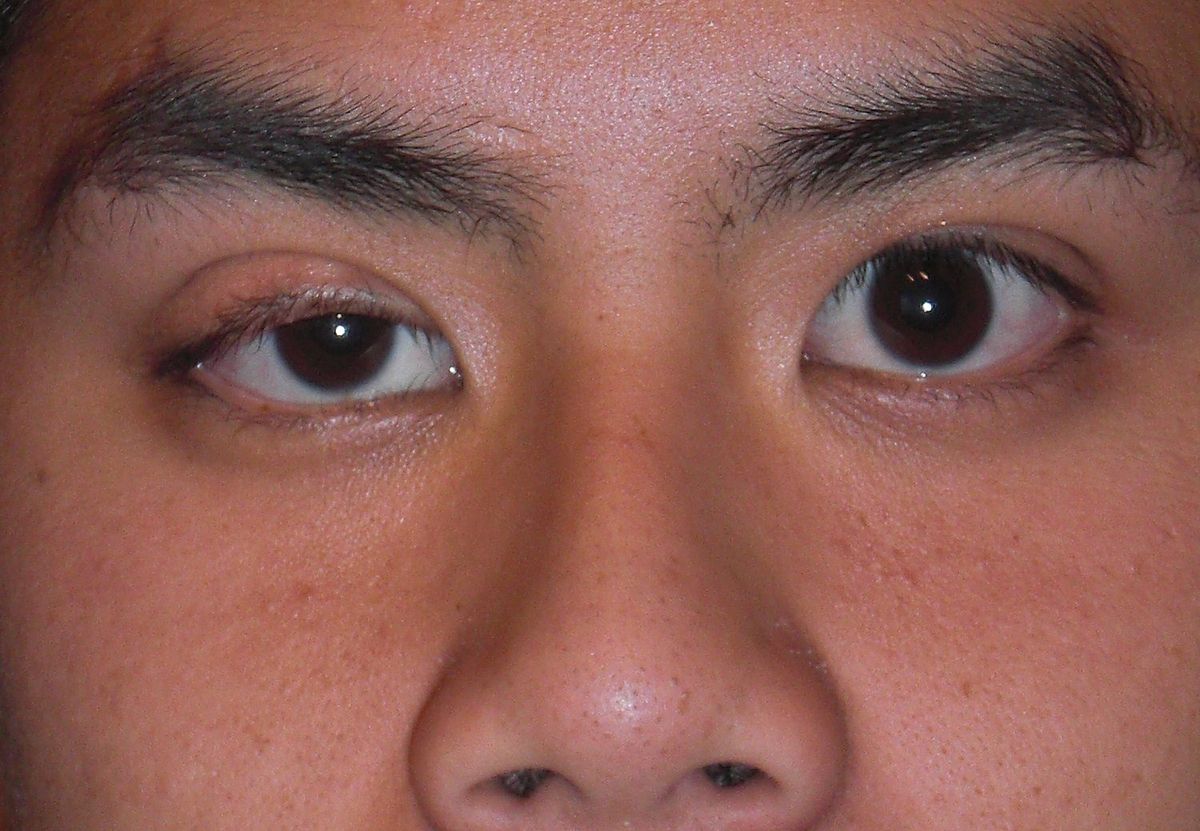





If you or your child’s been diagnosed with ADHD, you might really have sleep apnea and were misdiagnosed.
The symptoms of ADHD mimic the symptoms of sleep apnea.
It’s not at all uncommon for people (kids and adults) who’ve been diagnosed with ADHD, to actually have untreated sleep apnea instead.
People who have been labeled as “ADHD” should get tested for sleep apnea, which afflicts some 18 million Americans, and many don’t even know they have it.
What does the test for sleep apnea involve?
“Spend the night hooked to a machine that monitors your breathing, brain activity, eye movement, muscle tone and oxygen levels,” says Dr. Frank Barnhill, MD, board certified family physician practicing child and adult preventative care/ADHD-behavior medicine in upstate South Carolina.
Don’t let this description intimidate you.
The home test is quite simple: A device the size of a small TV is placed in your bedroom, and you simply clip a monitor to your finger at bedtime and snooze away with that on.
In the morning you remove it, and a technician will return to pick up the unit, which will have recorded all your overnight data. Or, you may drop it off at your medical office.
Sleep apnea is when a person stops breathing throughout the night (during sleep). Interestingly, the patient often is not aware of this.
The body’s autonomic nervous system kicks in and makes breathing resume, and the patient usually sleeps through these apnea episodes.
However, they leave their mark: Daytime symptoms that mimic ADHD are, says Dr. Barnhill:
“Irritability and impulsivity, poor concentration, difficulty maintaining focus, problems organizing, poor school performance.
“All of these occur as a result of not getting adequate rapid eye movement (REM) and deep stage sleep.”
What is sleep apnea?
In the early stages of sleep, a person (child or adult) begins snoring (obstructive sleep apnea), or develops “sighing breaths” (central SA or OSA-CSA combination).
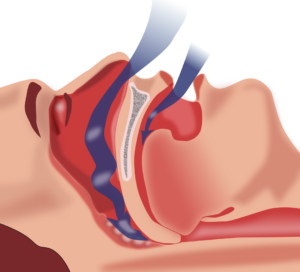
The obstruction in sleep apnea. Habib M’henni, Wikimedia Commons
As the SA progresses, respiration is interrupted by hypopneas (irregular partial breaths) or stopped breathing (apneas).
These breathing problems cause the person to either awaken with the sensation of struggling to inhale, or, the person only partially awakens and doesn’t remember the incident.
“Hypopneas are breaths that, while not normal, are at least partially effective in moving air in and out of the lungs,” says Dr. Barnhill.
“We call them mini-breaths — sort of like rapid shallow breathing. These episodes can occur hundreds of times a night.”
The individual ends up awakening throughout the night many times, getting no restorative sleep.
Fallout of Sleep Apnea
Being deprived of restorative sleep on a recurring basis means you’ll be prone to irritability, fatigue, even muscle aches, and “all of this causes problems with brain related functions such as short-term memory, thought processing, a decrease in the normal inhibition of impulsivity and aggressiveness (the judgment centers) and ability to maintain attention span,” says Dr. Barnhill.
The brain’s executive thought processing centers take a hit from the low oxygen levels caused by the sleep apnea. “It’s hard to think clearly when your brain is tired.”
If you don’t have ADHD and instead have sleep apnea, your ADHD medications will be pretty much useless.
However, it’s also possible that you can have both ADHD and sleep apnea.
ADHD is not a life-threatening situation, but sleep apnea can have life-threatening consequences.
Cardiovascular problems. The sudden drops in blood oxygen that result from stopped breathing can have devastating consequences, including sudden cardiac arrest.
Stroke and high blood pressure can also result, along with congestive heart failure and heart rhythm disorders.
Excessive fatigue. Though the patient is usually not aware of the apnea episodes, they do result in loss of restorative sleep, and this leads to daytime drowsiness, irritability, moodiness and poor concentration; those last three sound a lot like ADHD, right?
Other cognitive problems. Memory may be affected, and mood swings and depression may be present. You may even be a bit hyperactive.
Perhaps you believe that only overweight, thick-necked people get sleep apnea, and if you’re thin, you don’t believe you might have this condition and instead think you have ADHD.
However, sleep apnea can occur in skinny people, including children!
So if you’re a young adult with an ADHD diagnosis and weigh only 150 pounds, it would be smart to get tested for sleep apnea.
 In practice for 30+ years, Dr. Barnhill is the author of “Mistaken for ADHD.” He has additional training in Infant, child and adolescent medicine, urgent and emergent medicine, and gerontology.
Lorra Garrick has been covering medical, fitness and cybersecurity topics for many years, having written thousands of articles for print magazines and websites, including as a ghostwriter. She’s also a former ACE-certified personal trainer.
.