

Shortness of Breath from Heart Problem vs. Narcotic Drugs

Is there a way to distinguish between breathing difficulty from angina and from narcotic painkiller side effects?
Narcotic painkillers can cause trouble breathing as a side effect, yet angina as well can result in this scary symptom; is there a way to tell one type of labored breathing from the other?
“Narcotic side effects would make them drowsy or unconscious, and breathing would become dangerously slow or even stop, and the person may not even realize it,” says Dr. Sameer Sayeed, a cardiologist at ColumbiaDoctors of Somers, NY.
“Angina is usually reproducible with the breathing difficulty happening each time they do a certain amount of activity, walking, etc., and once it is severe would even occur at rest, and the person would be very uncomfortable and definitely would realize it.”
So if you’re on narcotic painkillers, and you feel fine all along, and suddenly develop difficulty breathing, chances are very high that this is NOT a side effect from the narcotic drugs.
It’s not necessarily angina, either, but you can pretty much rule out narcotic side effects if this is your only symptom, and especially if it came on during mild exertion that’s too light to justify the shortness of breath.
My mother had been on narcotic painkillers, and on and off complained of “labored breathing.”
We all thought it was from the narcotics because the inserts listed this symptom as a possible side effect (along with a huge host of other potential side effects).
It’s much more likely that all along this symptom had been caused by severe coronary artery blockage, because eventually she was diagnosed with very severely blocked arteries (after being diagnosed with unstable angina), and had to undergo coronary bypass surgery.
If you’re worried about your heart health, see a cardiologist and also have your coronary calcium score taken.

Dr. Sayeed performs echocardiograms and stress tests at the Midtown Manhattan and Westchester offices at Columbia Doctors. He is also trained in cardiac CT imaging.
 Lorra Garrick has been covering medical, fitness and cybersecurity topics for many years, having written thousands of articles for print magazines and websites, including as a ghostwriter. She’s also a former ACE-certified personal trainer.
.
Top image: Shutterstock/PrinceOfLove

Why a Stress Test Can Miss Severe Artery Blockage

Find out how often and why cardiologists miss severe heart disease when examining a patient.
It’s possible for a cardiologist to miss severe heart disease when giving a patient a heart exam, and actually go as far as telling the patient, “You’re the last person I’d ever expect to have a heart attack.”
This happened to my mother. Ten months later she had emergency quintuple bypass surgery.
“This can happen if the stress test is normal but the patient has severe triple vessel coronary disease,” says Dr. Sameer Sayeed, a cardiologist at ColumbiaDoctors of Somers, NY.
“Some nuclear stress tests can be normal in the setting of triple vessel disease due to a phenomenon called balance ischemia where the blood flow discrepancy cancels each other out and the test appears normal.”
In other words, relative blood flow is detected, rather than absolute blood flow.
Thus, if only one or two of the three major vessels is/are severely blocked, this will cause a disparity in blood flow that will be easily detected.
How common is balance ischemia as a camouflage in a stress test?
Dr. Sayeed says, “This probably happens in a relatively small percentage of people, 5% or less. A cardiologist with a high suspicion of disease based on symptoms and exam and history would not trust the falsely normal stress test and probably perform a coronary angiogram.”
But what if the patient reports no symptoms?
My mother did not have symptoms 10 months before three doctors said that a massive heart attack was imminent.
She saw a cardiologist because an EKG, taken in the ER as part of a complete workup to find out why she was sleeping so much, revealed a “left bundle block.” The ER doctor told her to follow up with a cardiologist.
The cardiologist did not order a stress test or any other imaging procedure.
She gathered subjective information from my mother, then examined her with a stethoscope, noted the pulse and blood pressure, and declared her heart healthy.
If the patient has no symptoms, has normal blood pressure, normal pulse, is not diabetic, does not smoke or drink, is not obese and reports no family history of heart disease, what SHOULD the cardiologist do?
When the cardiologist asks the patient, “Do you exercise?” and the patient says, “Well, I maintain a large house that has a staircase, and I’m up and down those stairs a hundred times a day,” the cardiologist should see a blaring red flag.
When people say things like this, assume they are sedentary!
A staircase in the house does not mean the resident has a built-in cardiovascular exercise program!
My mother had three blaring risk factors for severe heart disease that the cardiologist should NOT have missed:
1) elderly age
2) lack of structured aerobic exercise
3) excess fat in the midsection (though she was not obese).
The cardiologist should have probed further with the exercise — for example:
“Do you do any brisk walking for at least 30 minutes most days of the week — and whatever walking you do while shopping does not count.”
And, “Do you take any fitness classes? Do you use any cardio machines like a bike, treadmill or elliptical? Do you jog?”
Sedentary people have a way of convincing themselves they get “plenty of exercise” by believing that housework and shopping count as sustained, rhythmic cardiovascular exercise!

Freepik.com
Though probing the exercise habits often will not turn up useful information when so many people believe that walking 3 mph on a treadmill while holding on counts as meaningful cardiovascular exercise, the probing can definitely yield insight to the cardiologist screening for severe heart disease.
The cardiologist asked my mother about her diet.
My mother replied, “I eat a balanced diet. I hardly eat fast-food. I watch my portions. I don’t eat much sweets.” The cardiologist did NOT probe further.
The problem isn’t so much the type of food; it’s the BRAND.
Popular, commercial brands of processed goods (potato mixes, pasta mixes, seasoning packets, salad dressings, bread crumbs, frozen dinners, frozen side dishes, processed frozen meats) are full of trans fats, which damage coronary arteries!
My mother’s diet was rich in heavily processed foods: trans fats! Trans fats are also “hidden” in foods whose packaging says “Zero trans fats!”
As for no family history of heart disease, my mother confidently declared this, even though at the time, her son had been diagnosed with heart disease years before, and she had siblings whose health histories she was not aware of (one eventually had a heart attack!).
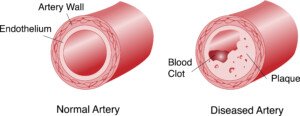
Do you now see how easy it is for a cardiologist to miss severe coronary heart disease?
Shutterstock/OSweetNature
If you’re worried about your heart, be sure you know the FACTS to what seem to be simple questions that the cardiologist will ask about your lifestyle and family history.
And get your coronary calcium score taken; discuss this with your cardiologist, as this can be extremely telling of the presence of severe coronary heart disease.
Dr. Sayeed performs echocardiograms and stress tests at the Midtown Manhattan and Westchester offices at Columbia Doctors. He is also trained in cardiac CT imaging.
 Lorra Garrick has been covering medical, fitness and cybersecurity topics for many years, having written thousands of articles for print magazines and websites, including as a ghostwriter. She’s also a former ACE-certified personal trainer.
.
Top image: ©Lorra Garrick

Zero Calcium Score: How Soon Can a Bad Diet Raise It?

If your calcium score is zero and you go bust with your diet, how long before the score rises?
Your calcium score is zero because you’ve been having a healthful diet and exercising, and maybe there’s some good genetics and/or youth tossed into the equation.
But let’s suppose that lately you’ve been gorging on sugary foods with trans fats, and eating very little of the vegetables and fruits you used to eat a lot of.
Maybe you’ve been stressed. Stress can lead to junk food consumption as a form of emotional relief or comfort.
The body’s stress response triggers cravings for high-fat, high-sugar foods, which can temporarily boost mood.
How long do you have to keep up this bad diet before it raises that calcium score of zero?
“Usually a calcium score or stress test gives an average person about a three to five year warranty in that if it is normal, the risk will probably be low for that period of time,” says Dr. Sameer Sayeed, a cardiologist at ColumbiaDoctors of Somers, NY.
“If someone is abusing their diet, it is possible that plaque could build up in three to five years’ time to the point where it could be detected on calcium score,” adds Dr. Sayeed.
“This is about how often stress tests, but not necessarily calcium scores, are repeated to monitor for new flow-limiting plaques.”
If your calcium score is zero, indicating no significant calcified plaque in your coronary arteries, it’s important not to use this as an excuse to abandon healthy eating habits.

The closer a food is to its natural state, the healthier it is for the human body, especially the heart.
Consuming a menu high in processed foods and added sugars can still pose risks to the person with a zero calcium score, because sugars contribute to coronary artery plaque buildup over time.
While a zero calcium score is a positive sign, maintaining a plant based diet rich in whole foods and low in processed sugars is the magic bullet for long-term heart health and preventing future cardiovascular issues.
You should read ingredient lists of your favorite foods.
You’ll be surprised over the amount of “hidden” sugars. Any ingredient that ends in “ose” is a sugar.
Trans fats can appear under various names on ingredient lists. Common names include:
1. Partially Hydrogenated Oils: The primary source of industrial trans fats.
2. Hydrogenated Oils: May also contain trans fats, though less than partially hydrogenated oils.
3. Vegetable Shortening: Often contains trans fats unless specified as trans fat-free.
4. Margarin: Some margarine products contain trans fats, though many have been reformulated.
5. Fully Hydrogenated Oils: These are typically low in trans fats but can still be present in some products.
Also avoid anything with “interesterified” fat in it.
Always check labels carefully and choose products that list “no trans fats” or “0 grams of trans fats” to avoid these harmful fats.
Calcium score is very predictive of the presence of coronary heart disease.
Calcium score is calculated using a CT scanner without contrast dye.
The test takes about 15 minutes and shows only the amount of calcified or hard plaque.
It does not show the soft or unstable plaque deposits.
Dr. Sayeed performs echocardiograms and stress tests at the Midtown Manhattan and Westchester offices at Columbia Doctors. He is also trained in cardiac CT imaging.
Lorra Garrick has been covering medical, fitness and cybersecurity topics for many years, having written thousands of articles for print magazines and websites, including as a ghostwriter. She’s also a former ACE-certified personal trainer.

4 Jaw Exercises for TMJ Relief by a Facial Pain Expert

A facial pain and TMJ disorder expert describes four jaw exercises for facial pain that are comfortable to perform.
TMJ disorder (aka TMD) causes quite a few symptoms, but among the most common is pain, including that in the face.
Before beginning these exercises, you should have a diagnosis of TMJ disorder rather than just assuming you have this common problem.
“The following exercises are often helpful to patients with facial pain,” says Donald R. Tanenbaum, DDS, MPH, a board certified TMJ and orofacial pain specialist, and author of “Doctor, Why Does My Face Still Ache.”
These jaw exercises for facial pain do not represent the full scope of jaw exercises available, adds Dr. Tanenbaum, but these are a great start if you’ve been suffering from facial pain.
Very important: Don’t hold your breath; breathe normally as you perform these movements. There should not be any pain while doing them.
Jaw Exercise 1
Goal: Release tension in jaw-closing muscles
Place your thumb directly under your chin. Place your tongue on the roof of your mouth, halfway back.
Attempt to open your mouth against gentle thumb resistance, as your tongue is kept in contact with the roof of your mouth.
Resist for 3-4 seconds without letting your jaw reach the maximum open position. Repeat 6 times.
Jaw Exercise 2
Goal: Help coordination of muscles that move jaw from side to side
Take a tongue depressor and gently rest it between your upper and lower teeth.
Swing your jaw to the right, gliding on the tongue blade, and feel the resistance. Hold it for 3-4 seconds. Repeat on the opposite side. Do 10 repetitions of both.
Jaw Exercise 3
Goal: Stretch jaw-closing muscles
While sitting down, place your left elbow on a table and lean your forehead into the palm of your hand.
With the index and middle fingers of your right hand, pull down on the lower front teeth to open the jaw until you feel a stretch in your facial muscles. Hold for 3-4 seconds, release, and repeat 10 times.
Jaw Exercise 4
Goal: Limit forward movement of jaw on mouth opening
Place your tongue on the roof of your mouth, halfway back. Open your mouth in front of a mirror.
Try to open in a straight line. Hold in a limited open position for 5 seconds. Release. Repeat 5-10 times.
Be consistent with these exercises, and the pain situation from your TMJ disorder should improve.

Dr. Tanenbaum’s practice focuses on facial pain, TMJ disorder and sleep-related breathing disorders. He is the past president of the American Academy of Orofacial Pain and takes a multidisciplinary approach to his patients’ care.
Lorra Garrick has been covering medical, fitness and cybersecurity topics for many years, having written thousands of articles for print magazines and websites, including as a ghostwriter. She’s also a former ACE-certified personal trainer.
.
Top image: Shutterstock/michaelheim

Is Dizziness from Exercise Different than from Anxiety?

Anxiety can cause you to feel dizzy, and so can exercise.
There are different kinds of dizziness, and each has different causes.
Anxiety is a common cause of dizziness.
However, if you feel dizzy after or during exercise, this can be caused by 1) Lack of nourishment; low blood sugar, or 2) The actual exercise itself, such as pivoting ‘round and ‘round on a stepper.
After all, the dizziness from anxiety is triggered by the rapid breathing that anxiety causes.
However, exercise, too, causes rapid breathing, but normally, a person will not get dizzy from exercise.
I’m a former certified personal trainer and rarely did my clients report feeling dizzy during or after exercise.
The few times this has happened involved clients who hardly ate anything the entire day prior to their exercise session with me.
Why would rapid breathing from anxiety leads to dizziness, and why would rapid breathing from exercise not lead to it?
“When people exercise they breathe rapidly because their muscles require more oxygen, and they also need to breathe out the excess carbon dioxide that is produced during exercise,” explains Peter Swanljung, MD, chief of psychiatry at the Malvern Institute in Willow Grove, PA.
“So the increased breathing is a result of the body functioning appropriately in response to exercise.
“When someone is anxious, they are breathing more rapidly than the body needs them to, and thereby are releasing too much carbon dioxide, which can cause the pH of the blood to rise and cause a constriction of the blood vessels in the brain, leading to a dizzy sensation.”
There are many other causes, such as premenstrual syndrome, and quickly rising to a standing position after being seated for a while.
A very pervasive cause is prescription medications, such as statins and antidepressants.
And of course, pregnancy can cause the sensation as well. Sometimes, unknown causes are at play.
In general, for the most part, if you feel dizzy, this is no cause for alarm.
Often, you know what the cause is right then and there: Are you premenstrual?
Did you just quickly stand up from a seated position? Have you not eaten anything all day?
Did you just try a new dance move that required some spinning?
Are you ill from a “bug” or the flu? Did you recently bang your head?
Are you on a new medication?
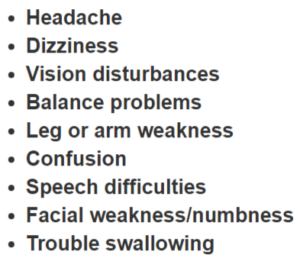
Rarely, dizziness is a sign of serious trouble, such as a transient ischemic attack.
A TIA is recognized by the medical establishment as an emergency situation that signals the possibility of a full-blown stroke in the near future.
However, the dizziness of a TIA is usually accompanied by any of the symptoms listed below.
 Dr. Swanljung is the former medical director of the general adult unit at Friends Hospital in Philadelphia and treats a variety of psychiatric conditions.
Lorra Garrick has been covering medical, fitness and cybersecurity topics for many years, having written thousands of articles for print magazines and websites, including as a ghostwriter. She’s also a former ACE-certified personal trainer.
.
Top image: Freepik.com yanalya

Bloody Urine: Top Causes Including Cancer
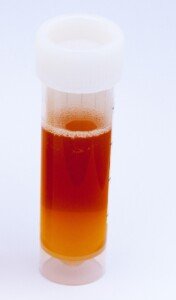
Blood in the urine has many causes, including cancer, and the sight of blood in your urine can be very frightening.
Obviously, this isn’t normal.
Or is it at times? It’s important to take a look at your urine on a regular basis.
What are the top 8, in order of likelihood, causes of blood in the urine?
Answering questions is Dr. Andrew Stephenson, MD, Section Chief and Director, Urology Oncology; Professor (PAR), Department of Surgery, Division of Urology, Rush Medical College.
Dr. Stephenson: Infection; Stones; Benign prostatic enlargement; Kidney cancer; Bladder cancer; Ureteral cancer; Medical renal disease; and Trauma.
In other words, if you see blood in your urine, it’s not necessary to suddenly fear you must have cancer.
In fact, if you see blood in your urine, you might want to ask yourself if you’ve been exercising strenuously lately. This is a type of “trauma” that can cause blood in the urine.
The following exercises can lead to urinary blood: distance running, rigorous cycling, and jumping/plyometric routines. Accident trauma can also cause urinary blood.
Top medications likely to cause bloody urine?
Dr. Stephenson: Anticoagulation therapy, e.g., Coumadin, Plavix, Heparin.
According to Ohio Health Online, here are more causes for blood in the urine:
Red: A red tinge may appear to be blood, when it’s not. One cause of a red tinge is porphyria, a skin and nervous system disorder; red or deep purple foods such as blackberries, beets and rhubarb pie; laxatives like Ex-lax; and other prescription drugs including Thorazine, an antipsychotic that’s also used to treat nausea from chemotherapy.
Blood in: Urinary tract infections, cancer of the kidney or bladder (seldom), and also, a leading cause of visible hematuria in kids is kidney inflammation caused by a bacterial/viral infection.
Guidelines for urinalysis for bacteria in the urine (bacteriuria), that is without symptoms. (Symptoms include urinary tract infections and inflammation of the kidneys and bladder.)
These guidelines are from Surgeon General Reports:
- American Academy of Family Physicians and U.S. Preventive Services Task Force — asymptomatic bacteriuria screening, by urine culture, should be performed on all pregnant women.
- The American College of Obstetricians and Gynecologists recommends screening for this, for women over age 65, or women with type 1 diabetes, as a routine part of physical exams.
- The American College of Physicians advises against routine screening.
- Canadian Task Force on the Periodic Health Examination — For patients with type 1 diabetes, a screening for protein to prevent renal disease is advised. But for the elderly, a screening to detect symptom-free bacteriuria is not advised.
 Dr. Stephenson’s clinical and research focus is the treatment of prostate, bladder, kidney and testes cancer. He has published over 100 articles in peer-reviewed journals.
Lorra Garrick has been covering medical, fitness and cybersecurity topics for many years, having written thousands of articles for print magazines and websites, including as a ghostwriter. She’s also a former ACE-certified personal trainer.
.
Top image: Shutterstock/Eag1eEyes

Can Diarrhea Be the Only Symptom of Microscopic Colitis?

A sudden onset of diarrhea, including a lot of diarrhea, but with no other symptoms, may signal an inflammatory bowel condition known as microscopic colitis.
Microscopic colitis falls under the category of “colitis,” which falls under the category of “inflammatory bowel disease.” Don’t confuse this with irritable bowel syndrome.
Inflammatory bowel disease simply means a flare-up, or inflammation, of the inner lining of the large colon.
A colonoscopy is necessary to confirm this, and depending on the type of IBD, a gastroenterologist can make the diagnosis visibly right there on the spot.
However, microscopic colitis is not visible to the un-aided eye. A colonoscopy exam should include a routine collection of large colon tissue, to be sent for a pathology report.
This is where the diagnosis of microscopic colitis is made. There are two types of microscopic colitis: lymphocytic and collagenous.
Mayoclinic.com reports that microscopic colitis can present with the following symptoms: watery diarrhea (no blood in it), abdominal cramping, abdominal pain, abdominal bloating, some weight loss, stool leakage, nausea, dehydration, and urgency to relieve the diarrhea.
However, it is entirely possible for microscopic colitis to produce just one symptom: the diarrhea.

This “sort of” happened to me, although I did have some abdominal cramping (mild) going on, but this was often from the bowel movements building up inside me, and was relieved once I used the restroom.
I say “sort of” because at the time, I didn’t know that the joint aches that I had were part of microscopic colitis.
I thought they were related to my menstrual cycle, even though the menstruation had ceased.
I would later learn that joint aches are a recognized symptom of MC, and involve the same hormones (prostaglandins) that cause the joint aches of PMS!
In my case, the joint aches persisted after my period stopped, and historically, this had never happened; my PMS joint aches had always been just that: PRE-menstrual, not POST-menstrual.
I also had dehydration in the form of notable thirst in the middle of the night. These latter symptoms are secondary to the diarrhea.
I had absolutely no abdominal bloating or distention, and certainly no fecal leakage, nausea, or any actual pain in my abdomen.
I simply had this annoying diarrhea, which wasn’t always watery, and the suspicious joint aches.
Sometimes many small and medium pieces of poorly formed BMs plopped out at once, but technically, they were not formed stools because a gentle poking of them with a cotton swab would cause a dispersal of the matter.
Flushing the toilet would also disperse the stools; that’s diarrhea.
A change in diet can alter the appearance of the diarrhea, making it appear less “diarrheaic.”
A change in diet can pretty much eliminate it as well, but this does not mean that the microscopic colitis has been resolved; it’s still there and must run its course.
When I eliminated fruit from my diet, the diarrhea stopped, but I continued to have a change in stool caliber.
They were greasy looking, layered, appearing to be made up of several different kinds of material; containing a lot of undigested food; light brown; sometimes tinged with green or a little orange, depending on the colors of the foods I had eaten.
A course of only diarrhea can also be caused by a local infection in the intestines (my doctor’s initial diagnosis pre-colonoscopy), and stress.
However, stress is not likely to change the caliber of your stools. If you suspect microscopic colitis, a colonoscopy is needed for diagnosis.
Lorra Garrick has been covering medical, fitness and cybersecurity topics for many years, having written thousands of articles for print magazines and websites, including as a ghostwriter. She’s also a former ACE-certified personal trainer.

How to Prevent Esophageal Cancer if You Have GERD

What is the best way to help prevent esophageal cancer if you have GERD (gastroesophageal reflux disease)?
Or, to put it another way, are there specific ways to lower the odds of ever developing esophageal cancer if you have GERD?
Chronic acid reflux disease is a risk factor for cancer of the esophagus.
The esophagus is the so-called food pipe.
How GERD Raises Risk of Esophageal Cancer
The chronic coating of the stomach’s acidic contents on the interior lining of the esophagus changes its cellular structure over time.
The cells become similar to those of the small intestine when this happens. This is a condition called Barrett’s esophagus.
If you’ve been diagnosed with Barrett’s esophagus, you have a risk factor for developing a malignant tumor in the esophagus.
Prevention Tactics for Esophageal Cancer if You Have GERD
There are things that you can do, says Dr. Maxwell Chait, MD, gastroenterologist at ColumbiaDoctors Medical Group in Westchester County, NY.
Dr. Chait says, “Lifestyle modification with weight loss; avoid fried and fatty foods, caffeine, alcohol and tobacco.”
This may sound like advice to stop having fun, but giving up your vices sure beats sitting for hours receiving chemotherapy through a drip bag after being told you have a disease with a five-year survival rate of only 19.2 percent.
Is that next cigarette, drink or bucket of fast-food fried chicken worth it?
Think you’re too young to worry about any of this?
Additional data from the National Cancer Institute Surveillance, Epidemiology, and End Results Program says that 10.4 percent of new diagnoses occur in people 45 to 54, and 27.1 percent occur in people 55 to 64.
If you’re in your 20s or 30s, you’re not immune.
But another point to consider is that the sooner you start prevention tactics for esophageal cancer, the better your chances are of never being diagnosed with this illness later on in life.
Dr. Chait continues, “Treatment of GERD with acid reducing medication to lower acid reflux” is yet another strategy.
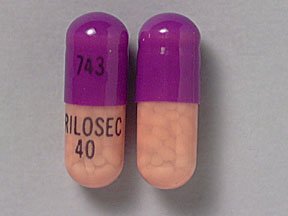
Prilosec is an acid-reducing drug.
But “use of NSAIDS such as aspirin is controversial since they can also damage the GI tract.”
Dr. Chait adds, “Surgery to prevent acid reflux remains controversial.”
If you’ve already been diagnosed with Barrett’s, he says that the progression of this condition can be prevented “using endoscopic methods to ablate the Barrett’s.”
-
- Difficulty getting food down the throat; this gets worse.
- Eventually, swallowing food gets so difficult one must switch to soft foods.
- Coughing or hoarseness that’s persistant
- Chest pain or a sensation of something “stuck” in the chest; this persists.
- Burning or pressure in the middle of the chest
- “Stuck food” feeling can also occur in the throat.
- Pain when swallowing food
- Weight loss resulting from regurgitation and a suppressed appetite
- Old blood (tarry looking) in the stools
- Fatigue or anemia
- New-onset heartburn
- Increased saliva

Dr. Chait’s practice interests include digestive conditions such as colon cancer, gastrointestinal endoscopy and internal medicine. He has authored numerous publications in reputed journals.
Lorra Garrick has been covering medical, fitness and cybersecurity topics for many years, having written thousands of articles for print magazines and websites, including as a ghostwriter. She’s also a former ACE-certified personal trainer.
.
Top image: Shutterstock/goodluz

Is Sex Necessary for Anal Cancer from an HPV Infection?

Though anal cancer is strongly linked to HPV, anal intercourse is not necessary to contract this virus that can lead to this cancer.
Did you know that 95% of anal cancer cases are caused by the human papillomavirus (HPV)?
This stat comes from analcancerfoundation.org, though cdc.gov/hpv/cancer.html says it’s 91%.
Intercourse is not necessary to transmit HPVs that ultimately can cause anal cancer, says analcancerfoundation.org.
Intercourse (vaginal or anal) is also not required to transmit the HPVs that can eventually cause cervical, vulvar, penile or oral cancers, says the foundation.
In fact, the foundation states that HPV can also be transmitted from person to person by deep kissing, manual stimulation of the genitalia, rubbing, sex toys…
In addition, researchers with the University of Hawaii HPV Cohort Study point out that “the majority of cervix-to-anus transmission” of HPV “happened in the absence of anal intercourse.”
The article concludes: In short, anal intercourse is not a pre-requisite for getting anal cancer.
Sources: analcancerfoundation.org/learn/anal-cancer/ and cdc.gov/hpv/cancer.html
Another site, cancer.org, specifically states: HPV is passed from one person to another during skin-to-skin contact with an infected area of the body.
The site notes that HPV can be spread during the act of sex—any kind (anal, vaginal and oral)—but that sex is not necessary for HPV to spread.
All that is needed is for there to be skin-to-skin contact with an area of the body infected with HPV.
In fact, HPV can be spread through non-intercourse genital-to-genital contact, and even with just hand-to-genital contact.
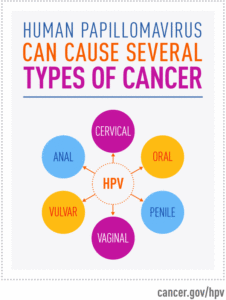
This ubiquitous virus can spread from one body part to another, e.g., from genitals to anus—without the assistance of the victim’s partner.
HPV is really out there. The site states that it “might be possible” to protect against a genital infection with this virus by forbidding people to contact your genital and anal regions.
However, the site says that there may still be undiscovered ways that HPV can make it into someone’s body.
For reasons not known, HPV infections mainly occur in women when they are under age 30.
Cancer.org says that the mean age of diagnosis (men and women) is 62. It takes many years for an HPV infection to develop into anal cancer.
This is not a disease where one contracts HPV in a particular year, and then three years later gets the dreaded diagnosis.
Lorra Garrick has been covering medical, fitness and cybersecurity topics for many years, having written thousands of articles for print magazines and websites, including as a ghostwriter. She’s also a former ACE-certified personal trainer.
.
Top image: Freepik.com/pressfoto
Sources:
cancer.org/cancer/analcancer/detailedguide/anal-cancer-risk-factors
cancer.org/cancer/analcancer/detailedguide/anal-cancer-what-is-key-statistics







Why Are the Cramps from Microscopic Colitis Painful?
“Typically, people have symptoms of abnormal pain in conjunction with diarrhea when they have microscopic or collagenous colitis,” says gastroenterologist Sander R. Binderow, MD.
“If a physician looks at the colon, it appears to be normal, but if the patient continues to have problems, the doctor will likely take random biopsies, which are sent to a lab and come back with results showing the lining as abnormal, which is called mucosa,” says Dr. Binderow, who’s with Atlanta Colon & Rectal Surgery.
“Cramps are the same with both diarrhea and microscopic colitis. The level of pain is not associated with the difference between regular diarrhea and colitis.
“Symptoms of microscopic colitis are less abnormal than obverse or gross colitis.”
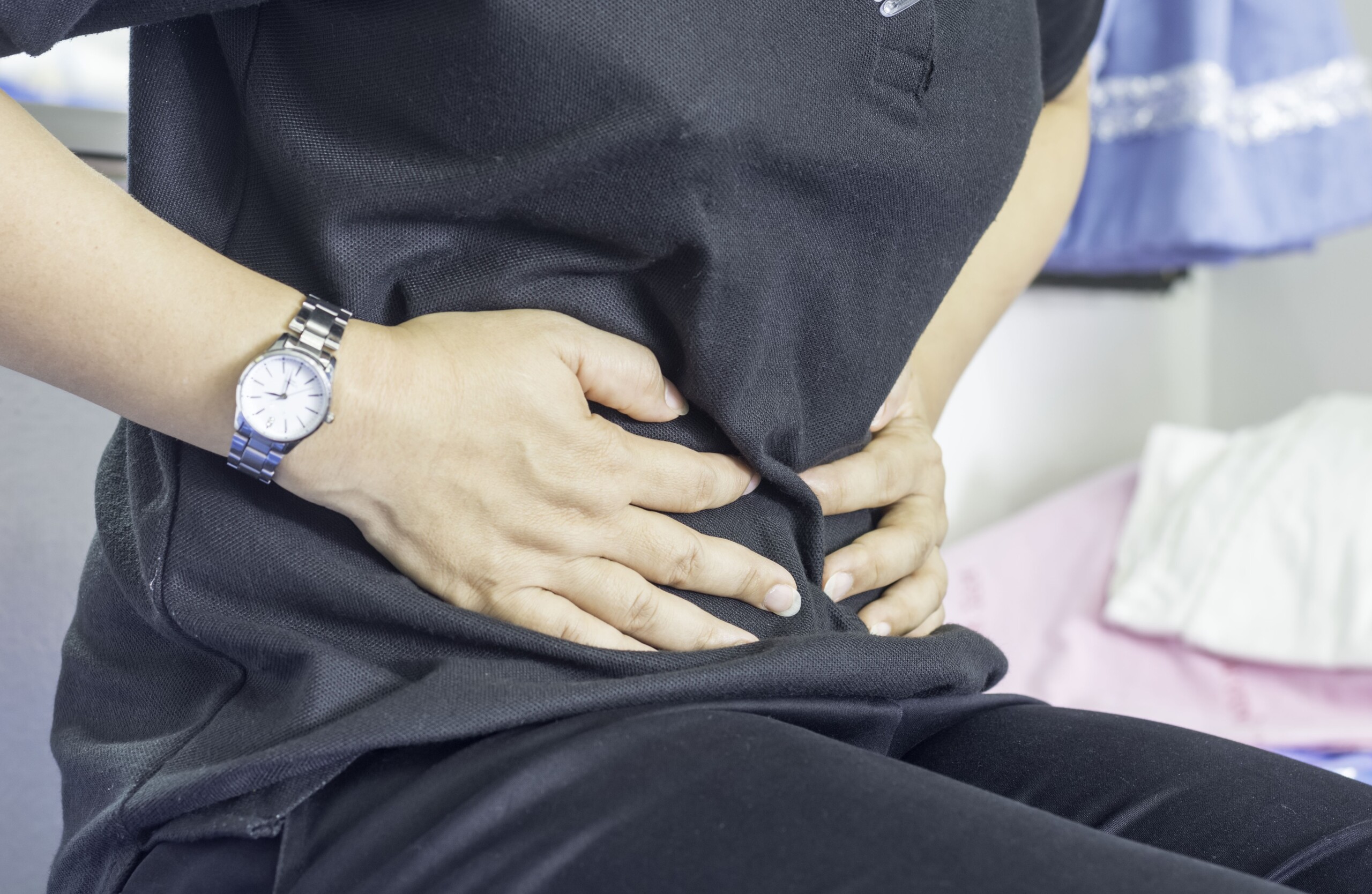
Sometimes, cramps can get really bad preceding the voiding of diarrhea.
Dr. Binderow explains, “Any colon or bowel pain is due to distension, which is when the colon is distended due to extra air.
“Colitis, or inflammation itself, does not cause any extra or extreme pain; it’s distension due to more air in the colon that can cause pain.”
Microscopic colitis is NOT a risk factor for colon cancer, no matter how painful the cramps.
Symptoms of colon cancer, that are not shared with microscopic colitis, are as follows: blood in the stools, unexplained weight loss, a persistent feeling of malaise, unexplained fatigue, abdominal pain that’s not related to diarrhea or BMs, feeling you still have to void BMs even after you “got everything out,” pencil-like stools, and constipation that alternates with diarrhea.
If you have any of these symptoms, you should see a gastroenterologist, who may recommend a colonoscopy as a diagnostic tool.
But if you’re free of symptoms and simply want to be screened for colon cancer, you can take an at-home colon cancer screening exam called Cologuard.

Cologuard
Your sample will then be analyzed for abnormal cells using the latest DNA technology.
If the cells are atypical, a colonoscopy will be recommended.
 Dr. Binderow performs minimally invasive, robotic and laparoscopic surgery for Crohn’s disease, ulcerative colitis, colon cancer and other colorectal conditions. Adept at routine procedures, he also sees patients with complex, atypical maladies.
Lorra Garrick has been covering medical, fitness and cybersecurity topics for many years, having written thousands of articles for print magazines and websites, including as a ghostwriter. She’s also a former ACE-certified personal trainer.
.