
How to Prevent Minoxidil from Dripping into Your Eyes
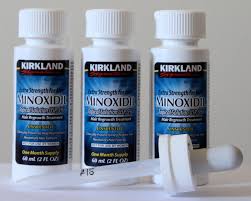
If you prefer to use liquid minoxidil, here’s a technique for avoiding dripping it into the eyes and getting that awful burning stinging.
This technique will work very well for those who wish to apply minoxidil to their temples.
Applying the liquid form here with the dropper and avoiding the liquid rolling down your temple and straight into your eye is exceedingly difficult.
My solution is to use an application that combines the liquid with the foam version.
If you use only the liquid minoxidil, then you’ll just have to accept that nearly every time, you’ll get it in your eyes, even if your head is tilted back so far that your temple is parallel to the floor.
In addition, you’re holding some cotton at your temple, below the cut-off point of application, to catch any runaway drops.
But just when you think all the runaway drops have stopped and it’s time to bring your head back to a normal angle…suddenly one or two shoot down your forehead and get into your eye.
So even extreme tilting and using cotton won’t stop this problem.
Put some of the foam on your fingertips and smear on the temple. The foam will not run, but make sure you shake the bottle good so that the foam is as foamy as possible. Otherwise it might be a little “liquidy.”
In fact, after putting some foam on your fingertips, waste no time applying it, because the foam quickly “melts” and will become runny.
Tilt head back (doesn’t have to be extreme) and quickly get that foam on the temples.
After you take care of the temples, you can then apply the liquid minoxidil further behind the area you just applied it, because beyond the temples (more receded back) is far enough away from the slope of your forehead that you don’t have to worry about runaway drops getting into your eyes.
But still take precaution! Keep head tilted back and keep that cotton ball in place.
There WILL be drops trickling down (unless you’re very sparing with the application), but because the application at this point is receded back further, the drops will take longer to trickle onto your forehead, giving you ample time to pat them away with the cotton.
After doing the first temple area, keep head tilted back for 30-45 seconds to wait for any delayed runaway drops. Then return head to normal angle—but don’t do anything yet.
Wait another 30 seconds; otherwise if you start the other temple too soon, a runaway drop may still make its way down the first temple and into your eye. Repeat the process for the second temple.
As for the hairline, you can also use the liquid minoxidil. Tilt head back and imbed the dropper into the hairline and lightly squirt while simultaneously moving it horizontally along the hairline.
 Lorra Garrick has been covering medical, fitness and cybersecurity topics for many years, having written thousands of articles for print magazines and websites, including as a ghostwriter. She’s also a former ACE-certified personal trainer.

Why Do You Get X-Ray in the ER for Chest Pain?

If you go to the ER with chest pain, the doctor will always want to give you an X ray, but just what can this show?
One of the first things you’ll get if you go to the ER with chest pain is an X-ray.
An X-ray cannot detect clogged arteries or if you had a heart attack, so why is this such a common procedure in the emergency room?
“Many times, chest X-rays are done unnecessarily, especially if the patient just had a normal one recently,” says Dr. Sameer Sayeed, a cardiologist at ColumbiaDoctors of Somers, NY.
“The only reasons a chest X-ray may be repeated in the above instance is if the MD was suspicious of congestive heart failure from chest pain that may be due to a new heart attack,” continues Dr. Sayeed.
Congestive heart failure is when the heart is not pumping adequate amounts of blood.
This situation can cause chest pain, which alerts the ER doctor that the patient could have congestive heart failure, especially if elderly.
The congestive heart failure may have been there for a while, or, it could be the result of a heart attack that the patient just had.
Congestive heart failure causes fluid buildup that is seen on the X-ray.
Other conditions that the X-ray can detect are “cardiac ischemia, a pericardial effusion that could cause chest pain, pneumonia that could cause chest pain or the rare instance that a previously normal aorta now had a problem,” adds Dr. Sayeed.
Cardiac ischemia means insufficient oxygen to the heart. Pericardial effusion means fluid buildup within the sac that surrounds the heart.
Pneumonia is a bacterial or viral infection in the lungs.
An abnormally enlarged section of the aorta, called an aneurysm, can cause chest pain, though usually, an aortic aneurysm causes no symptoms and these are discovered by accident when the patient is getting imaged for something unrelated.
Even if you go to the ER very frequently with complaints of chest pain, and all the previous workups were normal including the X-ray, you’ll still likely get an X-ray.
This is because, if you actually do turn out to have a serious problem that was missed, and decide to sue the doctor, the doctor’s defense will be able to show that standard of care was met because a baseline battery of tests was ordered—which would include the chest X-ray.

Dr. Sayeed performs echocardiograms and stress tests at the Midtown Manhattan and Westchester offices at Columbia Doctors. He is also trained in cardiac CT imaging.
Lorra Garrick has been covering medical, fitness and cybersecurity topics for many years, having written thousands of articles for print magazines and websites, including as a ghostwriter. She’s also a former ACE-certified personal trainer.
.
Top image: ©Lorra Garrick

Can Electrophysiology Testing Cause Heart Attack or Stroke?

It’s easy to wonder if electrophysiology testing can trigger a heart attack or stroke, since it involves catheter placement in the heart.
The electrophysiology test is designed to detect a heart rhythm disorder (arrhythmia).
Another question that might pop into one’s mind is if an EP test can miss an arrhythmia.
“The test is meant to provoke the arrhythmia, not wait for it to happen spontaneously,” says Peter R. Kowey, MD, FACC, Professor of Medicine and Clinical Pharmacology, Jefferson Medical College; Chief, Division of Cardiovascular Diseases, Main Line Health System; and author of “Lethal Rhythm,” a medical mystery. Dr. Kowey specializes in heart rhythm disorders.
Can electrophysiology testing cause a heart attack or stroke by dislodging plaque buildup in a coronary artery?
Dr. Kowey explains, “The EP catheter doesn’t go into coronary arteries or carotid arteries.
“It rarely can cause stroke or MI [heart attack] by provoking arrhythmias that in turn cause hypotension and under-perfusion.”
Hypotension means blood pressure that is too low. During an EP test, the patient’s blood pressure is continuously monitored via an arm cuff.
Under-perfusion simply means not enough blood supply.
The area of insertion of the catheter may either be a vein in the groin or in the neck, where a local anesthetic will be applied.
The patient also may — or may not — be given a sedative, depending on what’s determined to be best for the patient.
If an arrhythmia is not detected and the test is negative, the doctor may decide to place an implantable loop recorder into the patient.
Dr. Kowey says that this device “is very useful for recording spontaneous arrhythmias to correlate them with specific but highly sporadic symptoms.”
Implantable Loop Recorder
This device records the patient’s heart rhythm for up to three years.
The instrument, which is placed just under the skin of the chest, will catch deviations from a normal heart rhythm that an EKG and Holter monitor can easily miss.
 Dr. Kowey’s principal area of interest is cardiac rhythm disturbances, and his group has participated in a large number of pivotal international clinical trials.
Lorra Garrick has been covering medical, fitness and cybersecurity topics for many years, having written thousands of articles for print magazines and websites, including as a ghostwriter. She’s also a former ACE-certified personal trainer.
.
Top image: Freepik.com

Can You Tell if a Normal Looking Mole is Melanoma?

Find out if it’s possible to identify melanoma when the “mole” still looks normal.
What if you have melanoma, but a close look with your, or your dermatologist’s, naked eye easily misses it because it’s early enough to still appear normal?
Must you wait until it progresses enough to look abnormal in order for it to catch your attention or that of your doctor’s?
Actually, melanoma can be detected while it still looks normal. In order for this to happen, you’d have to either have normal moles removed and then biopsied, or, a more practical approach is to take advantage of the latest melanoma detection technology.
There’s always a period of time in which a mole, that has become malignant (melanoma) still looks normal or unchanged to the naked eye.
“This is why an early detection and surveillance program such as MoleSafe is so critical,” says Richard Bezozo, MD, President of MoleSafe, the world’s most advanced melanoma screening program.
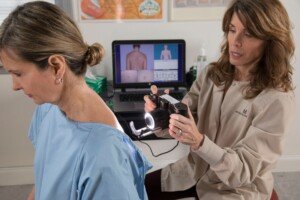
“MoleSafe uses high resolution photographs, and advanced dermoscopy and can find melanomas before they would be identified in a naked eye examination, and would also reduce the need for unnecessary biopsies, unlike what you will find in a typical dermatologist’s office.”
facebook.com/molesafe
Computer Technology Hunts Down Suspicious Moles
Serial digital dermoscopy involves having selected moles photographed.
“MoleSafe uses high resolution photographs and advanced dermoscopy to find melanoma before they are visible to the naked eye,” explains Dr. Bezozo.
“MoleSafe is something that is repeated annually, so that the dermoscopic images can be compared from year to year, making this the most advanced tool for identifying early changes.
“For patients at risk for melanoma, nothing should be taken for granted.
“Early detection is the only cure. Identifying changes not visible to the naked eye are essential.”
People with average risk for melanoma can still take advantage of serial digital dermoscopy for hard-to-see moles on their back or simply for increased peace of mind.

Richard Bezozo, MD
There are more new cases yearly of skin cancer than breast, prostate, lung and colon cancers combined. The MoleSafe system produces high-resolution diagnostic images and creates a profile for your skin that’s monitored for any changes in moles.
Lorra Garrick has been covering medical, fitness and cybersecurity topics for many years, having written thousands of articles for print magazines and websites, including as a ghostwriter. She’s also a former ACE-certified personal trainer.
.
Top image: Freepik

Trouble Swallowing, Thick Mucus in Back of Throat: Causes, Solutions

Here’s the causes of thick drainage in back of throat and trouble swallowing.
Regarding what causes thick drainage in the back of the throat, along with trouble swallowing, the expert source is Dr. Stacey Silvers, MD, of Madison ENT & Facial Plastic Surgery in NYC, who is board certified in otolaryngology.
“Thick drainage in the throat is otherwise known as post-nasal drip,” says Dr. Silvers.
“This can be caused by excess mucous production from allergies, an upper respiratory infection or acid reflux.”
How does acid reflux cause thick drainage in the back of the throat and difficulty with swallowing?
“Thick mucous is produced to coat the throat when stomach acid goes into the larynx area,” says Dr. Silvers.
“Acid is a pH of 2 and can be highly corrosive without this thick protective mucous.
“The mucous can be annoying and causes chronic clearing of the throat.”
It can also lead to bad breath.
“Once the reflux is treated, the mucous wont be required to protect the throat and will reduce.”
Dr. Silvers also points out that acid reflux can be caused by anxiety and/or stress.
Treatment often involves addressing the underlying cause, such as managing allergies with antihistamines, using nasal decongestants or saline sprays for sinus congestion, or treating infections with appropriate medications.
Staying hydrated and using a humidifier can also help manage symptoms.
How much water do you drink daily? Keep track; strive to consume six, eight-ounce portions of water on a daily basis and see if this doesn’t improve the thick mucous in the back of your throat and its associated symptoms: frequent clearing of the throat, a cough that worsens overnight, and a scratchy, sore or burning sensation in the throat.
Also make an effort to better manage any anxiety or stress going on in your life. Pick your battles wisely.
Exercise such as strength training or hiking will help soften the blow of stress and anxiety.
 An NYC expert in ear, nose and throat care, Dr. Silvers has been named among America’s Top Physicians and Surgeons in facial plastic surgery and otolaryngology numerous times since 2003. Dr. Silvers is an expert in the field of minimally invasive rhinology, resolving patients’ breathing and sinus problems with simple in-office procedures.
 Lorra Garrick has been covering medical, fitness and cybersecurity topics for many years, having written thousands of articles for print magazines and websites, including as a ghostwriter. She’s also a former ACE-certified personal trainer.
Top image: Shutterstock/Aaron Amat

Tongue Has Red Spots: Is This Cancer?

There are numerous causes of red spots on the tongue, and unfortunately, cancer is one of them.
However, this isn’t the most likely cause of what you might perceive to be red “spots” on your tongue. Let’s first look at non-malignant causes.
“Vitamin B12 deficiency can cause red spots on the tongue,” says Richard Bezozo, MD, President of MoleSafe, the world’s most advanced melanoma screening program.
He says that scarlet fever and strep infection can also cause red spots on the tongue.
“Thrush, a yeast infection of the mucus membrane lining the mouth and tongue, can also cause red spots,” says Dr. Bezozo.
“Common causes of yeast infection oral candidiasis include antibiotic use, HIV infection or other immunodeficiency conditions.”
Tongue Cancer Appearance
Tongue cancer often presents with distinct changes in the appearance of this muscle.
One of the first signs of this condition is the development of a red or white patch on the tongue.
While this discolored area might initially appear as a small spot, it is more commonly observed as a larger patch or splotch that can appear anywhere on the tongue’s surface.
As the cancerous lesion progresses, it typically exhibits raised edges and becomes increasingly firm to the touch.
The texture of the lesion may become harder over time, making it more noticeable.
In advanced stages, the center of the lesion often becomes ulcerated and prone to bleeding.
This bleeding can occur easily with applied pressure, such as during activities like chewing or swallowing.
The lesion may break open more readily under such conditions, leading to discomfort and additional bleeding.
These symptoms are significant and warrant prompt medical attention.
Other Symptoms of Tongue Cancer
• Pain when swallowing or without
• The tongue is stiff.
• Feeling that something is stuck in the throat.
• Problems chewing or a stiff-feeling jaw
• Tasting blood (from bleeding in the mouth)
• Numbness involving the mouth
Risk Factors
• Any kind of tobacco use — smoking, chewing; cigarettes, cigars, pipes
• Heavy drinking (combination of smoking and heavy drinking significantly boosts risk)
• Standard American diet: lots of processed foods such as luncheon meats, microwavable dinners and side dishes, fast foods, bakery, and few fruits and vegetables
• History of an HPV infection
• Family history of oral cancer
• Male, over age 50, but don’t let this make you think that women are immune.
• Chronic acid reflux (GERD)
• Exposure to asbestos or formaldehyde
• Poor oral hygiene
• Bad fitting dentures
Malignant lesions may be tender. And this can’t be said too much: Beware of red spots on the tongue that bleed; this is a strong indication of cancer.
Lorra Garrick has been covering medical, fitness and cybersecurity topics for many years, having written thousands of articles for print magazines and websites, including as a ghostwriter. She’s also a former ACE-certified personal trainer.
Richard Bezozo, MD
There are more new cases yearly of skin cancer than breast, prostate, lung and colon cancers combined. The MoleSafe system produces high-resolution diagnostic images and creates a profile for your skin that’s monitored for any changes in moles.
.
Top image: Shutterstock/sirtravelalot
Sun Spots on Skin vs. Age Spots
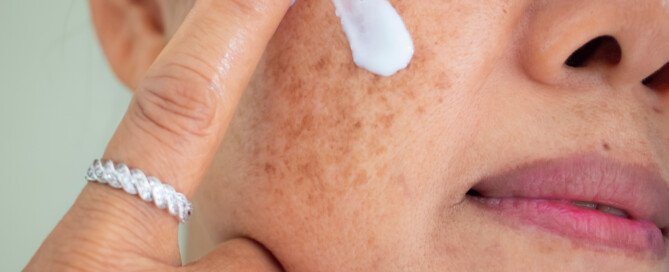
Is a sun spot actually an age spot or what?
And don’t assume that only “old” people get age spots; they can begin in middle age.
“Sun spots and age spots are the same thing, which result from too much sun exposure” says Richard Bezozo, MD, President of MoleSafe, the world’s most advanced melanoma screening program.
These benign lesions are also called liver spots.
“They are most common on sun exposed areas of the skin,” says Dr. Bezozo.
“Sun spots are the result of a buildup of melanin in the skin.”
Small sun spots can sometimes pass as common moles. If you discover what appears to be a new mole, have your dermatologist inspect it with a handheld lens called a dermatoscope.
A new mole in an older person, particularly over age 40, may actually be a melanoma, even if it appears normal.
The term “lentigo” is sometimes used to refer to a sun spot in people of middle age and older. The plural is lentigines, and these can strongly resemble moles.
They are harmless, but any new spot (call it “age” or “sun”) that looks like a mole should be checked out by your doctor.
“Melanin typically spreads throughout the skin as an even tan, but when we age, melanin can clump. Prevention is the best cure because sun damage is cumulative.”
To help prevent sun or age spots, Dr. Bezozo recommends the following measures:
- Avoid the sun between 10 am and 4 pm.
- Use a broad spectrum UVA/UVB sunblock with an SPF of at least 25.
- Wear clothes with built-in sunscreen.
- Wear a wide brimmed hat and sunglasses.
- Avoid sunbathing.
“For people with sun spots, there are some creams available that may reduce some of the darkening; speak to your dermatologist for recommendations,” says Dr. Bezozo.
Richard Bezozo, MD
There are more new cases yearly of skin cancer than breast, prostate, lung and colon cancers combined. The MoleSafe system produces high-resolution diagnostic images and creates a profile for your skin that’s monitored for any changes in moles.
Lorra Garrick has been covering medical, fitness and cybersecurity topics for many years, having written thousands of articles for print magazines and websites, including as a ghostwriter. She’s also a former ACE-certified personal trainer.
.
Top image: Shutterstock/DUANGJAN J

Get Rid of Bitter Taste in Mouth: Doctor’s How-To

A bitter taste in the mouth has many causes, says an ear, nose and throat doctor.
That’s pretty aggravating, a persistent bitter taste in the mouth.
“Many things can cause a bitter taste in the mouth,” explains Dr. Stacey Silvers, MD, of Madison ENT & Facial Plastic Surgery in NYC, who is board certified in otolaryngology.
Dr. Silvers says these causes are as follows: tonsil stones (old food particles combined with oral bacteria), poor dental hygiene, chronic sinus infections (this means old mucus remaining in the sinuses), and last but not least…acid reflux.
Bitter Taste in Mouth Caused by Acid Reflux
Dr. Silvers points out that often, a patient will not feel the so-called heartburn or indigestion, and this makes a diagnosis more difficult to come up with.
“Conservative treatment entails avoiding acidic and carbonated foods,” says Dr. Silvers.
In addition, she advises to refrain from eating about three hours prior to bedtime.
You can play this safe by not eating even “just a small snack.”
Also, prop yourself up on a wedge-shaped pillow (below) “to allow gravity to keep acid in the stomach. If this is not helpful OTC antacids will likely help. If this does not help, see your ENT.”

Source: medcline.com
An NYC expert in ear, nose and throat care, Dr. Silvers has been named among America’s Top Physicians and Surgeons in facial plastic surgery and otolaryngology numerous times since 2003. Dr. Silvers is an expert in the field of minimally invasive rhinology, resolving patients’ breathing and sinus problems with simple in-office procedures.
Lorra Garrick has been covering medical, fitness and cybersecurity topics for many years, having written thousands of articles for print magazines and websites, including as a ghostwriter. She’s also a former ACE-certified personal trainer.
.
Top image: Freepik/benzoix

Foul Morning Taste in Mouth: Causes, Treatments

Many things can cause a foul taste in the mouth, says an ENT doctor.
Sooner or later, most people will find they have a foul taste in their mouth either upon awakening for the day, or upon awakening sometime in the middle of the night.
“Many things can cause a foul taste in the mouth,” says Dr. Stacey Silvers, MD, of Madison ENT & Facial Plastic Surgery in NYC, who is board certified in otolaryngology.
“Poor dental hygiene, tonsil stones (buildup of old food particles mixed with oral bacteria), chronic sinus infections (old mucous sitting in the sinuses) and acid reflux.”
Acid Reflux As Cause of Overnight Foul Taste in Mouth
“Stomach contents that reflux up is a common cause of a foul taste and foul breath,” says Dr. Silvers.
“Often patients will not feel heartburn or indigestion, making the diagnosis more difficult.”
How does the reflux, though, lead to the foul taste?
Once in your throat or mouth, this acidic mixture coats your tongue, teeth and soft tissues, altering taste receptors and disrupting saliva’s normal cleansing.
The acid de-mineralizes tooth enamel, causes bacterial overgrowth and raises your mouth’s pH.
This creates an environment where microbes — that don’t smell too nice — flourish.
Bile, if present, adds a bitter or sour note to the taste.
Together, these changes leave a lingering foul, sometimes metallic, or a sour taste upon waking.
Your morning mouth essentially reflects the overnight exposure to corrosive digestive fluids.
Treatment for Foul Taste in Mouth that Occurs Overnight
“Conservative treatment entails avoiding eating three hours before bed and sleeping on a back wedge to allow gravity to keep acid in the stomach,” says Dr. Silvers.
“With sinus issues patients will have sinus pressure over the cheeks and/or forehead.
“Natural sinus washes [with a neti pot] can be helpful to clear old mucous from the nose and sinuses.”

Neti pot. Shutterstock/kavzov
Dr. Silvers also says, “Reflux medication over the counter can be tried for possible reflux.”
There are several brands to choose from; if one doesn’t work, it’s possible that another one will.
An NYC expert in ear, nose and throat care, Dr. Silvers has been named among America’s Top Physicians and Surgeons in facial plastic surgery and otolaryngology numerous times since 2003. Dr. Silvers is an expert in the field of minimally invasive rhinology, resolving patients’ breathing and sinus problems with simple in-office procedures.
Lorra Garrick has been covering medical, fitness and cybersecurity topics for many years, having written thousands of articles for print magazines and websites, including as a ghostwriter. She’s also a former ACE-certified personal trainer.
Top image: Shutterstock/Marius Pirvu








Morning Nose Gunk May Be Caused by a Dry Climate

Are you sick of waking up every morning with all this dried gunk in your nose, making it feel as though you’re not breathing in enough air?
If you live in a dry climate such as Colorado, you may have dry-air-induced morning nose snot. In fact, in Colorado, it goes by a name:
“Colorado nose” refers to the condition of awakening with dry mucous plugging up your nasal passages as as result of a dry climate.
But you don’t have to live in Colorado to have “Colorado nose.”
Any dry climate can cause the mucus in your nose to pile up come morning.
What makes dry snot worse than moist gooey snot is that the dry kind is difficult to blow out. It just stays stuck in there.
Desperation can easily lead to using tweezers to pluck out the dry chunks of mucus plugging up your nostrils.
Some people fare better with a Q-tip swab, or even a long fingernail.
“Dry cold thin air can irritate the mucous membranes and dry the nasal mucous,” says Dr. Stacey Silvers, MD, of Madison ENT & Facial Plastic Surgery in NYC, who is board certified in otolaryngology.
“Areas of higher altitude have dryer thinner air,” she continues. “Over time most people living in these climates will adjust. People visiting the mountains on holiday would benefit from a humidifier especially at night.”
The humidifier should be placed near the head but not so close that the hot steam coming from it is uncomfortable. The door to the room should be closed for a maximum moistening effect of the air.
Hydration

Freepik.com
Dr. Silvers also says, “It is also important to keep hydrated. Occasionally nasal moisturizers like saline sprays or Rhinaris nasal spray or ointment are over the counter and can be used a few times per day for dryness in the nose.”
A neti pot is another alternative for getting rid of dry crusty gunk in the nose when you wake up.
An NYC expert in ear, nose and throat care, Dr. Silvers has been named among America’s Top Physicians and Surgeons in facial plastic surgery and otolaryngology numerous times since 2003. Dr. Silvers is an expert in the field of minimally invasive rhinology, resolving patients’ breathing and sinus problems with simple in-office procedures.
Lorra Garrick has been covering medical, fitness and cybersecurity topics for many years, having written thousands of articles for print magazines and websites, including as a ghostwriter. She’s also a former ACE-certified personal trainer.
.