

How Many PVCs Mean Occasional vs. Frequent per Hour or Day?

If you’re having so many PVCs that you measure their frequency by the hour, this may have you fearful that you’re afflicted with frequent PVCs.
Per hour, per day, how many premature ventricular contractions you have will vary when compared to others who believe they too suffer from “frequent” or “a lot” of these annoying – and sometimes very scary – heartbeat sensations.
But thinking that you have frequent or a lot of PVCs can be a very subjective interpretation.
Electrophysiologist’s Answer
So I asked an electrophysiologist the big question. Just how many PVCs per day or hour must one have in order for the condition to be considered frequent as opposed to occasional?
“Frequent PVCs are defined as having 15,000 or more per day, whereas five to ten PVCs per hour (or less) are considered occasional,” says Andrea Natale, MD, cardiac electrophysiologist and executive medical director of the Texas Cardiac Arrhythmia Institute at St. David’s Medical Center.
So, 15,000 PVCs per day = on average, 625 per hour, if you include the hours during sleep.
Frequent PVCs, then, would mean, on average, 10.4 of these “skipped” or “extra” beats every minute.
Keep in mind that someone may go many minutes or even a few hours without having a single premature ventricular contraction, but then over 2,000 occur in just the next hour alone.
Thus, the 24-hour tally won’t be evenly spread out among 24 hours.
This is why the concept of frequent vs. occasional is measured per day rather than per hour.
Five to 10 PVCs per hour, on the other hand, are, as Dr. Natale says, considered an occasional occurrence.
This will be surprising to many people who have health anxiety over their PVCs, because from their frightened point of view, five to 10 “flutters” per hour seems excessive.
But imagine having 10 PER MINUTE.
According to the math, occasional PVCs means 120 to 240 per day. If you’ve documented a lot more than this, but also a lot less than 15,000, you’re somewhere in the range of moderate frequency.
High frequency would mean you’d be feeling your heart jumping, thumping, fluttering or skipping nearly constantly every waking moment (10.4 or more per minute) or for large chunks of time out of the day.
Hopefully, this math will put things in perspective for you. But there’s a little more to consider.
“The prevalence of PVCs increases with age,” says Dr. Natale, “with less than one percent of ambulatory ECG recordings demonstrating PVCs in those younger than 11 years of age, compared with more than 69 percent in those 75 years of age or older.”
Dr. Natale’s greatest reward is restoring his patients to a life free of cardiac arrhythmia. He pioneered a circumferential ultrasound vein-ablation system to correct atrial fibrillation and performed the procedure on the world’s first five patients.
 Lorra Garrick has been covering medical, fitness and cybersecurity topics for many years, having written thousands of articles for print magazines and websites, including as a ghostwriter. She’s also a former ACE-certified personal trainer.
.
Top image: ©Lorra Garrick

Heart Racing in Middle of Sleep: 200 Beats/Minute
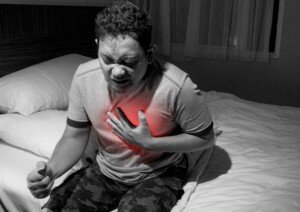
If you’ve accurately taken your pulse in the middle of the night to be 200 beats per minute or even 150, after being awakened by this furious heart rate, you should not just stew over this and keep trying to guess what happened. (more…)

Why Does Angina Cause Pain to Spread to Left Arm & Shoulder?

“It’s a common misconception that angina causes pain to spread to the left arm and shoulder,” explains Charles C. Cummings, MD, Interventional Cardiologist, LifeBridge Health Cardiovascular Institute in Baltimore, MD. (more…)
Why Can Angina Get Worse with Exercise?

You’d think that exercise would benefit the heart and thus improve the angina condition, but the truth is the opposite:
Exercise will make angina get worse. (more…)
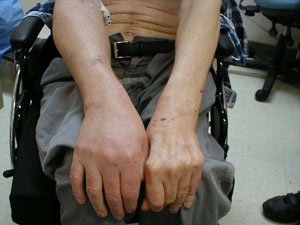
Can You Get a DVT in Your Arm?
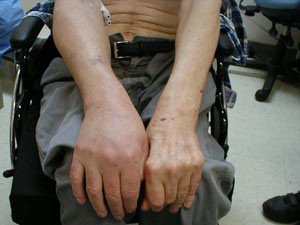
Yes, a deep vein thrombosis can occur in the arm, not just in the legs.
The risk factors for a DVT occurring in an arm are the same as for the leg — generally speaking.
But there’s a subset of risks that are much more applicable to blood clot formation in an arm.
Symptoms of an Arm DVT
• Swelling of the arm as the blood builds up, since the blood can’t get past the clot.
• Pain or tenderness in the arm, caused by tissue damage.
• Red or purplish color to the skin.
• Arm feels warm, due to irritated blood vessels.
• Bulging veins (when previously they weren’t).
• Hand weakness
• You won’t necessarily have every one of these symptoms and sometimes may not have any symptoms at all.
• Typically only one arm is affected.
DVT Risk Factors
“DVT, or deep venous thrombosis, is the process of blood clotting in any large veins, which is abnormal,” says Morton Tavel, MD, Clinical Professor Emeritus of Medicine, Indiana University School of Medicine, and author of “Health Tips, Myths and Tricks: A Physician’s Advice.”
“Anything that slows the venous flow excessively, such as heart failure or prolonged sitting, motionless standing or the presence of dilated (varicose) veins, will increase the likelihood of clotting,” continues Dr. Tavel.
Additional risk factors are uninterrupted long periods cramped in a seat during long air or road travel, obesity, smoking, birth control pills and joint replacement surgery.
“Clotting in veins is unusual but enhanced by slowing of blood flow, and because of the slowing effects of gravity, it is encountered almost exclusively in the lower extremities,” says Dr. Tavel.
“By contrast, clotting in the arms and other parts of the upper body is rare since venous flow is not retarded by gravity, and therefore, flow is brisk unless retarded by some type of obstruction, which is unusual.”
A venous blood clot in an upper limb is indeed highly unusual – enough so that nobody should ever have anxiety over developing one of these.
Nevertheless, upper extremity DVT’s do occur, and they actually have a different set of risk factors more applicable to them.
• Bone fracture
• Medical procedure such as catheter insertion
• Strenuous movement (e.g., pitching a baseball, moving furniture). This risk is VERY rare and by no means contraindicates intense or heavy exercise.
• Genetic blood clotting disorder
• There are cases in which an arm DVT has no known cause.
The presence of five identified risk factors for DVT development in the arm in no way contradicts the rarity of this event.
What to Do
Stop worrying. But … if you do suspect a deep vein thrombosis in your arm, and especially in your leg, you need to go to the ER.
An emergency room setting will allow prompt diagnostics.

Dr. Tavel’s medical research includes over 125 publications, editorials and book reviews in peer-reviewed national medical journals. He was formerly director of the cardiac rehabilitation program at St. Vincent Hospital in Indiana. mortontavel.com
 Lorra Garrick has been covering medical, fitness and cybersecurity topics for many years, having written thousands of articles for print magazines and websites, including as a ghostwriter. She’s also a former ACE-certified personal trainer.
ALS vs. MS Symptoms: What Really Are the Differences?

Some similarities between ALS and MS symptoms are frightening.
But most differences are very reassuring to those who can’t stop worrying that they have the fatal motor neuron disease.
A person with health anxiety may be fearing only MS, while others with health anxiety may be wondering which one of the two they have.
Symptoms Common to MS but not to ALS
• MS usually impacts one side of the body; ALS affects the entire body, though may start out in a small area on one side, such as one arm first.
• MS symptoms take their sweet time progressing, while ALS symptoms typically progress fairly quickly, e.g., no such thing 12 months of ALS symptoms being confined to just the legs.
• MS symptoms can come and go. You’ve probably heard someone say, “My multiple sclerosis is in remission.” Remission can last for months.
There are cases in which MS patients have been virtually bedridden, only to be eventually up and around in the community. ALS symptoms, once they present, are there to stay, and only get worse.

• Symptoms of multiple sclerosis may include issues with taste, smell and sight – which are not affected by ALS.
• MS may affect cognition, which is not affected by ALS.
The Multiple Sclerosis Pattern
“MS attacks can present as many different symptoms,” says Joseph Krainin, MD, board certified neurologist and sleep doctor.
“Common MS symptoms include blurry vision in one eye, dizziness or imbalance, weakness or numbness on one side of the body or from the chest down, and difficulty walking.”
Why Some People Get Confused Over ALS vs. MS Symptoms
Both conditions—in the early stages—can present with similar symptoms.
They are muscle weakness and stiffness, fatigue, a loss of coordination and control, and difficulty with moving the limbs.
In fact, this exact set of symptoms can describe numerous possible conditions.
Depending on the words googled, a person with health anxiety might end up convinced that they have a vitamin deficiency, fibromyalgia, myasthenia gravis, repeated transient ischemic attacks or a brain tumor.
Define “Muscle Weakness”
The concept of “muscle weakness” can be subjective. Obviously, there’s an issue with muscle weakness when suddenly you have difficulty carrying a gallon of milk across the room and struggle to lift one leg as you climb stairs.
But those with health anxiety are capable of perceiving a pathological weakness when at the gym, their heaviest bench press is 225, whereas for the preceding four gym sessions, they were benching 235.
Another example of “perceived weakness” is when someone begins imagining that it’s more difficult than usual to unscrew jar lids (but they do get unscrewed) or haul out heavy garbage bags (but they do get hauled out).
Any number of benign variables can explain the perceived weakness.
Some people with health anxiety immediately zoom in on multiple sclerosis, while others promptly zero in on ALS.
What determines which, in many instances, is what keywords a person searches for online. This then determines what pops up in the search results.

If it’s MS sites, the person is more likely to start fearing they have MS symptoms.
If it’s ALS information, their mind will tune into ALS. And of course, some fear both.
 Double board certified in sleep medicine and neurology, Dr. Krainin is founder and president of Singular Sleep, LLC, an award-winning online sleep center.
Lorra Garrick has been covering medical, fitness and cybersecurity topics for many years, having written thousands of articles for print magazines and websites, including as a ghostwriter. She’s also a former ACE-certified personal trainer.
Top image: Shutterstock/srisakorn wonglakorn
Sources:
cdc.gov/als/whatisals.aspx
webmd.com/multiple-sclerosis/ms-or-als

Chest Pain, Need to Burp but Can’t: Future Heart Attack?

Your worst fear is true: Chest pain and a burp that you can’t get out can mean there’s something wrong with your heart.
Can Angina Cause Pain Between Shoulders when Brisk Walking?
If every time you go for a walk you feel pain between your shoulders, this actually could be a sign of heart trouble, namely angina.
In fact, the odds of this being a musculoskeletal problem aren’t particularly high, since soft tissue or joint problems that cause pain between the shoulders would be triggered by different activities and movements, not just merely walking.
This would be especially true if your brisk walks don’t involve a hardy arm pump that may conceivably strain deconditioned upper back muscles.
Angina is highly suspect if:
- Other movements that involve retraction or pulling back of the upper back muscles don’t cause pain.
- The pain is predictable when you go on fast walks – especially if it is between the shoulders and kicks in almost immediately.
If the pain between your shoulders tends to dissipate as the walk goes on (even at a quicker pace), this doesn’t mean it can’t possibly be heart related.
Angina usually subsides when the physical exertion ceases. But there are cases in which it subsides with continuation of the activity.
This doesn’t mean you’re in safe territory. If you have angina, even if it vanishes as the walking or other activity continues, you STILL have blocked coronary arteries! You can’t ignore this!
Angina Can Cause Pain Where You Least Suspect It
“Angina can absolutely cause pain between the shoulders when someone is walking briskly or doing any kind of similar physical activities,” says Charles C. Cummings, MD, Interventional Cardiologist, LifeBridge Health Cardiovascular Institute in Baltimore, MD.
“This would be considered an atypical symptom because people do not usually associate this type of pain with having angina.
“Typical symptoms of angina involve a squeezing pain or pressure in the chest that radiates to the left arm and shoulder or jaw.
“In general, atypical pain is most often experienced by women and people with diabetes, but men may also experience it.”
The pain between your shoulders while walking fast or even slower, that disappears soon after or once the walking ceases, is suspect for angina ALSO if any of the following applies to you:
• Overweight
• Smoker
• Junk food diet
• Poor sleep habits
• High blood pressure
• Diabetes
• Chest pain with exertion
• Feeling more fatigued lately without explanation
• Strong family history of heart disease
• Age: men over 45; women over 50
These are risk factors for heart disease. Exertional angina occurs when there’s not enough blood flowing through the heart due to clogged coronary arteries.
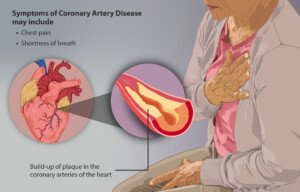
myupchar. com
Another risk factor for coronary artery disease is a lifelong absence of at least moderate effort aerobic exercise.
Or, to put that another way, you’re a “newbie” when it comes to structured cardio exercise.
Even a neighborhood walk can trigger angina in those with bad-enough coronary heart disease.
The absence of chest discomfort does not exclude angina as the cause of pain between the shoulders.

Dr. Cummings holds several cardiovascular device patents and is board certified in internal medicine.
Lorra Garrick has been covering medical, fitness and cybersecurity topics for many years, having written thousands of articles for print magazines and websites, including as a ghostwriter. She’s also a former ACE-certified personal trainer.
.
Top image: Shutterstock/Africa Studio




Angina Back Pain vs. Musculoskeletal Back Pain: Comparison
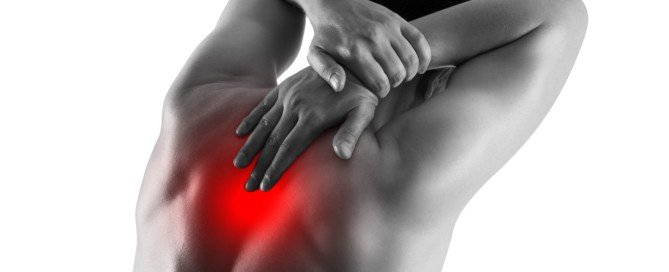
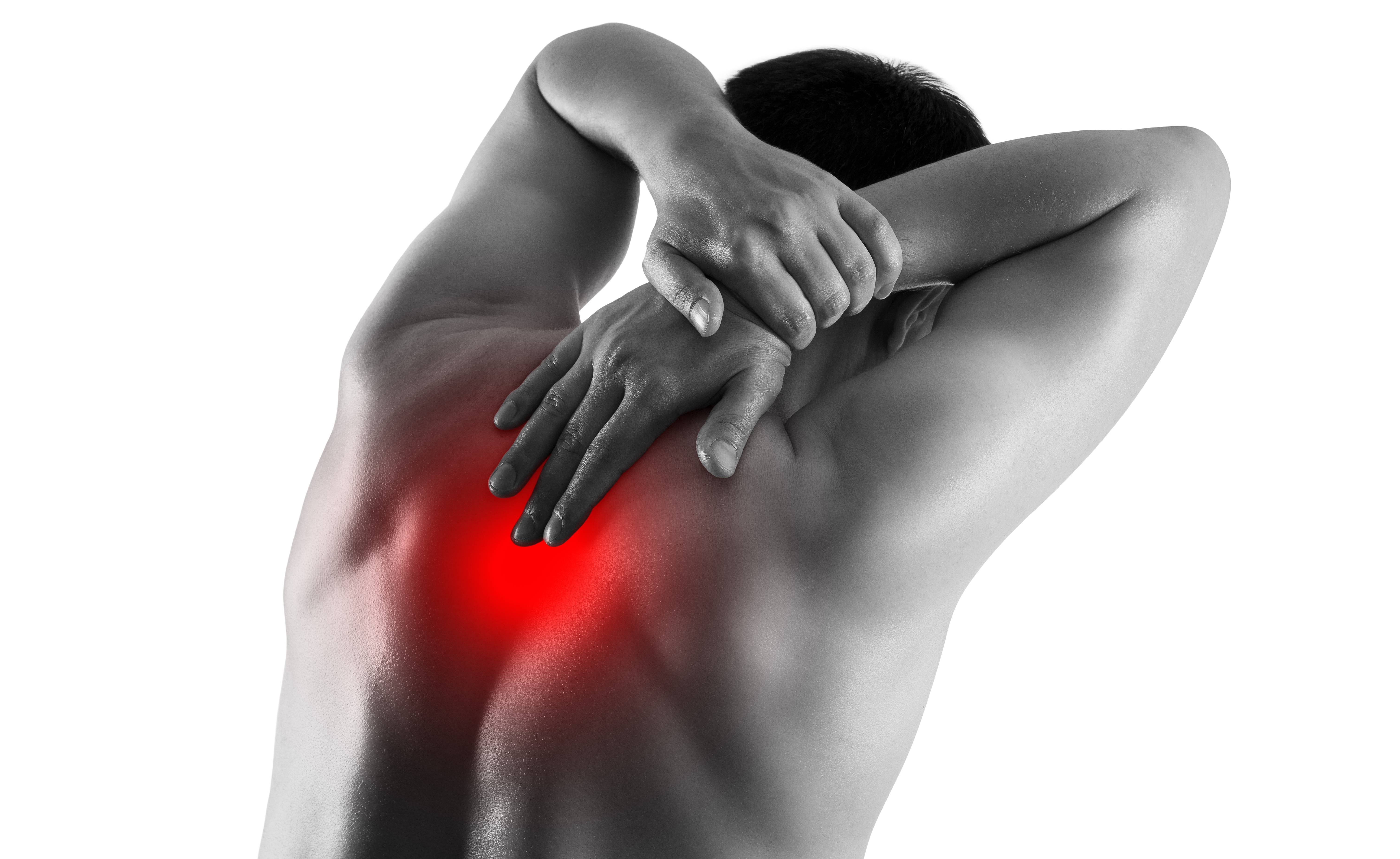
Blocked arteries can cause back pain and so can strained muscles; unfortunately the pain from both can feel very similar.
However, there are clues…
“It’s not always easy to differentiate between angina back pain and musculoskeletal back pain, but there are clues,” says Charles C. Cummings, MD, Interventional Cardiologist, LifeBridge Health Cardiovascular Institute in Baltimore, MD.
How to Tell Difference Between Angina Back Pain and Muscle Back Pain
Dr. Cummings explains, “For example, if you put your arm in one specific position and it causes pain, but in another position, the pain completely goes away, it’s less likely to be a cardiac issue.
“Also, if you press on the same area of your chest or arm and it hurts, but it goes away when you stop, that’s more likely to be musculoskeletal…not 100 percent but more likely.
“Another example of pain that can be cartilage-related and not angina can be with people who have arthritis who move into a certain position and can duplicate the pain and stop it when they change positions.”
Whether the pain in one’s back is one-sided or seemingly equal on both sides is not indicative of likelihood of a heart problem.
Furthermore, muscle related strains or pulls may be one-sided or bilateral.
Got “Costo”?
“Additionally, there is a condition called costochondritis,” continues Dr. Cummings.
This condition, which many bodybuilders and muscle-building athletes are familiar with, “is inflammation in the joint between the sternum and the ribs that causes pressure which is not cardiac related.”
The discomfort is typically in the chest but can affect the back.
Spasms
“Another atypical type of angina is called Prinzmetal angina,” says Dr. Cummings.
“This is when there is a coronary spasm that’s not from a fixed blockage from arteriosclerosis (also called hardening of the arteries).
“This type spasm frequently happens at night when someone is lying down, and all of a sudden, he or she experiences severe pain. Prinzmetal angina is relatively rare compared to the typical angina.
While the above examples may not be [typical; clogged arteries] angina, without proper testing, there is no way to be absolutely certain.”
Physical Exertion Is Very Telling
Dr. Cummings explains, “What is more certain is that when individuals have chest, shoulder, arm or back pain while exerting themselves, that’s more typical of angina.

Shutterstock/MikeSaran
“Additionally, if someone is sitting down, completely relaxed and has chest pain, that could be an indication of a severe blockage to the heart, and if it gets worse, the artery may be very severely blocked.”
This is called unstable angina and is a very serious condition that needs immediate medical attention.
If you’re an athlete who’s been getting along fine and have had your share of musculoskeletal back pain, but this time the issue seems to have no traceable cause, you should get your heart checked out just to play safe.
Musculoskeletal back pain that does not involve cartilage or tendons – just the muscle as far as soft tissue – should begin resolving soon after avoiding the suspected offending activity such as overdoing it with the deadlifts.
Muscle related back pain, including in the upper region, can be quite painful, and depending on the mechanism of injury and type of injury, can take weeks to subside.
This type of pain is very responsive to movement, though may still hurt when you’re sitting still. Slight movements can set it off.
This descriptor of the back pain points heavily towards a musculoskeletal cause rather than angina.
Dr. Cummings holds several cardiovascular device patents and is board certified in internal medicine.
Lorra Garrick has been covering medical, fitness and cybersecurity topics for many years, having written thousands of articles for print magazines and websites, including as a ghostwriter. She’s also a former ACE-certified personal trainer.
Muscle Knots: Don’t Worry, but Here Are Causes & Solutions

Muscle knots can cause anxiety over possibly having a serious disease, but it’s a benign condition that has different causes and treatments.
Do not panic if the professional who’s massaging your back, shoulders or neck suddenly says, “You have a big knot in your muscle.” Don’t worry; this doesn’t mean a serious disease.
The massage therapist will then proceed to “work out the knot.”
In minutes you’ll feel relief. Don’t let the layperson term “knot” scare you.
What is a muscle knot?
• “Muscle knots are areas of a muscle that are excessively tight and overly contracted, many times to the point of being painful,” says Dr. Tom Carpenter, corrective exercise specialist, certified personal trainer and chiropractor, inventor of Stand Corrected™, a portable harness-like stretching tool that helps alleviate back, neck and shoulder pain. The contracted muscle fibers are not able to release.
• They thus remain in a tightened or tense state.
• They are very local, and the spot that’s tender upon pressing has a small surface area – up to the size of a quarter.
• “Some knots are only painful when direct pressure is applied, and these would be considered to be latent trigger points,” says Dr. Carpenter.
• There may be multiple knots in a specific area.
• The medical term is myofascial trigger point.
Origin of Muscle Knots
• “Muscle knots can be caused by overuse, heavy lifting or repetitive movements,” says Dr. Carpenter.
• “Also prolonged poor posture from, for example, too much texting or being hunched over a computer resulting in strains which produce tight and knotted muscles.”
• Dr. Carpenter also explains, “Spinal misalignments can many times result in associated myofascial trigger points as well, and this should be checked by a chiropractor.”
• Don’t be surprised if your massage therapist, upon beginning to work your neck and shoulder area, asks if you’ve been under a lot of stress lately.
Dr. Carpenter points out, “Emotional and mental stress shouldn’t be ruled out either when experiencing this problem.”
• Nutritional deficiency
Treatment for Muscle Knots
“Some solutions would be to massage the painful areas and try to work them out as well as using a heat pad on the area, assuming the pain is not from a recent acute injury,” says Dr. Carpenter.
Massage therapy such as deep tissue massage will work wonders. The caveat is that it’s not cheap.
However, rather than having hour-long massages you can have 30 minute sessions to save money yet still reap the treatment benefits.
As the therapist “works out” the knot, it usually hurts (tenderness), but then it starts feeling good. The therapist can then press upon the area where the knot was, and you’ll no longer feel the pain.
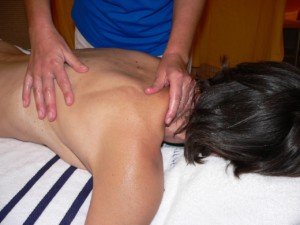
However, rather than having hour-long massages you can have 30 minute sessions to save money yet still reap the treatment benefits.
Foam rollers. If you use a gym, you’ve probably seen on many occasions people rolling a body part against a foam roller on the floor.
I’ve done this with the area where the butt muscle ties into the upper hamstring (“glute tie-in” or “hamstring-glute junction”).
And it actually works when you’re patient and relaxed, rhythmically rolling.
Improve posture. Avoid slumping in your computer chair and slouching while standing.
“Gentle stretching of the muscle can also be helpful,” says Dr. Carpenter.
Take your hands off the treadmill. Holding onto the treadmill creates an unnatural walking gait that skewers posture.
This can contribute to or cause undue tension in the neck, shoulder and upper back muscles.
If you think you’ll fall off without holding on, slow the speed and/or lower the incline.
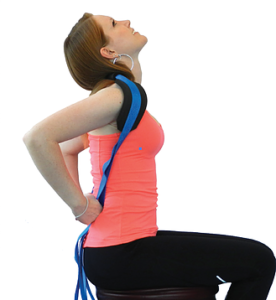
Stand Corrected™
Dr. Carpenter recommends seeing a chiropractor if the above treatments fail to resolve your muscle knots.
Muscle knots are very common, especially in athletes, workout enthusiasts and muscle builders. Do not fear them; just treat them.
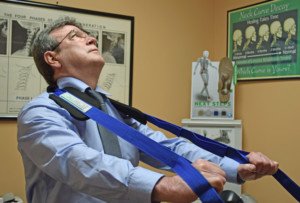
Photo credit: Aleesia Forni