Melanoma & Mole Borders: Signs of Cancer vs. Normal
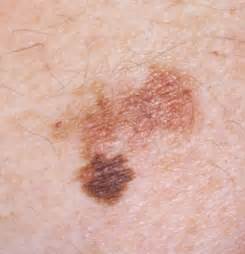
There’s far more to knowing about the borders of a melanoma than what you think.
First of all, a jagged border of a mole doesn’t always mean melanoma.
There are many variables to consider when scrutinizing the borders of your moles.
“Benign mole borders are usually smooth and well-defined,” says Caroline A. Chang, MD, a board certified dermatologist and founder of the Rhode Island Dermatology Institute.
Dr. Chang explains, “Suspicious mole borders are often fuzzy, scalloped, irregular, asymmetric.
“I have often heard melanomas recalled as having a fuzzy border or looking like a ‘splotch.’”
Using Magnifying Lenses to Inspect Moles
When you examine your moles for your monthly self-inspection, it’s advisable to abstain from using a magnifying glass, as this will accentuate jaggedness in the border of a benign mole that looks pretty normal without magnification.
Viewing magnified moles, which accentuates their features, can cause a lot of anxiety.
The more magnified a mole, the more “uneven” or “notched” the border appears to the layperson.
Every year I undergo elective serial digital dermoscopy, in which moles are photographed; the images are input into a computer database and rated for index of suspicion for melanoma.
I’ve seen my normal moles magnified on a computer screen – big images. The borders appear quite jagged under this magnification.
Even a simple magnifying glass can make a benign mole look suspicious for melanoma – to the untrained eye.
So don’t get into the habit of using magnifying glasses during self-exams. The only exception to this guideline is if you have presbyopia: blurry up-close vision that requires reading glasses.
This eye condition usually starts setting in in the mid-40s. It will prevent you from crisply viewing a mole if you’re up close and personal to it, such as with moles on your shin or forearm.
But people with good up-close vision really should not use any magnification lenses.
Has the Mole Always Had a Jagged Border?
If a mole’s border looks rather uneven or erratic to the naked eye, this is suspicious, but it doesn’t always mean melanoma.
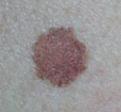
Have a dermatologist inspect it with a dermatoscope. All moles, too, should be viewed through this dermatologist’s tool.
Conversely, sometimes melanomas have smooth borders. Or, the melanoma can be starting up in the center or inside the border of a mole that has a round smooth border.
Once you get acquainted with your moles, make a note of the ones with uneven or irregular borders.
The longer that time passes during which you don’t detect any changes in these moles, the more reassuring this will be that they’re benign.
But if you continue to worry, request a biopsy. It’s normal to keep wondering if a mole has always had particular border features.
Serial Digital Dermoscopy
You do not need to have a large number of moles or “funny looking” moles to have serial digital dermoscopy.
If you’ve been diagnosed with dysplastic nevi (funny looking moles), your insurance may cover serial digital dermoscopy.
If your insurance doesn’t, have it done anyways. The peace of mind is incredible, and this technology really does make a difference. The cost will be around $250.
The computer database may rate a mole in the “suspicious” category, leading to a biopsy that confirms a very early melanoma that was not evident to the naked eye or even through a dermatoscope.
The computer software can detect if a mole’s border needs further evaluation.

Dr. Chang practices general and cosmetic dermatology, and has particular expertise in melanoma and the use of dermoscopy for mole monitoring.
 Lorra Garrick has been covering medical, fitness and cybersecurity topics for many years, having written thousands of articles for print magazines and websites, including as a ghostwriter. She’s also a former ACE-certified personal trainer.
Can You Build Muscle without Exercise? No, No and No

When people write articles titled “How to build muscle without exercise,” they’re playing with semantics to trick you into thinking you can build muscle without exercise. (more…)
Does Lifting Groceries Count As Strength Training?

Lifting and carrying heavy groceries, though difficult for a de-conditioned woman, does not count as strength training.
If it did, every mom out there who shops for her kids would have visible muscle development. I don’t mean big muscles, but the look of toned arms. (more…)
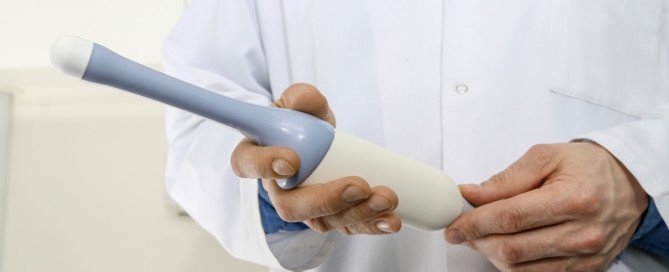
Transvaginal Ultrasound Pain Intolerable? Cause and Solutions

If any penetration, including that from a transvaginal ultrasound, is unbearably painful, it’s likely you have a particular condition that’s often misdiagnosed. (more…)
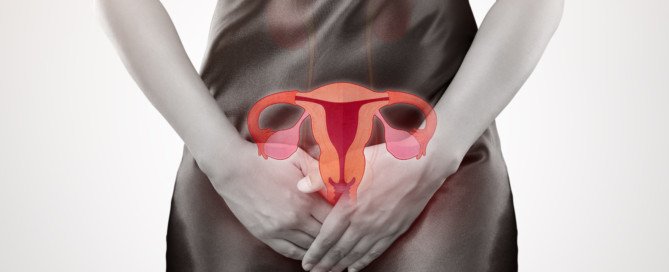
Doctors Explains How Fast Uterine Cancer Grows
Many uterine cancer patients want to know how fast this disease grows, and many women who fear they might have it also want to know its growth rate.
So just how fast can uterine cancer grow? (more…)

Can Ovarian Cancer Cause Numbness in a Leg?

If you’re experiencing unexplained numbness in a leg, this could be caused by ovarian cancer.
But is it most likely ovarian cancer?
The answer depends on whether or not you’re experiencing other symptoms that are classic for this disease, such as loss of appetite, a distended and bloated stomach, pelvic or lower abdominal cramps and heaviness on one side of the pelvis.
Leg Numbness Not Caused by Ovarian Cancer: Still Potentially Serious
“Leg numbness should be immediately evaluated because this can be due to serious medical problems such as nerve compression in the pelvis, either from a spinal abnormality, neuropathy or tumor compressing a nerve,” says Mylaine Riobe, MD, founder of Riobe Institute of Integrative Medicine.
Dr. Riobe, who’s board certified in ob/gyn and integrative medicine, is the author of “The Answer to Cancer.”
“Ovarian tumors large enough to compress the nerves in the pelvis can cause leg numbness,” says Dr. Riobe.
If this isn’t frightening enough, there are cancers other than ovarian that can cause a numb sensation in a leg by pressing on nerves.
These include cervical cancer and tumors on the spine.
Do not confuse a “tingling” sensation in a leg with actual numbness.
It’s normal for legs to tingle or “feel numb” from time to time as a result of external mechanical pressure on a nerve.
And when this happens you can still actually feel your legs with your fingertips, even though you might think, “My leg feels numb.”
The tingling or prickly feeling is usually caused by innocent nerve compression from sitting on a toilet for too long, sitting in your computer chair or TV sofa for too long in the same position, prolonged leg crossing or perhaps a prolonged compressing position during sleep – which can make your leg feel “dead.”
And you’ll notice that the tingling or “pins and needles” disappears after the source of external compression is removed.
While some women fear ovarian cancer might be causing numbness in a leg, other women (and men) may panic over the idea of a DVT: deep vein thrombosis.
Dr. Riobe says, “Leg numbness can also be caused by a blood clot in a major blood vessel or nutritional deficits leading to poor nerve conduction or circulation.”
Data Non-Existent
There is no data that gives a percentage of likelihood of what’s causing numbness in a leg.
For example, nobody can say, “Okay, the odds that numbness in a leg is being caused by ovarian cancer is 23 percent; the odds that it’s being caused by diabetes is 55 percent; fibromyalgia, four percent.”
However, the likelihood that numbness in a leg is being generated by an ovarian tumor increases if other suspicious symptoms are present, such as, as mentioned, abdominal distention (from fluid buildup in the abdominal cavity caused by the tumor), pelvic cramps and loss of appetite.
Other Non-Cancerous Causes of Leg Numbness
• Meralgia paresthetica (affects outer thigh)
• Lumbar disc hernia
• Lumbar degenerative disc disease
• Lumbar spinal narrowing
• Spondylolisthesis (structural problem with vertebra)
• Spinal tuberculosis
• Tarsal tunnel syndrome (yes, just like carpal tunnel except affecting the foot)
• Trauma
• Spinal cord inflammation
• Marfan syndrome (genetic disorder characterized by tallness)
If your leg numbness comes and goes in synch with certain body positions on seats, sofas and beds or in a motor vehicle, immediately resolving when you exit the offending position, you can be reassured that this symptom is not being caused by ovarian cancer.
But if you’re having other suspicious symptoms that point to this disease, have your ovaries checked out.
-
- Abdominal bloating
- Abdominal pain
- Appetite suppression or feeling full after eating only small amounts of food
- Back pain
- Constipation
- Expanding belly despite no increase in food intake
- Fatigue or gas without explanation
- Nausea or vomiting
- Pain during sex or bleeding afterwards
- Pelvic heaviness, especially on one side
- Pelvic pain, especially on one side
- Urinary frequency
- Vaginal bleeding
- Weight loss despite not dieting

Dr. Riobe has helped thousands of patients overcome difficult illnesses by addressing root causes, not just masking symptoms. The Riobe Method focuses on the prevention of disease, not the prevention of death from disease. She has 20+ years’ experience using integrative techniques to treat diverse patients.
Lorra Garrick has been covering medical, fitness and cybersecurity topics for many years, having written thousands of articles for print magazines and websites, including as a ghostwriter. She’s also a former ACE-certified personal trainer.
.
Top image: Shutterstock/Miss Ty

Detailed Exercise Guidelines After LEEP

Many women are eager to return to exercise after LEEP but do not have exercise guidelines.
Here are detailed guidelines so that you can feel confident during your recovery.
LEEP stands for loop electrosurgical excision procedure.
A woman who’s been sticking to a workout regimen will wonder just how soon she can return to it following the LEEP.
Exercise Guidelines Following LEEP
“Generally, it’s not advised to do any rigorous exercise for 48-72 hours after LEEP,” says Mylaine Riobe, MD, founder of Riobe Institute of Integrative Medicine.
Dr. Riobe, who’s board certified in ob/gyn and integrative medicine, is the author of “The Answer to Cancer.”
“It’s important for the surgical area to heal and stop bleeding before rigorous activity,” continues Dr. Riobe.
“During a LEEP procedure a significant portion of the cervix is removed and cauterized to stop bleeding.
“A liquid ‘band-aid’ called Monsel’s solution is usually applied by most gynecologists following LEEP to stop bleeding.
“The cervix is a highly vascular tissue and bleeds easily. A scab forms on the cervical bed and, if disrupted, can cause significant bleeding.”
Wait 48-72 Hours to Resume Your Deadlifts and Squats

Shutterstock/Oleksandr Zamuruiev
“After 48-72 hours, you can usually gradually resume activities,” says Dr. Riobe.
Just to play safe you should use a little less weight than what you were normally doing prior to the procedure – if for no other reason muscle loss will have occurred after 72 hours of no exercise.
Maybe hold off on any gut-wrenching routines and instead perform them at 80 or 90 percent intensity for that first workout after the LEEP.
If you’re a runner you can return to that 48-72 hours post-procedure.
If you’ve been doing HIIT workouts, maybe go up to your highest sub-optimal interval for your first post-LEEP HIIT session.

In that same timeframe you can return to your group fitness classes, karate, hiking and yoga with confidence.

Of course, says Dr. Riobe, “Once the scab is formed, it’s generally safe to exercise. Ask your doctor for specific instructions, as each case is different.”
Don’t be vague with your instruction request such as, “When can I get back into exercise?”
If you’re into CrossFit, mention that, and you’ll need to explain how intense it is if your doctor is not familiar with it.
If you do heavy and strenuous weight workouts with your lower body or do martial arts, tell your doctor that.
Dr. Riobe continues, “The scab usually falls off at seven days and some people can see some light bleeding when the scab separates from the cervical bed.
“It’s generally not advised to lift over 5-10 pounds for the first 48-72 hours following LEEP for the same reasons cited above.
“If all is okay following this period and there is no further bleeding or infection, you can usually gradually resume your activities as tolerated.
“Again, ask your doctor for specific instructions, as every case is different.”
This all is pretty good news for women who are eager to get back into their exercise regimen following LEEP.
Dr. Riobe has helped thousands of patients overcome difficult illnesses by addressing root causes, not just masking symptoms. The Riobe Method focuses on the prevention of disease, not the prevention of death from disease. She has 20+ years’ experience using integrative techniques to treat diverse patients.
Lorra Garrick has been covering medical, fitness and cybersecurity topics for many years, having written thousands of articles for print magazines and websites, including as a ghostwriter. She’s also a former ACE-certified personal trainer.
Can Symptoms of an Ovarian Cyst Feel Like PMS?

An ovarian cyst often does not produce symptoms, but in other cases may cause symptoms similar to PMS.
However, the cause of the ovarian cyst may also be causing PMS-like symptoms.
Classic Physical Symptoms of PMS
• Joint aches
• Upper leg and lower back aches
• Abdominal bloating
• Abdominal and pelvic cramps
• Breast tenderness
• Diarrhea or constipation
• Breast tenderness
“Ovarian cysts are typically without symptoms, but can occasionally cause cramping or even vaginal bleeding,” says Mylaine Riobe, MD, founder of Riobe Institute of Integrative Medicine. Dr. Riobe, who’s board certified in ob/gyn and integrative medicine, is the author of “The Answer to Cancer.”
Cramping and vaginal bleeding can both occur with cervical cancer and even ovarian cancer, though bleeding with ovarian cancer is very rare.
PMS does not cause vaginal bleeding but is notorious for causing cramping.
Dr. Riobe also explains, “Small simple cysts less than four cm are usually of no significant concern. Larger cysts or complex cysts should be further evaluated.
“Women often experience vague symptoms of crampy, achy pain in the pelvic region. They may experience back pain.
“In menopause, cysts should not be ‘hormonally’ active, meaning the ovaries should be relatively quiet since they are no longer cycling.
“Often ovarian cysts are a sign of improper fluid metabolism and inflammation, originating elsewhere. GI problems or hormone imbalance can lead to inflammation which can predispose to cysts.
“The symptoms women experience may not be directly from the cysts, but rather, from the metabolic disturbances occurring in the GI tract causing inflammation. This same inflammation can also cause the ovarian cyst.
“GI infections such as small-bowel bacterial overgrowth, enzyme deficiencies and other abnormalities can cause inflammation leading to symptoms such as bloating, constipation, back pain, upper leg aches.
“An evaluation with a board-certified integrative physician can determine if these abnormalities are present.”
In addition to abdominal or pelvic bloating, cramps, lower backache and digestive issues, the following symptoms have been associated with ovarian cysts.
• Sharp abdominal or pelvic pain; may be very severe
• Feeling of heaviness in the pelvic area
• Pelvic or lower abdominal pain may come and go
• Gas without any explanation
• Abdominal distension despite not eating more
• Appetite suppression or getting full quickly on smaller meals
• Nausea or vomiting
PMS can also cause nausea, vomiting, dizziness, weakness, feeling faint and agonizing lower abdominal or pelvic cramps.
If you’re experiencing any of these symptoms BUT also have a fever, you need to see a doctor urgently.
A fever in combination with excruciating abdominal pain plus feeling faint can mean that an ovarian cyst has caused the ovary to twist, or that the cyst has ruptured.
Dr. Riobe has helped thousands of patients overcome difficult illnesses by addressing root causes, not just masking symptoms. The Riobe Method focuses on the prevention of disease, not the prevention of death from disease. She has 20+ years’ experience using integrative techniques to treat diverse patients.
Lorra Garrick has been covering medical, fitness and cybersecurity topics for many years, having written thousands of articles for print magazines and websites, including as a ghostwriter. She’s also a former ACE-certified personal trainer.
.
Top image: Shutterstock/siam.pukkato




Just How Bad Is Smoking for Brain Aneurysms?

Maybe you think your smoking will magically escape lung or mouth cancer, but ever consider a brain aneurysm?
Smoking is a risk factor for developing an aneurysm.
But a study out of the University of Michigan has found that smoking significantly increases the risk that survivors of a brain aneurysm will suffer a recurrence of the condition.
Smoking Is Very Bad for People Who Have an Aneurysm in Their Brain
The study, headed by B. Gregory Thompson, MD, says that for smokers, there was an almost threefold increase in aneurysm recurrence.
The Journal of Neurosurgery study involved 247 patients who’d had 296 brain aneurysms.
They were grouped by current, former and never smoker. All the participants underwent endovascular treatment.
• Current and former smokers had a recurrence of 26.3 percent.
• They comprised 232 of the 296 aneurysms.
• Never smokers had a 17.2 percent recurrence rate, accounting for the remaining 64 cerebral aneurysms.
Why would smoking increase the recurrence rate of a brain aneurysm?

“Smoking is mildly to moderately bad for aneurysms due to blood pressure elevation that can cause rupture,” says Richard Honaker, MD, Chief Medical Advisor at Your Doctors Online, with 30+ years’ experience as a primary care physician.
“It also affects some regional blood flow, increasing flow to some organs and reducing flow to others. This too may have an effect.”
Quit Smoking – for Your Brain, if for no Other Reason
The patients knew from the start the importance of kicking the habit; they weren’t in the dark. They were educated on this topic, but just would not quit.
Many people actually have brain aneurysms and don’t know it because they lie there silently.
The first symptom is usually when this bulging blood vessel ruptures, spilling blood into the brain:
A life-threatening condition that almost always causes sudden and very severe head pain that patients (those who survive) describe as “thunderclap.”
Most aneurysms are discovered by accident with imaging for an unrelated purpose.
That next cigarette just isn’t worth it.
 Dr. Honaker has been recognized by D Magazine as one of the Best Doctors in Dallas several times and a Texas Super Doctor by Texas Weekly. He’s also a recipient of the Physician Recognition Award from the American Medical Association multiple times. Your Doctors Online
Lorra Garrick has been covering medical, fitness and cybersecurity topics for many years, having written thousands of articles for print magazines and websites, including as a ghostwriter. She’s also a former ACE-certified personal trainer.
.
Top image: ©Lorra Garrick
Source: sciencedaily.com/releases/2017/08/170817092757.htm
Can Periomenopause Cause High Blood Pressure?