Tricks to Hide Mastectomy without Reconstruction from Family

I’m 21 days postop from a preventive double mastectomy without reconstruction and have pulled a number of tricks to keep it a secret from my family.
Here’s how to keep family members from finding out you had a double mastectomy without a reconstruction. (more…)
Another Red Meat Causes Cancer Study: Hype or Truth?
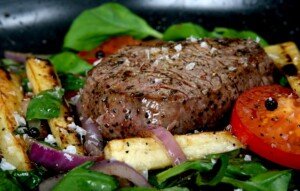
What’s going on with the studies linking meat and protein to higher rates of cancer?
One of the most startling reports to make rounds comes from Valter Longo, who was professor of biogerontology at the USC Davis School of Gerontology and director of the USC Longevity Institute at the time of his study.
His study, which appears in Cell Metabolism (March 4, 2014), concludes that high protein intake is linked to a dramatic rise in cancer death.
All-cause mortality was 74 percent higher among protein lovers during the study period than with lower protein eaters.
Though Longo et al’s study incorporates the issue of growth factor IGF-1, which is regulated by protein intake, the study did not adjust for a particular, and very significant, variable.
This “red meat cancer” study accounted for plant vs. animal protein — and adjusting for carbohydrate and fat intake did not alter mortality results.
Mortality rates and cancer death were not impacted by plant protein, even though plant protein also affects IGF-1.
This suggests that animal protein is the key villain.
But there’s a big gaping hole: source of animal protein!
What kind of animal protein were the study participants eating?
In fact, this question applies to all the meat and protein studies that deliver bad news – as in, “Red meat causes cancer.”
Can You Eat Your Lamb and Buffalo without Worrying About Cancer?
“The studies that have linked red meat to some cancers are very broad and have grouped red meat in the same category as processed meats including bacon, sausage, etc.,” says Dr. Keith Kantor, a leading nutritionist and CEO of the Nutritional Addiction Mitigation Eating and Drinking (NAMED) program, which treats substance abuse, mental illnesses and other illnesses.
“Red meat including pork, beef, lamb, etc., that is cooked from its most natural form are not as high of a risk for cancer as processed meats,” says Dr. Kantor.
“It is important to take into consideration that these studies are also not taking into consideration the quality of meat, and most importantly the type of farming the meat came from.
“Factory farming methods are typically higher in chemicals and lower in nutrients, meaning that factory farmed meats have less essential amino acids than grass fed and organic farms do.
“In addition to the type of farming, the processing of the meats is also an important factor in determining the health risk associated with the meat.
“A frozen meal that has been pumped with preservatives, dyes and additional chemicals is not near as nutritionally dense as organic and all-natural meat options.”
- Did the high protein eaters feast mainly on meat dishes that come in a plastic tub that you stick in the microwave?
- Did a lot of the protein come from luncheon and deli meats or fake roast beef sandwiches from a fast food chain?
Beware of these studies. “The meat is never adjusted for and never organically, grass fed sourced,” says John Salerno, MD, board certified family physician who combines complementary medicine with his private practice in NYC.
“In the studies, the meat used is never the healthier alternative, which is why these studies can be argued may not be applicable to those who choose to consume healthier, leaner meat options,” points out Dr. Salerno.
What would make a more truthful “meat causes cancer” study?
Let’s investigate people whose red meat consumption consists entirely of grass fed or wild game — straight from the butcher rather than from a box, tub or McBurger’s.
Where ARE these more focused studies?
 Dr. Kantor has a PhD in nutritional science and a doctorate in naturopathic medicine, has appeared on CNN and Fox News Channel for his expertise, and has been an advocate of natural food and healthy living for 30+ years.
The Salerno Center for Complementary Medicine combines the wisdom of alternative healing with the teachings of traditional medicine, treating the entire patient instead of just symptoms.
 Lorra Garrick has been covering medical, fitness and cybersecurity topics for many years, having written thousands of articles for print magazines and websites, including as a ghostwriter. She’s also a former ACE-certified personal trainer.
Source: cell.com/cell-metabolism/comments/S1550-4131(14)00062-X
Can a Lot of Walking on a Treadmill Be Bad for Your Body?
How much time can one spend walking on a treadmill before it starts becoming something bad for the body?
Spending a lot of time walking on a treadmill can be defined as very prolonged periods on the machine, but not necessarily daily. (more…)
Why It’s OK for Plus Size Women to Want a Slim Body
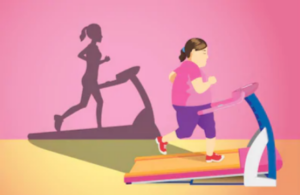
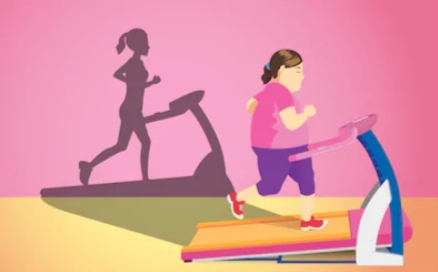
If you’re plus size and want a slim body, there’s nothing wrong with this. It’s a myth that the only road to fat loss is to starve or develop an eating disorder.
Now before I go on further, take a good look at the image below to clearly understand my message.
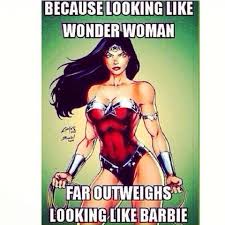
If you want to look like Wonder Woman, you can! You need not develop “big” muscles to get a svelte waist and fit into a size 6 outfit.
As a former personal trainer, I can confidently tell you that every single overweight client I ever had, who had “struggled” for years with their weight, went about fat loss the WRONG way.
One of the mistakes they had made was either not doing any strength training, or, if they were, it was not intense enough.
Don’t give up your goal to slim down. Do not let obese women guilt you into thinking that wanting to go from a size 18 to a slender size means you hate yourself.
Just make sure that your goal is realistic. For instance, a woman who’s 6’2 shouldn’t be aiming for a standard size 6.
At a job I once had, a coworker woman was 6’2 and wore a size 12. Yet she was sometimes referred to as “skinny.”
But for the average woman, a size 6 is far from anorexic thin.
I helped clients with an obese-range BMI (body mass index) get down to a normal-weight or lean body. And yes, they were happier.
Did it help them pay their bills? No. Did it bring them love? No. But did they physically feel better, sleep better, have more energy and no longer have knee pain or high blood pressure? YES!
The Formula for Safe, Permanent Fat Loss
This formula works whether you’re morbidly obese, moderately obese or 20 pounds overweight.
• Lift weights: heavy, intensely and hard – enough to be breathing hard after each set — for at least 75% of your sets. Below are examples of some exercises.
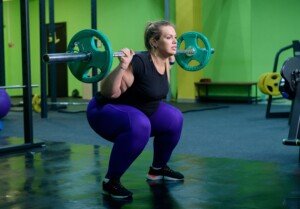
Back or barbell squat. Shutterstock/Reshetnikov_art
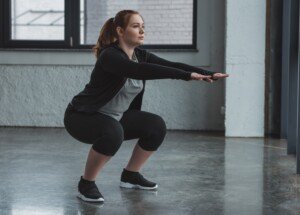
Bodyweight squat. Shutterstock/LightField Studios
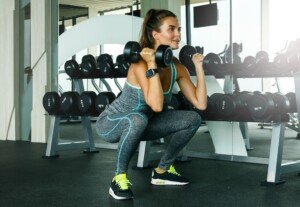
Dumbbell squat. Shutterstock/BLACKDAY
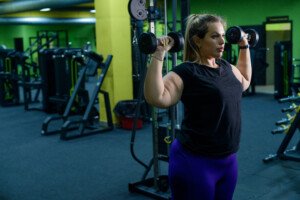
Standing dumbbell press. Shutterstock/Reshetnikov_art
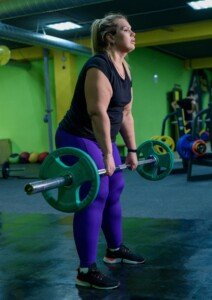
Deadlift. Shutterstock/Reshetnikov_art
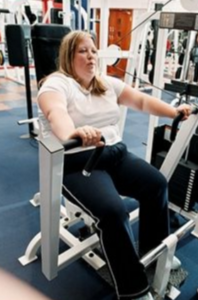
Seated chest press
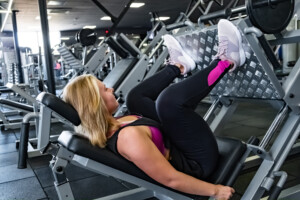
Leg press. Shutterstock/Aleksey Boyko

T-bar row. Samuel Girven/Unsplash
• Do high intensity interval training. ANY body can do this. It can be effectively done on a stationary bike or elliptical trainer. It can be done walking inclines on a treadmill (do not hold on). To learn more about HIIT, here are guidelines.
• Control portions of your food. Do not eliminate your favorite foods.
• Restrict processed food (e.g., eat grapes for energy, not an “energy bar”).
• Eat your highest-calorie meals within a few hours of your workouts.
Do not let body positive women – who DON’T have the body you’ve always wanted – convince you that your mental health is in a bad state just because you “hate” your body.
And besides, the issue isn’t your body. The issues are not knowing how to maximize workouts and apply mindful eating habits.
If you see yourself as “fat” and want a trim and toned body, then by all means, continue to strive for this. NEVER settle for being fat. Embrace being a work in progress.
Tips for Fat Loss
Do not center your gym workouts around crunches, the inner-outer thigh machine, balancing on one leg while curling little dumbbells and spending lengthy amounts of time on cardio equipment. (A 20 minute HIIT session will incite major fat-burning.)
Most exercises should be multi-joint: working more than one joint at once, rather than a ton of triceps kick-backs or arm curls.
Do NOT skip workouts. Don’t. No excuse. Never replace a strength training or HIIT workout with housework or yard work.
- This isn’t about whittling down to a waif.
- It’s about becoming lean and strong. Learn the difference!
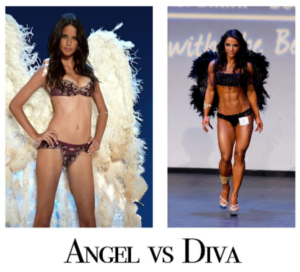
Do not let “fit shamers” brainwash you into thinking that it’s wrong to hate a fat body and want a lean toned body.
More on the deadlift.
Lorra Garrick is a former personal trainer certified through the American Council on Exercise. At Bally Total Fitness she trained women and men of all ages for fat loss, muscle building, fitness and improved health.
.
Top image: Shutterstock/solar22
Should Kids Wear Hearing Protection at Sporting Events ?

Are you afraid of what strangers will think if you put ear muffs on your young child at a loud sporting event to protect their hearing?
If so shame on you over and over.
For very young children, hearing protection needs to be in the form of the so-called ear muffs, since ear plugs can be removed and swallowed.
Older kids, of course, won’t be swallowing ear plugs. But all children should have protection in or over their ears from the loud screaming, hollering and other booming noise sources of sporting events.
If adults need hearing protection, why wouldn’t kids, preschoolers and babies? Don’t worry what strangers will think!
You should NEVER care what strangers think of any health-conscious actions you take for yourself or your children and babies.
If someone asks about “what’s on his ears” or “what are those for?” then graciously educate these ignorant people who can’t figure out the obvious. They may actually thank you.
It’s really mind bending why it’s virtually unheard of (no pun intended) for parents to require their kids to wear ear plugs or protection at sporting events.
• Many parents will make their kids wear sunscreen at sporting events.
• They’ll make them wear helmets while bicycle riding.
• They’ll make them wear knee and elbow pads for inline skating.
I realize that padding protects against instant, traumatic injury that can be seen right then and there.
But sunscreen protects against cumulative damage from an external agent, the sun. And I’m all for that, too.
So why don’t these same parents mandate ear plugs (or muffs) to protect against cumulative exposure of loud noise?
Let me guess: Hearing protection is visible, easily seen by strangers, while sunscreen is invisible!
For Pete’s sake, stop ranking the opinions of ignorant strangers above the heath of your child’s ears!
“Loud sounds of sporting events are part of the experience for many individuals,” says Rivka Strom, AuD, CCC-A, chief audiologist at Central Hearing LLC in NY.
“People want to feel the sounds around them including the loud roaring/cheering of fellow fans,” continues Strom.
“But many do not realize how dangerously loud these events truly are.
“One of the loudest sporting event was on September 29, 2014, where the loudest crowd roar was recorded at a Kansas City Chiefs game, at Arrowhead Stadium in Kansas City, Missouri.
“The roar clocked in at 142.2 dBA and was recorded with eight seconds remaining in the first quarter (Prusick, 2015).”
The loudest roar at an indoor sporting event was 126 decibels (Sacramento Kings vs. Detroit Pistons, Nov. 15, 2013).
Strom explains, “All individuals attending these events should be wearing hearing protection devices, but this is especially so for children who are at a greater risk when exposed to high noise levels.”
Most sporting events are not 126, let alone, 142 decibels.
However, Lindsay Prusick, an audiologist with Starkey Hearing Technologies, says on its website that “exposure to a sound that is 120 dB or louder causes immediate damage.”
You will not always detect that damage immediately. Think of the insidiousness of hearing loss as akin to the slowly creeping-up-on-you damage from sun exposure without sunscreen.
Years later it can result in ugly crinkles or cancer, but after just one afternoon in the sun without protection, you may only notice a little tan, a burn that disappears in a week, or no visible change at all.
And you certainly won’t be able to see DNA damage or a swath of leathery skin just from a single afternoon!
Sporting events, says Prusick on the site, though usually not 126 decibels, “are still very loud and can be hazardous to your hearing.”
How loud are sporting events?
• Basketball: 99-118
• Auto racing: 90-115
• Baseball: 85-107
• Football: 81-91
The Starkey site says that if you attend a basketball game of 97 decibels, “you can only be exposed to this level for 30 minutes before you run the risk of damaging your hearing” without ear plugs or muffs.
I can honestly tell you that I’ve never been in a fist fight over my hearing protection. Occasionally someone asks about it and I educate them.
So what are YOU afraid of?
If your older children balk at wearing hearing protection or ear plugs, ask yourself who’s the boss? You make them eat vegetables, right?
Then make ‘em wear hearing protection.
Children who learn EARLY in life about the value of hearing protection will less likely balk when they’re older and have to wear the ear plugs at sporting events (after you make them eat their broccoli and clean their room, of course!).

Dr. Strom is a member of the American Speech Language and Hearing Association and has received several awards including Brooklyn College’s Excellence In Audiology Award.
Lorra Garrick has been covering medical, fitness and cybersecurity topics for many years, having written thousands of articles for print magazines and websites, including as a ghostwriter. She’s also a former ACE-certified personal trainer.
.
Top image: Shutterstock/ Lost_in_the_Midwest
Source: starkey.com/blog/2015/08/loudest-sporting-events

New Test Diagnoses ALS Faster than Ever; Not an EMG
Diagnosing ALS can take a long time, with misdiagnoses occurring too often.
The diagnosis of ALS “relies heavily on the physician’s clinical acuity,” says Professor Philip Van Damme from VIB-KU Leuven, UZ Leuven. (more…)

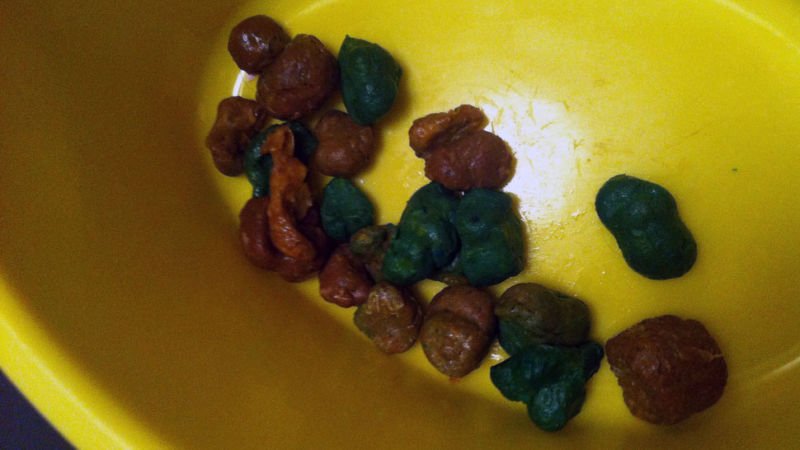
Causes of Blue Stools in Young Kids & Adults: Reassurance!

The color blue is not a classic warning sign in medicine, and this applies to stools, whether in young kids and babies or adults.
Blue usually is not a worrisome color to doctors.
“While there are a number of causes for blue stool in children, there is no known disease-related cause,” says Walter Gaman, MD, FABFM, board certified in family medicine and the author of several award-winning books including “Age to Perfection: How to Thrive to 100, Happy, Healthy, and Wise.”
Causes of Blue Poops in Babies, Toddlers or Preschoolers
• Ingestion of a blue crayon. Look closely at the poop and see if the blue portions appear to be undigested wax.
• Ingestion of blue playdough. Inspect the stools and see if the blue particles resemble clay.
• The most likely cause of blue bowel movements in this age group is consumption of something blue (e.g., frosting, ice cream, Kool-Aid) – but sometimes it’s not a food item.
• Many young children love blueberries and will sometimes void blue or blue-green stools.
A bowl of blueberries to a tiny body will have a greater impact in terms of natural pigments than on an adult size body.
• Baby formula
If seeing blue in your baby’s or young child’s stools makes you nervous, despite now knowing what the causes are, then a good way to eliminate most of this is to stop feeding them foods with chemical dyes.
Keep giving them the blueberries, of course, but the body never benefits from chemical dyes. The closer food is to nature, the better it is for you.
Ask yourself if it’s really necessary to give a toddler or young child sugary frosting.
A child won’t demand what they haven’t already been exposed to. Stick with the blueberries and unsweetened yogurt for treats.
Causes of Blue Poops in Teens and Adults
• Blueberries.
• Fake blueberries – the “blueberries” found in muffin mixes and other processed foods that are actually granules of corn syrup, oil and food coloring.
• Raspberry cobbler, which if purchased from a store, very likely has artificial dyes.
• Blue velvet cake and any other food with enough fake colorings.
• Large amounts of blue curacao liquor or grape soda.
Medical Causes of Blue Stools
• Ingestion of ferric ferrocyanide, a treatment for heavy metal poisoning.
• Porphyria, an inherited metabolic disease that usually causes a purple hue to the BM’s, but there can be a bluish cast.
WARNING
If you think you’re seeing dark blue bowel movements, make sure that the color isn’t actually black or a very dark maroon, as these two colors may mean bleeding in the GI tract.
Examine the stool matter under good lighting to better see the actual color.

Dr. Gaman is with Executive Medicine of Texas and is with the Staying Young Radio Show 2.0 podcast.
 Lorra Garrick has been covering medical, fitness and cybersecurity topics for many years, having written thousands of articles for print magazines and websites, including as a ghostwriter. She’s also a former ACE-certified personal trainer.
.
Sources:
healthtap.com/topics/blue-stool-in-children
diarrheanurse.com/blue-poop.html
remm.nlm.gov/prussianblue.htm

Can Smelling Phantom Metal Mean You Might Have Cancer ?

Unfortunately, if you’ve been smelling metal when no metal is around, this could mean cancer.
In fact, the phantom odor that you’re smelling might be described as slightly metallic or like rust, a chemical or a kind of burning-type odor.
The common denominator is that the smell is unpleasant. This could mean a variety of medical issues including cancer.
“Phantosmia is smelling something that is not there,” says Dr. Stacey Silvers, MD, of Madison ENT & Facial Plastic Surgery in NYC, who is board certified in otolaryngology; one of her specialties is sinus surgery.
“Metal, cigarettes, garbage. And dysosmia is distortion of smells (a banana smells like metal or smoke),” adds Dr. Silvers.
In an article at nbcnews.com, Dr. Alan Hirsch says that a phantom smell “could be a tumor – that’s on the top of your list of things to rule out – but it could also be a cyst or some infectious agent.”
Dr. Silvers says, “Tumors affecting the olfactory bulb are uncommon but can distort smell.”
The Experience of Phantom Smells
The odor can be just about anything that’s disagreeable, from rotting meat or cheese to fish, something burning or something chemical.
Phantosmia can come and go or be persistent. “Often the cause is idiopathic [never found] with no specific finding on exam or MRI,” says Dr. Silvers.
“A good physical exam is necessary and often an MRI.”
The condition can also be caused by inflamed sinuses, temporal lobe seizures, Parkinson’s disease and brain tumors, plus even an upper respiratory tract infection.
“Head trauma can affect the olfactory nerves and they can re-innervate improperly, affecting smell,” says Dr. Silvers.
Additional causes of smelling metal or something weird:
• Nasal polyps (these are not cancer)
• Migraine
• Stroke
If you’re smelling metal for no apparent reason, however, do not jump to the conclusion that you have brain cancer. But do get yourself checked out.
On a related note, Dr. Jordan S. Josephson, an ear, nose and throat physician, explains why you might be smelling cigarette smoke for no apparent reason.
 An NYC expert in ear, nose and throat care, Dr. Silvers has been named among America’s Top Physicians and Surgeons in facial plastic surgery and otolaryngology numerous times since 2003. Dr. Silvers is an expert in the field of minimally invasive rhinology, resolving patients’ breathing and sinus problems with simple in-office procedures.
Lorra Garrick has been covering medical, fitness and cybersecurity topics for many years, having written thousands of articles for print magazines and websites, including as a ghostwriter. She’s also a former ACE-certified personal trainer.
Top image: ©Lorra Garrick
Sources:
nbcnews.com/health/body-odd/phantom-smells-may-be-sign-trouble-f1C9926312
mayoclinic.org/diseases-conditions/temporal-lobe-seizure/expert-answers/phantosmia/faq-20058131
express.co.uk/life-style/health/713681/is-smell-burnt-toast-rubber-symptoms-of-brain-tumour-or-stroke
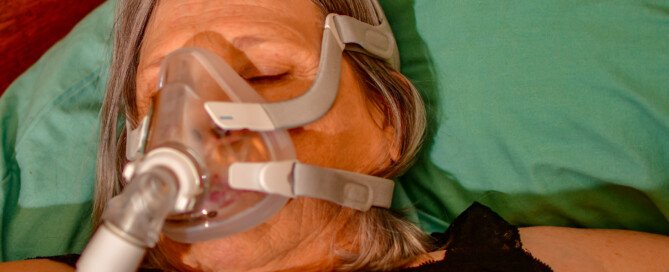
Why the Word “Fat” is Nothing to Be Body Positive About
Fat SHOULD be something to fear — when there’s too much of it in your body. This isn’t phobia. It’s medicine. It’s facts. Do not be “Factphobic.”
Plus size women who campaign for body positivity want us to believe that having lots of surplus fat is not a bad or scary thing.
The word “fat,” in and of itself, is not a scary word. It could mean many things.
But put the word “excess” before it, and we have a whole new animal: one to be araid of.
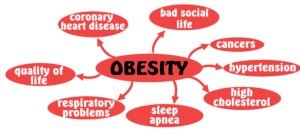
“Heart disease and cancer are scary words because they imply significant health issues,” says Susan L. Besser, MD, with Mercy Medical Center, Baltimore; Diplomate, American Board of Obesity Medicine and board certified by the American Board of Family Medicine.
“Fat (and we are talking obese, not just overweight) should also be scary for the same reason — it implies potential for significant health issues such as diabetes, high blood pressure, heart disease; not to mention the increased risk of developing arthritis from wear and tear on the joints, as well as liver disease (fatty liver disease which can lead to a type of hepatitis),” explains Dr. Besser.
Ask Your Doctor How Excess Fat Is Related to the Following
- Mobility problems, joint pain
- Gout
- Some cancers including uterine
- Complications during pregnancy and delivery; difficulty conceiving
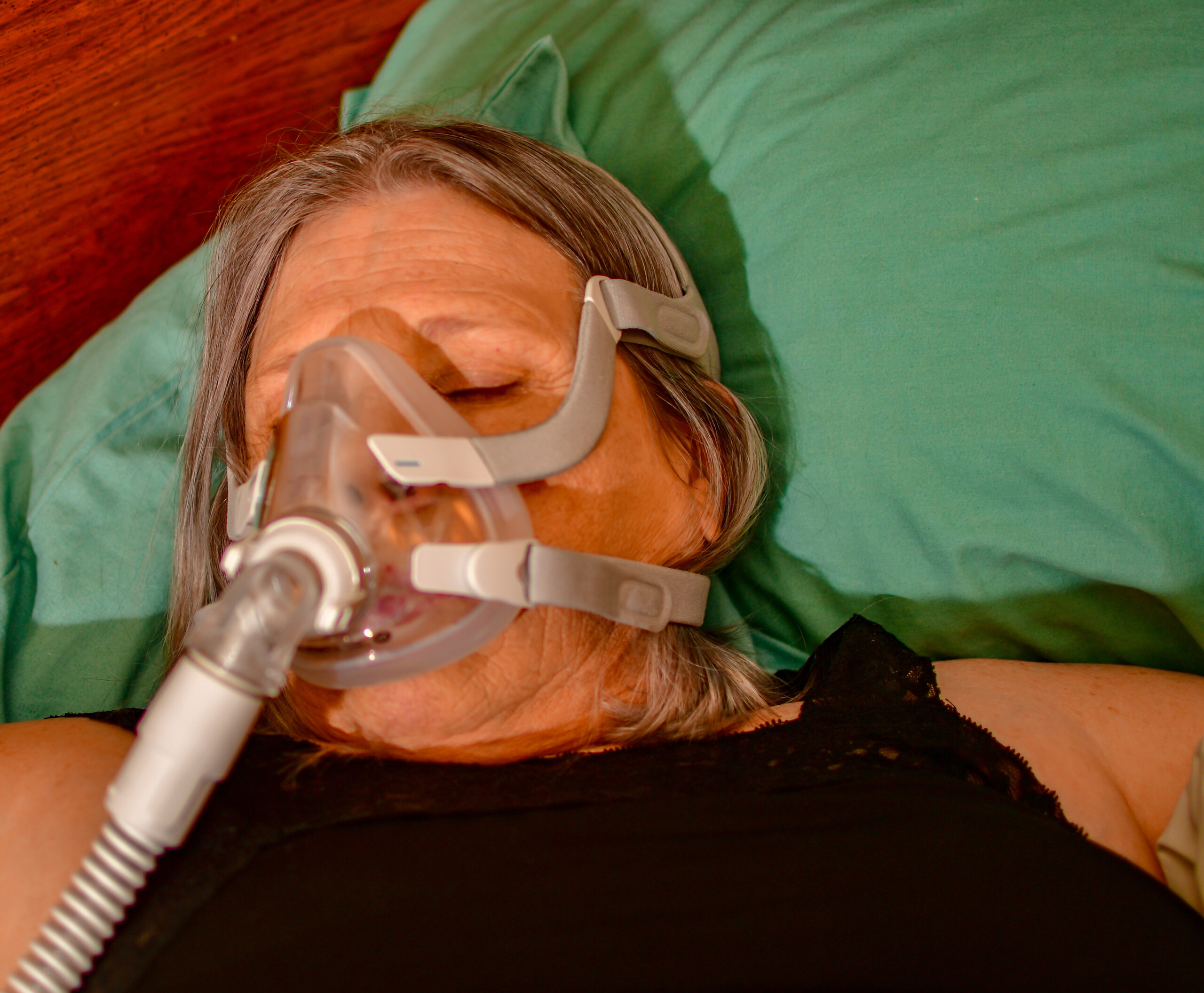
- Obstructive sleep apnea
A personal trainer can prove, instantly, that having too much fat in the body is a bad thing and has no place in what true “body positivity” should be about (e.g., embracing an unmodifiable physical trait and wearing it proudly, such as being very tall or very dark skinned).

ParentingPatch, CreativeCommons
A personal trainer can ask their very plus-size client to simply run down the street as fast as possible. Instant proof of disability.
The inability to run hard down a street is not anything to feel positive about. A hard brief run is a fundamental ability of a healthy fit body.
Though many non-overweight people can’t run too well down a street, you can certainly imagine how much more crippled they’d be if they were to awaken the next morning with 100 more pounds on their frame.
One body image influencer asks on her Facebook page, “Why is fat such a scary word?”
More Reasons “Fat” Is a Scary Word
• Too much of it is deadly for tens of thousands of Americans every year. Some estimates go to 300,000.
• Too much fat in a child can lead to psychological damage, even if her mother promotes body confidence and self-love.
Shutterstock/Noiel
An influencer for body acceptance may ask why “Fat” carries as much disdain as the so-called F word.
Excess body fat kills more women than breast, uterine, cervical and ovarian cancers combined.
The body positive woman validates fat by pointing out that “we all have fat” and that it’s part of being human.
Pointing out that we all have fat stored everywhere has nothing to do with the dangers of obesity.
That’s like a smoker saying, “I’m not a smoker. I HAVE smoke.”
A play on words DOES NOT CHANGE THE FACTS.
The human body was not meant to be big, even though a very small percentage of people can stay thin despite eating large portions.
“I try to tell my patients that ‘fat’ (and I use the word obesity rather than fat) is a chronic health condition, just like diabetes, high blood pressure and so on,” says Dr. Besser.
“I explain it is linked to multiple health issues and needs to be controlled.
“Unfortunately for many, being overweight is very obvious (unlike hypertension which doesn’t have any observable signs), so the person is immediately judged for his or her appearance.
“So my ‘fat’ patients tend to be somewhat depressed because of the way they are treated. Of course, this too affects their health and their ability to lose weight and learn a healthier lifestyle.”
If you have enough excess fat to be considered obese by your primary care physician, you should not embrace this any more than you’d embrace a sick liver from excess drinking.
 Dr. Besser provides comprehensive family care, treating common and acute primary conditions like diabetes and hypertension. Her ongoing approach allows her the opportunity to provide accurate and critical diagnoses of more complex conditions and disorders.
Lorra Garrick is a former personal trainer certified through the American Council on Exercise. At Bally Total Fitness she trained women and men of all ages for fat loss, muscle building, fitness and improved health.
.
Top image: Shutterstock/Grossinger
Do Plus Size Women Work Out Only to Lose Weight?
Why do some people assume that when an overweight woman works out, it’s ONLY because she wants to lose weight?
I’m a former personal trainer and group fitness instructor who was inspired to write this article after reading a post by a very overweight “body positive” promoter.
She posted that every time she posts videos of herself exercising, she gets questions to the tune of: “Are you trying to lose weight? I’m confused.”
This individual generously posts that she is NOT trying to lose weight and is thrilled with the clinically obese body she has, after gaining a lot of weight over the past few years.
She generously preaches the virtues of loving your body no matter how overweight and to stop worrying about what the scale says, how big your waist is, cellulite, etc.
This is vexing to her followers who watch her exercise videos.
They automatically assume that the only reason she exercises is to lose weight.
NO Body Type Is Exempt from the Benefits of Exercise
I had many clients who were not overweight but just wanted a kickass workout program.
They thrived on the challenge of getting their body to do things that it had never done before.
I also remember one large female client whose goal was to get fit enough to pass a fitness test for a job she wanted to apply for: repairing phone poles. This required climbing.
Nobody does NOT need to exercise.
Read that again.
The very hefty body image campaigner graciously supplied clues to those followers who were getting confused seeing her exercise.
Here’s my message to people who think that the only reason a fat woman works out is because she wants to drop pounds:
• Exercise lowers resting blood pressure.
• Exercise improves vascular health.
• Workouts improve heart health.
• Working out lowers the risk of type 2 diabetes and some cancers.
• Exercising improves mobility and energy.
• Working out strengthens the joints and muscles, making day-to-day tasks easier.
• Exercise improves brain health.
People who question why an obese woman works out if she’s not trying to lose weight apparently have never done a good workout.
Because after a good workout you just feel so wonderful!
So don’t get “confused” if you see your idol exercising.
Consider the possibility that maybe, just maybe, she’s trying to lower her risk of colon and breast cancer! Or maybe she just thinks yoga is cool!
Lorra Garrick has been covering medical, fitness and cybersecurity topics for many years, having written thousands of articles for print magazines and websites, including as a ghostwriter. She’s also a former ACE-certified personal trainer.
.