

Should a Broken Molar Be Pulled? Sometimes Yes, Sometimes No
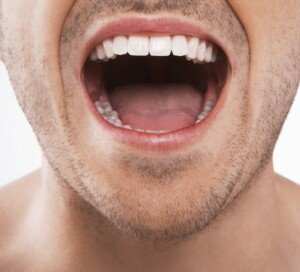
Molars are subjected to the most biting force and thus can end up broken pretty badly, but at what point should they be pulled when this happens?
“Broken teeth are probably one of the most common emergency calls to the dental office,” says Gigi Meinecke, DMD, FAGD, member of the Academy of General Dentistry with a private practice in Potomac, MD.
“Like anything else, there are varying degrees of ‘broken’ when it comes to teeth,” she continues. “Only a dentist can determine if a tooth is broken beyond repair.
“Molars, located in the back of the mouth, have the most force applied to them when chewing (think of a nutcracker), and are frequent victims of breakage.”
Foods that Can Break a Molar
Hard candy. This includes anything with names like “Jaw Breakers.”

If you love hard candy, suck on it rather than chew. Remind yourself that you don’t have the jaws/teeth of a dog.
Stale gumball. Especially large ones; when stale they can be as hard as hard candy.
Chilled chocolate blocks. Biting into a block can easily crack a molar.
Peanut brittle.
Unpopped popcorn kernels.
Bread. Some crusts are ridiculously hard, forcing the eater to try to tear at the crust with their teeth, and then chew it with the molars. This puts tremendous strain on the molars.
Ice cubes. If you like to chew on ice, make it crushed ice.
Bones. You’re not a hyena. Don’t try to chew bones in the name of getting more calcium or because you don’t want to bother spitting them out.
Dr. Meinecke continues, “Depending on the extent of damage, your dentist will recommend anything from a simple filling, root canal and/or a crown.
“If your dentist believes the damage is beyond repair, or if the cumulative costs involved in repair don’t make good financial sense when weighed with the resulting long-term prognosis, he or she may recommend extraction.
“When extraction is the only option, your dentist will discuss replacement options with you.”
 Dr. Meinecke, member of the Academy of General Dentistry, uses state-of-the-art sterilization procedures to ensure patient safety. In addition to comprehensive dental care, you’ll be treated in an ultra-modern dental office utilizing many of today’s latest dental technologies.
 Lorra Garrick has been covering medical, fitness and cybersecurity topics for many years, having written thousands of articles for print magazines and websites, including as a ghostwriter. She’s also a former ACE-certified personal trainer.
.
Top image: Shutterstock/sirtravelalot
How Long After Molar Extraction Should It Bleed & Solutions
There’s a general rule for how long after a molar is removed that active bleeding should last and how long seeping should last, plus how to treat and what to expect.
A lot of bleeding after molar extraction can be unnerving. Here’s what you need to know.
“Just like no two individuals are the same, no two extractions are the same,” says Gigi Meinecke, DMD, FAGD, member of the Academy of General Dentistry with a private practice in Potomac, MD.
“But in general, once your tooth has been removed, the dentist will place a thick piece of gauze at the extraction site and have you bite down on it,” continues Dr. Meinecke.
“You’ll be instructed to stay closed on the gauze for 20 minutes before removing it. That puts pressure on the area and helps stop the bleeding.
“During that time you should refrain from talking or any other mouth movements that would release the pressure on the gauze.”
That means you may want to turn off your cell phone to avoid the temptation to respond to incoming calls.
“You should swallow like normal during this time since any spitting will loosen the clot,” continues Dr. Meinecke.
“I tell my patients that the gauze does have an odd taste, but you should ignore it and swallow as usual.
“After the 20 minutes has gone by and you’ve removed the gauze, if there is still some bleeding your dentist will have given you a pack of extra sterile gauze. You can place new gauze in the area and bite on it again for 20 minutes – no peeking!”
What if the bleeding after molar extraction won’t stop after 20 minutes?
“If that 20 minutes goes by and you still have some bleeding or oozing of blood, you should get a tea bag – any generic tea will do – moisten the tea bag with water and place it at the extraction site and bite for another 20 minutes,” says Dr. Meinecke.
“Tea contains tannic acid which will help clot the blood. In total, 60 minutes of biting down on either the gauze or tea bag should be enough to stop any active bleeding.
“Don’t be alarmed if you see blood on your pillow the next morning. This is common, and remember that your blood is mixed with saliva which makes it appear more impressive, but it’s usually nothing to worry about.
“However, you should contact your dentist immediately if your mouth is filling with blood.
“Active bleeding should end within 20 minutes after extraction, and mild seeping of blood can go on for 12 hours.”
Dr. Meinecke, member of the Academy of General Dentistry, uses state-of-the-art sterilization procedures to ensure patient safety. In addition to comprehensive dental care, you’ll be treated in an ultra-modern dental office utilizing many of today’s latest dental technologies.
Lorra Garrick has been covering medical, fitness and cybersecurity topics for many years, having written thousands of articles for print magazines and websites, including as a ghostwriter. She’s also a former ACE-certified personal trainer.
.
Top image: Shutterstock/Jaromir Chalabala
Is Mild Sleep Apnea a Risk Factor for All Cause Mortality?
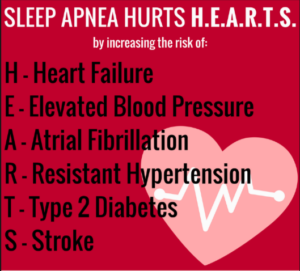
Just how dangerous is untreated but mild obstructive sleep apnea? Can mild OSA cut your life short?
Moderate to severe obstructive sleep apnea is defined as having equal to or greater than 15 respiratory disturbances per hour. (more…)
Does CPAP Lower Cardiovascular Risk Directly or Indirectly?
CPAP treatment of sleep apnea lowers cardiovascular risk – significantly, when compared to what it potentially could be if sleep apnea goes untreated on a chronic level. (more…)

HOW Does Untreated Sleep Apnea Damage the Heart?

You’d be shocked to know just all the ways that sleep apnea can harm the heart.
If you’ve ever wondered why periods of stopped breathing can be so dangerous to the cardiovascular system even though the heart doesn’t actually stop beating, you’re about to find out.
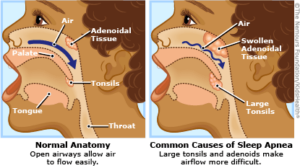
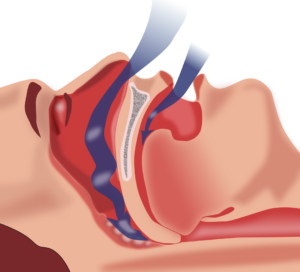
Sleep apnea is usually the obstructive type. This means that while you’re asleep, the structures and tissues of the upper airway collapse.
This may partially or completely obstruct the passage of inhaled air coming through.
If it’s a complete obstruction, the person will stop breathing.
However, the brain eventually senses a drop in oxygen levels, and rouses the sleeper — just enough to unrelax the airway tissues and allow for a deep breath.
Then the process starts all over again — all through the night.
Sleep apnea affects all ages.
What this all means is that the oxygen levels in the body are dropping (desaturation), then rising (re-saturation) with recovery breaths, then falling again, back and forth.
“Recurrent desaturation and re-saturation and recurrent arousals leads to fluctuations in pleural [surrounding the lungs] pressure and strains the heart, and can cause bradycardia and then tachycardia,” says Dr. Nancy Foldvary-Schaefer, DO, MS, and Director, Sleep Disorders Center, Cleveland Clinic.
- Bradycardia: abnormally slow heartbeat
- Tachycardia: abnormally fast heartbeat
”The heart should rest in sleep, but in the presence of significant OSA, the heart is actually working harder than it should be,” says Dr. Foldvary-Schaefer.
“Long-term, recurrent apneas associated with hypoxia [abnormally low oxygen] and arousal lead to a pro-inflammatory state that drives cardiovascular events, stroke and hypertension: systemic and pulmonary.”
A Closer Look at Untreated Sleep Apnea’s Danger to the Heart
The collapsed airway subjects the body to ongoing periods of:
• Hypoxia
• Abnormally low pressure within the chest/lung cavity
• Brain arousals
More specific harm then follows:
• Reduced contractile ability of the heart muscle
• Heart muscle wall stress
• Activation of the sympathetic nervous system—the “flight or fight” response
• Increase in blood pressure
• Increased heart rate
• Body-wide inflammation
• Platelet activation (aka thicker blood; higher blood clot risk)
• Impairment of the inner lining of blood vessels (endothelium)
Whew! That’s a lot! But that’s just the beginning.
For example, that impaired endothelial function can lead to increased stiffness of the arteries – which then can bring on high blood pressure throughout the day.
Now wait a minute here. If the sleep apnea ends when you awaken, why would you have high blood pressure throughout the DAY?
It all originates during sleep when you stop breathing. Remember, OSA drops the body’s oxygen level, arousing the brain — just enough to send signals through your nervous system to get you breathing again, but not enough to awaken you to full consciousness.
Obstructed airway. Habib M’henni, Wikimedia Commons
The signals instruct the blood vessels to increase the flow of oxygen to the heart and brain. However, this mechanism may carry over to after you’re awake.
The low oxygen levels (desaturation) during sleep trigger several mechanisms that persist during waking hours – ripples in the pond that continue to expand outward.
At the end of any given overnight apneic event, blood pressure may be as high as 240/130.
However, “One can have low blood pressure and still have OSA,” says Dr. Foldvary.
This is because, for reasons researchers don’t yet know, some patients — even those with severe OSA (as measured by the average number of sleep disordered events per hour) — don’t experience symptoms during wakefulness.
Untreated Sleep Apnea: Body Lying Still but Overworking
It’s one thing when your body works hard during conscious daytime exercise at the gym.
It’s a whole new, and brutal, animal when your body is overworked overnight due to stopped breathing and desaturation.
The overwork due to sleep apnea thickens the walls of the heart. That may sound like the heart gets stronger like a biceps muscle, but biceps muscle and heart muscle are not the same kind of muscle.
You do NOT want the walls of your heart to thicken. This enlargement makes the heart get less oxygen and work less effectively.
Furthermore, the overnight workload changes the structure of your heart.
It becomes stiffer because more (and undesirable) fibrous cells grow between the cardiac muscle cells.
You eventually resume breathing, so what’s the big deal?
Frequent bouts of hypoxia damage the blood vessels that supply oxygen to the heart.
Recurring hypoxia causes the release of substances that may cause constriction of blood vessels for hours.
Obstructive sleep apnea can lead to chronic heart failure via several routes:
• Activating the sympathetic nervous system, including during waking hours.
• Increasing left ventricular workload, including during wakefulness.
• Increasing right ventricular workload.
All of this can then lead to atrial fibrillation, a rhythm disorder. And guess what: another ripple, in that atrial fibrillation is a major risk factor for stroke and heart attack!
Are you now getting the impression that sleep apnea’s ripples in the pond are created by a boulder?
If someone tells you they think you have sleep apnea, but they’re not a doctor, don’t let that stop you from SEEING a sleep doctor.
• Don’t make excuses like “I’m old.”
• Regardless of cause of OSA (obesity, smoking, naturally narrow upper airway, excess throat tissue), the damage to the body is the same, and in most cases, the treatment is the same.
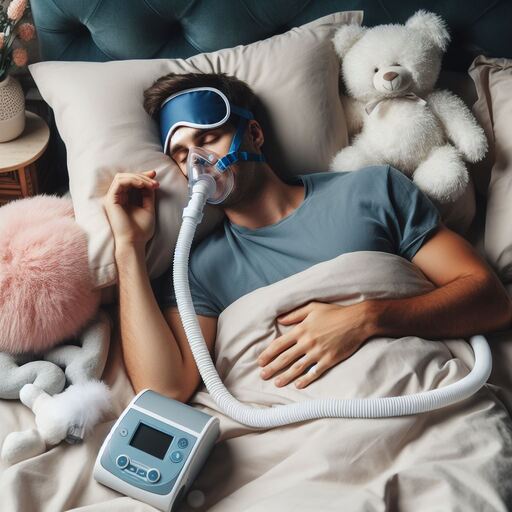
The gold standard of treatment is CPAP: continuous positive airway pressure — shown below.
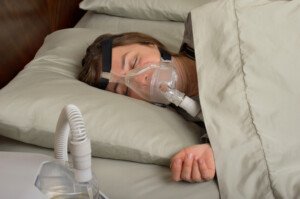
CPAP machine. Shutterstock/Brian Chase
In some cases, OSA can be mitigated by a custom-made mandibular device to place inside the mouth overnight, fashioned by a sleep dentist.
 Certified by the American Board of Neurology and Psychiatry in Neurology, Clinical Neurophysiology and Sleep Medicine, Dr. Foldvary-Schaefer has treated patients with sleep disorders and epilepsy at Cleveland Clinic since 1995. She has served as a lead investigator on numerous clinical trials.
Lorra Garrick has been covering medical, fitness and cybersecurity topics for many years, having written thousands of articles for print magazines and websites, including as a ghostwriter. She’s also a former ACE-certified personal trainer.
.Sources:
sciencedirect.com/science/article/pii/S0140673608616220
health.clevelandclinic.org/2015/05/do-you-snore-how-sleep-apnea-can-hurt-your-heart/
thoracic.org/patients/patient-resources/resources/obstructive-sleep-apnea-and-heart.pdf
sleepfoundation.org/ask-the-expert/sleep-apnea-and-heart-disease
sciencedirect.com/science/article/pii/S0735109708016483
Sleep Apnea’s Gasp for Breath vs. Overnight Laryngospasm

Okay, so which is it: sleep apnea or laryngospasm, being that both can cause you to abruptly wake in the middle of the night gasping for breath? (more…)
Can a Finger Pulse Oximeter Alone Detect Sleep Apnea?
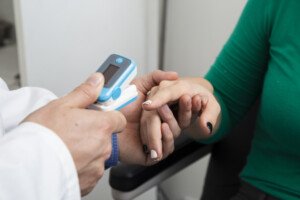
Being that sleep apnea causes frequent low oxygen levels overnight, could a finger pulse oximeter by itself detect sleep apnea?
When sleep apnea is suspected, the patient is encouraged to undergo a “sleep study” (polysomnography) at a lab — and if that’s absolutely not possible, one can take a sleep study test at home overnight. (more…)
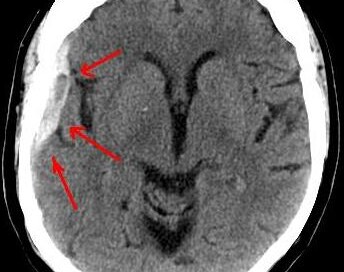
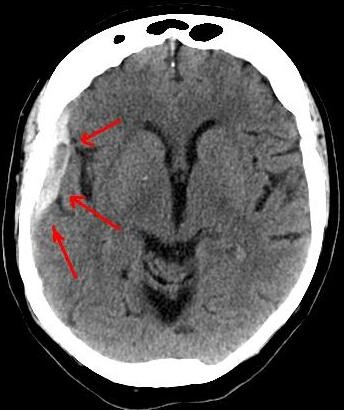
What Can Cause a Chronic Subdural Hematoma to Be Fatal?
Being that it’s not acute and can be caught in time, how is it that sometimes people die from a chronic subdural hematoma?
After all, this condition is relatively very easy to treat.
Now in the case of an acute subdural hematoma, it’s simple to see why this can kill a person within minutes: sudden gushing of blood inside the brain, quickly sweeping over brain tissue.
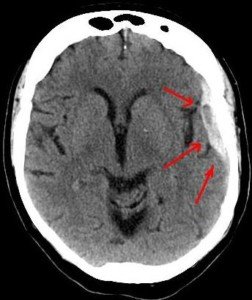
A chronic subdural hematoma is what its name suggests: It occurs over a period of weeks; it’s slow in progression—very slow—enough so that the first symptom may not appear until three months following the insult – which is typically a fall or bump to the head.
Nevertheless, people DO die as a result of a chronic subdural hematoma.
Typically a cSDH is treated with a non-invasive surgery: burr hole craniostomy with a closed-system drainage.
Reasons for Fatal Chronic Subdural Hematoma
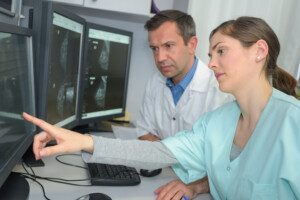
Credit: Alpha Prod
• Severe delay in seeking treatment; patient is comatose upon admittance to hospital.
• Postop complication: acute SDH.
• Postop: intracerebral hemorrhage (not the same as acute SDH).
• Postop: infection
• Postop: cerebral edema/swelling (caused by compressed brain surface caused by impaired vein drainage)
• Postop: disseminated intravascular coagulation (blood clots forming in the brain).
• Pneumonia following the burr hole procedure. A paper in Neurosurgical Review, March 2002, cites pneumonia as the most common postop complication.
The less healthy the patient is preop, the more vulnerable they’ll be to pneumonia. Excessive inertia postop also raises the risk of pneumonia.
Treatment Delay
In an industrialized culture, delay in treatment is rare, simply because the symptoms are difficult to ignore – especially when the patient lives with someone.
However, shut-ins or those who have very little contact with people and who are not of sound mind are at risk for serious delay of seeking treatment.
People in non-industrialized cultures are also at high risk of delayed treatment.
Another risk factor for delayed intervention of a cSDH is when the patient has already been diagnosed with a condition that can mimic a cSDH.
Family members may pass off the cSDH symptoms as just part of the current condition.
If bleeding inside a brain — albeit the slow nature of a cSDH — is left untreated, then yes, it will probably become fatal.
Intracerebral Hemorrhage
This very rare complication post-evacuation of the blood and fluid buildup of a chronic subdural hematoma can be fatal.
It can arise from impaired blood clotting (coagulopathy), leading to fast-onset hemorrhaging.
Why this would be a postop complication isn’t always clear, but a pre-existing issue with blood clotting, when combined with cSDH treatment, can lead to the hemorrhaging.
However, there may be no pre-existing pathology other than the actual cSDH itself.
Other possible causes:
• Damage to blood vessels caused by the brain shifting sideways which is caused by the hematoma.
• Sudden increase in blood flow, combined with defect in blood flow regulation.
• Bleeding into a previously undetected bruise in the brain.
• Chronic enlargement of small arteries and buildup of carbon dioxide.
As frightening as this sounds, treatment of chronic subdural hematoma has a good prognosis in general.
Lorra Garrick has been covering medical, fitness and cybersecurity topics for many years, having written thousands of articles for print magazines and websites, including as a ghostwriter. She’s also a former ACE-certified personal trainer.
.
Top image: Lucien Monfils
Sources
link.springer.com/article/10.1007%2Fs101430100182?LI=true
jstage.jst.go.jp/article/nmc/41/8/41_8_371/_article
ncbi.nlm.nih.gov/pmc/articles/PMC3611053/

Can Sleep Apnea Be Sporadic Rather than Every Night?
Sleep apnea may not always occur every single night and in fact may be sporadic in some cases.
This can be referred to as intermittent sleep apnea, in which the intermittency is measured in days or weeks rather than hours in a single night. (more…)
Can Diabetes Cause Pain in Calf Muscles when Walking?
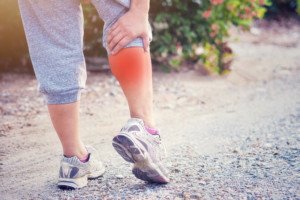
Diabetes can lead to dangerous conditions that cause pain in the calves and overall legs when walking.
Those with type 2 diabetes are particularly vulnerable to an arterial condition, though the risk is still increased by type 1 diabetes.
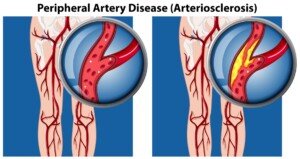
This condition is PAD: peripheral artery disease—also known as peripheral vascular disease. PAD is when there’s plaque buildup in the arteries of the legs.
This is the same plaque or “sludge” that builds up in coronary heart disease, causing the so-called blocked coronary arteries.
Source: vecteezy.com
There are three other conditions — related to diabetes — that can cause pain, aching or cramping in the calves — but first here is information on peripheral artery disease, which can get bad enough to cripple a person.
Diabetes and PAD
Diabetes is not required to develop PAD, but the presence of diabetes (especially type 2) raises the risk.
The reason diabetes increases the risk of peripheral artery disease, which causes pain when walking, is because diabetes causes a higher level of blood fats and raises blood pressure.
These situations can lead to arterial clogging with fatty deposits. The result is blocked, hardened and narrowed arteries in the legs.
“At rest there is no pain, but with activity, there isn’t enough blood flow to the muscles, so there is pain,” says Susan L. Besser, MD, with Mercy Medical Center, Baltimore, and Diplomate American Board of Obesity Medicine and board certified by the American Board of Family Medicine.
PAD Causes Pain
The pain can be in the feet and toes, not just the calves and upper leg, and will be worse when walking and especially using a staircase.
However, PAD pain isn’t always constant. Sometimes it’s intermittent and is called intermittent claudication.
The discomfort can be in the form of a cramping type of sensation, or that of heaviness or fatigue.
PAD is no picnic. Peripheral artery disease can disable a person and lead to very slow-healing wounds (cuts, scrapes, etc.). The feet may become cold, too.
Ironically, PAD in some diabetics may not produce pain, mainly because the patient also has diabetic neuropathy, which reduces sensation in the legs and feet.
Peripheral artery disease in the diabetic or non-diabetic can also exist under the radar due to a gradual onset.
This gradual onset, or a subtle onset, can masquerade as “normal aging” to some individuals.
Their compensatory behaviors are to shorten the distances they walk (parking closer to store entrances, always using elevators and escalators, taking more sitting breaks when at the amusement park, etc.).
If the patient is older (e.g., 48 rather than 28), they’re likely to shrug this off as a case of “I’m not as young as I used to be.”
Another compensatory behavior is to walk more slowly. They are unaware they have PAD.
Even if they know they have diabetes, it may not occur to them that what’s happening is due to clogged arteries in the legs and calves.
Diabetic Neuropathy
As mentioned, this can reduce sensation and thus, blunt the pain of PAD. But diabetic neuropathy in and of itself can also cause pain.
You can have pain in your legs (although it usually causes pain in the feet),” says Dr. Besser.
If you have diabetic neuropathy this actually raises the risk of PAD. So it’s not just the diabetes that puts you at higher risk of clogged leg arteries, but the neuropathy, which is caused by chronic excess sugar in the body.
Deep Vein Thrombosis
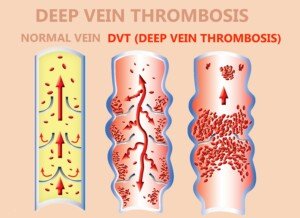
A blood clot in a vein (DVT) can occur to anyone, but many risk factors abound, including diabetes.
A DVT classically presents with pain in a calf, including at rest. There may be associated swelling, redness and warmth to the area.
Shutterstock/Solarisys
A pulled calf muscle, however, typically feels fine at rest and is elicited only upon movement such as walking.
Electrolyte Imbalance
“If your diabetes isn’t controlled, your electrolytes (sodium and potassium) will probably not be normal; abnormal electrolytes can cause cramping,” explains Dr. Besser.
“Muscle strain is due to injury to the muscles (sprain/strain). This pain may also occur at rest if the strain is severe enough.
“There may also be tenderness in the affected muscle and it may be swollen.
“Rest, time and ibuprofen (or similar medications) will treat this but won’t help pain from diabetes related issues.”
Those with type 2 diabetes are particularly vulnerable to an arterial condition, though the risk is still increased by type 1 diabetes.
 Dr. Besser provides comprehensive family care, treating common and acute primary conditions like diabetes and hypertension. Her ongoing approach allows her the opportunity to provide accurate and critical diagnoses of more complex conditions and disorders.
Lorra Garrick has been covering medical, fitness and cybersecurity topics for many years, having written thousands of articles for print magazines and websites, including as a ghostwriter. She’s also a former ACE-certified personal trainer.
.