Can Stress Cause Many Missed Periods in a Row?

How many periods in a row can you miss from stress?
Well in my case it looks like five.
“It has been known for years that the menstrual cycle can become dis-regulated when a great deal of stress is present,” says Marcelle Pick, MSN, OB/GYN, NP, in private practice and co-founder of Women to Women Health Center, and author of the book, “Is It Me or My Hormones?”
But ask yourself why ongoing stress would cause only one missed period. It’ll likely be several in a row.
Before I missed the five periods, I had predicted I’d miss at least two in a row. I made this prediction shortly after a stress bomb was dropped on me.
The previous year I had missed two periods in a row, courtesy of ongoing stress involving my mother’s illness. She recovered fully.
Almost a year later I took my mother to the ER, where I was told she needed quintuple bypass surgery with mitral valve replacement; a massive heart attack was imminent without the surgery; the surgery had a 15 to 20 percent mortality rate.
The first day of my last period had been Sept. 28. My mother’s surgery was overnight, October 9 through 10. I began moving my things into my parents’ house.
I just knew I’d be missing at least two periods due to this unspeakable stress. And sure enough, my next period never came.
“This happens because with increased stress, cortisol levels can become very high,” says Pick. Cortisol is the so-called stress hormone.
My mother was having fainting spells at the hospital but she was discharged. I took her to the ER several days later; she was readmitted.
After the second discharge, it was back to the ER; she was readmitted again. Discharged.
Then again to the ER, admitted once more, with a diagnosis of congestive heart failure. Meanwhile, she was blacking out several times a day due to orthostatic hypotension.
Because she was non-compliant with managing this condition, I couldn’t let her out of my sight or she’d black out while upright and risk a serious fall.
Where was my father in all this?
Nine days before my mother’s surgery, he had back surgery and was in no condition to oversee his wife. He was barred from driving for a month.
This meant while my mother was in the ICU (where she had atrial fibrillation and mild kidney failure), I drove to the hospital three times a day (to be present during all three “shifts” of visiting hours).
One-way to the hospital took 40 minutes. (I put my homebased work on hold).
In the weeks following the surgery there were complaints of chest pain and shortness of breath: stress, stress galore, enough to miss several periods over.
Pick explains, “With high cortisol can come thyroid dysfunction, as the cortisol can block T4 to T3 conversion, making the T3 an inactive form which in turn can affect the cycle — and also, continued stress causes adrenal dysfunction which can cause the hormone progesterone to be low — and the cycle can be missed altogether or become irregular.”
My father’s condition never improved (more stress), so the weight of never letting my mother out of my sight fell virtually all on me, which meant every time she got out of a chair, I had to promptly get right behind her.
Dozens of times she passed out and I had to lower her to the floor, including several times in public.
My mother refused to comply to doctors’ treatment recommendations, which caused me ongoing, relentless stress: fear of my mother suffering a life-threatening fall.
She eventually fell when I wasn’t present (after she talked my father into allowing her to resume sleeping with him; prior she had been sleeping downstairs where I was sleeping so that I could escort her overnight several times to the bathroom).
My father slept through her exiting the bed and she hit her head on the bathtub (visible head injury).
A CAT scan at the ER was normal, but I feared there’d be a slow blood leak over the next several weeks.
More battles ensued between my father and me about how my mother should sleep downstairs so I could escort her overnight, but my father again gave in to my mother’s insistence that she sleep with him.
Again she passed out in their bathroom and fell, but no trip to the ER (no visible head injury).
Six weeks after the first fall, my mother awakened with an alarming headache and stroke-like symptoms in her legs.
Another trip to the ER: The CAT scan revealed bleeding in the brain (chronic subdural hematoma).
By this point I had missed four periods in a row.
She had to have brain surgery to drain the blood. The symptoms cleared up after, but soon after discharge my mother began experiencing increasing headaches, then mental fogginess and dysfunction of her left hand.
Another CAT scan showed a recurrence of the chronic subdural hematoma: another hospital admission, another brain surgery. Meanwhile my father had had his coronary calcium score taken: 1,195!
Talk about unspeakable stress; it was no wonder I ultimately missed five periods in a row.
Furthermore, following the second brain surgery, my mother had cognitive impairment, slurred speech and a useless left hand — for eight days post-op. We thought the neurosurgeon botched the job. (She eventually recovered.)
About 145 days after the first day of my last period, I began flowing, after 14 days of spotting!
Yes, stress can definitely make you miss several periods — many periods — in a row.
 Marcelle Pick holds a BS in nursing from the University of New Hampshire School of Nursing and her MS in nursing from Boston College-Harvard Medical School. She is certified as an OBGYN nurse practitioner. Visit “Is It Me or My Hormones.”
 Lorra Garrick has been covering medical, fitness and cybersecurity topics for many years, having written thousands of articles for print magazines and websites, including as a ghostwriter. She’s also a former ACE-certified personal trainer.
Why Is There Blood in Cervical Mucus after Period Ends?
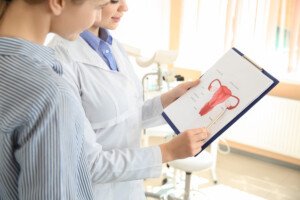
An OB/GYN explains reasons for blood in cervical mucus after menstruation is over.
Have you noticed blood in your cervical mucus even though your period has ended? Perhaps you’ve noticed the blood in the cervical mucus on Day 8 or 9 of your menstrual cycle, or even on Day 11 or 12.
This can be scary, wiping yourself and looking at the mucus on the tissue paper, and seeing a red tinge to it.
When blood appears in cervical mucus, it either gives the mucus a pinkish tinge, or, the tinge can be pinkish-brown, or light brown.
Sometimes, blood in cervical mucus can present as a thin red streak or red hair-thin strand.
Cervical mucus is normally yellowish, cream-colored or somewhat clear, like egg whites.
So to see blood in there, when your period has ended, can be unsettling – unless you know what’s really going on.
For this article questions were addressed by Dr. Christine E. O’Connor, MD, an OB/GYN with the Weinberg Center for Women’s Health and Medicine at Mercy, Baltimore, Maryland.
If you’ve never been concerned about trying to get pregnant, chances are that you do not know that red, pink or brown in the cervical mucus is a sign of fertility.
When a new egg is released by the ovary, the process can cause a minute amount of blood leakage that makes its way to the cervix, and then gets picked up by expelled cervical mucus.
This is called mid-cycle spotting, and women who are trying to get pregnant, who have studied up on the subject, welcome this fertility sign.
Two other causes for cervical mucus that has red, pink or brown in it is leftover, residual blood from your last period.
And also when a fertilized egg implants itself into the uterus – you are pregnant, and with this implantation spotting, the blood can end up in the cervical mucus.
But can other things explain when cervical mucus has a reddish, pink or brownish tinge?
This article is about blood in the cervical mucus, rather than general spotting or bleeding in between periods. Spotting or bleeding in between periods doesn’t necessarily occur with the expulsion of cervical mucus.
For example, a symptom of uterine cancer is bleeding in between periods, but this blood can find its way through the cervix and onto toilet tissue in the absence of cervical mucus.
Certain forms of exercise can cause anal or vaginal fissures that release minute amounts of blood, that can find its way to toilet paper after you’ve wiped yourself.

Pressure on the anus and vagina. Shutterstock/Seasontime
This appears as tiny bright red specks or red hairline streaks (the brightness indicates it’s fresh), and there may not even be any sign of cervical mucus with it.
Blood in between periods can also signal a problem with the gastrointestinal tract. But what about blood specifically in the cervical mucus, after your period has ended?
Can anything else cause it besides the already-mentioned?
Dr. O’Connor: Absolutely! This can be caused by hormonal fluctuations (i.e., from stress and weight changes), breakthrough bleeding if on hormonal birth control, any change in medications or over the counter supplements.
This can also be an early sign of cervical infections or vaginal infections, or an early sign of cervical or uterine polyps, fibroids, cancer, etc.
Any spotting or pinkish/brownish tinge in the cervical mucus that is new or a change from what has been previously noted is worth discussing with a gynecologist to determine if it is normal or may need additional attention.
Concerning blood specifically coming out with the cervical mucus, after a period has ended (Day 8-12 or 13), can this be caused by factors other than: a new egg released; implantation of fertilized egg; and residual blood from the ended period?
Residual menstrual blood would be seen just after a period ends. An implantation bleed would cause bleeding just before or when the next cycle would be due. Mid-cycle would be the timing for ovulation related spotting.
But again, especially if there is no predictable pattern or a change from what is normally noticed, there are many other potential causes.
Regarding blood in the CM that’s from, specifically, a newly released egg…can this blood appear in the CM two or three days in a row, or is it almost always a one-day thing?
Blood seen from ovulation is rare, usually a very small amount and for a very short amount of time.
For women who notice this phenomenon, the bleeding around ovulation or mid-cycle is thought to be due to the fall in estrogen levels that occurs just before ovulation.
This would be around Day 12 or 13 in a woman who has perfect 28 day cycles.
Once ovulation occurs, the estrogen and progesterone levels rise again quickly to stabilize the endometrium and ready it for a possible fertilized egg.
What if a woman has ovulation spotting (blood in cervical mucus) on Day 12, can subsequent high levels of stress trip up the cycle such that, instead of her period beginning 14 days later, it begins much later (a very late period caused by stress)?
Generally, menstruation occurs 14 days after ovulation. That is actually the only predictable part of a cycle.
Note: Some women, however, report that their menstruation occurs more than 14 days after ovulation.
 Dr. O’Connor is exceptionally skilled in minimally invasive/endoscopic and robotic surgeries.
 Lorra Garrick has been covering medical, fitness and cybersecurity topics for many years, having written thousands of articles for print magazines and websites, including as a ghostwriter. She’s also a former ACE-certified personal trainer.
.
Top image: Shutterstock/Pixel-Shot

Late Periods Causes and When to Worry

Can a late period be a sign of cancer? Are late periods really worrying you?
Menstruation normally occurs every 21 to 35 days. After 35 days is a truly late period, and your worry is understandable.
An occasional late period may start between 36 and 40-something days after the start of the last menstrual cycle.
This interval isn’t long enough to be considered a missed menstrual flow, but rather, a late or very delayed period.
A number of reasons can cause your period to be late, and I asked Mary Jane Minkin, MD, clinical professor of obstetrics and gynecology at Yale University School of Medicine, all about the causes.
Just what are the reasons that cause a period to be late?
This assumes that the woman knows she cannot be pregnant.
Dr. Minkin: Anovulation — not having ovulated. Now what can cause that? Perimenopause is certainly one.
As we approach menopause, the poor ovaries just cannot respond to all the FSH (follicle stimulating hormone) and the LH (luteinizing hormone) that the pituitary (gland) sends their way — ultimately, the ovaries will stop producing estrogen, but actually, it is the failure of ovulation that produces the late period.
I thought that you can’t menstruate if you don’t ovulate.
You can get a period from overflow; the lining of the uterus just builds up, and after it reaches a significant accumulation, it just flows out, and it can flow quite heavily.
Thyroid disease is also a common culprit (for late periods). Classically, overactivity (hyperthyroidism) does it; but hypothyroidism can do it, too.
Also, another endocrine disorder, namely elevated prolactin, secreted by the pituitary, can give you late periods.
These women also often have secretion of milk by the breasts.
Prolactin secretion can also be caused by many medications, particularly antipsychotics such as Risperdal.
Also, a medication for nausea like Reglan can elevate prolactin levels.
Of course, depression with stress in and of itself can cause late periods.
Hyper-exercise can screw up periods, even without weight loss.
Eating disorders of course can do it; anorectics seldom get periods. But significant weight gain can do it, too.
Polycystic ovarian syndrome is yet another cause of late periods. Dr. Minkin explains:
This is most often associated with obesity, and most PCOS ladies, because of being heavy, have chronically high estrogen and testosterone levels — so that they never get an LH surge to trigger ovulation, which then makes the progesterone which triggers the period.
Can delayed flow be a sign of serious disease, other than PCOS?
Rarely – they might be just a sign of stress. Something like anorexia is a serious disease, and it does produce amenorrhea, or at least late periods, but as far as something like cancer, no, not very likely.
Cancer of the uterus would more likely present with extra bleeding, not less bleeding.
How often do stress and anxiety cause late periods?
Extremely commonly, and since we really cannot measure stress exactly, stress gets blamed most of the time, when everything else we can measure (like pregnancy, menopause, prolactin, thyroid and PCOS) gets ruled out.
Is there a way a woman can tell if her delayed flow is caused by stress or just a premenopausal body?
The only way would be to measure her FSH level. If it were significantly elevated, you would assume she is in the perimenopausal timeframe.
However, even with a normal FSH, she could be perimenopausal, which we will often diagnose only retrospectively.
If a 40-something woman is experiencing some late periods (beginning on Day 39 or 40, for example, of her cycle), and she’s been suffering an extraordinary amount of stress in the weeks preceding, how likely is stress the cause of lateness, versus being perimenopausal?
Extremely difficult to assess. Perimenopause is often something which takes years, and is very difficult to quantitate.
We do know that the older ovary is less robust, which makes it more vulnerable to stress.
In a nutshell, here is how stress and anxiety trip up the menstrual cycle, causing late periods:
The cerebral cortex of the brain interprets stress in a woman’s life.
This suppresses the cerebral cortex’s efficiency at signaling to the brain’s hypothalamus gland to send instructions to the pituitary gland.
The instructions to the pituitary are supposed to direct it to send a message to the ovaries to ovulate.
This chain reaction gets bungled beginning when the “thinking” part of your brain, the cerebral cortex, feels a lot of stress.
 Dr. Minkin is nationally known in the field of gynecology and is often interviewed and quoted in print and broadcast media, including the New York Times, Wall Street Journal and Time Magazine.
Lorra Garrick has been covering medical, fitness and cybersecurity topics for many years, having written thousands of articles for print magazines and websites, including as a ghostwriter. She’s also a former ACE-certified personal trainer.
Top image: Shutterstock/Roman Samborskyi

Why Does PMS Cause Swollen Ankles?

PMS (premenstrual syndrome) can cause swollen ankles.
Sometimes this is merely a cosmetic issue, appearing unsightly.
But other times, the swollen ankles caused by PMS can be very tender to the touch, even somewhat painful.
Getting swollen ankles from PMS is nothing to worry about, other than the inconvenience.
It certainly doesn’t mean that anything is wrong with your body. There are over 150 symptoms associated with PMS, and swollen ankles is certainly one of them.
I asked Randy Fink, MD, Director of the Center of Excellence for Obstetrics & Gynecology in Miami, FL, why the swelling results from premenstrual syndrome.
Dr. Fink explaines: “Bloating and water retention are common symptoms ascribed to PMS.
“The exact mechanisms of PMS are unfortunately not known; if we knew, we could much more effectively treat and prevent it.
“PMS certainly has a hormonal connection, as by definition it occurs during a particular time of the cycle.
“‘Retaining water’ tends to cause excess fluid to accumulate in the lowest, most gravity-dependent areas, i.e., the feet (and ankles) from standing, the finger tips, or even in the lower back or coccyx bone in those who sit or lie down for extended periods.”
Is there anything a woman can do to treat the pain in the ankles/feet that may accompany this swelling? (Other than take a pill).
Dr. Fink says, “A natural diuretic may help. Make a tea from apple cider vinegar, or make some homemade lemonade (squeeze a lemon into water – especially warm water. Do NOT over-sweeten. Use minimal sugar or honey).
“This may help mobilize some excess fluid and take the pain/pressure off swelling.”
Having swollen ankles from PMS is no reason to cease exercising.
You can continue exercising as you normally do, though the tighter fit in your footwear may be uncomfortable.
But all exercise is a go, including step aerobics, running and kickboxing.

Shutterstock/bg_knight
Don’t be alarmed if your ankles are tender or sore to the touch; this comes along with the phenomenon.
The swelling in the ankles from PMS will not necessarily disappear overnight.
The condition may persist for up to two weeks, and you may never even get it ever again.
The infrequency of swollen ankles caused by PMS is no cause for alarm, nor is any frequency of it.
Continue treating your body right as usual: exercising every day, drinking plenty of water, restricting processed foods and eating several servings a day of both fruits and vegetables.

Creating an environment where the very best of medicine and gentle gynecology are practiced and where patients come first has always been Dr. Fink’s goal.
Lorra Garrick has been covering medical, fitness and cybersecurity topics for many years, having written thousands of articles for print magazines and websites, including as a ghostwriter. She’s also a former ACE-certified personal trainer.
.
Top image: Shutterstock/cunaplus

Mid-Cycle Joint Aches or Pain in Women: Causes and Solutions

Mid-cycle joint aches or pain can affect some women.
Mid-cycle joint pain or aches are when a woman experiences a discomfort in her joints that feels just like the joint aching she gets in the days leading up to her period (PMS discomfort).
However, these joint aches occur about mid-cycle, out of the PMS range.
If a woman experiences mid-cycle discomfort in her joints, she can assume it’s related to the increased production of hormones called prostaglandins.
These are the same hormones that cause joint pain during PMS and even during her period.
“Prostaglandin is a chemical released in the body designed to cause a particular response,” says Randy Fink, MD, Director of the Center of Excellence for Obstetrics & Gynecology in Miami, FL.
“Prostaglandin is released in response to trauma, for instance, and it leads to activation of the immune system and inflammation.
“It is a cause of pain, as the body releases it to try to protect itself in some way – even though the result may be unpleasant and unhelpful.
“It causes headaches. It causes fever. It causes smooth muscle contractions, such as cramps.”
The joints in the neck, wrists, lower back and ankles can be affected.
The aching is not the same kind of discomfort felt if you’ve over-exercised or have arthritis.
“When the ovary releases its egg at mid-cycle (ovulation), the body may perceive this as a type of trauma,” says Dr. Fink.
“Many women feel cramps at the time of ovulation, and some have severe pain (known as ‘mittleschmirtz,’ or painful ovulation).
“These are caused by prostaglandin. In fact, sometimes a small amount of fluid is released into the abdominal cavity at the time of ovulation that may indeed cause a great deal of inflammation.”
So if a woman gets joint pain or aches at around mid-cycle (and the discomfort may persist for several days), this suggests that there’s either larger amounts of prostaglandins being secreted when she ovulates, or, her joints are sensitive to changes in her body’s metabolic processes.
However, despite the annoying nature of mid-cycle joint aches, this problem, when caused by the monthly cycle, does not indicate a medical problem.
Solutions for Mid-Cycle Joint Aching or Pain
Dr. Fink recommends taking a medication that inhibits prostaglandin production: namely, ibuprofen (Motrin, Advil), or Tylenol.
For best results, take the drug before the onset of discomfort.
“If your pain level is 10 out of 10 and you take a pain med, the best you will do is to bring it down to a 7 or 8.
Prostaglandin levels are already high, and they are hard to bring down.
“However, if you can stop the process before it gets out of control, you will be much more effective in managing this discomfort.
“If the pain level is a 2 or 3 because prostaglandin levels are rising and you take the medication, you can prevent the prostaglandin levels from maxing out and thus prevent the discomfort from escalating.”
Prostaglandins cause mid-cycle pain as well as ovulation discomfort and the classic menstrual cramps.
Dr. Fink emphasizes, “Take your medicine from the first moment you know the time is starting. Don’t be a hero and try to wait until it is bad!
“Preventing pain is much more effective than trying to make it go away.”
Creating an environment where the very best of medicine and gentle gynecology are practiced and where patients come first has always been Dr. Fink’s goal.
Lorra Garrick has been covering medical, fitness and cybersecurity topics for many years, having written thousands of articles for print magazines and websites, including as a ghostwriter. She’s also a former ACE-certified personal trainer.
.
Top image: ©Lorra Garrick

Nipple & Breast Burning from Breastfeeding: Causes, Treatments

Experiencing burning in the breasts during breastfeeding or shortly after is not uncommon.
But don’t confuse this with actual pain in the breast. It’s also not the same as soreness.
So what causes burning in the breasts and nipples while you’re breastfeeding your baby?
“I believe you are referring to what is known as the ‘milk letdown reflex,’ or simply ‘letdown,'” says Randy Fink, MD, Director of the Center of Excellence for Obstetrics & Gynecology in Miami, FL, what causes a woman’s breasts to have a burning sensation as a result of breastfeeding.
“Suckling, or nipple stimulation, or even just the sound of the baby crying, may stimulate the hormone that causes milk production (prolactin).
“This hormone causes the breast glands to produce milk, and can sometimes be described as a burning deep within.”
Is there anything a woman can do to relieve this very benign reason for burning in the breasts related to breastfeeding?
Dr. Fink explains: “One soothing act for the burning sensation to apply a cool or cold cabbage leaf to the breast.
“There is a natural component absorbed through the skin which has an anti-inflammatory property, and the cool temperature of the leaf is soothing.
“We also use this remedy for those who suffer with frequent blocked ducts and general breast pain from breastfeeding.”
“Letdown” isn’t the only cause, however, of burning breasts/nipples related to breastfeeding. Another culprit to keep an eye out for is a fungal infection caused by candida albacans.
In addition to the burning, other symptoms might be nipples that are itchy, pink or crusty.
This fungal infection may also be referred to as “thrush,” and can affect your baby as well.
The candida albacans fungus loves to make a home in warm, dark, moist areas, and the nipples of a breastfeeding woman can become attractive to this fungus. So can the dark, warm, moist insides of a baby’s mouth.
Treatment for this involves medications or antifungal creams. However, a woman need not cease breastfeeding during candida albacans treatment.
To help prevent burning in the breasts/nipples during breastfeeding:
You should keep your breasts dry and exposed to the air after feeding.
Make a point of exposing them to the sun several minutes per day, one or two times per day.
Do not use plastic-lined breast pads, as these can trap leaked milk. After each feeding, change the pads.
Always wear clean bras that are 100 percent cotton, and they are to be washed in hot water every day.
Boil the milk pump parts in water every day for five minutes, after using a bleach solution to wash them – every day.
Nipple and breast burning do not have to be a part of breastfeeding your baby.
Creating an environment where the very best of medicine and gentle gynecology are practiced and where patients come first has always been Dr. Fink’s goal.
Lorra Garrick has been covering medical, fitness and cybersecurity topics for many years, having written thousands of articles for print magazines and websites, including as a ghostwriter. She’s also a former ACE-certified personal trainer.

Why Can Ovarian Cancer Cause Leg Pain?

Ovarian Cancer Can Cause Leg Pain, but Why?
One of the symptoms of ovarian cancer can be leg pain.
Ovarian cancer is the deadliest of all gynecological cancers, though it kills 14,000 to 15,000 women in the U.S. every year, striking about 20,000 women per year.
Ovarian cancer has been nicknamed the silent killer because often, symptoms don’t start presenting until this malignancy has spread outside the uterine cavity, sometimes not until it has spread to organs or distant sites in the body such as the breast.
Ovarian cancer’s symptoms are frequently misdiagnosed for more benign ailments such as gastrointestinal disturbances, the aches and pains of getting older, a musculoskeletal injury and even stress.
As for the leg pain being a symptom of ovarian cancer, I asked Randy Fink, MD, Director of the Center of Excellence for Obstetrics & Gynecology in Miami, FL.
He explains: “Presumably, growth of tumor in the pelvis may cause compression on one or more nerve groups.
Leg pain can be associated with any process that has potential to cause pelvic pain: uterine fibroids, benign ovarian cysts, ovulation, endometriosis, or even just routine period cramps.”
In addition to leg pain, the symptoms that have been caused by ovarian cancer are (no particular order):
Abdominal bloating (increase in size)
Sensation of abdominal bloating
Suppressed appetite or feeling full after small meals
Back pain
Stomach pain or upset
Pelvic pain or discomfort
Feeling of heaviness in the pelvic area
Unexplained weight loss
Unexplained fatigue
Constipation and diarrhea, especially alternating
Feeling the urge to void though nothing comes out.
Though about 90 percent of women with newly-diagnosed ovarian cancer are over age 50, younger women should have their ovaries examined if they present with the previously mentioned symptoms.
If you’ve been experiencing any of those symptoms for longer than a few weeks, see your gynecologist and request to have a complete exam of your ovaries.

The premier ovary exam is the transvaginal ultrasound. Shutterstock/Doro Guzenda
Some young women, who’ve had ovarian cancer, were told by their doctors that they couldn’t possibly have this disease because they were “too young.”
This statement assumes that 100 percent of newly diagnosed ovarian cases occur in older women.
Women in their 20s can get ovarian cancer, though this is rare.
In fact, here is the age bracket breakdown for the period 2002-2006 (National Cancer Institute):
Average age of diagnoses: 63
Dx over age 85: 7.6%
between 75-84: 19%
between 65-74: 19.9%
between 55-64: 22.3%
between 45-54: 18.9%
between 35-44: 7.4%
between 20-34: 3.5%
under 20: 1.3%
It’s impossible to say that leg pain can ever be the only symptom of ovarian cancer.
A woman with these symptoms that persist should have a thorough gynecological exam.
Creating an environment where the very best of medicine and gentle gynecology are practiced and where patients come first has always been Dr. Fink’s goal.
Lorra Garrick has been covering medical, fitness and cybersecurity topics for many years, having written thousands of articles for print magazines and websites, including as a ghostwriter. She’s also a former ACE-certified personal trainer.
Top image: Shutterstock/Albina Glisic

Should You Be Scared when Your Heart Flutters?

When the heartbeat does what you’d describe as flutters, these are “usually called palpitations, which represent an awareness of our heartbeat (it may be described as an irregular beat, a forceful beat, or a rapid beat),” says Teresa Caulin-Glaser, MD, a cardiologist and senior vice president with Service Lines, OhioHealth.
A fluttering heartbeat can be frightening, even if you’re young and athletic, but especially when you’re not so young anymore and not in the best shape.
Dr. Caulin-Glaser continues: “There are multiple causes of palpitations (arrhythmias, structural heart problems, medications, recreational drug use, caffeine, stress, metabolic disorders).”
If your fluttering heartbeat is being caused by anxiety or stress, worrying about this issue will likely exacerbate the fluttering, but this won’t cause any damage.
You’ll find that during periods when you realize your heart was not fluttering, you were calm, cool and collected, and the issue was the furthest thing from your mind.
Exercise is a great way to subdue general anxiety.

Freepik.com, prostooleh
Dr. Caulin-Glaser explains: “Most often palpitations are not a concern and are a result of premature heartbeats.
“The heart feels like it is flip-flopping in the chest, sometimes with a sensation that it has paused.
“This sensation is the result of the premature beat causing a brief pause in the heart rhythm.
“If the symptoms are frequent, increasing in duration, associated with symptoms, they should be evaluated.
“This would initially involve a very careful history, physical exam, 12-lead ECG, labs and ambulatory monitoring of the rhythm.”
If your fluttering heart is accompanied by symptoms such as feeling like you’re about to pass out, lightheadedness or chest pain, you should schedule an appointment with a cardiologist.
It would also be a smart idea to keep a log of your heart fluttering episodes.
This way you can determine if there is any pattern, such as the problem occurs only when you are experiencing substantial anxiety; during or shortly after physical exertion; or whenever you take a certain drug, such as diet pills, cold and cough medications, amphetamines and cocaine.

Dr. Caulin-Glaser is an experienced physician, teacher and researcher in the specialty of cardiovascular disease, and formerly the system vice president for Heart & Vascular Services at OhioHealth.
Lorra Garrick has been covering medical, fitness and cybersecurity topics for many years, having written thousands of articles for print magazines and websites, including as a ghostwriter. She’s also a former ACE-certified personal trainer.
.
Top image: Shutterstock/Monster e

Does Slow Resting Heart Rate Mean Low Heart Disease Risk?

Does a slow resting pulse mean you don’t have heart disease?
Think again if you believe your slow resting heart rate means you can’t possibly have heart disease – even severe heart disease, also known as coronary artery disease (CAD).
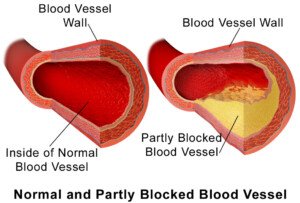
A heart with heavily clogged arteries can still have a consistent beat of 60-something or 70-something per minute.
“A low resting heart rate does not preclude CAD, nor does a low blood pressure,” says Dr. Michael Fiocco, Chief of Open Heart Surgery at Union Memorial Hospital in Baltimore, Maryland, one of the nation’s top 50 heart hospitals.
“The vast majority of coronary disease patients are hypertensive (high blood pressure), but those with normal or low blood pressure are not protected.”
BruceBlaus
I’ve witnessed this myself, in that my mother’s resting heart rate was consistently in the high 60s, sometimes into the 70s, yet she ended up needing quintuple bypass surgery after a catheter angiogram revealed five major coronary arteries to be almost completely blocked.
She had the “slow” resting heart rate right up to the time of surgery.
Almost daily she’d take her blood pressure at home with a little device, and it would show resting heart rate. Her blood pressure was also consistently in the normal range.
Between the slow or “normal” resting heart rate, and the normal blood pressure, my mother was convinced she couldn’t possibly have heart disease.
Dr. Fiocco explains, “Although a low resting heart rate has in the past been a marker of someone who was healthy and fit, a much better measurement is what is called your recovery heart rate.
“In other words, how quickly your heart rate returns to normal after maximum exercise.

Freepik.com ijeab
“If your heart rate drops more than 30 beats, and in the most fit, 50 beats, within two minutes of stopping max exercise, you are considered healthy and at low risk for CAD.”
My mother’s resting heart rate was slower than mine, but pre-surgery she’d get audibly out of breath simply by hurrying to answer the phone in another room; whereas I could sprint across a parking lot in the rain, my baseline heart rate faster than my mother’s.
Yet at the conclusion of the sprint, my heart rate would hardly be elevated and I would not be out of breath.
“Back to the low or normal blood pressure patients,” continues Dr. Fiocco.
“Most are taking better care of themselves, and are less likely to have CAD.
“But there are exceptions and we see patients all the time with normal blood pressure who smoke and have diabetes or a strong family history of CAD, who themselves have CAD.”
Don’t let that slow resting heart rate or low blood pressure fool you; this does not mean you can’t have heart disease!

Dr. Fiocco specializes in treating artery disease, valvular disease and aortic aneurysm. His heart care expertise has earned him recognition by Baltimore Magazine as a Top Doctor in 2010, 2011, 2013, 2016 and 2017.
Lorra Garrick has been covering medical, fitness and cybersecurity topics for many years, having written thousands of articles for print magazines and websites, including as a ghostwriter. She’s also a former ACE-certified personal trainer.
Top image credit: Szlomo Lejb

How Much Coronary Artery Blockage Causes Angina?

How much blockage in the coronary arteries is needed to cause angina?
You can have sludge built up in your arteries and not know it.
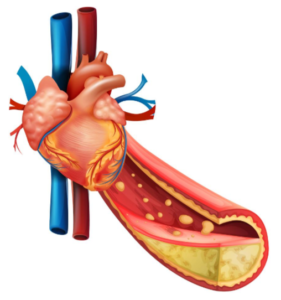
Angina is chest pain from blocked coronary arteries, which restrict blood flow (and thus oxygen) to the heart.
I wondered, however, just how blocked that coronary arteries need to be, in order to cause the symptoms of angina.
“The amount of blockage in an artery needed to cause angina is complicated due to flow dynamics and how the narrowing is measured,” says Michael Fiocco, MD, Chief of Open Heart Surgery at Union Memorial Hospital in Baltimore, Maryland, one of the nation’s top 50 heart hospitals.
“Simplistically, anything over 50 percent is significant and may cause angina with exertion.
Source: vecteezy.com
“Once the narrowing reaches 75-80 percent or more, angina may occur at rest (known as unstable angina). Again this is a general rule and is different from person to person.”
Have you had chest pain during working out or immediately after, that very rapidly disappears?
This can be caused by inflammation of the cartilage in the rib cage (costachondritis).
It can also be caused by the effects of momentary exertion of the chest muscles, such as in a hardcore set of pushups or flyes.

Finally, what can be described as chest pain during or immediately following a sprint or other brief burst of maximal activity could be chest muscle fatigue or soreness from strained, deep inhalations.
This can also happen as a result of arguing if it involves a lot of tension-filled deep breaths in between a hollering match during a heated argument.
But this isn’t chest pain per se, but rather, a sensation of chest fatigue or mild soreness.
Can you have a coronary artery blockage of over 90 percent and yet experience no angina upon exertion?
Dr. Fiocco explains, “Yes, and many people do. If the artery occludes over a long period of time, your heart and body adjust and no symptoms, sometimes even if the artery is occluded.
“Collateral circulation, small capillaries which enlarge and reverse flow, will get some blood to the compromised [heart] muscle to keep it alive and prevent angina.
“This system of collateral circulation will not suffice when more than one artery becomes narrow.”
Can you have a coronary artery blockage of under 50 percent, say, 40 percent, yet experience angina upon exertion?
“No. Either the ‘angina’ is coming from another source, or it is truly angina and the degree of narrowing is being underestimated.”
Dr. Fiocco specializes in treating artery disease, valvular disease and aortic aneurysm. His heart care expertise has earned him recognition by Baltimore Magazine as a Top Doctor in 2010, 2011, 2013, 2016 and 2017.
Lorra Garrick has been covering medical, health and cybersecurity topics for many years, having written thousands of feature articles for a variety of print magazines and websites. She is also a former ACE-certified personal trainer.
.