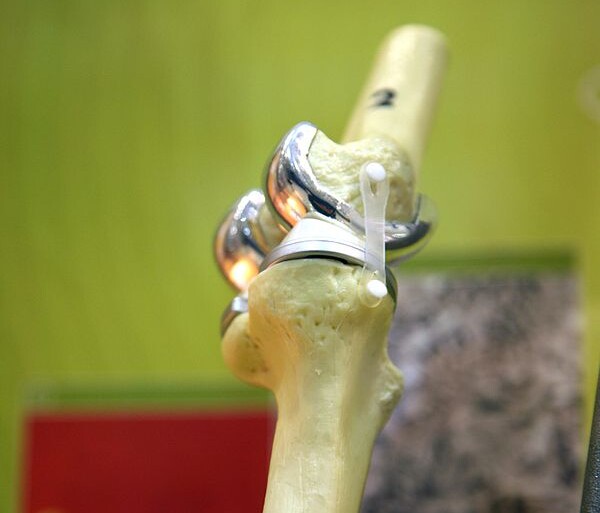
Does a Marcaine Gel Exist for Failed TKR Pain?

Marcaine injections can do wonders to suppress the pain of a failed or loosened knee replacement.
This begs the question of if a gel form of this drug can also be effective.
Very Fast Pain Relief
If Marcaine is injected into the knee of a person with loosened implants from a failed total knee replacement procedure, the pain will be subdued nearly instantly.
For some patients, this quick result will be enough to enable them to walk surprisingly comfortably — when normally, due to the failed TKR, they’d have difficulty walking due to the pain.
But So Temporary
Unfortunately, the anesthetic effect of Marcaine against the pain of a loosened knee replacement lasts for only several hours.
Obviously, the patient can’t keep getting injections every several hours.
Source of the Pain
A doctor will inject Marcaine into the joint to see if the pain in the knee is originating from there, rather than from elsewhere in the body such as a compressed nerve higher up.
Thus, if it’s suspected that the patient’s TKR has failed or loosened, and is therefore causing aggravation in the joint, the physician may elect to administer an injection of Marcaine to help guide in a diagnosis.
This begs the question:
Why can’t a gel form of marcaine be developed to be applied as needed to manage pain from a loosened TKR?
Is there even a such thing as a gel form of this drug?
“Not that I know of, but there are Lidoderm patches that can be applied 12 hours daily which can give some topical relief,” says Henry Boucher, MD, clinical instructor of Adult Reconstruction, Medstar Union Memorial Orthopaedics, Baltimore, MD.
What about a permanent fix to failed TKR pain? Well, unfortunately, the only permanent fix is a knee revision surgery, which takes longer than the original one.
And this is not a guarantee that the problem will be fixed. The revision surgery can also be a fail.

Dr. Boucher’s specialties are hip and knee surgery, replacement and revision, and sports medicine surgery. He has been the recipient of the Golden Apple Award for teaching excellence multiple times.
 Lorra Garrick has been covering medical, fitness and cybersecurity topics for many years, having written thousands of articles for print magazines and websites, including as a ghostwriter. She’s also a former ACE-certified personal trainer.
.
Top image: Freepik.com

Gold Standard for Diagnosing Failed Knee Replacement

There is a gold standard for the identification and diagnosis of a failed or loosened knee replacement.
The hardware can fail due to unknown factors in some cases. In other words, when a failure occurs with a total knee replacement, it’s not necessarily surgeon error at play.
And when the hardware begins loosening up, the patient starts to experience pain in the knee. The pain could be pretty bad, too.
Gold Standard for Diagnosing a Failed Knee Replacement
“The gold standard is serial X-rays and follow-up exam,” says Henry Boucher, MD, clinical instructor of Adult Reconstruction, Medstar Union Memorial Orthopaedics, Baltimore, MD.
He continues, “These diagnose the vast majority of loose implants.”
Serial X-rays are valuable for diagnosing a failed knee replacement because they allow doctors to monitor changes over time.
By comparing images taken at different stages, physicians can detect loosening of components, implant shifts, bone loss or signs of infection.
These progressive changes may not be visible in a single image — but become evident with repeated imaging, helping a doctor identify complications early and guide appropriate treatment or surgical revision if needed.
What about a Marcaine injection to diagnose a failed knee replacement surgery?
Marcaine is an anesthetic, and an orthopedic surgeon may inject the bothersome joint for an evaluation.
“The injection is best to determine if the knee is the actual cause of pain,” says Dr. Boucher.
Pain in the joint may actually originate from elsewhere in the body.
The Marcaine injection can rule out referred pain from another location, “but it does not give the exact diagnosis,” says Dr. Boucher.
An arthogram can look for any loosening or instability in the knee joint.
A bone scan may also be used to look for tell-tale signs of a failed knee replacement, but Dr. Boucher adds that a bone scan is not always reliable, and is open to conflicting interpretation by doctors.
While one surgeon sees no problem with the hardware as viewed on the bone scan image…another surgeon may identify a loosening.
Causes of Loosened Knee Replacements
• Friction caused by the joint surfaces wearing away the implant surface.
• Bacterial infection on the metal or plastic pieces.
• The soft tissue that surrounds the knee is not strong enough to support walking or even standing.
• The implants have been incorrectly placed.
Dr. Boucher’s specialties are hip and knee surgery, replacement and revision, and sports medicine surgery. He has been the recipient of the Golden Apple Award for teaching excellence multiple times.
Lorra Garrick has been covering medical, fitness and cybersecurity topics for many years, having written thousands of articles for print magazines and websites, including as a ghostwriter. She’s also a former ACE-certified personal trainer.
.
Top image credit: Rama

Failed Knee Replacement: Can Marcaine INJECTION Diagnose?

Find out how effective a Marcaine injection might be for detecting a loosened knee replacement (failed TKR).
If your doctor suspects that you have a failed total knee replacement (TKR), he might give you an injection of an anesthetic called Marcaine (bupivacaine).
He may even term the procedure as a “Marcaine diagnosis.”
Effectiveness of Marcaine Injection
It sounds too good to be true, that all a doctor need do is inject your knee, wait a bit, and then voila, he can tell if you have a loosened knee implant.
“The gold standard is serial X-rays and follow-up exam,” says Henry Boucher, MD, clinical instructor of Adult Reconstruction, Medstar Union Memorial Orthopaedics, Baltimore, MD.
“These diagnose the vast majority of loose implants. The injection is best to determine if the knee is the actual cause of pain (rather than a referred or external source), but it does not give the exact diagnosis.”
In other words, the Marcaine injection will alert the physician that the source of pain originates in the knee, rather than the lower back or hip.
However, just what’s going on in the knee (e.g., failed implants) cannot be determined by the Marcaine injection.
Symptoms of a Failed Knee Replacement
An implant may loosen or fail soon after the operation or years after. The following are suspicious symptoms.
Pain during rest or while simply bending the knee a bit while changing position in a chair.
The pain may be a feeling of soreness or severe, and is suggestive of excess fluid in the knee.
Abnormal gait (walking) pattern. However, a normal gait does not rule out a failed or loosened knee replacement.
The surgical knee feels “hot.”
The knee is swollen, reddish or has a rash.
Stiffness and reduced range of motion (more so than what a knee replacement in and of itself would normally cause).
Dr. Boucher’s specialties are hip and knee surgery, replacement and revision, and sports medicine surgery. He has been the recipient of the Golden Apple Award for teaching excellence multiple times.
Lorra Garrick has been covering medical, fitness and cybersecurity topics for many years, having written thousands of articles for print magazines and websites, including as a ghostwriter. She’s also a former ACE-certified personal trainer.
.
Top image: Shutterstock/Africa Studio

Elderly Patient’s Knee Revision Surgery’s Biggest Risk?

Find out just how much advanced age plays a role in determining if you’re a poor candidate for knee revision surgery.
Can you be too old for knee revision surgery due to failed implants? Is old age, in and of itself, a contraindication to knee revision surgery?
“Age by itself is not a contraindication,” says Henry Boucher, MD, clinical instructor of Adult Reconstruction, Medstar Union Memorial Orthopaedics, Baltimore, MD. “Risk increases with the number and severity of comorbitities.”
Age Is not the Only Factor in Risk Assessment for an Elderly Patient’s Knee Replacement Surgery
Examples of comorbidities are diabetes and congestive heart failure. These may prove a lot greater in the risk-benefit assessment for the operation for an elderly man or woman.
A 65-year-old with these issues would be a less suitable candidate for knee revision surgery, or even a first-time joint replacement, than a 90-year-old who does not have any other diagnosed health problems.
Another comorbidity that would really get the surgeon’s attention is pre-existing kidney disease.
“Patients need to be evaluated by their primary MD and/or cardiologist for risk assessment,” adds Dr. Boucher. “Elderly patients are often candidates for revision surgery.”
Other comorbidities of greater concern than how old the patient is would be obesity, emphysema and uncontrolled high blood pressure.
If an orthopedic surgeon has reservations about performing a knee revision procedure due to how old you are, it’s probably because he is not knowledgeable of your general health.
Be sure to make sure that the surgeon has every bit of information about your health so that your advanced age isn’t the only thing that the surgeon bases an opinion on.
A patient of very elderly age who still has decent heart pumping function, healthy kidneys, normal blood pressure, no diabetes and no other serious issues would be a suitable candidate for a knee revision surgery.
Dr. Boucher’s specialties are hip and knee surgery, replacement and revision, and sports medicine surgery. He has been the recipient of the Golden Apple Award for teaching excellence multiple times.
Lorra Garrick has been covering medical, fitness and cybersecurity topics for many years, having written thousands of articles for print magazines and websites, including as a ghostwriter. She’s also a former ACE-certified personal trainer.

Treating Failed Knee Replacement Surgery: Latest Techniques

Exciting new techniques are available for treating failed or loosened total knee replacements, which can cause pain and mobility issues, reducing quality of life.
A typical TKR surgery takes three hours.
Knee revision surgery is a bit more complicated because the parts must be removed.
It’s not as simple as it may sound, and if you’re in need of knee revision surgery, it’s understandable that you may want to know what the latest advancements are.
Options for Failed Knee Replacements
“Best new advances are special metal augments which allow for bone ingrowth fixation to the implant even in cases with significant bone loss,” says Henry Boucher, MD, clinical instructor of Adult Reconstruction, Medstar Union Memorial Orthopaedics, Baltimore, MD.
“Most revision knee systems rely on stems (cemented/uncemented) and surface augments to reconstruct the knee.”
I asked if there was a such thing as resurfacing to repair a failed TKR. Dr. Boucher responds, “No such thing as resurfacing in a revision knee.”
What about partial revisions for failed TKR?
Dr. Boucher explains, “Partial revisions are possible depending on identification of the existing implant and the skills of the surgeon. Some studies show worse outcomes from partial revision, but it is still a viable and effective option depending on the situation.”
How to Tell if Your Knee Replacement Has Loosened
A bone scan is one way to tell, though two doctors viewing the same scan may disagree on whether or not the implant has loosened.
But if you’re having the following symptoms, you should suspect a loosened or failed knee replacement:
• Soreness, and especially severe pain, long after normal postop pain should have gone away.
• Signs of infection: fever, muscle aches, chills.
• Stiffness in the joint or limited range of motion.
• Swelling due to excess fluid in the joint.
Dr. Boucher’s specialties are hip and knee surgery, replacement and revision, and sports medicine surgery. He has been the recipient of the Golden Apple Award for teaching excellence multiple times.
Lorra Garrick has been covering medical, fitness and cybersecurity topics for many years, having written thousands of articles for print magazines and websites, including as a ghostwriter. She’s also a former ACE-certified personal trainer.
Top image: Freepik.com

Bone Scans Difference of Opinion Re: Loosened TKR

Unfortunately, there is no one, single test that can definitively detect a failed total knee replacement. Individual doctor interpretation is much involved.
Have you seen your surgeon about the possibility that your total knee replacement has failed, and he said something like, “It might be loose?”
You get a second opinion from another orthopedic surgeon who says they look okay.
BONE SCAN. You get a bone scan. Your surgeon says the bone scan looks normal. The second opinion is that the bone scan shows “there may be some loosening.”
A third doctor feels the knee, asks questions, then says it’s probably old age or possibly compressed nerves in the lower spine radiating pain to the knee.
Adding to the mess is that the X-rays of your knee replacement have gotten differing interpretations.
“Bone scans are not always helpful tests and can be tricky to interpret,” says Henry Boucher, MD, clinical instructor of Adult Reconstruction, Medstar Union Memorial Orthopaedics, Baltimore, MD.
“There is a high false positive rate if the patient is within two years of the surgery.
“The bone scan needs to be correlated with the X-rays and physical exam. The test should be reviewed by the surgeon and not rely solely on the radiologist report.
“Patients who have two differing opinions unfortunately need a tie-breaker, and if all opinions are different they should rely on reputation and gut feel.”
Medicine is not absolute; much of it is, indeed, based on common sense and gut instinct.
Deciding whether or not you have a failed knee replacement can also be aided by ruling out other possible causes (with tests such as an EMG for spinal nerve compression) of your knee pain and other symptoms associated with loosened implants: swelling and warmth about the knee.
Dr. Boucher’s specialties are hip and knee surgery, replacement and revision, and sports medicine surgery. He has been the recipient of the Golden Apple Award for teaching excellence multiple times.
Lorra Garrick has been covering medical, fitness and cybersecurity topics for many years, having written thousands of articles for print magazines and websites, including as a ghostwriter. She’s also a former ACE-certified personal trainer.
.
Top image: Shutterstock/ChooChin

How Low Must Ejection Fraction Be for Congestive Heart Failure?

Find out what the cut-off point is for when ejection fraction could be low enough to mean congestive heart failure.
People with congestive heart failure have a low ejection fraction, but does a low ejection fraction always mean congestive heart failure? How low is too low?
“The cut-off point where we would start to worry about why the patient’s heart function is being affected is usually below 50%,” says Dr. Sameer Sayeed, a cardiologist at ColumbiaDoctors of Somers, NY.
The ejection fraction simply refers to how much blood the heart pumps with each beat.
The percentage means what percent of the blood, that’s in the heart’s chambers, gets pumped out.
A cardiologist may explain this to a patient in terms of how much of a “squeeze” that the heart has with each beat.
EF is determined for the left ventricle and also for the right: two different figures.
“A normal EF is usually 55-60% or 60-65%, and an EF from 50-55% is generally considered low normal,” says Dr. Sayeed.
“We wouldn’t necessarily call it CHF (congestive heart failure) if the EF was below 50% unless they were having signs and symptoms of CHF like shortness of breath, unable to sleep flat, waking up at night with shortness of breath, or leg swelling, etc., but would call it a depressed EF,” continues Dr. Sayeed.
This can be a little tricky, though, if the patient is of advanced age and never exercises.
They may complain of shortness of breath after pushing a shopping cart full of groceries across a parking lot, loading the car’s trunk, then pushing the cart back.
Chances are, an 80-year-old is going to be short of breath after this.
Does this mean they automatically have congestive heart failure if their ejection fraction is under 50 percent, even as low as 35 percent?
The cardiologist needs to find out if there are other suspicious symptoms and what can explain those symptoms.
Did they have relatively recent coronary bypass surgery and recover fully from it, which might rule out heart disease causing symptoms?
Is an echocardiogram normal? Is a chest X-ray normal?
If yes to all these (and no other symptoms), the patient is most likely short of breath from exertion combined with old age and lack of aerobic exercise.
Athletes exist who have a low ejection fraction.
“An athlete could have a low EF if he had a known cardiomyopathy of some sort, but was able to train himself back to a high endurance level,” says Dr. Sayeed.
“This would be fairly uncommon, as most individuals with a low EF would not be able to be very athletic due to symptoms, unless they were very well-compensated and could deal with the low EF.”

Dr. Sayeed performs echocardiograms and stress tests at the Midtown Manhattan and Westchester offices at Columbia Doctors. He is also trained in cardiac CT imaging.
Lorra Garrick has been covering medical, fitness and cybersecurity topics for many years, having written thousands of articles for print magazines and websites, including as a ghostwriter. She’s also a former ACE-certified personal trainer.
.
Top image: Shutterstock/designer491

Overcome Your Fear of Twitching Muscles Once and for All!

Overcome Your Fear of Twitching Muscles Once and for All!
Here is the sequence of events:
1) You notice a muscle twitching and it won’t stop. It may be under your leg while you’re sitting; on the arch of your foot; a whole toe; a whole finger; below your lower lip; in the chest, torso, upper arm, shoulder…it’s just twitching away.
2) In this day and age of the Internet, you do a search on something like, “Why does my muscle keep twitching?”
3) On the first page of search results are links to ALS sites; you learn that muscle twitching is a well-documented symptom of this merciless, incurable disease.
4) Your “fasciculations” now intensify, becoming more frequent and spreading throughout the body.
So if you first began noticing the twitching in your left lower leg, it’s now spreading up the leg, then to the other leg, and it just seems that your entire body’s muscles are acting up.
5) You now spend hours and hours on the Internet, and every time you find some reassuring information, the next link contradicts the good news that you just read and you’re back at ground zero: fear that you have only two to five years to live.
Scared out of Your Wits About Your Twitching Muscles
“I would say that there is a wealth of knowledge available about neurologic diseases including ways to identify and treat them,” begins Mitzi J. Williams, MD, clinical neurologist with Morehouse School of Medicine and clinical advisor for the Multiple Sclerosis Foundation.
“Because there is so much information available, it can cause one to think that conditions occur more commonly than they do.
“For instance, there are an estimated one million people in the U.S. living with MS — out of an overall population of 325 million people.
“ALS is an even rarer condition and some estimate that there may be 20,000 people living with ALS in the U.S. at any given time.
“Though they have gained recognition through various campaigns to raise awareness and funds for research, they are not at all common diseases.
“Reading and informing yourself about conditions related to your symptoms such as muscle twitching is important, but it is also important to pair that knowledge with medical expertise for diagnosis.
“If you have been seen by a medical professional and have muscle twitching without weakness or other signs of neurologic impairment, it is not likely either of these diseases.”
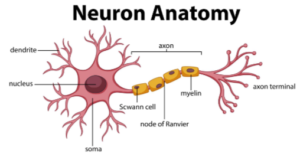
Below are links to articles that will give you a lot of very helpful information.
I know what it’s like; I’ve been there, and I have made sure that my articles will leave you feeling much more empowered with knowledge—and most likely, with the reassurance you’ve been so desperately seeking.
Where are you twitching?
……………………………………………………………………………………………..
Muscle Twitching F.A.Q.
The areas where a twitching muscle is most likely to be visible include the eyelid, an entire finger or toe, the quadriceps area and the chest region. Why you see some fascics and is this worrisome?
Sometimes a muscle twitch looks more like something under the skin making it jump. Here is what that means.
Another name for harmless muscle twitching is benign fasciculations. If you’re suffering from a lot of this, the cause may be anxiety.
As you inspect the front of your legs for any signs of atrophy (which may be a symptom of a neurological disease), you may spot a dent or groove that you swear was never there before. There is a benign explanation,
Do you exercise a lot or hard? Lengthy aerobics sessions, or vigorous cardio activity and even strength training, can cause muscles to twitch afterwards. A doctor explains why in this article.

Dr. Williams is author of “MS Made Simple: The Essential Guide to Understanding Your Multiple Sclerosis Diagnosis,” available on Amazon. She is a member of the American Academy of Neurology.
 Lorra Garrick is a former personal trainer certified by the American Council on Exercise. At Bally Total Fitness she trained clients of all ages for fat loss, muscle building, fitness and improved health.
.
Top image: ©Lorra Garrick
Image of neuron: vecteezy.com

ALS Tongue Twitching, Weakness, EMG Test

Why can’t ALS patients feel their tongue twitching?
Did you know that if you can feel your tongue twitching, this is not a symptom of ALS?
That’s because people with this neurological disease cannot, ever, feel their tongue twitching. Learn more about this.
What ALS tongue twitching really looks like
When you realize what this actually looks like, you’ll probably be overcome with a ton of relief, because, though the tongue in general is “icky” to look at, the twitching tongue of someone with ALS is in a league of its own. Read more…
How to tell the difference between perceived weakness and ALS weakness.
I once read of a man who couldn’t help wonder if he had ALS, even though he was bench pressing 500 pounds.
Though the weakness has to begin from some point, there actually are big differences between benign weakness that one might experience from stress, fatigue or overactive imagination, and pathological weakness. Learn more.
Lorra Garrick has been covering medical, fitness and cybersecurity topics for many years, having written thousands of articles for print magazines and websites, including as a ghostwriter. She’s also a former ACE-certified personal trainer.
Top image: Shutterstock/pathdoc

Why Muscles Seem to Twitch More When at Rest

Find out why your muscles begin twitching while at rest, but stop when you move.
One day I sat at my computer and began noticing that my leg muscles were twitching all over.
Not much sooner, I had completed a two hour power hike and trail run, during which I perceived no twitching.
If I moved my knees in and out, or repeatedly went up and down on the balls of my feet, the twitching ceased. Or did it?
I’ve had twitching (fasciculations), but never while I was moving that muscle group. Or so it seemed.
“Benign twitches are more prominent when the muscle is at rest for two major reasons,” begins Anthony P. Geraci, MD, associate professor of neurology at Donald & Barbara Zucker School of Medicine in New York.
“First, if we are at rest—sitting or lying down—we are more likely to notice a twitch.
“Second, even when we think we are perfectly still, our nerves and muscles are very busy keeping us still.
“We have a feedback loop between the muscles and spine that keeps our posture steady, etc.
“Our agonist and antagonist muscles are always in a state of balance.
“For example, when we move our biceps, the triceps receives signals from the spine to inhibit it from contracting and fighting against the bicep.
“This phenomenon occurs constantly and the inhibitory signals keep the muscle membranes stable.”
So if you’re at your computer in a seemingly immobile state, your muscle fibers aren’t exactly inert.
There’s still activity going on.
Think of them as being on standby for more prominent movement such as shifting position in your chair.
And of course, it makes a lot of sense that you wouldn’t feel twitching while you’re walking, cleaning the house or exercising.
The fact that muscles “seem” to twitch only while at rest in NO way points to a possible disease process.
There is nothing intrinsic about rest that suggests a pathology.
So go ahead, get in your favorite chair and relax!
 Dr. Geraci is also the director of neuromuscular medicine at Northwell Health in New York.
Lorra Garrick has been covering medical, fitness and cybersecurity topics for many years, having written thousands of articles for print magazines and websites, including as a ghostwriter. She’s also a former ACE-certified personal trainer.