
Can You Get Six-Pack Abs from Cardio or 1,000 Sit-ups a Day?

So which is better for getting six-pack abs: 1,000 sit-ups every day or a regular program of cardio?
After all, who doesn’t want six-pack abs, right?
Cardio beats 1,000 daily sit-ups any day for getting a six-pack.
Why is cardio superior to doing a thousand sit-ups every day for achieving six-pack abs? After all, cardio doesn’t even target the abs.
But it’s not about targeting. It’s about engaging the abs in combination with burning overall body fat.
If you target the abs, even with a thousand sit-ups every day, you’re still working only a very small muscle group.
The abdominal rectus (six-pack) group functions to stabilize the spine, as well as bend the trunk. Big deal.
Carrying out these tasks won’t do much to raise the body’s energy needs, even if the bending (sit-ups) is repeated a thousand times.
Though a poorly conditioned person will struggle with just one sit-up, don’t let this fool you.
This simple isolation movement is very miniscule work as far as force production and energy expenditure. Ab muscles are weak.
When people lift very heavy things, which muscles do they use?
Their legs, back, chest and shoulders, essentially. When you do cardio, which muscles work?
Those in the legs (and butt). For people who find it difficult to understand how cardio can bring out a six-pack, and 1,000 crunches a day will fail, I say look no further than the most extreme form of cardio: the competitive sprinter.
Show me one competitive sprinter who does NOT have a prominent six-pack. This also goes for 400 meter, even 800 meter specialists. It goes for soccer players and tennis players, who do a lot of cardio.
But you need not do a lot of cardio to get a six-pack or definition.

Freepik.com, dille
The time spent running, that the above athletes actually do, isn’t that much, when you really think about it. It’s brief bursts, stop and go, stop and go. But the bursts are significant.
When we apply this concept to a structured cardio program for the non-competitive athlete, it translates to high intensity interval training. This is a form of cardio exercise. It blasts fat.
In order to “get” a six-pack, you must shed enough body fat to reveal these ab muscles.
A thousand crunches a day will shed miniscule fat. But high intensity interval training (even when done only twice a week) will burn a LOT of fat because it speeds up resting metabolism!
HIIT sets off a hormonal response that results in accelerated fat-burning, even while you’re at rest.
 Lorra Garrick has been covering medical, fitness and cybersecurity topics for many years, having written thousands of articles for print magazines and websites, including as a ghostwriter. She’s also a former ACE-certified personal trainer for Bally Total Fitness.
.
Top image: Shutterstock/Viktor Gladkov
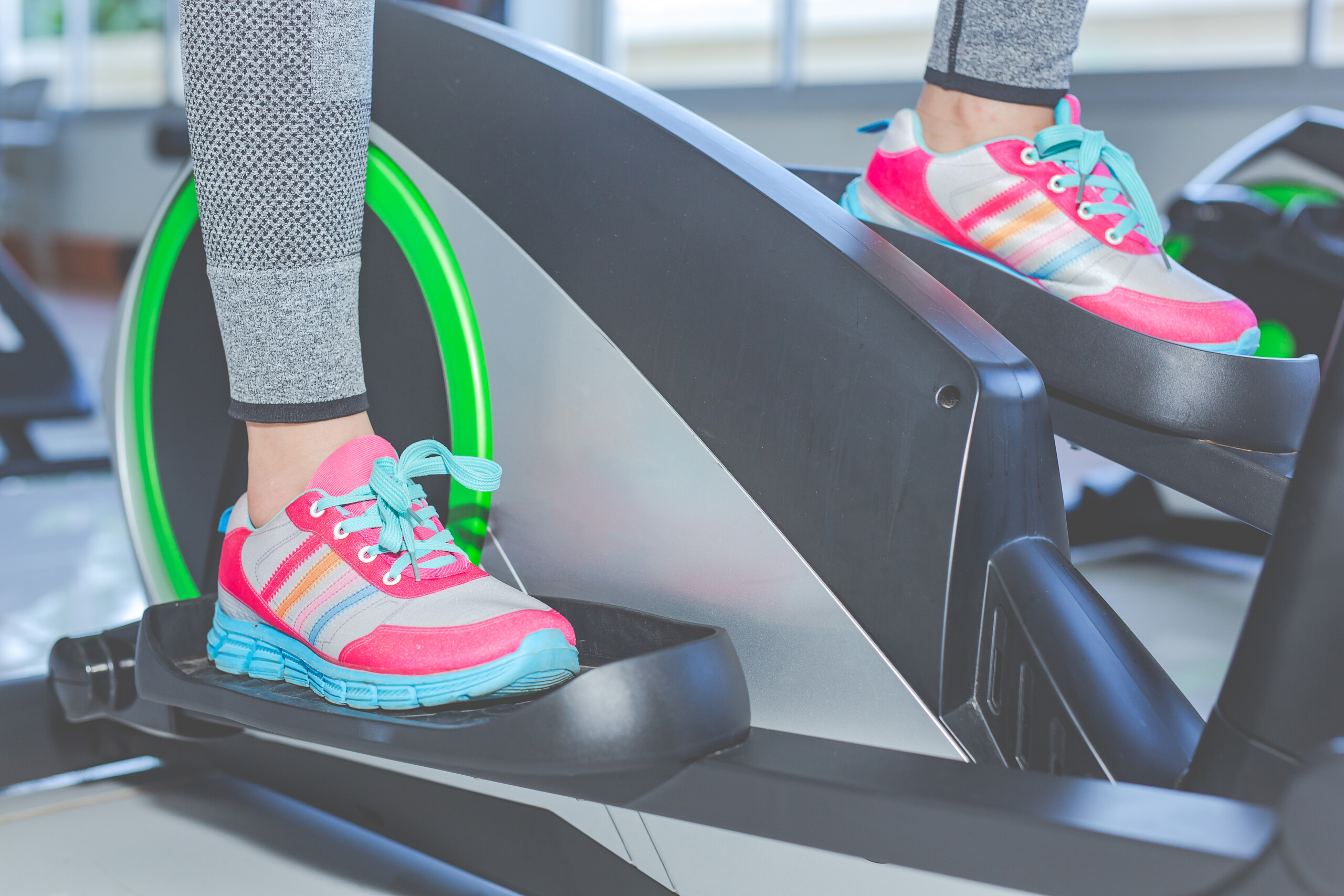
Benefits of Backwards Pedaling on an Elliptical Machine

The forward direction of pedaling on the elliptical trainer recruits a different pattern of muscles than does going backwards.
Try it and you’ll feel the difference.
With elliptical backwards pedaling, your upper body is facing forward, opposite the direction of your movement, unlike in backwards walking/jogging or reverse stepping on a stair climber.
Posture and body alignment will be thrown off when a person is forward pedaling AND holding onto the machine’s rails.
In pronounced cases, the person is leaning forward, butt sticking way out while they hold tightly to the rails.
Remove the hands and let them swing in synch with the lower body, and this will immediately correct postural deviations.
For a real thigh (quadriceps) killer, pedal backwards on the elliptical but squat down a bit. Keep back straight.
The lower you go, the more challenging it will be to keep from holding onto the rails.
So if you feel a need to, I recommend lightly making contact with just the fingers – no outright gripping, since gripping or clasping with the entire hand will encourage pulling and yanking as you fatigue.
The idea is to induce a nasty burn in the quads while using the fingers on the rails only to maintain balance.
Try to keep back straight. The higher the pedal angle, the more difficult this maneuver will be.
This is a serious thigh burner. Your quads will KILL.
Because this type of exercise is so searing, it’s supposed to be done for only a few minutes or so at at time, after which you straighten your legs into their normal pedaling position and pedal forward for recovery.
If your thighs exhaust after only 30 seconds, then go into recovery mode.
This is not supposed to be a sustained activity, but rather, a brief and very intense interval.
Do three or four of these; think of this as a hybrid of squatting and pedaling: “Squadaling”
Backwards pedaling on the elliptical is also useful without the squatting or half-squatting, if for no other reason it alleviates boredom from the same forward motion.
It definitely targets the quads more than forward pedaling.
Finally, backward pedaling on the elliptical trainer is superior to backward walking on a stair stepper or revolving staircase machine.
On the staircase, one’s leg movement speed is limited due to the precarious nature of the body position.
Adding to the cumbersome nature of this is that you must be acutely aware of foot placement, requiring you to continuously look down if you’re not holding onto the rails, which will compromise your posture.
Pedaling backwards on the elliptical machine will allow you to go all-out without worrying about foot placement or losing balance.
 Lorra Garrick is a former personal trainer certified through the American Council on Exercise. At Bally Total Fitness she trained women and men of all ages for fat loss, muscle building, fitness and improved health.
.
Top image: Freepik.com/jcomp

Orthostatic Hypotension Caused By Low Thyroid

Low thyroid may be causing your orthostatic hypotension, even if you’ve already been taking medication for low thyroid.
The efficacy of medication for low thyroid can become compromised by surgery, such as coronary bypass, or, your body many spontaneously need a higher dose over time – and these issues can bring on symptoms of low thyroid that you may not have had before… such as orthostatic hypotension.
Basically, orthostatic hypotension (orthostasis) is when there is a sudden and extreme blood pressure drop when a person changes positions: rising from a lying or seated position and then standing or immediately walking across a room.
The autonomic nervous system regulates blood pressure changes so that when a person makes sudden changes in position, blood pressure adjusts appropriately.
With orthostatic hypotension, this mechanism doesn’t work properly.
As a result, a person with orthostatic hypotension who (for example) stands from a seated position and immediately walks away, will experience a range of interesting effects:
- an impending black-out feeling
- feeling dizzy or faint; woozy or lightheaded
- or even actually passing out — presenting a fall hazard.
There are many causes of orthostatic hypotension, and I wondered if low thyroid could be one.
Can low thyroid be a cause of orthostatic hypotension?
“Yes, a major cause of orthostatic hypotension is poor adrenal functioning, commonly known as adrenal fatigue,” explains Kent Holtorf, MD, MD, thyroidologist and founder of Holtorf Medical Group in California.
“The adrenals can fail to function properly with low thyroid levels, so untreated or undertreated hypothyroidism can result in orthostasis.”
Hypothyroidism is the medical term for low thyroid, when this gland does not produce adequate amounts of the hormone thyroxine, which controls metabolism and many other bodily processes.
It’s not surprising, then, that low thyroid can mess up adrenal function. The adrenals are glands. Adrenal deficiency can be diagnosed with blood tests.
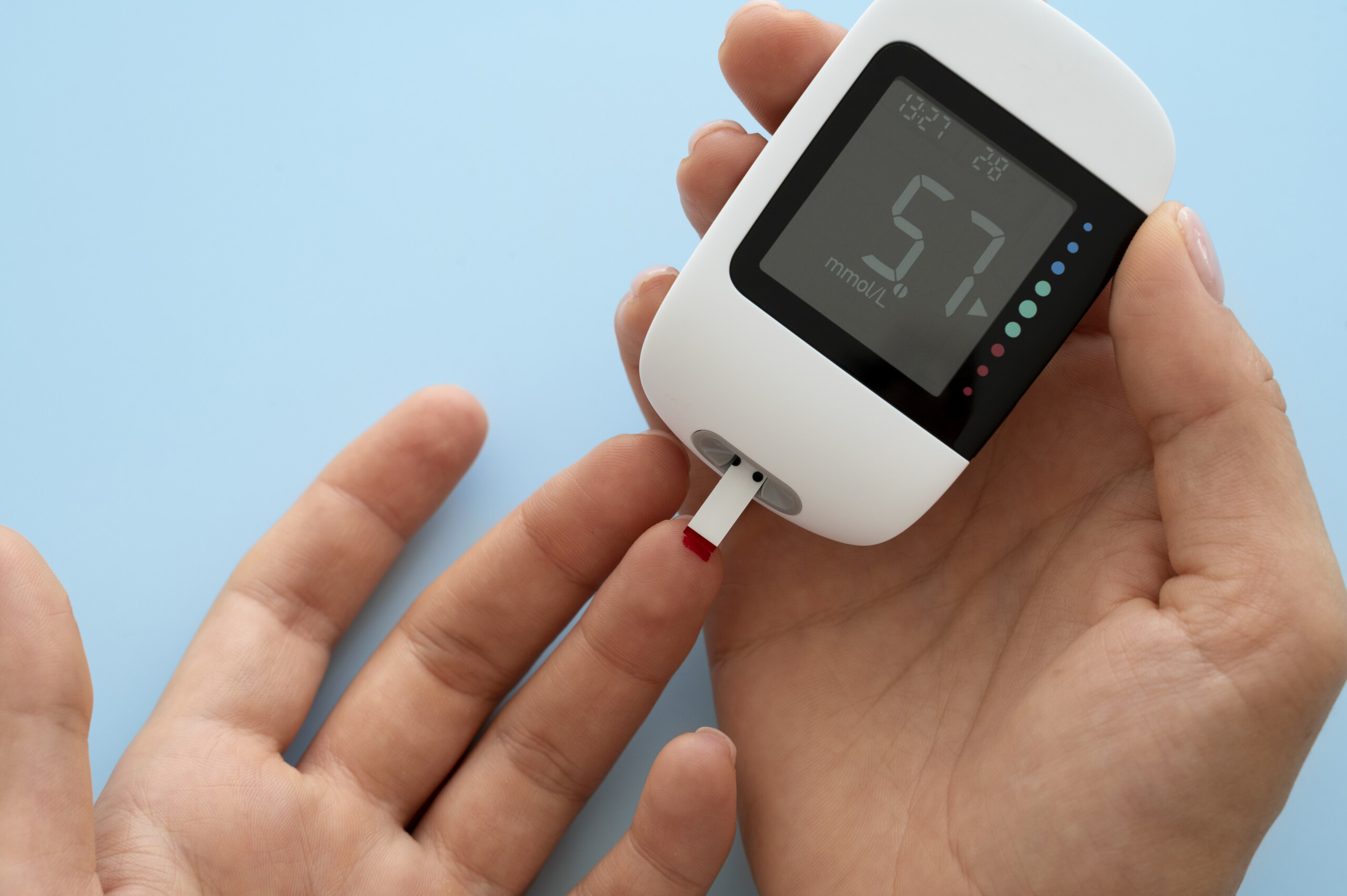
If you’ve been suffering with what seems to be orthostatic hypotension (various tests given by medical professionals can confirm a diagnosis; and a home test with a blood pressure monitor is a valuable tool in pointing towards this condition), you must have your thyroid levels checked, even if you’ve been on medication for hypothyroidism and a past blood test showed a normal TSH level.
What can you do in the meantime to minimize orthostasis as well as help suppress other hypothyroid symptoms?
Is there an interim drug to help with orthostasis that can be taken until the thyroid medication is increased?
Dr. Holtorf explains, “There are a number of treatments for orthostatic hypotension, including increasing salt and fluid intake, taking adrenal support nutrients such as licorice root and ginseng, and adrenal support hormones such as cortisol, fludrocortisone, DHEA and pregnenolone.”
 Dr. Holtorf has published a number of endocrine reviews on complex topics in peer-reviewed journals on controversial diseases and treatments.
Lorra Garrick has been covering medical, fitness and cybersecurity topics for many years, having written thousands of articles for print magazines and websites, including as a ghostwriter. She’s also a former ACE-certified personal trainer.
.
Top image: ©Lorra Garrick

Best Treatment for Metabolic Syndrome: Can Lead to Diabetes

Metabolic syndrome is no picnic but it’s highly treatable. You may have metabolic syndrome and not even know it.
It is dangerous. It comes with fatigue, slowed metabolism and fat gain, plus blood sugar issues that can lead to type 2 diabetes.
Your doctor can tell you if you have metabolic syndrome or are headed in that direction.
Of course, if you’re overweight, don’t exercise and eat a lot of processed foods — and you feel rundown or often fatigued — you wouldn’t exactly be in left field to suspect metabolic syndrome.
Best Ways to Fight Metabolic Syndrome
One great way is the Mediterranean diet.
“The Mediterranean diet is high in fruits, vegetables, fish, nuts and seeds, and olive oil,” says Julie Cunningham, MPH, RD, LDN, registered dietitian and certified diabetes educator.
“Thus, it contains lots of antioxidants, omega-3 fatty acids and fiber, which are beneficial for the prevention of different cancers as well as heart disease.”
Falsely Believing You’re on the Mediterranean Diet
Many people believe they are on the Mediterranean diet, when in fact, their eating habits are far from it.
Olive oil in your cupboard, in and of itself, does not mean you’re truly on the Mediterranean diet!
A very large study in Journal of the American College of Cardiology (March 15, 2011) endorses the Mediterranean diet as a way to fight off metabolic syndrome.
What exactly is metabolic syndrome?
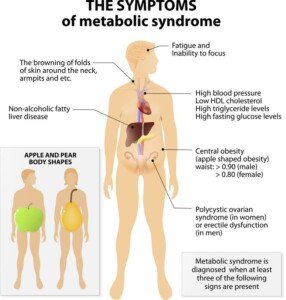
Metabolic syndrome is the catch-all term given to having a cluster of conditions that significantly raise risk of heart disease and type 2 diabetes.
The cluster of conditions are: insulin resistance, poor cholesterol profile, high blood pressure, and a higher than normal risk for developing blood clots.
As just mentioned, metabolic syndrome is associated with obesity, as well as just having excess belly fat.
Shutterstock/Disignua
Who gets metabolic syndrome?
A blaring risk factor for metabolic syndrome is lack of exercise, or inadequate exercise.
“People with metabolic syndrome benefit from regular cardiovascular exercise (such as walking 30 minutes five days per week), mild weight loss if they are overweight, and a diet that is high in omega-3 fatty acids (olive oil, fatty fish, nuts and seeds).” explains Cunningham.
Other lifestyle habits put you at risk for metabolic syndrome:
- Progressive weight gain
- Smoking
- Highly processed-carbohydrate diet, and though metabolic syndrome can cause weight gain, being obese is the greatest risk factor.

The Study Report
The JACC report is an analysis of 50 studies involving the Mediterranean diet, encompassing about 500,000 participants.
The Mediterranean diet positively impacts problems like excessive waist circumference, “bad” cholesterol and triglyceride levels, blood pressure and glucose (blood sugar) metabolism.
“The prevalence of the metabolic syndrome is increasing rapidly throughout the world, in parallel with the increasing incidence of diabetes and obesity, and now considered a major public health problem,” says lead researcher Demosthenes Panagiotakos, PhD, in the paper.
Mediterranean diet food pyramids vary.
But the variation is minimal. Whole grain cereals are also permitted, and some pyramids show daily consumption of olive oil or olives.
The Mediterranean diet forbids processed foods as staples other than the cereals, breads and pastas.
“Our results add to the existing knowledge, and further demonstrate the protective role and the significance that lifestyle factors, and mainly dietary habits, have when it comes to the development and progression of the metabolic syndrome,” says the JACC paper.
 Julie Cunningham specializes in helping men and women with diabetes and prediabetes learn how to eat to manage their blood sugars–so they can get back to the things they enjoy.
Lorra Garrick has been covering medical, fitness and cybersecurity topics for many years, having written thousands of articles for print magazines and websites, including as a ghostwriter. She’s also a former ACE-certified personal trainer.
.
Sources:
sciencedaily.com/releases/2011/03/110307161851.htm
medicinenet.com/metabolic_syndrome/article.htm

How Long Can Colon Cancer Go Undetected?

A gastroenterologist explains how long cancer of the colon can go undetected.
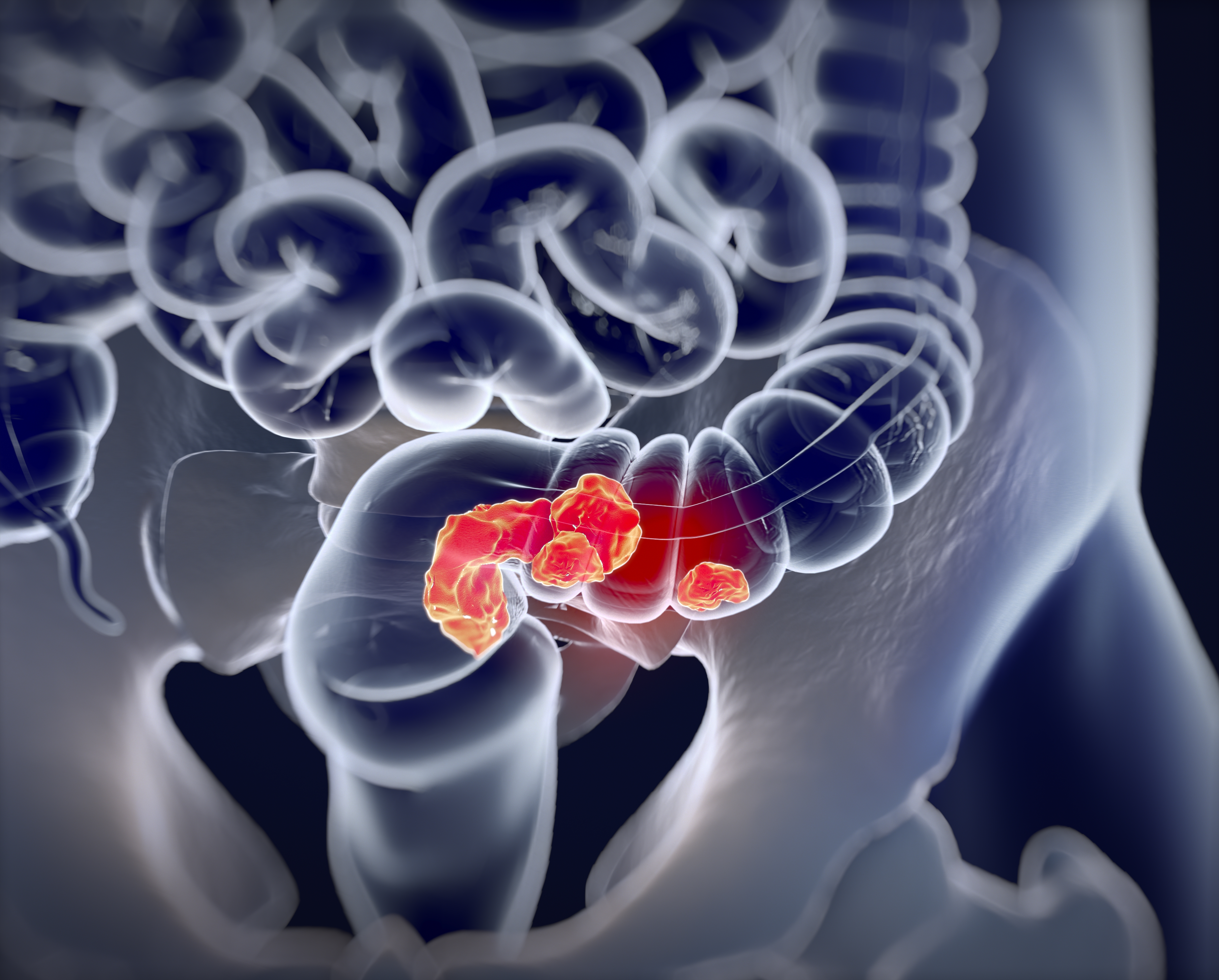
“Cancer [including that of the colon] can go undetected for many years since it rarely causes any pain or symptoms other than anemia,” says John Covington, MD, a gastroenterologist with a private practice in Maryland.
“If caught early it is curable. Polyps can sometimes turn into cancer, but they do not cause any symptoms.
“You don’t know that you have polyps unless the doctor looks inside with a colonoscope. So in order to detect and remove them, colonoscopy is needed every 10 years.”
Based on this information, one can deduce that cancer in the colon can go undetected for up to 10 years, meaning, a colonoscopy turns up normal results, and then one a decade later shows a malignant tumor.
But it’s impossible to tell at what point along the timeline that a polyp, which would have precursed a primary cancer in the colon, began growing, and even more elusive would be at one point it began transforming into a malignancy.
Another point to consider is that a person may begin developing symptoms from a colon cancer, but there’s no way to tell how long the disease had been festering inside their gut prior to the development of symptoms.
The precise, absolute answer to “How long can colon cancer go undetected,” then, remains undetermined.
A colonoscopy can prevent the development of colon cancer.
- Blood in the stools — could be red, reddish brown or even black with a tarry look
- Pencil-thin or ribbon stools
- Feeling of incomplete voiding after a bowel movement
- Constipation or diarrhea
- Alternating constipation with diarrhea
- Odd change in bowel habits
- Abdominal pain or cramps, gas
- Feeling of bloating or fullness
- Unexplained weight loss or fatigue
- Back pain
 Dr. Covington provides comprehensive care for digestive tract diseases, offering the latest diagnostic and treatment options including colonoscopy, upper endoscopy and small bowel capsule endoscopy.
Lorra Garrick has been covering medical, fitness and cybersecurity topics for many years, having written thousands of articles for print magazines and websites, including as a ghostwriter. She’s also a former ACE-certified personal trainer.
Top image: Shutterstock/Anatomy Insider
How Long Does It Take for a Colon Polyp to Become Cancer?
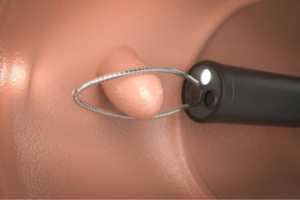
You know that a polyp can be sitting in your colon for years, but just how long does it take to turn into cancer?
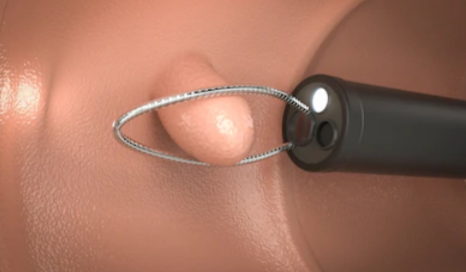
There’s a real high risk for cancer transformation of a colon polyp, which is why they are removed right on the spot when discovered during a colonoscopy.
Time It Takes for a Polyp to Turn into Colon Cancer
Two Basic Kinds of Polyps
“Hyperplastic polyps which are never thought to turn to cancer, and adenomatous polyps (also called adenomas, which can potentially grow to cancer after many years),” explains John Covington, MD, a gastroenterologist with a private practice in Maryland.
“But most adenomas will not turn into cancer.”
There are five total types of polyps.
Why are screenings recommended every 10 years for those at average risk of colon cancer?
“We recommend regular screening colonoscopies every 10 years because the vast majority of adenomas in the average patient grow slowly and pose no risk for at least 10 years,” says Dr. Convington.
“Therefore a routine colonoscopy every 10 years will assure us that colon polyps can be detected and removed long before cancer develops.”
The 10-year guideline applies to people with average risk of colon cancer.
Dr. Covington says, “There are special situations where cancer risk is higher and could develop earlier, but your doctor can identify those particular situations where colonoscopy is needed sooner and more frequently.”
- Blood in the stools — could be red, reddish brown or even black with a tarry look
- Pencil-thin or ribbon stools
- Feeling of incomplete voiding after a bowel movement
- Constipation or diarrhea
- Alternating constipation with diarrhea
- Odd change in bowel habits
- Abdominal pain or cramps, gas
- Feeling of bloating or fullness
- Unexplained weight loss or fatigue
- Back pain
Dr. Covington provides comprehensive care for digestive tract diseases, offering the latest diagnostic and treatment options including colonoscopy, upper endoscopy and small bowel capsule endoscopy.
Lorra Garrick has been covering medical, fitness and cybersecurity topics for many years, having written thousands of articles for print magazines and websites, including as a ghostwriter. She’s also a former ACE-certified personal trainer.
.
Top image: Shutterstock/Phonlamai Photo

When It Comes to Bullying Among Kids, Size DOESN’T Matter
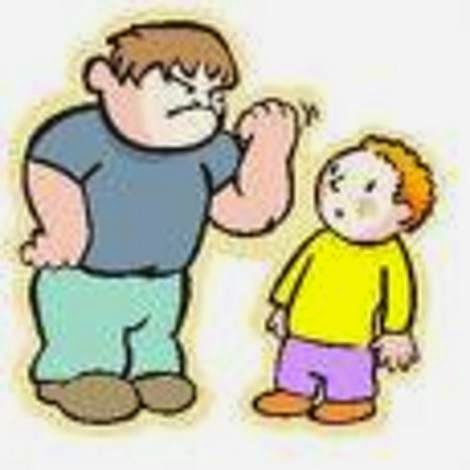
It’s actually often the case that a bully is much smaller than the victim.
You’ve probably witnessed this growing up: The meanest bully is far from being the biggest kid in the grade or even classroom.
Certainly many people, in childhood or teen-hood, have witnessed bullying situations in which the victim was the bigger of the two.
This phenomenon occurs in adults all the time — in which the victim is bigger — so why wouldn’t it also be prevalent among school kids?
Though it’s easier for one to be a cyber bully since they are safe behind a computer screen and don’t have to worry about getting punched by the victim, it still stands even today that often, the bully has enough fire inside that it’s not required for their targets to be smaller.
“Bullying is becoming more of a mental game than a physical one with multiple ways in which a bully can ridicule or induce a feeling of powerlessness within a victim,” says Kyle Gillett, Ph.D., LMFT, Executive Director and Founder of Solstice East and Asheville Academy for Girls.
He leads groups and conferences on bullying, helping not only victims but also the bullies.
But as far as face-to-face bullying, it’s “truly a myth” that the mean kid is usually bigger, heavier and/or taller, says Tara Fishler, a conflict resolution specialist and founder of Customized Training Solutions in New York which provides conflict resolution, training and strategic management services.
“Once when I taught a parent workshop, I used clip art of a bigger child punching a smaller child,” says Fishler.
“A parent came up to me and asked me not to use that in the future. Her son was a big kid and it seemed people assumed he was a bully, but from her perspective, he was a sweet kid who was often the target, not the perpetrator.
“I never used that image again. It is not a child’s size that matters; it is the authority they project.”
There’s nothing inherent in a big body that increases the propensity for becoming mean. What drives a child to become a bully are the circumstances at home, not the size of his body.
A small child with enough anger or learned-aggression in him can always find a vulnerable, non-assertive classmate to heap on, and vulnerable, defenseless kids come in all sizes—including extra large and extra tall.
In junior high school and high school I witnessed incidents involving bullies who were a lot smaller than their targets.
“While there isn’t a universally accepted definition of bullying, the best way I can describe it is some type of aggressive behavior (physical, emotional, social, etc.) from one individual or a group of individuals with the intent to harm (physically, emotionally, socially, etc.) in which a power differential is present,” explains Dr. Gillet.
“This power differential can take many forms—including physical (bigger or stronger), intellectual (smarter or more savvy), social (more “popular” or accepted), or could even represent a power differential in numbers (a group of kids bullying one single child).
“So, again, size is only one example of power differential that can be present in a bully.”
 Tara Fishler works with adults and students creating interactive workshops on numerous topics including anger management, communication skills and anti-bullying.
 Dr. Gillett’s career has focused on treating both boys and girls, with specialization in trauma, processing difficulties, eating disorders, depression, anxiety, OCD and difficult family systems.
Source: solsticeeast.com, ashevilleacademy.com bully bigger than victim

Do Kids Who Don’t Get Spanked Become Bullies?

If you never spank your child, will they be at higher risk of eventually becoming a bully towards other kids?
Is there really a connection between lack of corporal punishment and becoming a bully?
More than one parent has posted in a forum, “If more people spanked their children, there’d be a lot less bullying.”
But we really have to look at this from a logical perspective rather than from an emotional perspective.
Just how on earth can getting NO spankings inspire a child to push around a classmate or pick fights in the schoolyard?
To put this another way, how would punishment of only timeouts, groundings, being sent to one’s room and confiscation of toys, the computer, TV, etc., encourage that child to then go out and shove other kids to the ground, trip them or unleash verbal insults?
Do you really believe that the absence of spankings made this child mean?
Why do kids become bullies?
– To prevent being a victim.
– Low self-esteem; bullying makes them feel 10 feet tall.
– To be revered by classmates as a leader.
– Learned behavior: An older person in the household, usually a parent, bullies the bully; or, the bully has repeatedly witnessed a parent behave aggressively towards other adults.
Expert’s Perspective
“It’s unfortunate when blanket statements are made regarding specific parenting approaches,” says Kyle Gillett, PhD, a licensed marriage and family therapist, and Executive Director and Founder of Solstice East and Asheville Academy for Girls.
He leads groups and conferences on bullying, aiding victims and also the bullies.
“The truth is that spanking or the lack of spanking in a parenting skillset has never been shown to cause anything — the association lies much more in the overall approach that parents apply in their parenting.”
Parenting can be divided into three categories: permissive, authoritarian and authoritative.
“A permissive parent has too few boundaries/rules and/or does not enforce them in a healthy way in the home (may be seen as a pushover).
“An authoritarian parent has too many boundaries/rules and/or may enforce them in too strict or demeaning of a manner (yelling, punitive punishments, could be seen as a drill sergeant).
“An authoritative parent has just the right balance of boundaries/rules, and enforces them consistently and with a respectful tone/approach.”
Dr. Gillet further explains, “So, a permissive parent not spanking his/her child could — along with MANY other passive and permissive parenting approaches — inadvertently teach a child how to manipulate a situation, take advantage of others, have very few boundaries, etc., which could lead to bullying.
“An authoritarian parent spanking his/her child on a regular basis could teach a child that physical confrontation is the way to solve problems and enforce differences in opinion.
“The good ol’ ‘kick the dog’ syndrome could apply here in which a child feels powerless with his or her parents, and in craving some power, determines to exert it through bullying behavior towards younger siblings or same-aged peers.
“An authoritative parent may choose to spank their child or not, and apply alongside their spanking strategy [or not] many other well-balanced boundaries/rules and ways to enforce those rules that teach their children not only to follow rules, but also how to appropriately show respect for others, communicate in healthy ways, and ultimately how not to be a bully.
“In other words, spanking or not spanking has little to nothing to do with whether a child will become a bully.”
Dr. Gillett’s career has focused on treating both boys and girls, with specialization in trauma, processing difficulties, eating disorders, depression, anxiety, OCD and difficult family systems.
Lorra Garrick has been covering medical, fitness and cybersecurity topics for many years, having written thousands of articles for print magazines and websites, including as a ghostwriter. She’s also a former ACE-certified personal trainer.
.
Top image: Shutterstock/Lopolo
Sources: solsticeeast.com, www.ashevilleacademy.com
Bullying: Complaining to School vs. Empowering the Victim
If you complain to the school that your child is being bullied, will this dis-empower the victim by making him or her feel helpless?
Parents whose child is being bullied at school are in a tough spot, because on one hand, it seems that the best course of action is to report the problem to the school officials and principal.
But on the other hand, could this course make the victim feel as though they lack any power to help solve the problem?
Will this feeling of “I need help to solve all my problems” haunt them throughout adulthood?
“A sad truth about bullying is that, while no one ‘asks for’ or ‘deserves’ to be bullied, there are actually many things that the targets of bullying may inadvertently do that serves to invite, or ‘attract’ bullying behavior,” explains Kyle Gillett, PhD, LMFT, Executive Director and Founder of Solstice East and Asheville Academy for Girls.
He leads groups and conferences on bullying, helping not only victims but also the bullies.
This is not a blame the victim mindset, either. The “invitation” is a human phenomenon, and it’s evident across all age brackets, including at the workplace.
Simply compare coworkers who are harassed to those who are not, and you’ll see common threads in both groups.
Another way to understand this is to imagine you’re back in high school or junior high, and you feel like bullying a classmate. What kind of classmate would you choose?
Gillet continues, “Each situation is a little different, so a blanket statement of how to approach a situation is relatively impossible, but the truth of the matter is that both approaches (complaining to the school and empowering the bully victim) need to be taken to ensure that your child is best protected from bullying.”
Depends on the School
“Many schools these days have very active anti-bullying campaigns, and solid policies that simply do not tolerate bullying,” says Gillet.
“Other schools may not have well-developed bullying prevention strategies, or honestly may be so consumed by attempting to deal with many instances of bullying that singular requests could fall by the wayside.”
Responsibility of School
“Regardless of the situation, it is the responsibility of ALL schools to provide a safe learning environment that allows each child in attendance the ability to access an education,” explains Gillet.
“If the school is not doing this, they can be financially responsible for providing a different environment in which a child’s needs can be met. Bottom line is, the school should always be at least notified of the occurrence of bullying.”
What can parents do to help empower their child?
Gillet says that parents should educate their children as follows:
– how to identify if you are being bullied
– that it is okay and important to defend oneself if possible in unsafe situations
– how to speak to a parent or adult if you are experiencing bullying
– the importance of not just trying to bully someone back or seek revenge
Dr. Gillett’s career has focused on treating both boys and girls, with specialization in trauma, processing difficulties, eating disorders, depression, anxiety, OCD and difficult family systems.
Lorra Garrick has been covering medical, fitness and cybersecurity topics for many years, having written thousands of articles for print magazines and websites, including as a ghostwriter. She’s also a former ACE-certified personal trainer.
.
Top image: Shutterstock/Lopolo
Sources: www.solsticeeast.com, www.ashevilleacademy.com

Caregivers: Prevent Back, Shoulder Pain with 3 Exercises

Here are three exercises that every caregiver should do to help prevent back and shoulder pain.
I know what the physical demands of caregiving are like due to personal experience with both parents.
And as a former personal trainer who’s had clients with back and shoulder issues, I also know which exercises are best at preventing back and shoulder pain.
If I could choose only three exercises for caregivers that would, more than any other type of exercise, prevent back and shoulder pain, they would be:
DEADLIFT
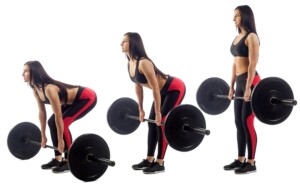
Shutterstock, Everyonephoto Studio
SQUAT
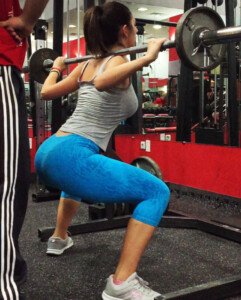
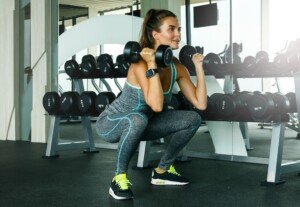
Shutterstock/BLACKDAY
BENCH PRESS
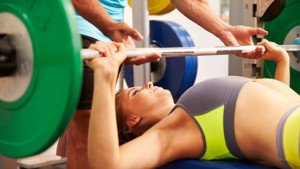
Shutterstock/Monkey Business Images
This doesn’t mean that there’s no such thing as a caregiver with back and shoulder pain who does at least one of these exercises. I’m sure there are.
Which brings me to my next point: HOW these exercises are conducted is just as important as actually doing them.
According to research by Amy Darragh, PhD, an occupational therapist from Ohio State’s School of Health and Rehabilitation Sciences, the small group of caregivers who were part of her study reported the following tasks as being problematic: transfers, toilet use, bathing, navigation of stairs and recovery from falls.
I urge all caregivers to seriously and intensely do the deadlift, bench press and squat.
I’ve been doing these for years, so when it was time to be a caregiver to my mother, I was already prepared.
However, if you’re currently caregiving and have not been working out; or, if you’ve been exercising but still suffer back and shoulder pain; or if you’re not a caregiver but foresee that one day in the future you will be — then by all means, follow my plan.
The key to the prevention of back and shoulder pain is to engage in the deadlift, bench press and squat using the following scheme: a five- to 10-repetition maximum.
This means you can perform at least five repetitions of any of these three exercises, but find that 11 at the same weight is absolutely impossible.
There are additional requirements for making these three multi-joint movements go a very long way at preventing back and shoulder pain in the caregiver:
#1. Master correct form. I can’t say this enough! Perfect form is mandatory.
#2. Be consistent. Twice a week is all you need.
#3. Warm up; don’t skimp here.
#4. Be progressive. This means don’t sit pretty at the same weight for months on end. Strive to increase the poundage over time.
#5. Crush any delusion that developing musculoskeletal strength via these exercises will result in unsightly muscles.
#6. Trust me. I took care of my elderly mother for four months after she had quintuple bypass surgery and mitral valve replacement, a pacemaker implant and two brain surgeries.
I had to deal with extreme non-compliance that was generated in part by her natural personality and also cognitive impairment that resulted from bizarre drops in blood pressure (which depleted oxygen supply to her brain).
Nobody was ever able to identify her blood pressure dives which began soon after the pacemaker implant.
But every time she exited a chair, within minutes she’d begin passing out, but not before her cognition became impaired — too impaired to realize she should have a seat to avoid fainting.
This meant I had to shadow her to prevent a fall. My father couldn’t because nine days prior to her heart surgery, he’d had back surgery and had limited physical abilities.
When my mother began passing out, no matter where she was, I had to be behind her to “catch” her and “sink” her to the floor or ground.
If I continued holding her upright, she’d pass out completely.
To restore blood flow to her brain, I had to sink her to the floor/ground.
This was done by slipping my arms under her armpits and lowering her 135-pound body gently (she was not able to assist, due to lack of wits due to the oxygen depletion) to the floor/ground, setting her first in a seated position, then leaning her back at an incline and waiting for adequate blood to reach her brain.
Sometimes during the sinking, her legs were stiff, nearly straight and non-functioning.
Once I saw her wits returning, I’d get into a squat-deadlift hybrid position, arms under her armpits, and straighten, lifting her to her feet, since these episodes would weaken her.
Once she was back on her feet, her blood pressure (mysteriously) was stable and she was able to function normally (until she sat down again for a while and then exited the chair…).
Caregivers report tremendous mental stress, and this can lead to impaired physical health of the caregiver.
Imagine my stress when my mother refused to alert me every time she exited a chair or bed. I had to keep her within my sight at all times.
But because I’m not omnipotent, during one of the few times she was out of sight (my bed was in my parents’ living room), she passed out in the upstairs bathroom while I was asleep.
I’ll never forget the sound of her head striking the bathtub. Six weeks later she underwent the first of two brain surgeries to drain a brain bleed.
I’m telling you this to establish myself as one who has experienced both the physical and mental demands of caregiving.
I once used the “sink” maneuver when my mother was passing out while trying to sit on a toilet.
I had to straddle the toilet behind her and do the maneuver, which involved a non-linear motion to get her on the floor.
If you’re strong at the deadlift, squat and bench press, you will be strong as a caregiver and be at low risk of back and shoulder pain — which I never experienced.
I did get several bad headaches and went five months without a period, but my back and shoulders never suffered.