
You know that a polyp can be sitting in your colon for years, but just how long does it take to turn into cancer?
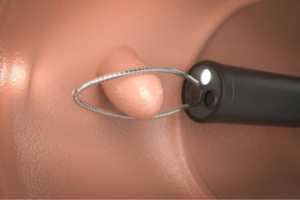
There’s a real high risk for cancer transformation of a colon polyp, which is why they are removed right on the spot when discovered during a colonoscopy.
Time It Takes for a Polyp to Turn into Colon Cancer
Two Basic Kinds of Polyps
“Hyperplastic polyps which are never thought to turn to cancer, and adenomatous polyps (also called adenomas, which can potentially grow to cancer after many years),” explains John Covington, MD, a gastroenterologist with a private practice in Maryland.
“But most adenomas will not turn into cancer.”
There are five total types of polyps.
Why are screenings recommended every 10 years for those at average risk of colon cancer?
“We recommend regular screening colonoscopies every 10 years because the vast majority of adenomas in the average patient grow slowly and pose no risk for at least 10 years,” says Dr. Convington.
“Therefore a routine colonoscopy every 10 years will assure us that colon polyps can be detected and removed long before cancer develops.”
The 10-year guideline applies to people with average risk of colon cancer.
Dr. Covington says, “There are special situations where cancer risk is higher and could develop earlier, but your doctor can identify those particular situations where colonoscopy is needed sooner and more frequently.”
- Blood in the stools — can be red or dark
- Old blood in the stools can appear black or like a tarry substance.
- Stools that are like ribbons or pencil-thin
- A feeling of incomplete voiding after a bowel movement
- Unexplained constipation or diarrhea that persists
- Alternation between constipation and diarrhea
- Odd changes in bowel habits
- Abdominal pain or gas
- A feeling of bloating or cramping in the abdomen
- Unexplained weight loss
- Unexplained fatigue
- Unexplained back pain
 Dr. Covington provides comprehensive care for digestive tract diseases, offering the latest diagnostic and treatment options including colonoscopy, upper endoscopy and small bowel capsule endoscopy.
 Lorra Garrick has been covering medical, fitness and cybersecurity topics for many years, having written thousands of articles for print magazines and websites, including as a ghostwriter. She’s also a former ACE-certified personal trainer.
.