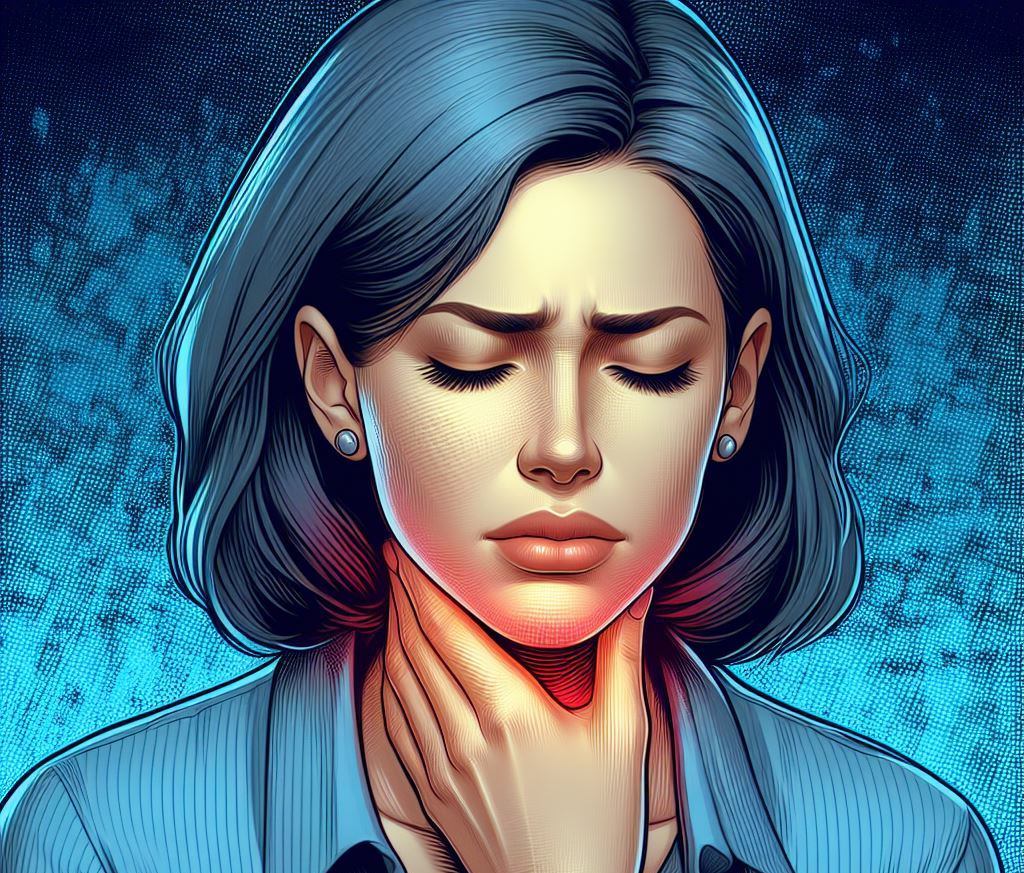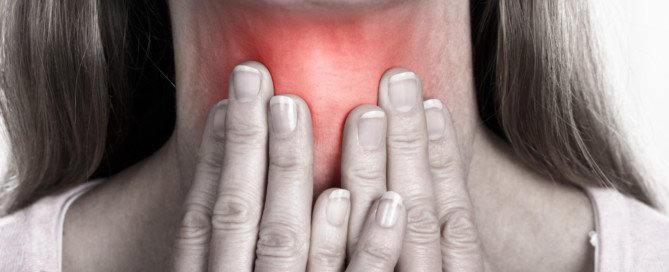
What Helps a Sore Throat from Acid Reflux?
An E.N.T. doctor explains what you can do to help your sore throat from acid reflux (LPR)—naturally and pharmaceutically.
What are the best drugs for helping relieve a sore throat from acid reflux?
“The best medications for acid reflux are the proton pump inhibitors,” says Dr. Stacey Silvers, MD, of Madison ENT & Facial Plastic Surgery in NYC, who is board certified in otolaryngology.
“Many of these medications are found over the counter in lower doses than can be found in a prescription.
“These medications include Nexium, Prilosec, Prevacid, Zegerid and omeprazole.
“Some patients may require these medications 2 x per day in order to manage their symptoms.
“There is no ‘best’ medication, as different people prefer and benefit from different things.
“If the first medication is not successful for you, then a second one may work better.
“Ideally these medications are not taken forever, and natural, dietary measures are taken and are successful.”
What are the best natural solutions for the sore throat caused by acid reflux?
Dr. Silvers explains, “These natural measures include first and foremost not eating three hours before bed.”
This is a difficult rule for many people to stand by, especially people trying to build muscle who believe that eating protein, even complex carbs, close to bedtime will turn an 11-hour fast into an eight-hour fast.
“Lying down with a stomach full of acid will lead the acid to go up with gravity from lying down,” says Dr. Silvers.
“It is not enough to elevate the head of the bed with a wedge, though this is a helpful natural measure.”
If you’re experiencing symptoms of acid reflux, including those affecting the throat, despite sleeping on a wedge, take note of what and when your last meal was before you got into bed.
“Foods that are high in acid should be reduced including tomatoes, chocolate, onions, alcohol, caffeine, mints and spicy food and citrus.
“If you smoke, QUIT. Some natural methods that are successful for some are apple cider vinegar 3 x per day and aloe. Individual results will certainly vary.”
If your sore throat persists despite these measures, acid reflux may not be the cause; see your doctor.
 An NYC expert in ear, nose and throat care, Dr. Silvers has been named among America’s Top Physicians and Surgeons in facial plastic surgery and otolaryngology numerous times since 2003. Dr. Silvers is an expert in the field of minimally invasive rhinology, resolving patients’ breathing and sinus problems with simple in-office procedures.
 Lorra Garrick has been covering medical, fitness and cybersecurity topics for many years, having written thousands of articles for print magazines and websites, including as a ghostwriter. She’s also a former ACE-certified personal trainer.
.
Top image: Shutterstock/Audrey_Popov

Does Vocal Cord Dysfunction (VCD) Really Exist?

“VCD does not exist,” says E.N.T. physician Dr. Stacey Silvers.
Dr. Silvers, of Madison ENT & Facial Plastic Surgery in NYC, who is board certified in otolaryngology, explains that “No one has done EMG on vocal muscles to show that the nerve is not functioning during these sudden ‘episodes.’”
An EMG (electromyography) is a nerve conduction test to see how well, if at all, electrical nerve impulses are firing to make muscle fibers contract.
So then, just what is going on when someone experiences what they believe to be a problem or “dysfunction” with their vocal cords?
Dr. Silvers explains, “The symptoms of ‘VCD’ are the exact symptoms of silent reflux. It is the swelling from the acid leading to the scary symptoms. It is not paralysis or weakness of the vocal cords.”
Silent reflux is also known as LPR (laryngopharyngeal reflux disease).
The term “vocal cord dysfunction” is actually ambiguous. What Dr. Silvers is saying is that there truly is a disorder suffered by many that involves the vocal cords: LPR.
But this is not a problem with the muscle fibers of the vocal cords. Hence, the term “vocal cord dysfunction” is misleading.
“VCD is a misnomer,” says Dr. Silvers. “The symptoms of difficulty breathing, coughing, wheezing, throat tightness, hoarse voice are all symptoms of LPR.
“The term VCD has been coined by allergists and pulmonologists who do not have the ability to view the vocal cords.”
You may have read somewhere that a doctor can look down your throat and diagnose VCD, but that in order for the doctor to do this, the patient would have to be experiencing an “attack” right at that moment. What are the odds of that occurring?
LPR can produce ongoing symptoms such as throat discomfort, the hoarse voice, very frequent coughing, a sensation of mucus trickling down the throat and a constant feeling of a lump in the throat.
But that sudden “attack” of feeling that your airway has instantly been shrunk to the diameter of a straw … it’s just not likely that this will occur right when the physician is peering down at your vocal cords.
And if it did…the doctor would see acid on the vocal cords making them swell.
“The symptoms can be sudden; they can wake you from sleep and make it feel like you cannot breathe,” says Dr. Silvers.
“Laryngopharyngeal reflux is acid coming up into the back of the throat. The throat (laryngeal or post cricoid) swelling is a result of the acid irritating the tissues leading to swelling.
“Therefore, people experience throat tightness and hoarseness.
“It’s the swelling of the larynx and even just below the larynx that is a result of the corrosive stomach acid that leads to the wheezing and throat tightness.
“These patients are not developing a nerve issue or vocal function problems. If the reflux is treated, the symptoms will resolve.”
An NYC expert in ear, nose and throat care, Dr. Silvers has been named among America’s Top Physicians and Surgeons in facial plastic surgery and otolaryngology numerous times since 2003. Dr. Silvers is an expert in the field of minimally invasive rhinology, resolving patients’ breathing and sinus problems with simple in-office procedures.
Lorra Garrick has been covering medical, fitness and cybersecurity topics for many years, having written thousands of articles for print magazines and websites, including as a ghostwriter. She’s also a former ACE-certified personal trainer.
.
Top image: Shutterstock/Aaron Amat.

Rotten Egg Smell from Nose: Interview with Doctor

A rotten egg smell in your nose can have several causes, says an E.N.T. doctor.
Eeeuuwww! What is causing that rotten egg odor from your nose?
“A bad smell in the nose can come from the sinuses, or old mucus in the nose (possibly infected) or acid reflux,” says Dr. Stacey Silvers, MD, of Madison ENT & Facial Plastic Surgery in NYC, who is board certified in otolaryngology; one of her specialties is sinus surgery.
She explains: “Acid can come up as high as the back of the nose, causing a bad smell or odor.”
Does a rotten egg smell from the nose, or a particularly bad odor, necessarily indicate it may be cancer?
Dr. Silvers answers, “Rarely, a foul odor can come from an olfactory bulb tumor or a nasal tumor.”
Located at the base of the frontal lobe, the olfactory bulb processes information about odors detected by the nose.
When you inhale, odor molecules (also known as odorants) are detected by sensory neurons in the nasal cavity.
These neurons send signals to the olfactory bulb, which then relays the information to other areas of the brain for further processing for smell recognition.
This all happens in just a few hundred milliseconds after inhaling the molecules.
Again, it’s extremely unlikely that what seems like a rotten egg smell coming from your nose is actually a malignant tumor.
“If the symptoms persist, then a nasal examination may be necessary,” says Dr. Silvers.
If the rotten egg smell is accompanied by a persistent new kind of headache, vision problems or cognitive problems, you should seek a thorough evaluation.
But even if the rotten egg stench is the only problem and persists despite making efforts to reduce acid reflux or let a suspected infection in the mucus clear up, it’s time to see your doctor.
You may also want to consider irrigating your nose on a daily basis with a saline solution and neti pot (shown below), both of which can be purchased from a drug store or online.

Neti pot. Shutterstock/nullplus
An NYC expert in ear, nose and throat care, Dr. Silvers has been named among America’s Top Physicians and Surgeons in facial plastic surgery and otolaryngology numerous times since 2003. Dr. Silvers is an expert in the field of minimally invasive rhinology, resolving patients’ breathing and sinus problems with simple in-office procedures.
Lorra Garrick has been covering medical, fitness and cybersecurity topics for many years, having written thousands of articles for print magazines and websites, including as a ghostwriter. She’s also a former ACE-certified personal trainer.
.
Top image: Shutterstock/Boibin

Pain Above Adam’s Apple from LPR

Here’s how LPR can cause pain above the Adam’s apple, says an E.N.T. doctor.
LPR stands for laryngopharyngeal reflux disease, and is a common culprit in pain or discomfort above the Adam’s apple.
“Throat pain is not a normal symptom; this does not mean, necessarily, that something bad [cancer] is going on with the throat,” says Dr. Stacey Silvers, MD, of Madison ENT & Facial Plastic Surgery in NYC, who is board certified in otolaryngology.
Dr. Silvers continues, “The Adam’s apple refers the thyroid cartilage. This tissue, like any tissue in the body, can get inflamed. In this case it is referred to as chondritis.”
Chond = cartilage, and itis means inflammation.
“Common things are common however, and pain in this area is invariably caused by acid reflux, otherwise known as silent reflux (LPR),” explains Dr. Silvers.
“LPR is when acid gets up into the back of the throat around the level of the larynx and the opening of the esophagus.
“The symptoms include post-nasal drip, throat pain, lump in the throat, trouble swallowing, pain with swallowing, throat clearing and cough.
“Stomach acid is an irritant and does not belong in the throat. The pH of this acid is 2 and is highly acidic and irritating to the tissues.
“This causes pain, swelling — and the body to try to protect itself with thick mucus from the back of the nose (causing a feeling of post-nasal drip and the need to clear the throat).”
Rubbing your fingers on the Adam’s apple will not make the pain or discomfort go away.
Triggers of Acid Reflux
When acid reflux occurs, it can travel high enough to cause LPR.
One common trigger is certain foods and beverages. Spicy foods, citrus fruits, tomatoes, chocolate and caffeinated drinks can irritate the esophagus or relax the lower esophageal sphincter (LES), which normally prevents acid from escaping the stomach.
Fatty or fried foods also tend to slow down digestion and increase the likelihood of acid reflux.
Another significant factor is overeating or eating large meals.
Consuming large portions puts extra pressure on the LES, making it more likely that acid will be pushed upward into the esophagus.
Eating late at night or lying down immediately after a meal can exacerbate the problem, as gravity helps keep stomach contents where they belong.
Smoking, too, weakens the LES, and alcohol can both relax the LES and increase stomach acid production.
Wearing tight-fitting clothing around the waist may add pressure on the stomach, leading to acid reflux — which again, can make its way to the throat: LPR that irritates the Adam’s apple area.
Stress can increase stomach acid production and slow down digestion, while inadequate sleep can affect the body’s ability to manage stomach acid levels.
We’re not done! Obesity puts extra pressure on the stomach, and this could cause those stomach juices to go where they shouldn’t.
The solution to pain above the Adam’s apple from LPR?
Make an effort to avoid all of the triggers of acid reflux and hence, the LPR, though stressful situations are often difficult to avoid.
An NYC expert in ear, nose and throat care, Dr. Silvers has been named among America’s Top Physicians and Surgeons in facial plastic surgery and otolaryngology numerous times since 2003. Dr. Silvers is an expert in the field of minimally invasive rhinology, resolving patients’ breathing and sinus problems with simple in-office procedures.
Lorra Garrick has been covering medical, fitness and cybersecurity topics for many years, having written thousands of articles for print magazines and websites, including as a ghostwriter. She’s also a former ACE-certified personal trainer.
Top image: Shutterstock/Niran Phonruang

Mucus in Throat Won’t Go Away: Causes, Solutions

An E.N.T. doctor explains causes and solutions to excess mucus in the throat that won’t go away.
Mucus in the throat that won’t go away or that you “can’t get rid of,” as many people state, is a common problem.
“Throat clearing and mucus in the throat that will not go away is associated with stomach acid coming up into the back of the throat,” explains Dr. Stacey Silvers, MD, of Madison ENT & Facial Plastic Surgery in NYC, who is board certified in otolaryngology.
People with this form of acid reflux do not usually experience the ‘typical’ reflux symptoms of indigestion and ‘heartburn.’
“The body has one protective mechanism to acid in the back of the throat, which is mucus,” says Dr. Silvers.
“That thick mucus in the throat is annoying and causes the individual to clear their throat almost constantly in some cases.
“Mucus production does come from the back of the nose and drips down. This often causes the individual to think the cause is allergies.
“Allergies cause congestion, sneezing, itching, mucus running and dripping from the nose. This can be successfully treated with allergy medication.
“Allergy medication will not treat that thick protective mucus in the throat causing the need to constantly clear the throat.”
How to Get Rid of Stubborn Mucus in the Back of your Throat
Dr. Silvers explains, “You can start by reducing eating three hours before bed and cutting down on highly acidic foods.”
So if you normally hit the sack at around 11:30 pm, be sure that your last bite comes in by 8:30 pm.
Dr. Silvers continues: “If this does not work adequately you can try an OTC reflux suppressor until the symptoms resolve.
“And then continue to focus on dietary treatment measures to keep the reflux from happening and therefore the need for excessive mucus in the throat.”
Examples of over-the-counter reflux suppressors include antacids such as Rolaids, Mylanta and Maalox.
H2 blockers include Pepcid and Zantac. Proton pump inhibitors include Nexium and Prilosec. Ideally, though, you’ll strive to treat your acid reflux naturally.
An NYC expert in ear, nose and throat care, Dr. Silvers has been named among America’s Top Physicians and Surgeons in facial plastic surgery and otolaryngology numerous times since 2003. Dr. Silvers is an expert in the field of minimally invasive rhinology, resolving patients’ breathing and sinus problems with simple in-office procedures.
Lorra Garrick has been covering medical, fitness and cybersecurity topics for many years, having written thousands of articles for print magazines and websites, including as a ghostwriter. She’s also a former ACE-certified personal trainer.
.
Top image: Shutterstock/Prostock-studio

Are These Symptoms Throat Cancer or LPR?

There are some distinguishing features between throat cancer symptoms and those of LPR, says Dr. Stacey Silvers, MD.
The first thing that Dr. Silvers says is that “Throat cancer should always be ruled out when symptoms include prolonged hoarseness.
“Cancers are growths and if on or adjacent to the vocal cords, the voice will be affected.”
Don’t rule out throat cancer if you’ve never smoked.
“Patients can develop throat cancer without a history of smoking,” explains Dr. Silvers, of Madison ENT & Facial Plastic Surgery in NYC. She is board certified in otolaryngology.
Are there symptoms or symptom features of LPR that rarely, if at all, occur with throat cancer?
“LPR if left untreated can lead to throat and esophageal cancer,” says Dr. Silvers.
“The symptoms can be similar; the most important feature is symptoms that are prolonged.

Shutterstock/Stockbakery
“Problems will only occur if symptoms are ignored and left untreated.
“If you have symptoms that affect your throat, you can try avoiding late night eating, and cutting down on acidic foods.
“You can try some OTC reflux medication which is readily available.
“If these measures are not helping your symptoms, then it is best to have your throat examined and a proper diagnosis given.”
Are there symptoms that usually occur with the cancer that are hardly seen, if ever, with LPR?
“We don’t typically see weight loss with LPR,” says Dr. Silvers. “This is a feature we can see with cancer.
“Bloody cough can be seen with LPR rarely, but is another symptom more worrisome with a throat cancer.
“A physical exam is necessary. A higher risk in smokers and heavy drinkers. Bad refluxers are as just as high of a risk.”
Is there a tip-off type of symptom that strongly points to LPR and away from the cancer?
Dr. Silvers explains, “Symptoms that have been present for a short term very strongly point to LPR.
“If left alone for years untreated then you are at a high risk for developing throat or esophageal cancer.
“Smokers and heavy drinkers are at a much higher risk. But esophageal cancer is seen frequently with bad refluxers alone.”
Is there a tip-off symptom that suggests cancer and probably NOT LPR?
“Prolonged hoarseness, blood in the sputum and weight loss are very concerning symptoms associated with throat cancer.
“Especially in someone who has had LPR symptoms for a long time to begin with.
“We are more suspicious in patients who are smokers and heavy drinkers, but these habits, though putting you at higher risk, may not be part of your lifestyle, as years of acid reflux alone can put you at high risk.”
Untreated acid reflux, even if it affects only the throat as far as feeling symptoms like those of LPR, can cause changes in the cells of the esophagus: a condition called Barrett’s esophagus.
This condition raises the risk of esophageal cancer and necessitates yearly screenings.
Dr. Silvers says, “Acid reflux is the number one cause of esophageal cancer, and this disease is on the increase in the U.S. ”
SYMPTOMS
- Bad breath despite home treatment
- Breathing difficulty or noise with breathing
- Persistent cough
- Coughing up blood
- Ear fullness or pain despite no infection
- Hoarse voice that persists longer than two weeks
- Loose teeth or dentures suddenly poorly fitting
- Palpable lump in the neck
- Nosebleeds for no reason
- Swallowing pain or difficulty
- Throat pain or soreness
- Throat burning or irritation
- Throat lump sensation like something is stuck
- Changes in voice pitch or volume
- This list is not complete.
An NYC expert in ear, nose and throat care, Dr. Silvers has been named among America’s Top Physicians and Surgeons in facial plastic surgery and otolaryngology numerous times since 2003. Dr. Silvers is an expert in the field of minimally invasive rhinology, resolving patients’ breathing and sinus problems with simple in-office procedures.
Lorra Garrick has been covering medical, fitness and cybersecurity topics for many years, having written thousands of articles for print magazines and websites, including as a ghostwriter. She’s also a former ACE-certified personal trainer.
.
Top image: Shutterstock/9nong

Yes, LPR Can Be Caused by an Infection, Says Doctor

“LPR can follow an upper respiratory infection,”
…says Dr. Stacey Silvers, MD, of Madison ENT & Facial Plastic Surgery in NYC, who is board certified in otolaryngology.
It’s not a coincidence that you have developed LPR (laryngopharyngeal reflux disease) following your infection of the upper respiratory tract.
Dr. Silvers explains, “Many patients describe a prolonged dry cough after a viral URI or prolonged hoarseness after a URI. These are classic symptoms of silent reflux.”
URI stands for upper respiratory infection.
LPR is the “silent reflux,” called this because it doesn’t present with what most people associate with acid reflux (thanks to endless TV commercials): the symptom of heartburn.
“We know emotional stress increases stomach acid production, and much of this acid comes up in the throat leading to LPR symptoms,” continues Dr. Silvers.
“A URI is a stessor on the body and can result in similar prolonged symptoms. Reflux medication and a reflux diet will resolve these issues.
“URI symptoms should resolve in 5-7 [days] unless the cause is bacterial.
“Antibiotics, after a culture, may be required. If it is not bacterial and symptoms progress weeks to months, then reflux should be considered, and treated.
“If a patient has a prolonged cough, postnasal drip, throat clearing and hoarseness after a URI, feeling well otherwise, the diagnosis is most likely silent reflux,” or LPR.
An NYC expert in ear, nose and throat care, Dr. Silvers has been named among America’s Top Physicians and Surgeons in facial plastic surgery and otolaryngology numerous times since 2003. Dr. Silvers is an expert in the field of minimally invasive rhinology, resolving patients’ breathing and sinus problems with simple in-office procedures.
Lorra Garrick has been covering medical, fitness and cybersecurity topics for many years, having written thousands of articles for print magazines and websites, including as a ghostwriter. She’s also a former ACE-certified personal trainer.
.
Top image: ©Lorra Garrick

Can You Die from a Single LPR Choking Episode?

Though untreated LPR can lead to fatal esophageal cancer, can you choke to death from one “I can’t breathe” episode of laryngopharyngeal reflux disease?
LPR causes many symptoms, and one of them is a sudden sensation that the airway has become constricted, making it difficult to INhale air (though there’s no problem exhaling).
It feels like you’re inhaling through a straw, and the sufferer may think that they’re going to die.
“The patient needs to relax; people do not die from these symptoms, as scary as they may be,” says Dr. Stacey Silvers, MD, of Madison ENT & Facial Plastic Surgery in NYC, who is board certified in otolaryngology; one of her specialties is sinus surgery.
Though LPR has been suggested as a cause of sudden infant death syndrome, this has not been proven, and SIDS continues to remain a mystery.
Furthermore, the 50 million Americans afflicted with LPR do not have to worry about choking to death or passing out and never awakening from the sudden feeling that they can’t breathe.
During such an episode, try panting heavily like a dog; that might restore normalcy.
Otherwise, stay calm and wait it out.
Dr. Silvers explains, “The patient can take some liquid Gaviscon which is fast acting to suppress the reflux and coat the throat (the European Gaviscon is best and can be purchased online).
“The patient should see an ENT who will confirm the diagnosis of LPR or silent reflux. Avoid late night eating; this is the number one trigger of nighttime breathing and choking symptoms.
“Acid reflux will worsen sleep apnea, and in some patients will cause their sleep apnea.”
A wedge to allow an elevated sleep position will help. It’s also possible that a person’s LPR can be caused by a problem with the diaphragm or the esophageal sphincter.
An NYC expert in ear, nose and throat care, Dr. Silvers has been named among America’s Top Physicians and Surgeons in facial plastic surgery and otolaryngology numerous times since 2003. Dr. Silvers is an expert in the field of minimally invasive rhinology, resolving patients’ breathing and sinus problems with simple in-office procedures.
Lorra Garrick has been covering medical, fitness and cybersecurity topics for many years, having written thousands of articles for print magazines and websites, including as a ghostwriter. She’s also a former ACE-certified personal trainer.
.
Top image: Shutterstock/Aaron Amat

Why Does Diabetes Kill So Many If It Can Be Controlled?

If diabetes can be controlled, why do so many Americans die from it every year?
According to the National Diabetes Statistics Report, 2014, diabetes was the seventh leading cause of death in the U.S in 2010 (over 69,000 deaths).
In that year there were over 234,000 death certificates listing diabetes as a contributing or underlying cause of death.
Diabetes is also a leading cause of blindness and amputations in U.S. adults.
This disease, as you can see, is very destructive. However, diabetes can be controlled. Have you ever heard someone say, “I have type 2 diabetes, but I control it with diet and exercise?”
Since type 2 diabetes can be controlled with diet and exercise, why do so many people die from it and even more develop serious complications leading to disability?
As for type 1, this, too, can be controlled, but requires daily injections of insulin.
Difference Between Type 1 and Type 2
In type 1 (10 percent of all cases), the pancreas fails to produce insulin—a hormone that shuttles blood sugar to muscle cells. The result is too much sugar in the blood.
In type 2, the pancreas works fine. The problem is with the insulin receptor sites on muscle cells:
They don’t work efficiently, and/or there’s not enough of them. The result is too much sugar in the blood.
Controlling Diabetes
Insulin injections provide insulin so that the blood sugar can be taken to the insulin receptor sites.
Exercise lowers blood sugar by forcing the muscles to demand more sugar.
Those with type 1 can exercise all they want, but without insulin, there’s nothing to shuttle the blood sugar to their muscle cells.
Diet is important: Too many refined carbohydrates, especially all at once, overload the blood with sugar.

“Although it can be controlled, it does not mean that most people do a good job,” says John Whyte, MD, board certified internist in Washington, DC, and author of “Is This Normal? The Essential Guide to Middle Age and Beyond.”
This is easy to believe. I used to work at a place where there were two diabetics.
One pedaled hard every day on a stationary bike, kept his weight in check and watched what he ate.
The other was overweight and was frequently seen eating junk food.
Dr. Whyte explains, “Diabetes is a progressive disease — which means that beta-cells in the pancreas which are responsible for insulin continue to ‘burn out.’ Changing our diet and taking medicines can slow that down, but all too often patients either don’t take their medicine as directed, or they don’t make changes to their lifestyle.
“It can be hard to make the healthy choice if you’ve grown up with processed foods and a love of candy!
“And if you have always been a couch potato, one doesn’t change overnight.
“I always get frustrated when patients are very reluctant to start insulin, and then after a few months, their diet gets worse since they learned [incorrectly] if they eat a cupcake, they can just take more insulin.
“So the reality is that we see far fewer complications when patients have good control. But we’re not doing a good enough job helping patients understand the importance of daily control.”
Controlling diabetes also means regularly checking blood sugar levels. Many people neglect to do this when they should.

Dr. Whyte is the chief medical officer of webmd.com. Prior, he was the chief medical expert for almost a decade at Discovery Channel.
 Lorra Garrick has been covering medical, fitness and cybersecurity topics for many years, having written thousands of articles for print magazines and websites, including as a ghostwriter. She’s also a former ACE-certified personal trainer.

Scalp Tenderness Above the Ear: Doctor Explains

A medical doctor answers what may cause scalp tenderness above the ear.
Many people want to know what might cause tenderness or soreness, even pain, on or in their scalp above the ear.
“In terms of scalp tenderness, there are a range of diseases and conditions for which this could be a harbinger,” explains John Whyte, MD, board certified internist in Washington, DC, and author of “Is This Normal? The Essential Guide to Middle Age and Beyond.”
Dr. Whyte continues, “But the reality is that most of the time it is related to tension headaches.
“We think of herpes as a condition that primarily affects our mouth or genital areas, but herpes zoster actually can cause tenderness of the scalp.
“One of the most serious conditions which can cause scalp tenderness is temporal arteritis.
“This is a condition which results in swelling of certain arteries in the head, typically around the eyes, but can also affect the side of our heads.
“There are almost always other symptoms such as vision changes and jaw pain. This is a medical emergency and needs to be evaluated quickly.”
Don’t panic if you discover some tenderness on or in your scalp above an ear.
First ask yourself if you bumped your head in that location within the past few days.
There could be a bruise from skin trauma — the same kind of bruise that would appear on your thigh if you accidentally rammed your thigh into something sticking out; after a few days the skin is still tender to the touch.
Another possible, and very benign, cause of tenderness at the scalp above an ear is the result of aggressive hair brushing.

Shutterstock/Image Point Fr
You should try a softer brush. Brushes with natural bristles or wide-tooth combs are generally gentler on the scalp compared to those with stiff or plastic bristles.
When you’re brushing, be mindful of your technique. Use gentle strokes and avoid yanking or pulling hard on your hair.
If you hit a knot, try to gently work through it with your fingers before reaching for the brush.
This approach can prevent unnecessary strain on your scalp.
The hair has nothing to do with this pain or soreness.
It’s the bristles of the brush making aggressive contact with the skin of the scalp.