

All the Reasons Why Cancer Causes Weight Loss

Cancer causes significant weight loss for many patients, and the reasons are many. This situation goes well-beyond loss of appetite or anxiety.
“A review of 25 studies relating weight loss and cancer was done in 2018 (Nicholson et al, BJGP),” says Dr. David Beatty, MD, a retired general practitioner with 30+ years of experience and an instructor of general medicine for 20+ years.
“A positive association between weight loss and cancer was found in 10 primary cancer sites: prostate, colorectal, lung, gastroesophageal, non-Hodgkin’s lymphoma, ovary, myeloma, renal tract and biliary tree.”
However, people with other kinds of primary cancer, such as breast and brain, may experience significant weight loss.
“I think the actual weight loss can be down to any one of the following causes,” continues Dr. Beatty.
Primary Cancer
“The body releases cytokines in response to cancer, infection and inflammation to stimulate a host response to minimize cell damage,” says Dr. Beatty. “It’s thought these may contribute to weight loss.
“The location of the primary cancer is important. Obviously, an esophageal cancer can narrow or block the gullet, reducing food intake.”
Secondary Cancer
“Spread to the liver and brain occurs with several cancers,” says Dr. Beatty. This includes breast and melanoma.
“If the liver is affected then jaundice, nausea, vomiting and impaired absorption can occur.
“Brain metastases can cause anorexia [poor appetite], nausea and vomiting.
“Sometimes stroke-type symptoms happen with their associated swallowing difficulties.”
Side Effects of Treatment
Dr. Beatty explains, “Chemotherapy and radiotherapy are common causes of appetite suppression, nausea and vomiting.
“After surgery there is often a period of convalescence before someone is eating properly.
“Painkillers like codeine and morphine often cause nausea, vomiting or constipation.”
A drug that’s prescribed long-term, once the course of chemo and radiation are completed, may alter the way the patient experiences tasting food, such as diminishing this sense.
Mental Health
“Most people with cancer will have stress, anxiety and often significant depression,” points out Dr. Beatty.
“This can often be overlooked with everything else going on. Anorexia and weight loss are both symptoms of moderate to severe depression.”
Inactivity
“For all sorts of reasons cancer patients are less active than they were before the diagnosis,” says Dr. Beatty.
“If someone is sitting or lying for prolonged periods they will lose muscle bulk and its associated weight.
“The large muscle groups like the quadriceps on the front of the thigh are particularly affected.”
Speaking of Muscles: Study Shows Reason Other than Inactivity
Tumors release substances into the bloodstream that impede the natural repair of damaged muscle fibers, leading to muscle loss (weight loss).
The condition is also known as cancer cachexia. Often, laypeople attribute the wasting-away of a cancer patient’s body to chemotherapy and/or avoidance of food due to poor appetite.
But the cancer-caused weight loss, for which no treatment exists, actually causes 25 percent of cancer deaths.
This information comes from research by the Ohio State University Comprehensive Cancer Center — Arthur G. James Cancer Hospital and the Richard J. Solove Research Institute.
The full report is in the Journal of Clinical Investigation (Oct. 2013).
Muscle stem cells are important for repairing damaged fibers.
The stem cells normally multiply and develop into mature muscle cells, which fuse with damaged fibers so that wasting does not occur.
Cancer blocks this process by releasing “factors.” Research is ongoing as far as trying to identify these factors.
 Dr. Beatty has worked in primary medicine, surgery, accident and emergency, OBGYN, pediatrics and chronic disease management. He is the Doctor of Medicine for Strong Home Gym.
 Lorra Garrick has been covering medical, fitness and cybersecurity topics for many years, having written thousands of articles for print magazines and websites, including as a ghostwriter. She’s also a former ACE-certified personal trainer.
Source
sciencedaily.com/releases/2013/10/131023153742.htm

Can Pancreatic Cancer Symptoms Come and Go?

Warning: Do not ever assume that just because your troublesome digestive symptoms come and go, that they can’t possibly mean pancreatic cancer.
“Generally, when someone has symptoms of pancreatic cancer, they tend to get progressively worse over time,” says Nadeem Baig, MD, a board certified gastroenterologist and hepatologist at Monmouth Gastroenterology, a division of Allied Digestive Health.
“During that period, it is very possible that some symptoms like stomach pain, back pain and loss of appetite can come and go on a day-to-day basis.
“Other symptoms like weight loss and jaundice tend to be more constant once they are present.”
An Interview with Pancreatic Cancer Patients
In a study Dr. Julie Evans and colleagues interviewed 40 people (age 35-84) who were diagnosed with pancreatic cancer.
The genders were about 50/50.
The report is titled “It can’t be very important because it comes and goes.”
Frightening Findings
Dr. Evans and her team found that symptoms that appeared and then went away, then came back, and so on, were not uncommon in the patients.
This come and go nature of symptoms occurred in the months, and even years, prior to diagnosis of pancreatic cancer.
The patients reported that the symptoms that did not persist, that instead came and went, did not alarm them enough to consider cancer as a possible cause.
What made the patients finally seek medical attention?
• Time passage revealed a symptom pattern.
• Frequency of symptoms increased.
• Symptom nature changed.
• New symptom appearance.
Pancreatic Cancer Symptoms Can Be Intermittent
The paper states, “Our study reports for the first time that symptoms of an intermittent nature may precede a pancreatic cancer diagnosis. Patients (and potentially their doctors) may be falsely reassured by symptoms that come and go.”
The study authors urge greater awareness that intermittent symptoms can be caused by cancer.
A greater awareness can lead to an earlier diagnosis when the disease is more treatable, even curable.
The full report is in the British Medical Journal Open 2014.
 Dr. Baig’s specialties include gastrointestinal cancers and liver disease, plus gallbladder, biliary tract and pancreatic disorders. He is an assistant clinical professor of medicine at the University of Medicine and Dentistry of NJ/Robert Wood Johnson Medical School.
 Lorra Garrick has been covering medical, fitness and cybersecurity topics for many years, having written thousands of articles for print magazines and websites, including as a ghostwriter. She’s also a former ACE-certified personal trainer.
.
Source: bmjopen.bmj.com/content/4/2/e004215.short

How Good Is MRI at Finding Breast Cancer? Excellent, Says Study

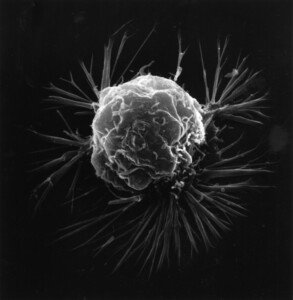
MRI is a superb imaging tool for detecting breast cancer, even when compared to the combined methods of ultrasound and mammography.
“MRI is a cutting-edge way that we can detect breast cancers early on, especially in patients with dense breasts and family history of breast cancer,” says Resham Mendi, MD, a renowned expert in the field of medical imaging, and the medical director of Bright Light Medical Imaging.
“This type of MRI usually takes about an hour and involves injecting IV contrast.
“At this time, it is typically only used in women with very high risk of breast cancer or a personal history of breast cancer.
“With more advanced technology, in the next several years, there may be enough technology to allow fast MRIs, to use MRI as a screening tool in more women.”
Superiority of MRI in Breast Cancer Screening
Cancer.gov/Bruce Wetzel, Harry Schaefer
A 2015 Journal of Clinical Oncology has a study from the University Department of Radiology and Nuclear Medicine at the MedUni Vienna.
“In cases where there is even the slightest doubt, especially in women at increased risk, the obvious choice is MRI,” says lead study author Thomas Helbich in the paper.
The superiority of MRI is independent of a woman’s age, BRCA status and even breast density.
However, some women can’t tolerate lying inside the so-called tube for an hour.
Furthermore, the rate of false-positives, leading to anxiety-ridden call-backs, needs to be considered.
Dense Breasts
Women with dense breasts may be particularly interested in supplemental forms of imaging.
They know that a mammogram can miss tumors in dense breast tissue more often than in fatty breast tissue.
Yet this study shows that an MRI doesn’t care if breast tissue is dense.
The breast cancer detection rate for the 559 patients in the study was 90 percent.
The Study
• The 559 women were at increased risk for breast cancer.
• A total of 1,365 screening exams were done.
• MRI won by leaps and bounds.
• When MRI was combined with mammography, the detection rate increased by only five percent.
• Ultrasound alone did not detect any of the found BCs.
Recommendations by the Study
• An annual MRI should be done on women at high risk who have a strong family history of breast cancer as an alternative to surgical breast removal.
The paper points out that the combination of mammography and ultrasound cannot detect all types of breast cancer.
Women with dense breasts DO have the option to request an MRI and will likely have to pay out of pocket for it.

Dr. Mendi has published several articles in radiology journals and has expertise in MRI, women’s imaging, musculoskeletal, neurological and body imaging.
Lorra Garrick has been covering medical, fitness and cybersecurity topics for many years, having written thousands of articles for print magazines and websites, including as a ghostwriter. She’s also a former ACE-certified personal trainer.
Sources
massgeneral.org/imaging/news/radrounds/october_2005/
sciencedaily.com/releases/2015/04/150407084850.htm

Can Asymmetrical Tonsils Mean Cancer? One’s Bigger than the Other

Unfortunately, asymmetry IS associated with a higher chance of cancer in tonsils, according to one study.
If only one tonsil is abnormally large, it should be removed, recommends a study in the Ear, Nose & Throat Journal (Oluwasanmi et al, 2006).
The paper states, “An abnormally large tonsil may be a sign of malignancy.”
The study involved 87 patients for which one tonsil was bigger than the other, but other than that, the tonsils looked normal.
The patients had no pre-existing risk factors for cancer (e.g., prior radiation exposure as treatment for a cancer in the past)
• 87 patients with uneven tonsils were examined.
• Two cases of tonsil cancer were found, both related to lymphoma.
• Both patients were over 50.
• Neither had a history of a recurrent tonsillitis.
“We believe that although the incidence of cancer in our series was small, it is significant,” says the paper.
“We recommend routine excision of abnormally large tonsils.”
The paper further emphasizes the importance of informing the patient of the risk/benefit ratio of tonsil removal that’s done solely due to asymmetry.
A second study, titled “Significance of asymptomatic tonsil asymmetry,” appears in Otolaryngology–Head and Neck Surgery (2004).
This study (Cinar et al) sought to find out the incidence of cancer in people who had asymmetrical tonsils: one tonsil bigger than the other but no other symptoms such as throat soreness.
The Cinar study spanned six years and examined 792 patients undergoing a tonsillectomy.
As in the first study mentioned, the study authors here made sure to exclude patients who had a pre-existing significant risk for cancer.
Study Results
• 53 patients had one tonsil clinically bigger than the other.
• 51 patients were in a control group (tonsils nearly the same size, though there were variations if size difference, but not enough to be considered asymmetrical).
• In the asymmetric group, 58 percent of the specimens contained benign enlargement of lymphoid tissue in response to bacteria.
• In the control group the percentage was almost 55 percent.
• No cancer was found in either group.
The paper concludes that asymmetric tonsils may occur in people “with an otherwise normal physical examination, secondary to anatomical factors” or the benign response to bacteria.
One tonsil being bigger than the other, then, in and of itself, does not indicate cancer.
However, if one tonsil is bigger than the other, and there are other signs, the uneven size would then become more meaningful:
• Odd-looking appearance of the larger tonsil
• Larger tonsil has been increasing in size
• Suspicious symptoms affecting the body
• Enlarged lymph nodes in the neck
Summary
• One study reveals two malignancies out of 87 cases of asymmetric tonsils.
• Another study reveals no cancer out of 52 cases of asymmetric tonsils.
• This begs the question: What if the second study had involved 35 more cases of uneven tonsil size?
Subjective Tonsil Asymmetry
Another point to consider is the possibility that it only seems as though your tonsils are uneven.
“Most tonsils are visually not symmetric in shape or size,” says Dr. Stacey Silvers, MD, of Madison ENT & Facial Plastic Surgery in NYC, who is board certified in otolaryngology.
Dr. Silvers continues, “Often, part of one tonsil is hidden or deeper in the oropharynx and cannot be fully visualized.
“Often on removal, if necessary, the tonsil size is found to be the same.
“Gross asymmetry and irregularly may be more concerning, as lymphoma and other types of cancers may be found in the tonsils.
“These findings should be examined by an ear, nose and throat specialist. A bleeding tonsil should be examined by an ENT.”
Conclusion
If one of your tonsils is bigger than the other — or seems that way — have an ear, nose and throat doctor examine them.
 An NYC expert in ear, nose and throat care, Dr. Silvers has been named among America’s Top Physicians and Surgeons in facial plastic surgery and otolaryngology numerous times since 2003. Dr. Silvers is an expert in the field of minimally invasive rhinology, resolving patients’ breathing and sinus problems with simple in-office procedures.
Lorra Garrick has been covering medical, fitness and cybersecurity topics for many years, having written thousands of articles for print magazines and websites, including as a ghostwriter. She’s also a former ACE-certified personal trainer.
Top image: Shutterstock/Tyler Olson
Sources
entjournal.com/sites/entjournal.com/files/archive/www.entjournal.com/Media/PublicationsArticle/OLUWASANMI-10_06.pdf
ncbi.nlm.nih.gov/pubmed/15243564
No Insurance for a Sleep Apnea Test? Here’s What to Do
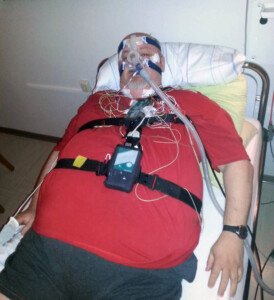
There IS a way you can undergo a very reliable sleep apnea test if you don’t have insurance—for a price so low you won’t believe it. (more…)
Why Is Sleep Paralysis More Common in Younger People?

It’s no secret that sleep paralysis is much more common in younger people. (more…)
CPAP Machine Is Inherently Safe, Says Sleep Doctor

Have you ever wondered about the safety of a CPAP machine, considering that this is an unnatural way to sleep?
The device involves a hose and forced air down down the throat, or just the nose, or both. The forced air keeps the sleeper’s airway open.
You may wonder if a CPAP (continuous positive airway pressure) device is safe in terms of germs or bacteria, or in terms of the mechanics of it.
A CPAP machine is not inherently harmful no matter how long you use it, says Joseph Krainin, MD, board certified in sleep medicine and neurology and founder of the online sleep apnea clinic Singular Sleep.
Many CPAP users, and those who will be new users soon, are worried that long-term use could somehow be harmful, even dangerous.
(Do they know how dangerous untreated sleep apnea is?)
“Overall, there are very few concerns about using PAP,” says D. Krainin.
“The manifest danger would be inhaling a pathogen or allergen due to an improperly cleaned machine or not using distilled or boiled water in the heated humidifier.”
In other words, the potential harm of a CPAP machine is not inherent in the device itself, but in the care of the device and inattentiveness to proper water use.
“There can be trace amounts of bacteria in municipal water systems which could potentially lead to dangerous infections,” says Dr. Krainin.
“The latent danger would be if you had the wrong type of PAP machine and/or wrong machine settings.
“In this case, your sleep apnea might not be properly treated and this could put you at risk for the long-term secondary health consequences of sub-optimally treated sleep apnea.”
These include:
- High blood pressure
- Falling asleep while driving and crashing the car
- Heart disease
“This is why it’s important to consult with a sleep apnea doctor to ensure that you are effectively treating the problem,” says Dr. Krainin.
 In 2013 Dr. Krainin was elected a Fellow of the American Academy of Sleep Medicine, an honor reserved for sleep doctors who’ve made significant contributions to the field in education, research and service.
Lorra Garrick has been covering medical, fitness and cybersecurity topics for many years, having written thousands of articles for print magazines and websites, including as a ghostwriter. She’s also a former ACE-certified personal trainer.
.
Top image: Shutterstock/Oleg Golovnev

Where Can Prostate Cancer Cause Pain & How Does It Feel?

Prostate cancer can cause pain in many areas and not just because of bone spread, but also due to other features of the disease.
It can feel different ways depending on the nature of the cause. (more…)
Proton Beam vs. Cyberknife for Prostate Cancer: Pros & Cons

There is one marked difference between proton beam radiation and cyberknife.
men with prostate cancer are understandably concerned over which treatment modality will be most effective. (more…)
How Is It Possible to Have Really Low PSA & Prostate Cancer?

A very low PSA but aggressive prostate cancer?
Yes, for three reasons. “Most prostate cancers produce PSA,” says Sean Cavanaugh, MD, a radiation oncologist with GenesisCare, a premier provider of cancer and urology care.
But there are times when prostate cancer is present along with a low PSA value.
“However, it is possible for a cancer cell line to dedifferentiate (mutate) and stop PSA production,” continues Dr. Cavanaugh.
“This could result in a patient with cancer, perhaps even a very aggressive cancer, but a normal or even low PSA. This is quite rare.
“In addition, men on anti-testosterone therapy might register a low or even zero PSA while still having viable cancer cells.
“Finally, post-prostatectomy or post-radiation patients generally have a low PSA, but as time passes some learn that they still have active cancer.”
The PSA, which is obtained via a blood test and stands for prostate specific antigen, can also be high in a man who does not have any malignancy.
Nevertheless, this biomarker is a valuable tool to physicians as a guide for how to proceed next in a patient who’s experiencing concerning symptoms such as frequent urination, difficulty with starting or stopping a urine stream, pain with urination or ejaculation, blood in the urine and pain in the lower back.
The American Cancer Society recommends that men who have an average risk of prostate cancer begin getting tested at age 50 if they’re already healthy enough to expect to live another 10 years.
For additional information on PSA testing as a marker for prostate cancer, contact CTCA at (855) 993-3381.






Dr. Cavanaugh regularly performs high-dose and low-dose rate brachytherapy, plus all aspects of highly conformal external beam radiation therapy. He has been published in numerous journals including Prostate Cancer, American Journal of Brachytherapy, The International Journal of Radiation Oncology, and Technology in Cancer Research and Treatment.
Lorra Garrick has been covering medical, fitness and cybersecurity topics for many years, having written thousands of articles for print magazines and websites, including as a ghostwriter. She’s also a former ACE-certified personal trainer.
.