A Natural Way to Make Your Period Come 2 Weeks Sooner?

There’s a way that just might induce a period two weeks sooner than when you’re expecting it.
It worked for me, though at the time, I didn’t know it was going to happen.
Normally, my period had intervals ranging from 24 to 32 days.
There were a handful of intervals between 21 and 23 days, but most were 26 to 30 days.
Some years ago I arranged to go on a trip to Hawaii for 10 days with my parents.
When my parents told me the departure date, I immediately checked it against the time range for the start of my next menstrual cycle.
I was mortified to learn that day 26 would be the first day of the Hawaii trip!
This meant that if my period came at any point during its typical interval range, the entire cycle would be during my Hawaii vacation!
I was livid. For the next two weeks, I just fumed over this. To have an entire period while vacationing in Hawaii would totally ruin everything.
It’s not that I planned on going swimming. I didn’t. But due to vaginismus, I was not able to use a tampon.
I was anticipating:
• Hassling with always having sanitary pads on me to prevent soaking.
• Worrying I’d be somewhere where it wasn’t convenient to just traipse off and change a pad, like on a boat for a whale watching excursion or at Disneyland.
• Agonizing abdominal cramps with the potential for confining me to bed for several hours.
• Nausea, possible vomiting.
• Low backache, upper leg ache.
Every day that got closer to the departure date, I grew increasingly infuriated. How could this happen to me, with this once-in-a-lifetime opportunity?
And no, it was impossible to change the date.
I mean really, I was p’d to no end.
Then I began spotting. A few days later I was flowing: my period! It was 14 days after the first day of my previous menstrual cycle!
This was unheard of. Other than the two week headstart, there was nothing remarkable about this menstrual cycle. It felt and behaved like any other period.
I had stopped flowing by the time my vacation began. I’ll never forget sitting on the plane on the way to the islands, still in disbelief that I would be free of the burden and pain of my menstrual cycle.
What made my period come two weeks sooner?
Common Sense 101 tells me that my fury over its projected coinciding with my vacation somehow altered my body chemistry.
It seems that the mind—the amazing machine it is—reset my hormones so that my next period would start two weeks sooner than usual.
I’m postmenopausal now, and this two week sooner period occurred many years ago.
So since then, there were many opportunities for this odd event to repeat itself — if it was just a coincidental fluke, that is.
But it never repeated itself. I can only conclude that my frequent stewing over my menstrual cycle ruining my vacation triggered hormonal changes in my body: mind over matter — without my consciously making this happen.
Nevertheless, if you’re anticipating menstruation coinciding with a planned vacation — you’ll want to discuss solutions with your OBGYN.
 Lorra Garrick has been covering medical, fitness and cybersecurity topics for many years, having written thousands of articles for print magazines and websites, including as a ghostwriter. She’s also a former ACE-certified personal trainer.
Knee Pain Using Staircase but not Running: Cause, Solution
Isn’t that the oddest thing:
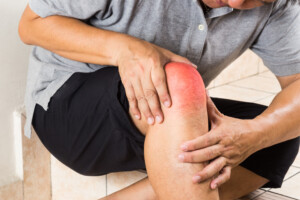
Your knee hurts climbing stairs but you can run all day long without any pain.
There’s a condition that can explain this.
“Chondromalacia, a degeneration of the underside of the knee cap, is often suspect,” says Dr. Tom Carpenter, corrective exercise specialist, certified personal trainer and chiropractor, inventor of Stand Corrected™, a portable harness-like stretching tool that helps alleviate back, neck and shoulder pain.
Chondromalacia is the wearing down of the cartilage located under the kneecap and is also known as “runner’s knee.”
Another name is “jumper’s knee,” as it’s no secret that volleyball and basketball players sometimes develop chondromalacia. But you need not be a jumping athlete to get this condition.
When the cartilage wears down, there is less cushioning of the joint, resulting in a dull aching type of pain under the kneecap.
Chondromalacia pain is not sharp, piercing or stabbing, but can range from a weakly dull ache to a strong ache. I know; I’ve had this condition, and I’ve cured it.
But in my case, it was running that brought on the knee pain, yet while climbing stairs — even bounding up steps two at a time — was painless.
Pain in the Knee Climbing Stairs

Freepik.com, jcomp
The increased flexion or bending of the joint forces the kneecap to glide up and down over the thigh bone (femur) more so than when you’re running.
For some people with chondromalacia, this will result in discomfort.
There are those especially unlucky people who experience pain with both climbing stairs and running.
In fact, there’s a third motion that chondromalacia infamously affects: kneeling so that your butt is against your ankles — a common position when gardening, in martial arts or in yoga. Even a deep squat can incite pain in some individuals.

Freepik.com
The cartilage is supposed to be smooth, and when it is, there is no pain.
Sometimes the cause of chondromalacia cannot be pinpointed, including in athletes who develop it gradually over time.
In my case, my first bout with chondromalacia was when I slipped on wet grass at age 17 when running to a base during softball.
The other knee developed it in a gradual fashion with no definitive cause.
You’re at risk for chondromalacia if you do a lot of running and/or jumping, and you already have less-than-ideal tracking of your patella (kneecap).
Additional Risk Factors
• Weak quadriceps muscles
• Hamstrings disproportionately weak, relative to quadriceps. A weightlifter may neglect hamstring workouts and focus too much on building the quads.
• Obesity
Very Effective Cure for Chondromalacia — Works Like a Charm
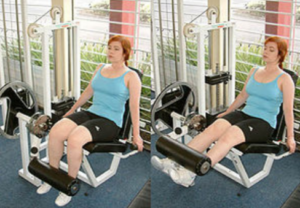
Leg extensions done against resistance will cure or at least really improve chondromalacia for many people who are patient and committed.
To get the ball rolling, sit on a chair that’s high enough so that your feet are not touching the floor.
Ideally the chair or stool will allow you to bend your legs further back so that your shin bone is past vertical.
Extend (straighten) both legs at once, aiming to get them parallel to the floor, but do not hyperextend. Toes should be pointing to ceiling (feet perpendicular to shins).
Lower to the start position. Repeat 10 times for three sets. Once you can do these without pain, move on to a leg extension machine (you’ll need to join a gym) where you can lift against resistance, beginning with the lightest load possible.
In short, a very effective treatment for chondromalacia is weighted leg extensions.
George Stepanek
This strengthens the quadriceps muscles, which in turn yield greater support to the knee. In my case the condition was outright cured.
However, you may have to do leg extensions for the rest of your life, or the chondromalacia may return.
But hey, with lifelong leg extensions, you’ll get shapelier and firmer legs!
While you’re rehabbing, avoid jumping, running or other activities that aggravate the knee pain.
Second Exercise for Chondromalacia
• Place a fitness ball against a wall.
• Stand back against it, back upright (don’t lean forward).
• Have feet out in front of you, shoulder-width apart, legs straight, wearing supportive footwear.
• Lift front of feet off floor, keeping legs straight, so that only your heels are in contact with the floor; then place front of feet back on floor.
• Repeat 20 times. Do three sets.
If these two exercises don’t work, a physical therapist can help you.
Being overweight is an impediment to recovering from chondromalacia, so it’s important to lose excess body fat.
Dr. Carpenter recommends ice and rest, but keep in mind that you will need to inherently improve the integrity of the joint with the right exercises.
In addition to the above, an overall fitness regimen is your best weapon against pain in the knee when climbing stairs but not during running.
So if you’re an avid runner who hasn’t been strength training, it’s time to strength train.
In addition to the leg extension do hamstring curls, leg presses, walking lunges (as tolerated) and half-squats — in which your thighs are parallel to the floor.
There’s no need to go deeper if it hurts your knees.
Never try to “run through” knee pain if your chondromalacia begins acting up when running.
Additional Causes of Knee Pain when Climbing Stairs but Not During Running
“If the pain occurs going down stairs, it could be an ACL, patellar tendon or arthritis issue,” says Dr. Carpenter.
As for pain in the knee when going up a staircase but not when you run, Dr. Carpenter says that “other causes should be considered, such as an imbalance of the supporting muscles involved with the knee, over-tightening of the IT band, Osgood-Schlatter disease, displacement of the kneecap which could be related to an arch problem of the foot, or bursitis in the knee.”
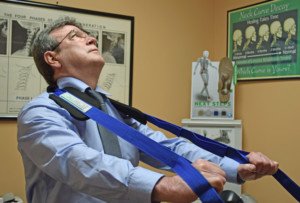
Photo credit: Aleesia Forni
Based upon 30+ years of experience, Dr. Carpenter’s practice approach reflects his belief that restoring optimum health and function will enable his patients to enjoy a much greater amount of vitality and wellness. Chiropractic care is true health care, not sick care!
 Lorra Garrick has been covering medical, fitness and cybersecurity topics for many years, having written thousands of articles for print magazines and websites, including as a ghostwriter. She’s also a former ACE-certified personal trainer.
Top image: Shutterstock/ThamKC

How Long Will Painful Urination Last after Catheter Removal?
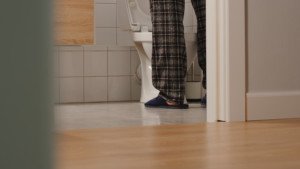
Catheter removal after prostate cancer surgery can cause painful urination as well as pain even when sitting.
“Most of the time, bladder pain after catheter removal goes away relatively quickly, on the order of a few hours to a few days,” says Michael Herman, MD, director of urologic oncology at South Nassau Communities Hospital in Oceanside, NY.
But there are exceptions to this rule.
Dr. Herman continues, “A little bit of burning can be caused by some irritation of the urethra itself.
“Other pain can be caused by the fact that the bladder also has to be moved and reconstructed during a prostatectomy.
“Very occasionally, bladder pain can be a sign of poor healing. If you have any questions, check with your surgeon.”
 Dr. Herman’s interests include reducing the over-diagnosis and over-treatment of prostate cancer by utilizing the latest biomarkers and imaging techniques. He is at the forefront of treatment and research of urologic cancers.
Lorra Garrick has been covering medical, fitness and cybersecurity topics for many years, having written thousands of articles for print magazines and websites, including as a ghostwriter. She’s also a former ACE-certified personal trainer.
.
Top image: Shutterstock/cliplab

Why Is There So Little Publicity About Prostate Cancer?
Where’s the publicity for prostate cancer? It’s a myth it’s a “good” cancer; it’s expected to kill 26,700 U.S. men this year despite 161,360 new diagnoses. (more…)
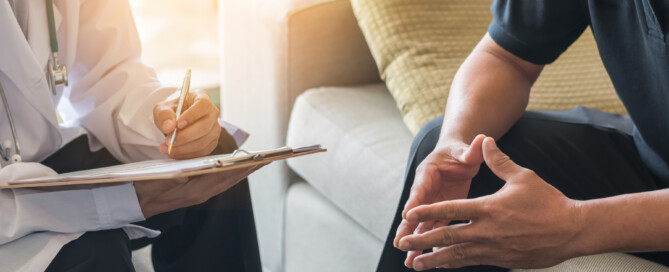
What Happens to Sperm After Prostate Removal?

After prostate removal, the sperm has to go somewhere – but where?
Men who are facing prostate removal due to cancer will surely wonder where their sperm will go after removal of the prostate gland. It’s fair to wonder about this. (more…)
Risk of Prostate Cancer Spread from Needle Biopsy?

You’re scared that prostate cancer—which you don’t know if you have—will spread by a needle biopsy.
But if you don’t have the needle biopsy, then you can’t be diagnosed with prostate cancer – and thus won’t get treatment for it. (more…)
Can You Have an Extremely High PSA but No Prostate Cancer?

Should you panic about prostate cancer if you learn that your PSA is shockingly high? (more…)
Prostate Cancer, Catheter Removal, Bladder Pain: Causes, Solutions

Some men suffer with bladder pain following catheter removal after prostate cancer treatment—for several weeks.
What are the causes of this and what can be done about it? (more…)
Causes of Lots of Squamous Cell Carcinomas in a Short Time Period
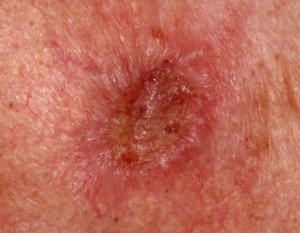
Squamous cell carcinoma is a potentially fatal skin cancer that can arise in multiple locations in a rather short period of time.
Most deaths are believed to occur in the elderly, who are more likely to delay seeing a doctor for a gradually growing pink/red scabby lesion on their face, nose or scalp. (more…)
How to Get More Freckles without Increasing Skin Cancer Risk?