Excess Sitting vs. Untreated Sleep Apnea: Which Is Worse?

Excess sitting is dangerous in so many ways, but so is untreated sleep apnea. Which is worse for the body?
Both can lead to heart disease and other ailments. (more…)
How Fast Can Abdominal Aortic Aneurysm Grow and Kill?
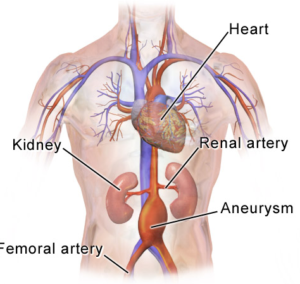
A small aneurysm seemingly ballooned in size and unexpectedly killed a woman.
Violet (Sue) Livene Nelson, 80, collapsed in her home in Wokingham, Berkshire, England, in 2016.
2012 Diagnosis of Small Abdominal Aortic Aneurysm
As of March 2012 the dilation measured just 3.6 cm. Her general physician did not refer her to a vascular specialist.
If you’ve been diagnosed with even the smallest abdominal aortic aneurysms, or a “dilation,” “dilatation” or “enlargement,” then you absolutely should seek out a consultation with a specialist, which would be a vascular surgeon.
Nelson was only instructed to come back to her primary doctor for annual reviews to check on the growth. She complied for 2013 and 2014.
How fast did this abdominal aortic aneurysm grow?
In 2013 it had grown minimally, to 3.7 cm. Oddly, in 2014 the scan showed 3.4 cm.
The protocol at the Wokingham clinic at the time was that 5.5 cm was the cutoff point for which a patient would automatically be referred to a specialist.
This is why the general practitioner never referred her, thinking she was in a safe zone with the 3.6, 3.7 and 3.4 cm measurements.
So based on this information so far, it may seem that actually, it’s NOT crucial to immediately seek out a vascular physician if you’re told you have an AAA measuring three point something centimeters, or even something in the low four range.
But this story takes an unexpected turn.
Nelson, for reasons nobody will ever know, failed to make follow-up appointments for 2015 and 2016. She also had never told her husband about the 2012 diagnosis.
Her husband had told the coroner that in the several days preceding her death, she had not been well, but on the morning of her fatal collapse in the kitchen, she had seemed better.
Did the abdominal aortic aneurysm really grow THAT fast?
A postmortem report showed that the AAA was about 10 cm.
How could the abdominal aortic aneurysm, measuring only 3.4 cm in 2014, grow fast enough to swell up to 10 cm only three years later?
The 10 cm bulge turned out to be much higher up in the thoracic cavity than was the original, much smaller bulge that was found in 2012!
The coroner, Peter Bedford, consulted with vascular surgeon Jack Collin, MD, about this odd situation.
Dr. Collin pointed out that a general practitioner would not have known to refer a patient to a specialist over a 3.6 cm aneurysm, especially since two years later it had apparently shrunk.
However, a referral could have saved her life, because, as Dr. Collin stated in the report, a specialist would have conducted a more thorough scan.
The report states that a specialist would have suspected that the small dilation was actually the lower portion of a much larger aneurysm!
As a result of this investigation, the Wokingham Medical Practice has now implemented a system in which any-size AAA nets a referral to a vascular specialist.
Thus, as you can see, this situation turned out to be a missed larger aneurysm rather than a super-fast growing aneurysm. Warning: graphic image below of an AAA.
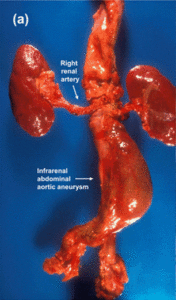
Hertzer NR, CC
Nevertheless, how fast CAN an abdominal aortic aneurysm increase in size?
“Most AAA’s, approximately 75%, are found when the patient is asymptomatic,” says Sendhil Krishnan, MD, a board-certified adult general cardiologist with advanced subspecialty training in interventional cardiology.
“As the aneurysm gets bigger it tends to grow faster due to the pressure that is placed on the arterial wall.
“An analogy to consider is like blowing up a balloon. When you first start to blow the balloon it takes a lot more effort for it to expand.
“However, once it has reached a certain size it becomes easier for the balloon to expand and be inflated quicker.
“When an aneurysm is typically under 5 cm the rate of growth is about 0.25 cm per year with only a 1% risk of rupture. As it gets larger the risk of rupture gets higher as well as the rate of growth.”
“Typically patients should continue to be monitored closely. Often doctors will place patients on beta blockers which will help reduce the sheer stress on the aortic wall.”
Smoking and untreated high blood pressure are major risk factors.
 Dr. Krishnan is with Pacific Heart & Vascular, where you can view his videos on heart disease and healthy living. He has numerous publications and often speaks at local and regional events.
 Lorra Garrick has been covering medical, fitness and cybersecurity topics for many years, having written thousands of articles for print magazines and websites, including as a ghostwriter. She’s also a former ACE-certified personal trainer.
.
Top image: BruceBlaus
Source: wokinghampaper.com/coroner-calls-changes-woman-dies-missed-aneurysm/

Why Does the Tongue Tingle or Burn Days After Root Canal?

The tongue may have a tingling or burning sensation for even much more than a few days following a root canal.
This can be unsettling to patients, making them wonder if the tingling or burning will ever go away.
Cause of Tinging, Burning Tongue after a Root Canal Treatment
“When dental procedure is performed on a lower tooth, the dentist will often recommend the numbing of the tooth to make the dental experience more comfortable,” explains Laurence (Larry) Grayhills, DMD, MS, MAGD, member of the Academy of General Dentistry.
“The goal of the dentist is to numb the inferior alveolar nerve (the main ‘pipeline’ nerve that runs through the lower jaw, supplying the teeth with feeling),” continues Dr. Grayhills.
“An unfortunate ‘bystander’ on the way to the inferior alveolar nerve is the lingual nerve which gives the tongue sensation.
“The lingual nerve is an unfortunate victim by the injection on the way to the inferior alveolar nerve.
“Not only is it numbed, sometimes the injection mildly traumatizes the lingual nerve in the attempt to numb lower teeth.
“It can leave a tingle or numb feeling in the tongue for up to a month. This numbness is reversible in most cases.”

Dr. Grayhills is with Mohip Dental & Associates, of FL, which provides the highest level of cosmetic, restorative, prosthetic and emergency dental care available.
Lorra Garrick has been covering medical, fitness and cybersecurity topics for many years, having written thousands of articles for print magazines and websites, including as a ghostwriter. She’s also a former ACE-certified personal trainer.
.
Top image: Shutterstock/ pathdoc
When Should Gums Stop Bleeding After a Deep Cleaning?
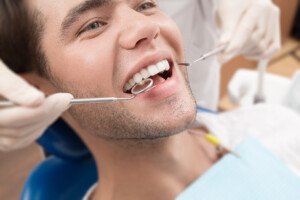
Are your gums left bleeding after a deep cleaning from your dentist or hygienist?
First off, do not be alarmed if a deep cleaning has left your gums bleeding.
“Gums heal very quickly,” begins Laurence (Larry) Grayhills, DMD, MS, MAGD, member of the Academy of General Dentistry.
“Just as a cut or scrape responds within a matter of days of cleaning a wound, removing bacteria-laden calculus (aka, tartar) by a dental professional will produce results within 24 hours,” continues Dr. Grayhills.
“One will notice a reduction of inflammation (red, swollen gums) returning to a nice firm consistency with an ‘orange peel’ stippling.
“In light skinned individuals, the change from red, bleeding gums will transform to non-bleeding coral pink.
“In dark skinned individuals, the color change may not be as obvious, but the transformation to non-bleeding occurs within days.
“It’s important to note that unless meticulous home care is maintained, this type of healing may not occur.
“Flossing is the most important procedure to prevent gingivitis ( irritated, bleeding gums) and periodontitis (loss of bony support around your teeth).”
Tips on How to Prevent Bleeding Gums after a Professional Cleaning

Shutterstock/Q-stock
The dental professional uses a sharp tool for the scraping portion of the cleaning. The actual polishing may also be more aggressive than what the patient is used to.
So if you are not a regular flosser, you can expect some blood after the cleaning.
If you hate flossing or can never remember to do it, at least make a point to begin flossing three weeks from your dental appointment, to give your gums enough time to “toughen up” for the professional scraping and cleaning.
Floss thoroughly, and do not be alarmed if this draws blood. Do not be alarmed if you taste blood.
After several days of thorough flossing, you’ll be bleeding a lot less. In under a week you should not be bleeding at all.
- Do not skip any days.
- Do not go to sleep with meat and other food stuck between your teeth.
- Floss after the meal if possible.
Finally, when brushing your teeth, make sure to brush behind them as well, and also gently brush your upper and lower gums!
Dr. Grayhills is with Mohip Dental & Associates, of FL, which provides the highest level of cosmetic, restorative, prosthetic and emergency dental care available.
Lorra Garrick has been covering medical, fitness and cybersecurity topics for many years, having written thousands of articles for print magazines and websites, including as a ghostwriter. She’s also a former ACE-certified personal trainer.
.
Top image: Shutterstock/Mintybear
What Makes a Tooth Hurt More At Night in Bed?

Ever notice that dental pains or aching teeth are more prominent at night when you’re in bed?
Two Reasons Tooth Pain Is Worse at Night
“A decayed tooth will hurt more at night for two reasons,” says Laurence (Larry) Grayhills, DMD, MS, MAGD, member of the Academy of General Dentistry.
Dr. Grayhills continues, “When laying back in the supine position, the blood pressure to the head increases (orthostatic hypertension, much as when your head is lower than the rest of your body) and will accentuate the blood flow to the damaged tooth, thereby enhancing the inflammatory process.
“Secondly, at night there are less distractions as there are during the day, allowing the affected individual to focus on the pain they are experiencing in the tooth.”
Seeing your dentist twice a year for routine checkups will go a long way at preventing tooth decay.
Why do so many people refuse to see the dentist?
One reason is fear. There is the fear of a nerve being poked by an instrument during a routine scraping procedure.
There is also the discomfort of lying helpless with one’s mouth wide open and someone looking inside with instruments.
Another reason is fear of being told something like, “You have five cavities,” or, “You will need a root canal.”
And of course, there is the bill for the services. Many people do not have dental coverage — including business owners.
However, like that famous saying goes, “A stitch in time saves nine.”
If you think you’re saving money by neglecting to have your teeth routinely examined, you may end up paying a pretty penny down the road for major dental work.
If the decay of a tooth has reached a point where it is hurting, whether only at night or during most of the day as well, this usually means that the sufferer has neglected regular dental visits.
Dr. Grayhills is with Mohip Dental & Associates, of FL, which provides the highest level of cosmetic, restorative, prosthetic and emergency dental care available. Academy of General Dentistry
Lorra Garrick has been covering medical, fitness and cybersecurity topics for many years, having written thousands of articles for print magazines and websites, including as a ghostwriter. She’s also a former ACE-certified personal trainer.
.
Top image: Shutterstock/fizkes
How to Tell If Your Molar Extraction Site Is Healing Well
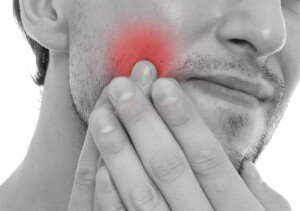
Things can definitely go wrong in the healing process following molar removal, so it’s important to know how to tell whether the site is healing well or not.
“As with any surgery, there’s going to be a recovery period,” says Laurence (Larry) Grayhills, DMD, MS, MAGD, member of the Academy of General Dentistry.
Dr. Grayhills continues, “Seven to ten days is a good estimate for the healing of an extracted tooth. If, after this time period, there is swelling, pain or a bad odor, it could be infected or developing a ‘dry socket.’”
What is a dry socket?
Dry sockets are uncommon, affecting two to five percent of people who have a tooth removed.
However, this is no consolation to the small percentage of patients who develop this uncomfortable, though very treatable, condition.
When the molar is removed, this leaves a hole (socket) in the bone. Part of the healing process is that of a blood clot forming in the socket to protect the bone and nerves.
If the clot dissolves or becomes dislodged, this vulnerable area is then exposed to anything that’s in your mouth, potentially leading to infection and pain (that can spread to the ear) that may last around six days.
Smoking increases the risk of a dry socket. So if you smoke and are planning on having your molars removed, you should quit smoking in the days leading up to the extraction.
To ensure that your molar extraction site is healing well, you can view it daily and check for a dry socket. If you see dark where the molar was removed, this is the protective blood clot.
If you see white, it’s a dry socket. Pain from a dry socket usually starts two days after the extraction.
Another checkpoint for the healing process is the development of unexplained bad breath and/or a bad taste in the mouth.
If you suspect that your molar removal site is not healing the way it should, don’t delay contacting your dentist.
The sooner the treatment, the less uncomfortable you’ll be.
Dr. Grayhills is with Mohip Dental & Associates, of FL, which provides the highest level of cosmetic, restorative, prosthetic and emergency dental care available.
Lorra Garrick has been covering medical, fitness and cybersecurity topics for many years, having written thousands of articles for print magazines and websites, including as a ghostwriter. She’s also a former ACE-certified personal trainer.
.
Top image: Shutterstock/ GlebSStock

Why Can’t CPAP Bring AHI Down to Zero All Night?

Are you concerned that your AHI keeps showing as two, three or four despite doing everything possible to ensure your CPAP is working right?
It’s a fair question: Why don’t CPAP machines deliver an AHI of zero?
“Thinking logically about this issue, it’s clear that there are two general explanatory paths,” says Joseph Krainin, MD, board certified in sleep medicine and neurology and founder of the online sleep apnea clinic Singular Sleep.
“One, your machine is not set correctly for you, or you have a problem with the delivery of the pressure to your upper airway, i.e., elevated leak.
“Two, the machine-calculated AHI is not perfect and can be spurious.
“I like to counsel patients that it’s a good ‘spitball’ estimate. If you are awake with your mask on and hold your breath for a few seconds, the machine will register that as an abnormal breathing event.”
There’s no data on just how many people in any demographic consistently have an AHI of zero, without any CPAP therapy.
However, sleep medicine doctors deem an AHI of under five to be in the normal range, not qualifying for a diagnosis of disordered breathing during sleep.
There probably are people out there who naturally have an AHI of zero, night after night.
Maybe they’re the ones who always sleep straight through the night, and when they get up in the morning, they don’t even have to urinate.
Maybe they have big jaws and chins and a big roomy airway. Who knows?
But an AHI of two, three or four is perfectly fine, under the radar for sleep-disordered breathing.
Thus, you should not fret if your CPAP machine can’t get your AHI to zero.
Nevertheless, a good question is why wouldn’t a CPAP machine keep the AHI at zero, being that it’s forcing air pressure down the throat?
Dr. Krainin explains, “Centrals [central apneas] can register in the machine’s calculated AHI, but also, being under-pressurized can lead to residual events.
“If auto-titrating machines are not adjusted properly, that can cause residual obstructive events as well.”
 In 2013 Dr. Krainin was elected a Fellow of the American Academy of Sleep Medicine, an honor reserved for sleep doctors who’ve made significant contributions to the field in education, research and service.
Lorra Garrick has been covering medical, fitness and cybersecurity topics for many years, having written thousands of articles for print magazines and websites, including as a ghostwriter. She’s also a former ACE-certified personal trainer.
.
Top image: Shutterstock/Grossinger

Pneumonia Cough vs. Bronchitis Cough Symptom Comparison

Pneumonia and bronchitis are notorious for causing a lot of coughing, but does this cough differ between the two conditions?
“It is important to begin by stating the differences between bronchitis and pneumonia,” says Angel Coz, MD, FCCP, board certified pulmonologist, Associate Professor of Medicine, University of Kentucky, Lexington Veterans Affairs Medical Center. (more…)

Can a Habit of Heavy Breathing Have a Serious Cause?

When is heavy breathing benign and when is it serious? Are some people just “naturally” heavy breathers – or, does this necessarily signal a problem?
“Heavy breathing is typically identified by an elevated rate of respiration at rest,” says Angel Coz, MD, FCCP, board certified pulmonologist, Associate Professor of Medicine, University of Kentucky, Lexington Veterans Affairs Medical Center. (more…)
Conditions that Mimic Exercise Induced Asthma Symptoms

Exercise induced asthma (EIA) has several skilled mimickers. You should know what they are.
“The classic symptoms of asthma include wheezing and shortness of breath,” says Angel Coz, MD, FCCP, board certified pulmonologist, Associate Professor of Medicine, University of Kentucky, Lexington Veterans Affairs Medical Center.
“However, several other conditions may present with similar symptoms and mimic asthma.”
Asthma Mimickers
“Heart ischemia: condition caused by insufficient blood flow to the heart muscle,” says Dr. Coz.
“Although the main symptom is chest pain, it can present as shortness of breath.”
Another name for this condition is angina. It’s caused by clogged (blocked) coronary arteries.
“Gastroesophageal reflux disease (GERD): Patients typically experience heartburn from abnormal flow of stomach acid back into the esophagus.
“GERD can cause asthma or make asthma more difficult to control.
“Chronic obstructive lung [pulmonary] disease (COPD): disease most commonly caused by chronic cigarette smoking that presents with shortness of breath and wheezing.
“At times, it can be difficult to differentiate COPD from asthma. Patients with COPD tend to have chronic productive cough.
“Congestive heart failure: accumulation of fluid in the lungs caused by inadequate cardiac pumping of blood. It can cause shortness of breath and at times wheezing.
“However, heart failure typically presents with lower extremity swelling, inability to lay flat, etc.”
Coronary artery disease and untreated sleep apnea are major risk factors for congestive heart failure.
“Vocal cord dysfunction or paralysis.” This is one of those conditions that a primary care physician may easily overlook when the patient describes what happened to them out of the blue.
Vocal cords are muscles. Muscles are prone to go into spasm.
In VCD, the spasm locks the muscles into a closed or nearly-closed position, blocking the airway.
The result is a sensation that the windpipe is as narrow as a straw.
Inhaling, no matter how hard one tries, is difficult, and not enough air gets through.
A VCD episode may last seconds to a minute or so, and can occur in the fittest athletes.
When struggling to inhale, the person will typically hear a wheezing sound.