



Can Colon Cancer Cause Leg Pain?

Leg pain has a ton of causes, and sure enough, colon cancer is one of them.
But how is this possible? And if you have unexplained leg pain, should you worry about colon cancer? (more…)

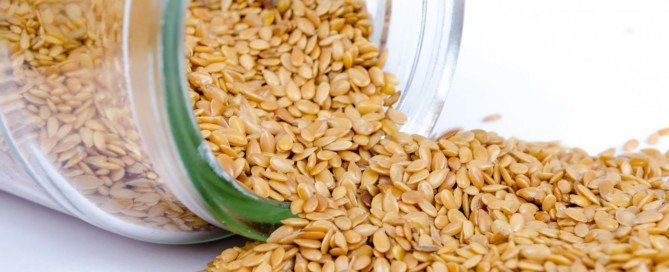
Sesame Seed Things in Stools but Don’t Eat Sesame Seeds ?
What ARE those things in your poops that look like sesame seeds, even though you don’t eat sesame seeds?!
Are they parasites or some other sign of a serious disease? (more…)

Can Colon Cancer Cause Sticky Bowel Movements?

Do your poops seem to have a lot of stickiness or goopy mucus in them?
Do you wonder if colon cancer can cause sticky slimy stools in addition to the more commonly publicized bloody or “tarry” stools? (more…)
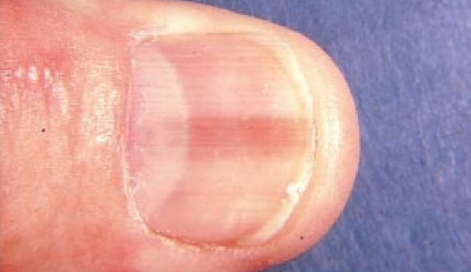
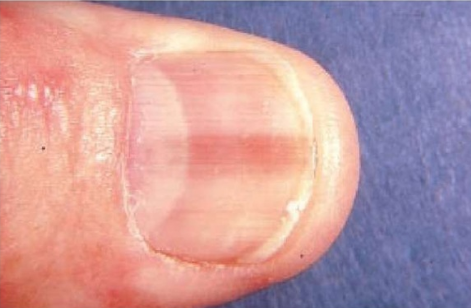
Pink Line or Stripe on Fingernail or Toenail Can Be Melanoma
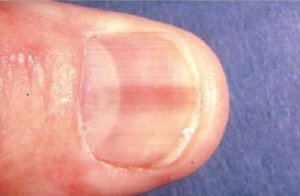
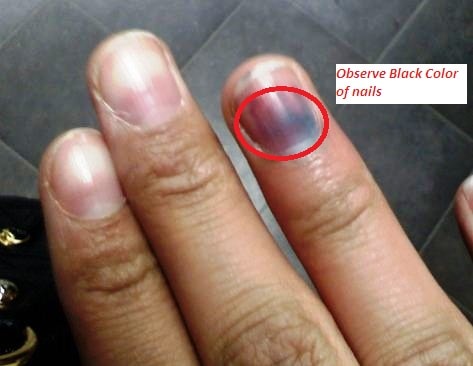
You probably already know that nail melanoma is often a dark line or stripe under the nail, but it can also be pink or a pinkish flesh color. (more…)

What Causes a Pimple to Be Purple? Could Cancer?

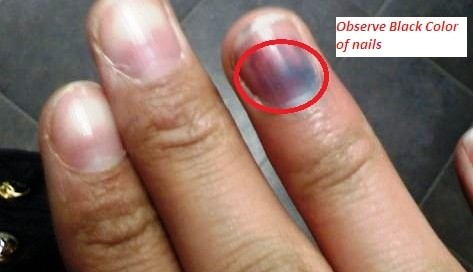
If pimples are supposed to be some shade of pink or flesh colored, then what causes a pimple to be purple?

Can You Stop Freckles from Forming in a Preschooler?

This isn’t about reducing the formation of freckles in a preschooler, but outright preventing the little spots from developing anywhere, especially on their face.

How Suddenly Can GERD Begin?






Just how fast can the symptoms of GERD present themselves once the acid starts making its way up the esophagus?
• Does GERD unfold slowly and with stealth?
• Or can its symptoms suddenly come out of the blue?
“GERD can begin very suddenly,” says Alan Gingold, DO, a board certified gastroenterologist with Central Jersey Ambulatory Surgical Center.
“GERD is the movement of stomach contents into the esophagus. Heartburn is a symptom of GERD and occurs in about 50% of people.”
Other Symptoms of GERD
• Chest ache or pain of a non-burning nature
• Upper abdominal pain, ache or a burning sensation
• Burning or pain in the back or between the shoulder blades
• Cough
• Bad taste in the mouth
• Problems swallowing
• Feeling of a lump in the throat
• Burning or sore throat
• Burning in the nose
• Ear pain
When GERD Hits You Suddenly
Dr. Gingold explains, “When the acid comes up into the esophagus, depending on the amount of acid, how sensitive the esophageal mucosa (skin of esophagus) is to the acid and how long the mucosa is in contact with the acid, the symptoms can occur with just one large reflux event.”
Anyone who gets exercise-induced acid reflux will tell you this. Within a few minutes of exercise (usually impact such as running or jumping), that person will start getting an unpleasant taste in the back of their throat or some other symptom such as a slight burning in their chest or upper abdomen.
GERD can also come on quite fast the moment a person lies horizontal at bedtime – especially if shortly before they had a lot to eat.
“This is very true when it happens at night when people are sleeping,” says Dr. Gingold.
“The acid may come in contact with the esophagus for a prolonged period of time and cause significant inflammation and symptoms.”
The heartburn or abdominal discomfort symptoms of acid reflux, when brought on by particular foods, typically do not occur during or immediately after eating.
However, we’ve all at one time or another regurgitated a little food soon after eating it.
 Dr. Gingold attributes his success to the extra time he spends with his patients. His areas of expertise include reflux disease, Barrett’s esophagus, capsule endoscopy, chronic liver disease and inflammatory bowel disease. Dr. Alan Gingold is board certified by the American Board of Internal Medicine in Gastroenterology
 Lorra Garrick has been covering medical, fitness and cybersecurity topics for many years, having written thousands of articles for print magazines and websites, including as a ghostwriter. She’s also a former ACE-certified personal trainer.
.