

Does GERD Cause Noisy Breathing During Sleep?

GERD can rear its ugly head while a person is asleep, affecting the throat and causing coughing. But what about a strange breathing noise?
This odd overnight noise from acid reflux has nothing to do with snoring or sleep apnea.
“GERD could cause nighttime noise when breathing if someone has enough reflux that the acid is coming up to the back of the throat,” says Alan Gingold, DO, a board certified gastroenterologist with Central Jersey Ambulatory Surgical Center.
“If this is the case, people can have micro-aspiration, meaning that small amounts of the acid go into the lungs, and this could cause asthma type symptoms. This could cause wheezing and noise when breathing.”
The acidic contents make their way into the lungs via the larynx and into the windpipe or trachea, leading to the lungs.
If the accompanying noisy breathing occurs only while one is asleep, this is likely caused by acid reflux – or more specifically, laryngopharyngeal reflux.
Another possible symptom of this is suddenly waking up and having difficulty breathing, or feeling as though your airway has been cut off.
The aspiration can trigger coughing, choking and a sensation of difficulty breathing, which can be distressing enough to wake you up from sleep
In some cases, severe GERD can trigger episodes where the airway becomes partially obstructed, leading to brief pauses in breathing during sleep.
This can result in sudden awakenings and difficulty breathing.
Dr. Gingold explains, “Micro-aspiration might make someone wake from sleep with trouble breathing because the acid and fluid that gets in the lung causes inflammation and coughing which can cause reactive airway disease or symptoms similar to asthma.”
If there’s also an unpleasant or bitter taste in the back of the mouth when this happens, this heavily points to acid reflux as the culprit.
Prevention of Overnight Noisy Breathing and Gasping for Breath
“The best way to prevent micro-aspiration is to make dietary and lifestyle changes that decrease likelihood of reflux,” says Dr. Gingold.
“Avoid food such as citrus, caffeine, spicy foods, alcohol, smoking, fatty foods, chocolate.”
Now of course, giving up favorite foods for life is impossible for most people, but at least you can try to cut back on your consumption of GERD triggers.
“Avoid eating for three to four hours before bedtime, sleep with additional pillows or raise the head of the bed [to angle up the torso] and take your reflux medication,” says Dr. Gingold.
A wedge pillow can be a helpful tool for managing acid reflux during sleep.
The design of a wedge pillow involves an inclined surface that elevates the upper body, which can reduce the likelihood of stomach acid flowing back into the esophagus while lying down.
 Dr. Gingold attributes his success to the extra time he spends with his patients. His areas of expertise include reflux disease, Barrett’s esophagus, capsule endoscopy, chronic liver disease and inflammatory bowel disease. Dr. Alan Gingold is board certified by the American Board of Internal Medicine in Gastroenterology
 Lorra Garrick has been covering medical, fitness and cybersecurity topics for many years, having written thousands of articles for print magazines and websites, including as a ghostwriter. She’s also a former ACE-certified personal trainer.
.
Top image: Freepik.com

Can a Barium Swallow Be Normal Despite Severe Reflux?

If you’ve been suffering a long time from acid reflux, you may want to ask your doctor about a barium swallow test to screen for Barrett’s esophagus, a precancerous condition.
The damage that the acidic contents from the stomach causes to the inner lining of the esophagus can lead to cellular changes: a change in cells that create a risk factor for esophageal cancer.
A barium swallow is designed to detect anatomical changes such as cancer, but it cannot detect Barrett’s esophagus because Barrett’s is based strictly on biopsy findings.
If someone has had severe acid reflux over a long course of time, is it ever possible for the barium swallow to come up negative?
“A barium swallow can absolutely be normal despite severe reflux, because a barium swallow is made to show changes in anatomy in the esophagus and stomach,” says Alan Gingold, DO, a board certified gastroenterologist with Central Jersey Ambulatory Surgical Center.
“It will show masses or ulcers, but if there is no significant damage from the reflux, the barium swallow may appear normal.”
Barrett’s Esophagus
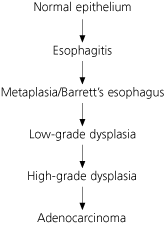
From normal cells to malignant cells.
About two percent of people with Barrett’s esophagus eventually develop esophageal cancer, which has a dismal five year survival rate of a little over 19 percent, according to the National Cancer Institute Surveillance and Epidemiology End Results Program.
Dr. Gingold explains, “Unfortunately, because Barrett’s esophagus is a pathological diagnosis — meaning that it is based on biopsy results, it cannot be followed by barium swallow studies.
“The only way to follow Barrett’s esophagus in patients with reflux is to do an EGD (esophagogastroduodenoscopy or upper endoscopy) every three to five years.”
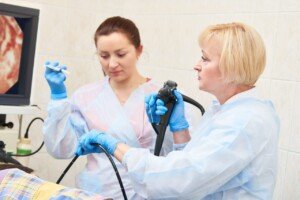
Upper endoscopy. Shutterstock, Dmitry Kalinovsky
Dr. Gingold attributes his success to the extra time he spends with his patients. His areas of expertise include reflux disease, Barrett’s esophagus, capsule endoscopy, chronic liver disease and inflammatory bowel disease. Dr. Alan Gingold is board certified by the American Board of Internal Medicine in Gastroenterology
Lorra Garrick has been covering medical, fitness and cybersecurity topics for many years, having written thousands of articles for print magazines and websites, including as a ghostwriter. She’s also a former ACE-certified personal trainer.
.
Top image: ©Lorra Garrick

Why Are Acid Reflux and Gas Worse Right Before Menstruation?

Ever notice that your acid reflux or gas worsens right before your period begins? There several reasons for this. It’s not in your head.
“Reflux and gas may be worse right before menstruation for several reasons,” says Alan Gingold, DO, a board certified gastroenterologist with Central Jersey Ambulatory Surgical Center.
“One might be the changing estrogen and progesterone hormone changes that occur right before a menstrual cycle.
“Other things that may make reflux worse at this time are dietary changes — more chocolate, sugars, etc.”
Does your appetite change in the days leading up to the official start of your period?
Cravings for certain foods mean eating those foods – leading to increased acid reflux.
Take note of the changes in diet that occur a few days before you begin flowing.
• Are you eating the same foods as you normally do – but in greater amounts?
• Are you eating more food closer to bedtime, which can lead to acid reflux overnight?
• Are you loading up on comfort foods that are known triggers for acid reflux, such as, of course, chocolate, as well as spicy foods, citrus fruits, soda, orange juice and alcohol?
Dr. Gingold adds, “More non-steroidal medication use at this time may cause more inflammation and irritate the stomach, and in general poor sleep and stress may exacerbate things at this time of the month as well.”
As for gas, this can be explained by the increased intake in food, particularly gas-causing food like beans and, for some women, milk.
And foods with added inulin are notorious for producing a lot of smelly passed gas.
To manage the increased acid reflux that comes around the beginning of your period, avoid eating within three hours of bedtime.
Avoid also the trigger foods for acid reflux and gas (hopefully you’ll be able to eventually identify them).
And remember, more gas than usual is normal in the days preceding menstruation.
Dr. Gingold attributes his success to the extra time he spends with his patients. His areas of expertise include reflux disease, Barrett’s esophagus, capsule endoscopy, chronic liver disease and inflammatory bowel disease. Dr. Alan Gingold is board certified by the American Board of Internal Medicine in Gastroenterology
Lorra Garrick has been covering medical, fitness and cybersecurity topics for many years, having written thousands of articles for print magazines and websites, including as a ghostwriter. She’s also a former ACE-certified personal trainer.
Top image: Freepik.com
Black Grey Hard Lump Inside Mouth on Bottom Lip of Child

Here’s what to do if your child has a black or grey hard lump inside the mouth on the bottom lip.
Can Specks of Blood in Infant’s Poop Be Caused by Cancer?

It’s alarming when changing your infant’s diaper you see specks or drops of blood in the stools.

What Does Atypical Mole with Regression Mean?
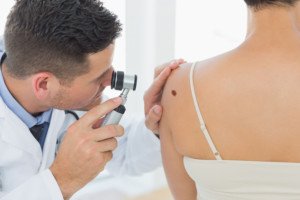
An atypical mole is also known as a precancerous mole. These such lesions can undergo a regression.
“Regression is a term applied to lesions that our immune system attacks or treats,” says Erum Ilyas, MD, a board certified dermatologist who performs adult and pediatric medical dermatology, cosmetic dermatology and skin cancer treatment with Schweiger Dermatology Group.
An atypical mole is one that usually looks different from other moles on the person’s body – an odd looking mole, often at least the size of a pencil eraser.
They are also called dysplastic moles or dysplastic nevi. The atypia means that its cells, when compared to those of a typical mole, are more likely to ever become malignant. This does not mean a guaranteed malignancy.
What Is an Atypical Mole with Regression?
Dr. Ilyas says, “Clinically it can appear as though a mole is ‘disappearing.’ This phenomenon can occur for a variety of reasons.
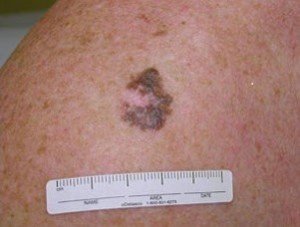
Regressing mole
“At times if a benign mole is irritated or inflamed, our immune system may send out immune cells to the mole to treat it. This doesn’t necessarily mean it’s harmful.
“At times regression can appear in atypical moles or melanoma as well. It’s possible that our immune systems recognize the presence of atypical or cancerous cells and attempts to treat or keep these cells in check.
“This is what the work on melanoma vaccines is based on. When an atypical mole has regression, this could be an indication that it is either irritated or inflamed based on its location (often noted for moles that appear under the bra strap).
“Or it may mean that the cells in the mole are atypical to the degree that our immune system is attempting to ‘treat’ it.
“For a benign mole with regression, the indication to remove it would be based on symptoms.
“For an atypical mole with regression, because it would be difficult to say with certainty the reason for regression, it is likely best to remove it.”
 Dr. Ilyas has practiced dermatology in the Philadelphia area and Boston for 15+ years and has served as Assistant Professor of Dermatology at Drexel University College of Medicine.
Lorra Garrick has been covering medical, fitness and cybersecurity topics for many years, having written thousands of articles for print magazines and websites, including as a ghostwriter. She’s also a former ACE-certified personal trainer.
.
Top image: Shutterstock/wavebreakmedia
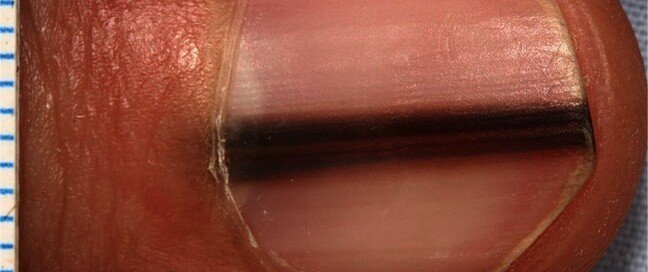
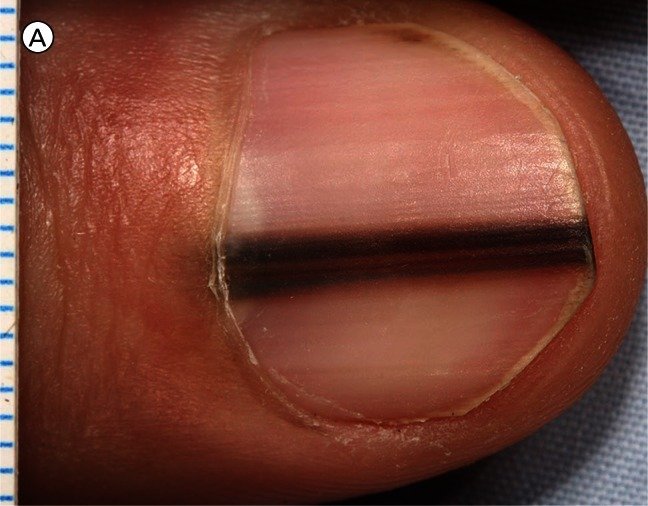
Two Big Warning Signs You May Have Nail Melanoma
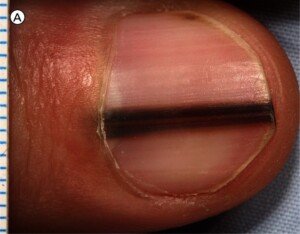
Yes, melanoma can affect a fingernail or toenail, and there are two major warning signs that what you see is a potentially deadly tumor — also known as subungual melanoma.

What Are All These Tiny Bright Red Dots on My Breast ?

Very tiny, bright red dots popping up over time on the breast can make a woman think this is a sign of breast cancer.
Breast cancer awareness is very important and has ongoing and strong publicity.
More and more women – including younger – are becoming increasingly conscious of this disease and its signs, plus any new changes in their breasts.
So when a woman notices a tiny bright red dot on her breast – and especially if she notices more bright red little spots appearing over the course of time – this can get her heart racing.
“It is important to have a routine skin cancer screening in addition to mammograms annually to verify the cause of these lesions,” says Erum Ilyas, MD, a board certified dermatologist who performs adult and pediatric medical dermatology, cosmetic dermatology and skin cancer treatment with Schweiger Dermatology Group.
Dr. Ilyas continues, “However, the most common reason I see patients for ‘bright red dots’ actually turn out to be angiomas, also referred to as cherry angiomas. These benign lesions are not related to skin or breast cancer.”
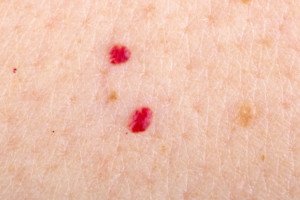
Angiomas. Shutterstock/Ocskay Bence
Angiomas, which do not need to be removed other than for cosmetic reasons, tend to come after age 30 and especially after 40. They may be flat or slightly elevated. They are also known as strawberry angiomas.
If one of your parents has a bunch of these tiny red spots, chances are, you will begin noticing them on your own body by the time you reach 40.
They can appear pretty much anywhere where there is skin, including the skin of your breasts.
But here’s what you need to know: An angioma (also known as a hemangioma) is a dermatological situation, not a gynecological one.
What exactly is an angioma?
They are very superficial – and benign – dense masses of very tiny blood vessels, which is why most are “bright” red. They may also appear orange-red and reddish-magenta.
Since this is an issue of the skin, there is no reason why angiomas wouldn’t also appear on the skin that covers a woman’s breasts any less than they would appear on one’s trunk, back, shoulder, neck or arms.
Angiomas, regardless of their location, have no connection to cancer of the breast, skin or any other organ.
As for actual signs of possible breast cancer other than a lump that you can feel, these include puckering of the skin on a breast, an inverted nipple when it’s never been inverted before, a relentlessly itchy nipple, and unusual discharge from a nipple.
If you experience any of these signs, you should make an appointment immediately with your gynecologist.
If this article provided you with helpful information or reassurance, please consider supporting my work through Ko-fi. Donations help me continue writing detailed medical content that’s easy to understand.
Dr. Ilyas has practiced dermatology in the Philadelphia area and Boston for 15+ years and has served as Assistant Professor of Dermatology at Drexel University College of Medicine.
Lorra Garrick has been covering medical, fitness and cybersecurity topics for many years, having written thousands of articles for print magazines and websites, including as a ghostwriter. She is also a former ACE-certified personal trainer.
.
Top image credit: Shutterstock, Max4e Photo

Mole Removal from the Butt Crack: Pain and Recovery

Here’s what you need to know about removing a mole from your butt crack: if it’s painful and how the recovery goes.
The idea of any procedure that involves the butt crack can cause anxiety in some individuals.
“Removing a mole from the butt crack is no different than removing a mole from another location in most instances,” says Erum Ilyas, MD, a board certified dermatologist who performs adult and pediatric medical dermatology, cosmetic dermatology and skin cancer treatment with Schweiger Dermatology Group.
What’s Involved in Removing a Mole from the Butt Crack
“These are often locally numbed by the superficial injection of a numbing agent that only affects the skin locally,” explains Dr. Ilyas.
“The spot is often scraped or cut out. If small, the base is often cauterized, or if larger, closed with a stitch.”
All removed moles – regardless of reason or location – should automatically be biopsied, even if they appear normal. So make sure that you request that the tissue be biopsied.
“Mole” in a Child’s Butt Crack
Dr. Ilyas explains, “I said ‘most instances’ because it is important to note that in children there can be markers for underlying ‘spinal dysraphism’ which is a group of congenital anomalies that result in incomplete fusion of the spine or its elements such as the bone or neural elements.
“These can present as a midline tag, lipoma (fatty tumor), patch of hair or dimple.
“If a child presents for a lesion in this area we often need to obtaining imaging to verify that there is no underlying concern.”
Recovery from Mole Removal in the Butt Crack
Dr. Ilyas says, “In terms of healing, these do not necessarily have more discomfort associated [than more common areas of mole removal], but can be at a higher risk for infection.
“It is important to maintain proper wound care for preventing these from getting infected.”
Dr. Ilyas has practiced dermatology in the Philadelphia area and Boston for 15+ years and has served as Assistant Professor of Dermatology at Drexel University College of Medicine.
Lorra Garrick has been covering medical, fitness and cybersecurity topics for many years, having written thousands of articles for print magazines and websites, including as a ghostwriter. She’s also a former ACE-certified personal trainer.
.
Top image: Shutterstock/puhhha

Can an Irritated Skin Tag Turn into Cancer?




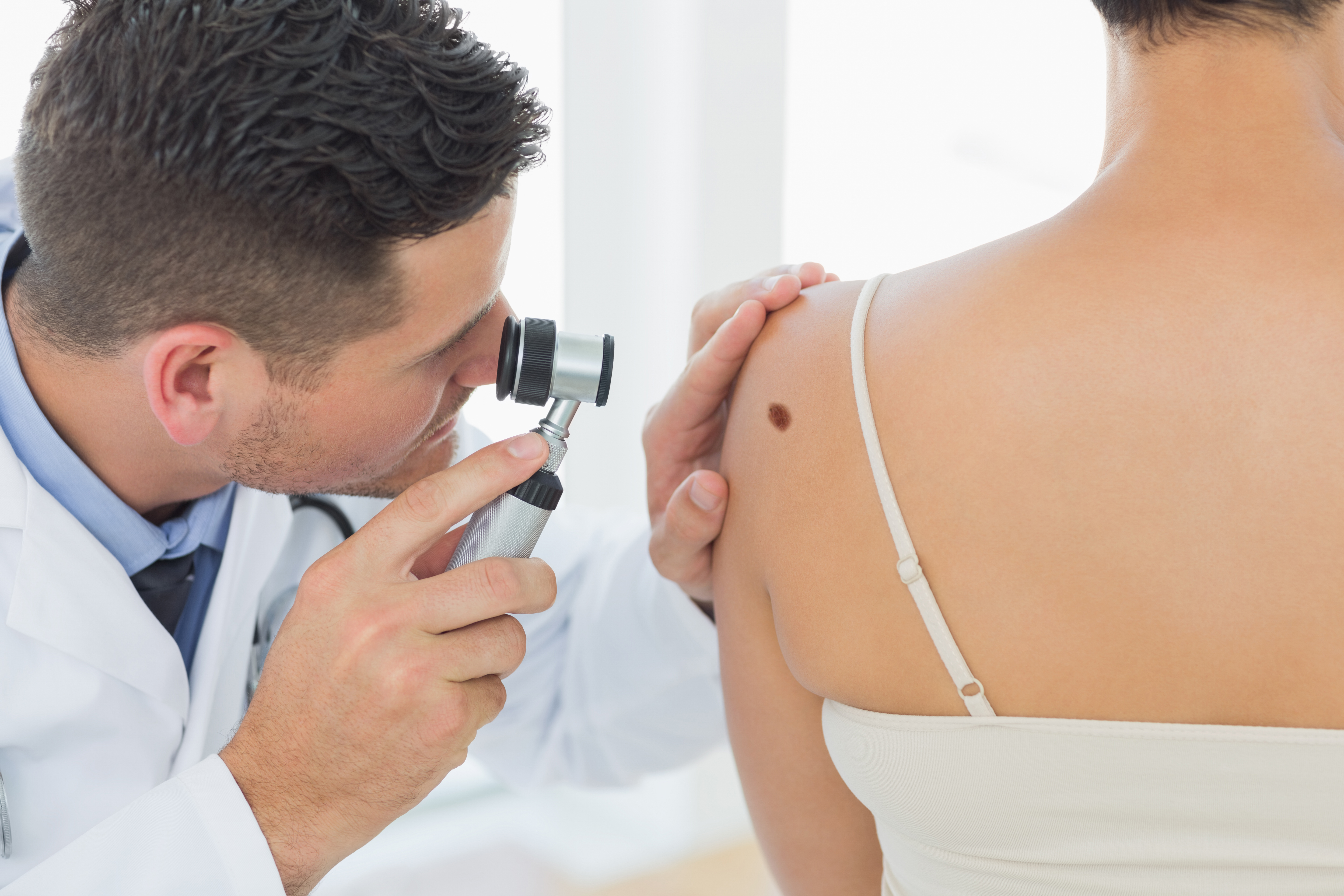



Skin tags are common and depending on their location are prone to irritation including bleeding.
Can an irritated skin tag, however, actually transform into cancer such as melanoma? (more…)