

Does Being on One’s Feet 8 Hours a Day Replace Aerobic Exercise?

Are you on your feet eight hours a day at work and wonder if this can replace aerobic or resistance exercise?
Do you feel “exhausted” after your shift and wonder if this means your heart gets a good workout at the workplace? (more…)

The Numbers You Should Know for Heart Disease Prevention

Here are the important numbers you should know as part of your mission to prevent developing heart disease or having a stroke.
How well do you know what your numbers should be?
- Blood pressure
- Lipid profile (which includes cholesterol)
- BMI (body mass index)
- Fasting glucose
Why should you know what your numbers should be?
“Because these numbers are markers for heart attack, stroke, early death and disability,” says Richard Honaker, MD, Chief Medical Advisor at Your Doctors Online, with 30+ years’ experience as a primary care physician.
The prevention of heart disease and stroke begins with knowing what the numbers should be for various tests.
Blood Pressure
- This should be 120/80 Hg or lower.
- For diabetics or those with kidney disease, it should be 130/80 or lower.
- Never take blood pressure after just “running around” doing chores or being busy. Sit quietly for 10 minutes first. Blood pressure readings at doctors’ offices tend to be higher than from home tests due to anxiety.
Lipid Profile
LDL (bad) cholesterol should be less than 100 mg/dL for typical people, and less than 70 for those with heart disease or at high risk for heart disease. Being at risk for heart disease also means you’re at risk for stroke.
Fasting triglycerides should be under 150 mg/dL.
HDL (good) cholesterol should be at a minimum, 40 mg/dL, for men, and 50 for women. Total cholesterol divided by HDL should be 3.0 or less.
C-reactive protein (high sensitivity) should be less than 1.0 mg/dL. This test is not part of the routine physical and is given only when the physician believes there’s a need for it.
BMI (body mass index)
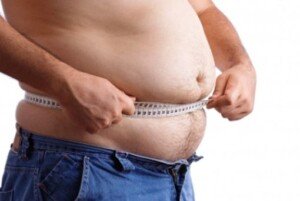
BMI should be 24 or under. Twenty-five to 29 is overweight, and 30 and over is obese.
Fj.toloza992, CC BY-SA
A person who is very muscular, such as a bodybuilder, may have a BMI over 25, since BMI is based on a height and weight calculation.
Thus, a 5-9 bodybuilder may weigh 200 pounds, but have only 8 percent body fat, yet his BMI number will be in the overweight range.

Fasting Sugar
Fasting blood glucose should be 99 mg/dL or less. If it’s 100-125 mg/dL, this may signal prediabetes.
The word “may” is used because more than one reading over a six-month period is required for a more definitive conclusion.
Plus, a doctor may order additional tests such as a glucose tolerance test, to get a more definitive assessment.
Knowing these numbers is part of your arsenal to prevent heart disease and stroke.
 Dr. Honaker has been recognized by D Magazine as one of the Best Doctors in Dallas several times and a Texas Super Doctor by Texas Weekly. He’s also a recipient of the Physician Recognition Award from the American Medical Association multiple times. Your Doctors Online
 Lorra Garrick has been covering medical, fitness and cybersecurity topics for many years, having written thousands of articles for print magazines and websites, including as a ghostwriter. She’s also a former ACE-certified personal trainer.
.
Sources: heart.arizona.edu/ sciencedaily.com/releases/2010/05/100505091632.htm

Four Basic Routines to Burn Stubborn Fat All Over
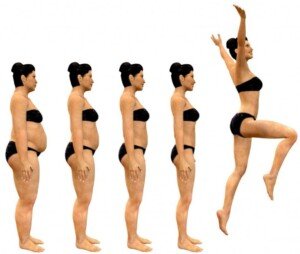
The fat won’t come off, right? No matter what you do, the scale won’t budge.
But don’t despair, because you’re probably NOT doing the very four routines that’ll kick that blubber clear to the curb. (more…)

Brilliant Hack for Home Hamstring Exercise: Discovered by Accident!

Here is an absolutely brilliant hack for home hamstring strength training that I discovered by accident while doing chest presses at home. (more…)

Getting Rid of Gallstones: Diet vs. Surgery

A doctor compares diet vs. surgery for getting rid of painful gallstones.
For someone diagnosed with gallstones, it’s easy to wonder about how effective a certain diet would be.
Could the right diet pass gallstones? Is surgery for gallstones always the best treatment?
I know a 50-something man who was experiencing severe sharp stomach pains and was diagnosed with a gallstone.
He consulted with a naturopathic physician to see if a special diet would make the gallstone pass.
The diet forbids white sugar and processed foods. Almost immediately the symptoms disappeared.
He’s been symptom free for many months, but a second scan showed that the gallstone was still there.
Should he have surgery?
“Decision for surgery is complex; pain is not the only indicator,” says Dr. Maurice A. Ramirez, DO, board certified in family practice and also clinical nutrition, formerly with Florida Hospital Ormond and now retired.
Dr. Ramirez continues, “The stone can become the nidus of an infection and/or cause an obstruction.”
What if there’s no longer any pain as a result of a dietary approach? Would it be okay to leave the gallstone in?
No, because, as already mentioned, the presence of the stone could lead to an infection or an obstruction.
What about surgery for those people whose painless gallstones were discovered incidentally while undergoing imaging for an unrelated matter?
“No, stones that are found incidentally and have never caused pain, fever, swelling, obstruction, jaundice or infection may be observed until one of these warning signs occur,” says Dr. Ramirez.
The Potential Danger of Gallstones
Dr. Ramirez explains, “Once incidental stones (cholelithiasis) become symptomatic disease (cholecystitis), the risk of life threatening infection, gangrene and death depend on whether there is obstruction (blockage) of the gallbladder. If obstruction occurs, the risk of death is high.”
Clean Diet vs. Going Under the Knife
Dr. Ramirez says that a change in diet — even the most healthful diet — is not as effective or as safe as surgical removal of the gallstone if there’s an obstruction or infection.
However, a dietary approach (whole foods, low saturated fat, low cholesterol, limited processed sugars) is “acceptable in the absence of obstruction or infection,” says Dr. Ramirez.
Should the patient first try diet to rid symptoms?
“Acceptable in the absence of obstruction or infection, but not a first choice for treatment,” says Dr. Ramirez.
If you have any of the following symptoms, ask your doctor about the possibility of gallbladder disease:
- Upper abdominal pain, especially on the right
- Nausea/vomiting
- Fever
- Night sweats
- Tea colored urine
- Oddly light colored bowel movements
- Jaundice (yellowish skin)
- Unexplained fatigue
- Unexplained weight loss
- Suppressed appetite
 Dr. Maurice A. Ramirez’s book, “The Complete Idiot’s Guide to Disaster Preparedness,” is now available everywhere.
 Lorra Garrick has been covering medical, fitness and cybersecurity topics for many years, having written thousands of articles for print magazines and websites, including as a ghostwriter. She’s also a former ACE-certified personal trainer.
.
Top image: Shutterstock/Burlingham

Young Child Vomiting Only at Night: Cause & Treatment

If your young child upchucks only overnight, the likely cause will really surprise you.
“If your preschooler vomits only at night, my first thought as a pediatrician would be that it is a behavioral issue,” says Joel Gator Warsh, MD, of Integrative Pediatrics and Medicine, Studio City, CA, and part of the pediatric staff of Cedars-Sinai Hospital.
Dr. Warsh continues, “One of a preschooler’s major drives is attention. Does your child want to go to sleep? Are they fighting you every night?”
This makes a lot of sense. After all, even though you may not be a doctor, you have to admit that it’s unlikely that any medical condition would cause vomiting ONLY at night or overnight.
Though many conditions can cause vomiting overnight, there’d also be upchucking during the day as well.
Plus, your child would have other symptoms such as nausea, stomach pain, loss of appetite. They’d seem sick.
“If your child vomited in the past because they worked themselves up, crying going to bed or were sick with a stomach bug, they probably got a lot of attention,” explains Dr. Warsh.
“They realized they received a lot of comfort and parental time for this, and the behavior continued happening.
“The most important thing to consider in this case, like any sleep training, is to not give too much attention to the issue.
“If they vomit, keep the lights dim, do not interact, change the sheets and put them straight back to bed. Positively reinforce nights without vomiting.”
But CAN it be a medical condition?
Dr. Warsh says, “Something else to consider would be reflux. When you lie down, gravity is not working with you, and stomach contents are more likely to reflux from the stomach into the esophagus.
“If this is a concern, start by restricting any liquids one hour before bed and see if this helps.
“Do not feed them any late night snacks, and if you give them anything after dinner, make sure it does not inflame the gut. No sugar, dyes or preservatives.”
Keep in mind that acid reflux that comes out of the mouth is not the same mechanical dynamic as vomiting, even though the fluid-like gunk may look like vomitus.
If possible, prop your preschooler’s bed up on the head side by 15 degrees to help offset the effect of gravity.
 Dr. Warsh and his Studio City, Los Angeles clinic treat a wide array of common pediatric issues using holistic and conventional treatments. He works with nutritionists, naturopaths, Ayurvedic practitioners, acupuncturists and more.
Lorra Garrick has been covering medical, fitness and cybersecurity topics for many years, having written thousands of articles for print magazines and websites, including as a ghostwriter. She’s also a former ACE-certified personal trainer.

Why Isn’t Obstructive Sleep Apnea Part of an Annual Physical?

Why don’t doctors screen for obstructive sleep apnea during the annual routine physical? (more…)

10 Tricks Fast Food Restaurants Use to Make You Overeat

There are 10 tricks that fast food restaurants use to make you overeat or give too much food to your kids.
The result is unwanted weight gain and obesity for many.
Big Colorful Ads in Public
Ever notice that the giant building for a business center has a tiny little sign out front that you can barely find, but Joe’s BBQ Stand has a sign bigger than an 18-wheeler with blaring red letters surrounded by bright orange “flames”?
And it’s not just the small Ma and Pa establishment that relies upon visual attraction. The big guns in the fast food industry pull this tricky stunt too.
There’s actually a link between obesity and fast food advertising, says a 2013 UCLA study.
Dr. Lenard Lesser of the Palo Alto Medical Foundation Research Institute says in the report that “marketing gets people to eat more.”
Big huge billboards off to the side of busy highways begin grabbing motorists’ attention from far away.
Restaurant Colors
“Notice the strong red/yellow color schemes of most fast food restaurants,” says Julie Cunningham, MPH, RD, LDN, registered dietitian and certified diabetes educator. This goes for the interior as well.

She explains, “It’s well-known that we are influenced by the colors red and yellow to eat more and to eat faster. Conversely, ‘cool’ colors like blue and green cause most people to eat less.”
Great Deals on Meals, not Single Items
“Value Meals typically give you an extra item for less cost, encouraging you to overeat,” says Cunningham.
Some “meals” are actually cheaper than the individual sandwich in that meal.
Not wanting to feel like they’re over-spending, people will order the “meal” and end up overeating.
Convenience
By definition, “fast food” is convenient. But the speedy time it takes to hand over your order is just the beginning.
Due to the large volume of fast food establishments in locations that are heavily frequented by people, many families end up eating dinner or lunch in the car – between rushing around to carry out the day’s activities and being “too exhausted” to make a healthy meal at home.
Note how thick and sturdy the disposable food trays are for some fast food giants.
You can trust even the clumsiest kid in the backseat with these.
Indoor Playgrounds
“The playground isn’t there so that your kids can get exercise,” says Cunningham. “It’s there so that your kids will beg for that particular restaurant.
“You order food while you’re there, and your kids get used to the food. This creates brand loyalty among your children for that particular restaurant.
“The next thing you know, the fast food chain has new customers for life, all because they had the best playground in town.”
TV Ads Targeting Kids
According to Statista, the Statistics Portal, here’s how many TV commercials American kids six to 11 see every year for various fast food giants:
• McDonald’s: 253
• Subway: 81
• Domino’s and Burger King each: 71
• Pizza Hut: 68
• Wendy’s: 48
• KFC: 29
Special Meals for Children
“The kids’ meals and the toys inside them are there to create brand loyalty among children, so that parents can unwittingly help fast food restaurants create customers for life,” says Cunningham.
Sneaking in Dessert
“When kids’ meals include dessert, or when you can trade the toy/book for dessert, this encourages kids to consume sweets they might not normally eat, because the sweets are included with the meal,” says Cunningham.
TV Commercials Directed at Adults
You may recall the McDonald’s slogan of decades ago that was sung in a jingle, “You deserve a break today, so get up and get away, to McDonald’s.”
Then there’s “i’m lovin’ it” and all the slogans in between, including for other fast food behemoths.
Remember the one for Arby’s some years back, a campaign featuring a young man newly living on his own, whose mother worried that he wasn’t eating properly?
“Don’t worry Mom, I eat at Arby’s!”
This had appeal to young men striking out on their own for the first time, plus their mothers who probably suggested that their sons eat more at Arby’s.
No Fat Actors in Fast Food Commercials
Lean, attractive people are hired for these commercials for a reason.
Occasionally a man might be husky, but when’s the last time you saw an overweight woman in TV commercials for fast food?
 Julie Cunningham specializes in helping men and women with diabetes and prediabetes learn how to eat to manage their blood sugars–so they can get back to the things they enjoy.
Lorra Garrick has been covering medical, fitness and cybersecurity topics for many years, having written thousands of articles for print magazines and websites, including as a ghostwriter. She’s also a former ACE-certified personal trainer.
.
Top image: ©Lorra Garrick
Sources:
mashable.com/2013/11/14/fast-food-ads-kids/#n23yeD1rgsqn
healthland.time.com/2013/08/29/forget-the-food-fast-food-ads-aimed-at-kids-feature-lots-of-giveaways/

Can Preschoolers Really Pick Door Locks or Is this Hype?
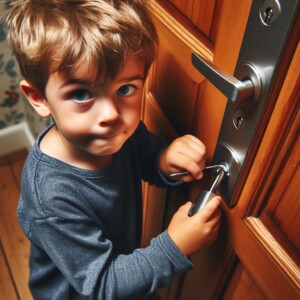
How is it possible that a preschooler can figure out how to pick a door lock and “escape” without the parent knowing?
There always seems to be news of yet another tragic story of a preschooler who was found dead in the family backyard pool or otherwise went missing and was eventually found dead in a river or never found at all.
In one story about a backyard pool, the preschooler “wandered” outside while the mother slept.
The story generated a lot of comments. Most focused on the following issues:
1 Professional burglars use special tools to get into houses.
2 How is it that preschoolers and especially toddlers are able to get past a door that’s locked from the inside?
How Very Young Children Get Past a Locking Mechanism
• The door lock is within the young child’s reach, and he already knows how to unlock it from watching his parents. The lever is loose enough to be flipped by a preschooler’s hands.
• If the door lock is beyond the child’s reach, the child is able to get a lightweight chair or stool beneath the lock and climb up.
• If the lock requires a key, the preschooler knows where the key is and knows how to use it after observing adults using it.
• The door is unlocked to begin with!
• The door has no alarm that sounds when it dislodges from its frame.
You can clearly see that under these circumstances it’s frightfully easy for even a two-year-old to get “past a locked door.”
Master Escape Artist vs. Careless Parents
A child is not an escape artist if her mother’s purse is in plain view on the kitchen table, and the adventurous four-year-old knows “the key” is inside.
These children are not mini-Houdinis. They are simply finding the weaknesses in a flawed system.
In the case of many pool drowning deaths, there are various points along the way, leading up to the drowning, at which security checks would have prevented the drowning.
• Door lock out of reach of child. No lightweight furniture nearby to use as climbing tools.
• Key’s hiding place not known to child or on parent’s person at all times.
• High-end door alarm that no preschooler is smart enough to deactivate; sounds when door opens.
• Gate access to pool; gate locked.
• Pool covered when not in use.
Once the preschool child is outside, there are numerous possibilities for tragedy, such as:
• Abduction.
• Hit by car after wandering away.
• Drowns in neighborhood lake.
• Drowns in neighbor’s pool.
• Drowns in their own pool.
• Gets into family car (that’s unlocked) and manages to roll it into the street and gets hit.
• Dog attack.
• Fall into sewer hole.
Tips for Preventing a Very Young Child from Getting Past Locked Doors
• If you had to unlock a gate for the service workers, relock it after they leave.
• Don’t assume spouse turned on the alarm system. Check it after he leaves, even if this means interrupting your sleep.
• When you’re home, keep doors locked.
Lastly, get a formal security system. Security companies want your business. They have security systems for all budgets.
Failure of Imagination
“The 9/11 Commission cited the main failure of the Administration at the time in regards to preventing the terrorist attack on the World Trade Center was ‘failure of imagination,’” says Robert Siciliano, CEO of Safr.Me.com and an expert in fraud prevention and personal safety.
When the young men who eventually were part of the 9-11 attacks were taking flight simulation training, they showed NO interest in learning how to safely land a plane.
Instructors didn’t imagine hard enough what this might mean, because nobody took proactive action about this highly suspicious phenomenon.
Siciliano continues, “Basically the parents’ failure to essentially imagine or determine all the ways in which a child could ‘escape’ failed.”
An alarm system that lets off a siren when a door or window is cracked open will solve the problem.
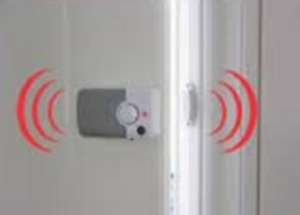
For people who live in apartments and don’t have much money, again, home security companies have deals for lower-income parents.
Besides, these tragedies often strike parents who have plenty of money. In one pool drowning case, the home had been purchased for $900,000.
“Corrective action is generally taken on use of 20/20 hindsight, which is reactive,” says Siciliano.
“Being proactive means making a concerted effort to imagine all of the possibilities in putting systems in place.”
All the Possibilities…
• Lock doors
• Lock windows
That’s two possibilities. Once the preschooler gets past either one, then YES, there are so many possibilities, save for being abducted by an extraterrestrial.
Alarm and lock systems are only as good as a parent’s ability to remember to keep them activated.
 Robert Siciliano is a private investigator fiercely committed to informing, educating and empowering people to protect themselves and their loved-ones from violence and crime — both in their physical and virtual interactions.
Lorra Garrick has been covering medical, fitness and cybersecurity topics for many years, having written thousands of articles for print magazines and websites, including as a ghostwriter. She’s also a former ACE-certified personal trainer.







12 Items You’ll Need in the House After Total Knee Replacement
Here’s 12 things you’ll need around the house once you return home after a total knee replacement surgery.
These items should be purchased beforehand.
Even the most prepared-thinking person may not consider the usefulness of some of these items.
My father has had three total knee replacements (one a revision surgery), so I definitely know all the things that should already be in the home, once the patient returns.
The new knee will not be able to bend well. Hopping and balancing on the good leg is not an option because:
1) If a person’s knee was bad enough to require knee replacement surgery, the odds are pretty strong that the other knee is also degenerated.
2) Even if the other leg IS good enough to hop on, this is not advised because it will interfere with recovery.
The person must use both legs as he normally would, so that the new knee is properly introduced to normal movement.
12 Household Items You Need After Knee Replacement Surgery
1 Walker and a 4-pronged cane
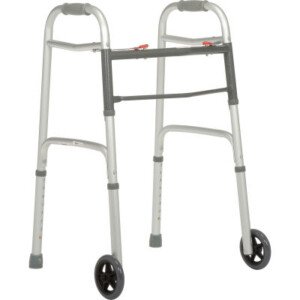
2 Comfortable gloves to wear while using the walker, since palm pressure on the device can irritate bare skin.
3 Raised toilet seat
Because the knee can’t bend much, the patient won’t be able to sink down far enough to sit on a regular toilet seat.
Furthermore, the deep position will make it impossible or difficult for the person to get back up into his walker (which he will be needing to move even a few feet).
Toilet seat extenders in the form of “arms” won’t solve the issue of not being able to bend their knees, because these only help the patient down and up.
What they need is a toilet seat height extension to lessen the bend in their knees.
4 Sturdy seat with handles on either side, that must be at least 20 inches off the floor
This seat should be in the bathroom to allow the patient to sit and do things such as remove/put on shoes/slippers, remove/put on socks (and surgical stockings), remove/put on clothes, and sit while showering.
A similar seat should be in the bedroom. From this seat, the patient grips the handles and rises high enough to then grip the walker and steady himself.
5 A bell or whistle
The patient will often need unexpected assistance and will have to signal for help, and hollering is not always a viable option.
A whistle around the neck is also very useful for patients who don’t always remember to have their phone on them to summon someone, or whose elderly caretaker-spouse doesn’t use a mobile phone (many elderly people are not caught up with texting technology).
6 Suppositories, laxatives and an enema device
These may be necessary because the anti-blood-clotting drugs can cause constipation. So will inertia.
7 Portable urinal
The male patient may have uncontrollable urine leaking, due to catheterization at the hospital.
So when the urge strikes, he can go in the handheld urinal, because by the time he shuffles to the nearest toilet, there may already be some leaking.
8 Adult diapers
For the patient who just might leak before getting to the toilet.
9 Food serving tray
The patient may want to spend a lot of time in the bedroom, so food will need to be taken to her.
10 Chair with arm rests
This is necessary for general lounging and when the patient does upper body exercises. The arm rests allow patient to get in and out of the chair. Ideally the chair should be higher than a standard chair, to minimize knee bending.
11 Shoes or slippers that have rubber soles
These will minimize slipping on non-carpeted flooring.
12 Iron supplement
The patient will have iron deficiency due to the surgery.
Additional Concerns
Make sure no rugs or mats might obstruct path of patient’s walker.
For the first several days upon the patient’s return home, a reasonably strong individual should be present to help lift the patient if he or she can’t stand up into the walker; and to guard against possible slipping while patient makes it up and down a staircase.
Lorra Garrick is a former personal trainer certified by the American Council on Exercise. At Bally Total Fitness she trained clients of all ages for fat loss, muscle building, fitness and improved health.
.