

Can Microscopic Colitis Symptoms Be Too Mild to Notice?

Can the symptoms of a microscopic colitis flare be small enough to appear below the radar?
Can the signs be so subtle that they fail to register on your awareness map?
Microscopic colitis is not an “all or none” condition.
I was diagnosed with microscopic colitis in May 2010, but does this mean that my first bout was at this time?
I really wonder, because there have been a few times way, way in the past in which I had experienced what I now know to be “explosive watery diarrhea.”
It had happened just a few times here and there over a span of years. Maybe it was something I had eaten. But maybe not.
I began juicing several years prior to my diagnosis, and noticed that on just about every juicing day, within 90 minutes to two hours after consuming an average of 32 ounces of juiced fruits and vegetables, I’d have one episode of major diarrhea.
It wasn’t watery or explosive, but it was like a thick porridge. I’d have just one occurrence, then I was done for the day.
I simply thought that all the juicing was triggering this. The diarrhea occurred only on days that I juiced.
Mild Microscopic Colitis Symptoms
“Yes – you can have microscopic colitis and not know it. You might not exhibit all the usual symptoms but still have the disease,” says Jeffrey Fine, MD, chief of gastroenterology at the Medical Surgical Clinic of Irving.
“With microscopic colitis, the colon looks completely normal until you get to the microscopic level.
“On the microscopic level, it’s abnormal. In some cases, a patient could have sub-acute symptoms. Sub-acute or milder symptoms may be harder for patients to recognize.”
My first round of microscopic colitis came and went (lasted about two months). The second round occurred about three and a half years later and lasted about five weeks.
But in between, could it have been there on a sub-acute or “low grade” level, masquerading as juicing-induced diarrhea?
I’d see particles of fruit/vegetable fragments floating around in the brown murky water of the toilet.
The diarrhea that I had with my first round of microscopic colitis did not look like typical diarrhea.
It looked really weird and came at all times of the day (including nocturnally) – even though during that time I was not juicing.
At around the beginning of 2013, I became gradually aware that I was no longer having diarrhea on juicing days; the bowel movements were normal.
This went on for months, and it really got my attention, because I was so used to the diarrhea.
“Why isn’t the juicing causing the diarrhea anymore?” I wondered. I had always thought that the fiber content in 32 to 40 ounces of juiced produce caused the diarrhea. So where was it now?
In retrospect, I’m thinking that maybe all along, it had been a very subtle manifestation of microscopic colitis, and that in 2013, I went into complete remission. Then…I had my second MC round later in the year.
Enteropathic Arthralgia Mimicking other Conditions
If you’re having subtle joint aches but no other symptoms, this, too, can be microscopic colitis, especially if you’ve already been diagnosed with MC and believe you’ve been in remission for a while.
It will be especially inconspicuous if the aching is in only one part of your body, such as only the low back.
After all, low back pain is extremely common and easily brought on by a combination of physical de-conditioning and improper lifting around the house or on the job.
The timeline could be a coincidence, when it’s really MC at work.
(Low back pain can also be brought on by physical de-conditioning alone! As a former personal trainer, I’ve witnessed this with clients who were new to exercise but complaining of low back pain.)
A subtle flare-up of microscopic colitis can also be missed by a fertile woman who’s experiencing what she believes are the minor aches of mid-cycle joint pain—when in fact, it’s enteropathic arthralgia.

Dr. Fine has been in practice for over 30 years and specializes in digestive health, integrative medicine and food sensitivities.
 Lorra Garrick has been covering medical, fitness and cybersecurity topics for many years, having written thousands of articles for print magazines and websites, including as a ghostwriter. She’s also a former ACE-certified personal trainer.
.
Top image: Shutterstock/Andreas Poertner

Are the Joint Aches of Microscopic Colitis Destructive?

Ever wonder if the joint aches you get with your microscopic colitis will over time cause damage to your joints, possibly weakening them or making them permanently stiff?
“Joint pain” doesn’t always mean damage or degeneration to the joints, and this includes in microscopic colitis.
When you hear or see the words “joint pain,” do you automatically think of gnarled fingers and a compromised ability to unscrew jar lids, carry a suitcase, tie a knot or handle a bowling ball?
Joint pain is one of several symptoms that can result from microscopic colitis.
It can also result from an injured tendon, worn-down cartilage, torn ligaments and rheumatoid disease. And premenstrual syndrome.
“At present, we do not know enough about microscopic colitis to understand how it affects the joints, but we know joint aches often accompany the disease,” says Jeffrey Fine, MD, chief of gastroenterology at the Medical Surgical Clinic of Irving.
Aches vs. Pain
Dr. Fine explains: “The type and intensity of joint aches can vary greatly from patient to patient, with a wide variety of contributing factors, such as age, diet, exercise, stress, etc.
However, there is research that suggests certain types of arthritis, like enteropathic arthritis, may be a manifestation of microscopic colitis, and enteropathic arthritis is considered nondestructive.
In these cases, once the underlying microscopic colitis has been treated effectively, the joint aches associated with it are resolved.”
Don’t let the term “arthritis” trick you into thinking this necessarily means the deformed fingers you’ve seen in people with arthritis. Don’t let those pharma TV commercials about arthritis mislead you, either.
“Arth” refers to joints, and “itis” means inflammation.
In microscopic colitis, there may be an inflammatory process occurring in the region of the joints.
This process is NOT the same as the one that occurs in, for example, rheumatoid arthritis or psoriatic arthritis.
“Arthritis” is a general or catch-all term that can have many meanings to the layperson, and numerous etiologies that result in different types or experiences of discomfort.
In the midst of the joint aches I’ve had from my own microscopic colitis, I have carried out intense and heavy weight lifting—without any deficits in performance.
In fact, rigorous use of my joints (deadlift, bench press, squat, kicking a heavybag, etc.) suppressed the achy feeling that was being generated from microscopic colitis.
Dr. Fine has been in practice for over 30 years and specializes in digestive health, integrative medicine and food sensitivities.
Lorra Garrick has been covering medical, fitness and cybersecurity topics for many years, having written thousands of articles for print magazines and websites, including as a ghostwriter. She’s also a former ACE-certified personal trainer.
.
Top image: Freepik.com
Microscopic Colitis: Can Joint Aches Be the Only Symptom?
“Microscopic colitis can manifest itself with multiple symptoms or hardly any symptoms at all,” begins Dr. Fine.
“Microscopic colitis can manifest itself with multiple symptoms or hardly any symptoms at all,” begins Jeffrey Fine, MD, chief of gastroenterology at the Medical Surgical Clinic of Irving.
Microscopic colitis presenting with only joint aches?
“I have not seen this personally, but it may be possible,” says Dr. Fine.
This is not to be confused with experiencing joint aches for a time period before the onset of diarrhea, but rather, an onset of joint aches without any gut symptoms ever appearing—and then the joint aches mysteriously disappear.
“In most cases, gut conditions and joint pain seem to go hand-and-hand,” Dr. Fine says.
“We suspect that non-steroidal anti-inflammatory drugs (NSAIDs) may play a part in this. NSAIDS are commonly used to treat joint pain and inflammation, but they can cause ulceration of the gut/colon lining.”
In other words, the scenario may be as follows:
You have joint aches (not caused by microscopic colitis). You take NSAIDS. The drug, however, triggers microscopic colitis.
So it seems as though there’s a connection between the arthralgia and the MC.
On the other hand, a person can develop microscopic colitis in the absence of taking NSAIDS, and have joint aches that are related to the MC.
My own initial onset of microscopic colitis in May of 2010 was apparently triggered by extreme emotional duress, and I had not been taking any NSAIDS.
My aches (which felt like a nasty case of PMS discomfort) appeared around the same time that the diarrhea did, though I don’t recall which came first.
“However, joint aches are not always concurrent with GI problems,” says Dr. Fine.
“With regard to inflammatory bowel disease (IBD) for example, joint issues may occur concurrently with GI issues, but in some cases they’re independent.”
Enteropathic arthralgia: joint pain (or aches) associated with a gastroenterological condition.
“Since they may occur concurrently or independently, if you’re experiencing one or both symptoms, set an appointment with your rheumatologist/gastroenterologist, so that he/she can evaluate your unique case.”
Dr. Fine has been in practice for over 30 years and specializes in digestive health, integrative medicine and food sensitivities.
Lorra Garrick has been covering medical, fitness and cybersecurity topics for many years, having written thousands of articles for print magazines and websites, including as a ghostwriter. She’s also a former ACE-certified personal trainer.
.
Top image: Freepik.com

Can a Stool Sample Show Celiac Disease?

Celiac disease is much more common than you think, which begs the question if whether or not a bowel movement sample can indicate the presence of this condition.
BMs and Celiac Disease
Most celiacs are asymptomatic. If someone has microscopic colitis, and asymptomatic celiac disease, the only way to confirm celiac is with the small-intestine biopsy.
However, can’t a stool sample be very telling (antigliadin level)?
Mainstream medicine does not place value on stool samples for celiac detection, but it seems to me that a stool sample analysis would be valuable since more of the antibodies would be concentrated in the stool than in the blood?
“This is not true,” says Eugene Yen, MD, a gastroenterologist with Northwestern Medicine Digestive Health Center in Chicago, who has a special interest in inflammatory bowel diseases.
“There was a study in the 1990s that looked at stool studies for celiac, and this fared horribly.
“The blood tests for celiac are very accurate, and we haven’t done stool analysis in years.
“People who order stool testing for this condition are either unaware of published data or operating on other assumptions.
“I don’t assume that the medical community is correct on everything, but this has been studied adequately.”
If you have reason to suspect you have celiac disease (e.g., a family member has it; eating gluten-containing foods always results in cramps and diarrhea; or unexplained miscellaneous symptoms such as joint aches, fatigue and depression), then ask your doctor to order a celiac blood test.
-
-
- Abdominal pain
- Bloating or gas
- Brain fog
- Chronic diarrhea
- Constipation
- Fatigue or anemia
- Foul smelling or pale colored stools
- Headaches
- Mouth ulcers
- Osteoporosis/brittle bones
- Pain in the joints
- Rashes on the skin
- Unintentional weight loss
- Vomiting or nausea
- This list is not complete.
-

Dr. Yen has specialty training in colon cancer prevention plus the management of patients with inflammatory bowel disease and celiac disease.
 Lorra Garrick has been covering medical, fitness and cybersecurity topics for many years, having written thousands of articles for print magazines and websites, including as a ghostwriter. She’s also a former ACE-certified personal trainer.
.
Top image: Shutterstock/KongNoi

What the Joint Aches of Microscopic Colitis Feel Like
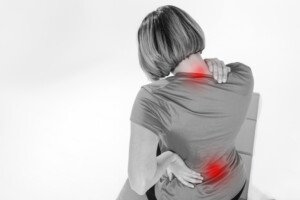
The mechanism behind microscopic colitis can lead to joint aches in some patients, and this symptom has a distinct characteristic.
Not all joint aches feel the same, and this goes for those linked to microscopic colitis, which I was diagnosed with in May 2010.
First, I’ll cut to the chase: The joint aches of microscopic colitis feel identical to PMS: premenstrual syndrome—for me, anyways.
Interestingly, not only are prostaglandins implicated in the pathogenesis of PMS, but they are implicated in the pathogenesis (development) of inflammatory bowel disease, of which microscopic colitis is one.
There are two types of MC: lymphocytic and collagenous. Their symptoms and treatments are the same, but they look different under a microscope.
Needless to say, a man would have no idea about this, and the women out there who’ve never had the joint aches of PMS would never know, either.
For men, and for women who’ve never experienced joint aches from PMS, here is what this particular symptom REALLY feels like — according to my subjective experience:
Microscopic Colitis Feeling: It’s not pain. It’s an ache.
However, the ache can be significant to the extent that it’s distracting or very annoying.
I’ve never had arthritis from a rheumatic condition, so I can’t say that the joint aches of microscopic colitis feel like—or don’t feel like—for example, those of psoriatic arthritis or rheumatoid arthritis.
What I WILL say is that during a good flare-up in my ankles, I am compelled to stretch the Achilles tendon area by placing my foot flat on the floor and then flexing the ankle (bringing the knee over and past the foot). This brings relief.
The objective is to cause the joint to “pop” or “crack,” and for some mysterious reason, when there’s a flare-up (either from MC or, in the past, from my PMS), the joints are quite “poppable” or “crackable,” and it feels SO good to make this happen.
When my wrists are affected, it’s the same thing: I must stretch them and pop them.
When my low back is affected, I crave a chiropractic adjustment and find myself twisting my back left to right, trying to induce cracks and pops.
Same with when my neck is affected: I want to get a good crack in, and in the presence of a flare-up, my neck (as well as my back) are much more crackable.
My bikini line also gets affected (this area extends or “smears” a bit above and below the bikini line, extending several inches down the upper legs).
This area is quite poppable during a flare-up, but the popping comes from soft tissue near the junction of bone, rather than from any actual bone.
This same phenomenon occurs in the uppermost part of the back of my legs. I just want to keep stretching out that area, and when I do, it often pops—and it feels SO good.
This is what the joint aches of microscopic colitis feel like and make me crave to do. In summary:
– Identical to the feeling of PMS
– Compulsion to stretch the surrounding soft tissue
– Compulsion to induce a crack or pop of the bones and surrounding soft tissue
– Feels great when the crack or pop occurs
– There’s a mild element of stiffness, but nothing substantial. The stiffness is most noticeable in the low back, but it’s overshadowed by the aching.
Stretching, popping and cracking, however, do not make the aching disappear. They provide only temporary relief.
“Aching joints can be a symptom of microscopic colitis, but not necessarily. Many patients with aching joints don’t have microscopic colitis, but aching joints and gut problems often go hand-in-hand.
They’re both associated with inflammation, and many doctors speculate that cyclo-oxygenase (COX 2) or prostaglandins are involved because of the function they provide. Prostaglandins are chemicals that generally cause inflammation of our joints.”
– Dr. Jeffrey Fine, MD, the chief of gastroenterology at the Medical Surgical Clinic of Irving, as interviewed in another article of mine, Why Does Microscopic Colitis Cause Joint Pain?
Lorra Garrick has been covering medical, fitness and cybersecurity topics for many years, having written thousands of articles for print magazines and websites, including as a ghostwriter. She’s also a former ACE-certified personal trainer.
.
Top image: Shutterstock/Freepik.com
Sources:
onlinelibrary.wiley.com/doi/10.1111/j.1365-2036.2011.04686.x/full (prostaglandins and MC) http://www.ncbi.nlm.nih.gov/pmc/articles/PMC3629156/ (prostaglandins and MC)
ncbi.nlm.nih.gov/pubmed/6350580 (prostaglandins and PMS)
ncbi.nlm.nih.gov/pubmed/19594490 (prostaglandins and IBD)
ccfc.ca/site/pp.asp?c=ajIRK4NLLhJ0E&b=6349433&printmode=1 (flare-up of joint aches can occur separate from gut problem flare-ups)

Does Microscopic Colitis Always Cause Fatigue?

Does every person with microscopic colitis experience fatigue?
Fatigue is often included in symptom lists for microscopic colitis.
I was diagnosed with lymphocytic colitis in May 2010. I’ve read a lot of patient self-reports of their symptoms and many mention fatigue and even exhaustion.
Like most people with microscopic colitis, though, I have not experienced any fatigue.
“Fatigue is not a typical symptom of microscopic colitis, and is a much more common symptom in other diarrheal conditions such as inflammatory bowel disease [Crohn’s, ulcerative coltis] or irritable bowel syndrome,” says Alan Gingold, DO, a board certified gastroenterologist with Central Jersey Ambulatory Surgical Center.
“Fatigue in microscopic colitis is likely due to loss of sleep, as nocturnal diarrhea can be seen in microscopic colitis – whereas, it’s very unusual in IBS,” continues Dr. Gingold.
“Fatigue may also be due to the stress and anxiety that it causes, as it can significantly affect a patient’s quality of life.”
If you’ve been having fatigue, ask your doctor if it also might be due to malabsorption of vital nutrients.
Some patients have diarrhea up to 20 times a day and can lose a lot of nutrients as well as water.
A small percentage of patients have joint aches, also known as enteropathic arthralgia.
These aches, which (based on my experience) mimic the aches of premenstrual syndrome, can disrupt sleep — leading to fatigue during the day.
The joint aches that are associated with microscopic colitis are NOT due to damaged joints or worn-down cartilage, as is the case with other forms of arthritis.
The aching is transient, and I’ve even done heavy weightlifting during episodes. It’s annoying as heck but runs its course.
Researchers believe that enteropathic arthralgia is caused by the release of inflammatory chemicals (“mediators”).
Fatigue is not the same as arthralgia.
Enteropathic arthralgia translates to “joint pain/ache originating from the gut.”
Many people with microscopic colitis have only the diarrhea element, and sometimes with that they have abdominal cramps.
Other associated symptoms include weight loss, nausea, even a feverish feeling.
But for those who suffer with fatigue, can this be eliminated with intense exercise?

I’ve always worked out very hardcore, and perhaps this is why, despite having microscopic colitis, I’m not afflicted with the fatigue element.
I urge anyone who has this inflammatory bowel disease to take up strenuous, intense exercise during non-flares (when you’re free of fatigue and nausea that would interfere with working out).
You can get in a very effective workout despite having to frequently ditch what you’re doing and run to the restroom. Build up your body to be as strong as possible.
In fact, intense weight workouts subdued my diarrhea; I never had to “go” when I was at the gym — as though somehow, my body knew that nothing dare better interrupt gym time.
Do hard workouts and see if these don’t eliminate the fatigue.
Hard exercise will also help you sleep better so that you’re not fatigued the next day from sleep interrupted by overnight diarrhea.
Finally, stop stressing about microscopic colitis. It’s annoying; it can even be disruptive … BUT…it’s benign; it can’t turn into anything serious.
 Dr. Gingold attributes his success to the extra time he spends with his patients. His areas of expertise include reflux disease, Barrett’s esophagus, capsule endoscopy, chronic liver disease and inflammatory bowel disease. Dr. Alan Gingold is board certified by the American Board of Internal Medicine in Gastroenterology
Lorra Garrick has been covering medical, fitness and cybersecurity topics for many years, having written thousands of articles for print magazines and websites, including as a ghostwriter. She’s also a former ACE-certified personal trainer.
.
Top image: Shutterstock/Emily frost

What Low Abdominal Cramp from Microscopic Colitis Feels Like

Here’s a finely detailed description of what a low ab cramp feels like from microscopic colitis.
One of the more common symptoms of microscopic colitis is a low abdominal cramp or ache.
“Lower abdominal cramp” is a vague term. There are numerous kinds of this kind of aching.
The lower ab area is that below the belly button: the pelvic region.
After experiencing sudden-onset, unexplained diarrhea in May of 2010, I had a colonoscopy which revealed microscopic colitis from the biopsy.
My bout with MC back then lasted about two months or so. With that first episode I had what I’d describe as low ab cramping.
This was very mild, as far as rating it on a discomfort-scale, but preceding the diagnosis, it was enough to alarm me because the sensation was that something was “going on in my small intestines.”
That’s what it felt like. Microscopic colitis is an inflammatory condition of the large colon, however.
But I’m simply telling you what the low ab cramp felt like: That something was going on with the small intestines; that there was activity inside there that shouldn’t be going on.
It was mildly gassy, almost like little gas bubbles being worked up. And cramp-like.
It wasn’t enough to interfere with any activities, including strenuous exercise, but as mentioned, before I knew what it was, it scared me, making me think, “Something is wrong.”
There’s a second type of cramp-like feeling that can be caused by microscopic colitis, and this, too, is located in the pelvic area.
However, this is a potentially debilitating, very strong cramp that feels JUST LIKE the cramping from PMS!
I swear, when I had my second flare-up of microscopic colitis (recently), it came with what felt precisely like the uterine cramping of premenstrual syndrome.
However, I completed menopause this past June, and a gynecological exam ruled out a gynecological cause!
I won’t go into detail, but trust me when I say this: The “uterine” cramping had to have been from microscopic colitis.
In fact, the accompanying low back, ankle, wrist and neck aches were a pretty good tip-off, not to mention the eventual porridge-like and liquidy diarrhea!
MC is an inflammatory bowel disease. Chemicals in the body, called prostaglandins, are believed to play a role in MC’s inflammatory process.
Prostaglandins are also believed to be the cause of premenstrual syndrome (PMS). Hmmm.
Drugs that block prostaglandin production work great to suppress PMS symptoms — which include joint aches. I took one of these drugs, Naprosyn, to suppress the “uterine” cramping (and joint aches), from my second flare-up of microscopic colitis, and it worked like a charm. Very interesting.
“Aching joints can be a symptom of microscopic colitis, but not necessarily. Many patients with aching joints don’t have microscopic colitis, but aching joints and gut problems often go hand-in-hand.
“They’re both associated with inflammation, and many doctors speculate that cyclo-oxygenase (COX 2) or prostaglandins are involved because of the function they provide. Prostaglandins are chemicals that generally cause inflammation of our joints.”
– Dr. Jeffrey Fine, MD, the chief of gastroenterology at the Medical Surgical Clinic of Irving, as stated in my other article, Reasons Microscopic Colitis Leads to Joint Aching
Lorra Garrick has been covering medical, fitness and cybersecurity topics for many years, having written thousands of articles for print magazines and websites, including as a ghostwriter. She’s also a former ACE-certified personal trainer.
Top image: Shutterstock/ShotPrime Studio
Sources:
onlinelibrary.wiley.com/doi/10.1111/j.1365-2036.2011.04686.x/full (prostaglandins and MC)
.ncbi.nlm.nih.gov/pmc/articles/PMC3629156/ (prostaglandins and MC)
ncbi.nlm.nih.gov/pubmed/6350580 (prostaglandins and PMS)
ncbi.nlm.nih.gov/pubmed/19594490 (prostaglandins and IBD)
ccfc.ca/site/pp.asp?c=ajIRK4NLLhJ0E&b=6349433&printmode=1 (flare-up of joint aches can occur separate from gut problem flare-ups)

What the Pelvic Ache from Microscopic Colitis Feels Like

Pelvic pains or aches can have numerous causes, including microscopic colitis, but what exactly does this feel like?
There are two distinct types of pelvic aches that are brought on by my microscopic colitis, an inflammatory bowel disease (IBD) that I was diagnosed with via colonoscopy in May, 2010.
My first flare-up was transient, lasting around two months. My second flare-up began recently and has inspired me to write this article.
Microscopic colitis is a benign condition that produces (at least for me) two kinds of pelvic pain—actually, more like an ache.
The first kind of pelvic pain feels exactly like that from PMS.
There is absolutely no distinction between this first kind and that from premenstrual syndrome.
I am currently in the process of securing gastroenterologists to explain why this is, though I have a theory, which I’ll get to at the end here.
The pelvic pain of PMS, when in its most severe form, feels like labor pains. In fact, the extreme discomfort is actually from the uterus contracting.
A lower grade discomfort also comes from uterine spasms (the uterus is a muscle).
This feeling is very unpleasant even when mild. It’s NOTHING like gas, a bowel movement working its way down your colon, a kick in the lower gut or a pulled low ab muscle. Nothing like it.
- It’s nothing like a runner’s cramp.
- Nothing like an upset stomach from bad food or overeating.
- It’s not sharp or piercing.
- It’s not burning.
- It’s in a class all its own.
I’m being very truthful when I say that this kind of pelvic ache from microscopic colitis is indistinguishable from PMS.
COULD it be PMS? I’m postmenopausal, so that clears that up.
Great relief comes when I press a fist into the area below my belly button.
That’s the kind of pain it is: When I’m seated or lying, my fist is pressed into my lower gut. Ahhh, that brings relief. So does a hot water bottle.
If the discomfort is severe enough, I must lie down on my side and curl up, fist pressed into my gut.
With this second flare-up of MC, I took Naprosyn, which pretty much takes it out.
Naprosyn inhibits prostaglandin production. Excess prostaglandins are implicated in the aches of MC—as well as in the cause of PMS!
(I took Naprosyn only a handful of times; so that I could work at my computer without the pain—but those with MC should not take NSAIDS.)
The second kind of pelvic ache from microscopic colitis feels entirely different than that which I previously described, but it’s still an ache—crampy-gassy-like, and it’s still located in the pelvic region (below the belly button).
This feeling, for me, has been very mild, but noticeable. It’s crampy as in gas, and the best way to describe it is that it feels as though there are gas bubbles acting up.
I can feel something going in there, and it has a vague gassy sensation.
Unlike the first type of pelvic ache, this second type (at least when it’s mild—I’ve never had it beyond mild) stays in the background of my awareness and does not bother me, as long as I know what it’s from.
As for my theory, I believe my body has “hot spots” for excess prostaglandin production: uterus, low back, ankles, wrists, neck, upper legs.
Regardless of the cause, when prostaglandins are released, these hot spots light up.
So even though MC has nothing to do with the uterus, the inflammatory mechanism with MC causes prostaglandin production in the uterus, making it spasm, creating the awful pelvic cramping.
You’ll be hard-pressed to find a doctor who agrees with this, but I challenge you to find a doctor who can prove otherwise!
I know what uterine cramping feels like. I’ve had this with PMS and microscopic colitis.
Especially compelling is the second MC flare-up, which occurred AFTER I completed menopause!
And it’s no coincidence that a few days after the MC diarrhea finally came for the second flare-up, the “uterine” cramping (pelvic pain) disappeared (along with the sometimes-aggravating joint aches!). Hmmmm.
Remember, I’m postmenopausal, and a gynecological exam showed a perfectly normal uterus.
So where is this pain coming from? The only logical answer is prostaglandins—from MC.
“Aching joints can be a symptom of microscopic colitis, but not necessarily. Many patients with aching joints don’t have microscopic colitis, but aching joints and gut problems often go hand-in-hand.
They’re both associated with inflammation, and many doctors speculate that cyclo-oxygenase (COX 2) or prostaglandins are involved because of the function they provide. Prostaglandins are chemicals that generally cause inflammation of our joints.”
– Dr. Jeffrey Fine, MD, the chief of gastroenterology at the Medical Surgical Clinic of Irving, as explained in another article of mine, Why Does Microscopic Colitis Cause Joint Pain?
Lorra Garrick has been covering medical, fitness and cybersecurity topics for many years, having written thousands of articles for print magazines and websites, including as a ghostwriter. She’s also a former ACE-certified personal trainer.
.
Top image: Shutterstock/Sofi photo
Sources:
onlinelibrary.wiley.com/doi/10.1111/j.1365-2036.2011.04686.x/full (prostaglandins and MC) m
ncbi.nlm.nih.gov/pmc/articles/PMC3629156/ (prostaglandins and MC)
ncbi.nlm.nih.gov/pubmed/6350580 (prostaglandins and PMS)
ncbi.nlm.nih.gov/pubmed/19594490 (prostaglandins and IBD)
ccfc.ca/site/pp.asp?c=ajIRK4NLLhJ0E&b=6349433&printmode=1 (flare-up of joint aches can occur separate from gut problem flare-ups)

What Happens to Brain if Brain Dead Person Stays on Ventilator?

Find out from a doctor whether or not the brain really turns to mush if a brain dead person is kept on a ventilator.
“No, the brain cells do not turn to mush, any more than the other cells in the body,” says Jacob Teitelbaum, MD, medical director of the Fibromyalgia and Fatigue Centers nationally, and author of “The Fatigue and Fibromyalgia Solution.”
“They simply stop having the level of functioning needed for any consciousness or awareness,” as well as the functioning needed for lower-level reflexes (i.e., to pain, light) and for respiration.
Wouldn’t the brain decompose since it’s not getting oxygen?
After all, a brain dead person, according to a PET scan, does not show blood flow in their brain.
Dr. Teitelbaum explains, “The PET scan is not looking for blood flow, but rather, metabolic activity.
“The area of the brain needed for consciousness and higher cognition is much more sensitive to injury than the cells needed to simply maintain sweating and other similar functions.”
Dr. Teitelbaum adds that he’d need to see the PET scan results of a brain dead person to yield a clearer and more accurate response.
He also explains that in a brain dead person, “The brain is getting oxygen, and the heart is circulating blood to the brain.
“What it takes for the nerve cells in the brain to survive is very different than what it takes for them to function and send signals.”
The signals are electrochemical in nature; there are electric currents involved.
This is what an EEG picks up. A flatline EEG means that no electrical activity is detected.
“They are getting the oxygen needed for the cells themselves to survive, but the parts of the brain needed for mental functioning [and lower functioning such as reflexes] are not functioning and sending signals.”
The brain of a brain dead person will thus not decompose or rot.
However, it won’t maintain the textural or visible caliber it had prior to its injury. It will become more water and less brain.
Dr. Teitelbaum is a board certified internist and nationally known expert in the fields of fibromyalgia, chronic fatigue syndrome, sleep and pain.
Lorra Garrick has been covering medical, fitness and cybersecurity topics for many years, having written thousands of articles for print magazines and websites, including as a ghostwriter. She’s also a former ACE-certified personal trainer.
.
Top image: Shutterstock/Khanbua.Sil










What Can a Brain Dead Body Do While on a Ventilator?

An internal medicine doctor explains what life-like processes continue occurring while a brain dead body is on a ventilator.
A person is declared brain dead, but the family insists on keeping that person on a ventilator.
They believe that as long as the heart beats (due to the ventilator pumping in oxygen; the heart has a built-in pacemaker), that their family member is “alive” and can’t possibly be dead.
What else besides heartbeat can a brain dead body do while being prevented from decomposing via the ventilator (and feeding device)?
First off, the hair and nails will continue to grow, get longer.
“At this point [brain death], all we are doing is keeping the individual cells and organs of the body alive,” says Jacob Teitelbaum, MD, medical director of the Fibromyalgia and Fatigue Centers nationally, and author of “The Fatigue and Fibromyalgia Solution.”
“So hair will grow, nails will grow, and urination will continue.”
Interestingly, in the Jahi McMath case, the day-by-day reports have never mentioned anything about a catheter to collect urine, even though Jahi’s kidneys were allegedly functioning, leading to excrement.
And if the kidneys are working, the liver, pancreas and entire G.I. tract must also be working. Seems that the “body,” then, was alive, right?
Dr. Teitelbaum says, “Meanwhile, the muscles will atrophy and shrink, the body will get severe contractures and bed sores, and the process that occurs after burial occurs instead, in a hospital bed, albeit more slowly.”
So even though some of the body’s systems (excretory, circulatory, even sweat glands if the room were hot enough) are functioning, the PERSON is dead. The person as a whole, is dead.
This may be difficult to grasp, but look at it this way: If they are brain dead, they’re never coming back in a form that would resemble a living person.
“The body can continue to do most of the basic metabolic functioning on life support,” says Dr. Teitelbaum.
“If played it out onto a petri dish, many of our body cells can continue to function indefinitely – perhaps even for centuries.”
The Million Dollar Question
“So the question is, when do we back off on technology?
Do we choose to torture everybody to death, who is unfortunate enough to make it to a hospital within a week after their heart stops?”