Carpal Tunnel Syndrome Causes Cold Hands and Pain

Carpal tunnel syndrome can cause hands to feel cold, and it can also cause discomfort in the hands and even forearms.
In fact, the symptom of cold hands can precede any symptoms of actual pain or aching.
“Very few patients have significant pain,” says Dr. John T. Knight, MD, an L.A.-based hand and wrist orthopedic surgeon and director of the Hand and Wrist Institute at the D.I.S.C. Sports and Spine Center. He continues, “The most common symptoms are tingling, numbness, and aching discomfort.”
However, it’s not uncommon for carpal tunnel syndrome to awaken somebody in the middle of the night by causing pain.
This is because during sleep, a person may take on certain body positions that are conducive to putting the wrist in a flexed position, that is, bent so that the angle between the palm and underside of the forearm is decreased.
Sometimes the angle of wrist flexion can be close to 100 degrees, while the person is fast asleep, unaware that this wrist flexion is putting pressure on the median nerve.
Pressure on the median nerve is what causes carpal tunnel symptoms.
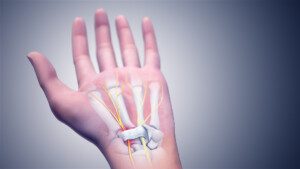
Carpal tunnel syndrome. Scientific Animations
It is along this nerve, which begins at the neck, that electrochemical signals travel that allow your thumb and fingers (except pinky) to move, as well as to feel.
In carpal tunnel syndrome, the median nerve is pressed upon at the wrist by a band of ligamentous tissue.
This nerve compression interrupts the signals coming from the brain for movement, or coming from the receptor neurons in the fingers for touch and feel, hence, why classic symptoms of carpal tunnel syndrome are tingling, numbness and weakness involving the fingers and hand.
Cold hands can be a symptom of carpal tunnel syndrome as well.
Dr. Knight explains, “Coldness in the hands is similar to tingling and is due to the pressure on the nerve and temporary decrease in circulation loss to the nerve.”
Surgery to correct carpal tunnel syndrome is recommended when conservative treatments (e.g., wrist splinting, cortisone injections, hand exercises) have failed.
Traditionally, surgery involves an incision about an inch long, stitches, and bulky restrictive bandages that must be worn for 2-3 weeks after surgery, and rehabilitation can take up to three months.
Dr. Knight specializes in stitchless endoscopic carpal tunnel release, which involves only a 1 cm incision, no stitches, much less surgical pain, and a much faster recovery time.
 Dr. Knight is widely regarded as one of the most prominent hand and wrist specialists in the U.S., specializing in minimally invasive techniques for hand, wrist and upper extremity injuries and disorders.
 Lorra Garrick has been covering medical, health and cybersecurity topics for many years, having written thousands of feature articles for a variety of print magazines and websites. She is also a former ACE-certified personal trainer.

Can Stress Cause a TIA (Transient Ischemic Attack)?

Stress absolutely can trigger a TIA, or transient ischemic attack, says John M. Kennedy, MD, medical director of preventative cardiology and wellness at Marina del Rey Hospital.
So if you’re at risk for a TIA, and especially if you’ve had a TIA, you’d better practice stress management.
“Stress comes in two varieties, acute or chronic,” says Dr. Kennedy, author of the book, THE 15-MINUTE HEART CURE: The Natural Way to Release Stress And Heal Your Heart In Just Minutes A Day.”
Acute stress is sudden in onset, like that experienced in a natural disaster, a heated argument or car crash.
Chronic stress is consistent, day in and day out, unrelenting stress like that experienced in a difficult relationship or a hostile work environment.
“Both forms of stress, whether acute or chronic, lead to a release of hormones, adrenaline and cortisol, which cause physiologic changes,” says Dr. Kennedy.
And once you get a TIA, or transient ischemic attack, you are at prime risk for a future stroke. In fact, the TIA can be a warning of an imminent stroke.
The physiologic changes that occur from stress, that can give rise to a TIA, are:
- Increased inflammation
- Increased heart rate
- Increased blood pressure
- Thick, sticky blood, “All of which create the perfect storm for a cardiac event, TIA or stroke by damaging the delicate inner lining of blood vessels,” says Dr. Kennedy.
Though there are people who have recovered completely from a stroke, or have had only a “minor” stroke, don’t let this comfort you.
About 750,000 people in the U.S. every year suffer a stroke, so certainly, out of this enormous statistic, there will always be some lucky people.
However, nearly 60 percent of stroke victims suffer permanent walking disability, and stroke is America’s leading cause of disability, and third leading cause of death by disease.
So if you’ve had a TIA, learning to manage your stress levels can save your life.
If you believe you’ve had a TIA, then get a complete evaluation as soon as possible.
In fact, a competent medical insurance plan will cover an ER visit for a transient ischemic attack if you come in that same day.
A TIA is a medical emergency, even though the symptoms may last only a few minutes and be mild.
“Additionally, acute and chronic stress can trigger an arrhythmia (abnormal heart rhythm) known as atrial fibrillation (AF), which causes the upper chambers of the heart to quiver, causing blood to become stagnant and prone to forming a clot,” says Dr. Kennedy.
“If the blood clot becomes dislodged and released into the bloodstream, it can travel to the brain and obstruct blood flow, causing TIA or stroke.”
In conclusion, stress really CAN kill, and stress can definitely cause a TIA.
 Double board certified in cardiovascular disease and also internal medicine, Dr. Kennedy’s special interest is stress and how it adversely affects a person’s delicate cardiovascular system.
Lorra Garrick has been covering medical, fitness and cybersecurity topics for many years, having written thousands of articles for print magazines and websites, including as a ghostwriter. She’s also a former ACE-certified personal trainer.
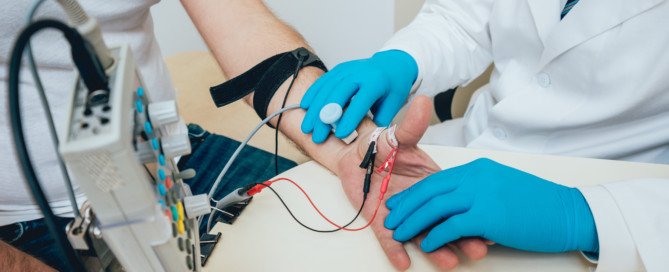
Can EMG Test Miss an ALS Diagnosis?
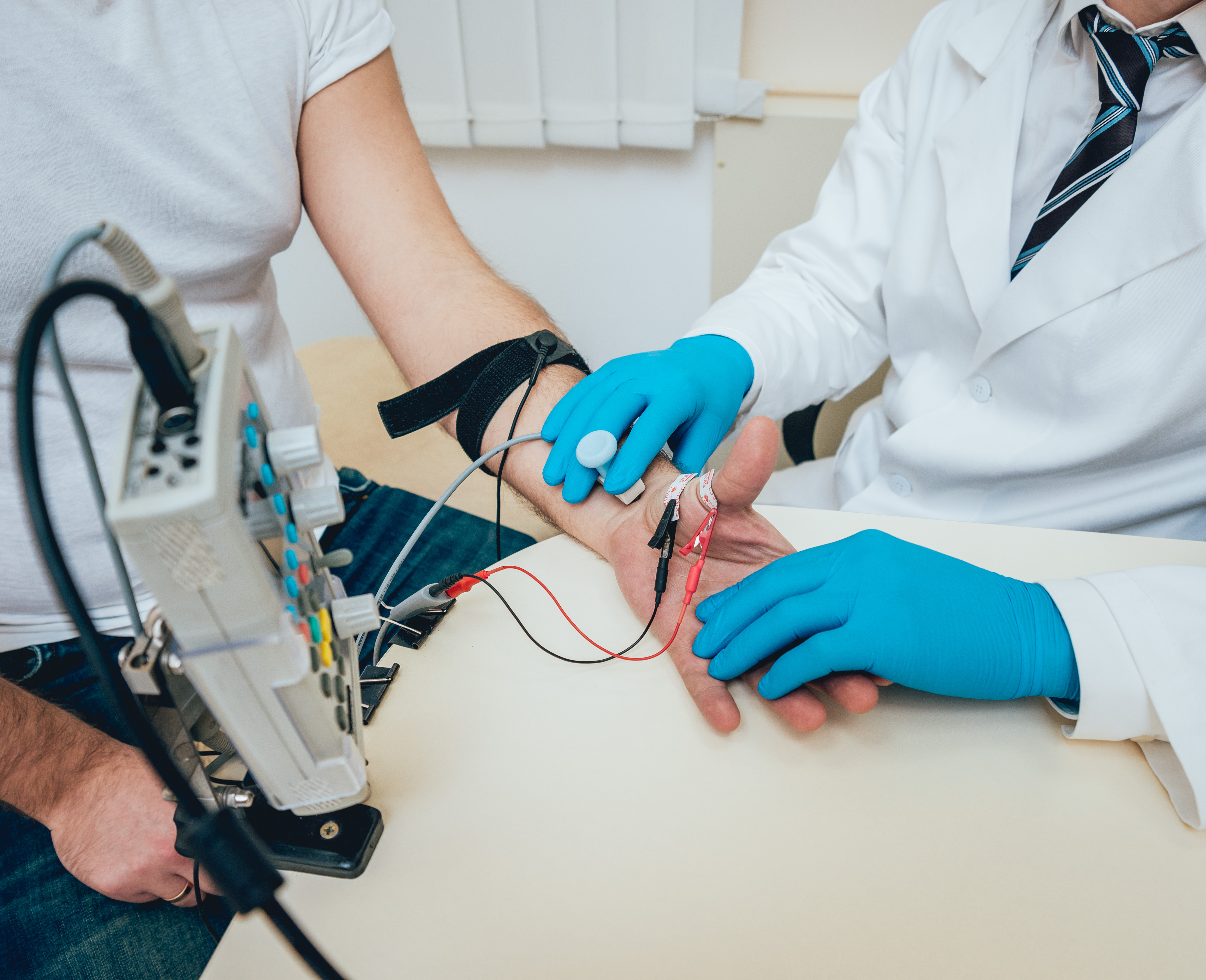
Can electromyography be done too early to detect amyotrophic lateral sclerosis?
People fearful they have ALS may wonder if their EMG test missed it because it was done too early; the EMG test results came out normal, but then, you still think you have ALS and begin doubting the EMG’s accuracy in detecting this fatal neurological disease.
Every 90 minutes in America, someone is diagnosed with amyotrophic lateral sclerosis, and death typically occurs 2-5 years after diagnosis, usually due to respiratory failure.
To find out if an EMG test can be done too early to diagnose ALS and thus miss it, I posed this question to Daniel Kantor, MD, director of the Neurology Residency Program, Florida Atlantic University.
Dr. Kantor responded: “There are two questions here. Can an EMG be normal in a patient who eventually gets diagnosed with ALS, and can an early abnormal EMG in an ALS patient be misinterpreted as another disease process. The answer to both, is, unfortunately, yes.”
The first of these two questions mentioned above simply means that you can go in for an EMG test that turns out normal — because you don’t have ALS.
But by sheer coincidence, at some point down the road, you happen to develop this untreatable neurological disorder, and sooner or later you’ll be going in for a second electromyography, due to the new symptoms.
This is akin to a woman going in for a mammogram that doesn’t detect breast cancer – because she doesn’t have it. But five years later, a mammogram shows a suspicious mass.
The second question is that a person with ALS has an EMG, and the results are misinterpreted for another condition. But the scenario doesn’t end here.
Dr. Kantor adds: “A person with ALS may have a normal EMG years before they become symptomatic, so theoretically an EMG early in the course of their ALS may appear normal (or mostly normal).”
So I then asked Dr. Kantor: What if they have the electromyography at the time they actually start having early symptoms?
Assume that’s why they’d have the test in the first place; they’re having peculiar symptoms; at this point, then, could the EMG still “miss” the ALS and still show normal readings?
Dr. Kantor says, “Actually, no test is 100 percent, even x-rays. So, theoretically (but not likely), an EMG could fail to detect the typical ALS changes because the electrical signals are below the sensitivity of the machine.
Other problems may cause an EMG picture similar to ALS, and ALS may be misdiagnosed as another problem.
Also, please remember that an EMG, like any test, is not 100 percent and is very operator dependent.”

Dr. Kantor is also President Emeritus, Florida Society of Neurology.
Lorra Garrick is a former personal trainer certified through the American Council on Exercise. At Bally Total Fitness she trained women and men of all ages for fat loss, muscle building, fitness and improved health.
.
Top image: Shutterstock/Roman Zaiets

What Is the Best Painkiller for Carpal Tunnel Syndrome ?

The pain of carpal tunnel syndrome isn’t the same kind of hurt that comes from injured cartilage, tendons or arthritic joints, so you need a painkiller that targets the specific problem of CTS.
Carpal tunnel syndrome and painkillers can go hand in hand (no pun intended).
If you have carpal tunnel syndrome, you may have already tried a number of painkillers to alleviate the discomfort, only to find that nothing really works.
As to what painkiller you should take for carpal tunnel syndrome, I asked Dr. John T. Knight, MD, an L.A.-based hand and wrist orthopedic surgeon and director of the Hand and Wrist Institute at the D.I.S.C. Sports and Spine Center. Dr. Knight specializes in the stitchless endoscopic carpal tunnel release, which takes only 10 minutes.
If your carpal tunnel syndrome necessitates painkillers that aren’t even working, then it’s wise to consider the next step.
Says Dr. Knight: “If severe carpal tunnel syndrome is present, surgery is usually indicated as soon as possible.
Carpal tunnel syndrome. Scientific Animations
“If there is significant pain not relieved with over-the-counter NSAID’s such as Advil or Aleve and possibly a cortisone injection, then a mild narcotic such as Darvocet may be helpful.
“No narcotics should be used more than a week or two, as they are habit forming, and if the pain is severe enough to require this type of medication, then surgery should be expedited.”
In addition to the kind of discomfort that can make you seek out narcotic painkillers, carpal tunnel syndrome typically presents with numbness and tingling in all the fingers except the pinky; and sometimes finger/hand stiffness and weakness.
Conservative treatment for this nerve compression disorder involves wearing a wrist splint while sleeping to prevent wrist flexion, which compresses the median nerve, the nerve at the center of carpal tunnel syndrome.
If you are reaching for narcotic or prescription painkillers, or perhaps any painkillers to subdue carpal tunnel pain, it’s time to seek out a surgical solution.
The more invasive, “open” procedure requires stitches, and results in longer recovery time than Dr. Knight’s stitchless endoscopy.
Until you have surgery, what kind of painkillers should you take for carpal tunnel discomfort, if narcotics can be habit forming over such a short period of time?
Dr. Knight explains that there is “no set time table; each person is different; the more they use, the greater the chance of addiction, and if the problem is correctable with surgery, then best to do soon if narcotics are necessary, but usually not an issue, as pain is not usually very bad.”
Dr. Knight is widely regarded as one of the most prominent hand and wrist specialists in the U.S., specializing in minimally invasive techniques for hand, wrist and upper extremity injuries and disorders.
Lorra Garrick has been covering medical, health and cybersecurity topics for many years, having written thousands of feature articles for a variety of print magazines and websites. She is also a former ACE-certified personal trainer.
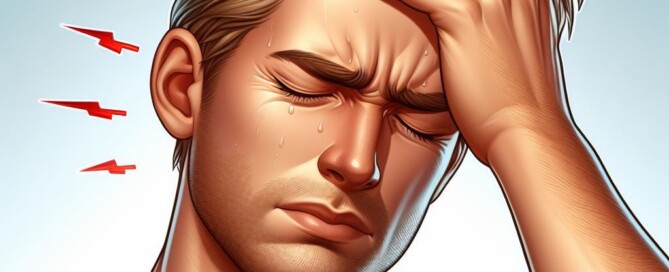
Migraine Headache Relief: Does Vomiting Work?
Is self-induced vomiting okay for migraine headache relief?
Is self-induced vomiting okay for migraine headache relief?
Many people suffering from migraine headaches wonder if it will help to vomit, as pain relief.
The reason some migraine headache sufferers have come to this idea is that sometimes, the explosive pain of a migraine headache causes a person to throw up involuntarily, but then, the person feels relief afterwards, and thus starts wondering.
If you’ve been contemplating making yourself throw up to relieve migraine headache pain, you’d better abandon that idea real quickly.
Says Daniel Kantor, MD, director of the Neurology Residency Program, Florida Atlantic University:
“A big part of migraine headaches as opposed to other headaches, is the sensitivity of the meninges (the covering of the brain) that can cause light sensitivity (photophobia), sound sensitivity (phonophobia), smell sensitivity (osmophobia), nausea, and/or vomiting.
“If someone throws up, they are letting go of a rising (bad) feeling that is already occurring and they are letting it go.
“It is probably a vicious cycle: the migraine leads to nausea; trying to control yourself from vomiting leads to you feeling sicker, which leads to more of a migraine, etc…”
Just because the vomiting occurs involuntarily, doesn’t mean it’s medically safe to make yourself upchuck the next time a migraine headache strikes.

Dr. Kantor explains, “It is a very bad idea to induce vomiting. It can lead to erosion of the esophageal lining and lead to long-term damage to the throat.
“A much safer and more efficient way to relieve migraines is to see a neurologist who has a special interest in migraine — who can help navigate you through therapeutic — including complementary and alternative medications.”
There are two more reasons why you should never induce vomiting just to relieve any kind of head pain, no matter how unbearable the pain.
The first reason is that throwing up on a frequent basis will erode the enamel of your teeth.
The second reason is that deliberately upchucking might kick in the idea, in certain vulnerable individuals, that this can also be done for weight management or weight loss.
The idea might be, Hey, if I can make myself throw up to relieve a migraine headache, I may as well make myself vomit after eating so I can lose weight (or not gain weight after binging.)
This is dangerous territory, yet a percentage of people who might try vomiting to relieve a migraine headache would certainly veer towards this path.
Next thing you know, they can wind up with an eating disorder called bulimia nervosa, in which a person deliberately brings on vomiting (which can be done by placing a few fingers down the throat) after eating huge volumes of food.
This practice can ultimately lead to life-threatening electrolyte imbalances.
Bottom line: Stay away from self-induced vomiting in an attempt to relieve migraine headaches or control body weight.
Dr. Kantor is also President Emeritus, Florida Society of Neurology.
Lorra Garrick is a former personal trainer certified by the American Council on Exercise. At Bally Total Fitness she trained clients of all ages for fat loss, muscle building, fitness and improved health.
.
Top image: ©Lorra Garrick
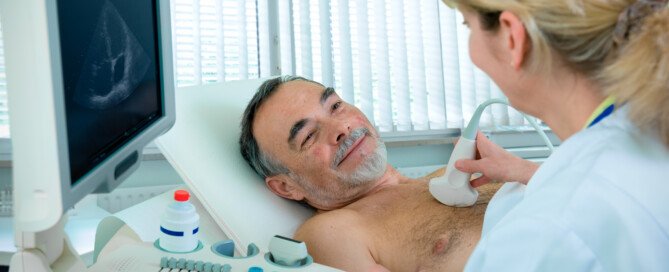
Can Heart Disease Be Detected with Ultrasound?

There are two kinds of coronary plaque: hard (calcified or “stable”) and soft (“unstable”).
The calcium score test measures the degree of calcified deposits inside the coronary arteries, but not the degree or extend of soft plaque.
The soft plaque in coronary arteries can rupture and cause a blockage, leading to a heart attack or stroke. That’s why it’s also commonly referred to as “unstable.”
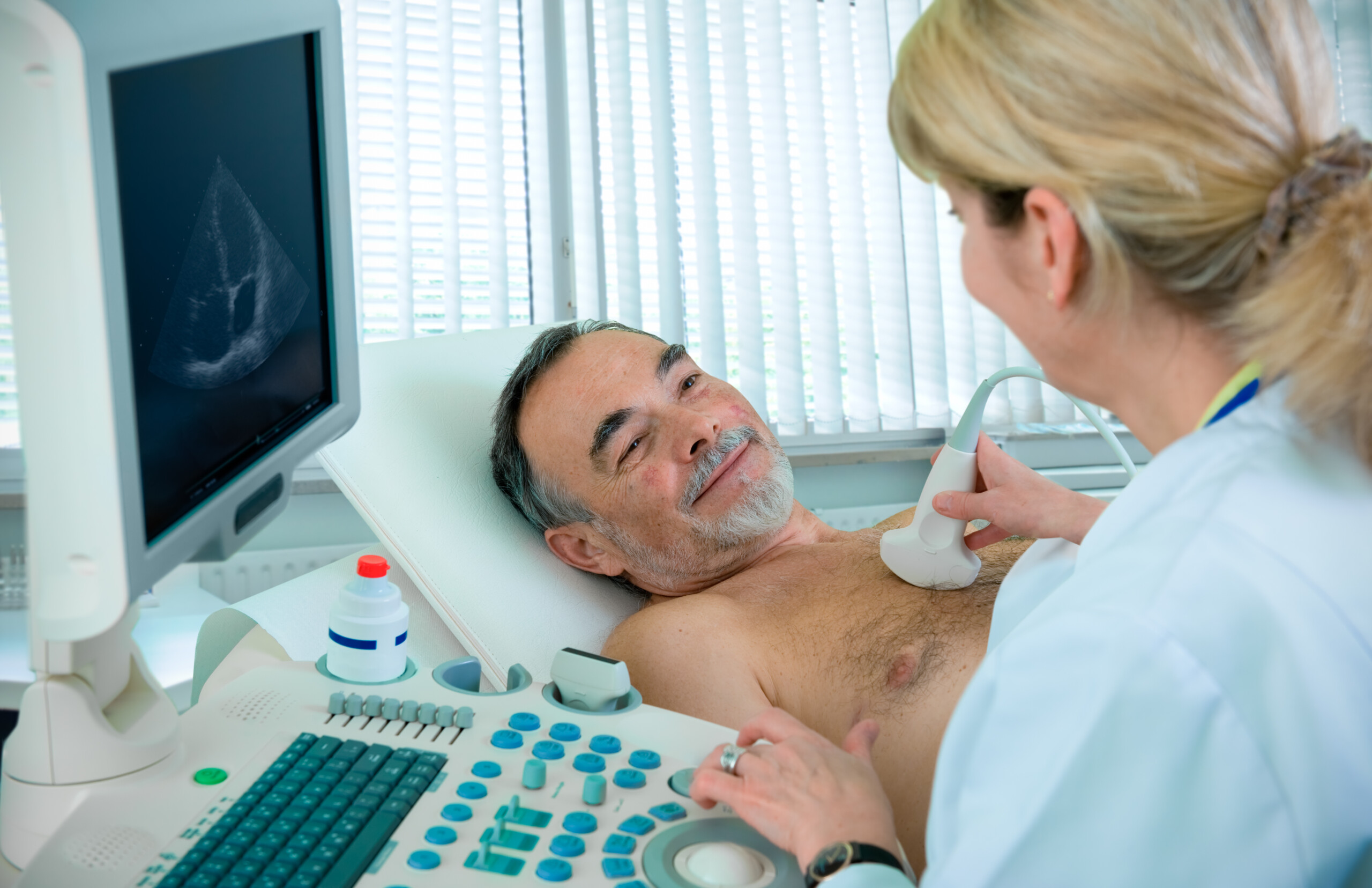
Researchers from the University of North Carolina at Chapel Hill and North Carolina State University have developed a method to identify this plaque—without the radiation exposure of a CT angiogram. Their ultrasound techniques use “microbubbles.”
The first technique identifies the vasa vasorum in arteries, clusters of small blood vessels that often invade plaque; they indicate the presence of soft plaque.
Microbubbles are injected into the artery and follow the blood flow.
When vasa vasorum is present, the microbubbles will flow through it, lighting up the image.
The second technique uses targeted microbubbles. Soft plaque is more likely to have certain molecules.
The microbubbles attach themselves to these, highlighting the image. “…we’ve developed a dual-frequency intravascular ultrasound transducer which transmits and receives acoustic signals,” says Dr. Xiaoning Jiang in the report.
The new technology continues to be developed and currently has been limited to the laboratory setting.
Many people are walking around with severe coronary artery disease and don’t even know it.
The condition can develop silently over time, with individuals often experiencing no noticeable symptoms until a major event like a heart attack occurs.
Regular checkups and screenings are crucial for detecting coronary artery disease early, especially for those with risk factors such as high blood pressure, high cholesterol, obesity or a family history of heart disease.
Additional risk factors include daily excessive sitting time, insomnia or sleeping under six hours, excessive sodium intake, tobacco use, untreated sleep apnea, diabetes, depression and stress.
Early intervention can significantly improve outcomes and prevent serious complications.
Lorra Garrick is a former personal trainer certified by the American Council on Exercise. At Bally Total Fitness she trained clients of all ages for fat loss, muscle building, fitness and improved health.
.
Top image: Shutterstock/Alexander Raths
Source: sciencedaily.com/releases/2014/04/140424102609.htm

Exercises to Heal Heel Pain

These exercises work for the heel pain from plantar fasciitis.
Heel pain from plantar fasciitis may be stubborn and persist, but the right exercises can actually reverse the condition; or, at least, result in substantial improvement with this painful heel condition.
Heel pain strikes athletes, fitness enthusiasts and people who don’t exercise, because risk factors for plantar fasciitis are varied and many.
“Plantar fasciitis usually occurs due to a posterior slippage of the heel bone (calcaneous) which causes a strain and consequently inflammation of the plantar muscles,” says Eugene Charles, DC, Diplomate of applied kinesiology and author of “Journey to Healing: The Art and Science of Applied Kinesiology.”
Heel pain can result from high heels or flat feet. Plantar fasciitis also can result from excess body weight.
Heel pain or plantar fasciitis can be brought on by running, hard walking and tight calf muscles.
Sometimes, the heel pain comes on for no apparent reason, though most likely, the sufferer has a risk factor he or she is not aware of, such as tight calf muscles or an improper walking gait.
Custom made shoe inserts are often recommended for plantar fasciitis, but they’re expensive and usually not covered by insurance.
Shoe inserts from shoe stores or drug stores don’t always relieve the heel pain of plantar fasciitis, either.
Neither do night splints, which aren’t cheap. If you’ve tried these, or are a recent victim of plantar fasciitis and nothing seems to help the heel pain, here are some marvelous exercises.
Exercises for the pain of plantar fasciitis
Walk up hills.
Yes, walk up hills. This forces the arch of the foot to stretch with each step. This stretching gets the heel involved.

Shutterstock/G-Stock Studio
The plantar fascia is a band of ligamentous tissue that extends along the bottom of the foot, from heel to ball.
Walking uphill will stretch this band. The pain of plantar fasciitis is mechanically caused by tight fascia.
The walking need not be strenuous. It can be slow and relaxed and done outdoors.
You can also use a treadmill, but keep your hands off the rails to maintain correct gait.
The last thing a person with plantar fasciitis and pain needs is to walk with an unnatural gait. In fact, an improper gait is a risk factor for this heel pain.
Walking up hiking trails is best because the surface of the trail causes the fascia to stretch every which way.
Pull toes towards your knee for one minute.
Release for at least one minute, then repeat four more times.
Three-Part Remedy
Dr. Charles explains, “A simple three-part remedy (barring any other factors) is to 1, Gently tap the back of your heel bone on the carpet before getting up three or four times to realign the bone; 2, Stretch out your calf muscles for one minute every morning, afternoon and evening, and 3, Roll a tennis ball under the bottom of your feet for five minutes when you are sitting every night.”
Strengthen the Calves
Don’t just do calf stretching exercises; do calf strengthening exercises.
Go up and down on your toes (wearing sneakers) to get a calf muscle burn, or use a calf-raise machine (gyms usually have these) set to light or moderate weight, and do 12-15 full range repetitions. Below are images showing more exercises for the calves.
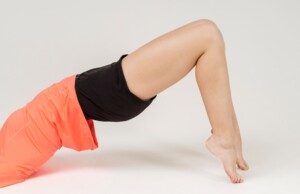
Go up and down on your toes to engage the calves. Freepik
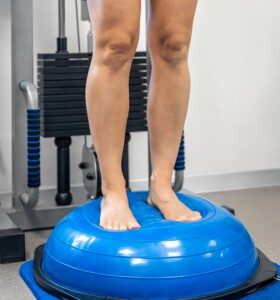
Go up and down on your feet while standing on a BOSU board. Freepik/pvproductions

Dr. Charles has helped thousands of patients and taught over 1,200 doctors during his 30+ years of practice. He has also created the Power Kinetics® Exercise Program and line of nutritional vitamins and performance supplements. amazon.com/Journey-Healing-Science-Applied-Kinesiology/dp/0964421763
Lorra Garrick is a former personal trainer certified by the American Council on Exercise. At Bally Total Fitness she trained clients of all ages for fat loss, muscle building, fitness and improved health.

World’s Tallest Children on TLC: Tall Is Beautiful.

The “World’s Tallest Children” is on TLC and will certainly keep airing.
World’s Tallest Children profiled several kids under age 18, the first being 13-year-old Brennan, who stands 7-4, the world’s tallest boy.
I recommend that all the tall youth out there who are agonizing over their height, tune in to the next airing of World’s Tallest Children.
There are too many teen girls out there, standing only 5-10 or 5-11, who cry daily over their height.
If they watch World’s Tallest Children, they will meet 15-year-old Marvadene from Jamaica, who–at the time of filming–was 6 feet 9 and one half inches.

Marvadene Anderson was a teen at the time this picture was taken.
At the end of World’s Tallest Children, Marvadene says she likes being tall, after the narrator says she wouldn’t mind growing a few more inches. Marvadene is naturally tall and has no medical problems.
But Brennan is apparently the only person in the world who suffers from an unnamed genetic abnormality that has led to his great height. He suffers from joint pain and cannot run well.
Marley is from Thailand, and at age 17, is the world’s tallest girl (at the time of filming), beating out Marvadene by one-half inch.
However, Marley suffers from a pituitary tumor that causes excessive release of growth hormone.
The tumor has grown back after it was surgically removed twice.
Her impoverished family is hoping that newfound fame as the world’s tallest girl will enable them to purchase the expensive drugs that might neutralize the tumor.
World’s Tallest Children also introduced the Van Ness family from the UK. Dad is about 6-11, and his two older teen sons are about 6-10 and 6-8. Mom is 5-11, and a 13-year-old son stands 6-1. An 11-year-old daughter stands 5-9.
I was disturbed by the case of Angelique. She is a perfectly healthy 8-year-old who towers over her classmates, standing at 4-7, the height of the average 10-year-old.
Her father, Nick, is 6-9, and expressed deep concern over how tall Angelique would grow to be.
He said he was picked on during his school years, explaining that if a kid could pick on the tallest kid in the school and get away with it, that this would establish the bully as leader of the pack.
Nick had a chart that he was using to monitor Angelique’s height. Angelique said that being the tallest in her class was “cool.”
But her father had a much less mature attitude, worried that eventually, kids would pick on her.
Though at first, this might sound like a very caring daddy, this very attitude has the potential to shake Angelique’s self-confidence and make her develop a very negative body image.
This “caring” attitude can lead to extreme self-consciousness and persistent slouching in Angelique.
It can even lead to bouts of crying, social isolation and a harmful obsession with her height.
Shame on Nick for fixating too much on his daughter’s height. He then arranged to take her to a doctor to get an adult-height projection.
Amazingly throughout all this, Angelique seemed resilient. But when kids are made to feel like something is wrong with them or defective about them, sooner or later they will break.
Angelique is taller than 99 percent of girls her age, yet her adult-height projection came out at 5 feet 8 and one-half!
The father expressed relief. She didn’t seem too relieved to learn it would be only 5-8.
You really need to watch World’s Tallest Children to appreciate the dynamics here. I hope the girl hits six feet!
- And what if that height projection is wrong, after all?
- What if Angelique keeps growing beyond 5-8?
- Will her father make the huge mistake of showing worry and telling her she shouldn’t wear heels?
- Nick needs to learn how to empower his daughter, rather than needlessly worry about her.
For Pete’s sake, Nick, be thankful she’s healthy, rather than suffering from life-threatening conditions like Marley and Brennan!
Tune in to World’s Tallest Children; you’ll get a kick out of Marvadene, whose older sister is 6-4.
If you have a very tall daughter who’s overly concerned about her height, or you, the parent, are unable to accept that your daughter may one day be exceptionally tall, both of you should watch World’s Tallest Children. You’ll learn a lot from 6-9 Marvadene (who’s now 6-11).
Lorra Garrick has been covering medical, fitness and cybersecurity topics for many years, having written thousands of articles for print magazines and websites, including as a ghostwriter. She’s also a former ACE-certified personal trainer.
Source: wikipedia.org/wiki/Marvadene_Anderson
Top image: Shutterstock/JPC-PROD

Why Very Tall Women Should Feel Feminine & How To

Very tall women have every reason to feel feminine, like the one above. Here’s why and how.
Here are encouraging words for tall women who believe they’re too masculine to attract men or who think they’ll never find a man who’ll make them feel feminine.
Though many tall women glow with confidence and pride, other tall women believe their height is an obstacle to happiness and feeling feminine or “normal.”
Here is an online post, copied and pasted, word-for-word, from a tall support site:
6’2″ Lisa wrote (January 31st, 2009)
I’m 22 and still struggle with my height. I play basketball and it is hard to feel feminine being tall with a muscular/athletic build.
In HS, there was only a few boys taller than me and they always end up dating short girls… I hate that.
Height has benefits in athletics and tall girls never get teased, but it really makes me worry that I will never find a husband who will make me feel like a woman.
I am very healthy, but way about 200 pounds because of my athletic stature and I get jealous when I see women being lifted off their feet on tv.
Encouring Words You Need
Depend upon YOURSELF for feeling feminine. This can be accomplished many ways:
1) a complete makeover
2) a spa treatment
3) a professional manicure
4) a new hairdo/cut/tint
5) jewelry
6) clothes, especially feminine colors such as pink, orange, violet, purple, etc.
7) feminine mannerisms, such as how you position your legs when sitting; your language (do you swear a lot?); and other mannerisms: how do you chew food or gum? What are your table manners?
8) fragrance
But most of all, how feminine you “feel” comes from inside your BRAIN.
As for longing to be lifted off the floor? Did Lisa mean literally scooped up and carried around, let alone without much effort?
If so, she, and many others, need to realize that not all men can do this, even with a “normal” height 130 pound woman!
As a former personal trainer, I know this to be a fact. It’s an illusion created by TV shows and movies.
The actors on TV may be getting help with special effects or an unseen booster under the actress.
But even if it looks unaided, the fact is, some men are simply not fit enough to do what Lisa longs for.
Remember, short 200 pound women can’t be easily scooped up either, yet manage to find loyal husbands!
Think of all the females you’ve seen in your lifetime who were masculine, or women you weren’t sure might be a man.
Were they necessarily tall? Do you think runway models are masculine or not woman-enough to attract men?
Think of actresses around six feet tall, such as Sigourney Weaver, Brooke Shields and Charlize Theron.
Are they masculine? Think of the women you’ve seen who were masculine. What about these women made them masculine?
- Being tall?
- Or hairstyle & clothes?
- Mannerisms?
I’ve seen masculine-appearing women who looked this way because of their 1) hairdo, 2) clothes, 3) facial features and 4) body shape — SHAPE, not height, but the shape.
I went bowling one day and the woman in the next lane was between 5-10 and 5-11, and from behind, she looked like a man.
She was wearing a dark blue sweatshirt; blue jeans; no makeup; a plain face with hard features; no jewelry; had very short hair like a man’s; and a heavyset body with no curves — and I couldn’t tell if she had breasts, either. Her height was just a coincidence.
I learned, though, that she was indeed a woman. And the androgyny had nothing to do with her height.
“Height doesn’t deplete femininity,” says Renee Sunday, MD, an anesthesiologist who’s 5-10.
“So you can still wear the heels and the skirts and the makeup — IF you desire. Dress in a way that makes you comfortable.
“Researchers have suggested that wearing high-waisted clothing helps to cinch the waist and give you the hourglass shape.
“However, good eating habits and self-care will ALSO do that.
“Tall females can be cute and sexy and even desirable.
“So if someone can’t handle your tallness, that’s their problem. But don’t ever dummy down — make them come up to your level.
“And you do that by walking proud, loving who you are, and allowing respect and laughter to lead the way.”
Never depend on a man to make you feel like a woman. This power should come from inside you yourself. Own your tall height!
Source of the post: tallwomen.org
 Dr. Sunday is a board certified anesthesiologist in practice for 20 years. Her site is reneesunday.com.
Lorra Garrick has been covering medical, fitness and cybersecurity topics for many years, having written thousands of articles for print magazines and websites, including as a ghostwriter. She’s also a former ACE-certified personal trainer.

Tall Women Who Feel Huge Around Other Women, Even Men

Are you a tall woman who feels like a giant among not-so-tall women?
Do you feel big even around men?
I’ve been writing lots of content about issues that tall women face, and one comment in particular to one of my “tall women” articles struck a nerve.
It’s just too easy for a woman to blame being tall on why she’s still single.
Since when are most never married women tall? Are there statistics on how many never married women over 35 are over 5-10 tall? You can’t assume that being tall is keeping you from finding Mr. Right.
Here is the comment to one of my “tall” articles:
I am 5’9″ and an exceptionally broad lady and am 28 yrs old. It is way too depressing to see short petite girls looking cute and nicer when I feel like a giantess standing next to them.
Can tall broad girls look cute and feminine? I am still single and am depressed that I am still single because I look huge and big and no guy wants to be around a girl like this.
WHAT ?!
First of all, 28 is NOT too old to still be single!
Secondly, this woman is only one inch taller than me. ONE LOUSY INCH.
Third, can “short cute girls” look elegant and regal ??
I posted a comment in return:
Akshaya, you’re only one inch taller than me. There is NO way I can ever feel huge around men, let alone women. If I’m a lot bigger than a woman, then she’s going to be pretty small.
I see women taller than you who look like they can be broken in half. I think the problem is more with your body build, not with your height.
Stop sulking and start empowering yourself by working out.
Become strong and energetic, faster and healthier. No guy wants to be around a girl who hates herself.
I’m not saying that Akshaya should starve herself down to 105 pounds. But she describes herself as “exceptionally broad.” I take this to mean she is built somewhat like Queen Latifah.
I use Queen Latifah as the comparison because Queen Latifah is the only well-known woman who comes to mind right now who pretty closely matches Akshaya in size:
Queen Latifah is 5-10 and broad, though I wouldn’t say “exceptionally” broad. Also, Akshaya could be overestimating how big she looks.
I also point out Queen Latifah because, despite her size, she projects glamour. Can we say that “no guy wants to be around” Queen Latifah?
Even if she weren’t a celebrity, I can imagine Queen Latifah strolling into a big ballroom, dressed her shimmering best, wearing high heels, shoulders thrown back, and soon a small crowd of men gathering around her, including shorter men.
And it’s true, I HAVE seen many tall women who look like a gust of wind could knock them over. Body composition is more important than how tall you are.
If you, as a tall woman, feel huge, then this is more likely related to your body weight.
It’s obvious in Akshaya’s comment that she’s absolutely miserable. I’d be willing to bet she never works out with weights.
I can’t begin to tell you how empowering it is for women, short or tall, thin or “broad,” to lift weights. This will NOT make Akshaya bigger. It will:
- Make her tighter, firmer and leaner
- Make her shapelier
- Create fat loss and thus a reduction in dress size
- Create more self-esteem than she could ever imagine
- Teach her to focus on what her body can DO, not what it looks like
And I can’t say it enough: Few good men want a woman who hates herself.
Lorra Garrick has been covering medical, fitness and cybersecurity topics for many years, having written thousands of articles for print magazines and websites, including as a ghostwriter. She’s also a former ACE-certified personal trainer.
.