
Can an MRA Detect Congestive Heart Failure?
An MRA (magnetic resonance angiogram) is often used to see if there’s anything wrong with the heart and associated structures.
If someone has an MRA, the report will include what the ejection fractions are for each ventricle.
This made me wonder if an MRA could detect and diagnose congestive heart failure, since I was thinking that a very low ejection fraction (such as under 35 percent) might mean CHF.
“MRI is the gold standard for determining ejection fraction,” says cardiologist and internal medicine specialist Norman E. Lepor, MD, who’s with Cedars Sinai in Beverly Hills, CA.
MRI stands for magnetic resonance imaging, so the MRA is a type of MRI.
Dr. Lepor adds that MRI is an intrinsic three-dimensional imaging modality. He further explains, “Echocardiography [ultrasound] is the modality most commonly used to determine ejection fraction.
“CHF is a clinical diagnosis that is based on symptoms and biomarkers such as BNP levels. Remember, half of patients with CHF have preserved ejection fractions.”
What would be abnormal on the findings?
Dr. Lepor explains, “Finding on MRI or echo can include enlargement of the heart chamber sizes, reduced ejection fraction in some patients, thickening of ventricular muscle thickness, leaky or stenotic [narrowed] heart valves, abnormal estimated pulmonary artery pressures, abnormal blood flow patterns from the left atrium to the left ventricular consistent with either diastolic or systolic dysfunction.”
An MRA to show heart function is an expensive procedure and is not used to screen for congestive heart failure.
Instead, it’s ordered by a cardiologist as a diagnostic procedure after the doctor finds, during an examination, something concerning and wants to pursue the cause.
In addition to ejection fraction values and the possibility of congestive heart failure, an MRA will show other details that can help a cardiologist understand what’s going on with the patient’s heart, such as any abnormally enlarged structures.

Having performed over 4,000 coronary angiograms and angioplasties, Dr. Lepor has focused on prevention and treatment of coronary heart disease.
 Lorra Garrick has been covering medical, fitness and cybersecurity topics for many years, having written thousands of articles for print magazines and websites, including as a ghostwriter. She’s also a former ACE-certified personal trainer.
.
Top image: Shutterstock/Green Apple
Statins vs. High Doses of Niacin: Why Not Take B3?
Why are statins pushed when instead, it seems that the safer route is to just take high doses of niacin (vitamin B3) to lower cholesterol?
You may have read that niacin or niacinamide has a positive effect on cholesterol profile, and that some cholesterol drugs are “knockoffs” of vitamin B3.
“Although most people think of niacin as just a vitamin, if you give it in high enough doses (the doses you need to budge cholesterol levels), it actually becomes a drug,” explains Dr. Elizabeth Klodas, board certified cardiologist and co-founder of Step One Foods.
She continues: “And drugs have side effects. High dose niacin can make blood sugar control worse in people with diabetes and prediabetes. It can cause flushing and itching [though non-flush versions are available].”
Okay, so what if you have great blood sugar levels and use the non-flush version of niacin?
“It can affect liver function,” says Dr. Klodas. “It can cause muscle achiness. And if you take a look at the medical literature as a whole, niacin does not appear to be that effective in improving patient outcomes.
“So even though it may lower cholesterol, the net benefit is more neutral for niacin than for statins.
“The benefit data behind statins is actually quite strong, especially in individuals with heart disease, those with diabetes and those with persistently very high LDL (bad) cholesterol levels (over 190 mg/dL).
“I only use high dose niacin as a second-tier therapy in those patients with known heart disease who cannot tolerate statins and don’t recommend them for diabetics.
“Because the benefit data for primary prevention with statins (taking them as a purely precautionary step) is less robust, I always try to work hard with my patients to address their cholesterol profiles with lifestyle changes, especially diet.”
Diet for Improving Cholesterol, Rather than Statins and Niacin
The key is not letting your cholesterol profile become undesirable in the first place.
“If you take in enough food-based fiber, omega-3 fatty acids, antioxidants and plant sterols (and I have to emphasize that these nutrients need to come from REAL FOOD in its REAL FORM to be effective), chances are high that your cholesterol profile will improve,” says Dr. Klodas.
“Because my patients found it hard to modify their diet to get these nutrients in adequate amounts, I created Step One Foods to make it easy.”
Don’t let your cholesterol reach a point where you must decide between statins and niacin; practice preventive medicine via the right diet.

Trained at Mayo Clinic and Johns Hopkins, Dr. Klodas believes in first changing the diet, rather than taking pills, to improve cholesterol profile.
 Lorra Garrick has been covering medical, fitness and cybersecurity topics for many years, having written thousands of articles for print magazines and websites, including as a ghostwriter. She’s also a former ACE-certified personal trainer.
.
Top image: Shutterstock/sirtravelalot

Lower Bad Cholesterol, Raise Good Cholesterol with Supplements

Why settle for drugs when you can lower your bad cholesterol and raise good cholesterol with natural supplements, minus side effects?
Don’t be fooled by brilliant ad campaigns for drugs — drugs that are among the best selling in the world.
Natural Supplements for Improving your Cholesterol Profile
Fiber. “Soluble fiber does have an effect on cholesterol,” says Shana Spence, MS, RDN, CDN, a registered dietitian nutritionist based in New York.
“Foods like oats, beans, Brussels sprouts, apples and carrots are all examples.”
But if you don’t care for these foods, a fiber supplement will help.
“How soluble fiber works is that while it digests, it actually attaches to the ‘bad cholesterol’ or LDL and removes them from the body,” continues Spence.
“Insoluble fiber is the kind that our body cannot digest, like in the skin of vegetables and fruits or grains. Insoluble just keeps us regular and our gut healthy.”
Green tea extract. “Green tea contains catechins, which are antioxidants,” says Spence. “EGCG is the most potent type (and the one most people have heard of) that is found and also extracted.
“There have been studies that show this particular antioxidant does help to lower LDL levels or ‘bad cholesterol.’
“To get this benefit, it’s actually recommended to take the capsule form or use the extract rather than just drinking tea, since there is only about 50-100 mg of catechins in the tea itself and 145-3,000 in supplement form, depending on which brand you purchase.
“The only thing to be mindful of is the caffeine level. For those sensitive to caffeine or for those who are pregnant it’s best to speak to a doctor.”
Niacin (vitamin B3). Spence explains, “Niacin actually works to raise the HDL levels of ‘good cholesterol’ in the body while decreasing your levels of triglycerides (a type of fat known for contributing to cardiovascular diseases).”
Niacin also lowers the bad cholesterol (LDLs).
“What niacin does best is promote digestion and also aiding the nervous system,” says Spence.
“As for treatments, niacin is most commonly used in people who have high cholesterol but can’t take statins.”
Omega-3 fatty acids. The safest and most practical source of omega-3s is the fish oil supplement.
Pantethine (vitamin B5). “Studies for this vitamin are unfortunately scarce,” says Spence. “Yes, some people have reported taking this for their cholesterol.
“Like niacin, pantethine has been found to increase HDL and decrease LDL in some.
“One particular study [Rumberger et al, Nutrition Research, 2011] found that in addition to the TLC diet, pantethine significantly decreased total cholesterol and LDL levels.
“The TLC diet focuses on foods low in cholesterol and saturated fats.
“However, the study was only 16 weeks and done on women. There is still a definite need for studies to give a definite yes on this one.”
Plant sterols (PS). Though plant sterols are found in just about all plants, the amount isn’t sufficient to impact cholesterol levels. A person, even a vegetarian, must ingest PS in concentrated form (supplements).
“Taking in around 1,000 mg of plant sterols twice per day with food has been shown to lower LDL (bad) cholesterol by as much as 15%,” says Dr. Elizabeth Klodas, a board certified cardiologist.
“Step One Foods have 1,000 mg of phytosterols per serving – so you don’t have to worry about taking the supplement.”
Policosanol. Works like statins by inhibiting the liver’s ability to make cholesterol; lowers LDL and may raise HDL.
Red yeast extract. “Red yeast rice contains a compound that is structurally similar to statin medications,” says Dr. Klodas. She adds that red yeast extract can also cause the same side effects as statins.
Tocotrienols. These antioxidants are found in barley oils and rice bran, and inhibit the liver’s ability to manufacture cholesterol.
Turmeric. Supplements are best, for potency.
Note. Supplements are available that contain many of the above compounds in just one tablet or capsule.
 Shana Spence of The Nutrition Tea is committed to providing trending information and nutrition facts covering a wide range including nutrition for heart disease and diabetes, pediatric nutrition and healthful lifestyles.
Trained at Mayo Clinic and Johns Hopkins, Dr. Klodas believes in first changing the diet, rather than taking pills, to improve cholesterol profile.
Lorra Garrick has been covering medical, fitness and cybersecurity topics for many years, having written thousands of articles for print magazines and websites, including as a ghostwriter. She’s also a former ACE-certified personal trainer.
.
Top image: ©Lorra Garrick
Sources:
webmd.com/cholesterol-management/side-effects-of-statin-drugs
webmd.com/cholesterol-management/guide/high_cholesterol_alternative-therapies
drcarolyndean.com/magnesium_miracle/
scholar.google.com/scholar?hl=en&q=turmeric+lowers+cholesterol&btnG=&as_sdt=1%2C6&as_sdtp=
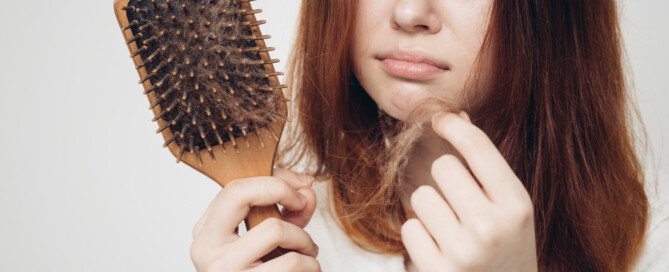
Is Female Pattern Baldness the Same As Male Mechanism?

Is there actually a difference in the mechanism that causes hair loss in women when compared to that which causes male pattern baldness?
Well, they are not the same, but the mechanisms can be similar, says Dr. Robert Dorin, DO, NYC-based hair care expert and restoration specialist.
He explains that “there does appear to be other factors contributing to female pattern loss not found in men.
“Unfortunately, we do not know what it is, but clearly there are other factors at play.
“This is why Propecia (a pill to block and lower DHT production in men ) is 70 percent effective and approved for use in men, but is not approved for effective hair loss doctors’ prevention in females, even at twice the normal dose; not to mention that it can cause birth defects in women who use it while pregnant during the first trimester of gestation in a male fetus.”
Propecia goes by the generic name of finasteride.
Of course, from a visible standpoint, female pattern baldness differs from male pattern baldness.
For some women, the first area to begin thinning is the part on the top middle or side of their head–wherever they prefer to wear a part.
Brushing the hair back so that it’s partless will mask this. However, this can then reveal — if not at that point, then eventually — thinning at the temples.
As time marches on, the pattern baldness in women takes on the form of diffuse hair loss, even though the part and temples may seem to show it most prominently.
In men, as we all know, make pattern baldness as it advances takes on that classic horseshoe pattern — after beginning with the proverbial shiny bald spot on the top back of the head.
Hair loss in women is often caused by mechanical means.
Avoiding mechanical insults to the hair root can go a tremendous way at preventing “balding.”
If you like ponytails, here are tips on how to prevent hair loss.

Dr. Dorin of True & Dorin provides creative hair loss solutions, including advanced hair transplant techniques and the latest in regrowth technology, to ensure that his clients achieve their desired results.
Lorra Garrick has been covering medical, fitness and cybersecurity topics for many years, having written thousands of articles for print magazines and websites, including as a ghostwriter. She’s also a former ACE-certified personal trainer.
.
Top image: ShotPrime Studio

What It Means to Feel Your Pulse Everywhere
“Feeling of the pulse at different locations in the body can be completely normal,” says Chester M. Hedgepeth, III, MD, PhD, Executive Chief of Cardiology at Care New England.
“Importantly, all the arteries in the heart conduct the pulse wave started in the heart.
“Pulses can be felt in the large arteries of the neck (carotid artery) and leg (femoral artery).
“Normal pulses can also be felt in the wrist (radial artery), temple (temporal artery) and even the stomach with deep palpation (aorta).”
The aorta is the body’s largest blood vessel, originating from the heart and extending down the abdomen where it eventually branches off into the femoral arteries in the thigh that supply the legs with oxygenated blood.
“Patients frequently describe feeling their palpitations [pulse] in different parts of the body,” says Dr. Hedgepeth.
“PVCs are commonly associated with this sensation, as they cause a premature firing of the heart’s electrical system.
“Many patients feel a skipped and ‘heavy’ beat because the heart is ejecting significantly more blood volume.
“This ‘heavy’ beat can often be felt in the temple, head or neck.”
In summary, there is nothing to be alarmed about if you feel your pulse anywhere or “everywhere” on your body.
- There is no cause for concern.
- You can relax and breathe easy about this.
Think of your arteries as conduits, kind of like if you were to place your hand on a metal water pipe inside your bedroom wall and feel it vibrating, but the source of the vibrating is a water generator down the street.
 Dr. Hedgepeth also serves as a physician in the cardiovascular division and arrhythmia service at Brigham and Women’s Hospital, plus is an instructor of medicine at Harvard Medical School.
Lorra Garrick has been covering medical, fitness and cybersecurity topics for many years, having written thousands of articles for print magazines and websites, including as a ghostwriter. She’s also a former ACE-certified personal trainer.
.
Top image: Freepik/KamranAydinov
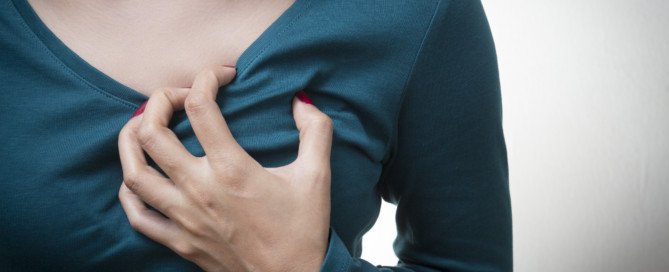
Always Feeling Heartbeat in Chest: Benign or Serious?
A cardiologist explains what it means to often feel your heartbeat in your chest.
This doesn’t refer to feeling your heart beating in your chest after you just did 20 squat jumps or ran hard on a treadmill.
This is about when this occurs in the absence of physical exertion — and anxiety, of course, which could really get the heart thumping good.
“Patients will commonly describe an abnormal sensation of feeling their heartbeat in the chest or an unpleasant awareness of your own heartbeat,” says Chester M. Hedgepeth, III, MD, PhD, Executive Chief of Cardiology at Care New England.
“This can be quite distracting. Fortunately, this is usually a benign finding.
“This sensation can be due to either forceful beating of the heart or due to increase in the heart rate (greater than 100 bpm while sitting still).”
Causes of Feeling Your Heart in Your Chest
Remember, that’s where this organ is located. Dr. Hedgepeth explains, “Forceful beating of the heart and/or increased heart rates leading to palpitations may be caused by anxiety, stress, panic attack or fear.
“Increased caffeine, nicotine levels or other stimulant use (e.g., diet pills, amphetamines, cocaine) are also associated with these types of palpitations.”
The so-called energy drinks can also produce this effect.
These drinks often contain high levels of caffeine, which can stimulate the heart and increase its rate.
Additionally, many energy drinks have other stimulants like taurine and ginseng that can also affect heart function.
For some people, these ingredients can cause the heart to beat harder or faster than usual, leading to a sensation of palpitations or a racing heart.
Dr. Hedgepeth continues, “Recent exercise and fever are common causes. Patients who might be dehydrated for any reason will often describe these types of symptoms.”
- Fill up on more water and less of the energy drinks.
- Cut back on caffeine; replace the diet pills with portion control and more exercise. Then see what happens.
Something of note: If you feel your heart beating in your chest, this doesn’t necessarily mean you’re feeling palpitations or PVCs, which are an irregular heart rhythm.
In fact, the beating may be quite steady and even-paced while you feel it in your chest.
In other words, you have no fluttering, but instead, just that strong awareness or sensation of a beating heart. The resting rate may even be normal during these experiences, too.
The more anxious you get over feeling your heartbeat in your chest — remember, the more this will make you “feel” it.
If your cardiac awareness, though, comes with other features such as lightheadedness, dizziness or chest pain, you should see a cardiologist.
Dr. Hedgepeth also serves as a physician in the cardiovascular division and arrhythmia service at Brigham and Women’s Hospital, plus is an instructor of medicine at Harvard Medical School.
Lorra Garrick has been covering medical, fitness and cybersecurity topics for many years, having written thousands of articles for print magazines and websites, including as a ghostwriter. She’s also a former ACE-certified personal trainer.
.
Top image: Shutterstock/Theerapol Pongkangsananan

Pain in Chest when Leaning Forward & Backward

A cardiologist explains the possible causes of chest pain when you lean forward and backward.
“Pain in the chest with leaning forward or backward is a symptom commonly associated with pericarditis,” says Chester M. Hedgepeth, III, MD, PhD, Executive Chief of Cardiology at Care New England.
“Pericarditis is an inflammation of the thin, protective membrane that surrounds the heart, and keeps it in its proper anatomic location. Inflammation of this membrane may cause chest pain.”
Dr. Hedgepeth says that “the inflammation in the lining around the heart could be related to a recent heart attack.
“Heart attacks can lead to an immune response that causes inflammation in the pericardial sac.
“You may hear your doctor refer to this type of post-heart attack pericarditis as Dressler’s syndrome.”
What if you haven’t had a heart attack yet are experiencing chest pain or discomfort (or a dull ache) when you lean forward and backward?
There are many possible non-cardiac causes.
“More commonly, this inflammation [periocarditis] is related to infection (virus, rheumatic fever or tuberculosis), cancers (lung, breast, renal cell cancer, Hodgkin’s disease and lymphoma), immune diseases such as lupus, recent radiation therapy to the chest area, or certain drugs,” explains Dr. Hedgepeth.
“Recent chest wall trauma, musculoskeletal injury and herpes zoster should all be ruled out.”
How is periocarditis diagnosed?
If you have pain in your chest when you lean forward and back, there can be many possible causes — linked to pericarditis.
The workup for a correct diagnosis is as follows.
1 Medical History and Symptoms Review: The diagnostic process begins with a detailed discussion of your medical history and symptoms.
The physician will ask about recent illnesses, autoimmune disorders or trauma.
2 Physical Examination: During the physical exam, the doctor will listen to your heart with a stethoscope.
A key finding in pericarditis is the pericardial friction rub — a distinctive, scratchy sound produced by the rubbing of the inflamed pericardial layers.
3 Electrocardiogram (ECG): An ECG records the heart’s electrical activity and may show changes typical of pericarditis.
4 Chest X-ray: A chest X-ray helps visualize the heart’s size and shape and can show the fluid accumulation around the heart.
5 Echocardiogram (Echo): This ultrasound test provides images of the heart and can detect the fluid and assess the thickness of the pericardium.
6 Blood Tests: These tests check for markers of inflammation and identify potential underlying causes, such as infection or autoimmune diseases.
7 Pericardiocentesis: If there is significant fluid accumulation, this procedure may be performed to remove and analyze the fluid, helping to diagnose the cause of the inflammation.
In some cases, CT scans or MRIs may be used for further evaluation.
Bottom line: Chest pain that comes when you lean forward and/or backward should never be ignored. Make an appointment with your doctor.
If this article provided you with helpful information or reassurance, please consider supporting my work through Ko-fi. Donations help me continue writing detailed medical content that’s easy to understand.
Dr. Hedgepeth also serves as a physician in the cardiovascular division and arrhythmia service at Brigham and Women’s Hospital, plus is an instructor of medicine at Harvard Medical School.
Lorra Garrick has been covering medical, fitness and cybersecurity topics for many years, having written thousands of articles for print magazines and websites, including as a ghostwriter. She’s also a former ACE-certified personal trainer.
.
Top image: Shutterstock/Chayatorn Laorattanavech

When Bed Elevation Won’t Prevent Acid Reflux

“My bed is elevated and I STILL get acid reflux overnight! Help!”
Does that describe you?
Overnight acid reflux can cause upper abdominal and/or chest discomfort, a bad taste in the mouth and coughing.
A person may even cough in their sleep — keeping their partner from a good night’s sleep.
“Acid reflux is when the normal stomach acid regurgitates up into the esophagus,” notes Jay Desai, MD, who specializes in colon cancer screening, upper endoscopy and consultative gastroenterology with of New York Gastroenterology Associates.
“The muscles at the bottom of the esophagus are meant to act as a valve to hold down acid, but in many people,” continues Dr. Desai, “this valve does not function properly.
“When people lie down at night, gravity is no longer helping keep the acid down in the stomach, so there is often worsening symptoms in this position.
“Frequently patients have just eaten dinner, and the food creates pressure which forces acid into the esophagus.
“Raising your head in bed is a good way to help gravity minimize this process.”
When Raising the “Bed” Won’t Help Acid Reflux
“One reason this doesn’t work in some patients is because they just elevate their neck and head (with pillows),” says Dr. Desai.
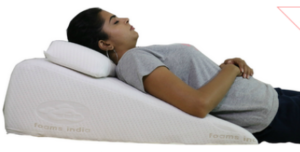
“For this technique to work, the whole chest needs to be elevated, usually with the help of a bed wedge device.”
So forget the pillows. The esophageal sphincter is in your stomach, not your neck.
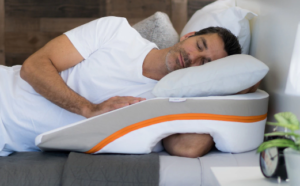
The bed wedge devices create an elevation of six to eight inches, and unlike regular pillows or cushions, will not lose their shape or form over time.
Below is a common type of wedge pillow which elevates the torso and will help keep the acid contents in the stomach from refluxing. And below that is a type that’s designed for side sleepers.

Board certified in internal medicine and gastroenterology, Dr. Desai provides a wide range of GI services including for bacterial overgrowth, constipation, acid reflux and GERD, IBS, incontinence and small bowel disease. Twitter handle: @NYGADocs
Lorra Garrick has been covering medical, fitness and cybersecurity topics for many years, having written thousands of articles for print magazines and websites, including as a ghostwriter. She’s also a former ACE-certified personal trainer.
.
Top image: Shutterstock/Photographee.eu
My 600 Pound Life: Pauline Is Another Penny
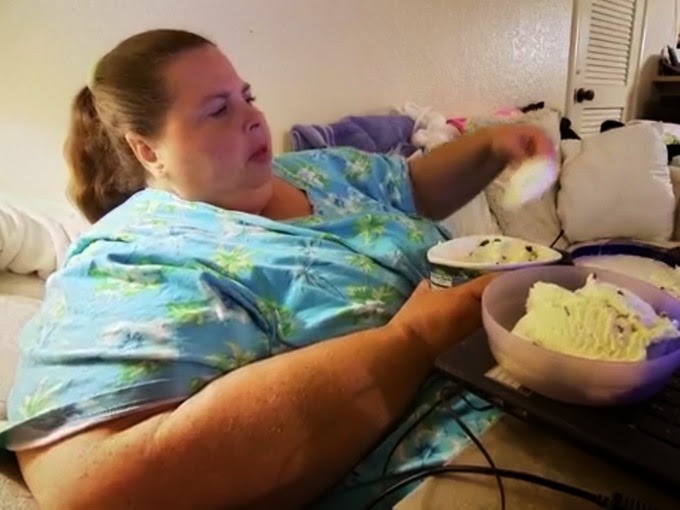
Penny from “My 600 Pound Life” now has a twin sister, Pauline, who’s in denial and refuses to take responsibility.
An episode of “My 600 Pound Life” in 2015 was viewers’ first exposure to Pauline, a 51-year-old who weighed about 670 when she first saw Dr. Nowzaradan. She has a 21-year-old son, Dillon, who enables her.
Dillon’s pilot light, if he ever had one, is out. He’s obese, apparently has no goals and takes care of his mother full-time.
In Dr. Now’s office, it appeared that Dr. Now was about to point out that Dillon was an enabler after he asked Pauline, “Who gets you your food?” when Pauline interjected and said that her son is not to blame because he listens to the authority of his mother.
At that point, I thought, “What’s Dillon afraid of if he refuses to get her all the food—that she’ll leap out of bed and chase after him?”
Pauline is able to walk but for only a few steps. She and Dillon moved to Houston for the surgery, and she tried to lose 30 pounds prior to surgery at Dr. Now’s instruction.
She kept saying how difficult everything was because she and her son were out of their element.
I think I’m madder at Dillon than at Pauline because he provided absolutely no motivation or inspiration.
This lost young man could have purchased a pair of light dumbbells for Pauline to do upper body exercise throughout the day.
He could have purchased some books and magazines, a crossword puzzle book, anything. Instead they were shown zoning out in front of the TV.
Doesn’t Pauline know how to use a computer?
Why didn’t Dillon have her spend some time on his?
All of these activities would have made it easier for her to stay on a diet.
Pauline gained weight, so Dr. Now admitted her to the hospital where she lost 44 pounds in two weeks.
Pauline Is Another Penny
By the time she was discharged from a lengthy hospital stay following surgery, she had lost about 135 pounds.
In the ensuing months, Pauline continued to lose weight, but only a few pounds per month. Unlike Penny, she was losing, BUT…her attitude was very similar to Penny’s.
Pauline refused the physical therapy, though she was shown wading in a pool on her own.
It never occurred to her pathetic son to get her signed up with a gym to do some upper body workouts.
Dillon continued to bring his mother enough food to prevent her from losing more than a few pounds per month: That’s obviously a ton of food to near-maintain 530 pounds.
Like Penny, Pauline kept making excuses: She gets dizzy when she walks; she’s afraid of falling if she walks for too long.
I wondered why Dr. Now didn’t intercept at that point and say, “Then don’t walk far from your house. Instead walk inside your house back and forth from one end of a room to another.”
I also wondered why Dr. Now didn’t arrange for some mental therapy. I saw nothing in Pauline’s childhood, as it was described, to explain how she got way over 600 pounds.
Pauline really pulled a Penny towards the end when, after leaving the doctor’s office, she said she was offended by the way he kept pushing her too hard, after he had busted her for her lie about the phone calls from physical therapy.
She went as far as proclaiming that she knew her body better than Dr. Now did. And she said more than once that she had to do this at HER pace.
At Pauline’s pace, it will be YEARS before she gets down to a healthy weight, losing only a few pounds a month. She doesn’t have years. At 51, she may have only months to get the whip cracking.
“My 600 Pound Life” – Another Penny
As long as her voiceless son keeps enabling her, Pauline will be another Penny.
The last scene of this original episode showed them at a bingo hall, with Pauline announcing something like, “At least I’m getting out and doing things.”
Yeah, right, playing bingo and feasting on junk food there will help you lose weight.
Final Thoughts on “My 600 Pound Life”: Pauline
She’s in total denial, thinks Dr. Now is too pushy and doesn’t understand her, refuses physical therapy, refuses to work on her walking (Dr. Now kindly admonished her at month 12 for using a motorized wheelchair for her final weigh-in), cries tears but won’t take responsibility, and has a deadbeat, enabling son with no goals.
Update on Pauline
The July 3, 2019 airing of “My 600 Pound Life” reveals that Pauline lost enough weight to get skin removal surgery for her stomach, having gotten down to around 242 pounds at her lowest.
Then she started gaining again, though agreed to home physical therapy to regain the ability to walk.
Often having a good dose of attitude, Pauline ultimately gained back around 60 pounds, disqualifying herself for any additional skin removals for at least six months from that point forward.
Nevertheless, she was able to walk, without any assistance, to what would be her last weigh-in.
Pauline decided to quit the program, announcing that she knew what she had to do and “didn’t need this anymore,” referring to Dr. Now’s program.
However, it’s clear that she’s now headed in the wrong direction: more weight gain to come.
That 60 pounds will very likely soon be 100 pounds and she’ll be back in a wheelchair.
Second Update

As of the April 29, 2020 airing of “Where are they now?” on “My 600 Pound Life,” Pauline’s massive legs got the best of her and she decided to get back on Dr. Now’s program.
She lost enough weight to qualify for skin/lymphedema removal surgery on her left leg.
Several weeks later she qualified for a second surgery on her right leg, bringing her postop weight down to 208, with a total weight loss of around 500 pounds.
Pauline reported that her son Dillon no longer needed to drive her around, and she was last filmed sitting up front in an aircraft (whether she was sightseeing or taking flight instruction was not clear).
Lorra Garrick is a former personal trainer certified by the American Council on Exercise. At Bally Total Fitness she trained clients of all ages for fat loss, muscle building, fitness and improved health.




How to Elevate Sofa 9 Inches to Prevent Acid Reflux

If you sleep on a sofa, here’s a safe, easy way to elevate it 9 inches to help prevent acid reflux overnight.
I sleep on a sofa (not a pull-out sofa, but the actual sofa). This is because my back doesn’t like mattresses.
I’m also not the type of sleeper who thrashes around all night, and thus, the confined space of the sofa poses no problem whatsoever.
One morning, I’d had it with the acid reflux, so I wondered how to elevate the sofa on my head side. I had some large loose bricks outside, so I put one under each “leg” of the sofa, elevating it six inches.
I was leery because I kept thinking that I might turn a little overnight and throw the sofa off balance. It did wobble somewhat when I got into it.
However, I still got the acid reflux, so I decided to elevate the sofa three more inches by placing blocks of wood (purchased at Home Depot) on top of the bricks. This made the sofa even more unstable, in that it shook when I got into it.
I also worried that in the middle of the night, one of the legs would slip off the wood block. So I decided to place my 12-inch exercise stool under the sofa, smack between the elevated legs.
It fit nearly perfectly, with just a little bit of space to spare. I now knew that should the sofa leg ever slip off a block, the sofa wasn’t going anywhere, as the stool would support it.

Though the stool is 12 inches off the ground, the net elevation is nine inches due to the leg nubs being about three inches.
In other words, the bottom of the legs is nine inches from the floor.
The exercise stool is the type commonly seeing at gyms and health clubs, either with a red base or black base, and black surface.
These stools are sold online and are extremely durable, able to support a heavy sofa.
Incidentally, after all this time, the legs have never slipped off the blocks of wood.
I need to say, however, that lifting the sofa up in the first place, to set the bricks in place, requires a degree of strength.
If you don’t have much upper body strength, you’ll need to have someone help you.
Nevertheless, this is an easy way, at least from a logistical sense, to elevate a sofa nine inches to prevent acid reflux.
Lorra Garrick has been covering medical, fitness and cybersecurity topics for many years, having written thousands of articles for print magazines and websites, including as a ghostwriter. She’s also a former ACE-certified personal trainer.
.
.