
Could a Teacher’s Favorite Student Secretly Be a Bully?

Yes, that sweet student who politely greets you and leaves an apple on your desk can also be one of your school’s meanest bullies — without you having a clue.
Maybe that bully sincerely likes the teacher, perhaps regarding the teacher as a “cool adult.”
Another possibility is that the bully-in-disguise is only pretending to be a model student in that particular teacher’s class — to more easily be believed should any classmates complain.
A third scenario is that the bully is fearful that the teacher, if they learn of the student’s true nature, will create a very negative consequence.
For example, perhaps the teacher is also the coach of the cheerleading squad for which the bully wants to be a part of.
How can a teacher spot a bully in disguise?
“The only way a teacher can tell a ‘nice’ kid is really a bully is to keep their eyes and ears open wherever students interact,” says Kate Walton, a former public school teacher who has developed some very effective anti-bullying strategies for schools, and who speaks to schools and universities on the topic of “The Power of Human Kindness.”
A mother of two, Walton is also the author of the young adult novels about bullying, “Cracked” and “Empty.”
Walton explains, “Constant and consistent vigilance is key.
“Teachers will see and hear things – positive, upsetting and surprising things.
“What counts is what the adult does with the upsetting or disturbing things overheard.
“When bullying is witnessed by the teacher, it is his/her job to address it.
“No matter what. Teachers simply can’t shy away from facing or addressing bullying. The perceived ‘niceness’ of the bully is irrelevant.
“No one is perfect, and even the ‘nice’ kid makes mistakes.
“Use the situation as a teachable moment for the student, an opportunity for him/her to grow as a human being. How?
“Have a purposeful and crafted conversation. Acknowledge and discuss what they did wrong, let them know how their bullying affected the other student.
“Talk about what compassion looks and sounds like. Praise them when they give it a go.
“Many students—even the ‘nice’ ones—need to be explicitly taught how to think of others, to be kind and compassionate.”
 A mother of two, Kate Walton is also the author of two young adult novels about bullying, “Empty” and “Cracked.”
 Lorra Garrick has been covering medical, fitness and cybersecurity topics for many years, having written thousands of articles for print magazines and websites, including as a ghostwriter. She’s also a former ACE-certified personal trainer.

Social Exclusion: 5 Risks for Kids at School

Wondering why nobody wants to be your child’s friend?
This is called social exclusion, but it can also come with ridicule and hostile behavior.
It’s easy to take a generic, overly-broad approach and say, “A child is usually socially excluded or has no friends because she’s just plain weird,” or, “He’s just an oddball.”
“During my time in the classroom, I did notice five common traits or behaviors in socially excluded students,” says Kate Walton, a former public school teacher who has developed very effective anti-bullying strategies for schools, and who speaks to schools and universities on the topic of “The Power of Human Kindness.” A mother of two, Walton is also the author of the young adult novels about bullying, “Cracked” and “Empty.”
- A struggle with appropriate peer communication
- Lack of confidence which oftentimes showed up as a difficulty with self-expression
- Over-confidence, resulting in aggressive and intimidating behavior
- Untrustworthy actions – lying, always being at the center of drama or arguments
- Lack of personal hygiene
Point 1 can mean a number of things, including introversion, lack of emotion, an unfriendly demeanor and annoying habits.
You’re probably wondering why disabilities or notable physical traits aren’t in this list of what makes kids prone to being socially excluded.
That’s because the disability, or the trait (such as being overweight) isn’t in and of itself the cause of social exclusion. Think back to your school years.
Surely there were kids who were quite overweight, or unusually tall and gangly, who had plenty of friends.
If Point 1 applies to a child who just happens to be “fat,” or short, tall, skinny, or with braces, glasses, ears that stick out, etc., then of course, the physical trait may come up in interactions, but again, it’s not the cause of social exclusion without the presence of some dysfunction in communication.
Point 2 is easy to understand: Kids usually don’t feel comfortable around classmates who lack self-confidence. The same can be said for adults.
Point 3 makes sense because the brash, boisterous child is no more inviting to be around than an obnoxious, brazen adult.
Point 4: Who wants to be around this kind of person?
Point 5 is very interesting because when I was in grade school, there was a boy I’ll call “Andy.”
At around 1 pm or so every day, Andy began stinking really bad. I once had heard that he’d been sprayed with a skunk, and it left a permanent odor, but of course, this wasn’t the case (a person sprayed by a skunk won’t have a permanent odor, and besides, Andy didn’t smell like a skunk).
It was a bad, pungent odor, yet everyone just accepted it, and he wasn’t treated any differently.
But the general rule is that yes, bad hygeine can cause social exclusion. This can be bad breath, slimy looking hair and pungent-smelling clothes.
If your child suffers from social exclusion, find out why. Are his or her clothes clean?
Do they have an annoying habit? How do they behave with other kids?
Here’s more information from Walton on how parents should handle the situation of social exclusion with their kids.
A mother of two, Kate Walton is also the author of two young adult novels about bullying, “Empty” and “Cracked.”
Lorra Garrick has been covering medical, fitness and cybersecurity topics for many years, having written thousands of articles for print magazines and websites, including as a ghostwriter. She’s also a former ACE-certified personal trainer.
.
Top image: ©Lorra Garrick

What to Do if Your Child Has No Friends

An expert gives advice on what parents should do and NEVER do upon realizing that their child suffers from social exclusion or that “nobody likes” him or her.
Kate Walton, a former public school teacher who has developed very effective anti-bullying strategies for schools, and who speaks to schools and universities on the topic of “The Power of Human Kindness.” A mother of two, Walton is also the author of the young adult novels about bullying, “Empty” and “Cracked.”
Have you just found out that your child has no friends and/or gets socially excluded? An open line of communication, says Walton, is crucial.
“Talking and truly listening to your child not only builds trust and confidence, but, if the situation changes and the lack of social acceptance becomes a problem, the child can express their feelings and share their thoughts in a safe environment with people who love and respect him/her.”
Don’t Make this Huge Mistake
“Assuming the social exclusion is their child’s fault is a dangerous assumption for parents to make,” says Walton.
“There are too many variables at play. The best a parent can do is excavate the situation through discussion—with the child and his/her teachers, counselors, etc.—and move forward based on what is discovered.”
You can’t force your child to just go out and “make” friends any more than YOU can magically feel wonderful about including a person in your life whom you find uncomfortable being around.
Yes, there’s a lot of truth to that age-old saying: Kids are people too!
There’s the story of a girl, Kristee, who was invited over a classmate’s house, let’s call her June.
Well, Kristee (adult now) can’t really remember why she declined June’s offer, but somehow, Kristee’s mother found out.
Kristee doesn’t recall if June told a teacher and then the teacher told Kristee’s mother, or if June found out Kristee’s phone number and spoke to her mother.
What Kristee does remember is that her mother scolded her and made her call up June and accept the invitation.
She has no memory of what happened after that. The memory stops with her mother lashing out at her and not even bothering to find out WHY she didn’t want to go over June’s house. Maybe June was just a rude girl.
Maybe it was merely a case in which Kristee felt that she and June didn’t think alike enough to spend time together.
Maybe Kristee feared not living up to June’s expectations.
Maybe she feared that June would find her boring. What a shame that her mother never asked WHY.
This reaction by the parent is not unheard of, but the strange thing is that the very parent who’d do this would, certainly, decline a lunch date with a coworker they didn’t feel comfortable around! Yet when their kid declines an invitation, it’s a crime!
If you, as the parent, don’t exactly have friends crawling out of the woodwork, or if none of your coworkers seem to want you hanging out with them during lunch, at the water cooler or after hours…then ask yourself if it’s fair that you try to force your socially excluded child to make friends.
And if you ARE popular, again, recognize that there’s any number of reasons why nobody seems to want to be your child’s friend. Do not be critical.
A mother of two, Kate Walton is also the author of two young adult novels about bullying, “Empty” and “Cracked.”
Lorra Garrick has been covering medical, fitness and cybersecurity topics for many years, having written thousands of articles for print magazines and websites, including as a ghostwriter. She’s also a former ACE-certified personal trainer.
.
Top image: ©Lorra Garrick

Why Kids Should NOT Be Taught “Obey All Adults”

Teaching your children to “obey” all adults out of respect to them can increase their risk of being abducted by a predator.
Are you the type of parent who preaches to your children, “Obey all adults”?
Did you know this can set them up for being abducted by a sex offender?
After all, if the instruction to “obey all adults” or “respect all adults” is pounded into their heads enough, they won’t know to question that stranger who demands they get into their car.
This article is about parents who command their children to obey ALL adults.
This directive puts into the child’s mind that all grown-ups are included in this admonition. And it’s dangerous.
“The reason why is because it leaves children vulnerable to be mistreated and go along with it,” says Shani Verscheisler, founder and CEO of Magenu, a non-profit organization that creates and implements educational curriculums dedicated to empowering children in personal safety and awareness.
“If a child views him or herself as a second-class citizen, meaning always in the wrong and on the opposite end of the authority figure, it leaves the door wide open for a predator to say things like, ‘Don’t tell anyone, this is our secret,’ ‘No one will believe you because I am the adult,’ etc.
“It allows the child to be the victim at the get-go. There should never be an ‘all adults’ rule.”
Many kids are instructed (and “instructed” is a mild term here) to “respect all adults.”
A child doesn’t know the creepy adult who just happens to have a rap sheet. Why should that child automatically respect and especially obey him just because he’s a grown-up?
Imagine that child having been grilled since day one to respect and “listen to” ALL adults, and “never question an adult,” and one day here comes along that pedophile who sternly orders the child into his car. Now what do you think that child will do?
Now, we know that there are adults whom the child sees on a recurring basis, such as teachers, coaches, the piano instructor, etc. But these aren’t strangers. This article deals specifically with strangers.
“Obey all adults” can mean a child will, without a second thought, obey the order of “Come with me” by a stranger who’s actually a pedophile. The School of Common Sense teaches this.
A child — including a teenager — may be so programmed to obey without any question ALL adults, that he or she may just automatically jump into that stranger’s car or go off on foot with that sex offender who’s using an authoritative voice to get the child to comply.
In fact, this programming can very well persist into adulthood, which explains why, in many cases, an adult will silently or passively endure years of sexual harassment on the job.
They’ve been over-programmed, since childhood, to submit to authority — even when they know that the authority is abusing his or her power — even if that abuse is of criminal proportions.
The child has no radar, no sense of discretion, due to that programmed, default reaction of obeying without question.
I have actually heard parents tell their children, “Obey all adults.” Perhaps you have, too.
What’s so special, so godly, about ME, that YOUR child, a complete stranger, should bow to me without question and take orders from me?
 Shani Verscheisler
 Lorra Garrick has been covering medical, fitness and cybersecurity topics for many years, having written thousands of articles for print magazines and websites, including as a ghostwriter. She’s also a former ACE-certified personal trainer.
.
Top image: ©Lorra Garrick

Does Revving Car Engines Damage Hearing?

Don’t men realize that revving up their vehicle’s engine will damage their hearing over time?
“Eight-five decibels and louder, depending on duration of exposure and individual susceptibility, can be permanently damaging to one’s hearing,” says Rachel Raphael, M.A., CCC-A, an audiologist with ENT Baltimore.
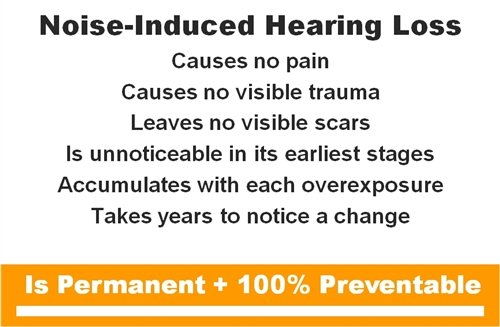
She continues: “It is a shame that there is no pain, bleeding or obvious damage at the time of exposure (sometimes takes years for the damage to show up as permanent sensorineural hearing loss, and/or tinnitus), or more people would reconsider the types of loud sounds/concerts/engine revving etc., to which they expose themselves and nearby others.
“There is nothing cool about revving up an engine! It’s annoying to everyone around in my opinion.
“It’s even less cool to have to wear hearing aids prematurely, due to all the damage that’s likely to show up down the road at a later date. (Also not cool to refuse hearing aids when needed, and keep asking ‘What?’ and ‘Huh?’ all the time!)”
Okay, so those of you reading this who enjoy tinkering with your vehicle’s engine, revving it up loudly, sitting back and basking in that thundering noise, are probably thinking that being concerned about possible hearing loss is a sign of wimpiness.
Loud noise causes hearing loss. Period. This isn’t a situation of wimpiness or being a sissy.
Of course, it’s your ears so why should this be anyone else’s business? Because nearby people, as mentioned prior, are also subjected to this noise.
“But I have to rev my car to warm up the engine.”
The need to warm it up seems to occur only among men.
In all my life, I’ve never witnessed a woman sitting in her vehicle revving up the engine for 10, let alone 20, minutes. Secondly, this “warming up” often occurs in the dead of summer.
What would happen if you skipped “warming it up” and just drove out of the parking space after turning the vehicle on? Surely it would move. Surely it would function.
The revving is just for playing around and having fun. But it’s at the cost of your hearing.
Maybe you don’t think it’s that loud. That’s because you probably already have hearing loss.
Down my street is a man (again, it’s never a woman) who sits in his pickup truck and just gloats in revving that engine, and I’m telling you, this is the loudest engine I’ve ever heard.
It is so roaring loud that I’m guessing that a decibel meter would register 120 at 50 feet away.
If you don’t think your engine is loud, record it with a decibel meter.
You may think that a few minutes here and there of revving it are harmless to your hearing.
But hearing loss is cumulative, over time; it’s stealthy and insidious, creeping up on you until one day, you realize that you’re constantly saying “What?” and “Huh?” Nothing macho about that.

Rachel A. Raphael specializes in clinical audiology and hearing aid dispensing. She helps in the diagnosis of hearing loss, tinnitus, dizziness and vestibular pathology in adults and children.
Lorra Garrick has been covering medical, fitness and cybersecurity topics for many years, having written thousands of articles for print magazines and websites, including as a ghostwriter. She’s also a former ACE-certified personal trainer.
.
Top image: ©Lorra Garrick
Can Hearing Loss Be Prevented in Old Age?
A lot of hearing loss that occurs in old age can be prevented; being “hard of hearing” does not have to be a part of aging if you know how to protect your ears.
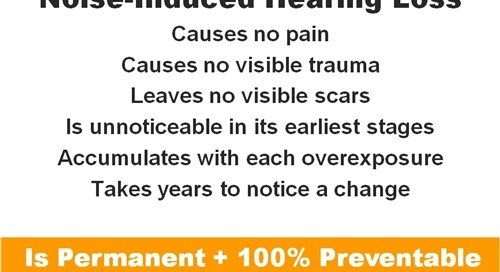
Noise-induced hearing loss is a leading cause of hearing impairment.
According to the National Institute on Deafness and Other Communication Disorders, 22 million U.S. people age 20 to 69 have permanent, noise-induced hearing loss — which comes from being around loud sounds.
When I was an adolescent, I sometimes warned my father about how one day he’d have hearing loss, especially in old age (because the longer you live, the more loud noise you’re exposed to if you don’t use ear protection), because he’d frequently spend time in his basement workshop using loud power tools.
At best, he’d have cotton in his ears. But mere cotton does not protect against hearing loss. Every weekend he’d mow the front and back yards, which took two hours.
Every Sunday he directed a church choir; I remember he’d be gone for three Masses in a row, and sometimes directed on Saturdays.
And then there were the nightly rehearsals for Christmas and spring concerts; the singing and organ, reverberating through the rafters, were quite loud.
One day I noticed that my father was developing a habit of setting the TV volume on the loud side.
I’d tell him that listening to a loud TV will, over time, cause hearing loss. I knew all this intuitively; common sense.
He never took me seriously. With each passing year, the TV got louder. And louder. Eventually it was blaring and I couldn’t be in the same room.
Maybe he chose the loud volume for the same reason that young adults like to blast car high-tech sound systems at top volume.
And maybe some of his choice was based on a progressing hearing loss. But even if hearing loss is present, it will be accelerated with a blaring TV.
Dulled ears can be trained to be more sensitive to lower volumes if you force yourself to get used to lower volumes.
Today, my father is a senior citizen and has significant hearing loss.
I don’t believe for one second that this hearing loss would have happened in the absence of his decades of exposure to loud noise. I don’t blame it on old age.
Had my father worn ear protection while in his workshop and while mowing the lawn, and used some sense when it came to adjusting the TV volume, his hearing wouldn’t be nearly as bad.
“We cannot stop the inevitable decline in hearing that occurs with aging (gradual decline in the high frequencies, typically after 60 + years of age),” says Rachel Raphael, M.A., CCC-A, an audiologist with ENT Baltimore.
“…but can play a huge role in reducing the hearing loss that is preventable, simply by using common sense, avoiding or reducing time spent in dangerously loud environments, and using hearing protection when needed (factories, shooting, concerts, power tools, etc.),” continues Raphael.
As for the endless choir rehearsals and Masses, well, I’m convinced he could have pulled off the feat just the same had he been wearing earplugs.
But he didn’t have the foresight to realize that loud noise today means hearing loss tomorrow – not just in old age, but in middle age.
I equate hearing loss to compromised lung function caused by smoking.
Though some people suffer hearing loss as a result of childhood infections, trauma and congenital defects, remember, 22 million Americans between 20 and 69 have noise-induced hearing loss, or shall I say, self-inflicted hearing loss.
And it’s my business when I am subjected to secondhand loud noise.
If a person wants to be dumb enough to permanently ruin his or her hearing with blaring TVs and pounding music, that’s his problem, but he has no right imposing that on other people, any more than a smoker has the right to blow smoke in your face.
As a layperson with common sense, I insist that a lot of hearing loss in old people could have been prevented.
My father’s hearing loss could have been prevented; you need only an ounce of common sense to realize this if you imagine all the thousands of hours of exposure to loud noise he could have prevented by simply wearing earplugs to church, and industrial ear protection while mowing the lawn and working with power tools.
Funny, he tells me, “Just wait and see when you get old, your hearing won’t be so good.”
No, I don’t think so; I wear ear protection (custom made earplugs and industrial ear muffs).
I even wear earplugs to noisy restaurants (loud people yapping combined with continuous clashing of dishes as buspeople clear tables and carelessly toss dishes into tubs, and all the clashing heard in the kitchen if our table is near it).
Any place that’s loud, I pop in the earplugs: movies, business seminars where people speak through microphones, the gym (blasting music, banging metal weight plates), and when an ambulance goes by, I stick my fingers in my ears.
If I’m walking by a construction site, I stick my fingers in my ears.
You shouldn’t care what people think if they see you plugging your ears; they won’t be buying your hearing aids if you one day need them.
Rachel A. Raphael specializes in clinical audiology and hearing aid dispensing. She helps in the diagnosis of hearing loss, tinnitus, dizziness and vestibular pathology in adults and children.
Lorra Garrick has been covering medical, fitness and cybersecurity topics for many years, having written thousands of articles for print magazines and websites, including as a ghostwriter. She’s also a former ACE-certified personal trainer.

Symptoms of Ovarian Cancer vs. Uterine Fibroids

The symptoms of ovarian cancer are very similar to the symptoms of uterine fibroids; this is why you shouldn’t ignore new-onset symptoms even if they closely match those of uterine fibroids.
Teresa P. Diaz-Montes, MD, says that “symptoms between ovarian cancer and fibroids could be similar.”
“If fibroids are large in size, a women can experience abdominal distension, shortness of breath, feeling full quickly after eating a small meal, going to the bathroom more frequently to urinate and experiencing pelvic pressure,” explains Dr. Diaz-Montes, of the Gynecologic Oncology Center at Mercy Medical Center, Baltimore, MD.
And that list of symptoms can also apply to ovarian cancer.
Dr. Diaz-Montes continues, “Fibroids can also cause lower back pain if they are big in size as well as leg pain if compressing on the side of the pelvis. These symptoms tend to be gradual and present over a matter of years.”
Ovarian cancer, too, can cause lower back pain and pain in a leg.
“Ovarian cancer can present with the same symptoms, but these tend to be of more rapid onset.
“Usually symptoms in ovarian cancer tend to present over a month or two prior to the diagnosis.”
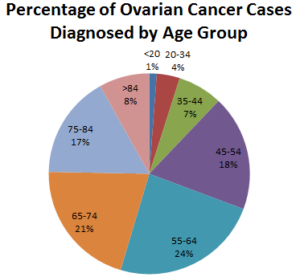
Keilana/CreativeCommons
Dr. Diaz-Montes adds, “Uterine fibroids could present with heavy vaginal bleeding. This is not a common symptom in ovarian cancer.”
Dr. Diaz-Montes is associate director of The Lya Segall Ovarian Cancer Institute at Mercy Medical Center. Board certified in gynecologic oncology, she has conducted various clinical trials to advance the care of gynecologic cancers. Gynecologic Oncology Center
Lorra Garrick has been covering medical, fitness and cybersecurity topics for many years, having written thousands of articles for print magazines and websites, including as a ghostwriter. She’s also a former ACE-certified personal trainer.
.
Top image: Shutterstock/popovartem.com

Ovarian Cancer Leg Pain vs. IBS: Symptom Comparison

Is there a difference in the way leg pain presents itself if it’s from ovarian cancer as opposed to irritable bowel syndrome?
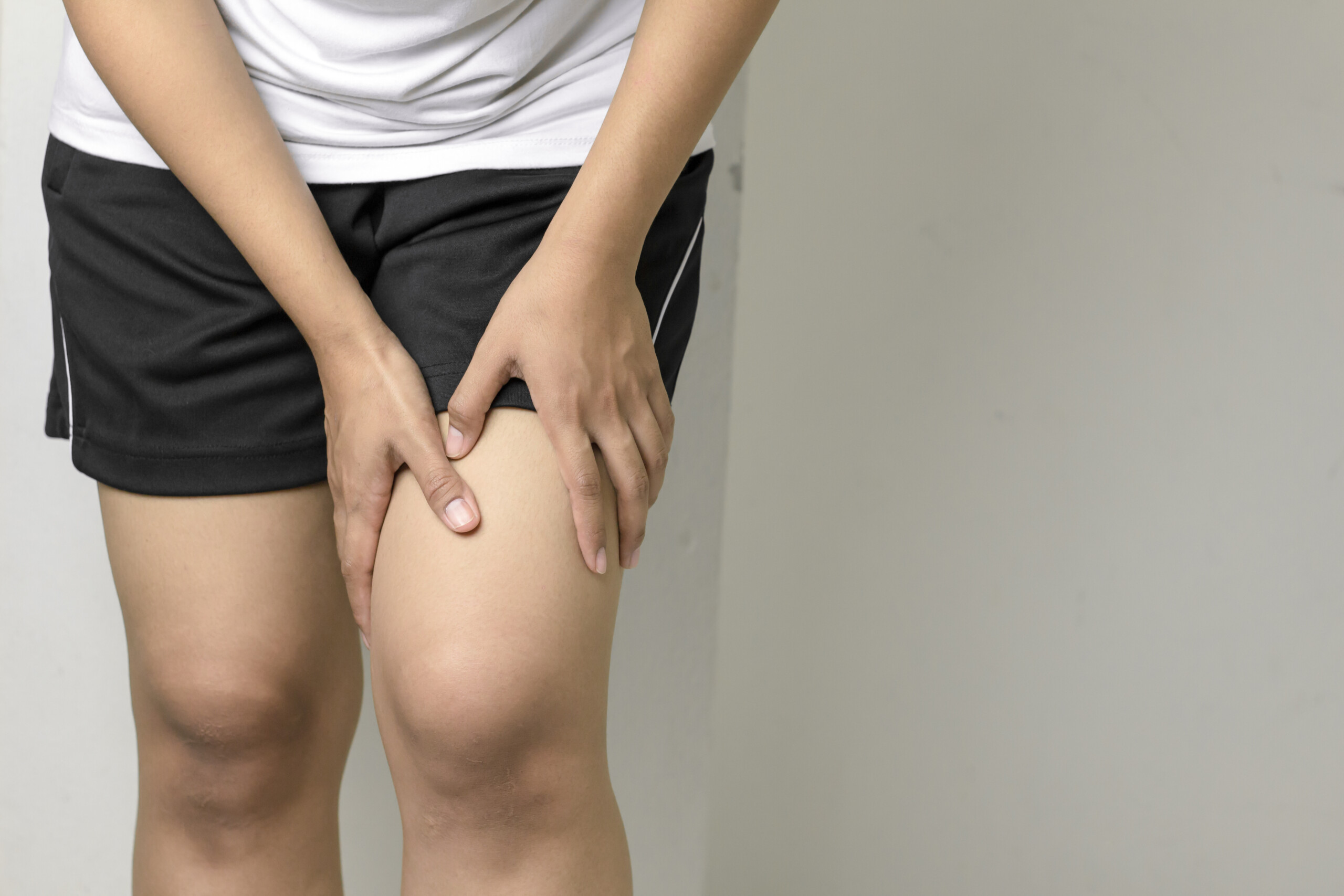
“Leg pain is not a common symptom of ovarian cancer,” says Teresa P. Diaz-Montes, MD, of the Gynecologic Oncology Center at Mercy Medical Center, Baltimore, MD.
“If leg pain is present, more likely the patient has pelvic pain and pressure. The leg pain tends to be constant and not relieved by movement or rest. The intensity of the pain could vary depending on the size of the pelvic mass.
“Leg pain is caused by compression of the pelvic mass on the pelvic side wall where the nerves that go to the leg are.
“The mass could also cause compression on the blood vessels, causing the leg to be more swollen when compared to the other leg.
“Another cause of leg pain could be the formation of blood clots. Blood clots tend to be more frequent among patients with cancer.
“The pain is located in the calf area. Increased swelling is also associated with formation of blood clots. Blood clots are very dangerous because if dislodged, they can travel to the heart and lungs, causing sudden death.”
IBS Leg Pain
“Leg pain is not a typical complaint in IBS,” begins Nnenna C. Okpara, MD, gastroenterologist and director of endoscopy at the Center for Women’s Gastrointestinal Health, Women & Infants Hospital in Providence, RI.
“When present, however, it is mostly described as a muscular type of pain in the legs, though a few patients also report joint pain.
” No mechanism has yet been identified to explain this symptom, but certain anti-inflammatory medications have been successfully used for such patients.
“Again, this may represent an association of IBS with other comorbid conditions, rather than a specific cause/effect.
“Research has shown some association of IBS with fibromyalgia, a disease which involves multiple areas of pain throughout the body.
“Furthermore, ‘referred’ pain from abnormal intestinal movement could theoretically be sensed as originating from the lower extremities.
“Patients with constipation and IBS do sometimes describe sensation of numbness, or ‘pins and needles’ in one or both legs with hard bowel movements, which may due to impingement of stool-distended colon on the nerve tracts exiting the bottom of the spine into the legs.”
There are so many possible causes of leg pain, which is why discomfort that doesn’t go away should be evaluated.
Dr. Diaz-Montes is associate director of The Lya Segall Ovarian Cancer Institute at Mercy Medical Center. Board certified in gynecologic oncology, she has conducted various clinical trials to advance the care of gynecologic cancer. Gynecologic Oncology Center
 Dr. Okpara’s clinical interests include colorectal cancer screening, gastrointestinal disease in pregnancy, and management of functional bowel disorders, including IBS and constipation.
Lorra Garrick has been covering medical, fitness and cybersecurity topics for many years, having written thousands of articles for print magazines and websites, including as a ghostwriter. She’s also a former ACE-certified personal trainer.
.
Top image: Shutterstock/ P Stock

Ovarian Cancer Indigestion vs. IBS: Symptom Comparison

What does the “indigestion” of ovarian cancer feel like and what’s it like with irritable bowel syndrome?
Are there similarities? What are the differences?
“Indigestion (the sensation of abdominal discomfort during or after eating) could be a symptom of ovarian cancer,” says Teresa P. Diaz-Montes, MD, of the Gynecologic Oncology Center at Mercy Medical Center, Baltimore, MD.
“Indigestion that is persistent and that lasts for a prolonged period of time (more than two weeks) and associated with nausea, vomiting, abdominal distention (feeling that clothes are tightly fit), feeling full after eating a small amount of food, changes in weight (mostly unintentional weight loss), shortness of breath, loss of appetite and new-onset constipation could be concerning for a malignancy.”
“If ovarian cancer causes a bowel blockage, then persistent nausea and vomiting, increased abdominal distention and decreased passage of stools, mostly diarrhea, could be observed.
“There will be total absence of normal bowel movements that do not respond to the use of laxatives.”
Indigestion from IBS
“Indigestion is a common complaint among both IBS and non-IBS patients, but usually has vague and unclear meaning,” says Nnenna C. Okpara, MD, gastroenterologist and director of endoscopy at the Center for Women’s Gastrointestinal Health, Women & Infants Hospital in Providence, RI.
“For most, it is reported as a sensation of discomfort or fullness in the upper abdomen, usually following meals. Others describe bloating, gas or visible or sensed abdominal distension.
“Bloating and abdominal discomfort after meals is one of the more common symptoms amongst IBS sufferers.
“Multiple factors can lead to a sensation of abdominal distension, including air in the bowel, stool in the intestines and fluid within the abdominal cavity (known in medical terms as ascites).”
Ascites is pronounced uh-sight-eez (it has Greek origins).
“Ascites is a serious symptom which can occur in the setting of many abdominal and gynecological cancers, particularly ovarian, and should always be promptly investigated.
“In the case of IBS, constipation is a likely cause of bloating and fullness, as well as food intolerances to certain dietary components like lactose, gluten and other poorly digested/absorbed components, the so-called “FODMAPs.”
“Simple remedies including over-the-counter medications for constipation and gas, probiotics and dietary modification may provide improvement or relief.”
Dr. Diaz-Montes is associate director of The Lya Segall Ovarian Cancer Institute at Mercy Medical Center. Board certified in gynecologic oncology, she has conducted various clinical trials to advance the care of gynecologic cancer. Gynecologic Oncology Center
Dr. Okpara’s clinical interests include colorectal cancer screening, gastrointestinal disease in pregnancy, and management of functional bowel disorders, including IBS and constipation.
Lorra Garrick has been covering medical, fitness and cybersecurity topics for many years, having written thousands of articles for print magazines and websites, including as a ghostwriter. She’s also a former ACE-certified personal trainer.
.
Top image: Shutterstock/Emily frost
Ovarian Cancer Pelvic Pain vs. IBS: Symptom Comparison
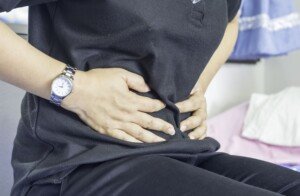
Two doctors talk about what ovarian cancer pelvic pain and that from irritable bowel syndrome are like.
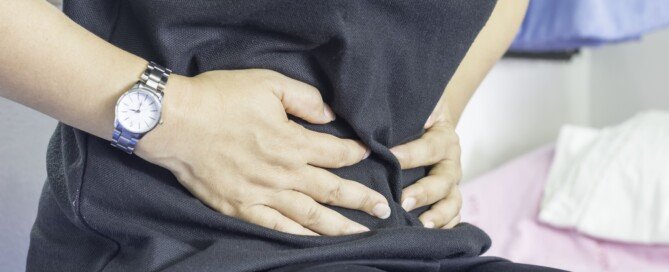
Pelvic pain can be caused by ovarian cancer. It can also be caused by IBS. Do they feel alike? What are the differences?
Let’s first start with the pelvic pain from ovarian cancer. For this topic is Teresa P. Diaz-Montes, MD, of the Gynecologic Oncology Center at Mercy Medical Center, Baltimore, MD.
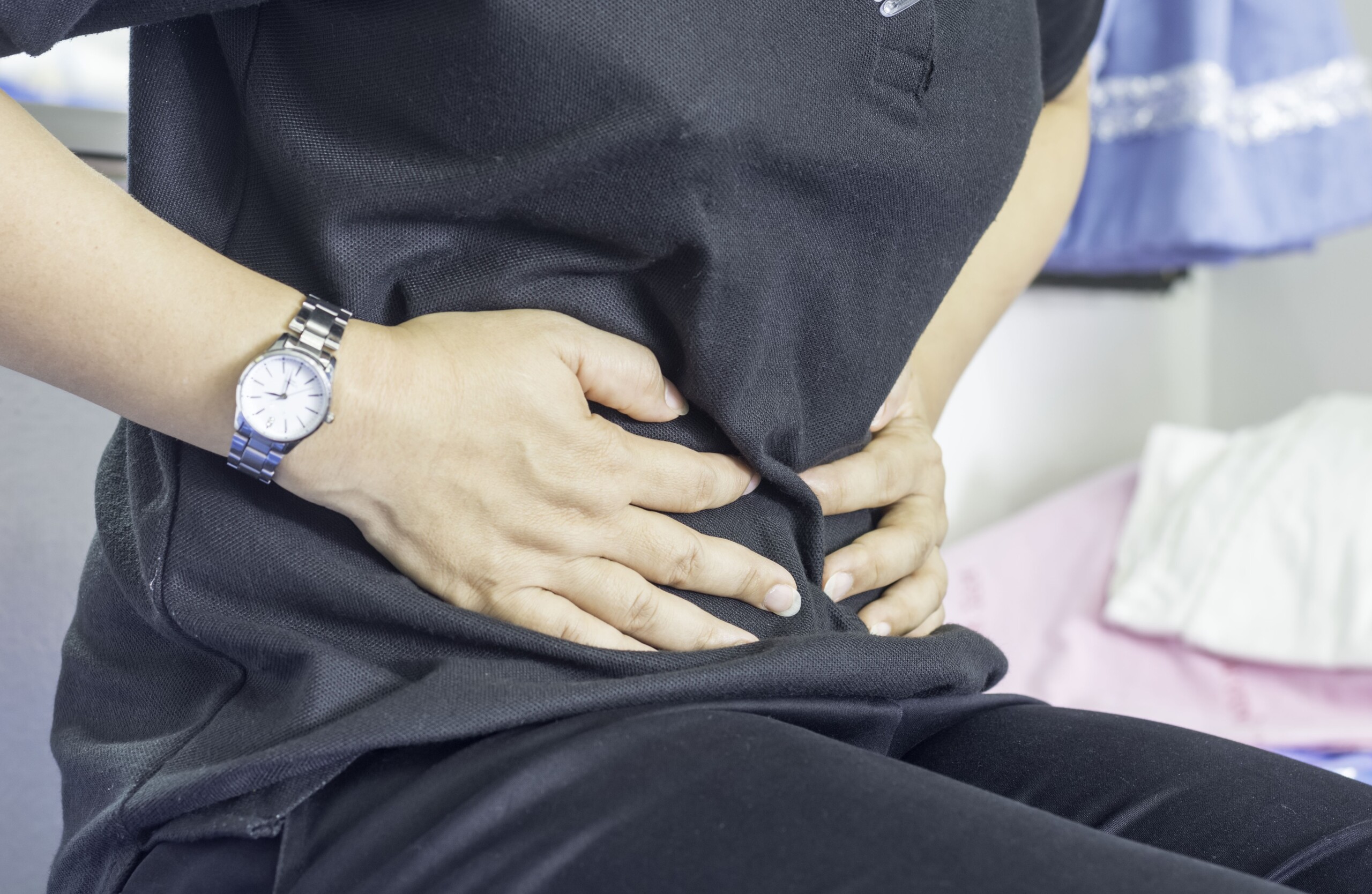
Dr. Diaz-Montes first notes that the pelvic pain is usually local to the pelvis: the lower abdominal area, beneath the belly button.
“The pain could be more localized to one side (right or left) of the pelvis depending on the size and location of the ovarian mass,” she says.
“The pain is usually constant and not aggravated by movement. It can be associated with a sensation of pressure in the pelvis.
“A women may complain of a new onset of constipation (difficulty with moving her bowels) or urinary frequency (going to the bathroom to urinate more frequently).
“This is due to the compression of the pelvic mass on the adjacent organs.
“If the mass is too big, it may be able to be palpated on examination. This can also cause abdominal distention and the sensation of bloating.
“The intensity of the pain depends of the size of the mass. When the ovarian mass is small, the pain is dull and described as a discomfort.
“When the mass is larger, the pain could be very intense and sharp, requiring the use of pain medications.”
For pelvic pain associated with irritable bowel syndrome, the physician is Nnenna C. Okpara, MD, gastroenterologist and director of endoscopy at the Center for Women’s Gastrointestinal Health, Women & Infants Hospital in Providence, RI.
“Many IBS patients report chronic pelvic pain,” says Dr. Okpara. “The pain is usually localized to the lower abdominal area, above the pelvic bone, or in the perineal area.
“It is usually referred to as a cramping sensation, which is sometimes worsened by movement of pelvic organs including during intercourse, urination or defecation.
“It is also sometimes exacerbated by menses, supporting a possible role for hormonal factors in the mechanism.
“Such complaints should usually trigger an evaluation of the pelvic organs including ovary, tubes and uterus to exclude structural abnormalities including cancer.
“Pelvic pain, though seen in IBS, has been illustrated in studies mostly as an association, meaning that neither proven to be the ‘cause’ of the other, but merely that a certain group of patients are likely to have both.
“This may point to common underlying factors common to both including depression, somatization and physical abuse.
“Another factor is that many IBS patients have undergone multiple abdominal surgeries over the years, which can lead to development of scar tissue (adhesions) within the abdomen and pelvic cavity, that predisposes to chronic pain.”
Irritable bowel syndrome is a diagnosis of exclusion. Make sure you get cleared of all possible causes of pelvic pain or aching before you get diagnosed with IBS.
That means see a gynecologist first to rule out any problems with the ovaries or other reproductive organs.