

Lifting Heavy Weights with High Blood Pressure for Mass Building

High blood pressure doesn’t mean that you can’t lift weights for building mass. I cite a fascinating study out of McMaster University.
This study showed that lifting lighter weights to muscle failure is sufficient to build mass – however, this article will describe to you how to maximize this process. “Lift lighter weights to failure” is rather ambiguous.
First of all, “Rather than grunting and straining to lift heavy weights, you can grab something much lighter, but you have to lift it until you can’t lift it anymore,” says associate professor of kinesiology at MU, Stuart Phillips.
“Muscle failure” is exactly that: You cannot lift the weight anymore. The limitation isn’t the perception that the weight has become too heavy to mechanically handle.
The limitation is the intense “burning” in your muscles, the “pain” or “hurting” in the muscles. This can occur even with very light weight.
To maximize the light weight protocol, I, as a former personal trainer for a health club, strongly recommend drop sets with relatively short rests in between.
The muscle burn will be significant after several cycles of drop sets. As for what constitutes “light” or “lighter” weights, this depends on the person doing the lifting.
One person’s “light” weight is another person’s heavy weight for lifting.
Here is an example of the protocol, using the shoulder press machine in which you insert a pin into a stack of weights.
This concept, however, can be applied to any lifting venue, such as pulleys, dumbbells and compound moves with barbells.
Find the load that is heavy enough to challenge you for eight reps, but that is not — I repeat — is not an 8-rep max.
An 8-rep max requires straining, which one with high blood pressure will not want to do.
So find the load that challenges you at eight reps, yet makes you feel that you can do several more reps, even five more reps. But stop at eight. This will avoid a spike in blood pressure.
Immediately lower the load by one plate worth (which on some machines is 10 pounds; other machines it’s 15 pounds). Then quickly resume lifting.
By quickly resuming, you are keeping the muscles activated and firing, yet you are also avoiding the straining zone, since the resistance is now lowered by 10-15 pounds.
Because this load is much lighter, you may be able to achieve muscle failure without straining and spiking blood pressure.
This depends on the routine, but the more it isolates muscles (as opposed to routines like deadlifts or free barbell squats), the easier it is to achieve muscle failure without straining and significantly raising blood pressure.
In other words, you will most likely reach a point where you cannot do another repetition, even though you are not straining, grunting or breaking form.
When you cannot lift any more, repeat the drop set with the next lightest weight increment.
Go to failure. At such a light weight, again, this should be achievable (an intense, nasty burn), well-before you reach the straining/grunting zone – avoiding a big raise in blood pressure.
Now, at this point, you can stop for a rest; or, you can do yet another drop set. So it may be a three- or four-drop-set routine.
The higher the weight that you start out with, the more descending sets that you can do, which means a greater potential for taxing muscle fibers without significantly raising blood pressure.
Take only 60 seconds in between cycles and do six cycles. The burning in your muscles will be significant, and you will walk away from this regimen feeling worked over.
Another tip for avoiding spikes in blood pressure, while performing this regimen, is to lift the weights fairly fast, but complete the range of motion for each repetition. Slower movements will raise blood pressure more.
“We’re convinced that growing muscle means stimulating your muscle to make new muscle proteins, a process in the body that over time accumulates into bigger muscles,” states Phillips.
This is doable with the regimen just described, while preserving reasonable blood pressure readings.
 Lorra Garrick has been covering medical, fitness and cybersecurity topics for many years, having written thousands of articles for print magazines and websites, including as a ghostwriter. She’s also a former ACE-certified personal trainer.
.
Source: sciencedaily.com/releases/2010/08/100811125943.htm
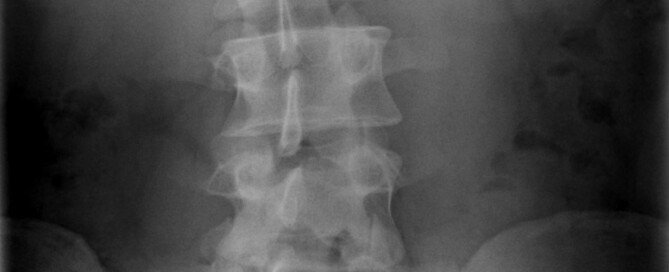
Can Lumbar Scoliosis Be Corrected Without Surgery?
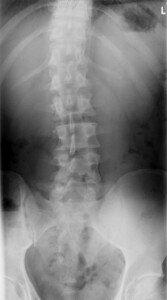
Do you really need surgery to correct lumbar scoliosis? Could there be a conservative way to deal with this problem?
“Research is inconclusive on whether nonsurgical care truly corrects [lumbar] scoliosis by reducing the curvature of the spine,” begins Dr. Jeff Langmaid, DC, Founder/owner of The Evidence Based Chiropractor, LLC, in Tampa, FLA, a research-based marketing and practice growth company that serves thousands of chiropractors across the world.
“However, many patients have received significant symptomatic relief from scoliosis through nonsurgical and conservative measures,” continues Dr. Langmaid.
“The primary conservative care options are physical therapy and/or chiropractic care.”
When might surgery be necessary for scoliosis including lumbar?
“The conversation for surgical intervention typically starts when the patient’s spine has a curvature of 45 to 50 degrees,” explains Dr. Langmaid.
“A vast majority of patients fall under the 45-degree threshold and can benefit from conservative care.
“Nonsurgical, conservative care may not always straighten the spine, but it often provides significant relief and functional improvement for patients with scoliosis.”
Keep in mind that a person may have scoliosis but also be asymptomatic—and thus not needing any treatment.
“Because of this, surgeons will typically wait until conservative care is exhausted before surgical intervention is discussed.”
Treatment and Management of Scoliosis Including Lumbar without Surgery
Dr. Langmaid explains, “Physical therapists will primarily work with a patient for strengthening and stretching muscles that support the spine.
“Strengthening and stretching the muscles around the spine may help reduce pain and prevent functional loss associated with scoliosis.
“Physical therapists may also use passive modalities, such as electric stimulation, heat or ice to reduce pain and inflammation around the unwanted curve.”
Chiropractic Medicine
“Chiropractors typically focus on the segmental motion of each vertebra,” says Dr. Langmaid.
“Patients often receive relief from the challenges of scoliosis with improved range of motion. Chiropractors may also choose to use passive modalities and/or strengthening or stretching to support their care.”
Causes of Scoliosis
The most common form of scoliosis has no known cause, but it does tend to run in families.
Less common forms may be caused by a neuromuscular condition such as cerebral palsy (which can be present at birth or acquired due to head trauma later in childhood).
An injury or infection to the spine is another possible cause of scoliosis.
 Jeff Langmaid, DC
 Lorra Garrick has been covering medical, fitness and cybersecurity topics for many years, having written thousands of articles for print magazines and websites, including as a ghostwriter. She’s also a former ACE-certified personal trainer.
.
Top image: Lucien Monfils
URINE: Cancer Fear over Colors, Odor, Burning
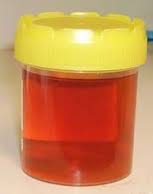
Here’s complete information about urine colors, smell, burning when you “go” and other excrement-related issues for cancer-phobes.
If you can’t get through the day without urinating into a plastic cup to inspect your excrement, even going as far as putting a color chart up against the fluid, then the articles below are for you.
However, even if you’re health conscious at a tamer level, you will learn a lot by reading these articles about all sorts of issues relating to urine.
CANCER
– Blood in urine can come from other conditions, not just cancer
– Causes of cloudy urine, how to examine your pee
COLOR
– Why your urine is the color of a blood orange

Orange, Freepik.com, rawpixel.com
– “Is my urine orange or just a dark yellow? How can I tell?”
– Over 12 causes of urine that’s the color of tea or cola
ODOR
– Does your urine suddenly smell really bad?
– Does your urine smell like rotten fish?
MISC
– Having to pee a lot can be caused by anxiety, but how?
– Why jogging can make you feel like you have to “go”
– Is your urine looking foamy lately? This needs attention.
What is pee made of anyways?
Urine is mostly water, about 95%, actually. This is surprising, yes, being that it can smell really bad at times.
The purpose of pee is to expel waste.
That remaining 5% contains urea, a byproduct of protein metabolism.
In addition there are salts, electrolytes and small amounts of creatinine, ammonia and other waste compounds.
It may also contain trace hormones, vitamins and medications the body is eliminating.
Lorra Garrick has been covering medical, fitness and cybersecurity topics for many years, having written thousands of articles for print magazines and websites, including as a ghostwriter. She’s also a former ACE-certified personal trainer.
.
Top image: Shutterstock/omicsonline

Will Vet Treat Injured Cat if Owner Cannot Pay Bill?
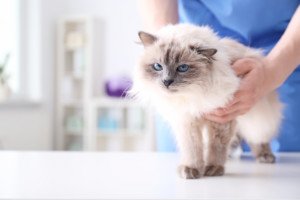
If you’re reluctant to bring an injured cat in for emergency treatment because you can’t pay the bill, here’s encouraging information from a veterinarian.
It’s one thing when a cat gets sick (ongoing diarrhea, starts limping, fur is falling out) and you’re broke and thus, don’t take your pet in to see the vet.
After all, you hope that the symptoms will go away on their own.
But what if your cat suddenly gets injured?
You’re thinking that if you bring it in for emergency treatment, you won’t be able to pay the bill.
Hold on – this situation is not as dismal as you might be thinking.
You “should know that in case of severe trauma, most states require a veterinarian to provide basic first aid, whether or not they are paid,” explains Jean Hofve, DVM, who has 20+ years’ experience in both conventional and alternative veterinary medicine, and author of the eBook, “What Cats Should Eat.”
Dr. Hofve further explains, “This is important, for example, if you see an animal that isn’t yours get injured; for instance, hit by a car.
“But if you authorize any further treatment beyond immediate stabilization, you will be expected to pay for it.”
So if your cat is hit by a car and suffers a broken leg, take it in for emergency treatment including X-rays and setting the leg — and you won’t have to pay for it.
The cat is stabilized once the broken bone is set, and at that point, any additional medical care (such as an infection a few days later) will be charged to you.
Same with surgery for organ damage sustained in a vehicular accident.
Or if your cat is gashed by a dog, again, you will not have to pay the bill for basic wound clean-up, stitching and bandaging.
The cat is stabilized at this point and you can take it home. Follow-up care, however, will be on your tab.
 Now retired from veterinary medicine, Dr. Hofve has researched pet nutrition and the pet food industry since the early 1990s. She has written dozens of articles and has been interviewed for print, radio and television around the world. She is author of the eBook, “What Cats Should Eat.”
Lorra Garrick has been covering medical, fitness and cybersecurity topics for many years, having written thousands of articles for print magazines and websites, including as a ghostwriter. She’s also a former ACE-certified personal trainer.
.
Top image: Shutterstock/New Africa
Kitten’s Swollen, Irritated Anus: Causes & Solutions
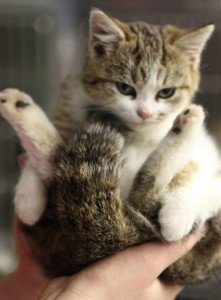
A vet explains why your kitten’s anus is swollen and irritated: MANY possible causes.
This could be due to quite a few possible causes that then indirectly lead to anal irritation and swelling.
The most likely cause is “scooting.” This is when a cat (or kitten) drags its behind along the floor or ground.
Of course, the anus will become irritated and swollen because of the repeated contact.
But the big question is: Why is your kitten scooting in the first place?
“Excessive scooting for any reason will cause swelling and redness,” says Jean Hofve, DVM, who has 20+ years’ experience in both conventional and alternative veterinary medicine, and author of the eBook, “What Cats Should Eat.”
Dr. Hofve says that scooting in a kitten may be caused by the following conditions (no particular order):
– Anal sac inflammation, infection or impaction
– Pyoderma (bacterial skin infection)
– Yeast infection
– Urinary tract infection
– Ringworm (a fungal skin infection)
– Tapeworms/coccidian/pinworms/other intestinal parasites
– Changes in gut flora (may occur after antibiotic treatment)
– Urethritis/vaginitis
– Proctitis (inflammation of the anus/rectum)
– Diarrhea or constipation
– Vaginal hairball/foreign body
– Low back pain
– Displacement behavior (cat continues scooting after the primary cause is resolved)
There are additional causes of scooting — which then could cause the anus to become swollen and irritated — but these additional causes are not as likely to occur in a kitten, but rather, a cat:
– Fleabite allergy
– Food allergy
– Atopy (inhalant allergy)
– Environmental allergy
– Inflammatory bowel disease
– Obesity
And One More Possible Reason for a Kitten’s Swollen, Irritated Anus
Dr. Hofve says that an additional cause could be “rectal prolapse and irritation from suckling by littermates (more common than you would think!). Depends to a large extent on age of kitten.”
Now retired from veterinary medicine, Dr. Hofve has researched pet nutrition and the pet food industry since the early 1990s. She has written dozens of articles and has been interviewed for print, radio and television around the world. She is author of the eBook, “What Cats Should Eat.”
Lorra Garrick has been covering medical, fitness and cybersecurity topics for many years, having written thousands of articles for print magazines and websites, including as a ghostwriter. She’s also a former ACE-certified personal trainer.
Will Yogurt Make Your Cat Sick?
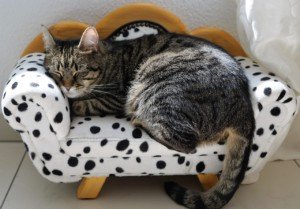
Will yogurt make your cat sick? Will yogurt — considered healthy for people — cause your cat to vomit?
Many people will give their cat milk without a second thought, and milk is a dairy product as much as yogurt is.
So it’s always interesting when people wonder if yogurt can harm their cat.
The answer to the question?
“No. Too many carbohydrates, and not enough probiotics to make a difference,” says Jean Hofve, DVM, who has 20+ years’ experience in both conventional and alternative veterinary medicine, and author of the eBook, “What Cats Should Eat.”
Dr. Hofve continues, “If your cat needs probiotics, use a good quality human probiotic supplement.”
These can be found in the supplement section of a conventional grocery store, as well as in a health food store.
They can also be ordered online.
To get your cat to consume the supplement, you can opt for chewable flavored tablets or mix the supplement in your cat’s food.
If your cat loves yogurt, however, there is no harm in feeding your pet unsweetened plain. Your pet does not need the added sugars.
An alternative is to mix the yogurt with the milk that you normally give to your cat.
You may also want to consider kefir, which is a dairy product that can accurately be described as a cross between yogurt and milk.
It’s thick like a shake. Pour this into your cat’s bowl and see what happens.
Make sure you give your pet unsweetened plain rather than fruit flavored.
Now retired from veterinary medicine, Dr. Hofve has researched pet nutrition and the pet food industry since the early 1990s. She has written dozens of articles and has been interviewed for print, radio and television around the world. She is author of the eBook, “What Cats Should Eat.”
Lorra Garrick has been covering medical, fitness and cybersecurity topics for many years, having written thousands of articles for print magazines and websites, including as a ghostwriter. She’s also a former ACE-certified personal trainer.
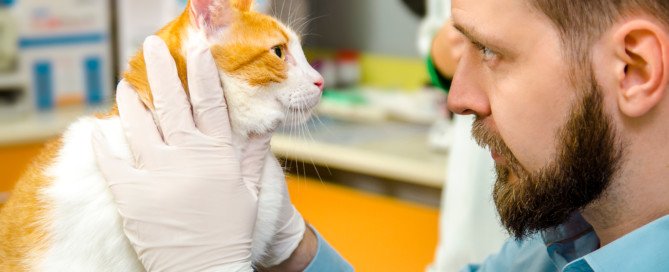
Cat Licking Off Fur: 10 Causes Named by Vet
Here’s what a veterinarian, not layperson in a forum, says about what might be causing your cat to lick off its fur.
Does your cat frequently lick off its fur, sometimes even in patches?
I asked this question to Jean Hofve, DVM, who has 20+ years’ experience in both conventional and alternative veterinary medicine, and author of the eBook, “What Cats Should Eat.”
Dr. Hofve names 10 situations that could cause a cat to lick at its fur. They are as follows:
– Fleas/fleabite allergy
– Mites (scabies, Cheyletiella, Demodex)
– Ringworm
– Endocrine disease (Cushing’s disease, other hormonal disturbances)
– Contact dermatitis (allergy to bedding, detergent, etc.)
– Food allergy
– Atopy (inhalant allergy)
– Diet (fatty acid deficiency)
– Pain
– Behavioral: anxiety, stress, OCD
As you can see, a few of these causes of excessive fur licking in a cat have sub-causes.
Solutions for a Cat that Keeps Licking off Its Fur
Dr. Hofve explains that “for parasites and medical conditions, treat the cause. Note that scabies, mites and ringworm are highly contagious to other pets and humans.
“For diet, give supplemental fatty acids (EPA, DHA, evening primrose oil).
“For psychogenic causes, environmental enrichment, flower essences, homeopathy, calming herbs, drug therapy (Prozac, etc.).”
Now retired from veterinary medicine, Dr. Hofve has researched pet nutrition and the pet food industry since the early 1990s. She has written dozens of articles and has been interviewed for print, radio and television around the world. She is author of the eBook, “What Cats Should Eat.”
Lorra Garrick has been covering medical, fitness and cybersecurity topics for many years, having written thousands of articles for print magazines and websites, including as a ghostwriter. She’s also a former ACE-certified personal trainer.
.
Top image: Phoenixns
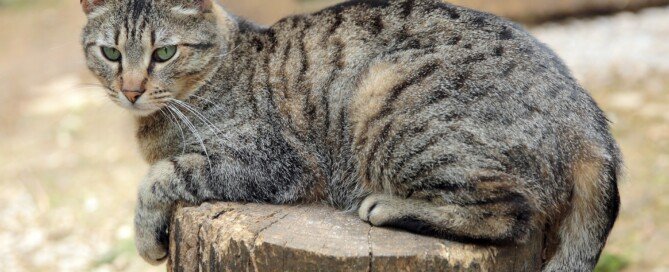
Cat Drags Butt on Floor after Pooping: Causes & Solutions
A veterinarian explains the many causes, and solutions behind why a cat drags its butt on the floor after pooping.
It’s not uncommon for a cat to drag its butt across a floor after having a bowel movement.
Cat Drags Butt on Floor after Pooping: Causes
“There are a surprising number and variety of reasons for this behavior, which we vets technically refer to as scooting,” begins Jean Hofve, DVM, who has 20+ years’ experience in both conventional and alternative veterinary medicine, and author of the eBook, “What Cats Should Eat.”
“Potential causes, from more to less common (depending on who you ask), include:
– Anal sac inflammation, infection or impaction
– Diarrhea
– Fleabite allergy
– Food allergy
– Atopy (inhalant allergy)
– Environmental allergy
– Pyoderma (bacterial skin infection)
– Yeast infection
– Tapeworms/coccidian/pinworms/other intestinal parasites
– Changes in gut flora (may occur after antibiotic treatment)
– Obesity (cat too fat to clean itself, leading to urine scald and skin irritation)
– Urethritis or vaginitis
– Vaginal hairball or foreign body
– Urinary tract infection
– Proctitis (inflammation of the anus/rectum)
– Inflammatory bowel disease
– Constipation
– Ringworm (a fungal skin infection)
So, though a few of these causes probably made you scrunch your face, the good news is that cancer is not among them.
It goes without saying — if your cat is scooting its butt across the floor, it really would be a smart idea to take your pet to the veterinarian.
Don’t take the chance that the butt dragging is being caused by something as very benign as constipation as opposed to a tapeworm infiltration.
If your cat is fat, don’t assume that this is the only reason for the dragging.
It’s always possible that dragging the butt across the floor can have more than one cause. Only a veterinarian can make this determination.
Now retired from veterinary medicine, Dr. Hofve has researched pet nutrition and the pet food industry since the early 1990s. She has written dozens of articles and has been interviewed for print, radio and television around the world. She is author of the eBook, “What Cats Should Eat.”
Lorra Garrick has been covering medical, fitness and cybersecurity topics for many years, having written thousands of articles for print magazines and websites, including as a ghostwriter. She’s also a former ACE-certified personal trainer.

Is Cancer Why Your Cat’s Vomit Is White & Foamy?
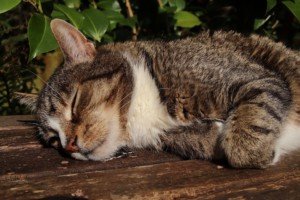
A veterinarian reveals if cancer could cause a cat’s vomit to be white and foaming.
If your cat has been retching a foamy white substance lately, perhaps you’ve wondered if this could mean cancer.
But there are actually many non-cancer causes of white, frothy vomitus, including overeating and, interestingly, not eating enough.
“Unfortunately, any one of about a zillion things” could be responsible, begins Jean Hofve, DVM, who has 20+ years’ experience in both conventional and alternative veterinary medicine, and author of the eBook, “What Cats Should Eat.”
Dr. Hofve continues, “There are more differentials (potential causes) for vomiting than for just about any other symptom, especially in cats!”
Cancer
“There are hundreds of causes [of specifically a foamy white caliber to the vomitus], and yes, cancer CAN be one of them,” explains Dr. Hofve.
“Cancer, IBD, neurological problems, etc., in the early stages can in fact produce mild, intermittent symptoms, like white foamy vomit.”
She adds, “What’s in the vomit depends on what’s in the stomach, and that can be anything from a pile of food to a little bit of foam.”
Before you jump to the conclusion that your cat’s second day of upchucking a sudsy-looking substance means your pet has cancer, there are other considerations to take note of.
Dr. Hofve notes that “if other symptoms arise, or, if it gets worse (more frequent, more severe, etc.), then the chances of serious disease go up.
If the cat hasn’t eaten lately, then the vomit will be only foam, regardless of the cause of the vomiting.
“The key is really that a mild bout of vomiting, by itself, isn’t an issue. If it’s cancer, it will eventually get worse.
“The important thing to know is that occasional, minor instances of vomiting are not usually significant as long as the cat is acting normal (no changes in eating, drinking, peeing, pooping or behavior).
“One thing I see frequently is a cat vomiting clear foamy mucus after eating grass. It may take a few tries to get out the grass itself. The same thing often happens with hairballs: multiple efforts that produce only foam, before the piece de resistance is finally ejected.”
When should you take your cat to the vet?
Dr. Hofve says, “If the vomiting persists; becomes more frequent; changes character; or additional symptoms (poor appetite, lethargy, fever, diarrhea, etc.) develop then it’s time to visit the vet.”
Other Medical Conditions that Can Cause a Cat to Throw up White Foam
Inflammatory bowel disease (IBD); inflammation of the small intestine; and disease of the liver, thyroid and kidney.
But if your cat has one of these conditions, chances are pretty good that there will be other symptoms like diarrhea and lethargy.
And more specifically, cancer of the GI tract and brain can result in a cat vomiting up some white foam.
Now retired from veterinary medicine, Dr. Hofve has researched pet nutrition and the pet food industry since the early 1990s. She has written dozens of articles and has been interviewed for print, radio and television around the world. She is author of the eBook, “What Cats Should Eat.”
Lorra Garrick has been covering medical, fitness and cybersecurity topics for many years, having written thousands of articles for print magazines and websites, including as a ghostwriter. She’s also a former ACE-certified personal trainer.
Formula for How Much Your Cat Should Urinate Daily
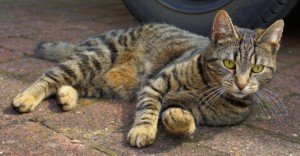
A vet provides easy way to figure out how much your cat should urinate every day.
“The normal water intake for an adult cat is 45 ml (about 1-1/2 oz) per kg (2.2 lbs.) of body weight per day,” begins Jean Hofve, DVM, who has 20+ years’ experience in both conventional and alternative veterinary medicine, and author of the eBook, “What Cats Should Eat.”
She continues, “A 10-lb. cat is about 4.5 kg, which translates to 202 ml, or about 7 oz per day (a little less than a cup).
“They will urinate out a little over half of that, 28 ml (1 oz), per kg per 24 hours. (Note: kittens are far more variable, and much more susceptible to dehydration.).”
Other Variables Affecting How Much a Cat Urinates in a Day
Dr. Hofve explains, “A cat may drink more during hot weather or after exertion, but the amount of urine may actually decrease, because the body keeps more of that water.
“Normal feline kidneys have an amazing ability to regulate urine concentration to maintain fluid balance in the body.
“Most cats will urinate 2 to 4 times per day. The key is to figure out what is normal for your cat, and watch for changes.
“An increase in number or frequency of urinations, especially with reduced volume, may indicate bladder inflammation (FLUTD), crystals or stones.
“An increase in number of urinations with the same or increased volume can signal issues including diabetes, liver disease, kidney disease, thyroid disease, and many other metabolic problems.”
Behavior Can Affect Urination Frequency in a Cat
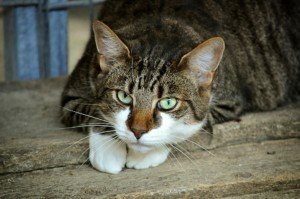
A cat may urinate outside the litterbox due to anxiety or territorial marking.
Stressful situations, such as changes in the household, new pets or altered routines can trigger anxiety-related urination.
This behavior is often a response to feeling unsettled or threatened.
Additionally, cats may mark their territory by urinating in various areas to assert dominance or claim their space, particularly if they perceive other animals or environmental changes as a challenge to their territory.
These behavior issues, though, are about when and where the urine is deposited, and even frequency—but not the volume.
Dr. Hofve says “the amount of urine produced per day does not change very much.”