
Why Isn’t Surgery Recommended for Grade 2 AC Separation?
Since the ligaments are torn in a grade 2 AC separation, why isn’t surgery the treatment of choice?
One day I was doing stool stepping exercise in my living room.
Suddenly, it were as though an unseen force yanked me off the stool while I had one foot on it and threw me to the floor.
It was over in a split second; too quickly for my athletic body to react. I landed on my shoulder and it hurt like hell.
I diagnosed myself with a possible AC separation, either a grade 1 or 2.
Separation of the acromioclavicular joint is usually caused by falling on one’s shoulder — which can happen after falling from a height or being tossed from a bicycle or skateboard.
A more serious injury (higher grade) may occur from a vehicular accident.
In a grade 2 AC separation, ligaments are torn from the bone.
A ligament is a type of connective tissue that connects bones to other bones at joints, providing stability and support.
Ligaments are composed primarily of dense, fibrous collagen fibers, which give them strength and flexibility.
Now in the case of an ankle injury in which ligaments are actually severed, surgery is the standard treatment. Same with the ligaments in the knee.
So I wondered why, in the case of a grade 2 AC injury, surgery isn’t performed.
“It is not recommended because it has not been shown to significantly improve the average person’s long-term function,” says Jonathan Oheb, MD, North Valley Orthopedic Institute, Chief of Orthopedic Hand and Upper Extremity Surgery.
“However, with a high demand patient who continues to have symptoms after a course of conservative treatment, surgery would then be an option.”
In my case, the injury turned out to be a hairline fracture of the clavicle.
This type of fracture is typically caused by trauma or impact, such as a fall or direct blow to the shoulder.
The symptoms were identical to that of a grade 1 or 2 AC joint trauma save for a visible deformity.
Treatment for a hairline clavicle fracture often focuses on pain management and immobilization of the shoulder, commonly with a sling or brace.
My injury healed beautifully with patience plus a homemade sling.
Standard Treatment for a Grade 2 AC Joint Injury
- Rest from activity
- Use of a sling
- Cold packs
- Painkillers
- Physical therapy
The above protocol works superbly; surgery is not required unless the injury is really severe.
Prevention of an AC joint separation is not related to physical fitness.
It’s related to activity. Be extra careful when you’re involved in activity that has the potential to cause a fall.
This includes hiking downhill and walking down an outdoor staircase that’s coated with a thin, often not very visible, layer of ice.
 In addition to hand, elbow and shoulder care, Dr. Oheb provides comprehensive surgical and nonsurgical treatment for all orthopedic conditions of the hip, knee and ankle, including broken bones and injuries. jonathanohebmd.com
 Lorra Garrick is a former personal trainer certified through the American Council on Exercise. At Bally Total Fitness she trained women and men of all ages for fat loss, muscle building, fitness and improved health.
Is Any Exercise Restricted for Grade 2 AC Separation Recovery?

If you have a full recovery from a grade 2 AC separation, is there any exercise that you should never try to do ever again, being that the ligament is no longer attaching two bones, and instead is in a state of perpetual tear?
I was inspired to write this article after reading in a forum about a young man’s concern about deadlifting with a grade 2 AC separation.
He was afraid that “there was nothing holding it together,” referring to the joint, when he was picking up a heavy barbell off the floor. He was afraid that something would just break off in his shoulder joint.
Take a look at the diagram below showing the grades of an AC joint injury.
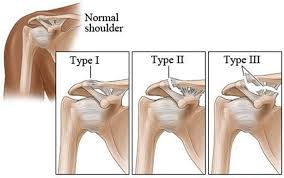
Any deadlifting or other weightlifting enthusiast will certainly wonder if, after the injury heals (no longer painful, swollen or bruised; no restriction of motion), any strength training exercises are permanently off-limits.
“There are a number of ligaments that support the acromioclavicular joint,” says Jonathan Oheb, MD, North Valley Orthopedic Institute, Chief of Orthopedic Hand and Upper Extremity Surgery.
“Including the joint capsule as well as the coracoclavicular ligaments,” adds Dr. Oheb.
“In this case there is a likely tear of the AC ligament, but the CC ligaments are still intact and likely sprained. [A sprain is an injured ligament that is not actually severed or torn.] Once they heal there should be no restrictions.”
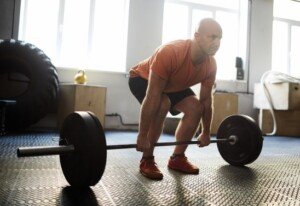
Freepik.com. pressfoto
This means that if you were deadlifting 400 pounds before your grade 2 AC separation, you can expect to eventually be deadlifting 400 pounds again.
As well as any of the following for max effort:
Bench press, Overhead press, Bar dip, Bent-over barbell row, Rock climbing, Chopping wood
This may take time with a grade 2 AC joint injury. Do not get ahead of yourself.
And while performing the deadlift, be sure to place the bar back onto the floor with control — rather than banging it to the floor, since having control is better for the shoulder and back structures.
In addition to hand, elbow and shoulder care, Dr. Oheb provides comprehensive surgical and nonsurgical treatment for all orthopedic conditions of the hip, knee and ankle, including broken bones and injuries. jonathanohebmd.com
Lorra Garrick is a former personal trainer certified through the American Council on Exercise. At Bally Total Fitness she trained women and men of all ages for fat loss, muscle building, fitness and improved health.
.
Top image: Shutterstock/wavebreakmedia

How to Get Back into Bodybuilding with Grade 2 AC Separation

If you suffer a grade 2 AC separation and are a bodybuilding enthusiast, you can expect to eventually resume your workout regimen once your injury heals.
However, you must be patient. You must not rush back into the bench presses, dumbbell presses, overhead barbell presses, dips, etc.
“In general, ligament tears and sprains can take up to 12 weeks to heal,” says Jonathan Oheb, MD, North Valley Orthopedic Institute, Chief of Orthopedic Hand and Upper Extremity Surgery.
Dr. Oheb adds, “I would recommend gradual progressive weight bearing after that.”
This means using a very light barbell for bench pressing, and small dumbbells for chest and shoulder pressing.
How Much Weight Are We Talking Here?
Just how much weight you should lift, once you are cleared to do this (after completing physical therapy exercises) will be determined by your previous level of strength.
Have you ever sprained an ankle? This is a ligament injury.
If you’ve ever experienced this, you know how long a bad sprain can take to heal before you’re running up and down hills again or sprinting across a parking lot in the rain without any discomfort or instability.
Even dashing up and down a single flight of stairs needs to be put on hold for a while when you have a sprained ankle.
And that’s without an actual severing of the ankle ligaments.
In a grade or type 2 AC separation, the ligament is actually severed, separating one part of the clavicle from the other, leaving a gap there — and that gap is permanent.
So you must be patient and not get ahead of yourself.
Sure, it stinks having to limit yourself to light weights, but in the long run you’ll be glad that you did.
As a bodybuilder, you may even suffer some “deflation” of your physique.
Be prepared mentally for this so that if you begin really noticing this, you’ll be in a better place mentally to continue with light weight workouts.
So if you keep things in perspective, you will regain your pre-injury bodybuilding status despite having a permanent grade 2 AC separation.
In addition to hand, elbow and shoulder care, Dr. Oheb provides comprehensive surgical and nonsurgical treatment for all orthopedic conditions of the hip, knee and ankle, including broken bones and injuries. jonathanohebmd.com
Lorra Garrick is a former personal trainer certified through the American Council on Exercise. At Bally Total Fitness she trained women and men of all ages for fat loss, muscle building, fitness and improved health.

Doctor Says Exercise Won’t Prevent Carpal Tunnel Syndrome

Unfortunately, says Jonathan Oheb, MD, there’s no exercise that can prevent carpal tunnel syndrome.
Symptoms of CTS
- Tingling and/or numbness in the thumb, index and third fingers, and the thumb-side of the fourth finger.
- Pain in the wrist
- A weakened grip
This condition is verified with an EMG: electromyography.
The EMG will detect if there’s a disruption in nerve impulses running through the carpal tunnel.
I was wondering if exercises like hand grips (using hand grippers), wrist rolls with a dumbbell or barbell, or reverse curls might have a preventive effect on carpal tunnel syndrome.
Dr. Oheb is with the North Valley Orthopedic Institute, and is Chief of Orthopedic Hand and Upper Extremity Surgery.
Dr. Oheb says, “There are no exercises that can prevent carpal tunnel syndrome.”
Why can’t any certain exercises prevent carpal tunnel syndrome?
Dr. Oheb explains, “Carpal tunnel syndrome is from elevated pressure within a confined space. Exercises will not lead to a risk reduction. These two are unrelated.”
Is there anything to reduce the risk of developing CTS?
See if you can use your keyboard off of your lap. This takes pressure off the wrists.
At times your wrists are lying comfortably on your upper thighs while your fingers are using the keyboard, even though there will be times when your wrists will be disconnected from your thighs.
Consider using a mouse that has a track ball.
This allows you to keep your hand in one spot while using the mouse, while your thumb moves the tracking ball.
The rest of your hand is on the contoured, large mouse. Your fingertips control clicking.
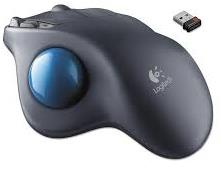
Trackball mouse. There are different kinds, but all reduce repetitive stress on the nerves in your wrist.
Though there may be exercises that can make your symptoms of carpal tunnel syndrome feel better, there is no known exercise that guarantees you can prevent this common condition.
In addition to hand, elbow and shoulder care, Dr. Oheb provides comprehensive surgical and nonsurgical treatment for all orthopedic conditions of the hip, knee and ankle, including broken bones and injuries. jonathanohebmd.com
Lorra Garrick is a former personal trainer certified through the American Council on Exercise. At Bally Total Fitness she trained women and men of all ages for fat loss, muscle building, fitness and improved health.
.
Top image: Freepik/krakenimages.com

Can Carpal Tunnel Syndrome Cause Shoulder Pain?

Are you wondering if the pain in your shoulder is from carpal tunnel syndrome?
Carpal tunnel syndrome starts in the wrist and involves a compression of the median nerve.
“Carpal tunnel syndrome cannot cause shoulder pain per se,” says Jonathan Oheb, MD, North Valley Orthopedic Institute, Chief of Orthopedic Hand and Upper Extremity Surgery.
However, one can often get symptoms of referred pain up the arm from median nerve compression distally at the wrist.
“This is not common but can sometimes present as a patient complaint.”
“Referred” pain means that the sensation of the pain is in an area other than the source of the pain.
There is nothing in that actual area that is causing the discomfort.
An example of referred pain is a pinched nerve in the neck causing a headache behind the eye.
There is nothing wrong with the structures behind the eye in such a case; the origin of the pain is the compressed nerve in the neck.
So in carpal tunnel syndrome, likewise, the origin of the problem (compressed nerve) is in the wrist, but in uncommon cases, the patient can get a referral pain in the shoulder.
In addition to hand, elbow and shoulder care, Dr. Oheb provides comprehensive surgical and nonsurgical treatment for all orthopedic conditions of the hip, knee and ankle, including broken bones and injuries. jonathanohebmd.com
Lorra Garrick is a former personal trainer certified through the American Council on Exercise. At Bally Total Fitness she trained women and men of all ages for fat loss, muscle building, fitness and improved health.

Benign Cause of Food Tasting Soapy

If your food sometimes tastes soapy, there may be a perfectly benign explanation for this.
Every so often I was noticing a soapy taste to my food.
I had always suspected that it was due to residue from the bar of soap at my kitchen sink making its way to the food.
When I began getting very strict about this, the periodic soapy taste disappeared.
What to Do if Your Food Tastes Soapy

Make a note of which foods seem to have the taste of soap in them.
After a while you may notice that it’s only certain foods. In my case it was only steamed vegetables.
Then ask yourself if those particular foods can, in even the most remote sense, come in contact with either dishwashing liquid or bar soap.
Also ask yourself if there’s any tiny soap splatter going on when the kids are helping you wash the dishes or just playing around.
Tiny drops of splatter could be making their way onto your bowl of fruit sitting on the counter.
In my case, I was washing my hands with the bar soap in the sink — and the sink was empty — there were no utensils or anything there.
Then at some point after, I’d use a strainer to rinse some chopped broccoli or cauliflower, then place the strainer over a pot of boiling water.
When I was done, I’d place the strainer in the sink. The bottom of it, of course, was making contact with the sink — where hours earlier, I had washed my hands with bar soap.
Though water had been running during that task, and also during the rinsing of the vegetables, it wasn’t enough to completely obliterate invisible soap residue on the sink that resulted from washing my hands.
And this residue was getting on the strainer. Next time I used the strainer, that residue would then make contact with the vegetables — and stay on them — even though I was rinsing them.
Then I’d steam them — and the residue would remain, and ultimately make its way to my mouth when I ate the vegetables — and hence, I’d taste soap.
It takes only a very tiny, tiny amount of soap residue to be detectable by your tongue.
Another way that soap can get into your food is if soap bubbles (that you may not see) are being released, and land on a plate that’s been sitting out, and then you put food on that plate — and it picks up the residue from the bubbles.
A fork, knife or spoon, left in a sink where you had been washing your hands with soap, could easily pick up invisible residue.
Then you use that utensil to eat, and voila, your food tastes soapy.
Prevent a Soapy Taste in Your Food
• Make it a rule: Any utensil or other food implement that ends up in the sink—you don’t use until it has been washed with the dishwasher.
If you accidentally place a perfectly clean item there, you can’t eat with it; assume it has soap residue, even if the last time you used soap in that sink was a few days ago.
• If you hand-wash your dishes, with a sink full of suds, make sure that there are no clean plates, utensils or glasses within “bubble-landing range.”
Have them all in the cupboards or drawers. In short, nothing that you’re going to be using to eat should be capable of catching airborne bubbles.
• Watch where you place utensils including spatulas. Did you just wipe the counter with a soapy substance to clean it? Then you placed a butter knife there?
Then you use that knife to put butter on your toast — and your toast tastes kind of soapy?
 Lorra Garrick has been covering medical, fitness and cybersecurity topics for many years, having written thousands of articles for print magazines and websites, including as a ghostwriter. She’s also a former ACE-certified personal trainer.
.
Top image: Freepik.com
Cloudy Urine and Changing Colors: Serious vs. Harmless
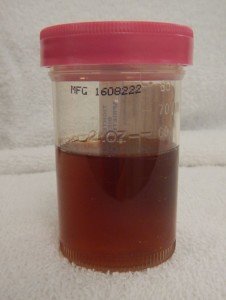
Cloudy urine can mean trouble.
So can certain colors of urine like cola colored or tea colored.
Cancer can cause urine to change colors. So can many other conditions including very strenuous exercise (dark color).
“Cloudy urine can be due to dehydration (concentrated urine), urinary tract infection (bacteria), blood in the urine, crystals in the urine (such as patients with kidney stones), elevated urine glucose (sugar) or medications,” explains Susan L. Besser, MD, with Mercy Medical Center, Baltimore; Diplomate, American Board of Obesity Medicine and board certified by the American Board of Family Medicine.
“Medications can change urine color,” continues Dr. Besser. “For example, OTC bladder infection medications; ‘AZO’ can turn urine orange; some vitamins can turn urine green or blue.”
Dehydration, even though you may not feel thirsty, can result in orange urine – which can be mildly murky or “cloudy,” or crystal clear.
Wide Color Range of Urine
Your flow can appear in a wide range of colors: cloudy, clear-yellowish, light yellow, medium yellow, dark yellow, bright yellow, orange, pinkish, red, maroon, tea, light brown, dark brown, and of course — green, greenish-blue and blue.
Sometimes, the color of the flow can be the gateway to your health or your body’s current medical or dietary status, be it cloudy, bluish-green or dark brown.
When it is bright, dark yellow or light orange, this usually means you are dehydrated, even though you may not feel thirsty.
To know if you’ve been getting enough water, simply check the color of your flow.
Flow should be a light yellow, which can also be described as clear-yellow, medium yellow or — in cases of well-hydration, like ginger ale.
Cloudy Urine: When to Worry
This is a Q & A interview with a urologist – Go to article
——-

Shutterstock/Igor Nikushin
Orange Urine: Causes, Solutions
A urologist explains causes and what to do – Go to article
——-
Top 8 Causes of Blood in the Urine
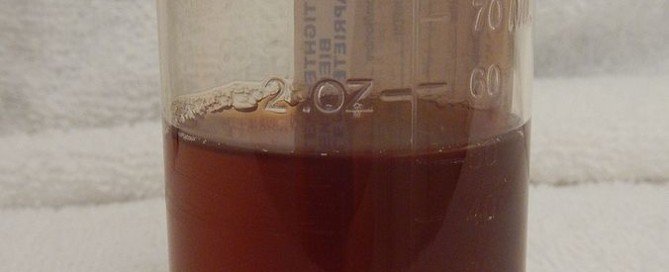
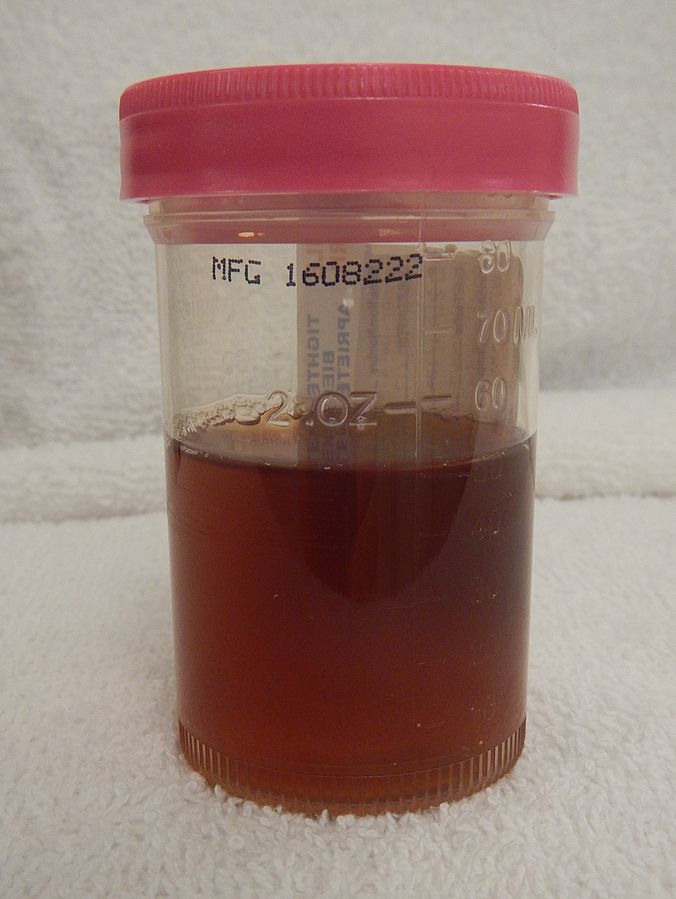
The image at the top of this article shows “gross hematuria,” which means visible blood in the urine.
A urologist provides information including about cancer as a potential cause – Go to article
——-
Dark or Brown Urine
Causes and solutions are given by a urologist. Most causes of dark or brown flow are serious, and there are quite a few causes – Go to article
All in all, the causes of color changes can either be quite benign and very interesting; or, are a symptom of a moderately-serious or easily treatable medical condition; or, are a symptom of a disease that can kill you.
Thus, it’s important to keep tabs on the color of your flow, and it will help to know which colors are the colors you never need to worry about.
Foamy Urine
Flow can also be foamy, and here’s information from a urologist about that.
Urologist Defined
A urologist is a medical doctor who specializes in the urinary tract.
You should check the color of your urine on a regular basis, and also check to see if it’s excessively murky or cloudy. Catching your urine in a clear plastic cup will allow you to accurately see what it looks like.
More on Blue or Green Urine
Explained by a urologist: Go to article
 Dr. Besser provides comprehensive family care, treating common and acute primary conditions like diabetes and hypertension. Her ongoing approach allows her the opportunity to provide accurate and critical diagnoses of more complex conditions and disorders.
Lorra Garrick is a former personal trainer certified by the American Council on Exercise. At Bally Total Fitness she trained clients of all ages for fat loss, muscle building, fitness and improved health.
Top image: James Heilman, MD
How to Relieve Muscle Cramps from Clavicle Fracture

Here is a non-drug way to instantly relieve muscle cramps from a clavicle fracture.
One day I experienced a hairline fracture to my clavicle — after having a freak fall while using an exercise stool for high-step aerobics.
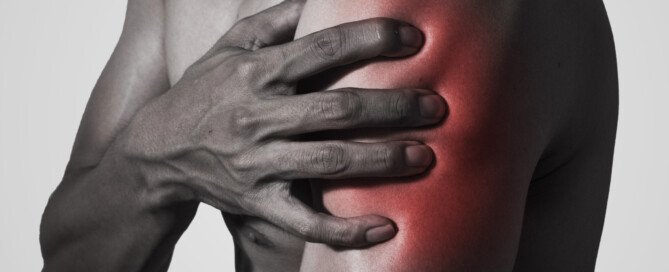
Multiple times a day I’d get sudden cramping or a deep aching in the surrounding tissues: deltoid, triceps and the muscles of the scapula such as the middle trapezius.
Instant Relief from Muscle Cramps Caused by Clavicle Fracture
Most people might not ever think to massage the aching area. But that’s what I decided to do.
Give the cramping area your deepest, hardest massage — but do not massage or press down on the clavicle itself.
Knead and work the aching muscles.
For me, one minute or so of this made the cramps disappear — and they would stay gone for quite a while.
There is a caveat to this solution: Your fingers/wrist will fatigue quickly — unless you’re a trained massage therapist, rock climber or piano player.
The good news is that you need to bare with the hand fatigue for only about a minute.
Be vigorous and deep, like an expert massage therapist would be.
For those of you versed in anatomy, you’ll want to get a good kneading of the infraspinatus and teres minor (if these areas are aching).
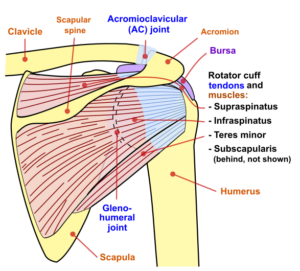
Back of the shoulder. Jmarchin, CC
For those of you familiar with the art of massage, you may discover a few “knots” in these areas. Press upon them and hold for 10 seconds to release them.
No kidding, 100 percent of the time I massaged my shoulder “complex” upon developing cramping or aching in that area, these symptoms full-out disappeared after only a minute or so.
My physical therapist said this was because the massaging promotes circulation — which is reduced when the shoulder is immobile for too long — which a person with a clavicle fracture may feel inclined to do throughout the day.
Lorra Garrick is a former personal trainer certified through the American Council on Exercise. At Bally Total Fitness she trained women and men of all ages for fat loss, muscle building, fitness and improved health.
.
Top image: Shutterstock/pickingpok

Cause of Muscle Cramping from Clavicle Fracture

Do the muscles around your shoulder cramp up since you’ve had a clavicle fracture?
How does a bone break cause muscle cramping?
While your clavicle fracture heals, you may be experiencing sudden cramping or deep aching of the muscles surrounding the joint: deltoid, triceps, upper back muscles on the side of the injury.
I recently suffered a hairline clavicle fracture. I was getting frequent attacks of cramping or deep aching while sitting at my computer and also while walking on my treadmill desk. Sometimes the cramps would occur while I was watching TV.
What do these three activities all have in common? Minimal movement of the shoulder.
Now you’re probably thinking, “Well, the GOOD shoulder doesn’t move much, either, save for handling the mouse and hitting Return on the keyboard.
Actually, if you’re sitting at your computer or TV with a clavicle fracture, the “good” shoulder is going to be moving more. The good shoulder will probably be handling the remote.
In my case, my good shoulder was also my dominant arm, so this meant that the injured side was especially immobile.
What causes the muscles around the shoulder in a fracture clavicle patient to cramp up or suddenly develop deep aching?
My physical therapist told me it was…inactivity. Certainly, do not engage in movements that promote the pain of the injury, but at the same time, don’t overprotect the shoulder by freezing it up while you’re watching TV or at the computer, either.
Medical Doctor’s Explanation
I wanted a doctor’s take on this, so for this article I asked Carolyn Dean, MD, ND, Medical Advisory Board Member, Nutritional Magnesium Association at nutritionalmagnesium.org.
Here is what Dr. Dean explains: “The force that causes a fracture can leave the muscles and tendons inflamed and painful.
“Also any fracture will cause inflammatory products to flood the area, increase the lymph node size and lymph drainage and cause referred pain to the shoulder and triceps.”

Dr. Dean, in practice for 35+ years and author of “The Magnesium Miracle,” is also a naturopath, nutritionist, herbalist, acupuncturist, lecturer and consultant.
Lorra Garrick has been covering medical, fitness and cybersecurity topics for many years, having written thousands of articles for print magazines and websites, including as a ghostwriter. She’s also a former ACE-certified personal trainer.
.
Top image: Shutterstock/Photographee.eu



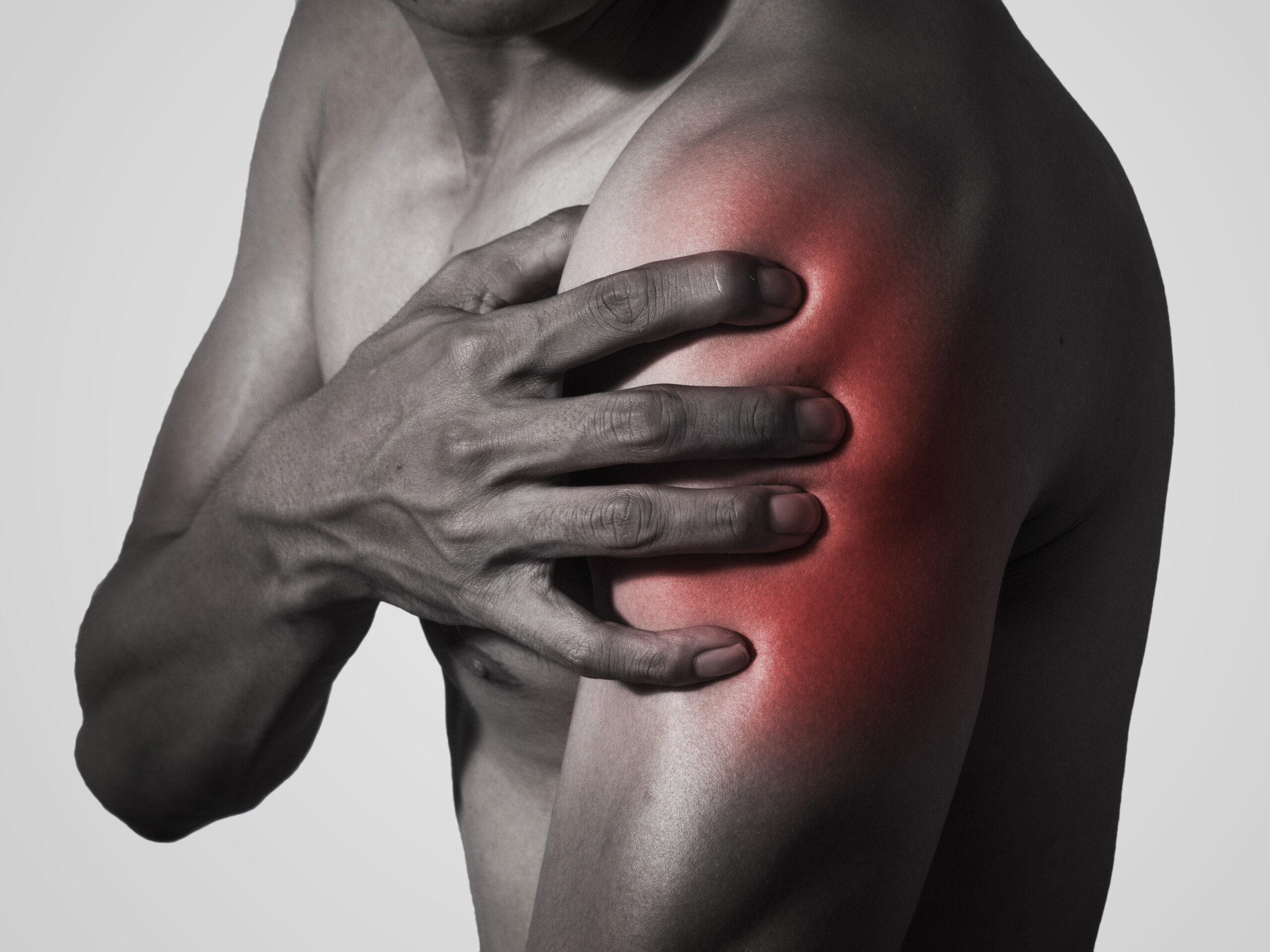


Cause of Morning Pain from a Clavicle Fracture

Do you experience morning pain in your shoulder due to a clavicle fracture?
The pain may be described as a deep soreness, and is evident when the patient gets up to exit the bed.
It will also be evident if they move the arm around in bed. This morning pain or soreness may feel as though the patient had spent the entire night sleeping smack on the shoulder with everything getting scrunched.
However, this pain upon awakening can easily occur if the patient has spent the entire night sleeping on their back, with their arm lying straight out at their side.
What is it about a clavicle fracture that causes morning arm pain or soreness?
Five months ago I sustained a hairline fracture of my clavicle. I asked the physical therapist what causes the morning soreness.
He said it’s due to the injured area overnight becoming stiff and accumulating fluid (even though you may not see any swelling).
The soreness quickly dissipates or reduces once you’re up and about (i.e., moving the shoulder, even if it’s in a sling; there is still more movement than if you’re lying there in a deep sleep).
I asked him why this morning pain is greatly reduced if I sleep with my arm propped up on a pillow that’s on my chest. He said it’s because of making it more comfortable.
That last answer doesn’t quite explain it for me, but I decided to post this article anyways, because his first answer makes sense.
The PT added that despite morning pain in the patient who has a clavicle fracture, this soreness does NOT mean that anything was injured overnight.
Sports Doctor’s Response
“Fractures or broken bones typically cause pain when there is abnormal movement of the broken bone ends rubbing against each other,” says John-Paul H. Rue, MD, orthopedic sports medicine surgeon with Orthopedics and Joint Replacement at Mercy Medical Center in Baltimore, MD.
“It’s possible that at night, without realizing it, you may be rolling over on your shoulder or somehow causing increased pressure on the fracturef clavicle, causing stress at the fracture site, and maybe even movement, leading to pain.”
 Dr. Rue specializes in prevention and treatment of sports and exercise injuries. His primary focuses are knee, shoulder and elbow injuries including ACL and cartilage injuries, rotator cuff injuries and overuse tendonitis.
Lorra Garrick is a former personal trainer certified through the American Council on Exercise. At Bally Total Fitness she trained women and men of all ages for fat loss, muscle building, fitness and improved health.
.