Proton Beam vs. Cyberknife for Prostate Cancer: Pros & Cons

There is one marked difference between proton beam radiation and cyberknife.
men with prostate cancer are understandably concerned over which treatment modality will be most effective. (more…)
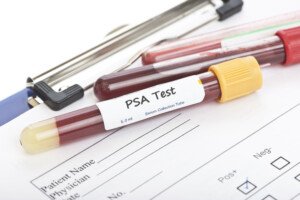
How Is It Possible to Have Really Low PSA & Prostate Cancer?

A very low PSA but aggressive prostate cancer?
Yes, for three reasons. “Most prostate cancers produce PSA,” says Sean Cavanaugh, MD, a radiation oncologist with GenesisCare, a premier provider of cancer and urology care.
But there are times when prostate cancer is present along with a low PSA value.
“However, it is possible for a cancer cell line to dedifferentiate (mutate) and stop PSA production,” continues Dr. Cavanaugh.
“This could result in a patient with cancer, perhaps even a very aggressive cancer, but a normal or even low PSA. This is quite rare.
“In addition, men on anti-testosterone therapy might register a low or even zero PSA while still having viable cancer cells.
“Finally, post-prostatectomy or post-radiation patients generally have a low PSA, but as time passes some learn that they still have active cancer.”
The PSA, which is obtained via a blood test and stands for prostate specific antigen, can also be high in a man who does not have any malignancy.
Nevertheless, this biomarker is a valuable tool to physicians as a guide for how to proceed next in a patient who’s experiencing concerning symptoms such as frequent urination, difficulty with starting or stopping a urine stream, pain with urination or ejaculation, blood in the urine and pain in the lower back.
The American Cancer Society recommends that men who have an average risk of prostate cancer begin getting tested at age 50 if they’re already healthy enough to expect to live another 10 years.
For additional information on PSA testing as a marker for prostate cancer, contact CTCA at (855) 993-3381.

Dr. Cavanaugh regularly performs high-dose and low-dose rate brachytherapy, plus all aspects of highly conformal external beam radiation therapy. He has been published in numerous journals including Prostate Cancer, American Journal of Brachytherapy, The International Journal of Radiation Oncology, and Technology in Cancer Research and Treatment.
 Lorra Garrick has been covering medical, fitness and cybersecurity topics for many years, having written thousands of articles for print magazines and websites, including as a ghostwriter. She’s also a former ACE-certified personal trainer.
.
Top image: Freepik.com, pressfoto
Best Diet to Help Treat Prostate Cancer During Radiation

If you’re undergoing radiation treatment for prostate cancer, here’s how you should change your diet to ensure that both diet and medical treatment work most effectively.
During Radiation Treatement: What to Eat and Why
“Depending on the type of radiation and technique used, some radiation treatments to the pelvis/prostate can often lead to urinary dysfunction and/or diarrhea,” says Crystal Langlois, RD, LD, Director of Nutrition, Cancer Treatment Centers of America at Southeastern Regional Medical Center.
“Proper hydration, particularly with water, and limiting foods or beverages with caffeine can be effective,” continues Langlois.
“It may be beneficial for patients to maintain adequate hydration during the day while decreasing fluid intake at night to reduce frequency of getting up to use the restroom at night.”
Diarrhea
“Dietary management to help minimize diarrhea may require restricting milk products or purchasing low lactose products.
“Following a low residue diet can also be helpful to decrease frequency of bowel movements.
“A low residue diet includes avoiding greasy fatty fried foods, restricting fiber intake — particularly whole grains, nuts, corn and legumes.
“If watery diarrhea persists, adding soluble fiber such as applesauce or psyllium products can help to bulk your stool.
“Choosing canned fruits/veggies in place of fresh or frozen are also beneficial to decrease frequency of bowel movements.
If diarrhea becomes severe, electrolyte imbalances can occur. It may be beneficial to add clear juice, broth or electrolyte replacement drinks to your diet and consult your physician if medication or pharmacologic intervention needed.”
Not Experiencing Diarrhea?
During prostate cancer treatment or any cancer treatment for that matter, healthy diet is crucial to aid in recovery.
For those not suffering from diarrhea induced by radiation, fresh produce should be part of the dietary plan.
Furthermore, the diet you should have during prostate cancer treatment (save for special considerations to manage diarrhea) is the same diet anyone should have to lower the risk of cancer and other disease.
• Plant based – fresh produce as the main course and meats on the side
• Emphasis on foods in their natural state (e.g., an apple rather than bottled apple juice)
• High in fiber (unless, again, you’re struggling with diarrhea)
• Inclusion of fish
• Whole grains instead of processed
• Minimal intake of added sugars, if at all
• Poultry and beef in whole natural form rather than processed
• Grass-fed beef rather than grain-fed
• Beans, nuts, raisins and fruit for snacks rather than candy, cookies, chips or other munchies
For additional information on how to eat your healthiest during prostate cancer treatment, contact Cancer Treatment Centers of America at (855) 993-3381.

Crystal Langlois
Lorra Garrick has been covering medical, fitness and cybersecurity topics for many years, having written thousands of articles for print magazines and websites, including as a ghostwriter. She’s also a former ACE-certified personal trainer.
Top image: Shutterstock/Chinnapong
Can a Prostatectomy Cause Permanent Incontinence?

If you have prostate cancer, there’s no way around a prostatectomy—it has to be done—but can a prostatectomy really make you permanently incontinent? (more…)

Is Thickening of the Uterine Lining Always Cancer?

One of the things that women fear most with a pelvic ultrasound is the finding that their uterine wall is thickened; cancer comes to mind.
And in fact, uterine (endometrial) cancer in most cases begins with a thickened uterine lining. (more…)

Should a Woman Have Both Breasts Removed if One Has Cancer?

Numerous studies show that women over-panic when cancer is found in one breast and unnecessarily have the other healthy breast removed; no survival benefit has been proven. (more…)
Digital Mammograms More Often Miss Cancer in Dense Breasts
Digital mammograms can miss breast cancer; the rate of false negatives is higher in women with dense breast tissue. (more…)

How Dangerous Is High Blood Pressure in Teens?

Teens can get very sick from high blood pressure; a young body offers NO protection against the dangers of high blood pressure.
“High blood pressure in teens is dangerous,” says Dr. Lisa Lewis, MD, a board certified pediatrician in Fort Worth, Texas, and author of “Feed the Baby Hummus, Pediatrician-Backed Secrets from Cultures Around the World.”
Dr. Lewis explains, “It’s called ‘the silent killer’ because many teens and adults don’t realize their blood pressure is high.
“The longer a teenager sits with high blood pressure, the more the risk of complications occurs.
“Adolescent high blood pressure may cause damage to the heart and blood vessels.
“Prolonged high blood pressure in teens into adulthood dramatically increases the risk of heart attack, aneurysm and stroke later in life.”
An aneurysm is a bulge in a blood vessel. This bulge can occur at any point along the aorta or in the brain. If it ruptures, death can occur within minutes.
It Can’t Be Said Too Much
Teens can suffer from organ damage stemming from high blood pressure, says the American Heart Association Council on Hypertension.
• Damage to the heart
• Damage to the blood vessels
“At any age, high blood pressure can be dangerous for the body,” continues Dr. Lewis.
“Although not as common, some teens with high blood pressure have undiagnosed kidney disease, and this could lead to kidney failure.”
Study Shows High Blood Pressure Is Harmful to Teenagers
• 180 teens 914-17) were in the study, led by Elaine M. Urbina, MD, director of preventive cardiology, Cincinnati Children’s Hospital Medical Center, OH.
• Organ damage (heart, vessel) was found in the mid-risk and high-risk groups.
“Some adolescents may have organ damage related to blood pressure and are not targeted for therapy,” points out Dr. Urbina in the Sept. 2017 report.
Imaging of the heart for teens with hypertension may prove useful to determine the extent of therapy.

Having 25+ years’ experience, Dr. Lewis completed her pediatrics residency at Texas A&M University Health Science Center, Scott and White Memorial Hospital. For two years afterward she was assistant professor in the department of pediatrics at Texas A&M University Health Science Center.
 Lorra Garrick has been covering medical, fitness and cybersecurity topics for many years, having written thousands of articles for print magazines and websites, including as a ghostwriter. She’s also a former ACE-certified personal trainer.
.
Top image: Freepik
Source: sciencedaily.com/releases/2017/09/170917150952.htm

What Is an Involuting Ovarian Cyst & Can It Mean Cancer?

The term “involuting cyst” can seem worrisome to a woman who’s concerned about ovarian cancer.
She may see “involuting” in her medical report or hear her doctor use it but be afraid to ask what it means. (more…)

Should You Worry About Endometrial Cells on Pap Smear Results?

Endometrial (uterine) cells may turn up on a Pap smear, making the patient think of possible uterine cancer.
Especially if her doctor wants a biopsy done despite a normal-looking ultrasound, this will leave the patient quite unnerved. (more…)