
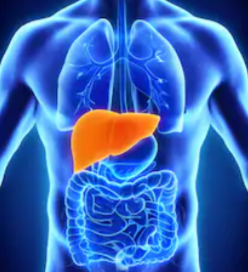
Acute Liver Failure Secondary to Heart Failure Always Terminal?
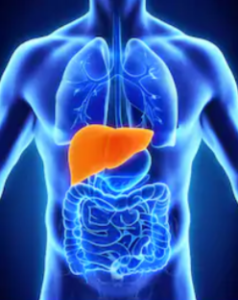
In acute liver failure (hypoxic or ischemic liver) that’s caused by chronic heart failure, the damage to the liver is not intrinsic to the organ but rather, the result of chronically poor blood flow.
An intrinsic problem might be a blood clot in the liver, toxicity from drugs, poison from mushrooms or a viral infection.
But a structurally normal liver can suffer injury over time from reduced blood flow due to a weakly pumping heart.
Poor blood flow to an organ is called hypoperfusion. In chronic heart failure it’s the kidneys that usually show signs of poor function (via the creatinine blood test).
Normally, cardiologists do not wonder how the liver is doing in chronic heart failure patients; they are more concerned about the kidneys because these much smaller organs are more likely to suffer insufficiency due to hypoperfusion.
But it happens every so often that in some chronic heart failure patients, their kidneys, though insufficient, are stable over years, but suddenly their liver crashes.
- There’s no history of alcohol, and tests for hepatitis viruses are negative.
- A CT scan shows no intrinsic issues such as cancer.
- The diagnosis is acute liver injury driven by poor cardiac output.
The aged weak liver has finally given up the good fight against years of hypoperfusion.
When this happens, is this acute liver failure—especially in a very elderly patient—always terminal?
After all, how do you fix hypoxic liver in this case? Double the heart’s ejection fraction with a safe pill? This medical technology is nowhere in sight.
“Acute liver failure is used to described a severe form of acute liver injury that is defined by the presence of certain clinical findings,” begins Daniel Motola, MD, a top board certified gastroenterologist and hepatologist providing same-day and next-day services in NYC with Gotham Medical Associates.
• Hepatic encephalopathy (cognitive impairment due to liver failure)
• Elevated INR > 1.5 (measure of blood clottability)
• Evidence of severe hepatic injury marked by highly elevated liver enzymes (aminotransferases).
• In some cases the liver enzymes may not be as high as expected, while the other two clinical findings are clearly in place.
Dr. Motola continues, “The term ‘acute liver failure’ is used to describe the above findings in someone without cirrhosis or known pre-existing liver disease (usually not known for <26 weeks).
“Acute liver failure is not universally fatal; close to half or more of patients will survive without the need for a liver transplantation, provided the underlying cause is treated.”
And therein lies the problem: underlying cause. If it’s chronic heart failure in an elderly person, the only way to remedy this is to give a pill that magically causes the heart to de-age and be as fit as it was many years ago.
Though cardiac function is considered “improved” when a diuretic drug removes fluid around the heart, this isn’t improvement per se, but rather, removal of something harmful to the heart (surrounding fluid).
Yet this procedure is sometimes deemed “improves cardiac function.” That’s like saying removal of a heavy backpack from the back of someone with severe spinal stenosis improves spinal function.
“If a person has acute liver failure from heart failure, which results in low perfusion state, the failure could be terminal if the heart failure is not treated,” says Dr. Motola.
Heart failure can result from factors other than an old heart getting weaker over time. It can be caused by a heart attack or a viral infection.
In the case of an elderly person whose heart has been declining with time, there is nothing that can rejuvenate this old weak heart with a very poor ejection fraction (amount of blood pumped with each beat).
So when hypoxic liver or acute liver injury eventually occurs (and it can show clinically over just a matter of days), this is terminal, end state organ failure, especially since acute liver injury will lead to acute kidney injury: end stage multi-organ failure.
If you are interested in a consultation with one of Gotham Medical Associates’ gastroenterologists please call 212-227-3688 or book online. Our staff will be happy to assist you, your family member or friend.
 In addition to his liver transplant expertise, Dr. Motola offers expertise in chronic liver disease, GERD, IBS, colon cancer screening, endoscopy and disorders of the bile ducts and gallbladder.
 Lorra Garrick has been covering medical, fitness and cybersecurity topics for many years, having written thousands of articles for print magazines and websites, including as a ghostwriter. She’s also a former ACE-certified personal trainer.
.
Top image: Shutterstock/Nerthuz
Sigvaris Comprefit Edema Compression Sock: Waste of Money
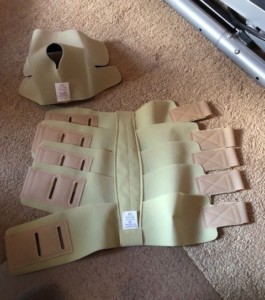
Do NOT buy the Sigvaris Comprefit compression sock with wraps or you will totally waste your money.
This product was a sorry disappointment for an elderly man with edema in both legs. (more…)
Why There’s a 1 Percent Mortality Rate for Melanoma Stage 0

The 10 year survival rate for stage 0 melanoma (in situ) is 99 percent.
So what happens with that one percent? Do they die from their melanoma in situ?
• How does anyone die from melanoma in situ?
• Shouldn’t the survival rate be 100 percent?
• In situ melanoma is confined to the top most layer of the skin, the epidermis.
• Stage 0 melanoma has grown in horizontal width (superficial spread) before it has burrowed into the next layer of skin, the dermis.
What happens to that 1 percent of stage 0 melanoma patients who don’t survive after 10 years?
One out of 100 melanoma in situ patients will not be alive 10 years after diagnosis. In fact, the 99 percent survival rate is also given for the five year mark.
There is no way to know just how many of those one-percenters, out of, for instance, 10,000 stage 0 melanoma cases, actually died from their original stage 0 melanoma.
We just know that five to 10 years later, a hundred out of those 10,000 will be dead.
Medical oncologist Daniel Vorobiof, MD, says that this mortality figure can, in part, be explained by study participants not being available for future follow-ups or dying from an unrelated condition.
But there’s more to it than these two explanations, because as the melanoma gets deeper, the five to 10 year mortality rate goes up. (Same with any cancer.)
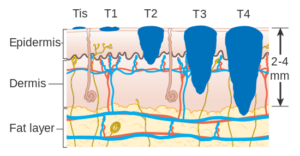
Cancer Research UK
So though we can say that out of those 100 death cases from the 10,000 in situ diagnoses — perhaps 20 percent perished from a heart attack and five percent died in car accidents, and maybe four were murdered and 10 more succumbed to stroke, food poisoning, shark attacks and rock climbing falls — this line of logic disintegrates as the stage of cancer gets more advanced.
Can People Die from Melanoma In Situ?
“When a lesion is removed and diagnosed, especially if it is a melanoma, we cannot be sure that it hasn’t sent some cells before, and years later we might see the appearance of a metastasis,” says Dr. Vorobiof, former medical oncology director of The Sandton Oncology Centre in Johannesburg, South Africa.
Dr. Vorobiof also runs the “Ask the Oncologist” forum in Belong.Life, the world’s largest social network for cancer patients.
“It is not uncommon to see in melanoma that there is regression (complete or partial) of a mole, and years later it appears somewhere else, and nobody has realized that there was an early lesion which disappears or is very small and without any specific characteristics,” explains Dr. Vorobiof.
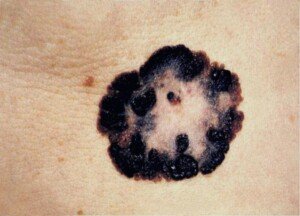
Regressed melanoma. CDC, Carl Washington, MD, Emory Univ. School of Medicine, Mona Saraiya, MD, MPH
“So it is not what the lesion does from today, but what it did beforehand, and we can’t measure that in time and we can’t visualize it or identify it later.
“That is why the risk of developing a metastases from a stage 0 (which is the lay term; we call it ‘in situ’) is very small, but nothing is impossible in the human body.”
When statistics are determined for cancer survival rates, there are limitations that can in part explain why there’s a mortality rate for melanoma in situ (or DCIS breast cancer, for that matter, which also has a 99 percent survival rate out to 10 years).
The first limitation is that elderly people have shorter survival times than younger patients, regardless of cancer stage.
The presence of elderly people in the stage 0 melanoma pool will affect the calculation for the survival rate.
Second, those with weakened immune systems from an unrelated condition like HIV infection will have a lower survival rate when compared to healthy people with the same stage of cancer.
So these are two more variables that account for the mortality of one percent in stage 0 melanoma.
But can melanoma in situ actually be fatal?
Literally, it can’t be, because by definition, it is confined to its starting point: the top-most layer of skin. “In situ” is Latin for “in place.”
However, it’s not impossible for the excision of the lesion to leave behind one malignant cell, which goes undetected – and multiplies – and over time becomes invasive.
If melanoma in situ ever became fatal, it would not be at stage 0 by the time it becomes untreatable.
If such an early cancer goes untreated, of course it will eventually become invasive with a poor survival rate.
In medicine, nothing is ever 100 percent. “There are only two certainties in life that are 100 percent — birth and death,” says Dr. Vorobiof.
 Dr. Vorobiof has authored more than 100 peer reviewed articles in international medical journals.
 Lorra Garrick has been covering medical, fitness and cybersecurity topics for many years, having written thousands of articles for print magazines and websites, including as a ghostwriter. She’s also a former ACE-certified personal trainer.

Is the Biggest Goal in Your Life to Wear a Bikini to the Beach?

If the biggest goal in life is to wear a bikini to the beach or for Instagram despite being plus size — you need to rethink your priorities.
It’s just flabbergasting how many women in today’s age of social media think that the hallmark of self-confidence is “getting up the nerve” to wear a bikini to the beach.
The irony is that women of ALL sizes have been wearing bikinis to the beach long before the advent of social media.
Plus Size Women Need Not Be Sex Objects to Gain Self-Worth
Posing seductively in a bikini, showing nearly every inch of skin, is a setback for the promotion of women as being more than just sex objects.
It’s just SO wrong to equate a self-confident woman with one who merely puts on a bikini.
You may feel “brave” after walking on a beach wearing a bikini, but…
If doing that makes you feel brave and accomplished, then you have to ask yourself just HOW LOW your standards of bravery and courage are, such that you equate these concepts with putting on a few pieces of fabric.
This fad, propelled insanely by the advent of Instagram, has got to stop.
The fad can be summed up in seven words:
“You TOO can be a sex object!”
There was once a time — I’m afraid too long ago — that chubby little girls would announce, “When I grow up, I’m gonna be a pediatrician [or astronaut, scientist, nurse, teacher, judge, police officer]!”
Today they’re thinking, “When I grow up I’m gonna wear a bikini on Instagram!”
What’s more important than wearing a bikini?
Get that college or business degree you’ve always wanted. Get your G.E.D. if you’re a high school dropout. Finish that novel. Finally learn to speak that second language or learn the guitar.
Stop obsessing over the really tiny things in life like working up “the courage” to wear a bikini so that strangers — whose opinions should not matter to you — can see your body on Instagram or Facebook.
If you’re struggling to finally work up the courage to wear a bikini, here’s the solutions:
- Ditch this project.
- Go take your dog for a walk.
- Sign up for yoga or self-defense classes.
- Call your mother.
- Sing to your child.
- Do volunteer work.
Lorra Garrick is a former personal trainer certified by the American Council on Exercise. At Bally Total Fitness she trained clients of all ages for fat loss, muscle building, fitness and improved health.
.
Top image: Shutterstock/Kokhanchikov

Cause of Groin Pain Only in the Morning

Every time you awaken in the morning, you’re rudely greeted with groin pain – no matter how many times you’ve tried new sleeping positions, pillows or different mattresses.
Just what is causing this morning groin pain?
First off, realize that the groin and the hip are very much a linked part of anatomy, so if you’re having groin pain, chances are pretty good that this is somehow connected to a problem in the hip.
“Most hip pain is made up of symptoms coming from the joint, bursa, IT band or sacroiliac joint,” says Chad Gorman, MD, a board-certified physician in private practice in New Port Richey, FL, specializing in treating chronic pain of the spine and extremities.
“Patients who have groin pain in the morning may be experiencing arthritis of the hip,” says Dr. Gorman. “Lateral hip pain that is tender to touch is likely hip bursitis.”
Another Cause of Groin Pain Only in the Morning
A herniated (bulging) disc as the L1/L2 level can cause low back pain that radiates to the groin area. The L2 nerve is close to the groin.
Even at L3/L4, the pain can radiate to the groin.
A pelvic misalignment is another possible cause of pain in the groin area.
So why would these different causes make the groin pain worse in the morning, or only noticeable in the morning?
After a night’s sleep, the body is stiff, having not moved much. When everything gets stiff, and there’s already some kind of neuromuscular pathology, pain, aching or soreness will easily result.
Dr. Gorman says that the first line of treatment should be epidural steroid injections and physical therapy.
The steroid injections typically last three to four months, and sometimes that’s all the patient needs, though physical therapy should also be included.
If conservative measures have failed, including chiropractic treatment, then minimally invasive surgery is an option.
 In private practice since 2013, Dr. Gorman specializes in treating chronic pain, particularly chronic lumbar and extremity pain. His orthopedic background puts him in a unique position to treat complex orthopedic pain non-operatively.
Lorra Garrick has been covering medical, fitness and cybersecurity topics for many years, having written thousands of articles for print magazines and websites, including as a ghostwriter. She’s also a former ACE-certified personal trainer.
.
Top image: Shutterstock/Chinnapong

Can Shoulder Pain & Numb Thumb Be Caused by One Condition?

If your shoulder hurts and your thumb or other fingers are numb and tingling, is this more likely multiple sclerosis, ALS or a more benign condition? (more…)

Runny Nose After Root Canal: Causes and Treatments

A root canal is unpleasant enough without a runny nose to go with it.
Sometimes a root canal can cause a runny nose.
But this does not reflect an inadequate job by the doctor who performed the root canal.
So what then, would lead to a drippy nose?
“Depending on where the root canal is, and how deeply the infection is in the jaw, it may be embedded near the sinus,” says Dr. Alireza Panahpour, DDS, author of “The Good Dentist.”
“The proximity of the root canal to the sinus area may make it so that root canal treatment may cause bleeding.”
And it may also cause a bit of running due to the irritation. This is par for the course and nothing to get worried about.
See it for what it truly is: a temporary nuisance that will run its course soon enough.
“With any root canal or wisdom tooth treatment we use platelet rich fibrin to rebuild the sinus lining at the time of surgery,” says Dr. Panahpour.
Three Questions to Ask About Your Root Canal Procedure
If you’ve been told that you need a root canal, here are three questions to ask.
“Exactly why do I need a root canal?” Reasons would be advanced tooth decay, a problem with tooth pulp due to a chipped or cracked tooth, or a bacterial infection.
“How much experience do you have with performing root canals?” Sometimes a dentist does root canals. Other dentists will refer the patient to an endodontist.
An endodontist typically performs significantly more root canals per week than does a dentist.
“What can I do to ensure success with the procedure?” One of the things you should do is arrange to have a final restoration after the root canal, as nearly all root canals need this.
Finally, a bonus question to ask the doctor who will be performing your root canal is what kind of possible side effects you might experience, including those that might arise based on the location of the infection if that’s what you have.
Runny noses following a root canal are not unheard of.

Dr. Panahpour’s approach to dental health encompasses the patient’s diet, immune and structural integrity, plus all the traditional treatments of a conventional dental practice.
Lorra Garrick has been covering medical, fitness and cybersecurity topics for many years, having written thousands of articles for print magazines and websites, including as a ghostwriter. She’s also a former ACE-certified personal trainer.
.
Top image: ©Lorra Garrick

Diseases that Can Cause TMJ Disorder: from Benign to Cancer

An assortment of benign conditions can lead to TMJ problems, but so can a variety of cancers.
This is why if your TMJ pain hasn’t resolved despite dental-based treatment, you should request an MRI of your head, plus bloodwork, to see if there are signs of cancer or benign tumors. (more…)
Can Obstructive Sleep Apnea Cause TMJ Disorder?

You know that TMJ disorder can cause obstructive sleep apnea…
But what about the other way around: Can temporomandibular joint problems lead to obstructive sleep apnea? (more…)






What Nighttime Problems Can TMJ Disorder Cause?

Many symptoms can be caused by TMJ disorder overnight.
In fact, you may not have even made the connection between these nighttime issues and temporomandibular joint disorder. (more…)