Ultra-Processed Foods Bad for All Body Sizes

Experts around the world are sounding the alarm about ultra-processed foods and how quickly they’ve reshaped modern diets.
The Motorless Curved Treadmill: Holding On vs. Hands Free
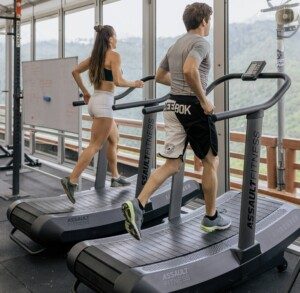
Wondering if holding onto a motorless curved treadmill defeats the benefits of this unique and effective design?
CAN these treadmills be used without holding on?
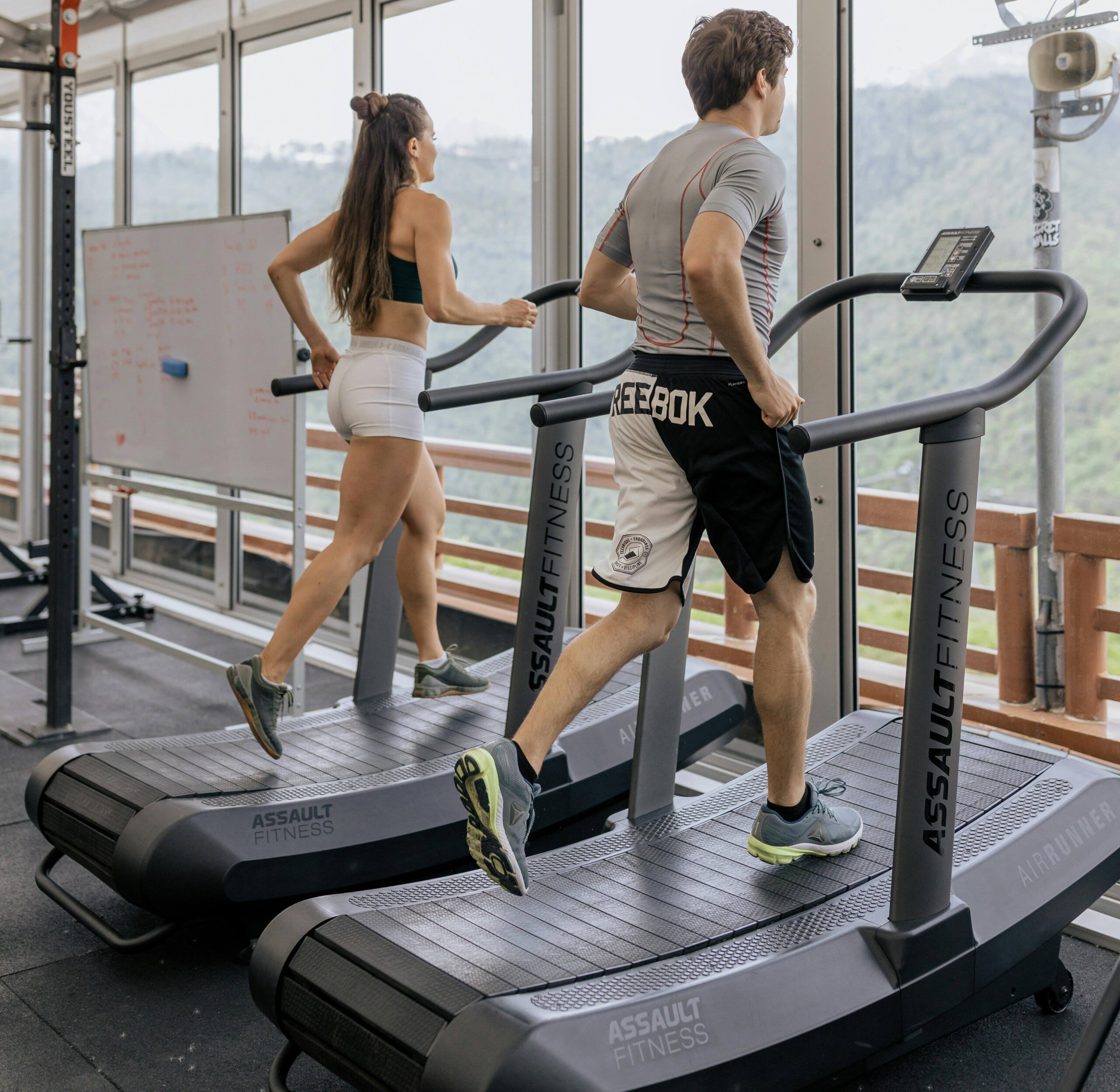
The motorless curved treadmill produces a unique experience when walking or jogging on it that’s distinctly different from that of a conventional treadmill.
There’s no motor. It’s entirely powered by the user. The curved tread allows the human powering because placing a foot where the surface curves upward makes it move backwards — the same principle behind a hamster wheel.
So to keep the tread moving or human powered, one must continually place their feet where it curves. You stop it by placing your feet at the most horizontal part of the belt.
And of course, the higher up on the curve you place your feet as you walk or jog, the faster the tread moves. It’s a brilliant design with a unique and inviting feel to many users.
Holding on vs. Letting Go of the Curved Treadmill Hand Supports
The supports are there for a few reasons, namely to appeal to as many potential buyers as possible.
They’re also there for liability reasons.
But these purposes don’t mean you have to place your hands on the bars for support — even if you’re jogging.
If you have a physical disability or pain when you walk, and that’s why you hold onto the curved motorless treadmill, then perhaps you shouldn’t be on this machine until your pain resolves.
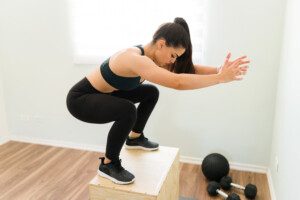
The much greater reality is that people who use this machine are able-bodied, often on the younger side of adulthood and are sometimes observed performing exercises that require balance and kinesthetic awareness such as kettlebell swings, walking lunges, step-ups while holding weights and dumbbell squats.
So why do they hold onto the curved motorless treadmill?
There’s several reasons, and each reason can be overcome.
Before I point out those reasons, I’m going to explain why a hands-off approach is far superior to clinging onto the rails, and the problems that holding on causes.
Benefits of Hands Free on a Motorless Curved Treadmill
Freepik/pvproductions
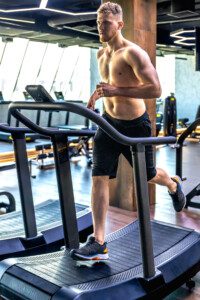
Keeping your hands off forces your entire body, including the core, to work to maintain balance.
Just because walking doesn’t involve folding or crunching up your body doesn’t mean that walking doesn’t engage the core.
Walking on a motorless curved treadmill without holding on forces your body to provide all propulsion, balance and pacing, which activates far more neuromuscular systems. Holding on, however, shuts this down!
Hands-off means you must stabilize your trunk, control arm swing, maintain lateral (side) balance and generate enough hip and glute drive to move the belt.
This recruits core muscles, deep stabilizers and proprioceptive pathways that coordinate posture and foot placement.
The curve also demands active forefoot engagement and stride modulation.
- Your balance gets dramatically improved, which will go towards fall prevention should you stumble somewhere.
- Your agility will improve. This will carry over to any sports such as basketball, tennis, pickleball, hiking, ping pong and martial arts.
Because of this equipment’s innovative features, it more closely mimics walking or running outdoors when compared to a conventional treadmill.
Many more calories are burned as well when your hands are free and arms moving.
The calorie display is triggered by the belt’s movement; the computer automatically produces a calorie-burn number and can’t tell if the user is holding on or not.
So though the number will be the same whether you’re latching on or walking with an arm swing, you’ll burn a lot more calories with your arms moving.
Why You Should Not Hold onto a Motorless Curved Treadmill
When you hold on, your arms and hands artificially stabilize you, shutting off much of the natural balance work explained previously, and reducing the need for core, hip and reflexive activation.
In simple English, it’s cheating. You wouldn’t cheat on other exercises, would you? So why cheat on this walking machine?
You’ll burn fewer calories (for obvious reasons: less work from your body).
Even if calories don’t matter to you, holding on prevents improvement of all those wonderful things just discussed.
Holding onto this equipment, even if you think you’re doing it “lightly,” makes walking artificially easier by offloading balance, propulsion and postural control to your arms instead of leaving all those there for your legs and core to conduct.
Because the machine is powered only by your stride, any support you use trains your body to rely on external stability rather than on internal neuromuscular coordination. Jeez Louise, reread that, because it sure slugs a punch.
Over time, keeping your hands on the bars reduces natural arm swing, weakens trunk-pelvic coupling, shortens stride length, and dampens the reflexes that fine-tune foot placement and rhythm.
Instead of reinforcing efficient, self-generated gait mechanics, holding on trains a “supported” walking pattern that is less transferable and less efficient during real-world ambulation!
Holding On May Seem Like the Smart Thing to Do…
Yeah, if you walked into the gym reliant on a walker due to a neurological injury or orthopedic disability.
But these aren’t the gym members who get onto a motorless treadmill that’s powered by only the feet.
Those with knee pain, hip problems, plantar fasciitis or some other issue are not likely to get onto a motorless treadmill — and will prefer a stationary bike or elliptical trainer.
Again, can’t say this enough: People who use the motorless tread device tend to be younger than middle age and can be seen performing other exercises that someone with a significant orthopedic challenge or pain from injury wouldn’t be able to do!
They hold on perhaps because — as trite as this sounds — the bars are there.
It could be because they’ve seen other users holding on.
It could be due to fear of falling off, even if they don’t have fear of teetering over when doing walking lunges or the back squat.
People are strange.
But what if you feel you must hold on or you’ll topple off?
Like many other gym exercises, using this machine without holding on won’t always feel easy or doable. But that’s where learning comes in.
You learned how to do the squat and deadlift.
Or, you learned something else, perhaps holding a plank or doing kettlebell swings.
Maybe burpees, pushups or barbell hip thrusts.
The point is, you taught your body to do these things. Why not also teach your body to walk naturally (hands free) on a motorless curved treadmill?
After all, you now know the many benefits this brings and the problems holding on causes.
Simply start out very slowly. Because of this device’s innovative design, I recommend getting going at a slow and controlled pace with your hands on the bars — initially.
Once you have the rhythm down, lighten your hold, and then lighten it some more until your hands are barely touching the bars.
Then remove your hands from them entirely. If you feel off-balance, that’s normal; it’s the nature of exercise, just like you may feel off-kilter with other forms of exercise such as box step-ups or the bench press.
By not holding on, you will force your body to adapt to a stimulus and become a neurologically better version of itself.
Another way to get used to a natural, hands-free walk is to start the belt going without holding on at all.
- JUST DO IT.
- Don’t enable yourself.
- Just say, “I’m done with underestimating myself!”

Lorra Garrick is a former personal trainer certified by the American Council on Exercise. At Bally Total Fitness, where she was also a group fitness instructor, she trained clients of all ages and abilities for fat loss and maintaining it, muscle and strength building, fitness, and improved cardiovascular and overall health.
Top image: Freepik
Is It Okay for One Dumbbell to Tilt During Shoulder Presses?
Most people don’t allow one dumbbell to stay tilted towards their head during a shoulder press.

Pretzel Shaped Implant Can Knock Out Bladder Cancer: Study

A study shows hope for bladder cancer patients. A little implant has been shown to destroy malignant cells in this organ.

Best Time of Day to Drink Your Coffee for Health Benefits

There’s a lot of conflicting research regarding coffee’s effect on the body. But is there still a best time to drink it?

Is There a Cutoff Number for Cups of Coffee Daily for Health?