Trans Fats: the Killer Among Us: How to Avoid this Food Ingredient

While gun control dominates the news, thousands of Americans every year die at the hands of trans fats in common foods.
Trans fats should be banned. Where is the outcry?
Trans fats are a poisonous additive that the FDA allows into the American food supply.
It’s not as easy as “Just avoid eating anything with trans fats” when a loved-one with poor heart health doesn’t care.
Or, to put it another way, many people, even those who’ve undergone bypass surgery for clogged coronary arteries, still aren’t convinced that trans fats are poisonous to the heart.
They’re not convinced because putting trans fats in foods is legal.
How many Americans die every year at the hands of trans fats?
“According to the CDC, reducing trans fat consumption could prevent 10,000-20,000 heart attacks and 3,000-7,000 coronary heart disease related deaths each year,” says Alison Massey MS, RD, LDN, registered dietitian and certified diabetes educator with over 10 years of experience in various community and clinical settings.
“These numbers were calculated from FDA data assuming that individuals consumed 1.3 grams from trans fats” daily, adds Massey.
What’s 1.3 grams?
That’s more than many people think. The amount of this toxic substance can easily exceed 1.3 grams a day because it’s in so many food items, including seasonings, and including items with a container that says “Zero trans fats per serving.”
The FDA allows food makers to label a product as “Zero trans fats” or “No trans fats” – “per serving” – as long as the designated “serving size” equates to less than half a gram of this toxin.
However, the “serving size” is usually ridiculously small; the consumer ends up eating multiple servings.
This can occur several times in one day with different food items, easily exceeding 1.3 grams!
Quite frankly, it’s just as insane for a person with heart disease to consume any amount of trans fats as it is for a person with emphysema to smoke.
Why are trans fats harmful to the heart?
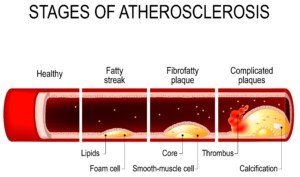
“Trans fats elevate the bad LDL cholesterol and lower the good HDL cholesterol levels,” says Massey.
“When LDL levels are elevated, over time they can promote atherosclerosis.” This means plaque buildup in the arteries.
Shutterstock/Designua
Massey continues: “Additionally, some research suggests that trans fat may increase lipoprotein(a), a type of LDL cholesterol, making them small and denser particles that promote buildup of plaque. Trans fat may also increase inflammation, which may play a role in the formation of blockages.”
Insanity
Ever shake your head when you hear about a person who continues smoking after being diagnosed with lung cancer, or who continues drinking after being diagnosed with liver disease?
It’s easier to give up trans fatty foods once a person is diagnosed with heart disease, because there’s no such thing as a chemical or mental addiction to trans fats!
Yet people with severe heart disease, even those who’ve had bypass surgery, continue ingesting this dangerous, unnatural substance.
“I encourage patients to eliminate all trans fat from their diets,” says Massey. “We discuss the fact that even ‘a little’ is not ideal.”
Why are trans fats so prevalent in processed foods?
“There are two types of trans fat: those that are in food naturally, produced in the gut of grazing animals, and those that are formed during food processing, when hydrogen is added to vegetable oil,” explains Massey.
“Trans fat is found in some processed foods because they extend the shelf-life and flavor stability of the product as well as improving texture or ‘mouth-feel’ for certain food items.”
This doesn’t mean that foods without trans fats are inferior in taste, freshness, texture or feel. Many foods that are free of this harmful chemical are absolutely delicious!
How can you tell a food has trans fat?
First of all, never assume something doesn’t have this poison just because the product is promoted as healthy or boasts high fiber or some other nutrient.
There’s only one way to know if a product contains this poison: the ingredients list.
- If you see the words partially hydrogenated in the list, don’t buy the product.
- If you see just hydrogenated, don’t by the product, because hydrogenated alone can mean partially.
- If it says completely or fully hydrogenated, it does not contain trans fats.
- If you see shortening, don’t buy the item, since the shortening may be partially hydrogenated.
- Avoid foods with canola oil; this oil contains trans fats and is not the health-giving oil that it’s been marketed as.
- Finally, avoid foots that contain interestified fats or say interestification in the ingredients list. Though this isn’t a trans fat, it’s just as bad.
To those who balk at reading ingredients lists, since when should this not be a part of smart shopping?
How crushing can your schedule be that you can’t take five minutes to sift through the different brands of stuffing mixes, noodle mixes or snack bars to see which ones contain trans fats?
People will spend more time channel surfing to see which reality show they should watch while eating meals containing trans fats.
Once you know which brands contain this deadly poison, you’ll no longer need to read ingredients lists.
And it’s a given that the bakery section of a conventional food store is Trans Fats Alley.
You don’t have to be faced with the drudgery of figuring out if you’re on track for exceeding 1.3 grams of this poison on a given day; simply avoid trans fats altogether!

Alison Massey has been working in the field of nutrition since 2010 helping individuals make sustainable changes to improve their health.
 Lorra Garrick has been covering medical, fitness and cybersecurity topics for many years, having written thousands of articles for print magazines and websites, including as a ghostwriter. She’s also a former ACE-certified personal trainer.
.
Top image: Shutterstock/Andrey_Popov

Plus Size Mom Teaches Obese Child to “Booo!” Diet Commercials

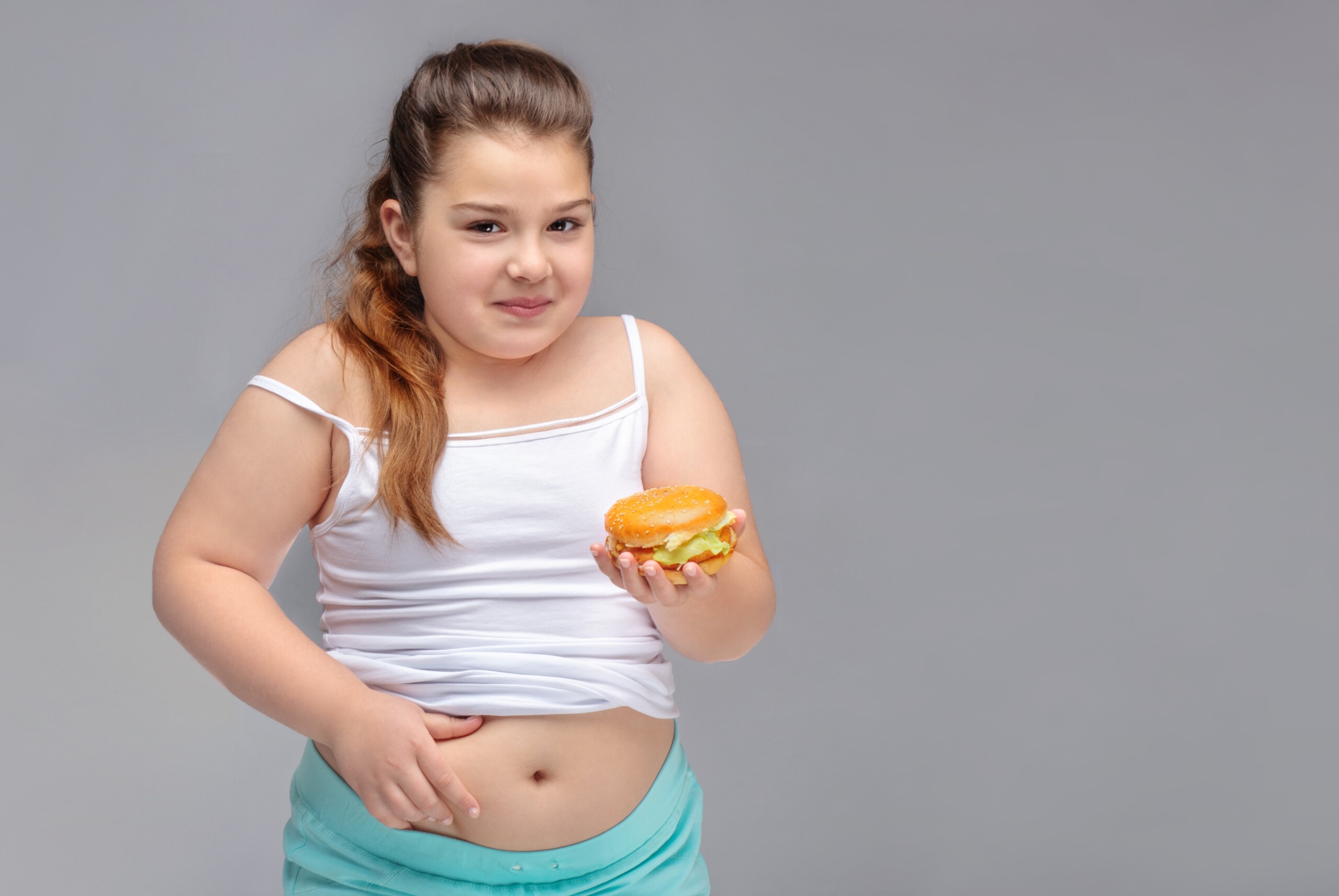
A mom who says she’s 265 pounds posted on Instagram a video of herself and her obese child hollering “Boooo!” at a diet commercial.
The video was posted on Jan. 4, 2020. I recommend you set your volume to low, because she and her seven-year-old overweight daughter are LOUD.
The Instagram video begins with the camera on a TV commercial for a diet. Seconds later:
Mama and child: “Boooooo! Booooo! Boooooo DIET! Booooo diet! Booooo! BOOOOO!”
Mama: “You’re perfect just the way you are! You’re perfect just the way you are!”
Child: “You don’t have to burn fat!”
This is not what body positivity should be about.
Yes, there are diets that cannot be sustained or are unrealistic, but this particular influencer believes that ANY attempt to lose excess weight is toxic.
I’m wondering how overweight her daughter would have to get before her mother realizes that excess body fat is unhealthy in children — that childhood obesity is nothing to kick under the rug.
What this woman is essentially doing is booing the entire medical establishment.
I’ve been following her – to get story ideas, not because I agree with her – and thus, I can definitely tell you that her message is that ANY attempt to lose weight, even if one is obese, is a bad thing.
Even if the “diet” simply means cutting back on extra helpings of junk food, this influencer wants her followers to know that this is a toxic way to live.
I’ve seen videos of her doing simple exercises – and making them look difficult.
At 265 pounds, 5’10 and in her early 30s, she’s still plenty mobile.
But as she gets older, her mobility will begin declining sooner than it should.
Youth is a wonderful thing. It’s highly protective of morbid obesity’s negative effects.
But before this mom of two realizes it, the obesity will catch up to her.
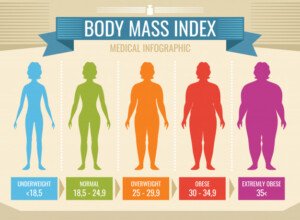
Though she stands 5’10, her weight of 265 puts her in the morbidly obese category.
Her daughter, age seven at the time the video of the booing was posted, seems to have gained more weight over time – out of proportion to her age and height.
The young girl may be on the way to weight problems in the future, especially since she’s being trained to believe that “going on a diet” is a terrible thing.
Her mother has actually posted that no child should ever be put on a diet.
Though many frustrated parents of overweight children go about the solution in a very destructive way, this doesn’t mean there don’t exist positive, encouraging and effective ways of helping an overweight child lose weight.
Imagine the message she’s sending when she encourages this child to shout at top volume, “Booooo diet!” at the TV commercial, and to recite, “You don’t have to burn fat!”
Being Perfect just the Way You Are
Certainly, this is a message that moms should convey to their children.
But when a child is encouraged to remain chubby, and is told the reason is because she’s perfect just as she is, this is very wrong — on so many levels.

Amina Filkins, Pexels
For example, what if one day she wants to play on her school’s basketball team or run on its track team?
At the time of the video she was on a cheerleading squad.
Her mother has already admitted that this child is the slowest of all the girls to learn the moves. There’s no wonder why here.
Good and Bad Diets
“I hate the word diet,” says Susan L. Besser, MD, with Mercy Medical Center, Baltimore; Diplomate, American Board of Obesity Medicine and board certified by the American Board of Family Medicine.
Dr. Besser explains, “It has such negative connotations! I generally recommend mindful eating and moderation in all things.
“That doesn’t mean no junk — just be mindful about what you are doing.
“In this case, the problem is with the mother. She doesn’t understand what eating healthy really means — and so she is training her child to have false notions.
“This is when the pediatrician needs to address the mom’s misconception (it wouldn’t hurt if mom’s doctor would discuss it with her as well).
“As a quick plug for my specialty, Family Medicine, we treat the entire family — so can address this sort of thing from both sides of the table, so to speak.
“Of course, a child can be put on a healthy diet without even knowing it. But first you would have to convince the mom it isn’t a ‘diet’ — just a healthier way of eating.”
When I was a personal trainer I always told my overweight clients that it’s okay to continue eating their favorite foods including carbs.
The key was portion control. My advice was to allow only one portion a day of any kind of bakery or sweets.
So if you had one donut with breakfast, that was it for the day. There’d be no candy bar for a noon snack, or no ice cream after dinner.
I also encouraged replacing soda with water, eating at least five servings a day of any combination of fruits and vegetables, and making sure to eat breakfast, as many of them skipped it.
Another recommendation was to snack only on fruit, nuts, seeds, tossed salads, steamed vegetables, tuna salad, yogurt, etc.
There is nothing toxic about this type of diet, and if adhered to, would result in fat loss, assuming that the dieter understood what “one portion” truly was.
Where does this 265 pound woman get the idea that ANY kind of diet, ANY kind of “mindful eating,” ANY safe attempt at losing excess body fat, is toxic to children and worth a lot of loud BOOOO’s?
It’ll be interesting to see what this seven-year-old child will look like in a few years.
When she’s a lot older and wiser, she may confront her mother:
“How could you have let me get fat?! What were you thinking? I can’t climb a flight of stairs without struggling for breath!”
The Instagram account is replete with this child’s images, and I’m predicting that by the time she’s 10, she’ll be where Honey Boo Boo (reality TV star Alana Thompson) was when SHE was 10: significantly overweight.
In fact, this may happen even sooner, as the bopo influencer becomes more aggressive with her anti-diet crusade.
This body positive Instragrammer may be unknowingly priming her seven-year-old daughter for future morbid obesity and lifelong struggles with food.
Update
As predicted, the influencer’s daughter, now 11 in 2024, is significantly overweight.
I’ve seen her on both Instagram and TikTok, where her mother (who currently lists her weight at 295) continues to push fat acceptance.
Interestingly, her formerly slender 12-year-old son is now noticeably overweight, but not to the extent that his sister is.
 Dr. Besser provides comprehensive family care, treating common and acute primary conditions like diabetes and hypertension. Her ongoing approach allows her the opportunity to provide accurate and critical diagnoses of more complex conditions and disorders.
Lorra Garrick is a former personal trainer certified by the American Council on Exercise. At Bally Total Fitness she trained clients of all ages for fat loss, muscle building, fitness and improved health.
Top image: Shutterstock/CHIVI SEYFETTIN

600 Pound Life: Why Surgery if They Lose Weight on Their Own?

TLC
If Dr. Now’s patients on “My 600 Pound Life” can initially lose weight all on their own, why do they need the surgery then?
Strength Training Machines: Range of Motion only Two Inches?

Have you ever seen people moving the handles only two inches on strength training equipment and wonder, “What the heck are they hoping to achieve?” (more…)

Why Do People Sing to Songs in Public that Others Want to Hear?

A song you love is on a workplace radio or public speaker and someone starts singing to it, destroying your listening pleasure!
(more…)





Right Chest Pain After Swallowing, Lasts Only Seconds

So it goes as follows: You chew, swallow without any problem and then right after there’s an odd pain in your right chest that lasts a few seconds. (more…)

Recent Belly Weight Gain: Ovarian Cancer or Normal Aging?
Many women seem to start gaining abdominal weight within a few years of completing menopause and some will wonder if it could be ovarian cancer. (more…)

Can Your Period Be Safely Stopped or Sped Up?

Periods are a pain, and many women want to know if they can be safely stopped, delayed or sped up.
This is particularly true for women who travel frequently.
“Women using hormonal forms of birth control may find that their periods stop or change — usually becoming lighter or less frequent,” says Dr. Kate Killoran, OBGYN and medical advisor at Your Doctors Online, an online doctor chat site.
“This is safe. The ‘period’ you have on hormonal birth control is artificial (the hormonal IUD is an exception) in that it is caused by the medication you are taking.
“It can be delayed by taking active pills (patch or ring) for a longer period of time.
“This doesn’t always work, as some women will have what’s known as breakthrough bleeding and start bleeding sooner than expected.
“While it is usually possible to delay or stop one’s period, it may be more difficult to speed it up.
“It certainly can be done but can be harder to predict.”
Never try to stop or delay your menstrual cycle with severe dieting or excessive strenuous exercise, nor try to stop your cycle with intentional gain of significant levels of body fat.
 Dr. Killoran has a private practice and is also a health coach at drkatemd.com. Your Doctors Online offers a free 7 day trial: Ask a doctor questions and get answers in minutes from anywhere 24/7. Learn more here.
 Lorra Garrick has been covering medical, fitness and cybersecurity topics for many years, having written thousands of articles for print magazines and websites, including as a ghostwriter. She’s also a former ACE-certified personal trainer.
.