Muscle Twitching Connection to Anxiety and Exercise

Relax, muscle twitching occurs to people all over the world, and until the invention of the World Wide Web, it didn’t seem to be much of a concern.
Thanks to the Internet, masses of people are now panicking that their twitching muscles mean ALS.
“Some people have benign fasciculation syndrome, which is just that – benign,” says Daniel Kantor, MD.
Benign fasciculation syndrome is the medical term for twitching muscles that reach a point of nuisance for the patient, and often, the patient also experiences benign cramps – which in part can be caused by anxiety.
BFS “means that even without an underlying muscle or nervous system disease, people sometimes have fasciculations,” continues Dr. Kantor, director of the Neurology Residency Program, Florida Atlantic University.
“While muscle twitching can be a concerning and disturbing symptom,” he continues, “many people have it simply as ‘one of those things,’ and in that case, it is nothing to worry about.
“Of course, you always want to clarify this with your primary care doctor or neurologist to exclude other, more serious, causes.”
Anxiety is a chief agent that makes things go twitch in the night, or day.
Perhaps this is because when we are under emotional stress, the body anticipates action, and hence gears up the muscles to prepare for a fight or flight. They get revved up, like revving up a motorcycle engine.
Hard exercise is another cause of twitching.

embhoo. CreativeCommons
Ask anyone who normally trains with intensity if they’ve ever had this experience, and I’m sure they’ll confirm it.
I myself train very hard and often experience some post-exercise twitching, or even immediately after a heavy weightlifting set. It’s my built-in masseuse system.
Many Body Sites for Twitches
- Calves
- Arches of feet
- Hamstrings (back of legs)
- Quadriceps (thighs)
- Butt
- Chest
- Back
- Neck
- Shoulders
- Arms
- Fingers
- Toes
- Lips and tongue
- Eyelids
- Back, top and side of head, forehead
If you see a twitch in action, this means NOTHING. Take-home message:
Muscle twitching (not the tremoring or shaking type) is, by and large, considered a normal occurrence and is no reason to grow fearful and think the worst.

Dr. Kantor is also President Emeritus, Florida Society of Neurology.
 Lorra Garrick has been covering medical, health and personal security topics for many years, having written thousands of feature articles for a variety of print magazines and websites. She is also a former ACE-certified personal trainer.
.
Top image: Depositphotos.com
Source: mayoclinic.com/health/amyotrophic-lateral-sclerosis/DS00359

Why Your Stomach is Twitching: Neurologist Explains

Is your stomach twitching?
“Twitching is the common term for fasciculations, an abnormal firing of muscles,” says Daniel Kantor, MD, director of the Neurology Residency Program, Florida Atlantic University.
When your stomach twitches, just what is happening? “When it is in the abdominal area, the abdominal muscles are having these fasciculations.”
So that’s what’s happening when a person’s stomach is twitching.
Dr. Kantor continues: “Fasciculations can appear in almost any muscle.” With that said, this experience is actually a muscle twitching in the stomach area of the body, rather than an internal organ.
“Fasciculations can be a normal thing (it just feels strange); it can be due to dehydration, aging or to more serious (usually not life-threatening or life-altering) causes.
“When we overuse a muscle, it can twitch. So, just like your leg muscles may twitch after a long run, if you put strain on your midsection, your abdominal muscles may twitch.”
In short, the sensation of your stomach twitching is absolutely no cause for alarm or fear, even though it can be very annoying.
In rare cases, a twitch coming from the stomach area can be a symptom of a more serious condition such as a motor neuron disease, says Dr. Kantor.
If that stomach twitching is really bothering you, see a neurologist to rule out any disease process and put your mind at ease. However, chances are, if your stomach muscles have been twitching, it’s a perfectly benign situation.
“This is why it is important to relax, not jump to conclusions, and to talk to your primary care doctor or neurologist about it,” says Dr. Kantor.
“Sometimes people mistake abdominal wall dystonia with abdominal muscle fasciculations. In abdominal wall dystonia there is an abnormal muscle tone.
“This causes sustained contractions and involuntary, writhing movements of the abdominal wall. This is why some people have called it ‘belly-dancer’s dyskinesia’ — abnormal movement.
“The confusion between twitching, abnormal muscle tone and even muscle jerking (myoclonus) highlights the importance of a good physical examination by your doctor.”
If you haven’t put recent strain on your stomach, but the muscles continue to twitch, this could be the result of anxiety, stress, dehydration and/or mineral imbalance.
Make sure you are getting enough fluids and adequate amounts of magnesium and potassium. If you’ve noticed that the more you think about your stomach twitching, the more it fires away, then this pretty much confirms that the situation is benign.
After all, an actual disease isn’t going to cause fasciculations just because you started thinking about it.
Dr. Kantor is also President Emeritus, Florida Society of Neurology.
Lorra Garrick has been covering medical, health and personal security topics for many years, having written thousands of feature articles for a variety of print magazines and websites. She is also a former ACE-certified personal trainer.
Top image: Shutterstock/Andrey_Popov
Source: neurologique.org/

Suffer with Body Wide Muscle Twitching? Here’s Good News

If you’re going nuts because of muscle twitching all throughout your entire body, stop fearing the worst, and don’t even worry about something even a little bit serious.
Muscle twitching isn’t necessarily a sign of something dreadful just because it’s happening all over your body. The most common cause of body-wide twitching muscles is anxiety.
Lack of adequate fluid intake, plus exercise or heavy physical activity, are two other common causes of muscle twitching, which may begin as localized.

Image: Freepik.com, pressfoto
But it has a funny way of “spreading” throughout your body moments after you begin worrying about it.
Yes, muscle twitching all over the body often starts in one spot, such as the thigh, arm or calf.
This is something that may have happened hundreds of times to a person, without him or her giving it even one second of thought.
But for some reason, one day, the twitching in this localized spot becomes the focus of attention.
Since it’s so easy to research things on the Internet, this person then decides to do a Web search on twitching muscles, and all sorts of interesting medical information shows up.

Shutterstock/fizkes
As a result, the person starts thinking he or she might have a deadly neurological disease, in which muscle twitching is a symptom.
But this kind of thinking is akin to believing you might have laryngeal cancer — just because you have a scratchy throat.
Upon filling up with anxiety over the consideration of this neurological disease, the individual then starts feeling more areas of his body begin to twitch.
The muscle twitching spreads throughout the whole body, and pretty quickly, too.
However, this is NOT how a neurological disease operates. But it IS how anxiety can cause all sorts of nerve-impulse firing in muscles.
“Some people have benign fasciculation syndrome, which is just that – benign,” says Daniel Kantor, MD, director of the Neurology Residency Program, Florida Atlantic University.
He continues: “This means that even without an underlying muscle or nervous system disease, people sometimes have fasciculations.” Fasciculations is the medical term for twitching muscles.
“While muscle twitching can be a concerning and disturbing symptom, many people have it simply as ‘one of those things,’ and in that case, it is nothing to worry about.
“Of course, you always want to clarify this with your primary care doctor or neurologist to exclude other, more serious, causes.”
When muscle twitching is the symptom of a serious neurological disorder, it’s almost always accompanied by other symptoms such as strange cramping or an uncharacteristic weakness such as one day finding you can’t hold your hairdryer.
Anxiety can produce dozens of physical symptoms, and muscle twitching all over the body is one of them.
Dr. Kantor is also President Emeritus, Florida Society of Neurology.
Lorra Garrick has been covering medical, health and cybersecurity topics for many years, having written thousands of feature articles for a variety of print magazines and websites. She is also a former ACE-certified personal trainer.
Top image: Shutterstock/Song_about_summer
Source: neurologique.org/

How to Tell the Difference Between Multiple Sclerosis and Restless Leg Syndrome

Telling multiple sclerosis from restless leg syndrome?
Multiple sclerosis vs. restless leg syndrome: Is there really a way to know, without seeing a doctor, if what you’re experiencing is restless leg syndrome, as opposed to the more serious issue of multiple sclerosis?
Restless leg syndrome can be so troublesome that a person might actually wonder if he or she has multiple sclerosis.
So I asked Daniel Kantor, MD, director of the Neurology Residency Program, Florida Atlantic University, if there is a way to know that certain symptoms are far more likely to be just a bad case of restless leg syndrome, rather than a scarier case of multiple sclerosis.
Dr. Kantor explains: “Multiple sclerosis (MS) usually manifests itself in many ways, not simply as a problem with the feet at night and a need to move around to try to relieve this disturbing sensation.
“So, someone who only has symptoms of restless leg syndrome and nothing else, is less likely to have multiple sclerosis, than someone with many MS symptoms.”
Symptoms of Multiple Sclerosis
- Numbness or weakness in a limb
- Tingling or pain in the body
- Tremors
- Unsteady walking
- Lack of coordination
- Dizziness
- Fatigue
- Vision problem
- Pain with eye movement.
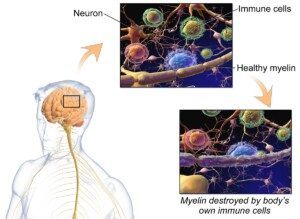
Multiple sclerosis. BruceBlaus, CC BY-SA 4.0/creativecommons.org/licenses/by-sa/4.0/Wikimedia Commons
Symptoms of RLS
In restless leg syndrome, the person typically feels “creepy crawlies” or crawling sensations under the skin of the lower limbs, that make keeping them motionless impossible.
Sometimes there aren’t any crawling, wormy or squirmy sensations under the skin, but the person still feels a compulsive need to keep the legs moving — all while trying to get some sleep or relax in a chair to read.
Keeping the legs still, gets very uncomfortable, and relief comes from continuously moving them.
However, restless leg syndrome does not produce numbness, pain or weakness, or other symptoms associated with multiple sclerosis, such as difficulty walking or vision problems.
Dr. Kantor says, “There does seem to be a higher prevalence of RLS in people with autoimmune diseases (such as MS) than the rest of the population.
“This can make it confusing when someone has multiple sclerosis and has restless leg syndrome symptoms — how can you know the difference?
“If someone has both MS and separately RLS, it is a good idea to undergo the regular RLS workup — such as having your iron tested, and if no other abnormality shows up, then you would probably treat the RLS symptoms in someone with MS just as you would treat it in someone without MS.”
There is no evidence that having restless leg syndrome puts you at risk for developing multiple sclerosis.
Dr. Kantor is also President Emeritus, Florida Society of Neurology.
Lorra Garrick has been covering medical, health and personal security topics for many years, having written thousands of feature articles for a variety of print magazines and websites. She is also a former ACE-certified personal trainer.
.
Top image: Shutterstock/Image Point Fr

Is Thumb Twitching Normal or Something to Worry About?

Is your thumb twitching lately?
Have you learned that muscle twitching is one of the symptoms of ALS? Does your thumb twitch and “jump” for no apparent reason?
Can a twitching thumb mean something serious, even deadly?
The reason a twitching thumb can really cause worry is because the thumb is a very small part of the body — a digit — and when muscles of a digit (be it a thumb, index finger or toe) twitch, the digit typically jumps.
It is the jumping that often worries a person when the thumb twitches, but whether or not a finger jumps or visibly moves, upon twitching, has absolutely nothing to do with the likelihood that there’s a fatal disease process going on.
The thumb contains voluntary muscles. So why wouldn’t it occasionally twitch?
Just like other muscles twitch (upper legs, back, arms, calves, etc.), the thumb is not exempt to this very common, benign phenomenon.
The worry factor kicks in because when a thumb twitches, it can be seen in action.
A person’s fixation and worry over a twitching thumb may evolve into imagining that the unit is weak, smaller than the other or visibly atrophied — possible signs of ALS — provided that these symptoms are real and not imagined, that is.
If you find yourself putting your fingers through all sorts of strength tests, and still not feeling assured that nothing is wrong with your body, then consider this statement from Kristina Lafaye, MD, a board certified neurologist specializing in clinical neurophysiology and neuromuscular medicine with Tulane Doctors Neurosciences:
“Weakness in ALS is progressive and not intermittent. There are no good days.”
Once the weakness is present, it will always be present and will only get worse.
This is in contradistinction to the weakness and “off days” that may be experienced by athletes and normal, active people.
A fairly typical scenario for an individual with ALS is this: The person is fit and active, and begins to develop an isolated symptom of weakness such as unilateral foot drop.
The weakness is subtle at first. The person attributes this to a bad knee or some type of orthopaedic problem.
Over time, not only does this problem not go away, but other signs of weakness develop in other parts of the body.
This is an insidious process, and most people do not initially come to a neurologist for these signs and symptoms.

Dr. Lafaye is triple board certified: neurology, clinical neurophysiology and neuromuscular medicine from the American Board of Psychiatry and Neurology. Her expertise and leadership continue to make a significant impact on patient outcomes.
Lorra Garrick has been covering medical, fitness and cybersecurity topics for many years, having written thousands of articles for print magazines and websites, including as a ghostwriter. She’s also a former ACE-certified personal trainer.
.
Top image: Shutterstock

Twitching Muscles: More Likely a Good Sign than Bad

Muscle twitching is quite a popular topic, but not one you’ll hear a lot about at the water cooler.
In cyberspace, twitching muscles are discussed quite prominently, because muscle twitching, though extremely common, is also a symptom of one of the most feared fatal diseases: amyotrophic lateral sclerosis (ALS).
But twitching muscles don’t mean you have ALS, any more than a little gas means you have colon cancer.
Unfortunately, once a person gets into the “I think I might have ALS” groove, the anxiety over this can become chronic — unless the person learns to see muscle twitching for what it really is: just tired muscles working their issues out.
Anyone with a lot of muscle twitching will tell you that movement almost always stops the twitching.
Perhaps this is because when a muscle is forced to work, it’s not relaxed enough to twitch.
And anyone who twitches a lot will tell you that most muscle twitching occurs while in a relaxed state.
This is maybe because a relaxed, sedated muscle can “feel free” to twitch all it wants.
They googled those keywords: muscle twitching…
The reason why there is a certain percentage of people out there who obsess about the possibility of having ALS is because they were in the wrong place at the wrong time.
Googling these words will bring up links to ALS, but also multiple sclerosis, a few other neurological disorders, and Lyme disease.
Yesterday I put my legs through a punishing weight routine at the gym.
They were sore today; delayed onset muscle soreness.
But I used my treadmill today, running on top of the soreness.
My hamstrings were aching and stiff, and I took to sitting at the computer for an extended time.
Lo and behold, the twitching began in my hamstring muscles.
But I must say, it felt GOOD ! It was almost like tiny fingers were giving me a nice massage.
It felt like miniature fingers were in there, working their way around in my beat muscles, working out the accumulation of lactic acid and other byproducts of anaerobic exertion (from the weight lifting and also the cardio).
And when the twitching began dissipating, I was disappointed. I wanted this automatic massage to continue.
But I guess the job of the twitching muscles was completed; perhaps the lactic acid had been dispersed.
So next time your muscles twitch, don’t despair; think of this as your body’s built-in massage mechanism for fatigued muscles.
Daniel Kantor, MD, is a neurologist who explains more about harmless muscle twitching from head to toe.
 Lorra Garrick has been covering medical, health and personal security topics for many years, having written thousands of feature articles for a variety of print magazines and websites. She is also a former ACE-certified personal trainer.
.
Top image: Shutterstock/Stokkete
Source: mayoclinic.com/health/amyotrophic-lateral-sclerosis/DS00359

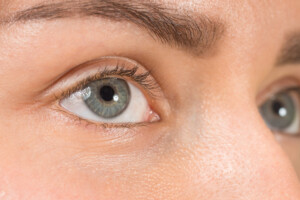
Twitching Eyelids: Causes, Don’t Worry, Be Happy

A twitching eyelid that just won’t stop can be anything from annoying to frightening.
If your eyelid has been twitching incessantly lately, you can probably chalk it up to strain of the ocular muscles and fatigue.
The eyelid is a muscle, and muscles often twitch for no apparent reason.
But the most common reasons for this phenomenon are fatigue, exercise and anxiety.
Benign fasciculation syndrome is the term often applied to someone who experiences a lot of twitching (fasciculations), especially if accompanied by cramps or fatigue.
And…it’s just that: benign.
Chances are exceedingly high that your twitching eyelid is absolutely nothing to worry about.
Stop worrying. Something that continuously happens throughout the day, that’s impossible to ignore, doesn’t mean it’s serious.
“Eyelid twitching [also called blepharospasm] is mostly caused by stress, fatigue and caffeine excess,” says Sashini Seeni, MD, a family medicine practitioner with DoctorOnCall, an online doctor and pharmacy.
Fasciculations are very common in the general population and can occur to any muscle in the body — any voluntary muscle, even the ones in your pinky toes or lips.
Though a twitching muscle can be a troubling, attention-robbing symptom, it’s usually no cause for alarm.
Of course, you’ll want to get this verified with your primary care physician or a neurologist to rule out a more serious cause.
“Other causes that may trigger eyelid twitching,” says Dr. Seeni, “are alcohol, bright light, irritation on the eye surface or inner eyelids, smoking, and wind or air pollution.”
Additional possible causes are corneal abrasion, dry eye and inflammation of the uvea (pigmented layer of the eye).
It’s recommended that you do not Google twitching eyelid.
You may stumble upon all sorts of scary content and/or, you’ll end up spotting titles of links that suggest a life threatening disease.
Can a serious, though not overtly life threatening, condition ever cause an eyelid to “twitch” or tremor?
Dr. Seeni points out the following possible, but much rarer, causes:
- Bell’s palsy
- Multiple sclerosis
- Cervical dystonia
- Tourette syndrome
- Parkinson’s disease
However, if you have any of these five conditions, you will very likely have other symptoms — that get your attention far more than does a twitching eyelid.
They include facial paralysis, tremoring hands, unsteady gait, neck pain, headaches and an uncontrollable jerking of the head.
Just about anyone can experience a fasciculating eyelid. One time, my sister commented out of the blue, “My eyelid’s been twitching all day and it’s driving me crazy!” That was over 20 years ago and she’s still alive and kicking.
“Sometimes, eyelid twitching can be the earliest sign of a chronic movement disorder, especially if other facial spasms develop too,” says Dr. Seeni.
These much rarer possible causes need to be mentioned, in all fairness.
But don’t let that throw off your perspective.
Twitching eyelids are a fact of human life, and, at least in isolation from other symptoms, is not indicative of a disease process.
So to summarize the VERY MOST LIKELY causes of a relentlessly twitching eyelid:
Anxiety and Stress

Freepik.com, creativeart.
Rubbing or Scratching the Eye

Shutterstock/fizkes
Contact Lenses

Strenuous Weightlifting
My eyelid once began twitching in response to a grueling set of heavy leg presses.

Shutterstock/Free around
A Deficiency In Magnesium/Calcium/Potassium
To subdue the fascics, make sure you’re well-hydrated and are not deficient in these three minerals.
If you must rub or scratch your eyelid, do so gently, and try to manage anxiety and stress, along with taking eye breaks from the computer or any reading.
 DoctorOnCall is the largest digital healthcare platform for citizens of Malaysia, allowing patients to consult doctors for advice, book appointments and place orders with local pharmacies.
Lorra Garrick has been covering medical, health and personal security topics for many years, having written thousands of feature articles for a variety of print magazines and websites. She is also a former ACE-certified personal trainer.
.
Top image: Shutterstock/SpeedKingz
Sources:
mayoclinic.com/health/eye-twitching/MY00102
nlm.nih.gov/medlineplus/ency/article/000756.htm

How Twitching Muscles Are Caused By Exercise

Everyone experiences twitching muscles.
Any voluntary muscle is capable of twitching.
This includes the eyelid, right above the lip, behind the ears, and of course, the larger muscles, including those located in the back, abdomen and limbs.
Fingers and toes may twitch from time to time as well. In fact, when digits twitch, it’s common to be able to actually see them in twitching motion.
Often, other muscles that twitch can also be seen twitching, including muscles on the top of the hand. In short, muscles, by nature, twitch.
For exercise enthusiasts, the most common sites of muscle twitching are the calves, arches of the feet, quads, hamstrings and glutes.
However, upper-body muscles also commonly twitch, such as biceps after performing pull-ups or grueling biceps curls; or chest muscles after bench pressing, pushups or some other rigorous chest routine.
Exercise is one of the most, if not the most, common causes of muscle twitching.

Shutterstock/bg_knight
However, the twitching normally does not occur during exercise. Sometimes, it occurs immediately following weight-bearing routines, such as pull-ups.
On the other hand, twitching may not start until the person finally comes to a complete rest at home. Cardio exercise can also induce twitching.
The medical term for muscle twitching is fasciculations, or fascics for short.
Ranking at perhaps No. 2 on the list of causes for fasciculations is anxiety.
Yes, muscles will often jump around a bit when you’re flanked with stress and anxiety.
Freepik.com, creativeart
Another cause is dehydration, though you may not be particularly thirsty.
Lastly, inadequate intake of calcium and magnesium is a classic cause of fasciculations.
Muscle twitching, to some people, feels good, kind of like internal massaging.
But to other individuals, fasciculations can be annoying, especially if the twitching rate is coming in at about one fasciculation per minute.
Some people experience several fasciculations per minute, for hours on end, even all day long.
Individuals have described the sensation as “worms crawling under the skin,” or “thumping.”
One particular area of the body may twitch a lot: a “hot spot” for fasciculations.
Common hot spots are calves and arches, because calves really do quite a bit of work from day to day, and our feet take a good beating on a regular basis.
Sometimes, twitches are body-wide. Interestingly, if a person starts worrying about the twitching, he or she will start twitching more.
In fact, many people who first start experiencing fasciculations in one body part, such as the feet, will then report that the twitching “quickly spread” throughout their entire body — only after they began worrying about it or focusing on it with too much wonder.
But are fasciculations something to worry about in the first place?
If fasciculations become annoying, you may become concerned that the twitching signals some kind of medical ailment.
This is akin to automatically concluding that an upset stomach means colon cancer.
However, in the case of a medical condition, the twitching is always accompanied by other symptoms of that condition. In other words, there is no illness that is characterized by just twitching.
When anxiety about fasciculations accompanies the twitching, other symptoms often appear: muscle cramping, some tingling, and what seems to be weakness. All three of these symptoms are caused by the anxiety.
Yes, muscle weakness in this case is imagined.
This is called “perceived weakness.” But if anxiety is severe enough, muscles really can lose their efficacy.
A classic example is when a person is under extreme duress, and can barely walk due to “buckling” legs.
Once the person begins lifting, running or hiking (and we all know how effective vigorous exercise is at eradicating anxiety), the perceived weakness typically disappears into thin air.

Notable muscle twitching is referred to as benign fasciculation syndrome, or BFS.
BFS is a fancy way of saying that someone has twitching muscles, usually accompanied by cramping or tingling.
The cramping often comes from tension in the muscles, sometimes from fasciculations; and tension from stress.
Muscle twitching in and of itself does not cause tingling. But worrying about the twitching can, since stress causes constriction of blood vessels in extremities, thereby reducing blood flow there!
Certainly, all athletes will get fasciculations sooner or later. After a rigorous hike or trail run, for example, a person will eventually settle down and relax, legs immobile.
Soon after, his or her legs begin twitching like mad. Movement ceases the twitching. But once inertia resumes, fasciculations resume.
Just what causes the twitching in the first place?
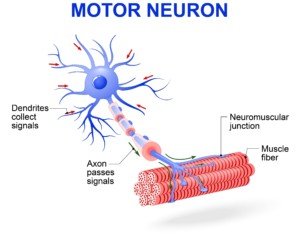
Shutterstock/Designua
“Above all, fatigue is the reason for the muscle twitching,” explains Kevin Plancher, MD, a leading sports orthopaedist and sports medicine expert in the New York metropolitan area.
“The muscles are most likely overworked at this point. The nerves that send impulses to the muscles become fatigued as well, which can cause erratic firing of the muscles.”
Long exercise sessions cause lactic acid to build up, resulting in a lack of oxygen.
Dr. Plancher says, “This alters the way the muscles contract as well, possibly causing twitching.”
As mentioned earlier, cramping can be brought on by stress. But it can also be caused by an electrolyte imbalance in the athlete.
“In order for a muscle to contract, electrolytes play a key role,” says Dr. Plancher.
Cramping and twitching can result from increased amounts of sweating that follow exercise, he says.
Also, cramping — or what the athlete describes as such — can simply be caused by an over-worked or over-stretched muscle.
Fasciculations shouldn’t be a nuisance, once you realize that they are a normal part of muscle physiology.
But there are ways to manage fasciculations, for those who don’t like the sensation.
Dr. Plancher says, “Movement is a very good way to minimize the twitching. It helps the body move the excess lactic acid out of the muscles.
“Secondly, it allows the electrolyte levels in the muscles to normalize if they are unbalanced due to fatigue of the nervous system.
“Stretching the involved muscles will help as well. This relaxes the muscles.

Freepik.com/Racool_studio
“Increasing fluid intake can be key to minimizing these episodes, especially if electrolyte imbalances are the culprit.”
Try a banana or an all-natural electrolyte beverage.
Dr. Plancher also suggests gradually working into an exercise session, rather than jumping in with too much, too soon.
“Do not overload in the beginning. You will see less adverse reactions with a progressive program.”
Finally, work on ways to reduce the anxiety in your life.
Dr. Plancher explains that the muscles of an anxious person are often tight — as in too much tension.
“The muscles would be in a constant state of contraction that would overwork the muscle and cause fatigue just like in exercising muscles.”
If you’re having a hard time settling down, consider doing muscle-relaxing activities such as yoga and swimming.
Lastly, spend some time in a sauna for its detoxifying and calming effects.
 Dr. Plancher is founder of Plancher Orthopaedics & Sports Medicine, and lectures globally on issues related to orthopedic procedures and sports injury management.
Lorra Garrick has been covering medical, health and cybersecurity topics for many years, having written thousands of feature articles for a variety of print magazines and websites. She is also a former ACE-certified personal trainer.
.
Top image: Freepik.com

Living with Benign Fasciculation Syndrome: Causes, Treatments

Benign fasciculation syndrome is a fancy name that simply means harmless muscle twitching that’s accompanied by cramping and maybe exercise intolerance.
Technically, everybody experiences benign fasciculation syndrome sooner or later.
The variables are duration and magnitude, not to mention the ALS scare that benign fasciculation syndrome often induces.
In fact, a fear of ALS has been known to cause full-blown benign fasciculation syndrome.
How It All Begins for Many
1) A twitching muscle becomes annoying. It may be very local or all over the legs—anywhere, actually.
2) You do an Internet search on “cause of muscle twitching” or similar.
3) ALS sites pop up in the first page of results.

Shutterstock/Aaron Amat
4) You start thinking you have ALS because one possible ALS symptom is muscle twitching.
5) Terror sweeps over you and your muscle twitching spreads throughout your body.
6) You begin perceiving weakness and even some cramping.
7) Nearly every waking moment is spent worrying about ALS (or multiple sclerosis).
What’s really happening is that the mind is playing tricks on you.
Another factor (which I’ll detail in a moment) is your lack of understanding of how Internet search engines work.
A person may no longer have an ALS fear yet still be taunted by benign fasciculation syndrome, in that twitching muscles can be nearly nonstop and really annoying.

Shutterstock/Shaynepplstockphoto
How is benign fasciculation syndrome treated, managed or cured?
Managing anxiety is a major way to suppress benign fasciculation syndrome, since anxiety is a major cause of twitching muscles.
Recognizing triggers of muscle twitching will go a long way. In my case, common triggers are trail running, hill dashing and power hiking.
Waiting out the storm. The more time under your belt from the institution of muscle twitching, the more reassurance you’ll have that this is not ALS, as ALS is progressive.
Buy a calendar and every day place a shiny red star on it to track time under your belt.
Before you know it you’ll have a cluster of stars equating to lengthy time passage—without any neurological regress if all you have is benign fasciculation syndrome.
Other causes of benign fasciculation syndrome or just plain muscle twitching:
1) Calcium, magnesium or potassium deficiency
2) Fatigue, eye strain
3) Medications and medication cessation
4) Viral infections
5) Lyme disease
6) Strenuous exercise
7) No known cause
When searching for a cause of muscle twitching, why do ALS sites or queries show up?
Back to my comment about Internet search engines. There is NO correlation between search engine results and the most likely cause of a symptom!
I specialize in search engine optimization writing, and believe me, if I write enough articles claiming that muscle twitching is caused by eating white bread, the first page of search results will show my articles!

MMMM, fresh baked bread! Shutterstock/monticello
Someone searching for causes of muscle twitching will then see all my page links and conclude, “Gee, I better stop eating white bread!”
Benign fasciculation syndrome isn’t a pathological process or disease in the true sense. It’s just a fancy name.
Muscles were meant to twitch while we’re under stress.
The theory is that they are on standby for a flight or fight response.
What does a neurologist have to say about muscle twitching?
“The key point with benign fasciculations is that, for whatever reason, they occur but they do not represent an ominous underlying condition,” says Kristina Lafaye, MD, a board certified neurologist specializing in clinical neurophysiology and neuromuscular medicine with Tulane Doctors Neurosciences.
“Yes, some people with benign fasciculations could experience them 24/7 (or so they say), but if nothing else is wrong, then I wouldn’t probe further.
“I don’t do any kind of a frequency count, because if a person doesn’t have evidence of denervation which, if present, would indicate a MND, myelopathy, or some other condition, then it doesn’t warrant any further neurologic evaluation.”
Dr. Lafaye is triple board certified: neurology, clinical neurophysiology and neuromuscular medicine from the American Board of Psychiatry and Neurology. Her expertise and leadership continue to make a significant impact on patient outcomes.
Lorra Garrick has been covering medical, fitness and cybersecurity topics for many years, having written thousands of articles for print magazines and websites, including as a ghostwriter. She’s also a former ACE-certified personal trainer.
Top image: Shutterstock/Miss Ty

Why Does My Urine Stink, Especially in the Morning?

Stinky smelly urine in the morning?
Or does your urine smell bad or like burning rubber at other times of the day?
Can anything be done about this bad smell in the morning or whenever it happens?
I myself don’t have bad smelling urine, but I wanted to get to the bottom of this common problem.
Many people are perplexed over this issue; sometimes the smell is a strong urine smell, and sometimes it’s that of burning rubber.
And, sometimes the bad smell or “strong” odor occurs only in the morning.
“Urine will often have a strong odor in the morning because it is very concentrated,” says David H.C. King, MD, Medical Director, Urology Services, El Camino Hospital Los Gatos.
But what about at other times of the day other than morning?
Dr. King says, “Certain foods and vitamins such as asparagus and vitamin B can also cause urine to have a strong aroma.”
The B vitamins in this case would be vitamin B complex and B-12 (found in animal-derived foods). Even a multivitamin can cause a strong odor.
Asparagus contains a compound that when broken down after the vegetable is eaten, releases an unpleasant odor.
Asparagus can also give your excrement a greenish tinge; don’t be alarmed; this is harmless.
Other Causes of Smelly Urine
Dr. King says, “Bladder or even kidney infections will also cause malodorous urine. It is important to have a urinalysis done to check for infections if you have a bad smell to the urine.”

Shutterstock/Tati9
Bladder infections are also known as urinary tract infections. Other symptoms of a UTI are burning, urge to urinate but nothing comes out, and urinary frequency.
Kidney infections are actually a type of UTI.
They can start in the bladder and make their way to the kidney and become life-threatening.
If your urine smells bad due to a kidney infection, you’ll have other notable symptoms of the infection including fever, abdominal pain, groin pain, and pain or burning when relieving yourself.
If you suspect a kidney infection, seek medical attention as soon as possible.
Dr. King says, “If there is no infection, then diluting the urine by drinking at least two to three liters of water a day and eating a bland diet should be able to help decrease the bad smell to the urine.
“Much more rare cause of malodorous urine can be related to metabolic disorders such as phenylketonuria or liver failure.”
 With 20+ years in general urology, Dr. King specializes in prostate disorders, kidney stones and urinary problems in men and women.
Lorra Garrick has been covering medical, health and cybersecurity topics for many years, having written thousands of feature articles for a variety of print magazines and websites. She is also a former ACE-certified personal trainer.