Can Easily Angered People Get Stockholm Syndrome?

Are people who get mad easily immune to developing Stockholm syndrome should they ever be held hostage?
Does it stand to reason that if it’s easy for people to anger you, that you would be incapable of getting Stockholm syndrome if abducted by one or more people?
Becoming easily angered can result from an inborn temperament type or to unresolved issues of abuse, fear or trauma, says David M. Reiss, MD, a psychiatrist from San Diego with extensive experience in PTSD.
In the case of the latter, the individual can end up with “interpersonal distrust and a tendency to be very easily disappointed, or even enraged – at times in response to minor ‘insults,’” says Dr. Reiss.
“IC” stands for involuntary captivity. When it comes to tolerating IC (a forerunner of Stockholm syndrome), anger can work two ways: 1) one easily expresses anger, and 2) one has trouble acknowledging anger.
In the case of #2, in which one denies and represses anger, “They are more likely to tolerate or excuse abuse, which likely would make them more vulnerable to Stockholm syndrome,” says Dr. Reiss.
Of course, people held hostage must learn to control expression of anger to avoid beatings by their captor. Suppressing anger is not the same as repressing it.
A hostage can feel the raging beast inside and imagine ripping the head off their captor first chance they get, yet from the captor’s point of view, this tied-up victim is as calm as a clam.
On the other hand, if the victim loses “their ability to acknowledge and experience that they are angry, they may be prone to perceive the perpetrator in unreasonably positive terms, minimizing the abuse and evil nature of the disease and instead being ‘thankful’ that ‘things aren’t worse,’” says Dr. Reiss.
Not that the victim shouldn’t be thankful they are not dead, but at the same time, says Dr. Reiss, they need to be aware of the reality, that being held hostage is nothing to be grateful for, and that feeling anger, fury, rage, the whole nine yards, is perfectly appropriate, and necessary to maintain objectivity…thus warding off Stockholm syndrome.
Summary
Dr. Reiss says that in abusive situations, “It is important to be able to experience anger without an over-reaction or unreasonable denial.
“Of course expressions of anger must be controlled in the name of safety, but a healthy ability to tolerate and control the experience of anger is probably protective, while tendencies to overly repress anger or to have difficulties coping with anger may be significant risk factors” for Stockholm syndrome.
 Dr. Reiss has been in private practice 25+ years, specializing in adult and adolescent psychiatry, having evaluated and treated over 10,000 patients.
 Lorra Garrick has been covering medical, fitness and cybersecurity topics for many years, having written thousands of articles for print magazines and websites, including as a ghostwriter. She’s also a former ACE-certified personal trainer.
.
Top image: Freepik.com/ pch.vector

Weightlifting Shoes vs. Plates to Elevate Heels for the Squat

Find out how weight plates compare to weightlifting shoes when you want to elevate your heels to do squats.
Which is better for the back squat: weightlifting shoes or plates? Or, to put it another way, what’s the difference between using plates and wearing weightlifting shoes when it comes to performing a good back squat?
People in muscle building forums have actually asked if there’s any difference between the elevation from placing one’s heels on plates and the elevation produced by a weightlifting shoe.
If you must choose between plates and weightlifting shoes, choose the shoes. The shoes are on your person and thus eliminate the problem of instability.
They eliminate the hassle of looking at your feet to make sure they’re positioned just right on the plates.
They eliminate the hassle of aligning the plates up just perfectly so that your feet are flush.
Finally, weightlifting shoes eliminate the precariousness of stepping backwards and onto a platform while 225 pounds are across your back.

Many different styles and makes of weightlifting or powerlifting shoes are on the market.
The difference between plates and weightlifting shoes for the squat, then, is obvious: a built-in stability with the footwear.
Another difference between plates and weightlifting shoes is that when you use plates, the middle of the bottom of your foot is not in contact with anything. It’s more of an unnatural foot position than with the shoes.
Some feel they must elevate their heel because perhaps they’ve seen a photo of Arnold doing squats this way. Many people who elevate their heels for squats actually don’t need to do this.
Others who elevate their heels have “bad anthropometrics” for the back squat, meaning, their femur length exceeds their torso length, or if these body parts are equal in length, their shin bones are disproportionately short relative to femur length.
Elevating the heels artificially lengthens the shin bones.
Heel elevation shifts knees forward just a little bit, which in turn shifts the shoulders forward, which enables your torso to be less leaned forward to maintain balance during the back squat.
You’re thus able to squat lower without leaning as far forward.
However, the artificial lengthening of the lower legs does not mimic the real thing, which is why heel elevation can strain the knees with heavy squats.
Furthermore, heel elevation de-emphasizes butt and hamstring activation and concentrates more of it in the quadriceps.
The recommendation for those with disproportionately long femurs who struggle with the back squat is to employ neither weightlifting shoes (about $100) and plates (unstable), and instead use a wide stance (Sumo stance) with feet pointed slightly outward. In addition, work on improving hip flexibility.
Lorra Garrick is a former personal trainer certified through the American Council on Exercise. At Bally Total Fitness she trained women and men of all ages for fat loss, muscle building, fitness and improved health.

Is Making Your Child Do Pushups for Punishment Abuse?

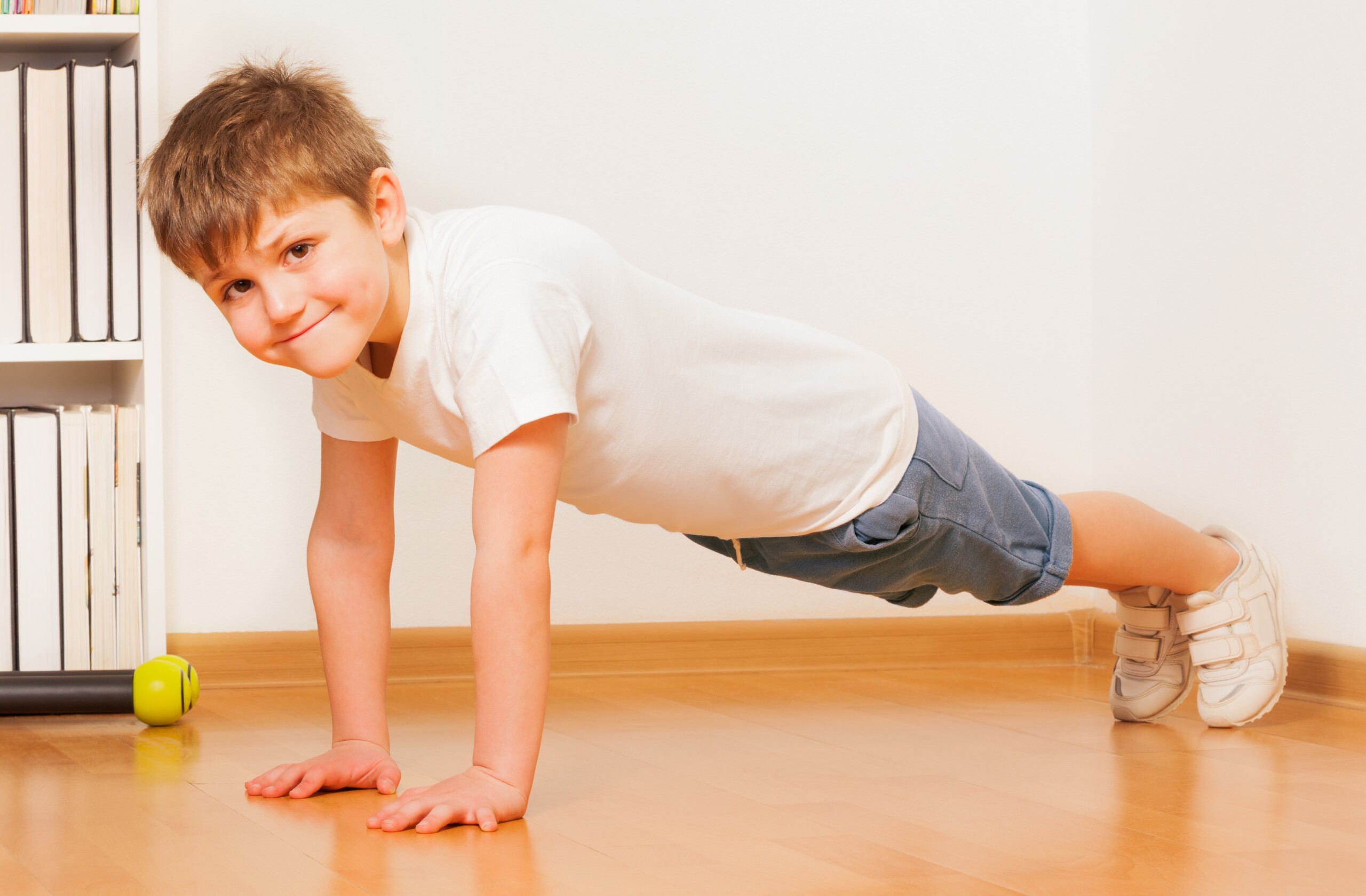
Is it abusive to punish your child with pushups?
I wonder if the people who think this is a form of child abuse are also opposed to spanking or other forms of corporal punishment.
I’ll be doggoned if a parent, who thinks nothing of whacking their child, actually thinks it’s cruel to use pushups as a form of punishment when that child misbehaves.
For those of you who believe that making kids do pushups as punishment is abuse:
How many of you have made your kids get down on their hands and knees and do household chores for punishment? Is this any less abusive than doing pushups? Think about that.
Household chores can be a real physical drain on a young body. Have you ever made your wispy little kid haul out heavy garbage bags for punishment?
How about vacuuming the floor of the car, raking leaves, shoveling snow, cleaning windows or wiping the baseboards – for punishment?
It’s not uncommon for parents to make their naughty kids perform household chores or yard work for punishment.
Yet household chores are actually dirtier to do, and more stressful to the body in many ways, than are pushups, especially when equipment (e.g., vacuum cleaner, weed whacker) is used.
Pushups are the foundation of any good physical fitness program.
They are performed in the military by the millions, and are used by personal trainers as part of a fitness assessment.
I was a personal trainer for five years at a gym, and though my clients were adults (though I’ve had some teen clients), from a physical standpoint, it is perfectly safe for kids to do pushups — but what about for punishment?
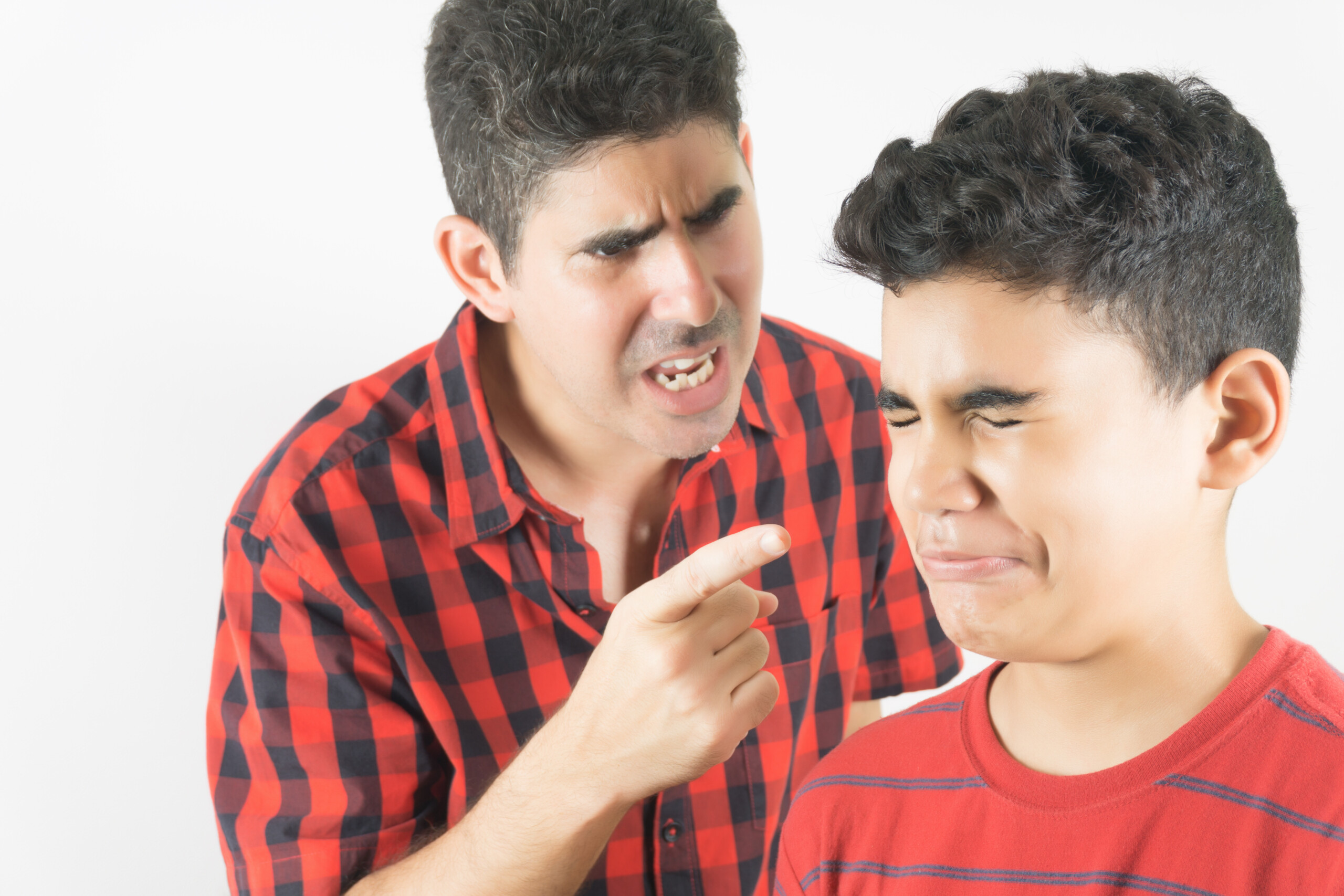
If the parent screams and hollers at his child to do pushups for punishment, this is out of line, extreme, and shows lack of control on the part of the parent.
Be cool and collected.
Can pushups lose their effectiveness with misbehaving children?
This is possible if your child, on the sly, practices pushups.
It’s also possible if every chance the parent gets, she or he doles out a session of this exercise to teach a lesson.
A young body will adapt to this exercise eventually.
If that happens, no problem: Have your child add a squat jump at the end of the pushup!
The entire move is called a “burpee.” You go down in the pushup, then back up, then quickly spring your feet and hands close together on the floor to prepare for a vertical jump from a squatting position.
After coming down from the jump, you do another pushup.
This raises the intensity level considerably.
Don’t be afraid of making your kids do pushups for punishment; they will gain physical fitness along the way, won’t get bruised, and it is not against the law; you cannot be arrested.
Just keep a calm, controlled demeanor, then follow up with an explanation of why the misbehavior was wrong, and what your child should have done instead that would have been the smarter choice.
 Lorra Garrick has been covering medical, fitness and cybersecurity topics for many years, having written thousands of articles for print magazines and websites, including as a ghostwriter. She’s also a former ACE-certified personal trainer.
Top image: Shutterstock/Sergey Novikov

When Parents Blame Their Child for Being Bullied

If you’ve ever scolded your child upon learning he or she was a victim of bullying, you made a horrible mistake as a parent.
Parents should never show anger or scorn towards their child upon learning that he or she is the victim of a bully. Nevertheless, there are parents who blame the victim of bullying.
“Many parents think that bullying is just a rite of passage, or that their child is to blame,” says Carleen Wray, executive director of Students Against Violence Everywhere (SAVE), which equips youth with information to take action to prevent and solve bullying issues.
This reminds me of a woman I babysat for when I was 15.
When I arrived for the babysitting appointment (the boys were about 11 and 8), the mother was fiercely scolding the older boy.
I thought he’d done something really bad to deserve the tongue lashing.
She then informed me that some kid was harassing her son at school.
How can any parent scold their child who’s a victim of bullying?
This mother was just downright mean. I must add that she was always very nice to me, and in my “employee” position and 15-year-old mind, I did not know how to challenge her about her highly inappropriate behavior.
I just accepted it. Sometime after the boys’ parents left, the bully came over to the house: a slightly older, obese kid, asking for the 11-year-old. I told him to go home and he left.
“Parents often do not understand why their child was a victim and assume it must have been his fault,” says Wray.
“They may say he should have had more backbone; he should have stood up to the bully; he shouldn’t be such a book worm or he should act more manly, etc.”
Parents need to understand, says Wray, that bullying is intentional aggressive behavior: There is an aggressor, and there is a VICTIM.
“This is similar to the crime of rape, where the victim is often subjected to blame and judgment and may hear accusatory comments regarding their choice of suggestive clothing or behavior,” explains Wray. “Any student who is bullied is a victim, period.”
If you find yourself reading the riot act to your child because he or she is being bullied, you may want to fast-forward several decades and imagine how eager your child, now grown, would be to assist you in your recovery from total knee replacement surgery.
Will he/she be there for you in YOUR time of need? Do whatever it takes to stop blaming your child for being bullied!
 Carleen Wray
Lorra Garrick has been covering medical, fitness and cybersecurity topics for many years, having written thousands of articles for print magazines and websites, including as a ghostwriter. She’s also a former ACE-certified personal trainer.
.
Top image: Shutterstock/Mastaco

Should Kids Do Pushups: How Young Is Too Young?

Can a child be too young to do pushups? How young is too young for kids to do pushups?
What’s interesting about this question is that babies do this type of motion all the time.
Though there is no practical reason to make a young child do pushups (as far as fitness is concerned, there are parents who enforce this exercise as punishment), it certainly isn’t harmful to a child’s body.
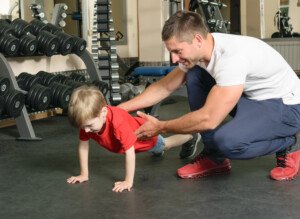
How many times have you seen a baby press up his or her body weight as though trying to do a pushup?
His upper body is off the floor, arms/shoulders holding it up, while the legs are still on the floor.
But what about preschoolers and young grade schoolers?
Shutterstock/siSSen
Is it safe for kids these ages to do pushups?
Yes, it definitely is safe. Think of the things that kids do, that you normally wouldn’t think of as being potentially harmful to their joints or muscles.
Examples are lugging around heavy bags of raked leaves, carrying out the garbage, picking each other up during play, carrying around dogs or their toddler siblings, bowling, and carrying heavy backpacks on their backs at school.
These are all weight-bearing activities that stress a young, growing body unequally and put strain on the back!
Pushups, on the other hand, stress the child’s body equally on both sides, with very minimal strain on the back.
Though few young people can do a complete pushup without a lot of practice, this doesn’t mean that this exercise is dangerous for them.
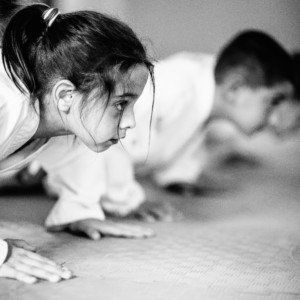
I have spent a number of years training in the martial arts, and have witnessed scores of young kids doing pushups.
Shutterstock/Microgen
Do novice children struggle at these? Of course. But so do teens and adults.
The ability to do this exercise is learned, either directly (as in the case of kids), or indirectly, as in the case of adults who lift weights.
If your child wants to train at pushups, encourage it. If your child must do them as part of martial arts training, then don’t fret.
Kids can become very efficient at performing this handy exercise.
If you want to make your child do pushups for general fitness this is perfectly fine.
This exercise will not injure kids unless they’re forced to overdo it and hence, harm a shoulder joint.
They are more likely to “pull something” while shoveling snow or lugging around heavy garbage bags.
Lorra Garrick is a former personal trainer certified through the American Council on Exercise. At Bally Total Fitness she trained women and men of all ages for fat loss, muscle building, fitness and improved health.
.
Top image: Shutterstock/Duct
Can Congestive Heart Failure Make Troponin Rise and Fall?

You may know that congestive heart failure can cause troponin elevation, but would this elevation necessarily stay there or can it “spike”?
A blood test that comes back elevated for troponin always means that something is going on — this is not a lab error, since the cardiac troponin test is extremely sensitive.
If the elevation of troponin is in the “indeterminate range” or “grey area,” and subsequent blood tests show a fall, this is not indicative of a heart attack. But something happened.
If prior, the patient was diagnosed with congestive heart failure (chronic, not acute), one might think that this higher-than-normal reading of troponin (a protein enzyme that’s leaked from damaged cardiac tissue) was triggered by congestive heart failure.
On the other hand, if subsequent tests show a drop back to a normal level—this points more towards an acute (sudden) event. So here’s the big question:
When congestive heart failure causes elevated troponin, can this elevation be temporary, transient, intermittent?
Or would it necessarily be a new “baseline normal” for the patient, since CHF doesn’t come and go, but is there to stay?
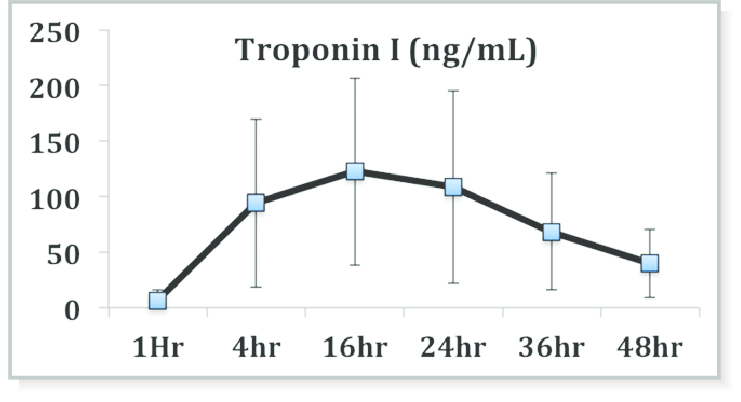
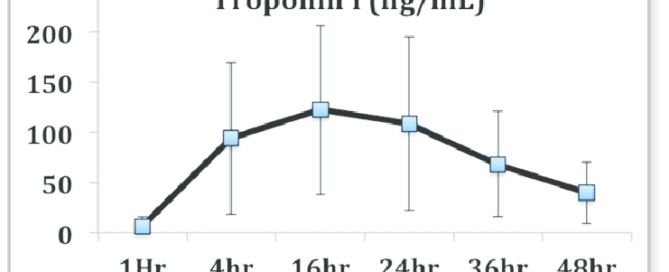
“It is persistently flat; it is usually only mildly elevated and does not rise and fall like in an acute myocardial infarction,” says Dr. Adam Splaver, clinical cardiologist and co-founder of NanoHealth Associates, a practice that explores the molecular level of cardiovascular disease.
“Flat” refers to the same ongoing level, not fluctuating back and forth between indeterminate range and normal..
If a CHF patient’s troponin is elevated in the indeterminate range fairly soon after suspicious symptoms begin, and then it actually drops on subsequent tests, this rise and fall is not from the congestive heart failure; it’s from something else.
But the grey area range is not sufficient to diagnose heart attack (myocardial infarction).
Dr. Splaver says, “Troponins are never suggestive of CHF; they are only an indicator that heart damage has occurred.”
So even though chronic CHF can indeed cause an elevation, it’s of the persistent or “flat” type, not the rise-and-fall type.
Doctors need to find out what caused the rise-and-fall in a patient with chronic CHF.
If a patient’s troponin result is, say, 0.18 (normal is zero to 0.04 for cardiac troponin T), this is not a normal result; it’s indeterminate and warrants another test several hours later.
If the second test is lower (say, 0.13), this is a “fall,” even though we’re talking a decimal fraction of hundredths. Remember, this test is highly sensitive.
Dr. Splaver says that this scenario suggests that an acute event occurred (but not a heart attack), even though 0.18 isn’t that much more than 0.04 from a mathematical perspective.
So what else might have been going on with such a patient? Again, doctors will look into this.
Other causes of a rise-and-fall of troponin into the indeterminate range and then to the normal range include a coronary artery spasm and atrial fibrillation.
However, in order for an episode of AF to elevate troponins, there would have to be severe underlying coronary artery disease.

Dr. Splaver is board certified in cardiology, internal medicine and echocardiography, and is a registered physician in vascular interpretation and trained in age management medicine.
Lorra Garrick has been covering medical, fitness and cybersecurity topics for many years, having written thousands of articles for print magazines and websites, including as a ghostwriter. She’s also a former ACE-certified personal trainer.
Top image: Shutterstock/designer491

Child Accused of Bullying? What Parents Should Know

The stereotypical reaction of a parent, when they learn their child/teen has been bullying another individual, is to deny their child’s behavior or make excuses for it.
And often, this is the case, but another scenario also often plays out:
The parent/s lambast their child or teen, and actually behave towards them in a way that’s similar to how the child bullies at school!
I once heard a woman, whose kids were grown, announce, “If my kids were ever bullies, I’d nail them to the wall!”
A man I once knew berated his son and said, “You’re the duncehead!” after he learned his son called a neighborhood boy “duncehead.” The apple doesn’t fall far from the tree.
Tips for how parents should respond upon learning child is a bully:
“If a child is accused of bullying, the first step is to take the accusation seriously,” says Rashmi Shetgiri, MD, MSHS, medical director at Pediatric Primary Care Clinic in Los Angeles whose research interests include bullying and youth violence prevention.
“It is important to talk with the child and, if possible, the accuser or school to ascertain all perspectives on the situation.”
Did that man ever inquire why his son called the boy “duncehead”? Perhaps the boy had threatened his son.
Perhaps the boy pushed the son to the ground. The son was too scared to explain why, and he was never asked why, either.
It’s possible the boy simply felt like taunting the other kid. This warrants a talk between son and father.
But the “talk” should not be one-sided or of a berating, demeaning tone — this parent-to-child dynamic often causes the child to be a bully at school — or a victim of bullies.
“After determining what happened, parents can talk to their child about the intentions behind his/her actions,” explains Dr. Shetgiri.
“Some children who bully may not realize the impact of their actions, or may be bullying as a result of peer pressure.”
Parents should not harangue their kids for submitting to the peer pressure to be mean, though it’s understandable when an adult simply cannot figure out how a child, especially an older child, could allow themselves to be swayed to the dark side.
Parents are capable of this very behavior — a mob mentality of becoming mean-spirited because their peers are doing so.
Look no further than youth baseball or soccer games, where parents have been known to explode in temper tantrums and holler obscenities to coaches and umpires.
If you find out your child is a bully, you can “then discuss and model respectful interactions with peers, and set expectations” for your son or daughter’s behavior, says Dr. Shetgiri.
“Finally, parents can periodically communicate with schools to determine if the situation is improving, and can consider having their child speak with their school counselor or a psychologist to evaluate for any mental health or behavioral concerns that may be contributing to their bullying behavior.”
Dr. Shetgiri also suggests that parents bring up the situation with the child’s doctor to see whether or not a mental health referral is warranted.
 Dr. Shetgiri is particularly interested in prevention of violence among Latino youth, the implementation of primary-care-based bullying and violence prevention strategies, and health outcomes for children exposed to violence and abuse.
Lorra Garrick has been covering medical, fitness and cybersecurity topics for many years, having written thousands of articles for print magazines and websites, including as a ghostwriter. She’s also a former ACE-certified personal trainer.
.
Top image: Shutterstock/Suzanne Tucker

Parents’ Mistakes that Make Kids Attract Bullies Like Flies

An expert weighs in on if there’s a such thing as a bullyogenic parent, one whose mistakes turn their kids into bully magnets.
If humans are a product of their environment, it should stand to reason that bully magnets are created by their parents’ mistakes, rather than dealt a bad genetic hand at conception.
This is a conclusion that many people in the general population are apt to make. But just how accurate is this conclusion?
“There is surprisingly little research to support the notion that parenting styles can make children more likely to be a victim,” says Rona Novick, PhD, who developed the BRAVE bully prevention program.
A clinical psychologist, Dr. Novick has worked with schools nationally on the issue of bullying, and is director of the Fanya Gottesfeld Heller Doctoral Program at Yeshiva University, NY.
She adds that a lot of what puts kids at risk for bullying has to do with their reactivity to situations and how much they show their distress.
“This is a characteristic largely fueled by temperament, a child’s predominate biological nature.”
Sometimes this can be observed even in infancy; a mellow, “easy” baby versus a fidgeting, demanding baby.
Dr. Novick says that parents of very reactive children are no more to blame for this than they are for their child’s height.
“Of course, being blessed with a reactive child, parents can certainly make things worse.
“Overprotectiveness is the one parental characteristic that research has found mildly connected to a child being bullied.
“Certainly, once a child is victimized, it is so natural for a parent to want to run to the rescue, or to teach the bully a lesson.”
Dr. Novick cites a case of a man whose disabled daughter was getting bullied on her bus.
He boarded the bus and threatened the bullies.
There are other cases of similar scenarios, in which a parent confronts their child’s bullies on a bus.
This may be effective for the moment. But then what happens after the parent gets off the bus or a week later when the impact of the intervention has thinned out?
The bullied student must “spend the school day in the company of the now aroused and possibly vengeful bullies,” says Dr. Novick.
“Parents need to be certain they are not making things worse, and they should listen to their children who are often the best informants about what will be embarrassing, inappropriate, or leave them in a worse position.”
Can parenting mistakes make a child more likely to be the bully?
Research indicates that kids raised in environments with inconsistent discipline, neglect or overly harsh punishment may develop aggressive behaviors.
A study by the National Institutes of Health found that inadequate emotional support and poor modeling of conflict resolution skills contribute to bullying tendencies.
 Dr. Novick is recognized for her expertise in behavior management and child behavior therapy. She has published scholarly articles on school applications of behavior management, children and trauma, and bully prevention in schools.
Lorra Garrick has been covering medical, fitness and cybersecurity topics for many years, having written thousands of articles for print magazines and websites, including as a ghostwriter. She’s also a former ACE-certified personal trainer.
.
Top image: Freepik.com

Why Parents Tell Kids to Ignore Bullying & Why It Fails

It’s a whopping myth that ignoring bullies makes them go away, so why do parents give this bad advice to their kids?
If your child is a victim of bullying, and you’re tempted to go the easy route by telling him or her, “Just ignore it,” you must seriously reconsider this approach.
“Although removing the reinforcement and attention from bullies should make them stop their harassment, it is not so simple,” says Rona Novick, PhD, who developed the BRAVE bully prevention program.
A clinical psychologist, Dr. Novick has worked with schools nationally on the issue of bullying, and is director of the Fanya Gottesfeld Heller Doctoral Program at Yeshiva University, NY.
How would these parents feel if, upon reporting to the human resources department that they were being sexually harassed by their boss, the HR manager told them, “Just ignore it”?
Can you say lawsuit?
Yet kids are told to ignore bullies!
Why is harassment to adults at the workplace worthy of a million-dollar lawsuit, but when it applies to kids at school, they should be expected to possess the psychological strength to “just ignore it”? What is this world coming to?
“Parents often tell victims to ignore bullying, hoping that if their child (the victim) does not give the bully the satisfaction of showing they are hurt, the bully will cease and desist,” says Dr. Novick.
Only a robot can hide feelings of hurt on their face and in their body mannerisms and speech patterns.
“In reality, bullies get very locked into their power dance with victims,” she continues.
“This means that when a victim does ignore (and by the way, since victims are often very reactive, this is extremely hard for victims to do), a bully will likely come back with escalating cruelty.”
Imagine the stress buildup in kids, even older high school kids, whose only weapon (or so they’ve been taught) is to continuously try to ignore verbal assaults at a place where they spend many hours, five days a week, nearly 10 months a year.
“Even the strongest of victims can rarely ignore consistently, so eventually, the bully gets the satisfaction of experiencing power over his/her victim,” says Dr. Novick.
Origin of Myth
“This strategy of ignoring has been so commonly reported in the popular media, and many novels, TV shows, etc., erroneously show it as effective, leading parents to buy into the myth.”
Most parents genuinely feel for their bullied kids, but just don’t know what to do, adds Dr. Novick.
And very unfortunately, there is a percentage of parents who just don’t want to bother with the task of figuring out a solution.
Telling kids to ignore bullies is perceived as a fast, quick-fix solution that relieves the parent of duties.
Can three words solve a big problem? Not likely. Telling a bullied child to “just ignore it” is like telling a 90-pound weakling to just hit a home run.
“Children need an array of strategies; they need to know to have friends and stay with friends, because being alone makes you more vulnerable,” explains Dr. Novick.
“They need to learn to use humor appropriately, to diffuse bullying. They need to learn when and how to involve adults.”
Dr. Novick is recognized for her expertise in behavior management and child behavior therapy. She has published scholarly articles on school applications of behavior management, children and trauma, and bully prevention in schools.
Lorra Garrick has been covering medical, fitness and cybersecurity topics for many years, having written thousands of articles for print magazines and websites, including as a ghostwriter. She’s also a former ACE-certified personal trainer.
.
Top image: Shutterstock/fizkes

Should Parents Scold Child Who Bullies a Younger Sibling?

Find out what you should do and NOT do if one of your kids is bullying another one of your kids.
************
Is one of your children being a bully to a younger sibling? You have every right to be distressed over this, but be very careful how you respond, because the last thing you want to do is model the very behavior you don’t want your children to commit: bullying.
Bullying among kids has been in the news very prominently since the Columbine shootings.
The focus on whom the victims of bullying are tends to be very concentrated among classmates of the perpetrator.
However, what about when one sibling bullies another?
This brings to mind a few things: 1) A child (grade school to teenage) who gets bullied by an older sibling will be more vulnerable to harassment from classmates, and 2) the bully at school may be a victim of sibling bullying at home!
In other words, being harassed in one environment can carry over to another, while many trouble makers are also victims of bullies (bullyingstatistics.org).
Are you the type of parent whose first reaction, upon learning one of your kids is bullying a younger sibling, is to scold or threaten the older child?
This is no time to let emotions preside over rationale, according to Janet Lehman, MSW, co-creator of The Total Transformation Program; social worker who’s been a case manager, therapist and program director for 25+ years in traditional residential care and group homes for troubled children.
Lehman says that it’s the parents’ responsibility to provide a safe, stable home environment for their kids; there is no excuse for abuse, ever, and bullying is a form of abuse.
Lehman explains, “Scolding is not the best remedy; humiliating a child only escalates the behavior.”
I had a buddy in junior high school who had a habit of pushing around her younger brother; I don’t mean physically, but she’d ridicule him.
I warned her that one day the boy would be bigger and stronger than her, but she just shrugged that off.
However, her mother screamed at her one day after the boy complained, to the extent that my friend was in tears. Even at a young age, I knew this wasn’t right.
“The best approach is to clearly identify the behavior: Label it, communicate that it is unacceptable and attach a clear consequence for the rule breaking,” says Lehman.
Parents must ask themselves, “How can I instill in my child some kindness and empathy if I react like a bully MYSELF when I catch them pushing around a younger sibling?”
Dr. Lehman explains that if the bullying behavior continues, the penalty for it should escalate “until it is abundantly clear that the home is a bully free zone. If more parents recognized these behaviors at home, there would be fewer problems in academic settings.”
There’s an old saying that has a lot of truth to it: Kids don’t listen to their parents; they imitate them.
 Janet Lehman, with her husband James, developed the foundational parenting programs offered by EmpoweringParents.com.