What Full Time Moms Should Say to Rude Questions

Here are great responses for stay-at-home moms to fire back at people who ask rude or lame questions.
Stay-at-home moms have a right to be feisty and respond with clever comebacks to rude or absurd questions from “working moms.” So here are some clever responses for all the stay-at-home moms who’ve had it with the outlandish questions and comments.
Rude question: “When your children are older, you plan on getting a real job?”
Stay-at-home mom response #1: “What part about raising kids is fake?”
Stay-at-home mom response #2: “Last time I checked, having quantity time for quality moments and witnessing developmental milestones and wiping my children’s tears and teaching them about all sorts of fascinating things is pretty real to me.”
Stay-at-home mom response #3: “So if I got a job stocking items at Walmart, that would be more real than building character in my kids; putting things in perspective for them when they feel down in the dumps; and having the time to help my kids with science projects, essays and math?”
Rude question: “Oh my, then you don’t work at all?”
Stay-at-home mom response: “Precisely. You see, I have this magic wand. I wave it and it makes my kids’ nutritious lunches magically appear.
“If I tap the wand, it creates a robot that helps with my kids’ homework.
“If I toss the wand and catch it behind my back, a nanny will appear and take care of the kids and clean the house while I watch TV all day.”
Rude comment: “So you must have lots of extra time; can you pick my daughter up from soccer practice tomorrow?”
Stay-at-home mom response #1: “Funny, I don’t recall mentioning that I had spare time on my hands.”
Stay-at-home mom response #2: “Sorry, but I’d much rather spend that extra time at the gym. It’s great to go to the gym in the middle of the afternoon before the after-work crowds get there.
“While I’m keeping my upper arms firm, my kids are playing in the gym’s daycare.”
Dumb question: “How can you spend all day with your kids?”
Stay-at-home mom response #1: How can you spend all day with corporate management, like they really have your best interests at heart?
And all day listening to the drivel of coworkers? And all day with workplace rules? Dress codes? Someone else telling you when you can take breaks? Really! How do you do it?”
Stay-at-home mom response #2: “It’s easy to spend all day with people I love. Do you love your coworkers?”
If the person says, “As a matter of fact, yes, I absolutely do love the group I work with,” then ask, “Really? Would you jump in front of a train to save any of them? I know I would for my kids.”
Dumb question: “Don’t you miss intellectual stimulation?”
Stay-at-home mom response #1: “Are you implying that working outside the home automatically burns brain cells? Tell me, what do you do all day at work – build rockets and research an AIDS cure?”
Stay-at-home mom response #2: “While the kids are napping or eating or playing quietly, I’ll take to reading the latest medical science or classic literature.
What do you read in your spare time? Or I’ll watch an educational show on TV with my kids and we both learn about how things work – shows about animals, biology, science – what do you usually watch on TV? I also take my kids to educational places like museums and arts festivals – where we both broaden our minds.”
Stay-at-home mom response #3: “What makes you think my last job outside the home was intellectually stimulating? I’d put advertisements together on a computer.
“Big deal. My brain went soggy doing that. By the way, would you like a game of chess with my nine-year-old?”
Dumb question: “What do you do all day?”
Stay-at-home mom response: “One day my husband came home from work and saw my two older kids rolling on the lawn in a fistfight, and two of the garbage cans were knocked over with garbage everywhere.
“He went inside and saw food splattered all over the kitchen walls and floor, and dirty dishes everywhere.
“The toddler, face smeared with food, was in the living room drawing on the wall with his crayons. My husband stepped over piles of dirty laundry to get to the staircase.
“He went upstairs and nearly tripped on some toys. He found me in the bathtub reading a book and eating bon bons. He asked, ‘Honey, what in devil’s name is going on?!’
“I said, Dear, you know how when you come home from work, you always ask me what I did all day? Well, today I didn’t do it.”
 Lorra Garrick has been covering medical, fitness and cybersecurity topics for many years, having written thousands of articles for print magazines and websites, including as a ghostwriter. She’s also a former ACE-certified personal trainer.

How to Be Confident if You’re the Youngest Kid in Your Class!

There’s no shame in being the youngest kid in your class or entire grade!
I was once that kid, and I will tell you how to deal with it.
I skipped kindergarten, was 13 in the ninth grade, and 17 when I went to an out-of-state college.
Common complaints from kids who are the youngest in their class:
#1 Being made fun of for being the youngest in your grade.
Hearing from your parents, “Oh, just ignore them because they’re jealous,” doesn’t help much. Ignoring ridicule won’t make it disappear.
However, in all seriousness, ask yourself: What’s wrong with being made fun of because you’re younger than the other kids in your class?
Is there something inherently wrong with being 13, or whatever age you are?
Okay, if you’re 13 and in the sixth grade…I can understand that being made fun of for this will hurt.
But 13 in the ninth grade? You’ve accomplished something. Remind yourself of this — whether you’re actually in the ninth grade right now, or seventh grade or grade 10 — whatever your grade.
- Being younger means you’re academically ahead of same-age kids.
- This is not something that needs a fix.
Next time kids poke fun at you just because you’re younger than the rest of the class, say this:
“Well I get to graduate from high school way sooner than any of you! I’ll be free when I’m 17 (or 16)!”
Now be a good sport when you say these words; don’t speak in a hostile tone.
#2 It hurts to see classmates doing things that your parents don’t think you’re old enough to do.
Remind yourself that if your parents won’t let you start dating till you’re 15, it will take just as long to turn 15 — whether your classmates are 15, 14 or 13!
Most parents won’t let their kids date until they reach a certain age. It’s a parent’s rule that was probably decided upon before you were born.
The age of permission, whether it’s dating, going alone to the mall, babysitting or whatever, is determined by your parents’ approach to raising kids — NOT how old your classmates are!
#3 You may feel that you’re not as “mature” as the other kids in your class.
Ask yourself on what grounds do you make this conclusion? You could be dead wrong.
Often, the immature kids are either the same age as most everyone else in their class, or even a bit older.
I spent grades 9 and 10 in a school with almost 1,000 students, and this is so true: The younger kids for their grade were actually the better behaved students.
The older kids in the class thought they were the class leaders and were sometimes on an ego trip, which isn’t a mature way to think.
Being around older kids (who are mature) will accelerate your own maturity.
This is the same concept with sports. If your tennis partners are always a little better than you, you will get better faster than if your partners always play worse.
So if you’re around older kids all day long…the general rule is that you’ll be inclined to act a little older rather than a little younger.
Write down the names of kids in your grade you think are childish and immature. Write their ages next to their names. How many are older than you?
Other Points to Consider
Don’t bother trying to look older. Just be yourself. If classmates know your age, this won’t change if you start wearing makeup or doing something stupid to look older like smoking!
In fact, you may not even look younger than your peers anyways.
I looked no younger than my classmates all throughout my schooling. Many older classmates even looked younger than me.
And if you do appear a lot younger, realize there’s nothing inherently bad about a 13-year-old looking like a 13-year-old, or whatever age you are and looking your actual age!
Do classmates even know your age?
It’s possible that nobody knows you’re the youngest in the class. But maybe you’re worried about the word eventually getting out.
Remind yourself that there are kids, who are younger, who actually embrace this because — as mentioned — it’s a sign of achievement, not failure.
If you’re the youngest in your grade, stand proud and know that you’re ahead of everyone else. Focus on more meaningful things in life, such as:
Do you brush your teeth every night before bed? Do you exercise and try to eat healthy foods? And no matter what, DO NOT SMOKE. It stunts growth and does NOT make you appear older.
Lorra Garrick has been covering medical, fitness and cybersecurity topics for many years, having written thousands of articles for print magazines and websites, including as a ghostwriter. She’s also a former ACE-certified personal trainer.
.
Top image: Freepik.com/pressfoto

Pulmonary Embolus: D-Dimer Result Adjusted for Age 50-Plus

If your elderly loved-one’s D-dimer result came back positive — don’t yet panic that it’s probably a pulmonary embolism.
The older a person gets, the less meaningful is a positive D-dimer result when a pulmonary embolism is suspected.
If you present to the ER with symptoms that can be caused by a pulmonary embolism, you’ll get blood drawn for a D-dimer value.
“The body has a system that regulates our blood’s ability to clot,” says Christopher J. Hanifin, PA-C, who was previously a physician assistant in open heart surgery with Cardiothoracic Surgery of South Bend in South Bend, IN.
“Clots are always forming in our bodies in response to injury and inflammation, and the body needs a mechanism for breaking these clots down.
“As these clots dissolve, products of their breakdown can be detected in the blood.
“One of these products is called D-dimer, and an elevated D-dimer level may signal the present of a large clot somewhere in the body.”
D-dimer in Younger Adults
Hanifin explains, “In young patients, a D-dimer level is fairly sensitive for a large clot.
“It’s important to recognize that lab values do not remain fixed over the course of a lifetime.
“‘Normal’ values may change as part of the normal aging process. This is the case with D-dimer levels, which rise as people age.
“A naturally higher D-dimer level in patients can make interpretation of the test challenging.
“Fortunately, there are imaging studies that can assist in the diagnosis of pulmonary embolism.
“With older patients, a clinician will usually have a lower threshold for checking imaging studies.”
When the D-dimer is positive, the imaging tool of choice is the CT scan — to capture an image of the chest, which would reveal a pulmonary embolism if one (or more) were present.
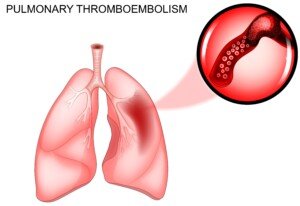
Pulmonary embolism. Shutterstock/Artemida-psy
However, the older a person is, over age 50, the less likely a positive D-dimer result will mean a pulmonary embolism.
Study: Sliding Scale Model for Evaluating a Positive D-Dimer
A 2014 issue of CHEST published study results regarding the D-dimer.
The typical scenario is that the patient presents in the emergency room with symptoms suspicious for a blood clot in the lung (PE).
Blood is drawn for the D-dimer. If it’s positive, that means a trip to the CAT scan wing or some other imaging modality.
This happened at least four times to my mother (senior aged). All the results were positive, yet a blood clot was never found.
In elderly patients, the result is often a false positive.
The study involved over 900 patients. Scott Woller, MD, adjusted the threshold for D-dimer levels to correlate to the patient’s age, with the idea of excluding a PE without having to rely upon the CT scan.
What’s the issue with the CT scan?
- It emits radiation.
- Results can take a while.
- A patient with weak kidneys is not a safe candidate, since the chemical dye used for the scan is toxic to weak kidneys.
What’s the standard cutoff for a D-dimer result to identify a blood clot?
It’s 500. Dr. Woller’s research recommends that this threshold should be bumped up for people over age 50:
Multiply the patient’s age by 10 for the cutoff value.
Thus, an 81-year-old’s cutoff value would be 810.
 Christopher J. Hanifin, PA-C, is currently Department Chair and Assistant Professor, Department of Physician Assistant, Seton Hall University, NJ.
Lorra Garrick has been covering medical, fitness and cybersecurity topics for many years, having written thousands of articles for print magazines and websites, including as a ghostwriter. She’s also a former ACE-certified personal trainer.
.
Top image: ©Lorra Garrick
Source: sciencedaily.com/releases/2014/12/141217141129.htm

Reasons the “Thigh Master” Won’t Trim Your Thighs
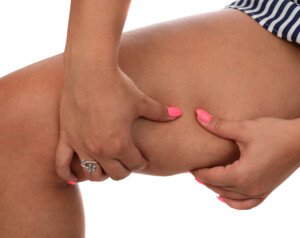
Even decades after its introduction on the market, the “Thigh Master” remains a popular piece of gadgetry, with its claim that it slims and tones the thighs.
One reason women fell for this was because the original pitch-person for this device was 1970’s TV star Suzanne Somers.
“I did aerobics ‘til I dropped,” Somers says in the original TV commercials.
Then she discovered the Thigh Master, she says in the ads, and is shown using the device and praising its results.
To use the Thigh Master (and subsequent similar copycat products), one lies on the floor or sits on the edge of a bed or chair and places the device between the thighs — as shown below.
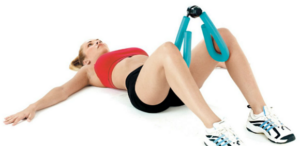
One then squeezes the thighs towards each other, against the resistance of the device.
In other words, these gadgets are portable hip adduction tools.
Hip adduction is the joint action of bringing the hips towards the midline of the body. This engages the inner thigh muscles.
The Thigh Master (and copycats) works only the inner thigh (hip adductor) muscles, yet the claim is that this gadget trims and tones the entire upper leg.
There are reasons why the Thigh Master won’t trim your thighs.
Only the hip adductor muscles are worked; it’s an isolation exercise of very small muscles.
This is the worst recipe for optimal fat burning.
Working just one muscle group, and relatively weak muscles at that, won’t cause a fat-burning cascade throughout the body — which is the only way to slash fat in the thighs.
In order to promote major fat burning, you must work large muscle groups by doing compound movements. Below are examples.

“Back” squat. Shutterstock/IvanRiver
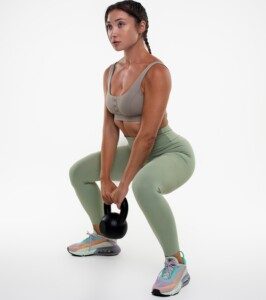
Kettlebell squat. Freepik

Deadlift

Jumping

Sled push. Pexels-airam-datoon
This dramatically increases the body’s energy needs when one uses moderately heavy to heavy resistance, or intensity such as with high jumping.
When the body’s energy needs are dramatically increased, serious fat-burning is the result — fat is pulled from fat cells throughout the body, including in the thighs — to feed exhausted muscle cells.
This process shrinks fat cells, which results in fat loss and a leaner appearance.
This incredible metabolic process doesn’t occur by just sitting in a chair and moving one’s legs in and out, even if the device is set at high tension.
The nature of the movement isn’t intense enough to burn significant fat. Hip adduction is not a power based motion.
The inner thigh muscles are not big power muscles, like the quadriceps, hamstrings and gluteus maximus muscles are. Movements that are not power based just don’t burn many calories.
See the Science
Why would working only one small portion of the legs result in trimming and toning the entire leg?
If you do only hip adduction, the inner thigh will get toned (while the layer of fat remains unchanged), but the quadriceps and hamstrings will not firm up.
The toning of the inner thighs by the Thigh Master does not mean that sufficient fat will be burned to convert heavy thighs into lean, buff thighs.
Do not believe the claim that this isolation exercise will tone and sculpt the entire upper leg.
This is impossible because, as mentioned, only one small muscle group gets worked with the Thigh Master: the hip adductors.
There are six of these muscles for each leg, but even all put together, they form a small, weak muscle group.
Think about the big power movements of the lower body: squatting, pressing, jumping and sprinting. There is minimal hip adduction action in these movements.

Leg press
These movements are powered by the quadriceps, hamstrings and gluteus maximus—big, powerful muscles.
If one performs exercises that target these muscles, the body will be forced to burn large amounts of fat to subsidize recovery from these workouts.
So there they all are:
Reasons why the Thigh Master won’t trim or tone the main portions of the thighs.
To slash fat in the whole leg and sculpt or tone them, one must perform intense compound movements like squats, deadlifts, leg presses, weighted walking lunges, sprints, hill dashes and box jumping routines.
 Lorra Garrick is a former personal trainer certified through the American Council on Exercise. At Bally Total Fitness she trained women and men of all ages for fat loss, muscle building, fitness and improved health.
.
Top image: Shutterstock/KlaraBstock

Corner Bar Single-Arm Shoulder Press Benefits
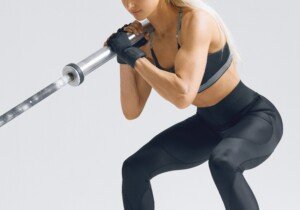
Few people do what would be called the corner bar single-arm shoulder press.
Many people may not even know what the corner bar refers to.
The corner bar is the Olympic bar that sits in the corner of a gym wall.
Sometimes there is a device on the floor in the corner, to which a person fits one end of the bar into for stability, as a pivotal point.
If the device isn’t there, the bar is jammed up into the corner anyhow.
The bar is angled out at the midpoint (about 45 degrees) between the two walls of the corner, and is typically used as a variation of a bent-over barbell row.
However, this type of setup can be used in numerous ways.
Corner Bar Single-Arm Shoulder Press Instructions
This exercise is also known as the landmine press.
One simply faces the corner (standing midway between the two walls of the corner) and picks up the bar, and using one arm, presses it above their head. The push may be preceded by a squat or lunge.
The angle of the press can range from straight up (vertical) to outward somewhat in front of the trainee.
An Olympic bar without any added weight is 45 pounds.
This will be too heavy for women to handle with one arm unless they’re already strong from lifting weights.
Thus, in this case, the not-so-fit person should use two hands, cradling the bar in both hands, both hands placed near the neck at the bottom or start of the movement.
You then extend the arms, hands rising right before the face in doing so.
Since this is a two-hand hold, the arms will be close together during the movement, and this means that there will be more triceps involvement than you may wish for if you’re seeking more of a pure shoulder workout.
However, if one-hand is too heavy, you have no choice but to first get stronger with two hands.
You can also get stronger by performing regular dumbbell and barbell shoulder presses, as well as using shoulder press machines.
Corner Bar Single-Arm Shoulder Press Variation
Another alternative for the weaker individual is to work at the one-arm version, but add a little leg thrust with the pressing.
In fact, this technique isn’t uncommon for those who are stronger and want to work with heavy weight with this exercise.
For stronger individuals, the start position (bottom of the movement) has the bar being held at shoulder level.
The hand placement may be directly above the shoulder, sitting on top of the shoulder in the rest position before the set begins.
The down-stroke, however, does not involve a rest, but rather, lowering the bar to just over the shoulder; there is no touching between reps.
The hand placement may also be (as already pointed out) a bit ahead of the trainee, depending on how close the hand is to the end of the bar, and where they are standing relative to the end of the bar.
If the hand placement is a little outward or ahead, the hand should be aligned with the outside of the shoulder, rather than the hand being aligned with the chest bone or somewhere between the chest bone and the shoulder.
You then push the weight as high as possible, straightening the arm.
If the extension of the arm goes out more horizontally than vertically, then this means that the movement is also a chest exercise, which is not what you want if you are seeking a solid shoulder exercise.
The more vertical the press, the more targeted the shoulder muscles become.
You stand in place, feet about shoulder width apart, and press the bar all the way up, then down, with the same tempo that would be used if you were pressing a dumbbell, barbell military style or the handles of a machine.
As the burn kicks in towards the end of the set, the trainee can add a little thrust with their legs (going up on their toes), or, they can assist with their other hand.
No twisting with the corner bar single-arm shoulder press…
At no time should you rotate or twist at the waist while performing this exercise. This includes while using the free hand to assist.
The torso must remain immobile and facing the pivotal point of the other end of the bar at all times.
Otherwise, to twist while lifting with one arm will put you at risk of straining the back muscles—and the pain can be debilitating and take a few weeks to heal.
If the bar alone is not heavy enough to induce failure or near-failure in 8-12 reps (the formula for maximizing hypertrophy), then you can add plates to the bar.
A variation of the corner bar single-arm shoulder press is to perform this exercise while seated.
Again, torso should be squarely facing the corner, the seat midway between the two walls of the corner.
The seated position takes stress off the lower back.
However, this position also forces more of an isolation of the shoulder muscles; this exercise, done seated, is harder than when done standing.
Lorra Garrick has been covering medical, fitness and cybersecurity topics for many years, having written thousands of articles for print magazines and websites, including as a ghostwriter. She’s also a former ACE-certified personal trainer.
.
Top image: Shutterstock/ Improvisor

What to Say Next Time Someone Says “Smile!”

“Smile!” Things can’t be that bad!” is one of the rudest things you can say to ANYONE.
“Smile!” Don’t you hate when someone says this to you? Even complete strangers will be this rude. And it’s usually a man saying this to a woman. Men rarely say “Smile!” to other men.
Is it because they fear a punch in the chops? Women rarely say this to men, as well. Or am I wrong?
But almost always, it’s a man saying it to a woman: “Smile! Things can’t be THAT bad!”
Heaven forbid if one of these clods says this to a woman who just learned her child has cancer. He deserves whatever response he gets.
To such a thoughtless man, I say: Really?
- How do you know things can’t be that bad?
- Do you know this woman personally?
- Are you living inside her head?
- Where do YOU get off declaring to someone you don’t know, that things can’t be that bad? What awful nerve.
If you’re a woman who’s getting increasingly angered by thoughtless men (or women) telling you to smile, here are smart, witty responses that will clam them up fast.
If the comment is just “Smile!” reply with one of these:
“MAKE ME.” Then give them a good long stare.
“AND IF I DON’T?” Then give them a good hard stare.
“SAY SOMETHING FUNNY.” Give them an emotionless gaze.
“AND WHAT, get smile wrinkles like some people around here?”
“I AM smiling. This is the face God gave me. Don’t like it? Take it up with HIM.”
“I DON’T SMILE ON COMMAND.”
“WHY?”
“WHY ARE WOMEN EXPECTED TO SMILE BUT NOT MEN?”
“GET RICH.”
No matter what you do, do NOT smile when someone commands you to.
The moment you smile just because a stranger told you to, you automatically rank yourself lower than them in the pack.
Women have a right to wear a face that reflects the bad day or bad week they’re having.
Shutterstock/Nicholas Piccillo
For God’s sake, what do you hope to accomplish by telling a woman, whose husband was just given a terminal cancer diagnosis, to smile?
You have NO idea if her sour face is because of that, or if it’s because she gained a pound over the weekend.
YOU DON’T KNOW, SO STAY QUIET.
And some people can’t help it; it’s the face nature gave them.
If the comment is:
“Smile! Things can’t be that bad!” reply with one of these:
1 “How would you know?” Then stare at them blankly while they try to figure out a way to get out of that one.
2 “How DARE you make that assumption about someone you don’t know?”
3 “Things can’t be that bad?? My dog got hit by a car three days ago and might lose a leg. My beloved Aunt Alice was just diagnosed with heptaphalocytovycosis. My house was broken into last week. My car needs a $1,000 repair. Now what were you saying?”
If anyone has any other great responses, please leave your comments.
I just can’t believe that people could be so rude to strangers.
Is it anyone’s business how you wear your face, especially if you’re waiting for the biopsy results?
Even if I’m having a great week, this doesn’t mean I’m going to smile.
- The human face does not naturally set in a smiling expression.
- Are people too dull to realize this?
Don’t you also find it odd that almost always, when someone tells you to smile, he himself is NEVER smiling?
I guess another great response would be: “WHY DON’T YOU?”
Lorra Garrick has been covering medical, fitness and cybersecurity topics for many years, having written thousands of articles for print magazines and websites, including as a ghostwriter. She’s also a former ACE-certified personal trainer.
.
Top image: Shutterstock/ArtFamily

Diet for Kids with Prader-Willi: Raw Vegetables All Day Long?

Why do women feed their Prader-Willi kids cereal for breakfast?
I was inspired to write this article after reading about a women whose 14-year-old daughter weighs 343 pounds (as of August 2014).
Hannah has Prader-Willi syndrome. If you clicked on this article, you know what PWS is, so I won’t explain it.
What puzzles me is why Hannah’s mother gives her cereal for breakfast. You don’t get a lot of bang for your buck with cereal. Three-quarters’ cup may be 120 calories—and then there’s the milk.
Cereal is a highly processed food that’s loaded with simple carbs. All Hannah gets is one cup. Then she’s done. “When’s the next meal?”
Americans are brainwashed into feeding their kids—PWS or healthy—cereal for breakfast. But cereal is not a health food.
Why not feed Hannah three cups of food for breakfast—but instead of something that comes from a manufacturing plant, how about something that comes from a real plant?
How about one bowl of diced carrots and celery; a second bowl of sliced cucumbers, tomatoes and cauliflower; and a third bowl of radishes and beets?
You’re probably thinking, “Ugh, you can’t expect a teenager or younger child to eat THAT for breakfast!”
But Hannah has eaten dog biscuits. Another Prader-Willi child I’ve read about would eat soap.
Do enough reading about what kids (and adults) with Prader-Willi syndrome will eat when not supervised, and you’ll come upon all sorts of things, like vegetable oil, jars of mayonnaise, sticks of butter, raw meat, even cardboard.
So if someone with PWS will eat these kinds of items, I’d think that several bowls of fresh vegetables would be most palatable, especially if they’re seasoned.
Three bowls of the aforementioned vegetables and fruits (tomatoes and cucumbers are fruits) equal the same calories as one cup of cereal—without the milk.
Raw produce is loaded with enzymes and natural antioxidants. Three bowls of the produce are far more healthful than the cereal.
And from a psychological perspective, the three bowls are far more satisfying because it would take longer to eat this tripled volume.
There’d be a lot of chewing. There’d be different colors, tastes and textures. Lots of crunching.
Hannah and others like her would be less inclined to be begging when their next meal is.
I’ve read about PWS kids being fed three meals a day and two snacks. Cassidie gets only four feedings a day—it’s spelled out on her Facebook page (run by her mother).
I realize that at only age seven, Cassidie can’t have more than around 900 calories a day or she’ll put on a lot of weight.
But she’d be able to have additional feeding times if some of the “regular” food was converted to vegetables.
And why do Prader-Willi kids get juice? Juice is loaded with calories. Even “normal” people, who want to lose weight are advised never to drink calories—to drink only water or Stevia-sweetened beverages—and CHEW calories!
Juice is gone in seconds: Bang, just like that—100 calories! For the same 100 calories, a person with Prader-Willi syndrome could be biting into, chewing and swallowing several cups of carrots, celery, radishes, cauliflower and broccoli.
Why give them juice? Is that necessary? No. Is the cereal necessary? No.
But cereal and juice are heavily marketed towards parents, so they’re brainwashed into thinking that if they don’t give their kids cereal and juice—they’re depriving them of something beneficial.
A child with the life-threatening disease of Prader-Willi syndrome needs a different set of rules.
A cup of the lowest calorie raw produce every two hours will surely eliminate the constant “When’s my next snack?” and provide a psychological type of satiation with all the biting into, crunching and chewing.
Lorra Garrick is a former personal trainer certified through the American Council on Exercise. At Bally Total Fitness she trained women and men of all ages for fat loss, muscle building, fitness and improved health.
.
Top image: Shutterstock/giedre vaitekune
Sources:
http://www.dailymail.co.uk/news/article-2738508/A-padlocked-fridge-dog-food-hidden-The-heartbreaking-condition-s-left-14-year-old-Hannah-unable-stop-eating-desperate-lengths-mother-control-appetite.html
https://www.facebook.com/CassidiesPWSJourney

Colon Cancer Abdominal Pain vs. IBS Pain: a Comparison

Does the abdominal pain from colon cancer have any resemblance to that associated with irritable bowel syndrome?
“Colon cancer with abdominal pain suggests advance stage cancer,” says Pankaj Vashi, MD, Lead National Medical Director, National Director, Gastroenterology/Nutrition/Metabolic Support, Cancer Centers Treatment of America.
Dr. Vashi explains: “The symptoms are more acute with other coexisting ‘warning signs’ like weight loss, blood in the stool, change in bowel habits.
“And loss of appetite vs. IBS related pain is a very chronic condition, usually in females, and the symptoms are present for years, usually starting at a younger age with NO associated warning signs.”
More on Abdominal Cramps and IBS
“Irritable bowel syndrome is a common GI disorder characterized predominantly by abdominal pain, that is associated with a change in stool habits; either constipation, diarrhea or a combination of both,” explains Nnenna C. Okpara, MD, gastroenterologist and director of endoscopy at the Center for Women’s Gastrointestinal Health, Women & Infants Hospital in Providence, RI.
“The pain tends to improve after bowel movements,” she continues.
“IBS symptoms can be mild, moderate or severe, and can have significant impact on the affected individual’s quality of life.
“Nonetheless, it remains an overall benign disease; it does not cause cancer and is not linked to any decrease in length of life.
“Though the single most common symptom in irritable bowel syndrome is abdominal pain, a fair proportion of IBS sufferers also complain of other pain patterns and locations; the most common of these being pelvic pain, headache, non-cardiac chest pain.”
Make sure that any chest discomfort is not the result of cardiac issues before attributing it to IBS or GERD. This will require seeing a cardiologist.
However, chest pain that changes with an alteration in body position, especially if a shift in position relieves it, probably isn’t heart related.
 For 20 years Dr. Vashi was instrumental in developing robust gastroenterology, and nutrition and metabolic support programs in all five Cancer Treatment Centers of America centers.
 Dr. Okpara’s clinical interests include colorectal cancer screening, gastrointestinal disease in pregnancy, and management of functional bowel disorders, including IBS and constipation.
Lorra Garrick has been covering medical, fitness and cybersecurity topics for many years, having written thousands of articles for print magazines and websites, including as a ghostwriter. She’s also a former ACE-certified personal trainer.
.
Top image: Shutterstock/fizkes
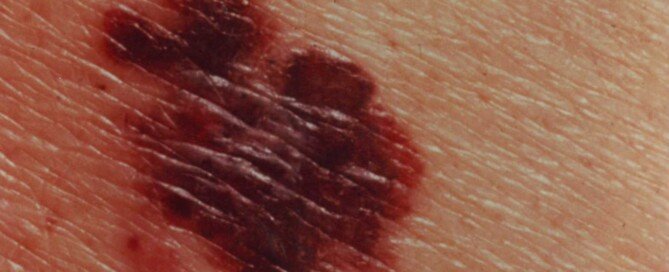
Is Your Mole Larger, More Irregular, Multi-Colored?
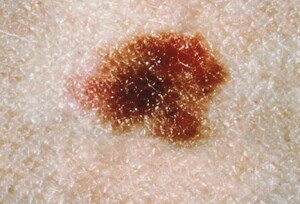
A dermatologist provides the information you really need to know about moles that grow larger, develop an irregular shape and become multi-colored.
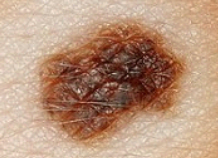
Certainly, you may already know that suspicious signs of melanoma are changes in a mole that include an increase in size, an evolving irregularity to its shape, and the formation of new colors.
Mole Is Bigger, Irregular, Has Different Colors
I once read in a melanoma-anxiety forum that a person noticed that his mole had gotten a bit bigger, had become irregular (he used that term — but didn’t really specify beyond that), and also became multi-colored (his wording again).
He said he feared melanoma and had it biopsied.
The result was benign. He didn’t say anything else, such as whether or not his doctor explained how these features could have changed yet the mole was still benign.
“While these worrisome features can frequently signify skin cancer, this is fortunately not always the case!” begins Dr. Rebecca Tung, MD, a
“Some medications can cause sun sensitivity leading to further pigmentation (color change) in lesions such as moles and freckles, yet do not cause cancerous change.
“Irregular shaped pigmented lesions may actually be freckles rather than moles.
“A biopsy of mole can be viewed under the microscope for a definitive answer.
“Typically, the microscopic features that identify skin cancer are very distinct from benign moles.”
A Biopsy Won’t Lie

You should always request a biopsy from your dematologist.
It is really no big deal because there is minimal discomfort.
During the procedure, a small sample of the mole or skin is removed for examination under a microscope.
Local anesthesia is applied to numb the area, so most patients feel only a minor pinch or pressure.
After the biopsy, you may experience slight soreness or tenderness at the site, but this typically resolves quickly.
The procedure is quick, and most people can resume normal activities shortly after.
Though waiting for the results means a lot of anxiety, this surely beats a situation of never-ending wondering because you didn’t have the biopsy for that odd looking mole with more than a few colors.
NOTE: When any mole is removed, regardless of the reason, it should always be biopsied.
Dr. Tung’s specialties include general dermatology with skin cancer surveillance, moles, melanoma, surgery (Mohs micrographic, laser, skin cancer reconstruction) and cosmetic dermatology.
Lorra Garrick has been covering medical, fitness and cybersecurity topics for many years, having written thousands of articles for print magazines and websites, including as a ghostwriter. She’s also a former ACE-certified personal trainer.
.
Top image: Cancer.gov

“The School Principal Is Bullying My Child!”

Bullies come in all ages and professions, including that of the school principal.
When I was in high school, I witnessed the principal grab a boy by the throat and shove him up against a locker, barking something at him.
The scene just moments before that was docile; the boy had been doing nothing to deserve being assaulted.
The principal did NOT break up a fight.
He was just pissed at the boy and had anger management problems.
There exist parents who, if they learned that the school principal bullied their child in this fashion, they’d be waiting outside for him at his car…a fist clenched.
What should you do if the school principal is bullying your child?
“If parents suspect their principal is the bully, action must be taken immediately,” says Kate Walton, a former public school teacher who has developed very effective anti-bullying strategies for schools, and who speaks to schools and universities on the topic of “The Power of Human Kindness.”
“After talking in-depth with your child and jotting down key details about the incident(s), start by setting up a meeting with the principal and the guidance counselor.
“While being impartial is difficult when it comes to your child, go into the meeting with an open mind and be prepared to hear the principal’s side.
“If you’re lucky, the situation may be addressed during the meeting, depending on the level of productivity.
“Don’t leave the meeting without a solid picture of how future interactions between your child and the principal will look.
“If you are not satisfied with the meeting’s outcome, or if the situation between your child and the principal worsens, take your concerns to the superintendent.
“Obviously, if you believe a crime or physical assault occurred, get the police involved immediately.”
Bullying by the school principal need NOT be physical.
It can be with just words, but the school principal has no right using denigrating or intimidating words on a student.
Don’t assume that the student is asking for it, being bratty and belligerent or won’t respond to more tactful interactions.
A bully of a principal will pick on a weak student whom he believes has parents who won’t budge about the situation.
Whom the principal selects as his (or her) victims has a lot more to do with the inability of the victim to respond back with fire and/or immediately report the incidents to parents who will quickly move to action, rather than with how “bad” or disorderly the student is.
In fact, the more brash, aggressive students probably never get picked on by such a principal.
This is the same concept as child-to-child bullying: The child/teen bully picks on someone he knows won’t fight back. The principal is the same way.
My high school principal wouldn’t have dared grabbed the throat of a popular football player or a student whom he thought would immediately report this to his parents.
 A mother of two, Kate Walton is also the author of two young adult novels about bullying, “Empty” and “Cracked.”
Lorra Garrick has been covering medical, fitness and cybersecurity topics for many years, having written thousands of articles for print magazines and websites, including as a ghostwriter. She’s also a former ACE-certified personal trainer.
.