

Eyebrow Bald Spots: Causes & Solutions

“Hair thinning, bald patches and total hair loss in your eyebrows can be reversible in some circumstances,” explains Dr. Janet Prystowsky, who’s a board certified dermatologist in New York, NY, with 30+ years’ experience.
She continues, “However, it is important to get to the root of the hair loss problem in order to restore hair to the eyebrow.”
Causes of Bald Spots in the Eyebrows
“Potential causes may be over-tweezing, chemotherapy or radiation treatments, hypothyroidism, a skin infection or trichotillomania (compulsively pulling out hair),” says Dr. Prystowsky.
A person may be unaware of how much she is finger-plucking away at her eyebrows when, for instance, entrenched in computer work or a gripping movie.
“It may take weeks or months for hair to grow back once the underlying cause is determined.
“If hair does not grow back, an off-FDA label use of a hair-stimulating product like Latisse (available only by prescription) or minoxidil (over the counter as Rogaine) may help.
“Check with your dermatologist to make sure you are a good candidate.
“Others may prefer using makeup pencils and powders to fill in their eyebrows. Tattoos are also a great option when they are done well.”
Another option, which is more common than you think, is eyebrow transplantation. Ask your dermatologist about this.
What about postmenopausal hormone changes?
Yes, the changing hormonal environment of a woman’s body in the years after menopause can definitely thin out the eyebrows — to even a very noticeable degree.
The thinning, though, would much more likely be uniform or diffuse rather than in just specific areas causing that bald spot appearance.
And of course, these hormonal shifts wouldn’t be the cause in premenopausal women.
Minoxidil
A less pricier version of the drug minoxidil is available at Walmart, and the brand is Equate.
This drug could be used off-label to reverse bald patches in the eyebrows only when other methods have failed to restore the hair.
You must be extremely careful when applying it because if it gets in the eye, the stinging is very painful.

In combination with her focus on early skin cancer detection and removal, Dr. Prystowsky provides a wide range of revitalizing and rejuvenating treatments.
 Lorra Garrick has been covering medical, fitness and cybersecurity topics for many years, having written thousands of articles for print magazines and websites, including as a ghostwriter. She’s also a former ACE-certified personal trainer.
.
Top image: Freepik.com, bearfotos

New Dark Hairs on Breast? Can Mean Weight Gain Disease

The appearance of new dark hairs on your breasts probably mean nothing, but you should see your doctor just to be sure, especially if you have additional new symptoms.
“New dark hairs on breasts should not be an immediate cause for concern,” says Tejas Patel, MD, a board certified dermatologist with Reforma Dermatology in NYC.
Many women do have dark hairs on their breasts. These pop up usually during times of normal hormonal changes such as during puberty, pregnancy or menopause.
It’s generally a harmless finding by a woman.
Concerning Cause of New Dark Breast Hairs
“These dark hairs could be due to a plethora of reasons, most likely caused by hormonal changes,” says Dr. Patel. You should visit your local dermatologist if you notice any other accompanying symptoms, as it might be of importance.
“Examples of accompanying symptoms would include acne, uncontrolled weight gain, excess hair growth, menstrual irregularities and others.”
The condition that causes these symptoms is PCOS: polycystic ovarian syndrome. Many women with PCOS are mostly concerned about the weight gain aspect.
However, with proper exercise habits and a clean, controlled diet, a healthy body weight can be maintained. Regular physical activity, including both cardio and strength training, helps regulate insulin levels and support metabolism.
Adding lean muscle to one’s body will raise the resting metabolic rate. A diet rich in whole foods — low in refined sugars and high in fiber — can reduce inflammation, improve hormone balance , and aid in weight management.
Consistency in these habits can significantly reduce the symptoms of PCOS and promote overall well-being.
PCOS Without Weight Gain Is Still Concerning
But even if you don’t gain much weight, PCOS is certainly nothing to sweep under the rug, either. That’s because complications can include miscarriage, infertility, type 2 diabetes and abnormal uterine bleeding.
Women with new-onset dark hairs on their breasts should not panic, but should also see a doctor to rule out any concerning cause and hopefully rule in the body’s normal hormonal fluctuations.
 Dr. Patel treats all skin types and welcomes the most challenging skin problems. Dr. Patel specializes in both medical and cosmetic dermatology, and treats patients of all ages.
 Lorra Garrick has been covering medical, fitness and cybersecurity topics for many years, having written thousands of articles for print magazines and websites, including as a ghostwriter. She’s also a former ACE-certified personal trainer.
.
Top image: Shutterstock/Max4e Photo

Black Hairs Growing on Breast: Causes

“If dark hairs suddenly appear on your breast,” begins Dr. Janet Prystowsky, a board certified dermatologist in New York, NY, with over 25 years of experience, “hormones are most likely the culprit.”
When women notice a black hair or two sprouting on their breasts, they want to know what could be the cause of this.
Dr. Prystowsky continues, “Many women experience dark hairs on their breasts, usually during periods of hormonal change like puberty, pregnancy or menopause.
“Generally this growth of dark hair (known as hirsutism) is harmless.
“However, there are some reasons to be concerned. Polycystic ovarian syndrome (PCOS) can cause unwanted hair growth, as it changes your hormonal balance.
“If you have PCOS or another hormone condition, you may also develop acne, problems with menstrual periods, trouble losing weight and diabetes.
“A tumor that releases male hormones could also cause these symptoms.”
“Check with your doctor to make sure that your black hairs are just part of your body’s normal hormonal fluctuations and not attributable to PCOS or another hormonally unbalancing condition.”
Here are the red flags for a tumor related cause:
Rapid onset of new hair growth, especially in adulthood.
Other virilizing signs: deepening of the voice, male pattern baldness, clitoral enlargement.
Irregular or absent menstruation
Abdominal pain
In combination with her focus on early skin cancer detection and removal, Dr. Prystowsky provides a wide range of revitalizing and rejuvenating treatments.
Lorra Garrick has been covering medical, fitness and cybersecurity topics for many years, having written thousands of articles for print magazines and websites, including as a ghostwriter. She’s also a former ACE-certified personal trainer.
.
Top image: ©Lorra Garrick
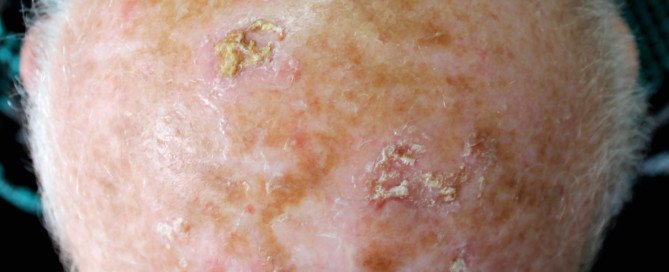
Can Scabs on Your Scalp Be Cancer?
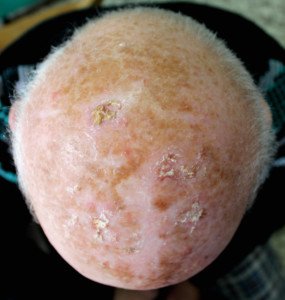
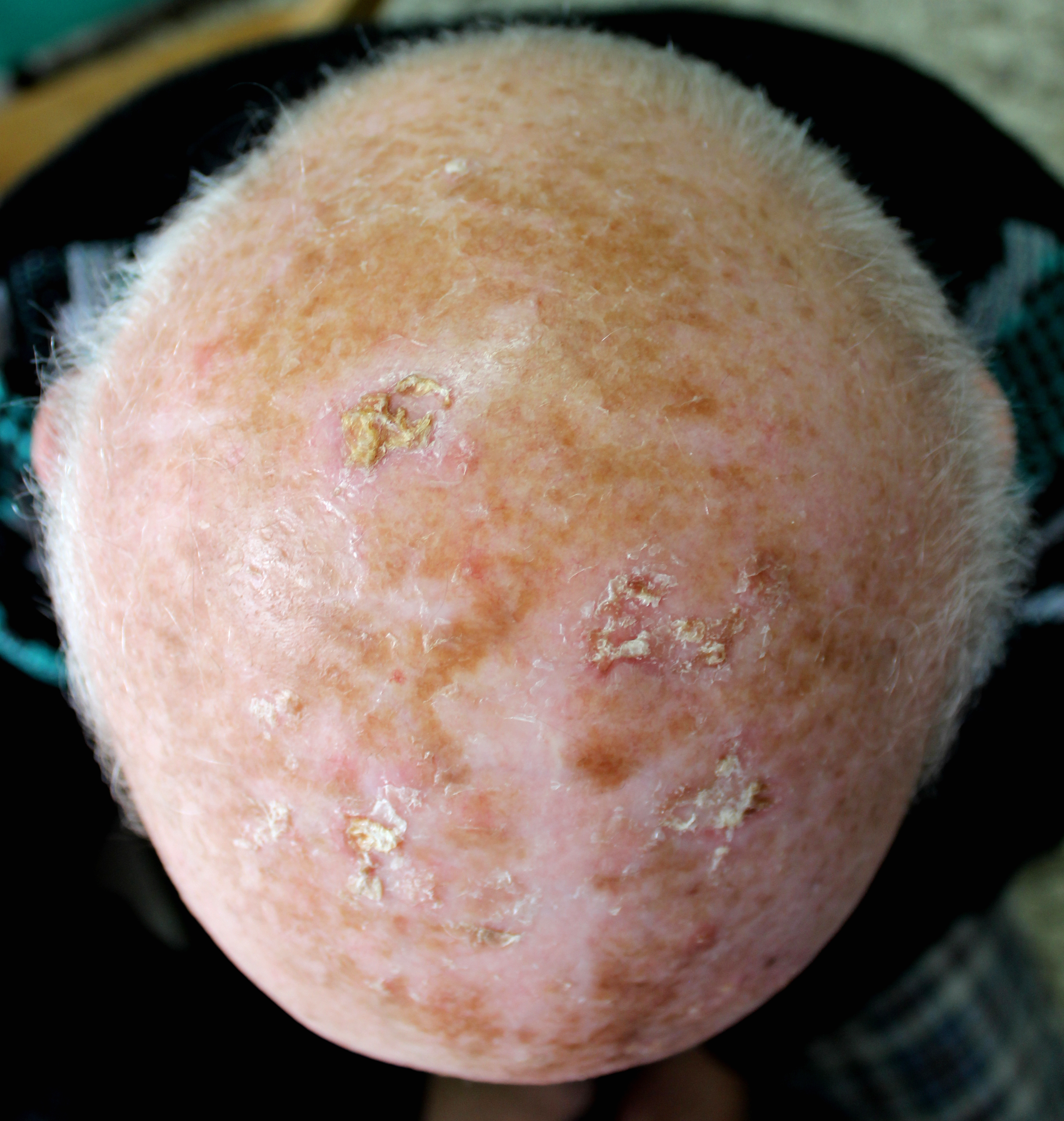
Scabs on your scalp, even just a single one, can be cancer, says Dr. Janet Prystowsky, a board certified dermatologist in New York, NY, with over 25 years’ experience.
“The most dangerous scab you can find on your scalp is from skin cancer,” she says.
“Any scabbing condition on the scalp that does not respond to usual treatments within a month should be re-evaluated and potentially biopsied.
“Skin cancer of the scalp (including melanoma, basal cell carcinoma and squamous cell carcinoma) is frequently mistaken for one of the more common scalp problems.
“Delay in diagnosis leads to a larger and more serious skin cancer.
“Even though hair should be able to protect the scalp from the sun, frequently skin cancer may appear in part lines or areas where the hair was cut short during childhood. It can occur anywhere on the scalp, however.”
Squamous cell carcinoma, like basal cell carcinoma, is intimately linked to cumulative sun exposure.
This is why this cancer typically appears in areas that have received heavy exposure to the sun.
Balding men are especially prone to these non-melanoma skin cancers unless they’ve habitually worn hats or sunscreen on their scalps when outdoors.
Basal cell carcinoma is the most common cancer in the world, and the most likely cancer to grow on a scalp.
This cancer, which is almost always non-fatal, will start looking scabby if left untreated for long enough.
They are slow growing and can easily be brushed off as nothing to worry about in their early stages, especially if they’re located where a person would not readily see them, such as on the scalp.
A squamous cell carcinoma is more dangerous, in that it can metastasize to distant parts of the body. These, too, can look like a scab.

Actinic keratosis; Source: skincancer.org
A precancerous condition called actinic keratosis often develops on scalps that have received a lot of sun exposure over the years.
If left untreated, these can start looking scabby (though predominately red/pink).
About 10 percent of these atypical growths, if left untreated, morph into squamous cell carcinoma — which can be fatal.
The American Cancer Society estimates that squamous cell carcinoma kills about 4,000 people in the U.S. every year.
This is why if you see any kind of scab development on the scalp that has a progressive nature — get it checked by a dermatologist.
In combination with her focus on early skin cancer detection and removal, Dr. Prystowsky provides a wide range of revitalizing and rejuvenating treatments.
Lorra Garrick has been covering medical, fitness and cybersecurity topics for many years, having written thousands of articles for print magazines and websites, including as a ghostwriter. She’s also a former ACE-certified personal trainer.
.
Top image: Shutterstock/Dermatology11

Bumps on Penis: Types, What They Mean

If you have strange, itchy or hard bumps on your penis, there is a particular type of doctor who will have excellent insight into what can be going on.
And that is a dermatologist. This is because the penis is covered with skin.
Disease processes or infections can manifest themselves in the skin, and a dermatologist can determine what that disease process or infection is.
Dr. Janet Prystowsky, board certified dermatologist in New York, NY, with 30+ years’ experience, cites a variety of causes for “bumps” that can appear on the penis.
Clear Bumps
In about 10 percent of men, these are normal “and are nothing to worry about,” says Dr. Prystowsky.
Single Hard Bump
If this appears to be just beneath the skin, it “could be a harmless cyst,” she says. It should be taken out or drained.
Cluster of Blistery Spots
This may be herpes. If not treated they’ll eventually burst and become scaly and red.
There are at least three more reasons for the development of bumps or spots on the penis, and one can lead to cancer, says Dr. Prystowsky.
If you have any bumps on your penis, even if they’re small and don’t itch, it would be a smart idea to make an appointment with a dermatologist rather than with a primary care doctor.
In combination with her focus on early skin cancer detection and removal, Dr. Prystowsky provides a wide range of revitalizing and rejuvenating treatments.
Lorra Garrick has been covering medical, fitness and cybersecurity topics for many years, having written thousands of articles for print magazines and websites, including as a ghostwriter. She’s also a former ACE-certified personal trainer.
.
Top image: Shutterstock/Syda Productions

Penis Bumps, Spots and Dots Guide by a Doctor

Here is a DOCTOR’S explanation for the many causes of different bumps, dots and spots on your penis and what can be done about these.
Forget the forums with laypeople’s explanations for why you have tiny red bumps or white bumps or dots or spots on your penis.
You may think that this problem belongs to a urologist, but the penis is covered with skin, and anything that goes on with the skin falls under the specialty of dermatology.
The Many Different Kinds of Bumps, Dots and Spots on the Penis
“Some dots on your penis may be perfectly normal or harmless,” says Dr. Janet Prystowsky, board certified dermatologist in New York, NY, with 30+ years’ experience.
“Others on the other hand may be sexually transmitted diseases.
“Clear bumps around the penis head are normal for about 10% of men and are nothing to worry about.
“A single hard bump that seems to appear just under the skin could be a harmless cyst that should be excised or drained.
“A cluster of blistery spots, however, may be herpes. These red spots eventually burst and become red and scaly.
“Another infection, syphilis, looks more like a red, painless ulcer.
“Molluscum contagiosum is a viral infection that causes small pearly-colored bumps.
“Genital warts is another viral infection that causes small, rough bumps.”
Deadly Virus
“The HPV (human papilloma virus) causing the genital wart could be dangerous and lead to penile cancer, which can be quite serious,” says Dr. Prystowsky.
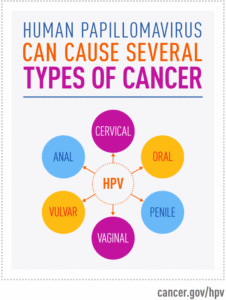
“The Gardasil vaccine is intended to help young men and women avoid infection with HPV.
“Also, oral contact with genital warts can lead to life threatening oral/throat cancer from certain bad strains of HPV.
“There are many reasons your penis may have a small bump.
It is important to make sure that if the bumps are infectious, they are treated before being spread to someone else.”
In combination with her focus on early skin cancer detection and removal, Dr. Prystowsky provides a wide range of revitalizing and rejuvenating treatments.
Lorra Garrick has been covering medical, fitness and cybersecurity topics for many years, having written thousands of articles for print magazines and websites, including as a ghostwriter. She’s also a former ACE-certified personal trainer.

Can Dehydration Alone Cause a Bulging Disc?

A bulging disc in the lower back can cause low back pain.
Many people drink much less water than they actually believe.
For optimal health and well-being, getting enough water is crucial.
When a disc bulges, this means that the spongy, shock-absorbing tissue that’s between the vertebral bones juts or oozes out of its place.
This can irritate nearby nerves, leading to pain or aching in the low back. The discomfort may radiate down a leg or include tingling.
Not Enough Water
To avoid dehydration, you should not wait until you’re very thirsty.
In fact, dark yellow, and especially orange, urine is an indicator that you’re not adequately hydrated — even if you do not feel thirsty.

Shutterstock/gritsalak karalak
Is there a connection between dehydration and a bulging disc?
“Yes, dehydration can cause a bulging disc,” says Dr. Michael Perry, MD, member of the North American Spine Society and American College of Sports Medicine.
It’s hard to believe, but true: Not drinking enough water can lead to a bulging disc.
“As most people know, the body is made up of 67 percent water, and some of that water is stored in the spine,” explains Dr. Perry.
He continues: “Our spinal discs are composed of two parts: annulus fibrosus —tough circular exterior composed of collagen fibers, and nucleus pulposus — inter core with a loose network of fibers suspended in a mucoprotein gel.”
The discs are shock absorbers. Dr. Perry explains that “about 75 percent of the pressure applied to the disc is on the nucleus pulposus.
“When the discs become dehydrated, the pressure is no longer on the nucleus pulposus but spreads throughout the entire disc.
“When pressure spreads to the annulus fibrosus, you can get cracks or bulges.
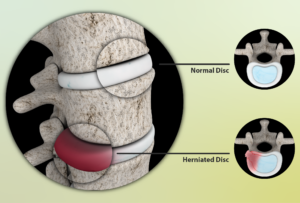
Source: myupchar. com
“This can also create pressure on the nerves and lead to other issues such as leg pain caused by sciatica.”
Dr. Perry adds, “Another interesting thing to note is that when we’re up standing or walking all day, we put enough pressure on our discs that can cause some people to even lose one-forth inch of height between when they wake up and go to bed.
“This is due to pressure and compression causing dehydration of the discs.
“When you lie down at night, the discs have time to extend and intake water. The discs are more likely to expand and the cushion effect becomes more apparent during rest and sleep.”
To make drinking eight to 10, eight-ounce glasses of water every day more feasible, make homemade lemonade, drink tea or add some water to your morning orange juice.
Soda never counts as water. Snack on cucumbers, watermelon and tomatoes, which have a high water content. Drink water with your meals instead of juice, soda or milk.
 Dr. Perry is chief medical director and co-founder of USA Spine Care & Orthopedics, and is frequently sought out for his minimally invasive spine surgery expertise.
Lorra Garrick has been covering medical, fitness and cybersecurity topics for many years, having written thousands of articles for print magazines and websites, including as a ghostwriter. She’s also a former ACE-certified personal trainer.
.
Top image: Shutterstock/Miss Ty
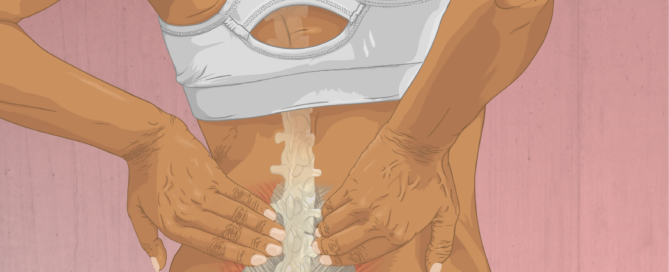
Drinking Water for a Bulging Disc for Recovery
Dr. Michael Perry, MD, says that drinking water is very crucial for recovering from a bulging disc.
A bulging disc also goes by the terms “herniated disc,” “lumbar herniation” and “lumbar pinched nerve.”
“It is important to drink between eight to 10, 10-ounce glasses of water per day to maintain hydration,” says Dr. Michael Perry, MD, member of the North American Spine Society and American College of Sports Medicine.
“If you’re outside or working in a hot and humid environment, it is important to increase this volume before you start to work.
“It makes a significant difference when you consume more water before you become thirsty; that way your body never becomes dehydrated in the first place.
Why Water Is Important for Treating a Bulging Disc
“Maintaining hydration combined with decreased force on the spine when lying down can help the discs reabsorb some of this additional water,” says Dr. Perry.
“This isn’t proven, but it may help prevent further bulging or even make the existing bulging less significant.”
Consider plentiful daily water intake as part of your conservative treatment for your herniated disc.
How to Fit in Eight Glasses of Water a Day
• Every morning, fill a pitcher with at least 80 ounces of water. Hopefully you already know there are eight ounces in one cup.
• The pitcher will be your supply for the ensuing day and evening.
• Drink only from the pitcher for a very easy way to track your intake.
• Replace soda and sugary juices with the water.
• Make it a point to have a glass first thing in the morning before you do anything else.
• Tea, coffee, soda and alcohol do not count towards your water intake.
• If you can’t drink water unless it’s chilled, and you’re struggling to drink 80 ounces throughout the day, you should try room-temperature water, as the lack of chill should make it go down faster.
• Give this plan some time to work towards improving your bulging disc.
Dr. Perry is chief medical director and co-founder of USA Spine Care & Orthopedics, and is frequently sought out for his minimally invasive spine surgery expertise.
Lorra Garrick has been covering medical, fitness and cybersecurity topics for many years, having written thousands of articles for print magazines and websites, including as a ghostwriter. She’s also a former ACE-certified personal trainer.
.
Top image: myupchar. com

Time It Takes for Lifting Weights to Bulge a Disc

“It could take seconds, or it could take years,” for weightlifting to cause a bulging disc, says Dr. Michael Perry, MD, member of the North American Spine Society and American College of Sports Medicine.
I was inspired to write this article after the fitness director of the health club, where I used to be a personal trainer, walked in one day with a slow, tentative gait. I asked him what was wrong and he said, “I blew out a disc leg pressing.”
Dr. Perry explains, “Typically, anyone who uses their back in any type of physical activity will have generalized wear and tear. With that, the disc and spine will become degenerative over time and that, in itself, can cause a bulging disc.”
In the fitness director’s case, it took seconds: a single, acute event.
Though the floor leg press machine is supposed to stabilize the back (and it does, relative to the instability of the back squat and deadlift), the lower spine can also be subjected to high levels of stress if you’re straining from a very low position to push up a very heavy sled.
If your butt is off the seat at this point, this makes those lumbar discs even more vulnerable.
This is why I recommend that if you’re going to press from a very low position (knees by armpits), to use no more than a moderate amount of weights, e.g., that which you can press for at least eight reps.
Dr. Perry continues, “Chronic condition: A former acute injury to the spine can accelerate the degenerative process. If you have an acute back injury, 10 years down the road you may develop additional pain.
“This isn’t related to new trauma, but related to the injury from 10 years ago. That injury accelerated the degenerative process.
“Acute condition: If you’re a weightlifter, any time you apply pressure to your spine (whether you’re doing deadlifts, squats, bench pressing, etc.), you can herniate [bulge] a disc or cause nerve compression.
“In rare cases, this disc herniation in the lower back can cause cauda equina syndrome – when the nerve roots at the end of the spinal cord are compressed [causing paralysis, numbness, incontinence]. Cauda equina syndrome develops rapidly and is a surgical emergency.”
Does this mean avoid squats, deadlifts and leg presses because lifting weights might cause a bulging disc? Of course not.
Lack of weight-bearing exercise is far more dangerous, because the individual who never strength trains and then one day is helping a friend rearrange some furniture, shoveling snow or just leaning forward to pick up a potted plant…can “throw his back out” and require immediate medical attention.
Or, an extra-long session of housework or yardwork could render a non-strength-trained person in bed all day the next day due to back pain.
When lifting weights, you must use picture-perfect form, and to build strong or big muscles, you do NOT have to gun for the one-rep max.
But even if you do eight reps, you must pay strict attention to textbook form.
I see so many people performing deadlifts and back squats with lousy form; they risk getting a bulging disc.
Dr. Perry is chief medical director and co-founder of USA Spine Care & Orthopedics, and is frequently sought out for his minimally invasive spine surgery expertise.
Lorra Garrick has been covering medical, fitness and cybersecurity topics for many years, having written thousands of articles for print magazines and websites, including as a ghostwriter. She’s also a former ACE-certified personal trainer.







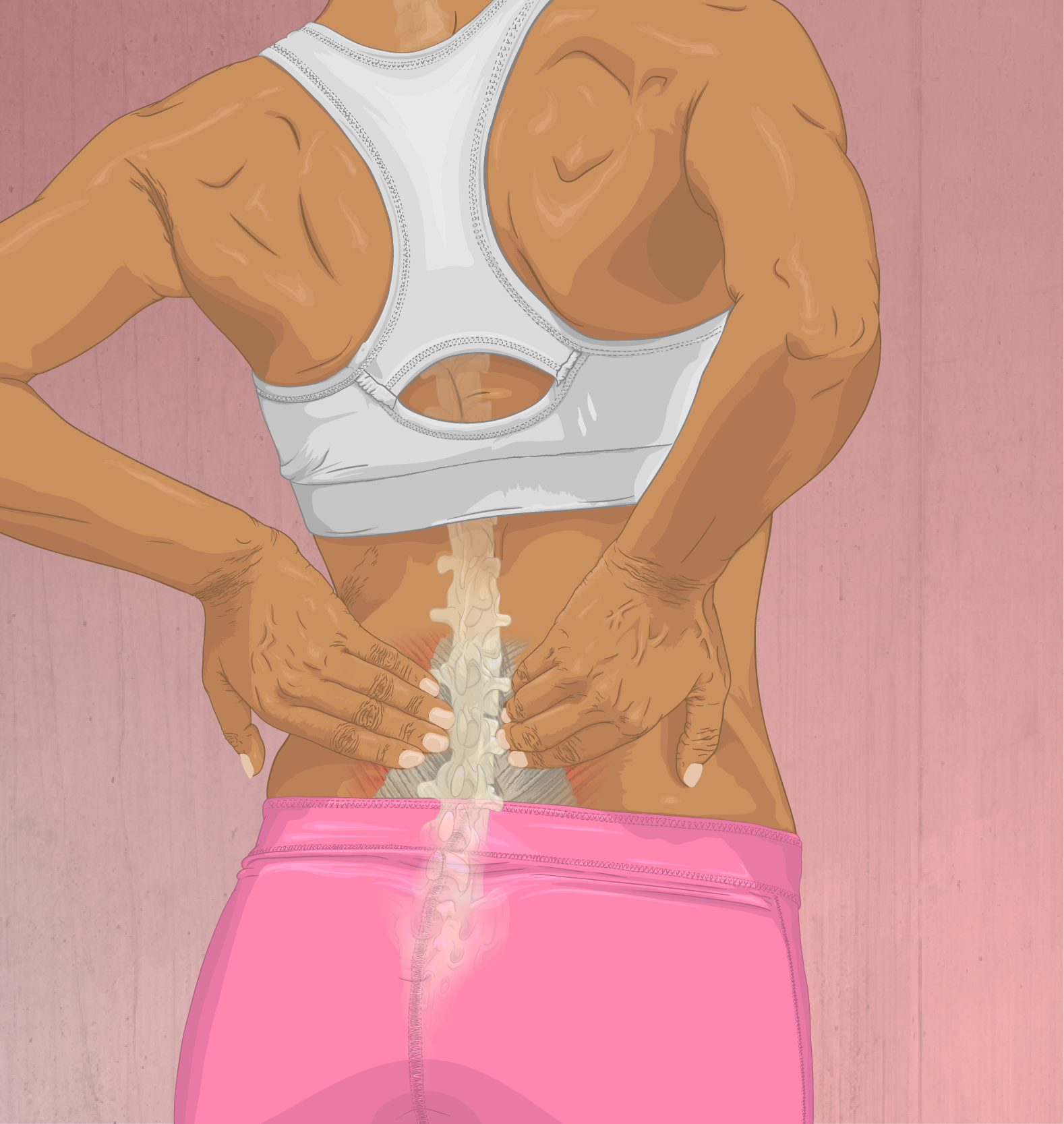


MRI vs. CT Scan for Low Back Pain: a Comparison

Low back pain is America’s No. 1 nonfatal health problem. An MRI, but also a CT scan, can tell a doctor a lot about what’s going on in one’s lower back.
The question though, is, which is better for diagnosing low back pain: an MRI or a CT scan?
For sure, from the patient’s point of view, the MRI sounds a lot better because it doesn’t emit the radiation that a CT scan does.
On the other hand, those with claustrophobia would rather undergo the CT scan than be “inside a tube.”
Patients who don’t want to feel trapped inside a tube can also inquire about the possibility of an “open” MRI.
An open MRI has wide sides and open space around the body, not a tight tunnel, allowing more visibility and airflow.
Low Back Pain: MRI vs. CT Scan
“The best test to obtain when looking at the spine is an MRI” rather than the CT scan, says Dr. Michael Perry, MD, member of the North American Spine Society and American College of Sports Medicine.
“These scans are the best for soft tissues, such as your spinal nerves, disc, cord and ligaments,” continues Dr. Perry. “An MRI will allow your doctor to see cord and nerve compression.”
That’s not the greatest news to those who fear enclosed spaces and don’t care about radiation.
But it’s really good news because you should be concerned about radiation, and the MRI is truly superior at imaging the causes of low back pain.
So if you’re scared of being inside a tube, remind yourself that the MRI equipment does not emit radiation, and the CT scanner does.
“When you may have a bone issue, such as a hairline fracture, spurring or arthritis, a CT scan is the best test to obtain,” says Dr. Perry.
“A CT scan is preferable if you have a pacemaker, defibrillator or morphine pump. When you have one of these implanted devices, an MRI scan is contraindicated because of the MRI’s ability to interfere with the functions of these devices.”
If you’re scheduled for an MRI due so low back pain, bring good earplugs with you, as this machine produces loud knocking noises throughout the procedure.
Dr. Perry is chief medical director and co-founder of USA Spine Care & Orthopedics, and is frequently sought out for his minimally invasive spine surgery expertise.
Lorra Garrick has been covering medical, fitness and cybersecurity topics for many years, having written thousands of articles for print magazines and websites, including as a ghostwriter. She’s also a former ACE-certified personal trainer.
.