Coronary Artery Calcium Score Predicts Heart Attacks

Heart attacks can be predicted with the so-called calcium score, which is based upon the amount of this mineral in your coronary arteries.
The calcium score is used to predict heart attacks when taken into consideration with other standard risk factors for heart attacks.
This all improves the ability to predict heart attacks. The information comes from research that’s reported in JAMA (April 2010). A CAT scan (“CT” scan) is the tool used to determine the coronary artery calcium score.
The imaging device measures calcium buildup in the plaque that’s on the arterial walls inside the heart.
This is associated with risk of future heart attacks. But to what extent does adding the coronary artery calcium score, when added to traditional risk factors for heart disease, improve classification of risk?
This is not clear, according to the JAMA report. The research involved 6,814 subjects who did not have known cardiovascular disease.
The authors of this study stated that when the coronary artery calcium score is added to the traditional risk factors for heart attacks, the result is a substantial improvement in the classification of risk for predicting heart disease events in women and men who present with no symptoms.
So why, then, isn’t the CAT scan for calcium score a standard screening procedure for possible future heart attacks?
A CAT scan runs between $200 and $600, and it would be quite costly to implement this as a screening procedure for the general or average-risk population.
Secondly, CAT scans pose radiation exposure. Just one exam, taken at age 40, is estimated to produce 28 cancers per 100,000 women, and nine cancers per 100,000 men.
This may seem negligible, but these numbers are actually statistically significant. The calcium score cannot be determined with an MRI.
The study authors report that the coronary artery calcium score is a promising assessment tool for possible future cardiac events, but it remains unclear whether or not this tool’s benefits outweigh the risks for the general population.
In the meantime, if you’re concerned about heart attacks, a good start would be to request from your doctor a C-reactive protein blood test, and an LPA blood test, in addition to a cholesterol test.
Plus, avoid trans fats, lose excess weight, especially if it’s concentrated in your belly, and stick to a structured exercise regimen.
Shutterstock/Oscar Carrascosa Martinez
Another risk factor for heart attacks is getting emotionally “worked up” on a frequent basis; learn stress management.
 Lorra Garrick has been covering medical, fitness and cybersecurity topics for many years, having written thousands of articles for print magazines and websites, including as a ghostwriter. She’s also a former ACE-certified personal trainer.
.
Top image: Shutterstock/ESB Professional
Source: sciencedaily.com/releases/2010/04/100427171708.htm
Should an Elderly Person Do Chair Exercise or Standing Exercise?

Elderly people need to be stronger on their feet; seated exercises won’t cut it; most of their exercise should be done standing.
Elderly people who are still walking without assistance should be doing mostly standing exercises, rather than group classes where the exercises are done while seated.
This isn’t about performing a barbell press overhead while seated, or curling dumbbells while seated.
It’s about the so-called chair exercises that are commonly done by older people in a group instruction setting.
Many of the participants walk into these classes without a walker or cane.
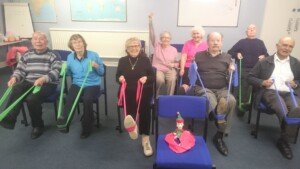
Such able-bodied senior adults do not live their lives out of a motorized scooter. It makes little sense, then, that they’d be doing exercises out of a chair.
“Standing exercise improves core strength, balance and coordination,” says Monica Charlton, a senior exercise specialist and certified Silver Sneakers/personal trainer out of New Orleans.
“Standing exercise is preferable to sitting exercise because it is weight-bearing, which is the only type of exercise that can help strengthen bone density.
“Seated exercises carry a lower risk of falling, but also do less to prevent falls in the long run.”
As a former personal trainer and one who has rehabbed my elderly mother from a hip fracture, I strongly recommend an emphasis on standing exercises for seniors.
What about seated resistance machines and dumbbell exercises from a chair?
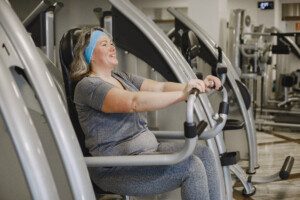
These include the leg press, leg extension, lat pull-down, any rowing-type equipment, overhead press equipment and chest press equipment, plus pushing dumbbells overhead or lifting them to the side.
All senior age men and women should use resistance machines, as they stabilize the body during strength training and isolate muscle groups.
Pexels, Gustavo Fring
Working with free weights or tension bands while seated is also very beneficial.
But there is no real benefit to doing “exercises from a chair” if you have the mobility to walk around your house, let alone a store or mall.
Even for older people who tire quickly after walking a short distance, doing exercises from a chair would be an inferior approach to improving their mobility, stamina and neuromuscular coordination.
You’re far more likely to fall (either from a slip or a knee giving way) while standing or walking, rather than topple out of a chair!
Thus, your exercise program should include many moves while standing or walking:
- Stationary or walking lunge (with or without holding a weight)
- Sideways and backwards stationary lunge
- Body weight or light dumbbell squat
- Step-ups
- Sustained staircase climbs (with short breaks as needed)
- Aerobics and group fitness classes. Never mind that all the younger participants have two risers under their stepper. You can use just the stepper alone and enjoy the class!
Exercising from a chair eliminates any chance to improve core strength, stability and balance while on your feet — which you will sooner or later be on when the “from a chair” exercise session is over.
The “from a chair” approach is a downgrade from an older person’s baseline — assuming they do not have difficulty with actual mobility — though they may tire quickly from walking due to heart disease or excess weight.
- Chair exercises will only improve one’s ability to do those particular exercises while seated in the chair.
- They will do nothing to ignite improvement in doing things while standing or walking.
According to cdc.gov, one out of three people over 65 will fall in a given 12 month period—and these are falls while they are on their feet.
Exercise while seated in a chair will NOT increase stability on one’s feet.
 Monica Charlton’s personal training services include fitness/body composition assessments, nutrition planning, running programs and customized programs for clients with disabilities or injuries, as well as older and mainstream clients.
 Lorra Garrick is a former personal trainer certified through the American Council on Exercise. At Bally Total Fitness she trained women and men of all ages for fat loss, muscle building, fitness and improved health.
.
Top image: Shutterstock/Boryana Manzurova

How a Woman Can Learn to Punch Good with a Treadmill

You’d be surprised how well a woman can learn to punch while walking on a treadmill; women can improve their punch without boxing classes. (more…)

Why Obese Women Should Avoid Light Weight Workouts
Obese or very heavy-set women should not rely on light weight strength training to lose fat, but instead take a different approach: one that they’d never consider. (more…)

Is Old Age a Good Excuse for a Fat Belly?

A high BMI is strongly correlated to certain medical conditions, even if you’re elderly or of “old age.”
A fat belly does not care how old you are, and elderly people with a high body mass index certainly do not get a free pass to good health just because of their age. (more…)

It’s Not True that Domestic Abuse Can Happen to “Any” Woman

It’s so false that “any” woman can remain with an abusive man.
If you believe domestic violence can happen to any woman, does this mean you also believe that domestic violence can happen to any man? (more…)

Why a Fatal Heart Attack Can Be Caused by Mental Stress

You know that stress can trigger a heart attack, but do you know HOW this process occurs, what actually goes on inside your body leading up to the cardiac event? (more…)

What to Do when Strangers Want to Hug Your Child

The feelings of the stranger who wants to hug your child never take priority over what your CHILD wants.
Here’s how to handle it when adults whom your child barely know or have just met want to give them even a “little” hug.
“How to handle this situation is based upon the child’s age and personality,” begins Dr. Tia Kern-Butler, a licensed psychologist for over 20 years who treats a broad range of issues including relationship problems and behavioral issues of children and adolescents.
“Some children, even young ones, will refuse to hug a stranger all on their own,” continues Dr. Kern-Butler.
“Parents should respect this and never scold, shame, embarrass or force their child to allow someone to touch them when they do not want them to.”
How to Handle when a Stranger Wants to Hug Your Child
The adult may also be someone the child has known for a while, but only marginally. Your child may also not be the hugging type.
Your rights outrank the stranger’s rights.
Even if you’ve known the adult for a while, and unexpectedly that person wants to hug your child — and you KNOW your child would be uncomfortable with this — you have as much right to prevent this cross-the-boundary form of communication as you do in stopping an adult from giving your child a liter of sugary soda.
“If a stranger asks to hug your child, and the child themselves does not say ‘No,’ the parent should then step in and set the boundary with that adult,” says Dr. Kern-Butler.
“This may be uncomfortable for some parents who have a hard time setting boundaries for themselves or worry about social politeness.
“Such parents need to place the psychological well-being of their child ahead of what some stranger might think about the hug boundary.”
Do not give in to the adult who wants to hug your child against his or her will.
- Remind yourself (and don’t wait till the circumstance actually arises) repeatedly that the feelings of the adult rank BELOW that of yours, and below that of how your child perceives ownership of his/her body.
- Once you’ve established the first point, you’ll find it much easier to prevent the behavior.
“The adult who initiates this is the one who is in the wrong, and a parent can acknowledge this in an assertive and non-confrontational manner,” says Dr. Kern-Butler.
“Simply saying, ‘I’m sorry, I don’t mean to embarrass you, but in our family we do not hug someone until we know them well; I’m sure you understand,’ can send the message.
“Or, ‘I’m sorry, we have taught our kids it’s not okay to hug someone they’ve just met; I’m sure you understand.’”
How Parents Can Intercept More Aggressive Attempts of Strangers to Hug Their Child
Yes, there are adults who won’t even give a signal; they’ll barge right into the child’s personal space and throw their arms around them.
The good news is that such aggressiveness is rare. Adults who lack a social filter will usually make a comment before proceeding with a hug, such as, “Let me hug your son!”
The adult may start advancing towards the boy — and that’s when you should NOT stand by idly.
Otherwise, from your child’s perspective, you won’t come across as their advocate or ally.
And at some point afterwards, you’ll want to kick yourself for ranking a rude person’s feelings above your values and your son’s ownership of his body.
Put your hands up and say, “Excuse me, time out. Let’s see if Tony wants a hug. He has the final word.”
Tony will already know this is coming, because you will have already “coached” the boy at home to prepare for such an unexpected and awkward social moment.
You have already, during the coaching, assured him that he DOES have the last word, and that all he has to say is “No thank you. I prefer a handshake,” or, “I’d like a high-five instead.”
For a softer response, you can ask your child, in the presence of the hugger-wannabe, “Would you like (name of individual) to give you a hug?”
Again, you will have already prepared your son or daughter for this experience, and they will already know it’s okay to refuse the hug.
If the adult is taken aback by a rejection of the hug request, just remind yourself that you just strengthened the trust that your child has in you, and you also reinforced in him or her that they have dominion over their bodies. No stranger’s feelings override that!
 Currently in private practice Dr. Kern-Butler spent 10 years as the lead child and adolescent psychologist with Winter Haven Hospital and served as the mental health liaison for the Children’s Advocacy Center for 14 years.
Professionalpsychologyofpinellas.com/about-me
Lorra Garrick has been covering medical, fitness and cybersecurity topics for many years, having written thousands of articles for print magazines and websites, including as a ghostwriter. She’s also a former ACE-certified personal trainer.
.
Top image: Freepik.com
Why Are Girls More than Boys Forced to Give Hugs?

Why is it that little boys are spared the discomfort of forced hugs, but little girls must take part in this dis-empowering ritual?
What negative message might this send little girls? (more…)
Should Very Overweight Women Try a Spin Class?

Many obese women are reluctant to even set foot in a gym due to feelings of self-consciousness about their size.
Yet I have never in my life heard of a situation, let alone witnessed it, of an obese woman being ridiculed in a spin class by other participants or by anyone looking into the class from outside.
Obese women should try a spin class.
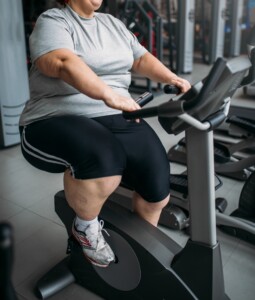
In a spin class, everyone is on an even playing field; this means a 250 pound woman can sit on a stationary bike and pedal as well as a 130 pound woman—in terms of the mechanics.
And that’s what it boils down to: sitting on the bike and making the pedals go ‘round and ‘round.
Sure, the obese woman will tire out much faster and won’t be able to keep up with the instructor’s directives, but will anyone actually notice this or even care if they do?
For example, when it’s time to stand up while pedaling, and you can’t do this, the only people who will notice are those behind you and to your side, and the instructor. And they don’t care.
In fact, you probably won’t be the only one not standing. What counts is that you’re THERE.
Shutterstock/Nomad_Soul
You may not be pedaling as fast, but nobody’s really going to notice this, and if anyone does?
They won’t care any more than YOU’D care if you noticed the man several bikes away propping his feet up on the bike to recharge, or the woman diagonally in front of you barely pedaling while she guzzles juice and then pats down her face with a towel.
So aside from pedaling slower or not using as much pedal tension as the instructor indicates for, the plus-size participant is essentially on an even playing field as everyone else.
EVERYONE is seated on a bike and pedaling.
The only issue an obese woman will have (and many thinner people also have this issue) is getting used to the hard little seats, but you can place a bike-seat cushion on them.
Spin classes are designed for high calorie burn and to take the participant out of their comfort zone.
I see so many plus-size women on regular stationary bikes in the gym’s cardio machine section, and in most cases, they are pedaling leisurely as though through a scenic park.
Absent is interval training or any intense bursts. Sometimes they are reading.
In a spin class, you won’t be able to read (it’s dimly lit, sometimes with flashing lights; there’s verbal instructions and distracting music). You won’t WANT to read.
And you’ll be motivated to leave your comfort zone of steady-paced pedaling that you probably don’t even break a sweat from, or at least, if you do sweat, you’re still not working out nearly as hard as you would if in a spin class.
Why is is that I never see obese women in spin classes?
A very heavy person can sit on a bike and pedal, and that’s the only requirement.
- You do not need to keep up with the instructor.
- You will not be graded!
- There is no pass or fail, only participate!
You may enjoy the energized atmosphere. You will leave realizing that you’re capable of working out much harder than you thought.
Obesity is no excuse for avoiding a spin class.
This kind of activity will help you lose weight far more than will that steady-state, leisurely pedaling you’ve been doing in the cardio machine section for so long and getting no results.
And by the way, your fitness and weight loss plan should include strength training.